



























Small wins are the tiny, frequent proofs that your effort is working. Tracking and celebrating small wins means deciding what “progress” looks like in miniature, recording it consistently, and acknowledging it in ways that keep you coming back. In practice, that can be as simple as logging one extra rep, noting a five-minute walk on a busy day, or writing down that you chose water over soda. This guide shows you 11 practical, evidence-informed ways to design those moments so they add up to big results. Quick start: pick one metric, log it daily, review weekly, and reward yourself appropriately—then repeat.
Fast start checklist: define a 4-week target → pick 2–3 trackable metrics → set a 2-minute logging habit → choose a weekly review time → pre-plan 2–3 no-cost celebrations.
Friendly disclaimer: The ideas here are educational and motivational. They’re not a substitute for personalized medical advice. If you have a medical condition or injury, consult a qualified professional before changing your activity or nutrition.
1. Define “Small Win” So It Directly Serves Your Big Goal
A small win is a bite-sized, achievable action or outcome that clearly moves you toward a larger objective. Start by stating your big goal plainly—“run a 10K,” “lose 8 kg,” “lift my bodyweight”—and then break it into micro-goals you can complete this week. The first 1–2 sentences should make the link obvious: if you do X repeatedly, Y becomes inevitable. This clarity matters because motivation rises when you can see progress and causality, not just effort. Research on the “progress principle” shows that even tiny steps forward create disproportionate boosts in engagement and mood. To harness that effect, define wins by behavior and result, and aim to notch at least one every day.
1.1 Why it matters
Small, visible progress creates a positive feedback loop: progress → motivation → more progress. It also sidesteps perfectionism. When “win” means “I showed up and did my plan,” you can succeed daily even if the scale stalls or a run feels slow.
1.2 How to do it
- Write a one-sentence big goal, then list 3–5 small wins that predict it (e.g., “3 workouts/week,” “+1 vegetable at lunch,” “in bed by 11:00 pm”).
- Make each win specific and observable (loggable in <2 minutes).
- Keep wins within your control (inputs) and pair them with occasional output markers (e.g., 1 cm off waist in 2–4 weeks).
- Set a time window: what wins will you collect for the next 28 days?
1.3 Numbers & guardrails
Plan one primary daily win and 1–2 optional bonus wins. If your schedule is chaotic, define a minimum viable win (MVW): 5 minutes of movement, one mindful meal note, or a 10-minute walk.
Mini case: A beginner lifter chooses “3 sessions/week,” “log sets in notes,” and “protein at 2 meals/day.” Four weeks later, strength is up, and the plan feels automatic. Synthesis: Clear definitions convert vague hope into trackable momentum.
2. Pick the Right Metrics: A Mix of Inputs and Outcomes
Choose 2–3 metrics you can measure consistently that predict the outcome you care about. Inputs include workouts completed, steps, minutes slept, or servings of produce. Outcomes include resting heart rate trends, waist circumference, 1RM estimates, or pace at a given heart rate. Start with inputs; they’re controllable and sensitive to daily effort. Add one outcome to show lagging progress. This mix keeps motivation steady when the scale or performance plateaus.
2.1 How to choose
- If weight management is the goal, pair inputs (calorie awareness, meal logging frequency, steps) with outcomes (7-day average body weight, waist).
- For performance, pair inputs (sessions, total volume, easy miles) with outcomes (time trial every 4 weeks, estimated 1RM, MAF pace).
2.2 Tools & examples
- Inputs: checkboxes on a wall calendar, Apple Health/Google Fit, a paper habit card.
- Outcomes: tape measure (waist at navel), 7-day moving average weight, time a fixed route monthly.
2.3 Numbers & guardrails
- Use moving averages to smooth noise: 7-day for weight, 4-week for strength PRs.
- For circumference, measure under identical conditions (morning, post-bathroom, pre-meal).
Common mistakes: Tracking too many metrics, relying on daily weight without smoothing, or picking metrics you can’t actually measure. Synthesis: A tiny dashboard—two inputs, one outcome—beats a sprawling spreadsheet.
3. Make Tracking Frictionless: Design a 2-Minute Logging Habit
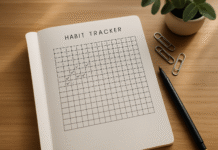
Your tracking system should be so easy it survives busy days. The golden rule: log within two minutes of the activity or at a fixed daily time. Friction kills consistency long before motivation fades. A physical calendar near your workout space, a pre-pinned notes template on your phone, or a one-tap app shortcut all work. Decide now where data lives and how you’ll enter it. Aim for boringly simple over beautifully complex; consistency is the goal.
3.1 Setup steps (pick one)
- Paper-first: Wall calendar + pen; tick a box, jot reps/sets, circle weekly totals on Sunday.
- Phone-first: One pinned note per month with a daily row; copy yesterday’s row forward.
- App-first: Use a minimal habit tracker or your platform’s health app; create a single widget on your home screen.
3.2 Mini-checklist
- One home for data
- One default logging moment (e.g., post-shower, pre-bed)
- One weekly 10-minute tidy-up
- One monthly archive (new page/note)
Example: After each session, you type “S: 3×8 goblet squat @12kg, P: 20-min easy, Sleep: 7:10.” That’s <60 seconds. Synthesis: The best tracker is the one you’ll still be using in six weeks.
4. Use Streaks Wisely (and Protect Them)
Streaks convert effort into a game, leveraging loss aversion and the goal-gradient effect—we try harder to keep what we’ve earned and speed up as we near a target. Use streaks for behaviors (e.g., “logged something daily,” “moved 10+ minutes”), not outcomes. Build in forgiveness so one missed day doesn’t nuke months of consistency. Streaks should encourage—not punish.
4.1 How to set up streaks
- Track a binary daily behavior: “Did I show up?” yes/no.
- Add a streak freeze (e.g., one “skip credit” per month) for illness, travel, or exams.
- Use threshold streaks like “10+ minutes moved,” not “60 minutes,” to weather busy days.
4.2 Common pitfalls
- Streak rigidity that causes overtraining or guilt
- Counting only “perfect” sessions
- Using streaks for outcomes (e.g., weight loss) that fluctuate
4.3 Mini example
A walker maintains a 90-day streak by allowing a 10-minute neighborhood loop on travel days and one monthly freeze. Pace improves without injury. Synthesis: Streaks should lower the bar for action while keeping the reward feelings high.
5. Build Milestone Ladders and Badges
Milestones are intentional checkpoints that are close enough to feel achievable and meaningful enough to celebrate. They convert long timelines into a ladder you climb rung by rung. Think 5% increments on lifts, every 2 kg on weight change, or every 10 minutes added to monthly activity. Pair each milestone with a small badge or ritual. The badge is not about vanity; it’s a memory cue that you’re the kind of person who makes progress.
5.1 How to design milestones
- Choose spaced checkpoints (every 2–4 weeks) with clear criteria.
- Add a visual badge (sticker on a chart, colored dot in your tracker).
- Pre-decide a celebration ritual: a victory playlist, a photo in your log, or calling your accountability buddy.
5.2 Numbers & guardrails
- Strength: ladder in 2.5–5% jumps; test every 4–6 weeks.
- Endurance: time trial every 4 weeks on the same route.
- Body composition: progress photos once per month in identical conditions.
Mini case: A runner sets milestones at 30, 40, 50 total monthly miles. Each tier earns a new sticker row on the calendar. The visual stack becomes a story of effort. Synthesis: Milestones shrink the future and magnify now.
6. Make Progress Visible with Simple Charts and Trendlines
Humans respond to pictures. A line that gently tilts upward (or downward for weight) is more persuasive than pages of numbers. Create one-page dashboards showing weekly totals and moving averages. For weight, use a 7-day average; for running volume, weekly totals; for lifting, total sets per movement pattern. Revisit monthly to refine what you display.
6.1 How to do it
- Once a week, total your key inputs (workouts, minutes, sets) and enter them in a small table.
- Add a 7-day moving average for daily metrics (weight, steps).
- Add a 4-week rolling sum for training volume.
6.2 Tools/Examples
- Spreadsheet with three columns (date, value, rolling average)
- A phone app widget that shows weekly steps
- A whiteboard chart with boxes you shade in
6.3 Common mistakes
- Over-customization that slows logging
- Reading too much into single-day spikes
- Comparing your charts to others’
Numeric example: If daily weights for the week are 80.2, 80.0, 79.9, 80.1, 79.8, 79.7, 79.8 kg, the 7-day average trends down even if a single weigh-in blips up. Synthesis: Visibility breeds belief; belief breeds persistence.
7. Run Weekly and Monthly “Win Reviews”
A weekly review transforms raw data into insight. In 10–15 minutes, scan your logs, list 3–5 wins, 1–2 lessons, and a tiny adjustment for the next week. A monthly review checks trajectory: Are your inputs steady? Are outcomes shifting? Reviews convert tracking into strategy and reinforce identity: “I’m someone who learns from reps.”
7.1 Weekly review template
- Wins: list 3–5 specific small wins (showing up counts)
- Lessons: 1–2 bottlenecks or patterns (late nights, skipped warm-ups)
- Adjust: one tweak for next week (earlier bedtime, shorter sessions midweek)
7.2 Monthly review checklist
- Are rolling averages moving the right way?
- Did I celebrate milestones?
- Do metrics still fit my goal?
- What’s one variable to test next month?
7.3 Region/time notes
Busy holiday month? Shift to maintenance metrics (e.g., “move 10 minutes daily,” “protein at 2 meals”) and keep reviews, even if brief. Synthesis: Reviews make progress obvious and keep the plan honest.
8. Celebrate With Ethical Rewards and Temptation Bundling
Celebration cements habit loops. Pair your effort with small, immediate rewards that don’t undercut the goal—think a favorite podcast only during walks, a new playlist for hitting a milestone, or 30 minutes of guilt-free leisure after logging a week of workouts. This is temptation bundling: combining something you should do with something you want to do. Keep celebrations frequent, inexpensive, and aligned with your values.
8.1 How to do it
- Make a list of non-food, non-spend celebrations (victory pose, checkmark photo, text a friend).
- Create bundles: podcast → walks, audiobook → mobility, favorite show → during bike sessions.
- Pre-commit: the reward only happens with the behavior.
8.2 Guardrails
- Avoid rewards that undo progress (e.g., overspending or bingeing).
- Keep big rewards for milestones (new shoes after 12 consistent weeks).
- Write rewards into your tracker so they’re visible.
Mini case: You reserve a gripping audiobook solely for long walks. Miss the walk, miss the chapter. Walking time doubles without extra willpower. Synthesis: Celebrations make consistency feel good now, not just later.
9. Plan for Slips With Implementation Intentions and WOOP
Slips are inevitable; smart plans anticipate them. Implementation intentions (“If X happens, then I will Y”) and WOOP (Wish, Outcome, Obstacle, Plan) translate hopes into concrete responses when friction appears. Pre-deciding your moves preserves streaks and prevents one miss from becoming a spiral. This is where tracking shines: your logs reveal common derailers so you can script better if-then plans.
9.1 How to do it
- Write 3–5 if-then plans based on real patterns: “If I get home after 8 pm, then I’ll do 10 minutes of stretches and log it.”
- Run a quick WOOP: Wish (3 workouts), Outcome (more energy), Obstacle (late meetings), Plan (“If meetings run late, I’ll do a 15-minute home session.”)
9.2 Common mistakes
- Vague plans without specific triggers
- Expecting zero obstacles
- Treating slips as identity statements instead of data
9.3 Example scripts
- Travel: “If the hotel gym is closed, I’ll do 3 bodyweight moves for 10 minutes.”
- Illness: “If I’m sick, I’ll switch to sleep/stroll metrics and protect the streak with a freeze.”
Synthesis: Pre-commitment turns unexpected friction into expected practice.
10. Track and Celebrate Non-Scale Victories (NSVs)
Outcomes that aren’t the scale often shift sooner and matter more: deeper sleep, steadier energy, clothes fit, fewer breaks on stairs, better mood, a new movement skill. NSVs reflect competence and build internal motivation. Track them monthly and celebrate them loudly. Many people quit because they measure only weight; NSVs protect motivation while the body adapts.
10.1 What to log
- Energy ratings (0–10) and sleep quality notes
- Clothing fit (belt notch, jeans test)
- Performance skills (first push-up, deeper squat, longer plank)
- Life wins (carrying groceries, faster recovery between sets)
10.2 Mini-checklist
- Add one NSV line to your weekly review
- Take a monthly progress photo (same light/clothes)
- Write a one-sentence story: “This month I… [did thing].”
Example: The scale stalls for 3 weeks, but you notch your first 60-second plank and jog 10 minutes without stopping. Motivation climbs anyway. Synthesis: NSVs widen your definition of success, making it easier to win.
11. Make It Sustainable: Environment, Identity, and Tiny Habits
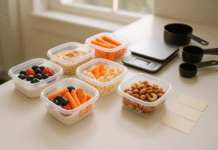
The most reliable way to keep small wins flowing is to design your environment and identity to make the next action the easiest action. Put your shoes by the door, lay out a kettlebell near the desk, or pre-portion a protein snack. Speak identity out loud: “I’m an active person; I don’t miss two days.” Shrink behaviors until they’re near-effortless on hard days. When wins are tiny and automatic, momentum survives real life.
11.1 How to do it
- Environment: Put cues in your path (yoga mat visible, water bottle filled).
- Identity scripts: “I train on Mondays,” “I log something daily.”
- Tiny starts: 1 set, 5 minutes, one line in the log—then optionally expand.
11.2 Common mistakes
- Relying on motivation instead of context
- Designing for perfect days
- Hiding equipment or trackers out of sight
Mini case: A parent with tight evenings moves a kettlebell next to the kettle. Every tea break becomes 10 swings—logged in under a minute. Strength creeps up with zero schedule overhaul. Synthesis: Sustainable design makes wins likely even when life is messy.
FAQs
1) What counts as a “small win,” exactly?
A small win is a specific, observable action or result you can achieve today that supports your larger goal—logging a meal, adding one rep, walking 10 minutes, or going to bed on time. The key is clarity and controllability. If you can check it off in under two minutes and it predicts future progress, it qualifies as a small win worth tracking and celebrating.
2) How many metrics should I track without burning out?
Two to three total is ideal—typically two inputs (behaviors you control) and one outcome (what changes because of those behaviors). This balance keeps you engaged daily while also showing longer-term results. More metrics rarely mean better progress; they often add friction and decision fatigue.
3) Is daily weighing helpful or harmful?
Daily weighing can be useful if you analyze the 7-day moving average instead of reacting to single readings. Weight is noisy due to water, glycogen, and sodium. Many people find trends motivating; others find them stressful. Choose the tool that supports your mindset and consider circumference or performance metrics as alternatives.
4) What’s the best app for tracking?
The best app is the one you’ll actually use. Paper calendars and pinned phone notes are underrated because they’re fast and visible. If you prefer apps, try a minimalist habit tracker or built-in health apps that support widgets. Prioritize one-tap logging and simple exports over fancy features you won’t touch.
5) How do I celebrate without derailing my goals?
Pick non-counterproductive rewards: playlists, leisure time, a relaxing bath, new socks, or sharing a win with a friend. Use temptation bundling—pair a treat (podcast, show, audiobook) with your habit. Save larger rewards for milestones a few weeks apart to avoid normalizing big splurges that fight your goal.
6) What if I break my streak?
Streaks should include forgiveness. Use a “streak freeze” (one per month) for illness or travel, and adopt the “never miss twice” rule. Your identity isn’t your streak length; it’s your ability to resume quickly. Treat breaks as data: what friction appeared, and what if-then plan will handle it next time?
7) How do I stay motivated when results are slow?
Shift attention to controllable inputs and non-scale victories: sleep quality, energy, skill improvements, or clothing fit. Review your tracker weekly to surface wins you’d otherwise forget. Re-run a WOOP exercise to plan for obstacles, and consider small environmental tweaks that make action easier when motivation dips.
8) Are small wins just “lowering the bar”?
They’re raising consistency. Small wins are not a compromise; they’re a proven strategy to build competence and momentum. Progress comes from reps, not heroics. By making success frequent and visible, you train your brain to expect and enjoy effort, which compounds into bigger wins over time.
9) How often should I test milestones like PRs or time trials?
Every 4–6 weeks works for most people. It’s often enough to see change without turning every week into a test week. In between, focus on steady inputs. Use 2.5–5% increments for strength PRs and fixed routes for endurance time trials to keep comparisons fair.
10) What if tracking makes me obsessive?
Your mental health comes first. Switch to low-granularity tracking (e.g., binary “showed up” checkmarks) or track only NSVs and weekly totals. Cap review time, hide daily scales, and work with a professional if you notice unhealthy patterns. You can keep the benefits of visibility without micromanaging every number.
11) Can I use small wins for non-fitness goals?
Absolutely. The same principles apply to studying, finances, or creative work. Define one controllable daily win (e.g., “10 minutes of focused writing”), log it, review weekly, and celebrate. Milestone ladders, streak freezes, and if-then plans work across domains because they leverage universal motivation mechanisms.
12) How long until small wins “add up”?
Some wins compound quickly (energy, mood, sleep within 1–2 weeks), while physique or performance changes may take 4–12 weeks. That’s why we pair input metrics (immediate wins) with outcome metrics (slower wins). Trust the process: consistency plus small improvements reliably produces visible change.
Conclusion
Lasting progress is rarely a single leap—it’s a stack of small wins that make action feel rewarding now, not just later. By defining wins that serve your bigger goal, choosing a tiny set of meaningful metrics, logging them with almost zero friction, and celebrating them ethically, you turn “discipline” into something closer to autopilot. Streaks, milestones, and simple charts make progress visible. Weekly reviews translate data into adjustments. If-then plans and WOOP keep you on course when life pushes back. Most of all, broadening success to include non-scale victories and identity shifts means you can win in more ways, more often. Pick one method from the list, set it up today, and let the feedback loop start working for you.
CTA: Choose your two metrics, print or pin your tracker, and tick the first box before the day ends.
References
- Amabile, T., & Kramer, S. (2011, May). The Power of Small Wins. Harvard Business Review. https://hbr.org/2011/05/the-power-of-small-wins
- Lally, P., van Jaarsveld, C. H. M., Potts, H. W. W., & Wardle, J. (2010). How are habits formed: Modelling habit formation in the real world. European Journal of Social Psychology, 40(6), 998–1009. https://doi.org/10.1002/ejsp.674
- Kivetz, R., Urminsky, O., & Zheng, Y. (2006). The Goal-Gradient Hypothesis Resurrected: Purchase Acceleration, Illusionary Goal Progress, and Customer Retention. Journal of Marketing Research, 43(1), 39–58. https://doi.org/10.1509/jmkr.43.1.39
- Ryan, R. M., & Deci, E. L. (2000). Self-Determination Theory and the facilitation of intrinsic motivation, social development, and well-being. American Psychologist, 55(1), 68–78. https://doi.org/10.1037/0003-066X.55.1.68
- Gollwitzer, P. M. (1999). Implementation intentions: Strong effects of simple plans. American Psychologist, 54(7), 493–503. https://doi.org/10.1037/0003-066X.54.7.493
- Oettingen, G. (2014). Rethinking Positive Thinking: Inside the New Science of Motivation. Current / Penguin Random House. (See overview & resources: https://woopmylife.org/en/science)
- Milkman, K. L., Minson, J. A., & Volpp, K. G. (2014). Holding the Hunger Games Hostage: Using Temptation Bundling to Increase Exercise. Management Science, 60(3), 283–299. https://doi.org/10.1287/mnsc.2013.1784
- Kahneman, D., & Tversky, A. (1979). Prospect Theory: An Analysis of Decision under Risk. Econometrica, 47(2), 263–291. https://www.jstor.org/stable/1914185
- World Health Organization. (2020). WHO guidelines on physical activity and sedentary behaviour. https://www.who.int/publications/i/item/9789240015128
- Burke, L. E., Wang, J., & Sevick, M. A. (2011). Self-Monitoring in Weight Loss: A Systematic Review of the Literature. Journal of the American Dietetic Association, 111(1), 92–102. https://www.ncbi.nlm.nih.gov/pmc/articles/PMC3603229/