























Sleep affirmations are short, calming statements you repeat to quiet mental chatter, reassure your nervous system, and cue your body that it’s safe to rest. Used consistently with simple wind-down habits, they can help you fall asleep faster, wake less often, and feel more restored in the morning. This guide gives you 12 tested affirmations for better sleep and relaxation, plus practical ways to pair each one with breathing, light movement, or journaling so they actually work when your mind is busy.
Quick start: Pick one or two affirmations. Repeat them slowly for 2–3 minutes while breathing gently. If you’re still awake after ~20 minutes, leave bed for a quiet activity and return when sleepy. Keep lights dim and screens off.
Friendly note: This article is educational, not medical advice. If you have persistent insomnia, loud snoring, breathing pauses, restless legs, chronic pain, or mood symptoms, talk with a qualified clinician.
1. I Am Safe; My Body Knows How to Sleep
Your first priority at night is to signal safety. This affirmation reminds your brain that sleep is a built-in reflex, not a task you need to “force.” By stating “I am safe,” you downshift the body’s threat systems (which keep you alert) and invite the parasympathetic “rest and digest” response. Adding “my body knows how to sleep” reduces performance anxiety—one of the biggest triggers for lying awake. Speak this line slowly, matching each phrase to an exhale. Expect a subtle, progressive settling rather than an instant knockout; the goal is comfort and trust, not control.
1.1 Why it helps
- Calm, safety-focused language lowers cognitive arousal.
- Reframing sleep as automatic reduces pressure and clock-watching.
- Paired with longer exhales, it nudges heart rate and muscle tone downward.
1.2 How to practice
- Sit on the edge of your bed, shoulders relaxed.
- Inhale through the nose for 4, exhale for 6–8.
- Whisper: “I am safe” on one exhale; “my body knows how to sleep” on the next.
- Continue 20–30 breaths, then lie down and let the phrase fade.
Mini-checklist
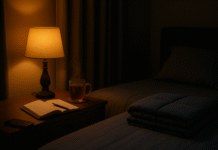
- Dim, warm light only
- Phone face-down and out of reach
- Room temp ~18–20 °C (64–68 °F)
Close by reminding yourself: safety plus patience beats effort—let sleep come to you.
2. I Release the Day; Nothing More Needs My Attention
This affirmation clears the mental “to-do” residue that often keeps people awake. It acknowledges your day has ended and gives your mind permission to stop monitoring. The phrase “nothing more needs my attention” is powerful because it directly addresses the vigilance that fuels late-night scanning of emails, conversations, and worries. Pair it with a brief note-dump earlier in the evening so your brain trusts that tasks are captured elsewhere. At bedtime, the affirmation becomes the final handshake that seals the off-duty agreement.
2.1 How to practice
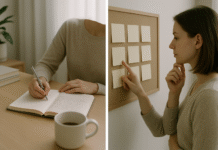
- Two hours before bed, spend 5–10 minutes writing tomorrow’s top 3 tasks.
- At lights-out, repeat the affirmation for 2–3 minutes.
- If thoughts pop up, say, “Captured for morning,” and return to the phrase.
Steps that help it stick
- Keep a “parking lot” notebook on your nightstand.
- Set email “send later” for morning to reduce temptation.
- Silence non-essential notifications after dinner.
A short closing exhale can punctuate the message: you’ve handed off the day; nothing urgent remains.
3. With Each Exhale, I Settle Deeper Into Rest
This breath-linked affirmation gives your mind a precise anchor and your body a clear physiologic cue: longer, softer exhales lower arousal. Counting isn’t required; simply tie the phrase to the out-breath and let your diaphragm do the heavy lifting. Over a few minutes, your heart rate drifts down, peripheral warmth increases, and your muscles slacken—signals your brain reads as “it’s okay to sleep.” If you wake at night, reuse this line to avoid flipping on lights or screens.
3.1 How to practice
- Breathe in through the nose, light and easy.
- Whisper the phrase silently on each exhale for 30–40 cycles.
- If you lose the thread, restart with one deeper sigh to re-anchor.
Numbers & guardrails
- Aim for ~6–8 breaths per minute.
- Keep effort low; a forced breath can feel like work.
- If you feel lightheaded, shorten the exhale and rest.
As you finish, let the words fade and keep only the feeling of a slow, unhurried out-breath.
4. I Welcome Rest; Sleep Arrives In Its Own Time
Anxious striving often backfires at night. This acceptance-based affirmation invites rest without demanding it, easing the “try harder” loop. By welcoming rest, you widen the goal beyond unconsciousness: relaxation counts, dozing counts, stillness counts. That reduces threat and paradoxically makes sleep more likely. If you find yourself checking the clock, use this line to pivot away from timing toward openness.
4.1 Why it helps
- Reduces performance pressure and catastrophic thoughts (“If I don’t sleep, tomorrow is ruined.”).
- Encourages a curious, non-judgmental stance toward drowsiness.
- Works well during mid-night wake-ups when chasing sleep keeps you up.
How to practice
- Lie comfortably; soften your jaw and brow.
- Repeat the line for 3 minutes, eyes closed.
- If you’re awake after ~20 minutes, get out of bed for a calm activity (dim light, paper book), repeating the phrase softly until sleepiness returns.
Accepting rest as useful reframes the night as friendly terrain; sleep usually follows when the struggle ends.
5. My Bed Is for Rest; I Return When Sleepiness Comes
This affirmation supports a key habit: associate bed with sleep and relaxation—not with worry, scrolling, or work. It sets a simple rule: if you’re not sleepy, it’s okay to step away and return later. That keeps the mattress from becoming a battleground. Repeating this line helps you honor the boundary without self-criticism and makes “brief reset breaks” feel intentional rather than like failing.
5.1 How to practice
- If you’re awake ~15–20 minutes, get up quietly.
- Do something calm and low-light: stretch, breathe, or read a paper book.
- Return as soon as your eyelids feel heavy.
Mini-checklist
- No bright screens during breaks.
- Keep slippers and a robe handy so getting up is easy.
- Park worries in your notebook, not in the bed.
Reinforcing bed-sleep connection with this phrase turns your bedroom into a reliable cue for drowsiness again.
6. I Am Allowed to Pause; Night Is for Recovery
Many high performers carry a “go, go, go” mindset into bedtime. This affirmation gives explicit permission to stop optimizing, producing, and solving. Recognizing night as a recovery window reframes sleep as productive—repairing muscles, consolidating memory, balancing mood—so rest feels aligned with your values. If guilt spikes when you step away from work, say this line until the urge to reopen the laptop fades.
6.1 Tools/Examples
- Set a firm “screens down” time 60 minutes before bed.
- Create a 10-minute “closing ritual” (tidy desk, jot 1 win, plan 1 step for morning).
- Play soft instrumental music while repeating the affirmation to mark the shift.
Common mistakes
- “Quickly” checking messages in bed.
- Letting overhead lights stay bright late.
- Caffeine too late in the day (for many, avoid after early afternoon).
Permission reduces inner resistance; when effort stops, recovery begins.
7. Thoughts Can Pass; I Don’t Have to Follow Them
This mindfulness-based affirmation addresses racing thoughts. It acknowledges thinking without engaging it and reminds you that attention is a choice. You’re not trying to stop thoughts; you’re letting them move along. Visualizing thoughts as clouds or cars passing by can help. The key is gentle redirection—over and over—without frustration. Over time, this trains a calmer relationship with your mind at night.
7.1 How to practice
- Lie down and notice breath at the nostrils.
- When a thought arises, label it (“planning,” “memory,” “worry”).
- Whisper the affirmation on the exhale and return to breath.
Mini-checklist
- Keep labels simple; don’t analyze content.
- Avoid debating or arguing with thoughts.
- If a sticky worry persists, jot a one-line note and resume.
This stance—observe, label, return—pulls you out of spirals and back into the quiet rhythm of the night.
8. I Soften My Body; Tension Drains From Head to Toe
Muscle tension is a sneaky sleep thief. This affirmation pairs perfectly with a brief body scan or progressive muscle relaxation (PMR). You’ll tense, then release, small muscle groups while repeating the phrase to amplify the sensation of letting go. The contrast between tension and ease helps your nervous system recalibrate toward rest. Within a few minutes, you’ll feel heavier, warmer, and more grounded.
8.1 How to practice (PMR blend)
- Start at the feet: curl toes for 5 seconds, release for 10.
- Calves, thighs, glutes, abdomen, chest, hands, arms, shoulders, face.
- After each release, whisper: “Tension drains… head to toe.”
Numbers & guardrails
- Keep breath easy; don’t hold air during tensing.
- Stop if cramping or pain occurs.
- 8–10 minutes is plenty for a full sweep.
Finish by scanning for any lingering tight spots; invite them to soften with one last exhale.
9. I Am Grateful for This Day; I Can Rest Now
Gratitude dampens rumination by shifting attention to what’s stable and good. This affirmation balances your brain’s negativity bias and reduces the urge to rehash problems. You’re not denying difficulties; you’re broadening the picture. Paired with a brief “three good things” practice earlier in the evening, it primes the emotional tone that supports sleep.
9.1 How to practice
- After dinner, jot 3 specific moments you appreciated (small is fine).
- At bedtime, repeat the affirmation slowly and visualize one of those moments.
- Smile gently as you breathe; let warmth spread in the chest.
Common pitfalls
- Vague clichés (“family, health”)—be concrete (“a coworker’s kind email at 3 pm”).
- Turning gratitude into a task; keep it light.
- Using it to bypass real feelings; acknowledge and then expand.
Ending the day with appreciation gives your mind permission to settle without scanning for unresolved threats.
10. I Set Tomorrow Down; Morning Me Will Handle It
Future-oriented thinking explodes at lights-out. This affirmation tells your brain that planning is scheduled for daylight and that your rested self is better equipped. It works best when paired with a short “worry buffer” earlier in the evening. By pre-deciding when you’ll plan, you reduce nighttime negotiations.
10.1 How to practice
- 1–3 hours before bed, spend 10 minutes on a “worry list.”
- For each item, write the next smallest step you’ll take tomorrow.
- At bedtime, if a worry resurfaces, breathe out and say the affirmation once.
Mini-checklist
- Keep the worry time consistent each evening.
- Use paper, not phone.
- Place the list outside the bedroom.
You’re not ignoring responsibilities; you’re protecting the brain that will do the work.
11. Every Breath Lowers My Heart Rate; I Drift Closer to Sleep
This physiologic affirmation builds confidence in paced breathing. By tying words to a predictable effect—heart rate gradually slowing—you create a feedback loop that feels tangible and reassuring. Choose a simple cadence that feels natural; many people relax with ~4–5-second inhales and ~6–8-second exhales.
11.1 How to practice
- Place one hand over your heart, one on your belly.
- Inhale lightly through the nose; exhale slowly through the nose or pursed lips.
- Synchronize the words to the out-breath for 3–5 minutes.
Numbers & guardrails
- Target ~6 breaths per minute for a few minutes.
- Keep shoulders relaxed; only the belly moves.
- If you’ve exercised late, allow extra cooldown before bed.
As the breath smooths, the words can fade; your body’s rhythm will carry the rest.
12. I Deserve Gentle Sleep; I Wake Restored
Self-talk matters. If you’re hard on yourself, nights can become a review of mistakes. This affirmation blends self-compassion (permission to rest) with a positive expectancy for the morning. It avoids magical thinking while steering your mind toward recovery. Repeating it while you nest into the pillow can become a comforting ritual that closes the day with kindness.
12.1 How to practice
- Place a hand on your chest or cheek to add warmth.
- Whisper the words slowly 10–20 times.
- Visualize waking at your usual time feeling clear and steady—not perfect, just restored.
Mini-checklist
- Keep wake time consistent (even after a rough night).
- Get morning daylight for 5–10 minutes to reinforce rhythm.
- Protect caffeine timing (ideally none in the late afternoon/evening).
Kindness at bedtime is not indulgent; it’s smart recovery that pays you back tomorrow.
FAQs
What are sleep affirmations, exactly?
Sleep affirmations are short, calming statements you repeat to reduce mental and physical arousal and cue your nervous system toward rest. They work best when paired with simple sleep-supporting habits (dim light, regular schedule, reduced late caffeine) and used consistently over a few weeks. They don’t “knock you out,” but they make conditions for sleep more favorable.
How long before bed should I start using them?
Begin your wind-down 30–60 minutes before lights-out. Use an affirmation for 2–5 minutes near the end of that routine, then again if you wake at night. If you’re wired, repeat one while reading a paper book in dim light until genuine sleepiness returns. Consistency across nights matters more than duration on any one night.
Can affirmations replace therapy or medical care for insomnia?
No. They can support relaxation and reduce worry, but persistent insomnia often responds best to a structured approach like cognitive behavioral therapy for insomnia (CBT-I). If you’ve struggled for months or have symptoms like loud snoring, breathing pauses, leg discomfort, or mood changes, consult a clinician to rule out underlying conditions.
Do I need to believe the words for them to work?
You don’t have to feel 100% convinced. Think of affirmations as cues or intentions that steer attention and physiology. If a phrase feels corny, tweak the wording until it feels authentic (e.g., “I’m learning to let the day go”). The key is a gentle tone, slow repetition, and pairing the words with calming actions like longer exhales.
What if my mind races even more when I repeat a phrase?
Switch to a sensory anchor—breath at the nostrils, the weight of your body on the mattress, or a slow body scan. Some nights, anchors work better than words. You can also step out of bed for 10–20 minutes of quiet reading and return when drowsy. The aim is to keep bed associated with ease, not struggle.
How many affirmations should I use at once?
Start with one. If it feels good after a week, add a second for mid-night wake-ups. Too many phrases can become mental noise. Many people keep a primary bedtime affirmation (e.g., “I am safe…”) and a backup for wake-ups (e.g., “with each exhale, I settle…”).
Will this help if I wake at 3 a.m.?
Yes. Use a soft, acceptance-based line: “I welcome rest; sleep arrives in its own time.” Pair it with slow exhales. If you’re still alert after ~20 minutes, get up for a calm, dim-light activity and return when sleepy. Avoid phones; their light and content tend to re-activate you.
Are there tools or apps that can support these practices?
A simple timer for paced breathing, a warm-colored bedside lamp, and a paper notebook go a long way. If you like audio, look for short body scan or PMR tracks you can play without screens. In the morning, reinforce rhythm with daylight and movement; at night, keep cues consistent.
Do kids or older adults use affirmations differently?
Kids benefit from playfulness—pair a phrase with a stuffed animal “breathing buddy.” Older adults may need extra focus on regular wake times and morning light exposure. Everyone benefits from reducing late caffeine and keeping the bedroom cool, dark, and quiet.
How soon should I expect results?
Many people feel calmer the first night, but steadier improvements appear over 1–2 weeks of consistent practice. Track what you try and how you feel in the morning rather than minute-by-minute at night. If sleep remains poor after several weeks, consider professional guidance.
Conclusion
Affirmations don’t replace smart sleep basics—they supercharge them by giving your brain a calm script and your body a clear cue. Choose one phrase that speaks to you, pair it with a downshift routine (dim lights, slow breathing, brief note-dump), and practice most nights for a couple of weeks. Use acceptance when sleep is slow to arrive, gratitude to soften rumination, and gentle self-talk to close the day without judgment. Keep your wake time steady, grab morning light, and let your bedroom be a safe, screen-free harbor. Bit by bit, your nights grow quieter and your mornings clearer.
Tonight, pick one affirmation and try it for 3 minutes—let the day go and let rest come to you.
References
- Healthy Sleep Habits, Sleep Education (American Academy of Sleep Medicine), n.d., https://sleepeducation.org/healthy-sleep/healthy-sleep-habits/
- How Much Sleep Do I Need?, Centers for Disease Control and Prevention, updated 2024 (date may vary by page), https://www.cdc.gov/sleep/about_sleep/how_much_sleep.html
- Behavioral and Psychological Treatments for Chronic Insomnia Disorder in Adults: An AASM Clinical Practice Guideline, Journal of Clinical Sleep Medicine / AASM, 2021, https://jcsm.aasm.org/doi/10.5664/jcsm.8986
- Cognitive Behavioral Therapy for Insomnia (CBT-I): What It Is, Harvard Health Publishing, 2021, https://www.health.harvard.edu/mind-and-mood/insomnia-try-cognitive-behavioral-therapy-first
- Sleep Hygiene, National Sleep Foundation, n.d., https://www.sleepfoundation.org/sleep-hygiene
- Insomnia — MedlinePlus, U.S. National Library of Medicine / NIH, updated 2023, https://medlineplus.gov/insomnia.html
- Progressive Muscle Relaxation, University of Michigan Health, n.d., https://www.uofmhealth.org/health-library/uz2255
- Relaxation techniques: Breath control helps quell errant stress response, Harvard Health Publishing, 2020, https://www.health.harvard.edu/mind-and-mood/relaxation-techniques-breath-control-helps-quell-errant-stress-response
- Sleep Deprivation and Deficiency, National Heart, Lung, and Blood Institute, updated 2022, https://www.nhlbi.nih.gov/health-topics/sleep-deprivation
- Cognitive behavioural therapy for insomnia in adults, Cochrane Review, updated 2021, https://www.cochranelibrary.com/cdsr/doi/10.1002/14651858.CD007570.pub3/full