




























You’re not lazy—you’re stuck at the friction point between intention and action. This guide turns vague “positive thinking” into practical prompts you can actually use today. Below are 12 evidence-aligned affirmations to overcome procrastination and stay on track, each paired with simple instructions, examples, and guardrails. Quick definitional answer: affirmations that beat procrastination are short, present-tense cues that link identity with a specific next action and context (e.g., “When it’s 9 a.m., I open the brief and write the first 3 sentences”). Use them as “if–then” plans, not slogans. If your procrastination is severe, persistent, or tied to mental health concerns, consider speaking with a qualified professional—this article is informational, not medical advice.
How to use this page fast: Pick one task. Choose one affirmation below. Say it out loud, write it on a sticky, and pair it with a 1–5 minute start and a timer (15–25 min). Repeat daily for a week, then adjust.
1. I start before I feel ready—small starts beat zero.
Begin by acknowledging a truth procrastinators forget: motivation follows action more often than action follows motivation. This affirmation works because it reframes “readiness” as a myth and lowers the bar to a tiny, undeniable first move. When you say, “I start before I feel ready—small starts beat zero,” you’re giving your brain permission to begin with a version so small it’s hard to refuse. That tiny action (opening the file, naming the document, writing a single bullet) creates momentum, a quick dopamine uptick from progress, and a feedback loop that makes the next step easier. It also sidesteps perfectionism by celebrating starts, not finished masterpieces. Use this on days when dread is high and the task feels amorphous. Pair it with a short timer so the “start” has a safe boundary.
1.1 How to use it
- Say the affirmation, then set a 5-minute timer.
- Do the smallest possible slice (title page, outline headings, pull one dataset).
- When the timer ends, decide: stop (win logged) or keep going (bonus win).
1.2 Numbers & guardrails
- Minimum slice: ≤2 minutes (e.g., write one sentence).
- Aim for 1–3 starts per day on stuck tasks.
- If you bail 3 days in a row, reduce the slice by 50%.
Close-out: Starting tiny beats waiting for perfect—because done beats ideal.
2. I schedule my focus—one block, one deliverable.
Cluttered calendars create vague intentions. This affirmation commits you to a single, named block with one clear output. “I schedule my focus—one block, one deliverable” transforms work from a wish into a container. You’ll stop asking “Do I feel like it?” and start asking “What fits this 25–50-minute window?” By choosing one deliverable—“draft intro,” “QA 10 tickets,” “review 2 proposals”—you also cap scope creep. This works especially well with time-blocking and the Pomodoro approach, because urgency (a ticking timer) nudges the brain toward task initiation. Protect the block by planning a micro-ritual: water, headphones, phone face-down, and a visible countdown.
2.1 How to use it
- Pick a start time and a length (25 or 50 minutes).
- Write a deliverable that fits the block (verb + measurable noun).
- Announce it to yourself (or a buddy) to raise commitment.
2.2 Numbers & guardrails
- Daily target: 2–4 blocks of deep work.
- Deliverable size: finishable in ≤50 minutes without dependencies.
- Break: 5–10 minutes between blocks; 30–60 after four.
Close-out: One named block today beats a sprawling wish list tomorrow.
3. I reduce friction first—make starting the easiest choice.
Procrastination thrives on tiny barriers: a cluttered desk, missing password, uncharged laptop. This affirmation flips the script: “I reduce friction first—make starting the easiest choice.” Instead of muscling through, you shape the environment so the “just start” step is practically automatic. Preloading tools, laying out documents, and disabling notifications shrink the activation energy required to begin. This isn’t busywork; it’s deliberate setup. Because the brain avoids effortful context switching, a ready-to-go workspace removes excuses and makes progress feel inevitable. Use this on tasks you chronically avoid because the first step is always clunky.
3.1 How to use it
- Spend 3–7 minutes prepping: open docs, load data, queue reference tabs.
- Put blockers in place: Do Not Disturb, website blocker, phone in another room.
- Prepare the “first keystrokes” (a template line, a code stub, a checklist).
3.2 Mini-checklist
- Power + chargers ready
- Required logins available
- Single-tab work window
- File naming convention set
Close-out: When friction falls, initiation rises—make starting your path of least resistance.
4. I choose the next visible action—clarity beats willpower.
Ambiguity is gasoline for delay. This affirmation, “I choose the next visible action—clarity beats willpower,” forces you to translate a project into a concrete, observable move. Vague goals like “work on thesis” trigger dread; specific next actions like “export 3 charts for Chapter 2” reduce uncertainty. Clarity quiets rumination, and visible actions produce quick progress signals your brain can reward. This is especially potent when you’re overwhelmed by complexity or don’t know where to begin. The aim is not to plan the entire path but to commit to the very next non-ambiguous step—something a camera could record you doing.
4.1 How to use it
- Write one next action with a verb + object + context (e.g., “email Priya to confirm figure captions”).
- Keep a Next-Action list separate from projects; never mix goals and actions.
- If stuck, ask: “What would I do if I had to move this forward in 5 minutes?”
4.2 Examples & guardrails
- Bad: “Finish report.” Good: “Draft the 150-word executive summary.”
- Bad: “Get fit.” Good: “Walk 12 minutes after lunch.”
- If a “next action” takes >25 minutes, split it.
Close-out: Specific beats strong—clarity is the lever that moves work.
5. I work where others can see—accountability makes effort visible.
Social commitments raise the cost of quitting. “I work where others can see—accountability makes effort visible” leverages that effect by making your effort observable: a check-in message, co-working session, or shared progress log. Visibility transforms private intentions into public commitments, gently increasing follow-through. Used well, accountability is supportive—not punitive. The key is to share process, not just outcomes, and to choose partners who reciprocate. This works for solo roles as much as team settings; even posting a “Starting 50-min block to draft the brief” in a chat channel can be enough to get you moving.
5.1 How to use it
- Pick an accountability partner (peer, study group, or an AI check-in).
- Share a start message: deliverable + timer (“Starting 25 min to refactor function names”).
- Log a finish message: result + next step (“Draft done; revise at 3 p.m.”).
5.2 Numbers & tools
- Frequency: 1–3 public check-ins daily.
- Tools: shared notes, Slack/Teams channel, Focusmate-style virtual co-working.
- Guardrail: celebrate starts and attempts; avoid shame language.
Close-out: When your effort is visible, your follow-through improves.
6. I reward progress, not perfection—done is the win.
Perfectionism masquerades as high standards but often hides fear. “I reward progress, not perfection—done is the win” reframes the goal as movement, not flawlessness. When your brain expects a reward only at the finish line, it withholds fuel during the hardest part—starting. Tiny, immediate rewards for progress flip that script, making the journey feel worthwhile. This can be as simple as a checkmark on a tracker, a cup of tea after a block, or five minutes of a favorite podcast. You’re training your brain to value completion of slices, not idealized outcomes. This is especially useful when quality anxiety stalls you at 0%.
6.1 How to use it
- Define clear “done” criteria per slice (e.g., “700 words, unedited”).
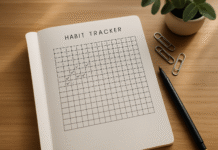
- Log progress in a visible tracker (paper grid, habit app).
- Pair each completed block with a small reward (stretch, walk, music).
6.2 Numbers & guardrails
- Reward ratio: 1 small reward per work block; save big rewards for milestones.
- Keep rewards non-screen if possible to avoid rabbit holes.
- If progress stalls, reduce the slice or add a pre-commitment (see Item 5).
Close-out: Progress praised becomes progress repeated.
7. I separate planning from doing—today’s mode is action.
Blending planning and doing creates churn. “I separate planning from doing—today’s mode is action” prevents endless re-prioritizing by giving each mode its own time box. Planning is for deciding what matters; doing is for executing without re-deciding. This helps when you’re stuck in analysis paralysis, constantly editing your plan instead of moving. By scheduling a short planning window (often the afternoon prior or morning warm-up) and then switching into action mode, you reduce decision fatigue and protect deep work. The affirmation reminds you to trust the plan once the clock starts.
7.1 How to use it
- Plan in a 10–20 minute window (prioritize Top 3 and time blocks).
- Do in protected blocks where the plan is not negotiable.
- Review briefly at day’s end to capture lessons and adjust.
7.2 Numbers & guardrails
- Top 3 tasks must fit your available blocks (don’t plan 6 in a 3-block day).
- If a new urgent item appears, swap it with a Top 3—don’t simply add.
- Weekly, schedule a 30–45 minute review to tune systems.
Close-out: Decide, then do. Don’t plan with one hand and un-plan with the other.
8. I stack new tasks onto old habits—anchors make action automatic.
Relying on motivation alone is fragile. “I stack new tasks onto old habits—anchors make action automatic” ties your desired behavior to a reliable cue you already perform. After coffee, you write three bullet points. After your commute, you process inbox to zero. This “habit stacking” approach reduces the need to remember or negotiate with yourself; the anchor cue does the heavy lifting. Over time, the pair becomes sticky, so the new behavior starts to feel incomplete if you skip it. This is ideal for routine but avoidant tasks: daily review, prep work, or short practice sessions.
8.1 How to use it
- Pick a rock-solid daily anchor (“after brushing teeth,” “after lunch”).
- Attach a tiny task version to it (≤5 minutes).
- Use the same wording daily: “After X, I do Y for Z minutes.”
8.2 Numbers & guardrails
- Start with 1–2 stacks only; add more after 2 weeks of consistency.
- If you miss a day, never miss twice—resume next anchor event.
- Keep the stacked task small until it’s automatic, then expand.
Close-out: Anchored behaviors need less energy—habit stacks carry you forward.
9. I measure what matters today—one to three wins, nothing extra.
Overcommitment breeds procrastination because everything feels urgent. “I measure what matters today—one to three wins, nothing extra” narrows focus to a small set of meaningful completions. By defining Daily Big Wins (DBWs)—one to three results that move the needle—you create clarity and protect your day from reactive drift. This is not about ignoring secondary tasks; it’s about ensuring that if the day ends, you still moved a primary project forward. You’ll find it easier to start because the list is finite and realistic.
9.1 How to use it
- Each morning, write 1–3 DBWs (results, not activities).
- Block calendar time for each DBW immediately.
- Park all other tasks in a Later list to revisit after blocks.
9.2 Numbers & guardrails
- DBW count: 1 on heavy meeting days, 3 on open days.
- If a DBW spills past its block twice, split it into smaller wins.
- Weekly, audit DBWs: at least 60% should relate to core goals.
Close-out: Less to measure means more gets done—your day becomes winnable.
10. I rewrite the story—discomfort is data, not danger.
Much procrastination is emotional avoidance: fear of judgment, boredom, or uncertainty. “I rewrite the story—discomfort is data, not danger” reframes those sensations as signals instead of stop signs. When you tell yourself the task is proof of inadequacy, you stall; when you view discomfort as information (“this is hard because it matters,” “I need a smaller first step”), you can proceed. This cognitive reappraisal lowers anxiety and restores agency. It’s useful before creative work, difficult conversations, and any task with ambiguous standards.
10.1 How to use it
- Label the feeling in plain language (“nervous,” “tired,” “confused”).
- Ask, “What would make just the first step safer or clearer?”
- Pair the reframe with a 5-minute micro-start.
10.2 Mini-examples
- “I’m scared of critique” → “I’ll draft a rough outline and ask for one note.”
- “This is boring” → “I’ll race the clock for 10 minutes, then decide.”
- “I don’t know how” → “I’ll search for 2 samples and copy the structure.”
Close-out: When the story changes, the behavior follows.
11. I say no to noise—my attention is a limited resource.
Distractions multiply because they’re designed to. “I say no to noise—my attention is a limited resource” asserts ownership of your focus and grants permission to block, mute, and decline. You’re not being antisocial; you’re budget-minded with cognition. This is crucial for modern work: each notification resets your context, and context switching taxes working memory. By creating clear boundaries—silent modes, batch messaging, do-not-disturb windows—you reduce the number of restarts. The result: fewer false starts, more continuous progress, and a calmer, more predictable day.
11.1 How to use it
- Put your phone in another room during deep blocks.
- Use a website blocker during work windows.
- Batch messages at set times (e.g., 11:30 and 16:30).
11.2 Numbers & guardrails
- Aim for 0 notifications during deep work.
- Set status messages (“Heads down till 2 p.m.—ping for emergencies”).
- If your role requires responsiveness, agree on service-level windows.
Close-out: Protect attention, and progress protects itself.
12. I close the loop—finish, ship, and review.
Many projects die on the 95% line. “I close the loop—finish, ship, and review” centers your attention on the last responsible step and a quick reflection. Closing loops frees mental bandwidth and creates momentum for the next task. It also builds a personal data trail—what worked, what didn’t—that improves your planning. Use this after each focused block and at the end of the day. A simple shipping checklist plus a two-minute note is enough to lock in the win and prevent re-work.
12.1 How to use it
- Define “Definition of Done” (DoD) for the slice (saved, shared, backed up).
- Ship the artifact to the right place (folder, stakeholder, repository).
- Write a 2-minute after-action note: keep/stop/start.
12.2 Numbers & guardrails
- End every block with a closure minute.
- Daily review: 5–10 minutes to log wins and choose tomorrow’s DBWs.
- Weekly review: celebrate milestones and prune dead tasks.
Close-out: Finishing is a habit—practice it every block so big projects actually end.
FAQs
1) Do affirmations really help with procrastination, or is this just positive thinking?
Affirmations help when they’re behavior-linked and specific, especially in “if–then” form (“At 9 a.m., I draft 150 words”). Generic positivity alone rarely changes behavior; pairing a statement with a tiny, immediate action and a time or context cue improves task initiation. The key is measurability—your affirmation should map to an observable step you can start in under five minutes.
2) How many affirmations should I use at once?
Start with one primary affirmation for a stuck task and use it daily for a week. Add a second only if the first becomes automatic. Too many at once creates decision fatigue. The goal is reliability, not variety; a single well-designed cue that consistently gets you moving beats a rotating set you forget to apply.
3) What if my problem is perfectionism, not procrastination?
They often overlap. Use Item 6 (“I reward progress, not perfection”) to shift reinforcement earlier in the process. Define “good enough for this slice,” finish it, and ship. You can schedule dedicated polishing blocks later. Separating drafting from editing protects momentum while still honoring quality.
4) How do I adapt these if I have an unpredictable schedule or caregiving duties?
Focus on micro-starts and habit stacks tied to reliable anchors (meal times, commute, school runs). Keep blocks short (15–25 minutes) and modular. When interruptions happen, log where you stopped and write the next visible action so you can restart quickly. Flexibility beats rigid plans in variable environments.
5) What tools support these affirmations without becoming distractions themselves?
Use simple, low-friction tools: a paper index card for DBWs, a basic timer app, and a browser blocker. For accountability, a shared note or small chat group works well. The best tool is the one you’ll actually use every day; avoid elaborate setups that require long maintenance.
6) How long until these affirmations feel natural?
Many people notice easier starts within one week when they pair affirmations with tiny actions and timers. Habit stacks often take 2–6 weeks to feel automatic, depending on frequency and stability of the anchor. Track small wins to make the behavior rewarding in the meantime.
7) Can I use these for studying or creative work?
Absolutely. For studying, define deliverables like “practice 10 problems” or “summarize 2 pages.” For creative work, detach quality from the first pass (“write 200 messy words”) and schedule short, frequent blocks. Creativity benefits from regularity and low start friction more than marathon sessions.
8) What should I do when I lapse for a few days?
Treat lapses as data. Resume with the smallest version (2–5 minutes), restate the affirmation, and schedule one protected block. Rebuild with “never miss twice” logic and remove friction (Item 3). Avoid compensatory overplanning; aim for one small win today to restart momentum.
9) How do I handle tasks I chronically dread?
Shrink the first step, pair it with a reward, and add social visibility (Item 5). Consider temptation bundling—only allowing a favorite podcast during that task. If dread persists, explore whether the task’s scope or standards are unclear; often you’re avoiding ambiguity, not effort. Clarify the next visible action.
10) What if I’m neurodivergent or suspect ADHD?
Some techniques here—tiny starts, timers, blockers, accountability—are frequently helpful. That said, everyone’s brain is different. If procrastination significantly impairs your life, consult a qualified clinician for a proper assessment and tailored strategies. Use this article as a toolkit, not a diagnosis.
Conclusion
Procrastination isn’t a character flaw; it’s a mismatch between intentions and systems. The 12 affirmations above work because they convert identity into behavior: you start small, you schedule focus, you remove friction, you anchor to habits, you measure a few wins, and you finish loops. Pair each affirmation with a timer, a tiny first step, and visible tracking. Keep your tools simple, your blocks short, and your standards clear for the current slice—not the final artifact. Expect lapses, treat them as feedback, and restart with the smallest possible version. Choose one affirmation now, make a 15–25-minute block, and begin.
Copy-ready CTA: Pick one task, set a 15-minute timer, and say it out loud: “I start before I feel ready—small starts beat zero.”
References
- The Nature of Procrastination: A Meta-Analytic and Theoretical Review, Psychological Bulletin, Piers Steel, 2007. https://doi.org/10.1037/0033-2909.133.1.65
- Implementation Intentions: Strong Effects of Simple Plans, American Psychologist, Peter M. Gollwitzer, 1999. https://psycnet.apa.org/record/1999-10444-002
- Mental Contrasting With Implementation Intentions (WOOP): A Method for Behavior Change, Gabriele Oettingen & Peter Gollwitzer, 2014. https://woopmylife.org/science
- Procrastination, American Psychological Association, 2023. https://www.apa.org/topics/personality/procrastination
- Procrastination, Deadlines, and Performance: Self-Control by Precommitment, Psychological Science, Dan Ariely & Klaus Wertenbroch, 2002. https://doi.org/10.1111/1467-9280.00459
- The Pomodoro Technique (official overview), Francesco Cirillo Company, 2023. https://francescocirillo.com/pages/pomodoro-technique
- Temptation Bundling: Leveraging Behavioral Economics to Work (and Work Out) More Effectively, Management Science, Katherine L. Milkman et al., 2014. https://doi.org/10.1287/mnsc.2014.1901
- Self-Control and Grit: Related but Separable Determinants of Success, Annual Review of Psychology, Angela Duckworth & James Gross, 2014. https://doi.org/10.1146/annurev-psych-010814-015104
- A Behavior Model for Persuasive Design (Fogg Behavior Model), BJ Fogg, 2009 (updated overview 2020). https://behaviormodel.org/
- Digital Distraction: The Effects of Notifications on Task Performance, Journal of Experimental Psychology: Applied, Stothart, Mitchum & Yehnert, 2015. https://doi.org/10.1037/xap0000040