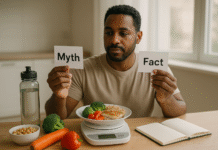





















Weight loss advice is everywhere—and much of it is wrong. Below, we cut through 12 stubborn myths with current research and practical guardrails so you can make smarter, safer progress. Quick reality check: fat loss still comes from a consistent energy deficit paired with enough protein, fiber, movement, and sleep. Everything else is “how” you get there. This article is for people who want clarity without gimmicks and prefer plans grounded in science, not slogans. Brief safety note: this is general information, not medical advice; check in with your clinician—especially if you have a health condition, take medication, or are pregnant.
Fast answer (for skimmers): Weight loss myths thrive because they’re simple and catchy; the evidence is nuanced. Diet quality and sustainability matter more than diet labels; meal timing tweaks are secondary to total intake; supplements and “detoxes” don’t melt fat; plateaus are normal; strength training protects muscle; and health cannot be reduced to BMI alone.
1. “Carbs automatically make you fat.”
Carbohydrates don’t inherently cause fat gain; eating more calories than you burn does. Multiple randomized trials show similar 12-month weight loss whether you go lower carb or lower fat—provided total calories and protein are appropriate and the diet is actually followed. In the landmark DIETFITS RCT (n=609), a “healthy low-fat” and a “healthy low-carb” approach produced no significant difference in 12-month weight change; genes and baseline insulin secretion also didn’t predict who would do better on which diet. The implication: choose the pattern you can stick to, emphasize minimally processed foods, and anchor meals in protein, produce, and fiber-rich carbs. abom.org
1.1 Why it matters
- Demonizing carbs often backfires: people cut fruit, whole grains, and legumes—foods linked with better adherence and satiety.
- Lower-carb or lower-fat can work; compliance beats ideology.
- Quality carbs (oats, beans, potatoes, fruit) support training, fiber intake, and gut health.
1.2 Numbers & guardrails
- Typical protein target when dieting: ~1.6–2.2 g/kg body weight/day.
- Build plates around protein + veg/fruit first; allocate remaining calories to carbs/fats you enjoy.
Bottom line: Carbs aren’t the villain; chronic calorie surplus is. Pick a sustainable mix you can maintain for months, not days.
2. “Skipping breakfast ruins weight loss.”
Despite decades of cereal commercials, eating breakfast is not a magic switch for fat loss. A 2019 BMJ systematic review of randomized trials found no weight-loss advantage to adding breakfast; if anything, breakfast eaters tended to consume ~260 extra kcal/day. Observational links between skipping breakfast and weight gain are confounded by lifestyle factors; trials are better for causal inference—and they’re underwhelming for breakfast claims. If breakfast improves your appetite control or training, keep it. If it makes you hungrier or you prefer a later first meal, that’s fine too. Prioritize total daily intake, protein, fiber, and consistency. PubMed
2.1 Mini-checklist
- If you eat breakfast: include ≥20–30 g protein.
- If you skip it: plan a protein-anchored first meal to avoid overeating later.
- Hydrate early; hunger is often thirst + habit.
Bottom line: Breakfast is optional for fat loss. Control daily calories and protein; time meals around your schedule and appetite.
3. “You must eat six small meals to ‘stoke your metabolism.’”
Meal frequency has minimal impact on daily energy expenditure. Meta-analyses show no consistent fat-loss advantage to higher meal frequencies once calories and protein are matched. Some people feel better with 3–6 meals; others prefer 2–3. Use the cadence that helps you meet your targets without constant hunger. What matters most: total calories across 24 hours (and across weeks), protein sufficiency, and food quality. PMC
3.1 How to do it
- Pick a repeatable pattern (e.g., 3 meals + 1 protein snack).
- Anchor each eating occasion with ~25–40 g protein and produce.
- Keep “graze and guess” to a minimum—liquid and snack calories add up fast.
Bottom line: Meal frequency is a preference lever, not a fat-loss lever. Choose the pattern that improves adherence.
4. “Detox teas and cleanses melt fat.”
There’s no good evidence that detoxes or “flat-tummy” teas remove toxins or burn fat. The U.S. NIH notes weight-loss supplements have little proof of meaningful, safe effects; some ingredients carry real risks (e.g., liver injury with concentrated green tea extracts in rare cases). NCCIH also emphasizes that human detox studies are few and low quality. If you lose weight on a cleanse, it’s mostly water and glycogen—and it often rebounds. Focus instead on fiber-rich whole foods, adequate protein, fewer ultra-processed foods, and calorie awareness.
4.1 Red flags
- Proprietary blends with stimulant stacks
- “Rapid fat loss” or “effortless” claims
- Advice to replace most meals with teas/juices
Bottom line: Skip the cleanse. Build habits that actually change energy balance and support health.
5. “You can spot-reduce belly fat with ab workouts.”
You can strengthen a muscle locally—but you cannot pick where the body burns fat in meaningful amounts. Classic RCTs show ab training without a calorie deficit does not reduce abdominal fat; recent small studies exploring localized fat use don’t translate to visible site-specific fat loss for most people. To shrink a stubborn area, reduce overall body fat and keep lifting to preserve the muscle underneath. PMC
5.1 Practical playbook
- Run a modest deficit (e.g., 300–500 kcal/day).
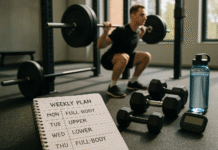
- Strength train 2–4×/week (include core work, but also legs/back/chest).
- Hit protein (≥1.6 g/kg) to protect lean mass during cuts.
Bottom line: You lose fat globally and reveal muscle locally. Training builds the shape; diet reveals it.
6. “Sweating (or sitting in a sauna) burns fat.”
Sweat is fluid leaving your body, not fat melting. Sauna or steam sessions can transiently drop scale weight via water loss (often 0.1–1.0 kg), which returns when you rehydrate. Reviews of sauna health effects note that bold claims (detox, metabolism, weight loss) are not well-supported by rigorous evidence. Saunas can feel great for relaxation and may have cardiovascular benefits for some populations—but they aren’t a fat-loss tool.
6.1 Use saunas wisely (if you enjoy them)
- Hydrate and replace electrolytes.
- Avoid if you have medical contraindications; ask your clinician.
- Treat it as recovery or relaxation—not a calorie-burner.
Bottom line: Saunas shift water, not fat. For fat loss, prioritize nutrition, training, steps, sleep.
7. “You can out-exercise a bad diet.”
Exercise is fantastic for health, fitness, mood, and maintaining weight loss—but for losing weight, diet changes do most of the work. The NIH’s weight-management research shows large deficits are hard to sustain with exercise alone because appetite often rises as you move more (partial “energy compensation”). Combining nutrition changes with activity works best; lifting helps keep muscle; walking/steps improve energy expenditure without crushing recovery. NIDDK
7.1 Smart pairing
- Nutrition: set a moderate calorie deficit; prioritize protein and fiber.
- Training: 2–4 days of resistance work + daily steps; add intervals if you enjoy them.
- Monitor: adjust calories/activity if weekly averages plateau.
Bottom line: Move more, yes—but you can’t outrun habitual excess intake. Pair diet + exercise.
8. “All calories are equal, so food quality doesn’t matter.”
A calorie is a unit of energy, but foods differ in satiety, micronutrients, and metabolic effects. Evidence and dietary guidelines recommend limiting added sugars—especially sugar-sweetened beverages (SSBs)—because liquid calories are poorly filling and linked to weight gain. Systematic reviews associate SSB intake with increased body weight; cutting them helps reduce BMI across ages. So yes, energy balance rules physics—but quality shapes appetite and adherence. odphp.health.govNCBI
8.1 Better swaps
- Replace SSBs with water, unsweetened tea/coffee, or low/zero-calorie options if they help you transition.
- Build meals around lean protein + produce; add whole-grain or starchy carbs to appetite.
- Reserve ultra-processed snacks/desserts as planned treats.
Bottom line: Calories count—and what you eat helps you stick to the calories that count.
9. “Eating after 7 p.m. causes fat gain.”
Late eating doesn’t magically store more fat; total daily intake and adherence matter most. Some studies suggest that earlier evening meals can modestly support weight loss or cardiometabolic markers, but effects are small compared with overall calories and protein. Night shift workers face unique circadian challenges; for most people, the best time to eat is when it helps control hunger and fit real life. If late-night snacking leads to mindless surplus calories, that’s the issue to solve.
9.1 Guardrails
- Front-load protein and fiber earlier in the day if evenings are snack-prone.
- Pre-plan a high-protein late snack (e.g., skyr + berries) if you’re genuinely hungry.
- Keep calorie-dense “hand-to-mouth” snacks out of easy reach at night.
Bottom line: Timing tweaks can help, but energy balance and habits rule the outcome.
10. “BMI tells you everything about health.”
BMI is a screening tool, not a diagnosis. It estimates weight relative to height and helps at the population level, but it doesn’t capture body composition, fat distribution, fitness, or metabolic markers. The CDC explicitly classifies BMI as a quick, low-cost screen that should be considered alongside other factors (e.g., waist, blood pressure, A1C, lipids). Don’t ignore concerning metabolic markers because your BMI is “normal”—and don’t assume “unhealthy” because you lift and carry more muscle.
10.1 What to track as well
- Waist circumference or waist-to-height ratio
- Blood pressure, fasting lipids, A1C
- Fitness: VO₂max estimate, strength, daily step count
Bottom line: Use BMI as a starting point, then personalize with clinical tests and context.
11. “If you hit a plateau, your metabolism is ‘broken’.”
Plateaus are normal because the body adapts: as you weigh less, you burn fewer calories moving and at rest; appetite may rise more than expenditure drops. Research from NIH modeling and follow-ups of extreme weight loss show some metabolic adaptation can persist, but appetite changes are usually the bigger driver of stalls. The fix isn’t despair; it’s small, testable adjustments: tighten calorie tracking, bump protein/fiber, add steps, consider a brief maintenance phase, and re-progress.
11.1 Plateau toolkit
- Audit portions/liquids/alcohol 7–10 days.
- Add ~2,000–3,000 steps/day or 1 extra lift session/week.
- Hold maintenance calories for 2–4 weeks, then resume a modest deficit.
Bottom line: Your metabolism isn’t “broken”; it’s doing its job. Adjust the plan; don’t abandon it.
12. “After 40 (or menopause), losing fat is basically impossible.”
Fat loss gets challenging, not impossible. A 2021 Science analysis of doubly labeled water data across the lifespan found that total energy expenditure is relatively stable from ~20 to 60 (after accounting for body size), with declines more apparent after 60. Weight gain around midlife often reflects changes in activity, sleep, food environment, and life stress—not an abrupt metabolic collapse. Strength training, adequate protein, and smart nutrition remain highly effective strategies in your 40s and beyond.
12.1 What helps most after 40
- Lift 2–4×/week; keep or build muscle.
- Hit 1.6–2.2 g/kg/day protein; distribute across meals.
- Walk more; protect sleep; manage stress.
Bottom line: Biology changes with age, but behavior still moves the needle—especially training and protein.
FAQs
1) What’s the fastest safe rate of weight loss?
Most guidelines consider ~0.5–1.0% of body weight per week reasonable for many adults. Faster rates can be appropriate under clinical supervision, but the faster you go, the tougher adherence becomes and the higher the lean-mass risk. Aim for “as fast as you can consistently sustain.” Track weekly averages to smooth day-to-day water noise.
2) Do I need to cut all sugar to lose weight?
No. However, cutting added sugars—especially sugar-sweetened beverages—often delivers big, painless calorie savings and better satiety. Swap SSBs for water or low/no-calorie drinks you enjoy; keep treats intentional, not automatic.
3) Are zero-calorie sweeteners good or bad for weight?
They can help some people reduce calories from sugary drinks/foods and bridge to water. Long-term outcomes vary by individual. Use them as a transition tool rather than a crutch, and focus on whole foods most of the time.
4) Is cardio better than weights for fat loss?
Cardio burns more calories per minute; resistance training protects muscle, strength, and resting energy expenditure. The best plan does both: lift 2–4×/week, walk daily, and add optional intervals if you enjoy them.
5) Do I have to track calories?
Not necessarily. You can create a deficit with structured habits (protein at each meal, plate method, step goals, limiting liquid calories). Tracking is a temporary awareness tool, not a lifestyle sentence. Use it when progress stalls or if you’re unsure where energy is going.
6) What’s the deal with “starvation mode”?
Metabolic adaptation is real but modest compared with appetite changes. Energy balance still governs body mass; adaptation may slow loss, not stop it. Most people can re-ignite progress with small intake adjustments and activity changes rather than drastic overhauls.
7) Should I avoid eating at night?
If late eating leads to unplanned surplus calories, restructure your day. Otherwise, time meals around your schedule and hunger. Earlier dinners may help a bit for some people, but the big rock is daily intake and protein.
8) Do supplements like green tea, garcinia, or raspberry ketone help?
Evidence is weak or mixed, and potential side effects exist—especially with concentrated extracts. Spend your money on protein, produce, and a good pair of walking shoes.
9) Why doesn’t the scale drop every day?
Scale weight swings with water, glycogen, sodium, fiber, and hormonal shifts. Track weekly averages and at least one non-scale metric (waist, progress photos, strength). Plateaus are often measurement noise—not failure.
10) Is BMI useless if I lift?
BMI can misclassify muscular individuals, but it’s still a simple screening tool. Pair it with waist measures and lab work to get the full picture.
Conclusion
Myths flourish because they promise shortcuts: “cut this one food,” “sweat it off,” “detox and reset,” “just eat six times.” Real progress is simpler—and harder: a steady, sustainable calorie deficit; enough protein to keep muscle; fiber-rich foods for fullness; regular strength training; daily movement; decent sleep; and patience. The good news? These fundamentals are flexible. You can tailor carbs and fats to taste, time meals around your life, enjoy favorite foods intentionally, and still lose fat. When the scale stalls, it’s not broken metabolism—it’s your body adapting in predictable ways. Adjust, keep going, and measure success with multiple markers (waist, strength, energy, labs), not BMI alone.
Your next steps (pick two to start this week): (1) Replace daily SSBs with water or a no-calorie option. (2) Add 25–30 g protein to breakfast or your first meal. (3) Walk 8–10k steps/day most days. (4) Lift 2–3×/week. (5) Track intake for 7 days to re-calibrate.
CTA: Ready to turn evidence into a simple plan? Pick two habits above, start today, and review your weekly average progress in 14 days.
References
- Gardner CD et al. Effect of Low-Fat vs Low-Carbohydrate Diet on 12-Month Weight Loss in Overweight Adults… (DIETFITS). JAMA. 2018. https://jamanetwork.com/journals/jama/fullarticle/2673150
- Sievert K et al. Effect of breakfast on weight and energy intake: systematic review and meta-analysis of RCTs. BMJ. 2019. https://www.bmj.com/content/364/bmj.l42
- Schoenfeld BJ, Aragon AA, Krieger JW. Effects of meal frequency on weight loss and body composition: a meta-analysis. Nutr Rev. 2015. https://pubmed.ncbi.nlm.nih.gov/26024494/
- NIH Office of Dietary Supplements. Dietary Supplements for Weight Loss (Fact Sheet). Updated 2022. https://ods.od.nih.gov/factsheets/WeightLoss-HealthProfessional/
- NCCIH. “Detoxes” and “Cleanses”: What You Need To Know. Accessed Aug 2025. https://www.nccih.nih.gov/health/detoxes-and-cleanses-what-you-need-to-know
- Vispute SS et al. The effect of abdominal exercise on abdominal fat. J Strength Cond Res. 2011. https://pubmed.ncbi.nlm.nih.gov/21804427/
- Brobakken MF et al. Abdominal aerobic endurance exercise reveals spot reduction… Sci Rep. 2023. https://pubmed.ncbi.nlm.nih.gov/38010201/
- Hussain J, Cohen M. Clinical Effects of Regular Dry Sauna Bathing. Evid Based Complement Alternat Med. 2018. https://pmc.ncbi.nlm.nih.gov/articles/PMC5941775/
- Podstawski R et al. Correlations between repeated dry sauna use and body mass loss (water). Int J Environ Res Public Health. 2019. https://pmc.ncbi.nlm.nih.gov/articles/PMC6360547/
- Hall KD. Maintenance of lost weight and long-term management of obesity. Med Clin North Am. 2018. https://pmc.ncbi.nlm.nih.gov/articles/PMC5764193/
- NIDDK. About the Body Weight Planner (research & modeling). Updated 2025. https://www.niddk.nih.gov/health-information/weight-management/body-weight-planner
- Pontzer H et al. Daily energy expenditure through the human life course. Science. 2021. https://pmc.ncbi.nlm.nih.gov/articles/PMC8370708/
- WHO. Guideline: Sugars intake for adults and children. 2015. https://www.who.int/publications/i/item/9789241549028
- Nguyen M et al. Sugar-sweetened beverage consumption and weight gain: updated systematic review and meta-analysis. Am J Clin Nutr. 2023. https://ajcn.nutrition.org/article/S0002-9165%2822%2910529-0/fulltext
- Madjd A et al. Later vs earlier evening meal during weight-loss diet: RCT. Br J Nutr. 2021. https://www.cambridge.org/core/journals/british-journal-of-nutrition/article/effects-of-consuming-later-evening-meal-v-earlier-evening-meal-on-weight-loss-during-a-weight-loss-diet-a-randomised-clinical-trial/B8967889CBD49D9AF2170F92457F8CD7
- CDC. About Body Mass Index (BMI). Updated May 2024. https://www.cdc.gov/bmi/about/index.html
- CDC. Adult BMI Categories (screening measure). Updated Mar 2024. https://www.cdc.gov/bmi/adult-calculator/bmi-categories.html