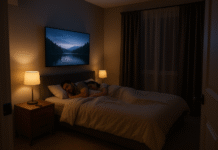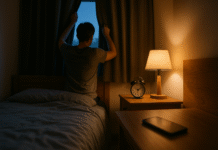














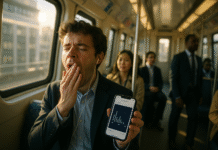


You don’t need a free afternoon to nap like a pro—you need a plan that fits a calendar packed with meetings, commutes, and deadlines. This guide turns napping from “nice in theory” into a practical performance tool for people with real jobs and limited time. You’ll learn how to carve out 10–20 minutes for a power nap without wrecking nighttime sleep, how to wake up sharp instead of groggy, and how to use caffeine, light, and timing to your advantage. This is informational, not medical advice; if daytime sleepiness is persistent despite 7+ hours of nightly sleep, speak with a clinician.
Quick answer: For most busy professionals, the highest-ROI approach is a 10–20 minute early-afternoon nap in a quiet, dim space, optionally preceded by caffeine (“coffee nap”), followed by bright light and movement on wake.
Quick steps: 1) Block 15–20 minutes between 1–3 p.m. 2) Eye mask + earplugs; set a gentle alarm. 3) Optional: drink coffee, lie down immediately. 4) Wake → stand, light, water, brief walk. 5) Track how you feel for 60–90 minutes and adjust.
1. Timebox a Daily 15–20 Minute “Performance Nap” Window
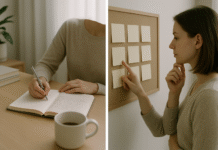
Treat naps like any priority: schedule, protect, and execute. The simplest, most repeatable strategy is to reserve a daily 15–20 minute window between 1:00–3:00 p.m. when circadian alertness naturally dips for many adults. Timeboxing signals to your team—and your brain—that this is not procrastination; it’s a performance intervention. It also removes the decision fatigue of “should I nap today?” by making the nap the default. If your afternoons are volatile, aim for a standing event on your calendar with “busy” status and a neutral title (e.g., “Focus reset”). Keep your setup minimal: eye mask, earplugs or noise, and a timer. Over a week, most professionals notice better mid-afternoon focus, steadier mood, and fewer late-day errors. If you regularly sleep less than seven hours at night, the benefits may be larger, but also consider fixing the root cause of sleep debt.
1.1 How to do it
- Block 20 minutes (not 30+); add 2–5 minutes buffer for wake-up.
- Pick the lowest-friction slot—right after lunch, between meetings, or before deep work.
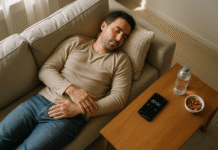
- Reserve a location (wellness room, parked car, couch) with a backup option.
- Use a consistent routine (mask, earplugs, recline, alarm) to condition faster sleep onset.
- Track response with a 1–10 alertness rating 60 minutes post-nap for a week.
1.2 Numbers & guardrails
- Start with 10–20 minutes of actual nap time to minimize sleep inertia.
- Avoid napping later than 4:00 p.m. if it delays bedtime.
- If you can’t fall asleep, just lying quietly with eyes covered still reduces sleep pressure; keep the habit.
Synthesis: A protected early-afternoon window creates a reliable, repeatable nap habit that pays off in energy and focus without disrupting your night.
2. Master the 10–20 Minute Power Nap (and Sidestep Sleep Inertia)
A power nap works because it taps light sleep without dropping deep into slow-wave sleep, reducing the risk of sleep inertia—that foggy grogginess after waking. For most adults, a 10–20 minute nap yields the best trade-off: rapid alertness gains with minimal transition time. Longer naps can help when you’re severely sleep-deprived, but they often come with more inertia and a longer runway to feel sharp. The key is structure: a reliable wind-down (mask, earplugs, cool air), a non-jarring alarm, and a fast “activation” routine on wake (stand, bright light, water, a brisk 2–3 minute walk). If you struggle to fall asleep quickly, treat it like meditation: focus on slow nasal breathing and the sensation of weight sinking into the chair.
2.1 Mini-checklist
- Set a 15–20 minute timer; pick a soft ringtone with gentle volume ramp.
- Eye mask + earplugs or a low whoosh of white noise.
- Cool the space slightly or remove a layer.
- On wake: stand immediately, sip water, step into bright light, and take a 2–3 minute brisk walk.
2.2 Numbers & guardrails
- Sleep inertia can last 15–60+ minutes; power naps shorten this risk window.
- If inertia lingers, move, hydrate, and seek bright light; avoid back-to-back meetings for 10 minutes after waking.
Synthesis: Keep it short, controlled, and deliberate—power naps should sharpen your next 1–3 hours, not become a second sleep.
3. Use the “Coffee Nap” to Stack Benefits When Time Is Tight
When you truly have only 20–30 minutes, the coffee nap can amplify alertness: drink a modest coffee (about 100–200 mg caffeine) and lie down immediately for 15–20 minutes. Caffeine takes roughly 15–30 minutes to kick in; by the time you wake, adenosine (the sleep pressure chemical) has eased, and caffeine begins to bind receptors—boosting vigilance without adding extra minutes. This combo shows benefits in tasks with sustained attention (e.g., driving simulators). It’s not for everyone—late-day caffeine can push bedtime later—and dose tolerance varies. If you’re sensitive, try half a cup or black tea first.
3.1 How to do it
- Start small: ~100 mg caffeine (half a mug of coffee or strong tea).
- Nap immediately; set a 15–20 minute timer.
- Activate on wake with light, water, and a brief walk.
- Stop caffeine by ~2–3 p.m. if it delays your bedtime.
3.2 Common mistakes
- Drinking coffee and then doom-scrolling—you lose the uptake window.
- Too late in the day: leads to shorter, lighter night sleep.
- Overdosing: more than you need increases jitters and can create rebound fatigue.
Synthesis: For tight schedules, a properly timed coffee nap is a high-leverage, 20-minute alertness boost—use it judiciously.
4. Build a Portable “Nap Kit” for Anywhere, Anytime
Busy days fall apart; your nap shouldn’t. A lightweight nap kit lets you nap at the office, in a car (engine off, safe spot), at a client site, or on a flight. The goal is fast setup and predictable comfort in imperfect environments. Core items: a contoured eye mask (no pressure on eyelids), soft earplugs or noise-masking (pink/white noise via earbuds), a travel pillow or foldable lumbar cushion, a thin throw or jacket, and hand sanitizer. Add a USB-C timer or phone with a nap-specific alarm. Keep everything in a small pouch that lives in your bag.
4.1 Mini-checklist
- Eye mask (contoured), earplugs, compact travel pillow.
- Phone with gentle alarm; do not disturb pre-set.
- Light layer for warmth; hydrating water bottle.
- Backup location list near your office (wellness room, unused huddle room, quiet staircase landing, parked car in shade).
4.2 Region & safety notes
- In hot climates, ventilate a parked car and never run the engine in enclosed spaces.
- In shared offices, post a status in Slack/Teams (“In focus block; back at 2:20 p.m.”) to avoid interruptions.
Synthesis: A compact kit reduces friction, letting you nap well in real-world conditions instead of waiting for perfect ones.
5. Pick the Right Place: Wellness Room, Parked Car, or Desk Recline
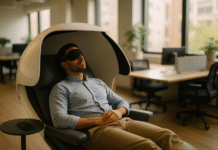
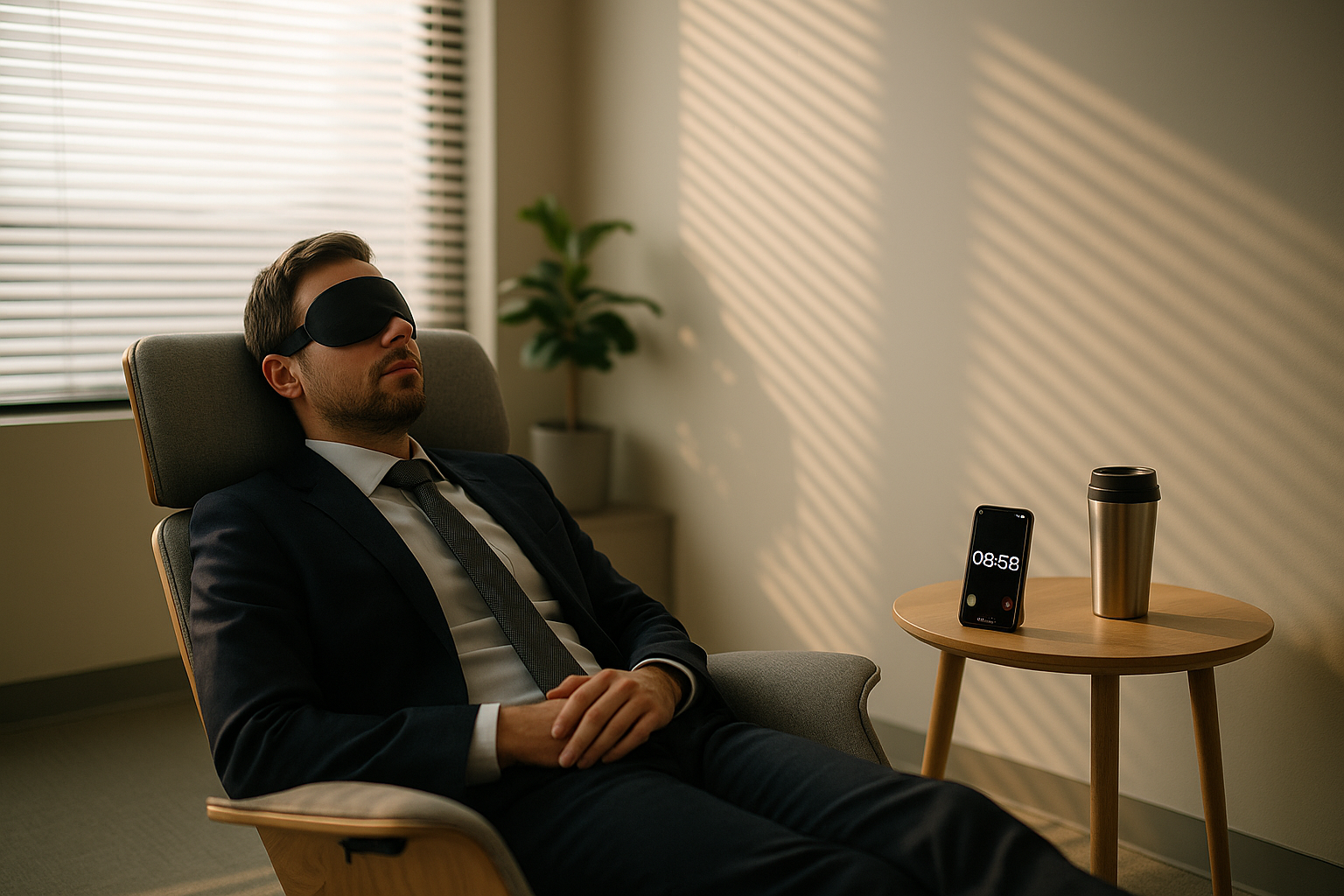
The best nap spot is the one you can actually use today. A wellness or “mother’s room” is ideal: quiet, dimmable, with a recliner. If not, a parked car (seat reclined, sunshade up, windows cracked, doors locked) can be surprisingly effective. In open offices, a 45–60° chair recline with an eye mask and noise control works in a pinch. Avoid places where you’ll be interrupted (near printers, entrances). For flights, use a window seat with neck support and mask noise with in-ear buds or over-ear headphones.
5.1 Quick evaluation checklist (SPACE)
- Silence: Can you block noise with earplugs/white noise?
- Privacy: Will people leave you alone for 20 minutes?
- Air: Is it cool enough (slightly cool improves onset)?
- Comfort: Can you recline without neck strain?
- Exposure: Can you keep it dark during the nap and bright on wake?
5.2 Common pitfalls
- Overheating: warm rooms lengthen sleep onset and worsen grogginess.
- Security: never nap in public spaces where theft is a risk; keep valuables out of sight.
- Policy misreads: know HR rules; many companies allow brief restorative breaks.
Synthesis: Choose a spot you control—comfort and predictability matter more than perfection.
6. Engineer Your Environment: Dark, Quiet, Cool In—Light and Movement Out
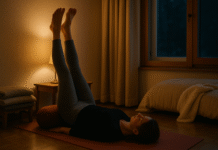
Think “two modes.” Nap mode: darker, quieter, slightly cooler than ambient. Wake mode: light, movement, hydration. Even if your nap is just 12–15 minutes, the environment determines how quickly you settle and how you feel after. Pre-nap, block blue-rich light with an eye mask and reduce noise. Post-nap, do the opposite: step into bright light (outdoors if possible), stand tall, sip water, and move for 2–3 minutes. Light exposure after waking can improve subjective alertness; movement restores blood flow and posture.
6.1 How to set it up
- Before: mask on, earplugs in, lower temperature 1–2°C, breathe slowly.
- After: lights up, blinds open, or step outside; walk a short loop; drink water.
- Alarm: use a gradual ringtone—not an airhorn.
6.2 Mini-checklist for inertia
- Stand immediately; no doom-scrolling while seated.
- Sunlight or bright indoor light within 2 minutes.
- Water + two minutes brisk walking to reset.
Synthesis: Make it dark/quiet to fall asleep quickly—and bright/active to feel sharp after. The contrast is the trick.
7. Use Longer 60–90 Minute “Recovery Naps” Sparingly and Strategically
Sometimes a longer nap is the right tool: after a red-eye, during jet lag adaptation, or following major sleep loss. A 60–90 minute nap can include slow-wave sleep and possibly REM, which helps mood and memory consolidation—but expect heavier sleep inertia and a longer “ramp” back to peak performance. Use this strategy sparingly, plan a 15–30 minute buffer after waking, and avoid scheduling critical decisions immediately afterward.
7.1 When to use
- Travel days with sleep restricted to <5–6 hours.
- Emergency nights (on-call, sick kids, launch deadlines).
- Weekends to repay acute debt—but don’t make it a daily habit if it pushes bedtime later.
7.2 Guardrails
- Nap earlier (late morning or early afternoon) to protect nighttime sleep.
- Block 30 minutes post-wake for light, movement, and low-stakes tasks.
- If long naps become routine, investigate and fix night sleep first.
Synthesis: Long naps are a rescue tool—great after heavy sleep loss, but costly for same-day productivity if misused.
8. Pair Naps with Time-Blocking and Meeting Design
Naps work best when your day is designed around focus peaks. Treat the early-afternoon nap as a reset between two deep-work blocks. Use a time-blocking method (e.g., 90–120 minute focus blocks or a looser Pomodoro variant) with a nap replacing one break. Also, stack meetings after your nap while alertness is high, leaving late afternoon for admin and lighter tasks.
8.1 Practical steps
- Map your ultradian rhythm: log 2–3 days of when you feel sharp vs. dull.
- Place a 15–20 minute nap before your longest daily meeting block.
- Batch shallow work after the nap; deep work for morning + early afternoon.
8.2 Micro-tactics for busy calendars
- Convert 60-minute meetings to 45–50 minutes, freeing a 10–15 minute nap slot.
- Add travel buffers that double as nap windows when onsite.
- Use status messages in Slack/Teams to normalize protected breaks.
Synthesis: A nap is a strategic reset—pair it with deliberate scheduling to multiply its impact.
9. Personalize with Data: Subjective Ratings + Simple Metrics
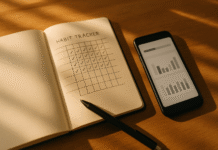
You don’t need a lab to optimize your nap—just subjective ratings and a few light metrics. Track a 1–10 alertness score before and 60 minutes after your nap, time to fall asleep (latency), and nap length. Optionally, use a wearable to add resting heart rate, HRV, or simple sleep stage estimates (with caution). Over 2–3 weeks you’ll see whether 10, 15, or 20 minutes works best for you and how different times of day change outcomes.
9.1 What to track (and what not)
- Do track: nap start time, length, latency, 1–10 alertness before/after, caffeine use.
- Optional: steps in the first 10 minutes after wake, exposure to outdoor light.
- Don’t overfit to wearables’ sleep stage labels—they’re estimates; prioritize how you feel.
9.2 Decision rules
- If post-nap alertness ↑ 2+ points, keep the protocol.
- If latency >10 minutes consistently, shorten the window, improve darkness, or push later.
- If nighttime sleep suffers, move earlier or skip caffeine.
Synthesis: Simple tracking reveals the nap timing and length that your brain actually loves—then you lock it in.
10. Make It Culturally Easy: Propose a Micro-Pilot with Real Metrics
If your workplace is skeptical, start small: a 30-day micro-pilot for your team with clear rules and metrics. Frame naps as a safety and performance tool (fewer errors, better attention), not a perk. Recruit a few colleagues, set one 15–20 minute slot daily, and measure task error rates, time-to-first-response after lunch, and subjective energy. Present the results to your manager along with a proposal for designated quiet spaces or shared nap kits (masks, earplugs, sanitizing wipes).
10.1 Pilot guardrails
- Opt-in only; quiet, respectful, and brief.
- Transparent metrics (attention ratings, error counts).
- No meetings booked over the pilot’s nap window.
10.2 What to show after 30 days
- Pre/post energy trends (1–10 scale).
- Error reductions or faster response times during the “post-nap” block.
- Simple costs (masks/earplugs) vs. benefits (fewer mistakes, faster decisions).
Synthesis: Culture shifts when you demonstrate value—measure it, share it, and make napping a normalized, results-oriented practice.
11. Travel & Jet Lag Days: Nap to Arrive Functional, Not Fried
On travel days, naps can be the difference between a competent client call and a foggy misfire. Use short strategic naps to bridge time zones: if you land in the morning local time after poor sleep, take a 15–20 minute nap early afternoon local time, not late evening, to help you stay awake until local bedtime. On red-eyes, try a 60–90 minute nap mid-day if your schedule allows, but maintain strong light exposure during local daytime to nudge your circadian rhythm.
11.1 Playbook (as of August 2025)
- Eastbound flights (short nights): 20-minute nap after lunch local time; keep bedtime aligned to destination.
- Westbound flights (longer days): If very sleepy late afternoon, take 10–15 minutes only; keep bedtime in range.
- Hotels: request a quiet, high floor, use mask/earplugs, set two alarms; step into bright light immediately after waking.
11.2 Guardrails
- Avoid late-day naps that push you past local bedtime.
- Hydrate; alcohol fragments sleep and worsens inertia.
- Pair naps with daytime sunlight; dim lights in the evening.
Synthesis: On the road, short local-time naps plus daylight give you just enough gas to land the meeting and still sleep at night.
12. Know When Not to Nap—and When to Get Help
Naps are a tool, not a cure-all. If you regularly need naps because you’re sleeping <7 hours at night, fix your baseline first. If short naps consistently worsen insomnia, push them earlier or skip them. Heavy, daily long naps may flag sleep apnea, depression, medication effects, or circadian disorders—get evaluated. Finally, avoid napping when you must be 100% alert immediately on wake (high-risk operations) and there’s no buffer to clear inertia; use brief movement, water, and light instead.
12.1 Red flags
- Loud snoring, witnessed apneas, or waking unrefreshed despite long nights.
- Daily naps >60 minutes without clear sleep loss the night before.
- Naps after 4–5 p.m. that delay bedtime and create a negative cycle.
12.2 Safer alternatives
- Quiet eyes-closed rest (10 minutes) without sleep.
- Movement breaks + bright light exposure.
- Caffeine micro-doses earlier in the day; avoid late-day use if sensitive.
Synthesis: Naps shine when layered onto healthy sleep. If you rely on them to survive each day, it’s time to address root causes.
FAQs
1) What’s the ideal nap length for office workers?
For most adults, 10–20 minutes hits the sweet spot: fast alertness gains with minimal grogginess, especially when scheduled early afternoon. Shorter naps avoid deep slow-wave sleep, which can amplify sleep inertia on wake. If you’re underslept from a late night, a 60–90 minute recovery nap can help—but expect a longer ramp back to full sharpness and avoid making it a daily habit.
2) Will napping hurt my nighttime sleep?
Not if you keep it short and early. Power naps of 10–20 minutes taken before 3–4 p.m. seldom delay bedtime. Problems arise with late, long naps that reduce homeostatic sleep pressure. If nighttime sleep worsens, move your nap earlier, shorten it, or skip caffeine before the nap.
3) I wake up groggy—how do I beat sleep inertia?
Design the wake ritual: stand immediately, step into bright light (outdoors if possible), sip water, and take a brisk 2–3 minute walk. Keep naps short to minimize deep sleep. Schedule low-stakes tasks for the 10 minutes after waking. Over time, a consistent protocol shortens grogginess windows.
4) Are “coffee naps” safe and effective?
For many, yes—100–200 mg caffeine followed by a 15–20 minute nap can outperform caffeine alone for sustained attention. The key is timing (caffeine right before you lie down) and stopping caffeine early enough that it doesn’t delay bedtime. If you’re sensitive or anxious on caffeine, skip or halve the dose.
5) Where can I nap if my office has no wellness room?
Use a parked car (recline, sunshade, windows cracked, doors locked) or a quiet meeting room with an eye mask and earplugs. Keep a nap kit in your bag. In open offices, a chair recline plus mask/white noise can work. Always follow workplace policies and basic safety.
6) What if I can’t fall asleep in 10 minutes?
That’s common. Treat it as rest practice: mask on, earplugs in, slow nasal breathing (e.g., 4-second inhale, 6-second exhale). Even without sleep, 10 minutes of eyes-closed rest reduces fatigue. If you rarely drift off, try shifting the time, making the room cooler/darker, or shortening your nap target.
7) How often should I nap?
Use naps as needed or daily if they reliably enhance performance without harming night sleep. Many professionals do well with one short nap most workdays. If you need multiple naps daily to function, investigate night sleep quality and consider a medical evaluation.
8) Are nap pods worth it?
Pods are nice but not essential. The real levers are duration (10–20 min), darkness/quiet, and timing. A comfortable recliner in a quiet room with masks/earplugs replicates most pod benefits at far lower cost. If your company is exploring pods, run a pilot and measure outcomes before scaling.
9) Do naps help creative work or just vigilance?
Both. Short naps particularly aid attention and reaction time, while longer naps that include REM may help associative thinking. For day-to-day professional work—coding, analysis, client calls—10–20 minutes is usually the highest return because you get back to work quickly.
10) Is there a best time to nap for people with early meetings?
Yes: late morning to early afternoon, depending on your wake time. Aim for a slot that sits ~6–8 hours after wake. If your day starts at 6:30 a.m., a 1:00 p.m. nap often works. Keep it short and consistent.
11) How do I sell naps to a skeptical manager?
Lead with performance and safety, not comfort. Propose a 30-day micro-pilot, define success metrics (error rates, time to resolve tickets, post-lunch responsiveness), and present results. Keep naps brief, quiet, and scheduled to avoid disrupting team flow.
12) Can I “train” myself to nap faster?
Yes—consistency is conditioning. Same time, same setup, same sequence (mask → earplugs → recline → timer). Over 1–2 weeks, your brain starts predicting the routine and sleep latency falls. Pair with slow breathing and a cool environment for quicker onset.
Conclusion
For busy professionals, a nap is not indulgence; it’s a precision tool for performance. The core play is simple: 10–20 minutes in the early afternoon, in a dark, quiet, cool setup, with an activation ritual on wake and, when appropriate, a coffee nap for extra lift. Lock a daily window on your calendar so napping becomes automatic rather than aspirational. Keep the practice lightweight with a portable kit and a few backup locations, and pair it with smart scheduling so your best work clusters after your nap window. Track how you feel for two weeks and let the data personalize your timing and length. If naps start to replace foundational night sleep or you rely on long naps to function, zoom out: fix the baseline and consider medical input.
Do one thing today: Block a 20-minute “focus reset” between 1:00–3:00 p.m., stash an eye mask and earplugs at your desk, and test a short nap for three days—then keep what works.
References
- Rosekind MR, Graeber RC, Dinges DF, Connell LJ. Crew Factors in Flight Operations IX: Effects of Planned Cockpit Rest on Crew Performance and Alertness in Long-Haul Operations. NASA Ames Research Center, 1994. https://ntrs.nasa.gov/api/citations/19950006379/downloads/19950006379.pdf
- Brooks A, Lack L. A Brief Afternoon Nap Following Nocturnal Sleep Restriction: Which Nap Duration Is Most Recuperative? Sleep. 2006;29(6):831–840. https://academic.oup.com/sleep/article-abstract/29/6/831/2708239
- Reyner LA, Horne JA. Suppression of sleepiness in drivers: combination of caffeine with a short nap. Psychophysiology. 1997;34(6):721–725. https://pubmed.ncbi.nlm.nih.gov/9401427/
- Hilditch CJ, Dorrian J, Banks S. Sleep inertia: current insights. Nature and Science of Sleep. 2019;11:193–208. https://pmc.ncbi.nlm.nih.gov/articles/PMC6710480/
- Centers for Disease Control and Prevention. About Sleep. Updated May 15, 2024. https://www.cdc.gov/sleep/about/index.html
- Sleep Foundation. Napping: Benefits and Tips. Updated March 11, 2024. https://www.sleepfoundation.org/napping
- Sleep Foundation. Do Power Naps Work? Accessed 2025. https://www.sleepfoundation.org/sleep-hygiene/power-nap
- Santhi N, et al. Morning Sleep Inertia in Alertness and Performance: Effect of Cognitive Domain and White Light Conditions. PLOS ONE. 2013;8(11):e79688. https://journals.plos.org/plosone/article
- Hilditch CJ, et al. An at-home evaluation of a light intervention to mitigate sleep inertia. Current Research in Behavioral Sciences. 2024. https://pubmed.ncbi.nlm.nih.gov/37679265/
- American Academy of Sleep Medicine. Recommended Amount of Sleep for a Healthy Adult: A Joint Consensus Statement. J Clin Sleep Med. 2015;11(6):591–592. https://pmc.ncbi.nlm.nih.gov/articles/PMC4434546/
- Harvard Health Publishing. Is your daily nap doing more harm than good? September 22, 2023. https://www.health.harvard.edu/staying-healthy/is-your-daily-nap-doing-more-harm-than-good
- AASM. Practice Guidelines and Clinical Guidance Statements. Accessed July 3, 2025. https://aasm.org/clinical-resources/practice-standards/practice-guidelines/