
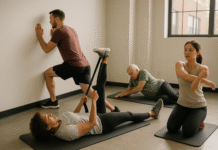
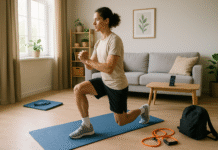
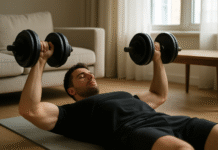
























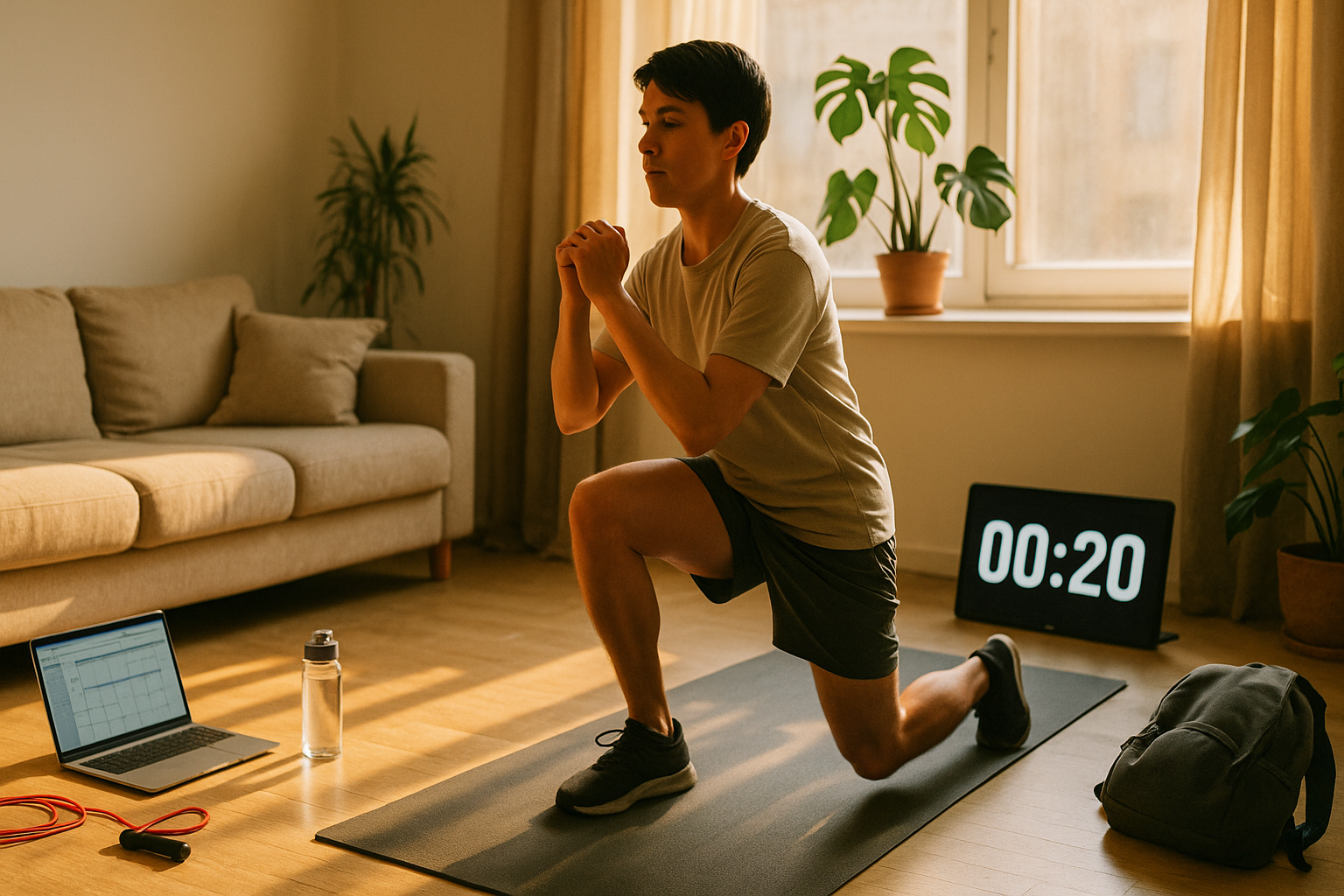
When your day is packed, long gym sessions fall off the calendar—yet you still want a sweat that moves the needle. This guide delivers 12 quick workouts for time-crunched days, each designed to fit into 10–20 minutes with minimal or no equipment. You’ll learn exactly how to warm up fast, pick a HIIT format, scale intensity, and recover well so you leave each session feeling accomplished, not wrecked. A brief note: if you have a medical condition, are pregnant, or are returning from injury, talk to a qualified professional before starting high-intensity training and scale to a comfortable effort.
Quick definition: A “quick workout” here = a short, structured HIIT or high-effort circuit that alternates intense bouts (20 seconds–2 minutes) with purposeful rest to deliver cardio and strength benefits efficiently. Done 2–3 days per week alongside regular activity, these sessions can help you meet aerobic and strength targets with less total time.
How to use this guide (fast): Warm up 3–5 minutes; choose one format below; set a timer; move with intent; stop 1–2 reps shy of failure; cool down 2–3 minutes. Keep at least 24 hours between hard HIIT days if you’re new to it.
1. Four-Minute Tabata Blocks (Stack 2–3 Rounds)
Tabata is the classic “20 seconds on, 10 seconds off” pattern repeated for eight intervals (4 minutes). It’s brutally efficient because the work intervals approach your near-maximal effort, but the sessions are short enough to slot into a lunch break. Start with a single block, then stack two to three blocks with 1–2 minutes of easy movement between them to reach 10–15 minutes total. Choose simple, big-movement exercises so you can push hard without fumbling technique. The goal is consistent, crisp reps—not collapsing after round two. For beginners, use lower-impact options (fast step-backs instead of squat jumps) and keep the first block at 7/10 effort to learn pacing. Research popularized Tabata using cycling, but the 20:10 template adapts well to bodyweight and light implements at home.
- Block A (4 min): Bodyweight squats → rest (alternate every 20:10 x8).
- Block B (optional): Mountain climbers (hands elevated on couch).
- Block C (optional): Fast step-ups or marching high knees.
1.1 Numbers & guardrails
- Duration: 4–12 minutes total (1–3 blocks).
- Pace: 8–9/10 effort once you’re warm and confident.
- Rest between blocks: 60–120 seconds of easy walking or mobility.
- Frequency: 1–2 times per week to start.
Synthesis: Tabata blocks give you the most work per minute when time is pinched; stack cautiously and prioritize form as intensity climbs.
2. 12–20 Minute EMOM (Every Minute on the Minute)
An EMOM turns the clock into your coach: begin a set at the top of each minute, finish the reps, and rest for the remainder. This keeps effort high yet controlled, letting you dose intensity without redlining. Pick two moves and alternate odd/even minutes for 12–20 minutes. For example, odd minutes: push-ups; even minutes: air squats. If you finish too early (≥30 seconds rest left) increase reps next round; if you can’t finish within 45–50 seconds, reduce reps to keep quality. EMOMs shine on busy days because the structure prevents wasted time and naturally scales to your capacity. They also mix strength (push, squat, hinge) with heart-rate spikes, checking both resistance and cardio boxes in one tidy package.
- Template: 12–20 minutes total.
- Minute 1: 10–15 push-ups (elevate hands as needed)
- Minute 2: 15–25 air squats
- Minute 3: 30–45-second hollow hold or plank
- Repeat until time.
2.1 Common mistakes
- Picking rep targets that erase rest entirely after minute 5.
- Letting form degrade—shorten the range or drop reps instead.
- Skipping a warm-up; do 2 minutes of brisk marching and dynamic hips first.
Synthesis: EMOMs deliver clock-driven focus and quality reps, turning 12 minutes into a surprisingly complete strength-cardio hit.
3. 10–15 Minute AMRAP (As Many Rounds As Possible)
AMRAPs ask you to complete as many tidy rounds as you can in a short window. Because the clock runs continuously, you’ll learn pacing: smooth is fast. Choose 3–4 moves you can flow between without equipment changes. Keep transitions minimal: mat → floor → standing. Breathe through the nose when possible; shake out the arms between sets. For capacity building, log total rounds and aim to match or beat it next time using the same rep scheme. If you’re stressed or sleep-deprived, pick fewer reps and keep effort at 7–8/10; consistency matters more than heroics. AMRAPs pair well with mobility finishers to bring your heart rate down and leave you calm for the rest of the day.
- Sample 12-min AMRAP:
- 8 reverse lunges (each side = 1 rep)
- 6 incline push-ups (hands on counter)
- 8 sit-throughs or dead bugs
- 6 hip-hinge good-mornings (backpack).
3.1 Mini checklist
- Timer set for 10–15 minutes.
- Moves require ≤3 seconds to transition.
- First round at conversational pace; build rhythm.
- Record rounds; stop with 1 tidy minute for cooling down.
Synthesis: Short AMRAPs turn limited time into measurable progress without the mental load of exact intervals.
4. Sprint Intervals (Run, Bike, or Rower) in 12 Minutes
If you have access to a quiet street, stationary bike, or rower, sprint intervals deliver top-tier aerobic benefits in minimal time. After a brisk warm-up, perform 6–10 rounds of 20 seconds fast / 40 seconds easy. Keep “fast” under control—think 85–95% of a hard effort, not a flailing all-out sprint. Uphill grades reduce joint impact and help form; a bike or rower lets you push without pounding. Newer trainees can start with 10 seconds fast / 50 seconds easy for 10 minutes. Track distance covered in work intervals to quantify progress week to week. Because this protocol is intense, schedule it no more than two times weekly with at least 24 hours between sessions, and keep the rest of your day’s movement easy (walks, mobility). ACSM
- Warm-up (3–4 min): Easy walk/ride, leg swings, two 10-second pickups.
- Main set (12 min): 20s fast / 40s easy x 12.
- Cool-down (2–3 min): Easy roll/walk; light calves/hip flexor stretch.
4.1 Numbers & guardrails
- RPE 8–9/10 during work; 3–4/10 during recovery.
- If form slips, cap the set and walk it in.
- Heat note (South Asia summers): choose early morning/evening, sip water, and avoid dark asphalt.
Synthesis: Intervals offer the best “miles-per-minute” fitness return when executed smoothly and sparingly.
5. 10–12 Minute Ladder Circuit (1→5→1 or 10→1)
Ladders climb reps up then down (or down only), helping you build volume without losing speed. For example, do 1–2–3–4–5 reps of two moves (push-ups and squat jumps), then descend 4–3–2–1; rest only as needed to keep quality. Alternatively, pick a down-ladder: 10 to 1 reps of three moves (squats, rows with backpack, sit-ups). Ladders are simple, competitive with yourself, and adaptable in tight spaces. They also pair nicely with strict tempo (3-second lowering) for joint-friendly intensity. If you sit a lot, use hip-dominant moves (hinges, bridges) to balance your day. The ladder ends when you finish the scheme or the clock hits your chosen time cap—whichever comes first.
- Up-down ladder (cap 12 min):
- Push-ups (elevate as needed)
- Squat jumps or fast squats
- 1-2-3-4-5-4-3-2-1 reps
5.1 Common mistakes
- Racing the early rungs and gassing out mid-ladder.
- Letting depth shorten—aim for consistent ranges.
- Choosing too many exercises; keep it to two or three.
Synthesis: Ladders bake progression into the structure, letting you rack up quality volume fast without complex timing.
6. Kettlebell Complex (10–15 Minutes, One Bell)
A kettlebell complex strings several moves together without putting the bell down, training strength, grip, and cardio at once. Choose a weight you can strict press 6–8 times. After a warm-up, perform 3–5 unbroken rounds with 90–120 seconds rest between sets: 5 swings → 5 goblet squats → 5 push presses (each side for presses) → 5 high pulls. This format minimizes transitions and keeps heart rate elevated while reinforcing full-body mechanics. If you lack a kettlebell, use a backpack filled with books and hug it for squats/hinges. Keep back flat, ribs down, and power the swing from the hips—never the low back. Because complexes demand technique, move crisply and stop a set if form wobbles.
- Set structure: 4–6 reps per move; 3–5 total rounds.
- Rest: 90–120 seconds between rounds.
- Scaling: Swap presses for floor presses if shoulders are cranky.
6.1 Why it works
- Dense strength + cardio stimulus in little time.
- Minimal setup, zero treadmill time.
- Easy to progress: add 1 rep per move or 2 kg over weeks.
Synthesis: One implement, four moves, and 10–15 minutes can deliver a complete strength-cardio dose that fits any busy day.
7. Jump Rope + Core Mix (12 Minutes)
A rope and a mat are a home gym in a drawer. Alternate short rope bursts with core stability for an aerobic hit that spares the joints. Start with 30 seconds of smooth singles, then 30 seconds of plank; repeat for 12 minutes. As skill improves, try 40/20 or add variations (side-to-side, boxer step). Jumping rhythm caps intensity naturally while the plank steadies breathing between rounds. If you’re new to rope, keep knees soft, jump low (just clear the rope), and practice for 5 minutes without worrying about misses. If the rope annoys your neighbors, mimic the motion with invisible handles and keep the cadence. Evidence shows rope-based exercise elicits meaningful cardio-metabolic responses in short bouts—perfect for days when you have 12 minutes tops. PMC
- Template (12 min):
- 30s jump rope → 30s plank (x12)
- Optional: swap plank for dead bug/hollow rock every other round.
7.1 Numbers & guardrails
- Keep cadence comfortable; wrists turn the rope, not the shoulders.
- Wear supportive shoes; jump on a mat or wood over concrete.
- Shin splint prone? Use shadow jumping for zero impact.
Synthesis: Rope + core delivers skill, cardio, and trunk endurance in a compact, neighbor-friendly format you can do anywhere. MDPI
8. Stairs Blitz (10–15 Minutes, Indoors or Outdoors)
Stair intervals provide a potent lower-body and cardio challenge without needing a track. Find a safe staircase (office, apartment, stadium). After a warm-up, climb briskly for 30–40 seconds, walk down for recovery, and repeat for 10–15 minutes. Use the handrail as needed, keep your torso tall, and drive through the whole foot to spare your knees. If descending bothers your joints, do 20–30 seconds of marching or step-ups on the bottom step instead of running back down. The short approach distances make this session workable in tiny windows of time while still delivering real training stress. In hot climates or poor air quality, indoor stairwells keep you moving when outdoor cardio isn’t feasible.
- Progressions: Two steps at a time; add a backpack; finish with 1–2 sets of slow calf raises.
- Beginner tweak: 20 seconds up / 60 seconds down-rest.
8.1 Mini checklist
- Clear the route; avoid crowded stairwells.
- Watch footing; no phones mid-climb.
- Stop one flight early if vision swims—safety first.
Synthesis: Stairs offer vertical meters and intensity on demand, translating 10 minutes into tangible leg strength and breath control.
9. Dumbbell (or Backpack) EMOM Strength Finisher (12–16 Minutes)
When time is scarce, a single pair of dumbbells or a loaded backpack can cover your push, pull, hinge, and squat patterns. Use an EMOM to structure four movements over 12–16 minutes: Minute 1 goblet squats, Minute 2 floor presses, Minute 3 hip hinges (Romanian deadlifts), Minute 4 backpack rows. Choose loads that allow 10 controlled reps in ~35–45 seconds, leaving a short rest. This finisher builds total-body strength and heart-rate time-under-tension without leaving you wiped for the rest of the day. If you only have 8 minutes, run two rounds of the four-minute cycle and call it a win. Track reps completed and add weight or reps slowly over weeks.
- Template: 3–4 rounds of 4 minutes (12–16 minutes).
- Rep guide: 8–12 per minute, crisp technique.
- Cool-down: 60–90 seconds of hips/chest mobility afterward.
9.1 Common mistakes
- Turning strength work into sloppy speed reps.
- Shrugging during rows—pull elbows toward back pockets.
- Letting backpack straps shift; cinch tight for stability.
Synthesis: A simple four-move EMOM condenses a full-body lift into under 20 minutes while preserving quality.
10. Walking HIIT (Beginner-Friendly, 12 Minutes)
HIIT doesn’t require sprints. Walking HIIT alternates brisk, arm-driven strides with easy strolls, making intensity accessible for beginners or anyone easing back after illness or injury. On a flat path or treadmill, do 60 seconds fast (noticeably breathy, you can talk in short phrases) followed by 60 seconds easy; repeat for 12 minutes. Add a slight incline for more demand without higher impact. If you prefer cycling, replicate with higher resistance during the work minute. This approachable format trains heart and lungs and can be done in work clothes with supportive shoes—perfect for a between-meetings reset. Pair it with 1–2 sets of wall sits or calf raises to round out the lower body.
- Template: 12 rounds of 60s fast / 60s easy = 12 minutes.
- Progression: Bump the incline 1–2% or add 15–30 seconds to the work periods.
- Form cues: Drive elbows back; lengthen your stride slightly during work minutes.
10.1 Why it matters
- Vigorous-intensity minutes “count double” toward weekly targets when combined appropriately, helping busy people meet guidelines more efficiently.
- Pair with 2 days of simple strength (push/pull/squat/hinge) weekly for a balanced base.
Synthesis: Walking HIIT is the on-ramp to intervals—gentle on joints, easy to schedule, and deceptively effective.
11. Shadow Boxing Rounds (12–16 Minutes)
Shadow boxing lights up cardio, coordination, and core without equipment. After a quick warm-up, set a timer for 3-minute rounds with 45 seconds of rest (like a boxing bout). Work combinations (jab-cross-hook), add light footwork (step forward/back, side shuffles), and keep your guard up. The rotational power and rhythmic breathing keep your heart rate up while the active rest teaches composure under fatigue. If you have a light resistance band, anchor it at chest height and punch against it for a round. This session fits in tiny spaces and can double as a work break that energizes rather than drains you. Finish with 1 minute of slow breathing and shoulder circles to down-regulate.
- Template: 4 rounds x 3 minutes (12 minutes) with 45 seconds rest.
- Technique focus: Turn hips on hooks; keep wrists straight.
- Beginner tweak: 2-minute rounds with 1-minute rest.
11.1 Numbers & guardrails
- RPE 7–8/10 during rounds; keep it snappy, not sloppy.
- Keep knees soft; pivot on the ball of the foot on hooks.
- If shoulders fatigue, throw straights only for 1 round.
Synthesis: Fast rounds of shadow boxing deliver athletic conditioning, stress relief, and footwork in a compact, equipment-free package.
12. Three 5-Minute “Movement Snacks” (Split Across the Day)
Some days, a single 15-minute workout still won’t happen—so scatter three 5-minute micro-sessions morning, midday, and evening. Each snack uses a different theme to avoid overloading one area while keeping your weekly activity needle moving. Morning: mobility flow; midday: brisk stair climb or rope; evening: strength mini-set. The cumulative effect surprises people: you rack up quality minutes and stay mentally fresh. This strategy also improves adherence because you don’t need to reshuffle your schedule—just inject a short burst into natural transition points (after coffee, between meetings, before dinner). Document your three snacks in a notes app so they feel like intentional training, not random movement.
- Snack A (AM): 5 minutes—cat-camel x10, world’s greatest stretch x5/side, 10 bodyweight squats, 20-second dead hang or doorway stretch.
- Snack B (Midday): 5 minutes—five flights of stairs or 90 seconds rope + 90 seconds plank + 60 seconds easy walk.
- Snack C (PM): 5 minutes—EMOM x5: 8 backpack rows (odd minutes), 8 glute bridges (even minutes).
12.1 Mini checklist
- Pre-plan your three windows.
- Keep a rope/backpack handy.
- Log completion to build momentum.
Synthesis: Movement snacks are the ultimate time-crunch tool: zero friction, real benefits, and no single block to “find” in your day.
FAQs
1) How many quick HIIT workouts should I do each week?
For most people, 2–3 HIIT sessions per week with at least 24 hours between is plenty; fill the rest of the week with walking and two short strength sessions. More isn’t better if recovery lags—watch for sleep disruption or lingering soreness as signs to back off. Existing guidelines suggest mixing vigorous and moderate activity to meet totals efficiently.
2) Do these short sessions actually improve fitness?
Yes. Multiple reviews show HIIT can match or sometimes exceed steady-state training for improving VO₂max and cardio-metabolic health despite lower total time, provided intensity is appropriate and progression is sensible. Consistency across weeks matters more than any single heroic effort.
3) What’s the minimum warm-up for a quick day?
Do 3–5 minutes of easy movement, big-joint mobility, and two short “pickups” to rehearse intensity. For very hard intervals, extend to 5–10 minutes and include one near-work rep to preview the effort. Warm-ups reduce injury risk and make the first working set more productive.
4) Can I count these toward weekly health targets?
Absolutely. The international and U.S. guidelines allow you to accumulate activity in short bouts; vigorous minutes can substitute for longer moderate minutes. Two HIIT days plus regular walking and brief strength hits can satisfy recommendations even on busy weeks. PMC
5) Is Tabata safe for beginners?
The 20:10 template is advanced when pushed at true high intensity. Beginners should choose low-impact moves, keep effort at 6–7/10, and limit to one block while they learn pacing. Over time, stack additional blocks or progress to more demanding movements. Safety improves with a proper warm-up and honest self-monitoring.
6) What about EPOC or “afterburn”—is it a big deal?
EPOC exists, and higher intensities tend to increase it, but it’s a modest contributor compared with the workout itself. Classic data suggest EPOC may add roughly 7–14% of the session’s net oxygen cost depending on intensity/duration—helpful, but not magic. Focus on consistent training and nutrition first.
7) I sit all day. Which options should I prioritize?
Favor hip-dominant circuits (hinges, bridges, swings), stair blitzes, and walking HIIT to undo desk posture while sparing your back. The EMOM strength finisher (#9) and kettlebell complex (#6) balance push/pull/hinge/squat in minimal time. Layer brief mobility in your movement snacks (#12) for hips and T-spine.
8) How do I scale without equipment?
Use tempo (3-second lowering), partial ranges (bottom-range squats), pauses (2 seconds at the hardest point), and leverage (hands higher for push-ups, feet farther for rows). To progress, add a round, add 1–2 reps, or shorten rests slightly. A loaded backpack instantly upgrades squats, hinges, and rows.
9) What if high-impact moves bother my joints?
Swap jumps for fast squats or step-ups; run intervals become brisk uphill walks or bike sprints. Use a soft surface and supportive shoes. If pain persists, consult a professional; you can still train hard with low-impact choices like rope (gentle cadence), cycling, or bodyweight tempo work.
10) Can I mix strength and HIIT on the same day?
Yes—do strength first if lifting heavy, then a short finisher (like EMOM #9). If strength is light/moderate, a 10–12 minute AMRAP can come first. Keep total hard time under ~30 minutes on busy days and watch recovery. Across the week, a mix of 2–3 HIIT and 2 strength sessions works well for many.
11) How long until I see results?
You’ll feel coordination and energy improvements in 1–2 weeks, and measurable fitness changes (e.g., faster intervals, more EMOM reps) over 3–6 weeks with consistency. Track a simple metric—rounds completed or distance in work bouts—to make progress visible and motivating.
12) Do I need a rest day if sessions are only 10 minutes?
Intensity—not just duration—drives recovery needs. Even short HIIT can be taxing; plan rest or easy movement days between very hard efforts, especially early on. Walks, mobility, and light strength practice are perfect “active rest” that keep momentum without overload.
Conclusion
Short, well-structured sessions aren’t a compromise—they’re a strategy. By picking a clear format (Tabata, EMOM, AMRAP), setting a smart time cap, and moving with crisp technique, you can hit both cardio and strength in 10–20 minutes and still have energy for the rest of your day. The key is realistic pacing and repeatability: two or three of these quick hits each week, plus regular walking and a couple of simple strength sessions, will move you toward the same health and fitness outcomes that longer workouts deliver. Start with accessible options (Walking HIIT, EMOM strength), keep a backpack or rope nearby, and log your numbers so progress is obvious. When the week gets busy, pick one of the 12 protocols above and press start—your future self will thank you.
Call to action: Pick one workout above, set a 12-minute timer, and go—then log your result and schedule your next session before closing your calendar.
References
- World Health Organization 2020 guidelines on physical activity and sedentary behaviour, WHO/BMJ, 2020. https://www.who.int/initiatives/behealthy/physical-activity and https://pubmed.ncbi.nlm.nih.gov/33239350/
- Adult Activity: An Overview, Centers for Disease Control and Prevention, December 20, 2023. https://www.cdc.gov/physical-activity-basics/guidelines/adults.html
- What Counts as Physical Activity (Adults), Centers for Disease Control and Prevention, December 6, 2023. https://www.cdc.gov/physical-activity-basics/adding-adults/what-counts.html
- Evidence-Based Effects of High-Intensity Interval Training, Sports Medicine – Open, 2021. https://pmc.ncbi.nlm.nih.gov/articles/PMC8294064/
- Effects of different protocols of high-intensity interval training on VO₂max, Journal of Science and Medicine in Sport, 2019. https://www.sciencedirect.com/science/article/abs/pii/S1440244018309198
- Exercise Intensity and Energy Expenditure of a Tabata Workout, Journal of Sports Science & Medicine, 2013. https://pmc.ncbi.nlm.nih.gov/articles/PMC3772611/
- Excess post-exercise oxygen consumption after interval vs continuous running, Journal of Applied Physiology, 1997. https://pubmed.ncbi.nlm.nih.gov/9049750/
- Effects of exercise intensity and duration on EPOC: a review, Sports Medicine, 2006. https://pubmed.ncbi.nlm.nih.gov/17101527/
- High-Intensity Interval Training: For Fitness, for Health or Performance?, American College of Sports Medicine, August 16, 2019. https://acsm.org/high-intensity-interval-training-fitness/
- High-Intensity Interval Training for Clinical Populations (warm-up & safety), ACE, n.d. https://www.acefitness.org/certifiednewsarticle/2589/high-intensity-interval-training-for-clinical-populations/
- Physical Activity Guidelines for Americans, 2nd ed., U.S. Department of Health and Human Services, 2018. https://health.gov/sites/default/files/2019-09/Physical_Activity_Guidelines_2nd_edition.pdf
- High-Intensity Circuit Training Using Body Weight, ACSM’s Health & Fitness Journal, 2013. https://journals.lww.com/acsm-healthfitness/fulltext/2013/05000/high_intensity_circuit_training_using_body_weight_.5.aspx