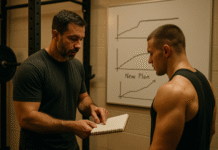













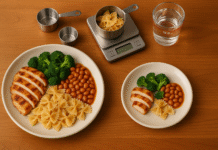














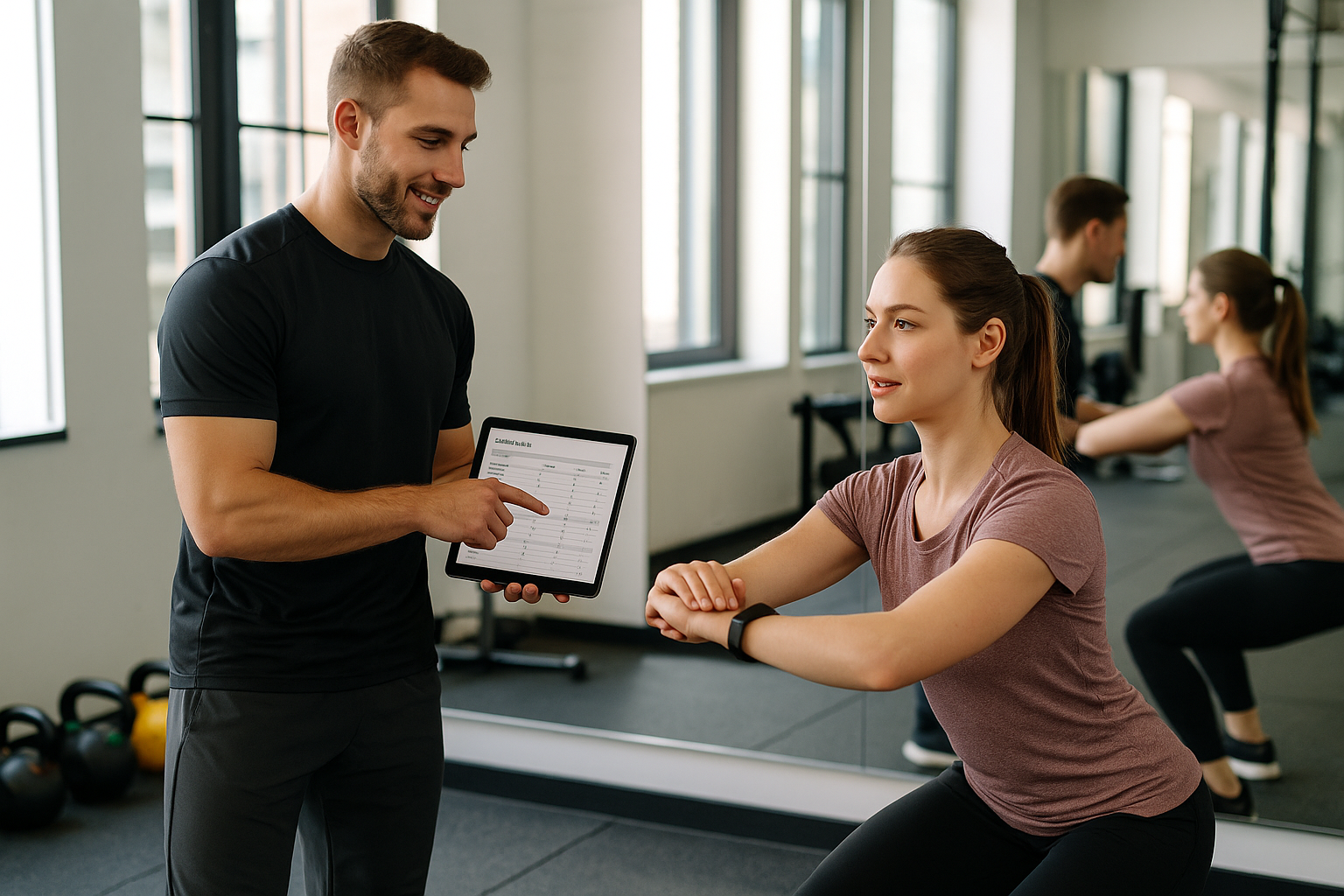
Personal training and coaching are structured partnerships where a qualified professional designs, teaches, and adjusts your training so you progress safely and efficiently. In practice, that means you’ll complete a brief health screen, a movement and fitness assessment, a goal-setting session, and a customized plan—then train, review, and refine. In one line: personal training and coaching provide expert programming plus accountability so you gain results faster with fewer detours. For quick orientation, here’s the usual flow: book a consult → complete screening → do baseline testing → agree goals and schedule → start sessions → track progress → refine every 4–8 weeks. This guide is informational, not medical advice; if you have symptoms or a condition, consult your clinician before starting exercise.
1. A No-Pressure Consultation that Maps Your Starting Point
Your first step is a friendly, information-gathering conversation that clarifies why you want coaching, the constraints you face (time, injuries, budget), and what success will look like. Expect the trainer to ask about your current activity, medical history, injuries, preferences, work and sleep patterns, and past training. Their goal is to learn enough to propose an approach—not to sell you a maximal package sight unseen. Good coaches also explain their methods, how sessions run, and what you’ll need to do between sessions. By the end, you should know whether the fit (style, communication, schedule) feels right; chemistry matters for long-term adherence and motivation. If the conversation feels rushed, salesy, or vague on process, consider it a yellow flag and keep looking.
- What you should bring: recent health info, medications list, and any rehab notes.
- What you should leave with: a clear next step (screening/assessment date) and a transparent pricing/scheduling overview.
- Good sign: the coach listens more than they talk, summarizes your goals back to you, and sets realistic expectations.
1.1 How to make the consult count
Prepare 2–3 concrete goals (“deadlift my bodyweight,” “jog 5 km pain-free,” “reduce blood pressure with doctor’s guidance”). Ask, “What happens in the first 4 weeks?” and “How do we track progress?” End with, “What would you recommend for me and why?”
Bottom line: Treat the consult like a mutual interview—your clarity plus the coach’s plan will set the tone for effective work together.
2. Safety Screening Comes First—PAR-Q+, Red Flags, and Referrals
Before your first workout, expect a brief pre-participation screen to flag any issues that warrant medical clearance or training modifications. Many coaches use standardized tools like the PAR-Q+ or follow the ACSM preparticipation algorithm to decide when to refer you to a clinician before moderate-to-vigorous exercise. These questionnaires ask about symptoms (chest pain, dizziness), conditions (heart, metabolic, renal), and current activity. If you answer “yes” to certain items or have concerning symptoms, a referral is a safety-first step—not a barrier—to getting you active. Transparent coaches happily coordinate with your physician or physiotherapist and will tailor intensity accordingly. Screening should be private, documented, and quick; it protects both you and the coach.
- Typical tools: PAR-Q+ (self-screen), ACSM preparticipation algorithm (pro guidance).
- Immediate red flags: unexplained chest discomfort, fainting, or uncontrolled blood pressure—seek medical input first.
- Expect regional variation: in some jurisdictions, gyms require a signed waiver or medical note for higher-risk clients.
2.1 Why it matters
Early screening reduces needless medical referrals while catching the rare person who genuinely needs clearance. Used well, it removes friction and speeds safe onboarding.
Bottom line: A short, evidence-based screen is normal and wise; it ensures your plan starts at the right intensity and with the right safeguards.
3. Baseline Testing: Movement, Strength, Fitness, and Body Metrics
Your assessment session measures where you are today so progress can be quantified later. Expect a technique-light warm-up, then basic movement checks (e.g., squat, hinge, push, pull), plus simple balance and mobility screens. Strength is often estimated via submax sets (e.g., a 5–10 rep estimate instead of a risky 1-rep max for beginners). Cardio fitness may be gauged by a talk test, a 6-minute walk, or a low-impact step/erg test. Coaches may record circumferences (waist/hip), take progress photos (with consent), or estimate body composition using calipers or bioimpedance. None of this should feel like a judgment; these numbers are simply anchors for your program’s starting loads and recovery needs.
- Expect retesting every 4–8 weeks to adjust loads and milestones.
- Consent first: decline any measure you’re uncomfortable with—there are alternatives.
- Metrics that matter for many: pain-free range, quality reps at a given load, RPE at a set pace, resting heart rate variability.
3.1 Numbers & guardrails
For new lifters, a 2.5–5% strength increase every 2–4 weeks is realistic; for endurance, sustaining conversation at a slightly faster pace is a common early win. Use rating of perceived exertion (RPE) as a second check on intensity—more on that below.
Bottom line: Testing informs training. Skip fancy gadgets until the basics (movement quality, base strength, aerobic capacity) are measured.
4. SMART Goals and Program Design (Periodization, Phases, and Flex)
Good programming converts your goals into periodized training—phases with specific focuses—so you’re not doing random workouts. Coaches often use frameworks like NASM’s OPT model (stabilization → strength → power) or classic linear/undulating periodization to progress volume and intensity over time. The first phase for novices typically builds movement skill, joint integrity, and work capacity, then gradually adds heavier loads, more complex lifts, or higher-speed work. SMART goals keep this grounded: specific, measurable, achievable, relevant, time-bound. Plans should reflect your constraints (time, equipment, travel) and adapt during life blips or plateaus. If your coach can’t explain why each block exists, ask for the rationale—there should be one.
- A common cadence: 4–6 week blocks, deloads as needed, and reviews each block.
- Strength example: 3 full-body sessions/week, 3–5 exercises/session, 2–4 sets, 6–12 reps, progressive load.
- Endurance example: 2 cardio focus days, 1 strength day, 1 skills/mobility day, plus easy activity.
4.1 Tools/Examples
OPT phases give a structured progression many gyms understand; they’re not mandatory, but they do illustrate how to scale complexity safely.
Bottom line: Periodized, goal-tethered plans beat random workouts; you should see how today’s session connects to next month’s milestone.
5. What a Session Looks Like: Warm-Up → Skill/Strength → Conditioning → Cooldown
A standard 50–60 minute session opens with a warm-up (5–10 minutes), then your focus block (technique + main lifts or key cardio intervals), accessories, and a short cooldown. Expect specific cues to refine form, a mix of demonstration and hands-on (with consent), and real-time adjustments if a joint feels cranky. Coaches manage intensity via load, pace, and RPE—a simple 0–10 or 6–20 scale correlating closely with effort and, roughly, heart rate. Used together with reps-in-reserve (RIR), RPE helps you train hard enough to progress without overshooting recovery. You should leave tired, not wrecked; soreness is normal, pain is not.
- Typical breakdown: 10 min warm-up, 25–30 min main work, 10–15 min accessories/conditioning, brief cooldown.
- Expect frequent cueing on breathing, bracing, and tempo.
- Good signals: consistent technique under fatigue and steady RPE targets week to week.
5.1 Numbers & guardrails
RPE 3–4 = easy, conversation-friendly; RPE 6–7 = working but sustainable; RPE 8–9 = hard sets saved for key lifts; RPE 10 = max. The Borg scales (6–20 and 0–10) remain widely used anchors across rehab and sport.
Bottom line: Sessions follow a predictable arc, and intensity is managed deliberately—expect purposeful fatigue, not random exhaustion.
6. Pricing, Packages, and Policies You’ll Actually Use
Costs vary by country, city, and coach experience. As of August 2025, mainstream reporting places typical U.S. hourly rates around $50–$150+, with major metros on the higher end and small markets lower; in other regions, rates track local income and gym models (e.g., session bundles in the UK, studio retainers in parts of Asia). Frequency for beginners commonly starts at 2–3 sessions/week for 4–6 weeks before tapering to 1x/week or biweekly as you gain skill and confidence. Sensible contracts outline cancellation windows, refund rules, and expiration dates; transparent coaches avoid lock-in tactics and happily match plans to your budget by mixing coached and DIY sessions. Always ask for a written summary before you pay.
- Budget levers: semi-private training, small-group sessions, hybrid (one live + two app-guided).
- Watch-outs: auto-renewing packages you didn’t consent to, opaque “assessment fees,” and short expiration dates.
- Region note (South Asia): many coaches offer monthly retainers with 8–12 sessions; ask about travel fees for in-home visits.
6.1 Mini-checklist
Confirm rate, session length, what happens if the coach cancels, how reschedules work, and whether homework plans are included.
Bottom line: Price reflects expertise, time, and location—lock in value by clarifying deliverables, frequency, and fair policies upfront.
7. How Often You’ll Train—and Why the 150+ Minutes Guideline Still Matters
Your weekly plan blends coached time with independent work. Most adults benefit from at least 150–300 minutes of moderate or 75–150 minutes of vigorous aerobic activity plus two strength days each week; your coach will help you distribute that across your schedule so recovery and life stay sane. Early on, more supervision accelerates skill learning; later, many clients shift to one coached touchpoint per week or per block. The aim is sustainable consistency, not a brief boot-camp spike. If you’re de-conditioned or managing a condition, your coach will help you start below the guideline and build safely.
- Common novice template: 2 coached lifts + 1–2 easy cardio sessions + daily steps/mobility.
- Busy weeks: swap one run for intervals on a bike/rower; keep strength sessions shorter rather than skipping them.
- Taper weeks: reduce total volume 20–40% to absorb adaptation.
7.1 Why it matters
The guideline benchmarks total activity; coaching then personalizes the how. Hitting it with a plan beats guessing.
Bottom line: Frequency is individualized, but the global activity targets remain a reliable north star—your coach will show you practical ways to get there.
8. Nutrition Guidance—What Coaches Can (and Can’t) Do
Expect basic, evidence-based nutrition support tied to your goals (protein targets, fiber, hydration, meal timing that fits your training). Ethical coaches stay within scope: they do not diagnose, prescribe diets for medical conditions, or replace registered dietitians. Many will provide calorie and macro ranges, habit-based coaching (e.g., “protein with each meal”), and accountability check-ins. If fat loss is a goal, anticipate discussions around sustainable deficits (e.g., 300–500 kcal/day), strength preservation, and satiety strategies. Supplements should be addressed conservatively: food first, check for third-party testing (NSF, Informed Choice), and clear anything questionable with your clinician.
- Expect grocery/practical advice over rigid meal plans.
- Red flag: miracle claims, aggressive detoxes, or supplement upsells.
- Great add-on: referral network with registered dietitians for medical nutrition needs.
8.1 Region note
Food availability and cultural patterns vary; good coaches design around local staples you actually enjoy, not imported menu templates.
Bottom line: Quality coaching demystifies nutrition basics and partners with qualified diet pros when your needs exceed their scope.
9. Progress Tracking that Goes Beyond the Scale
You’ll track more than weight: strength PRs (or rep PRs at the same load), RPE at a set pace, work capacity (more quality sets in the same time), movement skill, and subjective markers like energy, sleep, and stress. Photos and circumference measures can help if body recomposition is a goal, but they’re optional. Reviews every 4–8 weeks compare data to your goals and decide whether to push, maintain, or deload. Expect your coach to use simple logs or apps and to celebrate process wins (consistency, form quality) alongside outcomes—this keeps motivation resilient.
- Tools: training logs, heart-rate trackers, velocity apps for lifts, step counts, readiness check-ins.
- Mini case: A novice progresses from 3×8 goblet squats at 12 kg (RPE 8) to 3×10 at 16 kg (RPE 7) in 6 weeks—objective and subjective gains.
- Review rhythm: short weekly check-ins, deeper block reviews.
9.1 Common mistakes
Only chasing scale weight, testing strength too often, or ignoring recovery signals (sleep, mood) undermines progress.
Bottom line: What gets measured gets managed—focus on a balanced dashboard of performance, health, and habit metrics.
10. Accountability, Communication, and the Supervision Advantage
Coaching isn’t just sets and reps; it’s a motivational relationship that keeps you consistent. Clear messaging between sessions, short voice notes, and scheduled check-ins help you course-correct early. Research suggests supervised training tends to produce greater strength and balance improvements than unsupervised programs—likely due to better technique, appropriate loads, and real-time adjustments. That doesn’t make DIY training useless; it means selective supervision (even monthly) can amplify results, especially for novices or after injuries.
- Accountability tools: weekly adherence score, “streaks,” or calendar reminders.
- Structure ideas: one coached lift + one form-check video review each week.
- Signs of good communication: prompt responses, specific feedback, and psychological safety to share setbacks.
10.1 Evidence snapshot
Meta-analyses and controlled trials show small-to-moderate advantages for supervised vs. unsupervised training on strength and function, particularly in older adults and novices.
Bottom line: You’re more likely to train well—and keep training—when someone expects you, watches your form, and adjusts the plan on the fly.
11. Tech in the Toolbox: Apps, Wearables, Video—and Why AI Isn’t a Full Substitute
Modern coaching blends in-person sessions with digital support: form videos, app-delivered progressions, heart-rate and sleep data, and automated reminders. These tools make homework precise and give your coach visibility between sessions. They’re helpful, but beware tech that overpromises (“AI will replace your coach”). Even advanced motion-tracking mirrors or app-guided plans struggle to deliver the empathy, nuanced cueing, and lived context a human coach provides—great for convenience, limited for accountability and adaptation.
- Useful tech: training apps with exercise libraries, HR monitors, smart scales, and habit trackers.
- Best practice: agree which metrics you’ll actually act on; ignore noisy dashboards.
- Good hygiene: protect privacy; share only what’s necessary for coaching decisions.
11.1 Reality check
Even sophisticated “AI mirrors” can coach form at home, but they can’t replace the relational and adaptive aspects of a live professional. Use them to supplement, not supplant, coaching.
Bottom line: Tech expands reach and data; your coach provides judgment, context, and human connection.
12. Special Populations, Modifications, and When to Refer
If you’re an older adult, pregnant, returning after surgery, or managing a condition, expect conservative progression and frequent dialogue with your healthcare team. Position statements emphasize that resistance training is safe and beneficial across ages when properly dosed—improving strength, function, and independence. Sessions will bias technique, tempo, range, and exercise selection to keep training stimulus high while risk stays low. Great coaches know when to refer (e.g., unresolving pain, concerning symptoms) and how to integrate physio exercises into your plan without derailing momentum.
- Mod levers: range limits, slower eccentrics, higher reps/lower loads, longer rest, machine choices over free weights initially.
- Older adults: 2–3 total-body sessions/week with multi-joint movements can improve daily function.
- Post-partum/pelvic health: coordinate with a pelvic PT; start with breath/pressure management and stability.
12.1 Evidence snapshot
Authoritative positions support resistance training for older adults with thoughtful programming and progression.
Bottom line: Inclusive coaching adapts the plan to the person—and loops in clinicians when needed.
13. Timelines and Results You Can Trust
Set expectations like an engineer. Skill and confidence often improve within 2–4 weeks; measurable strength usually climbs for novices by 5–15% over 6–8 weeks with consistent work; endurance markers (e.g., sustained pace at lower RPE) tend to improve similarly. Visible body recomposition is slower and highly individual—think 8–12+ weeks of steady training and nutrition. Supervision often accelerates early gains versus unsupervised training, but long-term progress depends on adherence, sleep, stress, and habit change. Don’t chase soreness or scale swings; chase high-quality, repeatable sessions and objective progress markers.
- Expect periodic plateaus; plan for deloads and small exercise swaps.
- Progress rhythm: push → consolidate → retest → adjust.
- If life gets messy, reduce volume (e.g., 60–70%) and keep the habit alive.
13.1 Evidence snapshot
Reviews show unsupervised home-based interventions can underperform in older adults, whereas even minimal supervision can improve outcomes—coaching time is a lever.
Bottom line: Results arrive on the schedule of consistent effort and smart progression; coaching ensures both stay on track.
FAQs
1) Do I really need a personal trainer or can I start alone?
You can start alone with basic strength and cardio, but a trainer shortens the learning curve, reduces form errors, and customizes progression. Even one to two sessions per month for program design and technique check-ins can make your solo training safer and more effective. If budget is tight, consider small-group sessions or a hybrid model.
2) How fast will I see results?
Most novices notice skill and energy changes within 2–4 weeks, with strength and endurance markers improving within 6–8 weeks when training consistently. Body composition changes take longer and depend on nutrition, sleep, and stress management. Tracking multiple metrics (not just scale weight) provides earlier proof you’re on the right path.
3) What certifications should I look for?
Look for credentials from reputable, NCCA-accredited bodies (e.g., NASM, ACE, NSCA, ACSM) and ask about continuing education. Accreditation signals a third-party standard, but experience and coaching style also matter. Verify certification numbers on the provider’s site and ask how their education informs your specific plan.
4) How many times per week should I train with a coach?
Beginners often start with 2–3 coached sessions per week for the first 4–6 weeks, then taper to weekly or biweekly check-ins as skills solidify and confidence grows. Your total weekly activity should still align with guideline targets (aerobic + strength), which your coach will help you meet.
5) How much does personal training cost?
Rates vary widely by region, coach experience, and setting (gym vs. private studio). U.S. reporting commonly cites $50–$150+ per hour as a typical range, with big-city rates higher; outside the U.S., structures vary (bundles, retainers). Ask for written policies on cancellations and refunds to avoid surprises.
6) What if I have an injury or a medical condition?
A reputable coach will start with screening, ask about your clinician’s guidance, and modify exercises, loads, and ranges to respect your condition. When something is beyond their scope, they should refer and collaborate rather than guess. Screening tools and conservative progressions reduce risk and keep you training while you heal.
7) Is online coaching effective?
Yes—if the coach provides clear programs, timely feedback, and scheduled check-ins. Online delivery works well once you know the basics; early supervision (in-person or live video) speeds skill acquisition. Many clients use a hybrid: monthly in-person technique sessions plus app-based homework. Trials suggest supervision still has advantages for strength outcomes.
8) How long is each session, and what happens inside it?
Most sessions run 50–60 minutes and follow a predictable arc: warm-up, skill/strength work, accessories/conditioning, and cooldown. Expect frequent cues, progressive loading, and intensity targets using tools like RPE to ensure you’re training hard enough without overreaching.
9) How are goals set and tracked?
You’ll co-create SMART goals, then test key metrics every 4–8 weeks. Coaches use training logs, simple performance tests, and periodic photos or measurements (optional) to validate progress. If goals aren’t moving, the plan changes—load, volume, exercise selection, or nutrition focus—rather than blaming willpower.
10) What are signs I should switch coaches?
Red flags include poor listening, unsafe cues (“no pain, no gain” as policy), lack of progress tracking, pushy sales tactics, or unwillingness to modify for pain or life constraints. The best coaches invite feedback, explain trade-offs, and adapt plans to your context.
Conclusion
Personal training and coaching are simple in concept but powerful in practice: a thoughtful plan, expert instruction, and steady accountability tailored to your life. Your journey should begin with a respectful consult, safety screening, and baseline testing that informs a clear, periodized program. Sessions feel purposeful—intensity is dosed with tools like RPE, technique is coached, and progress is logged. Costs and frequency vary, but you can shape value by choosing the right mix of supervised and independent work, backed by transparent policies. Technology can help, yet it’s the human relationship that translates data into consistent action. As you weigh options, use this guide to interview coaches, clarify expectations, and create a plan that fits your calendar, budget, and goals. Start where you are, progress what you can, and let skilled coaching make the process simpler—and more enjoyable—than going it alone.
CTA: Book a consult with a qualified coach this week, ask the five questions in Section 1, and schedule your assessment.
References
- Physical Activity Readiness Questionnaire for Everyone (PAR-Q+), ePARmedX, Jan 2023, https://eparmedx.com/wp-content/uploads/2022/12/ParQ-Plus-Jan-2023-Image-File.pdf
- Updating ACSM’s Recommendations for Exercise Preparticipation Health Screening, Med. Sci. Sports Exerc., 2015, https://www.exerciseismedicine.org/assets/page_documents/ACSM%20Preparticipation%20Screening%20Guidelines.pdf
- Physical Activity Guidelines for Americans, 2nd Edition, U.S. HHS, 2018, https://odphp.health.gov/healthypeople/tools-action/browse-evidence-based-resources/physical-activity-guidelines-americans-2nd-edition
- Rating of Perceived Exertion (Borg Scales) overview, Shirley Ryan AbilityLab, 2016, https://www.sralab.org/sites/default/files/2018-04/Rating_of_perceived_exertion_-_Borg_scale.pdf
- The OPT™ Model (Optimum Performance Training), National Academy of Sports Medicine, accessed Aug 2025, https://www.nasm.org/certified-personal-trainer/the-opt-model
- Resistance Training for Older Adults: Position Statement, NSCA, 2019, https://www.nsca.com/contentassets/2a4112fb355a4a48853bbafbe070fb8e/resistance_training_for_older_adults__position.1.pdf
- Effects of Supervised vs. Unsupervised Training Programs in Older Adults: Systematic Review & Meta-analysis, Sports Med., 2017, https://pubmed.ncbi.nlm.nih.gov/28573401/
- The Role of Supervision in Resistance Training: Exploratory Systematic Review & Meta-analysis, Journal of the International University of Sports Science, 2022, https://journal.iusca.org/index.php/Journal/article/view/101/185
- The effectiveness of unsupervised home-based exercise for improving lower extremity physical function in older adults: Systematic review & meta-analysis, BMC Geriatrics, 2024, https://pmc.ncbi.nlm.nih.gov/articles/PMC11443890/
- How to choose the best personal trainer for your fitness goals — and budget, Associated Press, 2024, https://apnews.com/article/c94f4f6625d2d6a5a77537946d1518b5
- Can an AI fitness mirror replace a personal trainer?, The Times, 2024, https://www.thetimes.co.uk/article/can-an-ai-fitness-mirror-replace-a-personal-trainer-gf35s8kvl
- ACE Personal Trainer Certification (NCCA-accredited), ACE Fitness, accessed Aug 2025, https://www.acefitness.org/fitness-certifications/personal-trainer-certification/default.aspx