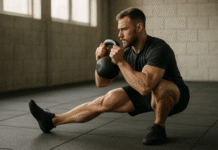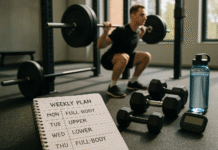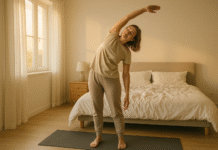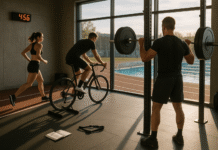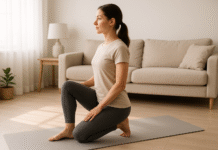
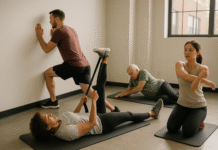
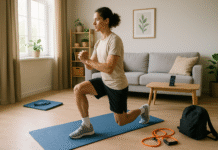
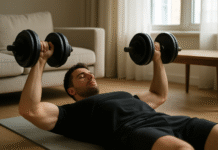













If you’re short on time, this 15-minute daily home workout balances strength, cardio, and mobility without equipment. You’ll hit all major movement patterns, get your heart rate up, and finish with a quick reset—designed for apartments and tight schedules. This is for beginners through intermediates, with clear low-impact and harder options. In one sentence: a 15-minute daily home workout is a time-boxed, full-body circuit you can do anywhere to build strength, cardio capacity, and mobility efficiently. Here’s the plan at a glance: warm up (2 minutes), then 10 minutes of strength/cardio blocks, a 2-minute mobility reset, and a 1-minute cool-down—15 total items below walk you through the exact moves, form cues, and progressions.
A quick safety note: this is general fitness education, not medical advice. If you have a health condition, pain, or you’re returning from injury, consult a qualified professional before starting a program.
1. Set Your Timer & Space (0:30–1:00)
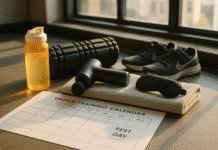
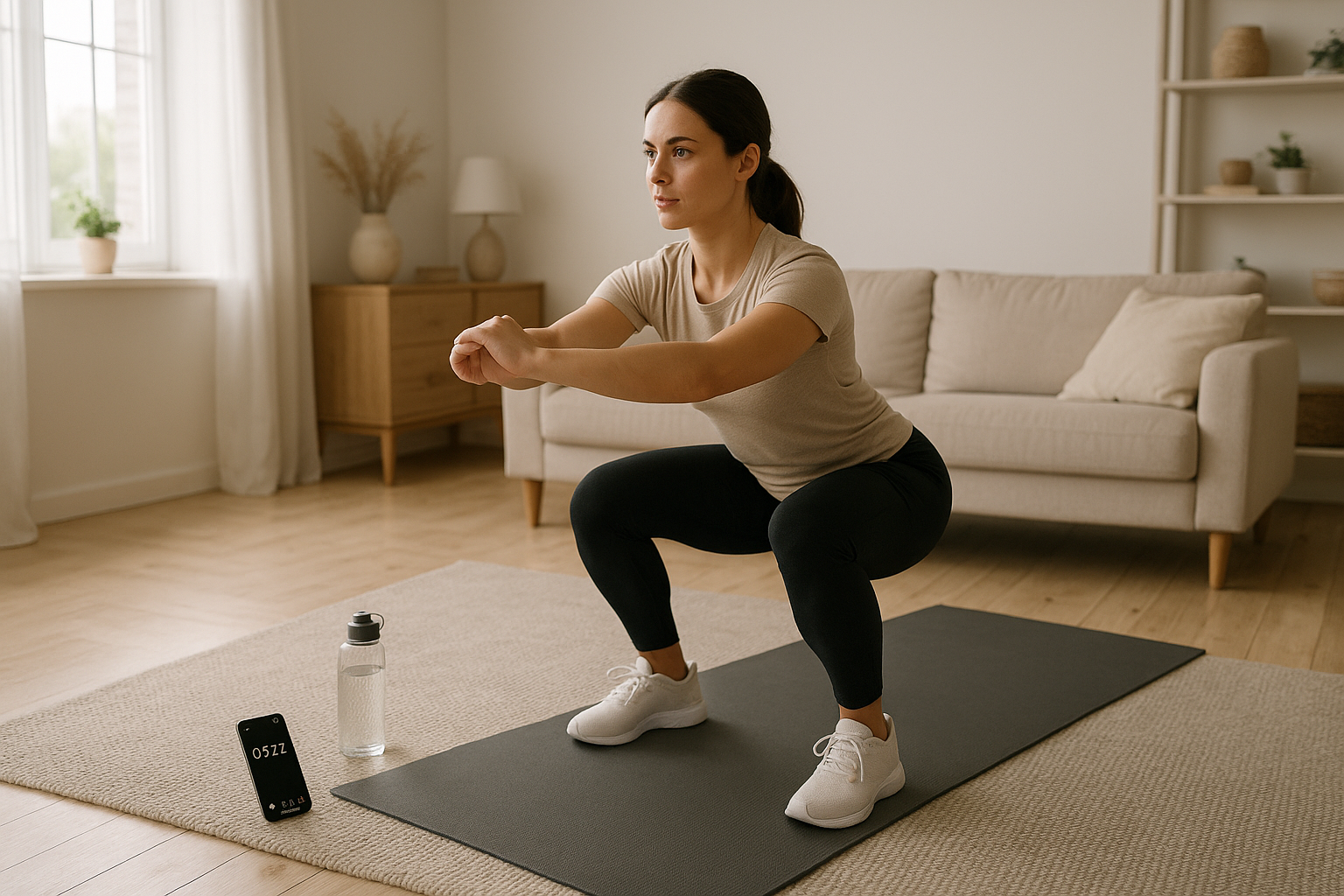
Start by defining the container: pick a timer app (e.g., any interval/Tabata timer) and clear a 2×2 m (6×6 ft) area. This single step removes friction and ensures you actually finish within 15 minutes. Place your phone where you can see or hear it, set a comfortable volume, and keep water within reach. Aim for breathable clothing and bare feet or supportive shoes, depending on floor and comfort. Decide up front on your effort scale: use RPE 6–7/10 (moderate) on most sets, briefly nudging to RPE 8/10 during cardio bursts. This clarity keeps you honest and prevents the session from drifting longer or easier than planned, making “daily” realistic rather than aspirational.
1.1 How to do it
- Choose an interval preset: 30 seconds work / 10 seconds transition (or 40/20 if you prefer).
- Set total session length to 15:00 and enable audible beeps.
- Clear the floor: remove slipping hazards; place a mat if the surface is hard.
- Keep a small towel and water bottle nearby.
- Pick music that helps you focus but doesn’t drown out the timer.
1.2 Numbers & guardrails
- Space: ~2×2 m is enough for lunges, jacks, and planks.
- Effort: Most work sets at RPE 6–7; brief spikes at RPE 8.
- Pacing: If new, cap your heart-rate spike by slowing reps, not stopping.
A deliberate setup means the rest of the session flows—no scrambling, no excuses, just clean execution.
2. 2-Minute Dynamic Warm-Up (Raise Heat, Prep Joints)
The warm-up is where you raise body temperature, “wake” your nervous system, and check in with tight areas. In two minutes, you’ll prepare ankles, hips, shoulders, and spine for the moves ahead while reducing the shock of the first work interval. Keep it rhythmic and light—the goal is readiness, not fatigue. You should feel warmer and more mobile but still able to speak a sentence. If you’re exercising early or in cooler rooms, extend to three minutes on days you need it. Conversely, on hot days, stay gentle and focus on range rather than pace. This brief primer increases comfort and reduces the chance you cut the workout short.
2.1 How to do it (sequence, ~2:00)
- 20s marching in place (drive elbows, roll through feet).
- 20s arm circles + shoulder rolls (both directions).
- 20s hip hinges to reach (soft knees, long spine).
- 20s world’s greatest stretch (alternating sides).
- 20s squat-to-stand (elbows inside knees).
- 20s cat–cow or standing spinal waves.
- 20s ankle rocks and gentle heel raises.
2.2 Common mistakes
- Going too hard and arriving at the first set already winded.
- Skipping joint prep (hips/ankles), then struggling with squats/lunges.
- Rushing through ranges without control.
When you finish, you should feel “switched on,” not tired—ready for quality reps.
3. Air Squat Pattern (Quads, Glutes, Core)
The squat is your lower-body foundation and teaches controlled hip–knee–ankle coordination. Start your first strength block with air squats to groove form and build confidence. Keep chest proud, ribs stacked over pelvis, and sit “between” your heels rather than collapsing forward. Depth is individual—aim for thighs parallel while keeping heels down; stop earlier if your back rounds. Newer lifters often benefit from a box/bench tap to standardize depth. For apartments or knee sensitivity, slow the eccentric (down) and drive up smoothly; there’s no need to jump yet. The goal is even pressure through both feet and steady breathing.
3.1 How to do it
- Feet shoulder-width; toes slightly out.
- Inhale, brace lightly; sit hips back and down.
- Knees track over 2nd–3rd toes; heels stay grounded.
- Exhale as you stand; squeeze glutes at the top.
- Tall posture; eyes on a spot ahead.
3.2 Numbers & guardrails
- Target: 30–45 seconds of squats.
- RPE: 6–7; you should have ~3 reps “in the tank.”
- Options: Counterbalance with arms forward, or hold a backpack to progress.
Smooth, repeatable squats set the tone for the rest of the session—quality over speed.
4. Incline Push-Up (Chest, Shoulders, Triceps)
An incline push-up (hands on couch, bench, or sturdy table) matches many people’s current strength better than floor push-ups and respects shoulders and wrists. The incline lets you find a form that keeps the body in one line—no sagging hips or flared elbows. Keep forearms vertical, elbows at ~30–45° from your torso, and neck long. If wrists complain, use fists or a thicker surface edge. Breathe out as you push, and keep glutes and quads engaged for a plank-like body. As this gets easy, lower the incline gradually until you meet the floor with clean reps.
4.1 How to do it
- Hands shoulder-width on a stable elevated surface.
- Step feet back; body forms a straight line from head to heels.
- Inhale down for ~2 seconds; light chest touch.
- Exhale up; lock out without overshrugging.
- Keep ribs tucked, gaze slightly ahead of hands.
4.2 Numbers & guardrails
- Target: 30–40 seconds of controlled reps.
- RPE: 6–7; stop before form breaks.
- Common mistakes: Flaring elbows >60°, sagging midsection, speed over control.
Inclines give you room to progress weekly without strain—perfect for a daily routine.
5. Hip Hinge: Good Morning or Backpack Deadlift
The hip hinge trains posterior chain (glutes, hamstrings, back) and protects your spine during everyday lifting. Think “reach hips back” more than “bend knees.” Keep a neutral spine—no rounding or overarching—and weight mid-foot to heel. Start with a hands-on-ribs-and-hips cue to feel torso stiffness. If you want light loading, hug a backpack to your chest or hold it by the handles with arms long (Romanian deadlift style). Move slowly and deliberately. If you feel your lower back more than hamstrings/glutes, reduce range and emphasize hinge mechanics.
5.1 How to do it
- Feet hip-width, soft knees, tall chest.
- Push hips back; shins vertical; torso inclines.
- Stop when hamstrings stretch; spine stays neutral.
- Drive through heels; squeeze glutes to stand tall.
- Keep chin tucked; neck follows spine.
5.2 Numbers & guardrails
- Target: 30–45 seconds of hinges or RDLs.
- RPE: 6–7; prioritize feel over load.
- Progressions: Add a backpack (5–15 kg / 10–35 lb) as control improves.
Mastering the hinge pays off everywhere—from safer lifting to stronger sprints.
6. Horizontal Pull: Table/Band Row
Daily life is front-heavy; pulling balances shoulders and supports posture. No pull-up bar? Use a sturdy table row (feet forward, knees bent) or a resistance band anchored in a doorframe. Aim to pull elbows toward back pockets, finishing with shoulder blades down and together—no shrugging. Keep ribs stacked and neck long. If the setup feels awkward, increase your knee bend or lower your body angle. Rows should feel in mid-back and lats, not in the upper traps alone.
6.1 How to do it
- Table row: grip table edge, walk feet forward, body angled; pull chest to edge.
- Band row: anchor at sternum height; step back; row handles to lower ribs.
- Pause ½ second at the top for quality scapular retraction.
- Control the lowering phase; no slamming.
6.2 Numbers & guardrails
- Target: 30–40 seconds.
- RPE: 6–7; keep 2–3 reps in reserve.
- Common mistakes: Flaring ribs, neck craning, shrugging to finish.
A strong pull movement makes push-ups happier and shoulders more resilient.
7. Reverse Lunge (Glutes, Quads, Balance)
The reverse lunge is joint-friendly and builds unilateral strength and balance. Stepping back reduces forward knee stress and helps maintain an upright torso. Start with a comfortable step length; both knees bend to ~90° as you lower under control. Front knee tracks over mid-foot; back knee hovers above the floor. Keep hips square and eyes level. If you wobble, lightly fingertip a wall. If you feel front-knee pinching, shorten the step and slow down. Drive up through the whole front foot; don’t let your weight collapse into the toes.
7.1 How to do it
- Stand tall; step back softly.
- Lower straight down; torso tall; ribs stacked.
- Exhale as you drive back to stand.
- Alternate sides, or do all reps on one leg then switch.
7.2 Numbers & guardrails
- Target: 30–45 seconds (alternating).
- RPE: 6–7; quality and balance first.
- Options: Reduce depth; use wall support; or elevate front foot slightly for more range.
Single-leg work evens out imbalances and makes the rest of life feel easier.
8. Front Plank (Anti-Extension Core)
A front plank teaches your trunk to resist extension (sagging), which supports every lift and daily task. The goal is a long line from head to heels, glutes lightly squeezed, ribs down, and a gentle breath rhythm. If your low back talks, raise hips slightly and shorten the hold. Keep elbows under shoulders and press the floor away to avoid sinking chest. Breathe quietly—don’t breath-hold. For wrists or shoulder comfort, try a high plank on hands or plank on a countertop.
8.1 How to do it
- Forearms parallel; elbows beneath shoulders.
- Step feet back; squeeze glutes, lightly brace abs.
- Think “long spine, chin tucked.”
- Quiet nasal breaths; no breath-holding.
8.2 Numbers & guardrails
- Target: 20–40 seconds as a single quality hold.
- RPE: 6–7; stop before shaking breaks form.
- Regressions/progressions: Knees down; or add shoulder taps in a high plank.
A steady plank improves mechanics of your squats, lunges, and even your posture at the desk.
9. Glute Bridge (Posterior Chain & Hip Health)
The glute bridge reinforces hip extension without loading the spine. Lie supine, feet flat hip-width, heels a hand-width from glutes. Exhale as you drive through heels and squeeze glutes to lift hips until ribs and pelvis line up. Avoid arching the lower back to fake height. Hold briefly at the top and lower with control. If you mostly feel hamstrings, bring heels closer; if knees cave, think “push the floor apart.” Progress by elevating feet, adding a mini band at knees, or moving to single-leg bridges as control improves.
9.1 How to do it
- Set feet; flatten ribs gently toward the floor.
- Exhale and press; glutes lead.
- Pause 1–2 seconds at top; lower under control.
- Keep chin neutral; avoid head lifting.
9.2 Numbers & guardrails
- Target: 30–45 seconds of reps or isometric holds.
- RPE: 6–7; strong squeeze, no back pinching.
- Options: Mini-band above knees; single-leg for advanced.
Bridging “turns on” the glutes, improving hip mechanics for walking, stairs, and sport.
10. Cardio Burst: Low-Impact Jacks or March-To-High-Knee
A short cardio burst elevates heart rate and adds a metabolic punch without needing equipment. Choose low-impact jacks (step out–in with arm swings) or march-to-high-knee if you’re upstairs or managing joints. Keep posture tall, arms active, and feet landing softly. The goal is breath pace up, form steady—not flailing. You should feel warmer, not wrecked; we still have work to do. If you wear a smartwatch, expect ~70–85% of age-estimated max HR here; otherwise, use RPE 7–8 for 30 seconds.
10.1 How to do it
- Pick your version: low-impact jacks, high-knee march, or classic jacks.
- Stay light on feet; drive arms to increase intensity.
- Breathe rhythmically; avoid shoulder shrugging.
10.2 Numbers & guardrails
- Target: 30 seconds “on,” 10–15 seconds easy march.
- RPE: 7–8; you can still say short phrases.
- Common mistakes: Stiff upper body, slapping feet, holding breath.
A deliberate, short spike boosts conditioning while keeping the session compact.
11. Anti-Rotation Core: Dead Bug or Paloff Press
Now add anti-rotation control to protect your spine during twisting life tasks. The dead bug (on your back) teaches rib–pelvis control as arms and legs move. If you have a band, the Pallof press (band held at chest, press forward) adds standing anti-rotation work. Move slowly, keep low ribs down, and breathe. The magic is in resisting motion, not chasing range. If your low back lifts, reduce limb range. Aim to feel abs and deep core rather than hip flexors tugging.
11.1 How to do it
- Dead bug: 90/90 hips/knees; exhale and reach opposite arm/leg; switch.
- Pallof: stand side-on to anchor; press band straight out; hold 1–2 seconds; return.
- Keep pelvis level; avoid rib flare.
11.2 Numbers & guardrails
- Target: 30–40 seconds of quality reps.
- RPE: 6–7; tension without bracing face/neck.
- Options: Shorten reach; add band tension as you progress.
A steadier trunk multiplies the benefits of every other movement you do.
12. Shoulder + T-Spine Reset (Mobility Interlude)
This mobility reset keeps shoulders comfortable and improves upper-back movement so pressing and rowing stay smooth. Combine scapular CARs (controlled articular rotations), thread-the-needle, and wall angels or floor snow angels. Move within comfort; you should feel muscle stretch and gentle joint motion, not sharp pain. Keep breath steady to encourage range. If you sit a lot or work at a laptop, this minute repays itself in posture and comfort.
12.1 How to do it
- 20s scapular circles: protract–elevate–retract–depress with straight elbows.
- 20s thread-the-needle (each side 10s): hands-and-knees, reach under and rotate.
- 20s wall/floor angels: slow, ribs down, wrists/elbows gliding through range.
12.2 Numbers & guardrails
- Target: ~60 seconds total.
- Feel: Smooth, warm, never forced.
- Common mistakes: Flaring ribs, craning neck, rushing.
You’ll return to your final blocks feeling more open and coordinated.
13. Balance & Hinge Control: Single-Leg RDL Reach
Integrate balance, hamstrings, and hip control with a single-leg RDL reach (bodyweight). Stand tall, soften the stance knee, reach the opposite leg long behind you as you hinge at the hip, and reach both hands toward the floor or a low target. Keep hips square and spine long. Move slowly; the goal is steadiness rather than depth. If balance is tough, light fingertip support on a wall is fine. You’ll feel hamstrings, glutes, and feet working hard to stabilize.
13.1 How to do it
- Plant left foot; unlock knee; hinge hips while right leg reaches back.
- Keep pelvis level; think “laser pointers” from hip bones facing the floor.
- Reach hands to mid-shin or a yoga block; stand tall and switch sides.
13.2 Numbers & guardrails
- Target: 15–20 seconds per side, alternating once or twice.
- RPE: 6–7; wobble is normal—slow down.
- Progressions: Hold a backpack in hands; move to airplane (arms out) for more challenge.
This pattern refines your hinge and teaches your foot/hip to coordinate under load.
14. Cool-Down: Breathe & Long-Leg Stretch (1–2 Minutes)
Cooling down helps drop heart rate, restore calm, and integrate range you opened during work sets. Prioritize breathing and long-leg hip flexor/hamstring stretches. Sit or lie down, inhale through the nose for ~4 seconds and exhale for 6–8 seconds. You should feel heart rate descend and shoulders relax. Follow with half-kneeling hip flexor stretch (tilt pelvis) and a hamstring strap stretch (or towel-around-foot) to restore posterior chain length. This downshift helps you leave the mat feeling refreshed rather than edgy.
14.1 How to do it
- 4–6 slow breaths (4-sec inhale, 6–8-sec exhale).
- 20–30s per side half-kneeling hip flexor stretch (glute squeeze, pelvis tuck).
- 20–30s per side hamstring strap stretch (soft knee, long spine).
14.2 Numbers & guardrails
- Target: 60–120 seconds.
- Feel: Gentle pull, not pain; breathe continuously.
- Common mistakes: Overstretching, holding breath, yanking on the neck with the towel.
Two minutes here improves recovery and helps you be ready to go again tomorrow.
15. Progression, Scheduling & Tracking (Make It Stick)
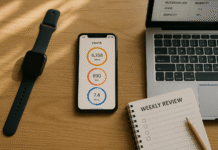
Consistency beats intensity in a daily plan. Your progress prescription: nudge volume, range, or difficulty a little each week while keeping the session at 15 minutes. Track 2–3 metrics (e.g., reps in 30 seconds for squats/push-ups, plank hold time, RPE). Use micro-progression: add 1–2 reps, reduce incline slightly, or add 1–2 kg to your backpack. Rotate options to avoid boredom (e.g., swap reverse lunges for step-backs or split squats every 2–3 weeks). Schedule a lighter day each week (RPE 5–6) to keep daily streaks without burnout. If you miss a day, just pick up tomorrow—no compensation marathons.
15.1 How to do it
- Week 1–2: Learn form; stay at RPE 6–7; record reps.
- Week 3–4: Add modest progressions (more range, slight load, lower push-up incline).
- Week 5+: Introduce mini-blocks (e.g., 2–3 rounds of your top 6 moves within the 15 minutes).
- Every 7–10 days: One “easy” day or mobility-only day.
15.2 Numbers & guardrails
- Progression rule: Change just 1 variable at a time (load, reps, or leverage).
- Stop rule: Sharp pain or dizziness means stop and reset; adjust or rest.
- Streak mindset: Completing “something” daily beats chasing perfect.
A simple, steady progression plan turns 15 minutes today into noticeable results in a few weeks.
FAQs
1) Can 15 minutes a day really make a difference?
Yes—especially when you do it most days. Any duration of moderate-to-vigorous physical activity contributes to health benefits, and short sessions add up across a week. When you train full-body with compound moves and keep effort around RPE 6–8, you can build a base of strength and cardio, support weight management, and improve mobility. Think of it as a floor, not a ceiling: consistency first, then scale as time allows.
2) How should I breathe during exercises?
Breathe continuously—avoid long breath-holds unless you’re intentionally bracing for a challenging rep. A simple rule: inhale on the lowering phase (eccentric), exhale on the effort (concentric). In planks and dead bugs, use slow nasal breaths to keep the ribcage stacked and core engaged. During cardio bursts, match breaths to rhythm and speak in short phrases; if you can’t, back off slightly.
3) I live upstairs—how do I keep it low-impact and neighbor-friendly?
Swap jumping jacks for step jacks or high-knee marching. Focus on soft, quiet landings and control, not height. Stick to strength moves like squats, hinges, lunges, and planks that make minimal noise. Use a thick mat or rug to dampen sound. You’ll still get your heart rate up through continuous movement and shorter rests.
4) What if my wrists hurt in planks and push-ups?
Try incline push-ups on a counter to reduce wrist angle and load. In planks, go to forearms or use push-up handles/fists to keep the wrist neutral. Spread the load through the full hand, grip the floor lightly, and keep shoulders stacked over wrists. Strength will build over time; pain that persists deserves a professional check-in.
5) How do I know if I’m working hard enough?
Use the Rate of Perceived Exertion (RPE) 1–10 scale. Most sets should land around RPE 6–7 (challenging but sustainable), with brief spikes to RPE 8 during cardio bursts. As a quick self-check, you should finish a set knowing you could have done 2–3 more good reps. If form crumbles or you’re gasping, reduce range or pace.
6) Can I add weights to this routine?
Yes—hold a backpack for squats/hinges, use water jugs for carries/presses, or loop a resistance band for rows and hip work. Add only a little at a time and keep the 15-minute cap. The golden rule is progress one variable (load, reps, or leverage), not all of them at once. If you’re sore for more than 48 hours, pull back slightly next session.
7) What’s the best time of day to train?
The best time is the one you’ll stick to. Mornings reduce schedule conflicts and help mood; evenings can feel stronger after a day of movement. In warm climates or summer months, earlier or later in the day can be more comfortable. Anchor your session to an existing habit (after coffee, before shower) to make it automatic.
8) How do I avoid knee pain with squats and lunges?
Prioritize alignment: knees track over the 2nd–3rd toes, weight through the whole foot, and depth only as far as you can keep a neutral spine. Start with slow eccentrics and short ranges; add depth as control improves. Favor reverse lunges (generally gentler on knees) and consider a slight forward torso lean in squats to load hips more than knees.
9) What if I only have 10 minutes some days?
Run a “core stack”: warm up for 1 minute, then pick any 6 moves you need most (e.g., squat, push, hinge, row, lunge, plank) for 60 seconds each, back-to-back. Keep RPE 6–7. You won’t cover everything every day, but across the week you’ll still build momentum. The habit matters more than the perfect split.
10) How should I eat and hydrate around this?
For a short, moderate session, you don’t need special fueling—drink water according to thirst and eat a balanced meal within a few hours of training. If you train first thing and feel lightheaded, try a small snack (e.g., a banana) 20–30 minutes beforehand. In hot weather, sip a little more water and cool the room if possible.
11) How soon will I see results?
Most people feel better energy and movement quality within 2–3 weeks of daily practice. Strength and stamina gains show up as higher reps at the same RPE, cleaner form, and faster recovery of breath. Visible physique changes vary by diet, sleep, and baseline, but consistent 15-minute sessions are a powerful on-ramp to more.
12) Can I do this with back or shoulder tightness?
Often yes—if you move within a pain-free range and prioritize control. For backs, hinge shallowly, brace, and keep ribs/pelvis aligned; reduce load. For shoulders, use incline push-ups and emphasize rows with good scapular movement. Any sharp or radiating pain is a stop sign—regress the move or consult a clinician.
Conclusion
A daily 15-minute home workout works because it’s doable, covers the essentials, and compounds over time. By focusing on the big patterns—squat, push, hinge, pull, lunge—then layering in anti-extension and anti-rotation core, mobility, and a brief cardio spike, you train what matters without decision fatigue. The 15-item structure above makes consistency simple: you have a clear sequence, a timer, and concrete effort targets. As you progress, you’ll nudge one variable at a time, keeping the session short but steadily more effective. The reward is not just better strength and stamina but also smoother daily movement, less stiffness, and a sense that fitness fits your life rather than the other way around.
Your next step is simple: set a 15:00 timer, clear a 2×2 m space, and start at Item 1—show up today, and let consistency do the rest.
CTA: Roll out your mat, start the timer, and complete Items 1–5 right now.
References
- Physical Activity Guidelines for Americans, 2nd edition — U.S. Department of Health and Human Services, 2018. https://health.gov/our-work/physical-activity/current-guidelines
- How much physical activity do adults need? — Centers for Disease Control and Prevention (CDC), accessed August 2025. https://www.cdc.gov/physicalactivity/basics/adults/index.htm
- Physical activity: Key facts — World Health Organization (WHO), accessed August 2025. https://www.who.int/news-room/fact-sheets/detail/physical-activity
- How to warm up before exercising — National Health Service (NHS), accessed August 2025. https://www.nhs.uk/live-well/exercise/how-to-warm-up-before-exercising/
- How to stretch after exercising — National Health Service (NHS), accessed August 2025. https://www.nhs.uk/live-well/exercise/how-to-stretch-after-exercising/
- Interval training: Spruce up your workout — Mayo Clinic, reviewed 2023; accessed August 2025. https://www.mayoclinic.org/healthy-lifestyle/fitness/in-depth/interval-training/art-20044588
- RPE Scale: What It Is, How to Use It — Cleveland Clinic, reviewed 2024; accessed August 2025. https://health.clevelandclinic.org/rpe-scale
- Quantity and Quality of Exercise for Developing and Maintaining Cardiorespiratory, Musculoskeletal, and Neuromotor Fitness in Apparently Healthy Adults: Position Stand — American College of Sports Medicine, Medicine & Science in Sports & Exercise, 2011. https://pubmed.ncbi.nlm.nih.gov/21694556/
- Progression Models in Resistance Training for Healthy Adults — American College of Sports Medicine Position Stand, Medicine & Science in Sports & Exercise, 2009. https://pubmed.ncbi.nlm.nih.gov/19855308/
- Water and Healthier Drinks — Centers for Disease Control and Prevention (CDC), accessed August 2025. https://www.cdc.gov/healthyweight/healthy_eating/water-and-healthier-drinks.html