












A great night’s sleep rarely “just happens”—it’s built, habit by habit. This bedtime routine checklist gives you a clear, practical, and science-informed sequence to follow so you can fall asleep faster, wake less often, and feel more refreshed in the morning. It’s designed for busy people, parents, students, and shift-juggling professionals alike. You’ll learn what to do, when to do it, and how to adjust each step for your home, climate, and schedule. Quick note: this guide is educational, not medical advice—see a clinician for persistent insomnia, loud snoring, breathing pauses, or other sleep disorders.
Quick-start overview — your 15 steps:
- Set a consistent sleep window
- Dim lights & block blue light
- Cool and quiet the bedroom
- Quit caffeine and alcohol on time
- Time a light snack (or none)
- Create a “digital sunset”
- Gentle mobility or stretching
- Warm bath or shower
- Brain dump & tomorrow plan
- Relaxation practice (breath/PMR)
- Sensory cues: sound, scent, dark
- Practice strict stimulus control
- Paper reading or low-stim audio
- Hydrate smart & bathroom routine
- Lights-out ritual & morning setup
1. Set a Consistent Sleep Window
Start by choosing a regular “sleep window” and sticking to it daily; consistency trains your body clock and is the single strongest anchor for better sleep. Pick a target bedtime and wake time that add up to 7–9 hours in bed for most adults, then protect that window—even on weekends—as closely as life allows. This predictability reduces social jet lag (the shift between weekday and weekend schedules) and stabilizes melatonin timing, making it easier to fall and stay asleep. If you’ve been erratic, don’t try to correct everything in one night; instead, nudge your schedule by 15–30 minutes every few days until you land on a sustainable window you can keep.
Why it matters
A stable circadian rhythm cues hormone release, body temperature changes, and sleep pressure at predictable times. When you drift hours later on weekends, Monday feels like flying across time zones. Your checklist works best when the window is the non-negotiable backbone.
How to do it
- Choose a wake time you can honor 7 days a week.
- Count back 7.5–8 hours to set a target bedtime.
- Adjust in 15–30 minute increments every 2–3 nights.
- Use a “go to bed” alarm as well as a morning alarm.
- Keep lights and stimulating activity low within 60–90 minutes of bed.
Synthesis: A consistent sleep window makes every other step easier, turning your routine from a wish list into a body-clock habit.
2. Dim Lights & Block Blue Light
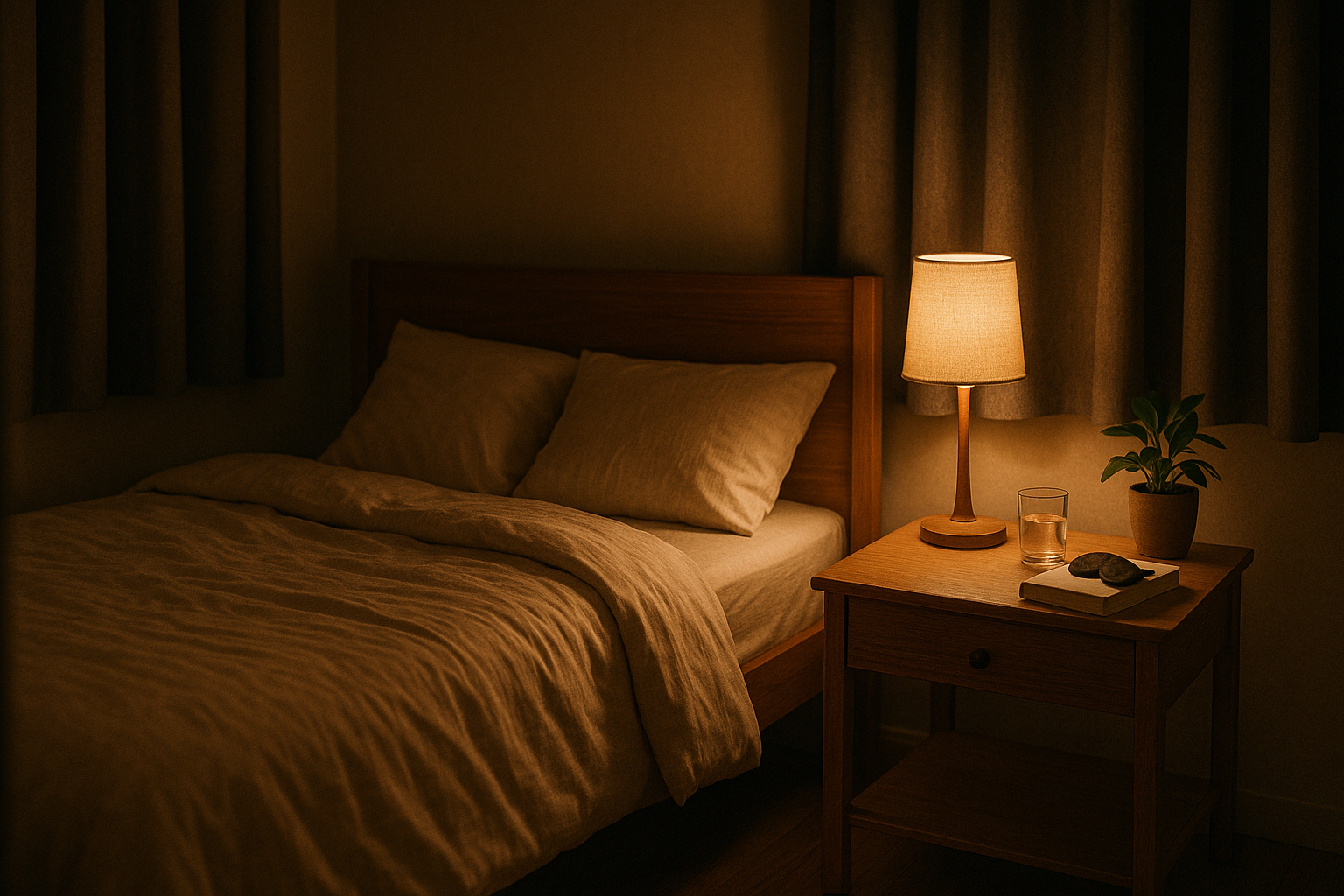
About 60–90 minutes before bed, lower overall light levels and minimize blue-rich light from LEDs and screens; this preserves melatonin’s evening rise and helps your brain read the room as “night.” Overhead lights are bright and stimulating—favor table lamps, wall sconces, or smart bulbs at 20–30% brightness. If screens must be used, enable night modes and blue-light filters, and switch to audio or paper tasks when possible. Extra points for amber/red nightlights in halls and bathrooms to avoid a harsh wake-up blast if you get up at night.
Numbers & guardrails
- Start dimming 60–90 minutes pre-bed.
- Use warm light (<3000K) in the evening; avoid bright overheads.
- On phones/PCs, enable Night Shift/Blue Light Filter; reduce brightness to the lowest comfortable level.
- Consider blue-blocking glasses in the last hour if you can’t avoid screens.
- Keep the bedroom dark enough that shapes are visible but details are not; use blackout curtains if needed.
Mini-checklist
- Lamps over ceiling lights
- Night modes on all devices
- Amber nightlight for bathroom trips
- Sleep mask at the ready
Synthesis: Treat light as a drug: dose down before bed to “prescribe” sleepiness at the right time.
3. Cool and Quiet the Bedroom
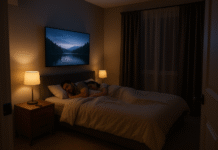
Sleep is easier when your bedroom is cool, quiet, dark, and airy. Aim for a room temperature that feels slightly cool under a light blanket so your core body temperature can drop—a physiological cue for sleep. Reduce noise by shutting doors, using rugs, or running a consistent broadband sound (white/pink/brown noise) to mask spikes from traffic or neighbors. Ensure fresh airflow with a fan or cracked window if safe, and keep the space uncluttered; a calmer visual field reduces cognitive load when you lie down.
Numbers & guardrails
- Temperature target: ~16–19°C (60–67°F) for many adults; adjust for your climate and bedding.
- Humidity: ~40–60% helps comfort and airways.
- Noise: aim for a steady soundscape; machines should be continuous, not pulsing.
- Light: blackout shades or sleep mask to block dawn or streetlight bleed.
Tools/Examples
- Tower fan or quiet HVAC with a constant “fan on” setting
- White-noise machine or broadband noise app
- Draft stopper, window inserts, or earplugs
- Breathable bedding (cotton, linen) and a lighter duvet
Synthesis: The right environment lowers arousal without effort, so your routine doesn’t have to fight the room.
4. Quit Caffeine and Alcohol on Time
Caffeine lingers for hours and can fragment sleep even when you “fall right asleep.” Alcohol may sedate you initially but disrupts REM and deep sleep, causing early awakenings and lighter sleep later in the night. Your checklist works best when both substances are timed so they’re out of the way at bedtime.
Numbers & guardrails
- Caffeine cutoff: 8–10 hours before bed for sensitive sleepers; 6 hours minimum for most.
- Alcohol: skip within 3–4 hours of bed; more conservative if you notice wake-ups or snoring.
- Total daily caffeine: many adults do well at ≤200–300 mg; adjust if anxious or sleep-troubled.
- Watch hidden sources: pre-workouts, energy drinks, dark chocolate, some teas.
Mini-checklist
- Last coffee/tea set as a calendar reminder
- Swap to decaf/herbal by early afternoon
- Alcohol-free alternatives in the fridge
- If you drink at dinner, pair with water and end earlier
Synthesis: Good sleep starts at lunch—timing your stimulants and sedatives pays off tenfold at 2 a.m.
5. Time a Light Snack (or None)
Going to bed stuffed or hungry both work against sleep. A light, balanced snack can steady blood sugar and reduce middle-of-the-night awakenings for some; others sleep best with nothing after dinner. Use this step to dial in what actually helps you—no dogma, just data.
How to do it
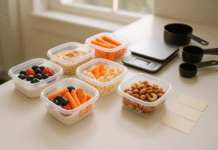
- If hungry, try a small snack 60–90 minutes pre-bed: yogurt with berries, banana with nut butter, whole-grain toast with cottage cheese, or warm milk.
- Keep portions modest (~150–250 kcal).
- Avoid spicy, greasy, or very sugary foods late; they can cause reflux or alertness.
- Finish eating 2–3 hours before bed if you’re prone to GERD.
Numbers & guardrails
- Last full meal: 3+ hours pre-bed.
- Snack window: 60–90 minutes pre-bed if needed.
- Hydration: sip, don’t chug, after this point.
Synthesis: The right bite at the right time smooths the night; the wrong late-night feast starts a sleep fight.
6. Create a “Digital Sunset”
Screens are not just light sources—they are portals to news, work, and social loops that spike arousal. A digital sunset means you switch devices to low-stimulus modes (or off), eliminate notifications, and shift to analog or passive activities. This step prevents one more episode from becoming three, and one “quick email” from turning into a mental meeting.
Mini-checklist
- Do Not Disturb auto-schedules on phone and laptop
- App limits for social and streaming after a certain hour
- A dock/charging station outside the bedroom
- Replace scroll time with an audiobook, paper book, or puzzle
H3 — How to do it without “going dark”
- Create a “last call” for messages 60 minutes pre-bed; tell close contacts about your quiet hours.
- Use grayscale mode to make your phone visually boring.
- If you must use a device (e.g., night-shift check-ins), dim it, enable night mode, and keep tasks procedural rather than exploratory.
Synthesis: Your devices can cooperate with sleep—but only after you set their bedtime, too.
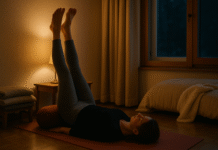
7. Gentle Mobility or Stretching
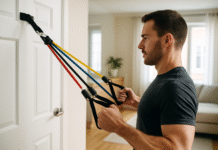
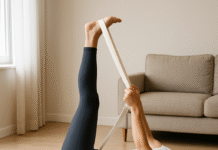
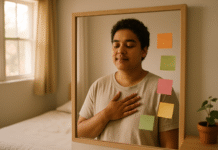
Five to fifteen minutes of slow mobility, yoga, or light stretching decouples workday tension from your body. You’re not working out; you’re down-shifting. Focus on the neck, shoulders, back, hips, and calves—areas that accumulate desk or standing stress. Breathing in rhythm with movement cues your nervous system toward parasympathetic calm.
Short sequence idea
- 1–2 minutes of box breathing (inhale 4, hold 4, exhale 4, hold 4)
- Cat-cow x 10 cycles
- Child’s pose, 60–90 seconds
- Supine hamstring stretch, 30–45 seconds each side
- Figure-4 glute stretch, 30–45 seconds each side
- Wall calf stretch, 30 seconds each side
Numbers & guardrails
- Keep intensity low; you should be able to breathe through your nose and talk easily.
- If you have pain or conditions, choose therapeutic movements approved by your clinician.
- Evening strength or cardio is fine for many, but finish vigorous work 2–3 hours before bed.
Synthesis: Gentle movement tells your body, “the hard part of today is over”—and your brain follows.
8. Warm Bath or Shower
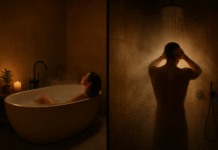
A warm bath or shower 60–90 minutes before bed can help you fall asleep faster. The heat brings blood to the skin; when you step out, your core temperature drops more efficiently—one of the signals that nudges the brain toward sleepiness. Keep it comforting, not scorching, and build the ritual to be quiet and unhurried.
Numbers & guardrails
- Timing: start 60–90 minutes pre-bed.
- Duration: 5–15 minutes is plenty.
- Temperature: warm, not hot; if you’re flushed or lightheaded, it’s too hot.
- Safety: dry off fully and keep the bathroom dim to avoid a bright-light reset.
Mini-checklist
- Soft lighting or a battery candle in the bathroom
- Towel and sleepwear warmed on a rack
- Lavender or unscented body wash if you enjoy aromatherapy
- Cool bedroom waiting when you return
Synthesis: Warm up to cool down—the contrast is the sleepy magic.
9. Brain Dump & Tomorrow Plan
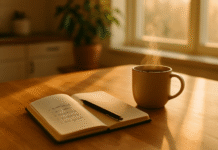
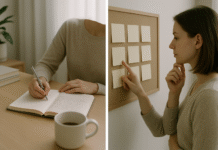
Racing thoughts at night are often “unfinished business” knocking. Externalize them with a paper brain dump and a quick tomorrow plan. This reduces cognitive load and gives your mind permission to power down because you’ve captured tasks and set simple priorities.
How to do it
- On paper, write everything on your mind: tasks, worries, reminders. No editing.
- Circle the 1–3 tasks that truly must happen tomorrow; assign a rough time block.
- For worries, add a “first next step” or write what’s outside your control.
- Put the notebook on your nightstand; you’re not solving—just unloading.
Numbers & guardrails
- Keep the process to 5–10 minutes to avoid turning it into work.
- If new thoughts pop up in bed, jot them down without turning on bright lights.
Synthesis: Your brain wants to know nothing important will be forgotten—prove it on paper, then let sleep take over.
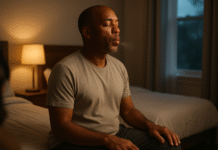
10. Relaxation Practice (Breath, PMR, or Meditation)
A targeted relaxation skill is the engine of your wind-down. Choose one method and do it the same way each night so it becomes a conditioned cue for sleep: slow breathing, progressive muscle relaxation (PMR), or a brief guided meditation/body scan. The consistent routine teaches your nervous system to shift states on command.
Options to choose from
- Breath: 6–10 breaths per minute (e.g., 4-second inhale, 6-second exhale) for 5–10 minutes.
- PMR: Tense each muscle group for ~5 seconds, release for ~10–20; move from feet to face.
- Meditation/Body Scan: 5–15 minutes of nonjudgmental noticing, often guided by audio.
Numbers & guardrails
- Aim for at least 5 minutes nightly; more if anxiety is high.
- Keep lights low or off; audio volume barely above whisper.
- If you get drowsy mid-practice, allow it—this is the point.
Synthesis: One reliable relaxation tool, repeated nightly, is a fast track from “busy” to “sleepy.”
11. Sensory Cues: Sound, Scent, and Darkness
Simple sensory anchors tell your brain “bedtime mode.” A steady sound masks noise spikes; a familiar scent becomes a Pavlovian cue; true darkness prevents stray light from poking you awake. Pick cues you genuinely like and keep them consistent so your body associates them with the onset of sleep.
Tools/Examples
- Sound: white/pink/brown noise, a fan, or low-volume “rain” track
- Scent: a small amount of lavender, chamomile, or simply “clean linen” sheets
- Darkness: blackout curtains, sleep mask, dimmable bedside lamp
Numbers & guardrails
- Volume: low and steady—just enough to mask outside variation.
- Scent: minimal—avoid overpowering diffusers.
- Darkness: ensure the room stays dark even during seasonal dawn changes.
Synthesis: Keep the cues simple and repeatable; over time they become your body’s shorthand for sleep.
12. Practice Strict Stimulus Control
If you can’t sleep, lying in bed frustrated trains your brain to pair bed with wakefulness. Stimulus control flips that script: the bed is for sleep and intimacy only, and you get up if you’re awake too long. It sounds counterintuitive, but it’s one of the most effective insomnia tactics.
How to do it
- If not asleep after ~20–30 minutes, get up and do something calm in low light (reading, puzzle) until drowsy.
- Go back to bed only when truly sleepy (heavy eyelids, nodding off).
- Wake up at your planned time regardless of a rough night to protect the sleep window.
- Avoid napping late the next day; if needed, keep it short (10–20 minutes, before mid-afternoon).
Numbers & guardrails
- Keep the “out-of-bed activity” boring; no screens, chores, or snacks.
- Expect 1–3 nights of practice before it feels natural.
Synthesis: You’re retraining the brain’s association: bed = sleep. Consistency wins.
13. Paper Reading or Low-Stim Audio
Choose a calming, non-urgent story or topic you enjoy—on paper or as an audiobook/podcast—and let it gently occupy your attention until sleepiness grows. Fiction often works better than problem-solving nonfiction, which can trigger planning. Keep the light dim and stop mid-chapter as soon as your eyelids sag.
Mini-checklist
- Paper book on the nightstand
- Clip-on amber book light (low brightness)
- Short-story collections for natural stopping points
- 15–30 minute audiobook timer so it shuts off automatically
Numbers & guardrails
- Avoid cliff-hanger content that spikes adrenaline.
- If you notice you’re reading longer each night, set a hard stop time and switch to a relaxation track.
Synthesis: Gentle stories keep rumination at bay and make room for drowsiness to do its job.
14. Hydrate Smart & Bathroom Routine
Nighttime awakenings for the bathroom are common—and preventable. Front-load most of your fluids earlier in the day, taper in the evening, and make one calm pre-bed bathroom trip part of the routine. Keep pathways safe and dim so any wake-ups are brief and non-stimulating.
Numbers & guardrails
- Begin tapering fluids ~2–3 hours before bed.
- Avoid chugging water late; sip if thirsty.
- If you take nighttime meds, prep a small, labeled glass so you don’t overdrink.
Mini-checklist
- Nightlight in hallway/bathroom (amber, low)
- Clear floor of trip hazards; keep slippers handy
- Place a glass of water at bedside to prevent kitchen trips
Synthesis: Smart hydration and one calm last stop reduce avoidable awakenings and help you return to sleep quickly.
15. Lights-Out Ritual & Morning Setup
Close your checklist with a tiny ritual that signals “sleep now”: switch off the lamp, put on a sleep mask, cue your sound machine, and take three slow breaths. In the same moment, set up one small thing for morning—clothes laid out, kettle filled, or a short gratitude note—to reduce tomorrow’s friction and give “future you” a head start. Ending the day with intention makes sleep feel earned and safe.
Mini-checklist
- Final look: room dark, phone out of reach, alarm set
- Mask on, sound on, three slow breaths (in 4, out 6)
- Morning cue prepped (outfit, coffee, gym bag)
Numbers & guardrails
- Keep the ritual short and the same every night; consistency > complexity.
- If you wake before the alarm and feel truly rested, it’s okay to get up—don’t “force sleep.”
Synthesis: A simple, repeatable last step makes sleep the natural close to your day rather than a negotiation.
FAQs
1) How long should a bedtime routine take?
Aim for 30–60 minutes. Shorter routines can work if you’re consistent, but cramming many steps into a rushed 10 minutes can be counterproductive. If time is tight, prioritize dim lights, digital sunset, one relaxation practice, and stimulus control. Over a week, expand to include environment tweaks and gentle mobility. The key is dependability—your body learns what comes next.
2) Do I have to do every step every night?
No. Think of this checklist as a menu. The “always” items are a consistent sleep window, low evening light, and stimulus control if you’re awake. Beyond that, choose what makes the biggest difference for you. Some households lean on white noise and a bath; others prefer journaling and breathwork. Track two or three metrics—time to fall asleep, night awakenings, morning energy—to see what’s working.
3) Is it okay to exercise at night?
Vigorous workouts late in the evening can keep some people wired, but many tolerate moderate exercise within a few hours of bedtime. If late-evening is your only option, finish at least 2–3 hours before lights out, cool down thoroughly, and keep post-workout lighting low. If your sleep suffers, try shifting intensity earlier or swapping in gentle mobility on training days.
4) What temperature should my bedroom be?
Most adults sleep well around 16–19°C (60–67°F), but bedding, pajamas, and personal preference matter. Use breathable fabrics, a lighter duvet, and a fan for airflow. If you routinely wake sweaty, drop the thermostat 1–2°C and consider moisture-wicking sheets. If you wake chilled, try a warmer duvet and socks; cold feet can make it harder to fall asleep.
5) Do blue-light glasses really help?
They can reduce evening light’s alerting effect if screens are unavoidable, but they’re not a magic fix. Dimming overall light and reducing screen time are stronger levers. If you use them, wear them in the last hour before bed and combine with device night modes. Remember, content matters too—doomscrolling will wake you up even through amber lenses.
6) What should I eat if I’m hungry at night?
Choose a small, balanced snack with protein and complex carbs—like yogurt with fruit or whole-grain toast with nut butter—about 60–90 minutes before bed. Avoid heavy, spicy, or greasy foods that can cause reflux. If you often wake hungry, add more protein and fiber at dinner instead of relying on late snacks.
7) How do I stop waking at 3 a.m.?
First, address basics: consistent sleep window, caffeine/alcohol timing, and a cooler, darker, quieter room. If you wake, avoid bright light, use the bathroom calmly if needed, and return to bed for a brief relaxation exercise. Persistent 3 a.m. wake-ups may reflect stress or conditioned wakefulness—stimulus control (getting out of bed until sleepy again) helps retrain the pattern. If it lasts weeks, speak with a clinician.
8) Can napping ruin my sleep?
It depends on timing and duration. Short “power naps” of 10–20 minutes before mid-afternoon can boost alertness without harming nighttime sleep for many people. Long or late naps, however, can reduce sleep pressure and delay bedtime. If you struggle to fall asleep at night, limit naps for a few weeks while you build the bedtime routine.
9) What if I work shifts or have an irregular schedule?
You can still apply the checklist—anchor a consistent “sleep window” relative to your primary work block, keep a strict digital sunset, wear dark glasses on the commute home after night shifts, and make your bedroom dark and cool even during daytime sleep. Consider a 20–30 minute “prophylactic” nap before overnight shifts. On off-days, minimize dramatic schedule swings; drift 1–2 hours rather than flipping completely.
10) How long until I notice results?
Many people feel improvements—falling asleep faster, fewer wake-ups—within 1–2 weeks of consistent practice. Deep changes, like fewer 3 a.m. awakenings or more morning energy, often take 3–4 weeks. Track simple metrics so you can see progress. If sleep remains poor despite diligent routine work, consult a clinician to check for sleep apnea, restless legs, anxiety, depression, or medication effects.
Conclusion
A dependable bedtime routine is less about perfection and more about rhythm. When the same sequence of cues shows up at roughly the same times each night—dim light, cooling room, gentle movement, a brain dump, a relaxation practice, sensory anchors—your nervous system stops negotiating and starts cooperating. That’s what this 15-step bedtime routine checklist delivers: a repeatable script that simplifies decisions, reduces arousal, and aligns your biology with the moment you want to sleep. Expect a brief adjustment period as you retrain your body clock, and give yourself two good weeks before judging results. Keep the changes small but steady: move your window by minutes, not hours; lower the light instead of banning all screens at once; pick one relaxation technique and practice it nightly. Layering these habits turns sleep from a nightly coin flip into a predictable glide path. Start tonight: choose your sleep window, dim the lights, write tomorrow’s top three, and take three slow breaths as you switch off the lamp.
CTA: Save this checklist, pick three steps to implement this week, and build your personal wind-down that sticks.
References
- Healthy Sleep: Tips and Facts, American Academy of Sleep Medicine (AASM), 2023 — https://sleepeducation.org/healthy-sleep/
- How Light Affects Our Sleep, National Sleep Foundation, 2022 — https://www.thensf.org/how-light-affects-our-sleep/
- Blue light has a dark side, Harvard Health Publishing, 2019 — https://www.health.harvard.edu/staying-healthy/blue-light-has-a-dark-side
- Caffeine and Sleep, Sleep Foundation, 2024 — https://www.sleepfoundation.org/nutrition/caffeine-and-sleep
- Alcohol and Sleep, National Institute on Alcohol Abuse and Alcoholism (NIAAA), 2021 — https://www.niaaa.nih.gov/publications/alcohol-and-health/alcohol-and-sleep
- Stimulus Control Therapy for Insomnia, American Psychological Association (overview), 2020 — https://www.apa.org/ptsd-guideline/patients-and-families/stimulus-control
- Bedroom Environment and Sleep, CDC: Sleep and Sleep Disorders, 2022 — https://www.cdc.gov/sleep/about_sleep/sleep_hygiene.html
- The Effects of Warm Bathing on Sleep Onset, Sleep Foundation (review), 2023 — https://www.sleepfoundation.org/sleep-hygiene/warm-bath-or-shower-for-better-sleep
- Physical Activity and Sleep, Office of Disease Prevention and Health Promotion (HHS), 2018 — https://health.gov/our-work/nutrition-physical-activity/physical-activity-guidelines/current-guidelines/science/physical-activity-and-sleep
- Noise and Sleep: Masking and Environment, National Institutes of Health (NCBI Bookshelf overview), 2020 — https://www.ncbi.nlm.nih.gov/books/NBK513310/