


















If your mind speeds up the moment your head hits the pillow, the 4-7-8 breathing technique offers a simple, portable way to slow down. Popularized in modern wellness and rooted in yogic pranayama, it uses a timed pattern—inhale for 4 seconds, hold for 7, exhale for 8—to reduce arousal and nudge your nervous system toward sleep. In practice, most people complete 4–6 cycles at bedtime and feel calmer in under two minutes. While it’s not a cure for chronic insomnia, it’s a low-effort tool that can complement good sleep hygiene and, when needed, clinician-guided care. As with any breath-holding practice, stay within comfort and stop if dizzy or short of breath.
Quick-start (at-a-glance):
- Sit or lie down comfortably, spine long.
- Tip of tongue lightly behind upper front teeth; lips closed.
- Exhale completely through the mouth with a soft “whoosh.”
- Inhale through the nose 4, hold 7, exhale through the mouth 8.
- Repeat 4–6 cycles, then return to natural breathing.
1. Set Your Environment and Posture
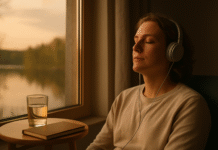
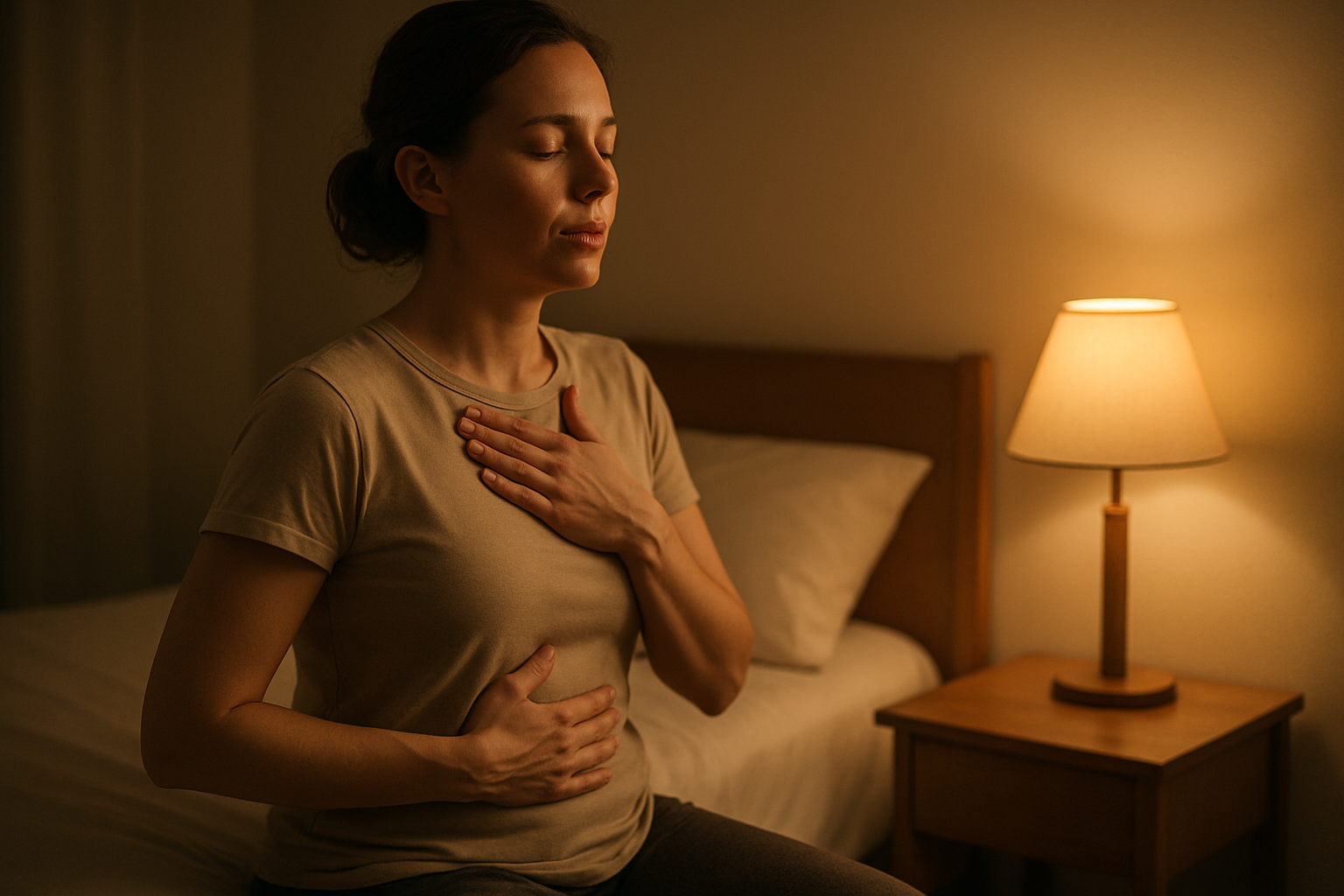
Begin by getting physically settled; a calm body makes the 4-7-8 pattern easier to maintain. Dim the lights, silence notifications, and choose a position you can hold without fidgeting—lying on your back with a pillow under your knees, or on your side if that’s more comfortable. Keep your spine long so your diaphragm has room to move, rest your jaw, and soften the shoulders. When you start from comfort, your attention can anchor to counting rather than scanning for aches, and your exhale can lengthen naturally, which is key for downshifting the nervous system before sleep. This deliberate setup also pairs nicely with other wind-down habits (e.g., a warm shower, dark room), reinforcing a cue that it’s time to rest.
1.1 Why it matters
A quiet, low-light environment plus a consistent pre-sleep routine helps your brain anticipate sleep and reduces cognitive load. That frees up bandwidth to count the breath, which is the core attentional task in 4-7-8. Relaxation strategies—breathing, muscle release, visualization—work best when they’re practiced the same way each night.
1.2 Mini-checklist
- Lights low; screens off or out of reach
- Comfortable position (back or side), jaw unclenched
- Shoulders down; chest and belly free to move
- Clock out of view; timer optional
- Optional: pair with a consistent bedtime routine (reading, gentle stretch)
Bottom line: a neutral, still starting point makes the timed pattern smoother and more effective at reducing arousal.
2. Place Your Tongue and Prepare the Mouth
Set your tongue tip lightly against the ridge just behind your upper front teeth and keep it there. Close your lips gently. This tongue placement helps shape the exhale (“whoosh”) and keeps the mouth posture consistent cycle to cycle, which simplifies the pattern. If your nose is congested, a saline rinse or gentle nose blowing beforehand can help; otherwise, default to nasal inhales and mouth exhales as described. People with CPAP, deviated septum, or frequent mouth-breathing can still practice: focus on the timing, reduce breath volume, and keep the exhale long and easy rather than forceful. The goal is a quiet, repeatable setup that you can do in bed without thinking.
2.1 How to do it
- Tongue lightly behind upper front teeth; relax the jaw.
- Seal lips at rest; don’t clench.
- Keep the face soft—between-the-brows and jaw tension commonly shorten the exhale.
- If nasal breathing is difficult, adjust gently and prioritize the timing rather than forceful airflow.
2.2 Common sticking points
- Too much effort: Big, noisy breaths can stimulate rather than soothe.
- Jaw tension: Unclench; allow a small space between upper and lower teeth.
- Nasal congestion: Try a saline rinse or side-lying position to open a nostril.
Synthesis: consistent tongue and lip posture makes each cycle predictable, which supports relaxed counting and a smoother, longer exhale.
3. Empty the Lungs with a Slow “Whoosh” Exhale
Start by exhaling fully and softly through the mouth until you feel comfortably empty—this “resets” the volume in your lungs and signals the body to slow down. Think of this first exhale as clearing static; you’re setting the stage for the measured inhale, hold, and extended out-breath. Keep the exhale smooth, not forced, with a slight pursing of the lips if it helps control flow. Many people notice that a gentle, elongated out-breath immediately reduces muscle tension in the shoulders and face. If you feel air-hungry, you’ve gone too far; back off and keep it easy.
3.1 Tools & examples
- Pursed-lip cue: Imagine blowing out a candle slowly, not in a gust—this maintains back-pressure and steadies the airflow.
- Timing check: Aim for a final exhale that ends softly, without a “collapse” or gasp.
- Mini example: Try a practice exhale of 5–6 seconds before your first cycle to feel the pace.
3.2 Why exhale length matters
Longer, controlled exhales bias the parasympathetic (“rest and digest”) response and can calm breathlessness and anxiety. Clinical respiratory guidance often emphasizes making the out-breath longer than the in-breath to reduce air trapping and tension, which aligns with the 4-7-8 emphasis on an extended exhale.
Synthesis: a complete, gentle “whoosh” exhale sets the tone for the slower rhythm that follows and makes the next inhale naturally quiet.
4. Inhale Quietly Through the Nose for 4
Draw in air quietly through your nose for a mental count of four. Keep your chest and neck passive; let your lower ribs and belly move first so the diaphragm does the work. A small, relaxed breath is enough—don’t stuff the lungs. If you’re lying down, a hand on the belly can help you feel a low, even rise; if you’re seated, lengthen the spine to create space for the diaphragm. A calm, consistent 4-count is more important than depth; over-inhaling often makes the following 7-count hold feel strained.
4.1 Numbers & guardrails
- Keep the inhale gentle; volume is less important than rhythm.
- If you can’t reach a relaxed four, shorten slightly and grow into it over a few nights.
- Mild lightheadedness is a cue to stop and return to normal breathing.
4.2 Mini-checklist (feel cues)
- Belly initiates; ribs widen laterally
- Shoulders stay heavy; collarbones quiet
- No gulping or “topping up” at the end of the four-count
Synthesis: a soft nasal inhale at a true four-count makes the next two phases—hold and long exhale—feel natural rather than forced.
5. Hold for 7 (Gentle Retention, Not Strain)
Now hold your breath for a count of seven, keeping the throat relaxed and the chest soft. This is not a max-effort breath-hold; it’s a gentle pause that widens the gap between inhale and exhale so the subsequent out-breath can lengthen without urgency. Many people feel a subtle stillness during this hold; if you feel tension building in the throat or jaw, slightly back off your inhale volume on the next cycle. If seven feels challenging initially, stay within comfort and consider practicing shorter, easy holds in the daytime while you build familiarity. The aim is calmness, not performance.
5.1 Why it helps
Paced-breathing practices that reduce breath rate and lengthen the exhale can increase vagal activity and heart-rate variability (HRV), physiological markers of down-regulation associated with relaxation. The 4-7-8 pattern does this by inserting a pause and emphasizing a long, unhurried out-breath. ScienceDirect
5.2 Guardrails
- Skip long holds if they provoke anxiety; resume with gentler cycles or alternative slow-breathing (e.g., box breathing).
- If you live with respiratory or cardiovascular conditions, practice conservatively and consult your clinician.
- Stop immediately if you feel dizziness, chest discomfort, or air hunger.
Synthesis: an easy seven-count hold creates space for a longer, smoother exhale—provided it stays comfortable and relaxed.
6. Exhale for 8 (Long, Even, “Whoosh”)
Exhale through your mouth for a count of eight, shaping the lips just enough to control the flow and keep the sound soft. Think of pouring out the breath in one continuous stream; the last second should be as gentle as the first. This long exhale is the central calming lever in 4-7-8, and it’s why many people feel their heart rate ease by the second or third cycle. If your eight ends early, don’t force it—note the limit and try a slightly smaller inhale next round so the exhale can stretch naturally.
6.1 Why a longer out-breath calms the body
Slow, paced breathing practices (especially those emphasizing longer exhales) are associated with increases in HRV and markers of parasympathetic activity, which correspond to reduced arousal and perceived stress—useful at bedtime. While many protocols hover around six breaths per minute, the unhurried 4-7-8 pattern accomplishes a similar shift by making the exhale dominant.
6.2 Tips to smooth the eight
- Keep the jaw and throat relaxed; the lips shape the flow.
- Imagine fogging a mirror very softly; that’s the exhale feel.
- Aim for evenness, not maximum length.
Synthesis: a steady eight-count out-breath is the technique’s calming engine; prioritize smoothness over volume or theatrics.
7. Repeat for 4–6 Cycles and Build a Nightly Habit
Complete 4–6 cycles at bedtime, then return to natural breathing and let sleep come. Many guides suggest starting with four cycles twice daily and working up to six to eight cycles at night as you get comfortable. The real gains arrive with consistency: practice at the same time each evening for 1–2 weeks, ideally paired with a short wind-down (dim lights, no scrolling, cool room). If you’re managing chronic insomnia, combine 4-7-8 with evidence-based approaches like CBT-I rather than relying on breathing alone.
7.1 Practice plan (2 weeks)
- Days 1–3: 4 cycles at bedtime; keep counts easy; note how you feel.
- Days 4–7: 6 cycles; add a 10-minute pre-sleep routine (dim lights, read).
- Week 2: 6–8 cycles if comfortable; keep the exhale smooth and unforced.
7.2 If 4-7-8 isn’t a fit tonight
Try an alternative slow-breathing pattern (e.g., box breathing: inhale-hold-exhale-hold for equal counts) or a brief body scan, then come back to 4-7-8 another night. The key is regular, low-effort relaxation that you’ll actually do.
Synthesis: repeat a small number of calm cycles nightly and pair them with good sleep habits; progress gradually and keep expectations gentle.
FAQs
1) What exactly is the 4-7-8 breathing technique?
It’s a paced-breathing pattern to promote relaxation: inhale through the nose for 4 seconds, hold for 7, exhale through the mouth for 8. Most people do 4–6 cycles at bedtime. The method is rooted in pranayama and popularized in modern wellness education.
2) How fast will it help me fall asleep?
Some notice calm within two or three cycles; for others it’s subtler and builds over a week of practice. It won’t “knock you out,” but by lowering arousal and steadying attention, it can shorten the time it takes to drift off when paired with a consistent routine.
3) How many cycles should I do?
A practical range is 4–6 cycles at bedtime. Some daytime practice (2–4 quick cycles) helps you learn the feel without sleep pressure. If you feel lightheaded, stop and breathe normally. cdn.optumwellbeing.com
4) Is there science behind it?
Direct clinical trials on 4-7-8 for insomnia are limited, but slow, paced breathing shows increases in HRV and other markers of relaxation. Clinical sleep guidelines endorse relaxation strategies as helpful adjuncts, with CBT-I recommended as first-line for chronic insomnia.
5) Can I modify the counts?
Stay within comfort. If the 7-second hold feels tense, first reduce inhale depth rather than forcing the hold; alternatively, try a simpler slow-breathing method (e.g., box breathing) and revisit 4-7-8 later. Always keep the exhale longer than the inhale for a calming bias.
6) Is it safe if I have asthma, COPD, or sleep apnea?
Many people with respiratory conditions use gentle breathing exercises, but avoid straining or long holds that provoke air hunger. Practice conservatively, prioritize ease, and follow your clinician’s guidance. If using CPAP, the timing can be done with the mask on—keep breaths small and unforced.
7) Should I use this instead of melatonin or sleep meds?
Think “both/and” with medical advice. For chronic insomnia, CBT-I is the evidence-based first-line treatment; breathing can complement it. Melatonin can help with specific circadian issues (jet lag/shift work) rather than general insomnia. Talk with your clinician about your situation. AASM
8) How does this compare to box breathing or resonance breathing?
All are forms of slow, structured breathing. Box breathing uses equal counts (e.g., 4-4-4-4) and suits people who dislike long holds; resonance breathing often targets ~6 breaths/min for HRV. 4-7-8 emphasizes a long exhale and slightly longer hold. Try each and adopt what you’ll practice consistently. Harvard Health
9) Can it lower blood pressure or anxiety?
Slow, deep breathing can modestly lower blood pressure and reduce perceived stress in some people when practiced regularly. It’s not a substitute for treatment but can be a helpful self-regulation tool. Harvard Health
10) Is it okay for kids or during pregnancy?
Gentle, game-like breathing can help kids settle, but keep it playful and short. During pregnancy, avoid strain and long breath-holds; choose relaxed, slow breathing without discomfort and follow midwife/clinician advice. The guiding rule is comfort over performance.
11) What if counting makes me more anxious?
Shift attention from numbers to feel cues (soft lips, easy jaw) or to the sound of the exhale. You can also start with two or three quiet cycles, then switch to a brief body scan or another relaxation exercise and try again the next night.
12) Do I need an app or timer?
No. Your internal count is enough. If you enjoy guidance, a simple timer or metronome can help pace the inhale/exhale, but avoid bright screens before bed. Consistency matters more than gadgets.
Conclusion
The 4-7-8 breathing technique distills a lot of sleep-friendly physiology into one easy pattern: a small inhale, a gentle pause, and a long, steady exhale. Used nightly, it can lower arousal, quiet mental chatter, and pair seamlessly with other wind-down habits. The trick isn’t perfect counts; it’s a relaxed rhythm you repeat consistently and without strain. Start with four cycles tonight, keep the exhale soft and even, and give it a week of honest practice. If sleep troubles persist, fold this tool into a broader plan—sound sleep hygiene and, when needed, professional care like CBT-I.
Tonight’s CTA: Dim the lights, lie comfortably, and complete 4 calm cycles of 4-7-8—then let sleep come to you.
References
- Breathing Techniques for Better Sleep — Sleep Foundation (Updated July 22, 2025). Sleep Foundation
- Relaxation Exercises to Help Fall Asleep — Sleep Foundation (Updated July 24, 2025). Sleep Foundation
- How To Do the 4-7-8 Breathing Exercise — Cleveland Clinic (Sept 6, 2022). Cleveland Clinic
- Breathing Exercises: 4-7-8 Breath (Video/Guide) — DrWeil.com (c. 2014). DrWeil.com
- 4-7-8 Breath — Relaxation Exercise (PDF) — Rutgers Nursing / Arizona Center for Integrative Medicine (Feb 2010). Rutgers Nursing
- Effects of Voluntary Slow Breathing on Heart Rate Variability: Systematic Review & Meta-analysis — Neuroscience & Biobehavioral Reviews (Laborde et al., 2022). PubMed
- Single Slow-Paced Breathing at Six Cycles per Minute Increases Cardiac Vagal Activity — Frontiers in Neuroscience (You et al., 2021). PMC
- Behavioral and Psychological Treatments for Chronic Insomnia Disorder in Adults: A Clinical Practice Guideline — AASM / Journal of Clinical Sleep Medicine (Edinger et al., 2021). PMC
- Updated Guidelines From the AASM on Management of Chronic Insomnia — American Family Physician (Jan 2022). AAFP
- Digital CBT-I: Platforms and Characteristics — American Academy of Sleep Medicine (May 2024). AASM
- Breathing Exercises for Stress — NHS (accessed Jan 2025). nhs.uk
- How to Manage Breathlessness: Make the Out-Breath Longer — Asthma + Lung UK (Mar 31, 2024). Asthma + Lung UK