























If your life revolves around barbells, sets, and PRs, you already know that what you do outside the gym can make or break progress. Supplements won’t turn a poor program into a winning one—but the right ones can help you train harder, recover better, and consistently add weight to the bar. This guide breaks down the 5 must-have supplements for strength athletes, how to use them step by step, what to expect, and how to measure results in the real world.
Medical disclaimer: The information below is educational and not a substitute for personalized medical advice. If you have a medical condition, take prescription medications, are pregnant, or have concerns about any supplement, consult a qualified healthcare professional before use.
Key takeaways
- Keep it simple: Most of your results come from training, sleep, food, and a short list of evidence-backed supplements.
- The big three for performance: Creatine, protein (whey/casein), and caffeine have the strongest support for strength, power, and training quality.
- Smart extras: Beta-alanine can boost high-rep sets and volume; vitamin D matters for athletes who are insufficient or deficient.
- Dose and timing matter: You’ll see better results and fewer side effects when you follow proven protocols.
- Track outcomes: Use a simple dashboard (1RM trends, rep PRs, weekly volume, body weight, session RPE, and recovery markers) to judge what’s working.
- Quality first: Choose third-party tested products to minimize contamination and labeling errors.
Creatine Monohydrate
What it is & why lifters use it
Creatine is a compound your body stores in muscle as phosphocreatine, which helps regenerate ATP—the fuel for short, high-intensity efforts like heavy singles and explosive triples. Supplementing with creatine monohydrate reliably increases intramuscular creatine stores, which can translate to higher training quality, more reps at a given load, greater strength, and lean mass accretion over time.
Requirements, cost, and low-cost alternatives
- Requirements: None beyond a quality creatine monohydrate powder and a drink to mix it with.
- Cost: Among the cheapest, most effective supplements (often pennies per 5-gram serving).
- Alternatives: Creatine-rich foods (e.g., red meat, fish) help, but food alone is unlikely to saturate muscle creatine stores to the same degree as supplementation. Other creatine forms offer no consistent advantage over monohydrate.
How to implement (beginner-friendly)
- Choose your approach.
- Loading (fast): 20 g/day split into 4 x 5 g doses for 5–7 days, then 3–5 g/day to maintain.
- No loading (slow): 3–5 g/day from day one; stores saturate over ~3–4 weeks.
- Timing: Take it any time you’ll remember consistently (with a meal works well).
- Hydration: Drink fluids throughout the day—creatine increases water content inside muscle.
Beginner modifications & progressions
- If you’re sensitive: Start at 3 g/day for two weeks, then increase to 5 g.
- If you’re larger or train twice daily: Some lifters benefit from 5–10 g/day maintenance; adjust based on training response and gut tolerance.
Frequency, duration, and metrics
- Frequency: Daily.
- Duration: Continuous use is common (on/off cycling isn’t necessary).
- Metrics to watch: Rep PRs at 70–85% 1RM, repeated sprint/jump power (if relevant), weekly training volume, lean body mass trends, and scale weight (expect a small, early uptick from increased muscle water).
Safety, caveats, and common mistakes
- Common mistakes: Skipping maintenance after loading; inconsistent daily dosing; chasing fancy forms instead of monohydrate; under-hydrating.
- Caveats: Mild GI upset can occur with large single doses—split doses if needed. If you have kidney disease or take nephrotoxic medications, consult your clinician first.
Mini-plan (example)
- Week 1: Load 5 g, four times daily with meals/shakes.
- Week 2+: Maintain at 3–5 g/day; track bench and squat rep PRs at working weights.
Whey/Casein Protein (to hit your daily protein target)
What it is & why lifters use it
Protein supplements aren’t magic—they’re convenient. Hitting your total daily protein target consistently is one of the strongest nutritional levers for increasing strength and lean mass. Whey (fast-digesting, leucine-rich) and casein (slow-digesting, ideal pre-sleep) make it easy to close gaps when food alone falls short.
Requirements, cost, and low-cost alternatives
- Requirements: A reputable whey or casein powder, shaker, and a measuring scoop.
- Cost: Moderate; varies by brand and third-party testing.
- Alternatives: Whole foods (eggs, dairy, lean meats, fish, soy). Many athletes meet needs with food only; powders just add convenience.
How to implement (beginner-friendly)
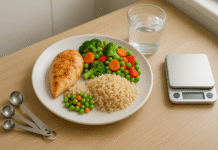
- Set your daily target: As a starting point for strength athletes, aim around 1.6–2.2 g/kg/day from all sources.
- Distribute doses: Plan 3–5 protein feedings/day, roughly 0.25–0.4 g/kg each (often 20–40 g per meal for most adults).
- Use shakes strategically:
- Post-training: 20–40 g whey.
- Before bed: 30–40 g casein or a slow-digesting protein option.
Beginner modifications & progressions
- If appetite is low: Start with 20 g shakes and build up.
- If you’re cutting: Higher protein (toward 2.2 g/kg/day) can support lean mass retention.
- Plant-based: Choose blends targeting a complete amino acid profile and adequate leucine.
Frequency, duration, and metrics
- Frequency: 1–2 shakes/day as needed to hit the daily total.
- Duration: Ongoing—adjust to body weight goals and training cycles.
- Metrics to watch: Body weight trend, skinfolds/DEXA (if available), strength at 3–8 reps, training volume tolerance, satiety and recovery.
Safety, caveats, and common mistakes
- Common mistakes: Treating shakes as a replacement for meals; overfocusing on “anabolic windows” while under-eating overall; ignoring total calories.
- Caveats: If you’re lactose intolerant, choose isolate or lactose-free options. In healthy athletes, higher protein intakes have not shown harm; those with kidney disease require medical guidance.
Mini-plan (example)
- Daily: Eat three protein-rich meals; add 1 whey shake post-lift and 1 casein shake pre-sleep as needed to consistently reach your target.
Caffeine
What it is & why lifters use it
Caffeine is a central nervous system stimulant that can acutely enhance strength, power, bar speed, and training volume, while reducing perceived exertion. Used strategically, it’s a simple way to make hard sessions more productive.
Requirements, cost, and low-cost alternatives
- Requirements: Coffee, caffeine tablets, gum, or a simple pre-workout that lists caffeine content.
- Cost: Low.
- Alternatives: For stimulant-free days, use non-caffeinated routines (music, longer warm-ups, ammonia only for competition if allowed) and leverage creatine plus carb timing.
How to implement (beginner-friendly)
- Pick a starting dose: 3 mg/kg body mass is a sensible first trial (e.g., ~225 mg for a 75-kg lifter).
- Timing: Take ~60 minutes pre-lift (tablets/capsules) or ~30–60 minutes if using coffee or most pre-workouts.
- Refine: If underwhelmed and side effects are minimal, titrate up to ~4–6 mg/kg on key days.
Beginner modifications & progressions
- If you train late: Use smaller doses or go caffeine-free to protect sleep.
- If you’re sensitive: Try 2–3 mg/kg or caffeine gum (faster on, faster off).
- Competition taper: Consider reducing daily caffeine for 7–10 days pre-meet so race-day/meet-day caffeine “feels stronger.”
Frequency, duration, and metrics
- Frequency: Save higher doses for your heaviest/most technical sessions; use less or none on easy days.
- Duration: Long-term use is common; rotating low and moderate doses can help manage tolerance.
- Metrics to watch: Bar speed (if you track it), session RPE, total reps at 75–85%, jump height/throw distance on power days, sleep quality.
Safety, caveats, and common mistakes
- Common mistakes: Stacking multiple caffeinated products; ignoring habitual intake when choosing a dose; taking high doses at night; underestimating sleep disruption.
- Caveats: Individual responses vary widely. Many healthy adults tolerate ≤400 mg/day total from all sources, but dose it to your goals and sleep needs. If you’re pregnant or on medications, seek medical advice.
Mini-plan (example)
- Heavy lower day: 3 mg/kg 45–60 minutes pre-lift.
- Max out day: If well-tolerated, 4–5 mg/kg 60 minutes pre-lift; cap total daily intake ≤400 mg unless advised otherwise.
Beta-Alanine
What it is & why lifters use it
Beta-alanine raises muscle carnosine, an intracellular buffer that helps manage acidity during hard efforts. For strength athletes, benefits show up most in sets lasting ~60–240 seconds (e.g., higher-rep squats, repeated sets with short rest) and high-volume sessions.
Requirements, cost, and low-cost alternatives
- Requirements: A plain beta-alanine powder or capsules.
- Cost: Low to moderate.
- Alternatives: Overlapping benefits with sodium bicarbonate exist for some efforts, but bicarbonate is trickier to dose and has more GI side effects.
How to implement (beginner-friendly)
- Daily dose: 4–6 g/day, split into 2–4 doses to minimize tingling (paresthesia).
- Duration: At least 4 weeks of daily use; effects build with ongoing use.
- Timing: Not critical—focus on consistent daily intake.
Beginner modifications & progressions
- If tingling bothers you: Use 1.6–2 g doses spread through the day or choose a sustained-release product.
- If you train with high reps or short rests: Aim toward 6 g/day after a 1–2 week ramp.
Frequency, duration, and metrics
- Frequency: Daily (not just workout days).
- Duration: Consider 8–12+ weeks across high-volume phases.
- Metrics to watch: Reps to technical failure at 60–75%, set density (more work in the same time), session RPE at fixed loads, and short-rest performance.
Safety, caveats, and common mistakes
- Common mistakes: Taking it only pre-workout; quitting after one week (levels need time to build); expecting 1RM changes—beta-alanine is mostly about capacity.
- Caveats: The tingling sensation is benign; splitting doses or using sustained-release forms helps.
Mini-plan (example)
- Weeks 1–4: 1.6 g four times daily.
- Weeks 5–8: Maintain 4–6 g/day; emphasize higher-rep accessory work to leverage improved buffering.
Vitamin D (ensure adequacy)
What it is & why lifters use it
Vitamin D supports bone health, muscle function, and overall health. For indoor athletes or those with limited sun exposure, insufficient or deficient levels are common. Correcting a low level helps overall readiness to train and may support musculoskeletal health over the long haul.
Requirements, cost, and low-cost alternatives
- Requirements: Blood test for serum 25(OH)D to confirm status; vitamin D3 (cholecalciferol) supplement if indicated.
- Cost: Low to moderate for testing; supplements are inexpensive.
- Alternatives: Sensible sunlight exposure and vitamin D–rich/fortified foods help but may be insufficient depending on latitude, season, clothing, and skin coverage.
How to implement (beginner-friendly)
- Test first: Ask your clinician for a 25(OH)D test, especially if you train indoors, wear full coverage in the sun, or live at higher latitudes in winter.
- Supplement if needed: Follow your clinician’s dosing to correct a low level, then transition to a maintenance intake aligned with dietary reference intakes.
- Retest: Recheck levels after the correction phase to ensure you’re in a healthy range.
Beginner modifications & progressions
- If levels are adequate: You may not need a supplement—stick to RDA-level intake through food/fortified foods or a multivitamin.
- If you’re low: Work with your clinician on a plan (daily or weekly dosing protocols vary by baseline level and body size).
Frequency, duration, and metrics
- Frequency: Daily or weekly per clinician guidance.
- Duration: Seasonal and lifestyle factors matter—reassess annually.
- Metrics to watch: Injury resilience, consistent training availability, and—if you were low—subjective energy/mood and recovery quality.
Safety, caveats, and common mistakes
- Common mistakes: Supplementing blindly without testing; megadosing; ignoring total intake from fortified foods plus supplements.
- Caveats: Respect the tolerable upper intake level (UL) for adults and avoid chronic excessive dosing. Vitamin D can interact with certain medications; consult your clinician.
Mini-plan (example)
- Step 1: Get a 25(OH)D blood test during your off-week.
- Step 2: If low, follow a clinician-directed repletion plan; if adequate, maintain RDA-level intake and recheck annually.
Quick-Start Checklist
- Nail the basics first: progressive programming, 7–9 hours of sleep, calorie-appropriate diet rich in whole foods.
- Creatine monohydrate: 3–5 g/day, every day.
- Protein: Plan 3–5 feedings; use whey/casein to hit ~1.6–2.2 g/kg/day total.
- Caffeine: Trial ~3 mg/kg 45–60 minutes pre-key sessions; adjust based on response and sleep.
- Beta-alanine: 4–6 g/day in divided doses for ≥4 weeks if your training includes high-rep sets or short rests.
- Vitamin D: Test status; supplement only if needed; avoid excess.
- Choose third-party tested products to minimize contamination risk.
- Track outcomes weekly (see “How to measure progress”).
Troubleshooting & Common Pitfalls
“I don’t feel creatine working.”
You won’t “feel” it acutely. Verify daily intake, ensure you’re at 3–5 g/day, and track training volume and rep PRs over 3–6 weeks.
“Caffeine wrecks my sleep.”
Use smaller doses, push it earlier in the day, or skip it on evening sessions. Protect sleep at all costs—no supplement can outwork poor sleep.
“Beta-alanine makes my skin tingle.”
Split into 1.6–2 g doses or use sustained-release forms. The sensation is harmless and tends to fade.
“Protein upsets my stomach.”
Switch to whey isolate or try different bases (water vs. milk). Consider lactose-free options. You can always rely more on whole foods.
“I’m overwhelmed by brands.”
Look for independent third-party certifications and simple formulas with transparent labels.
“Vitamin D is confusing.”
Test status, then follow medical guidance. Avoid megadosing and respect upper intake levels.
How to Measure Progress (Simple Dashboard)
- Strength: Track 1RM (or estimated 1RM) in squat/bench/deadlift/press every 4–6 weeks.
- Volume capacity: Total weekly hard sets per muscle group; reps completed at a fixed percentage (e.g., AMRAP at 75%).
- Bar speed/power (optional): Best rep velocity at a fixed load; jump height or med-ball throw distance.
- Recovery: Session RPE, next-day muscle soreness rating, and sleep quality/duration.
- Body composition: Morning body weight (7-day average), waist, and periodic body comp if available.
- Training availability: Missed sessions due to illness/injury (monthly).
Use the dashboard to evaluate whether a supplement helps you train more, better, or recover faster—not just how you “feel” on day one.
A Simple 4-Week Starter Plan (Roadmap)
Goal: Implement the big rocks, maintain sleep and nutrition, and establish baseline metrics.
Week 1 – Foundation & Baselines
- Start creatine (load if you want faster saturation, then move to 3–5 g/day).
- Plan protein feedings to hit ~1.6–2.2 g/kg/day; add one whey shake post-training.
- Trial caffeine ~3 mg/kg before your heaviest session this week.
- Start beta-alanine at 1.6–2 g, 2–3×/day (build to 4–6 g/day).
- Book a vitamin D blood test if appropriate.
- Record baselines: key lifts (working sets at 70–85%), session RPE, weekly sets, body weight average.
Week 2 – Consistency & Dose Tuning
- Maintain daily creatine and beta-alanine.
- Hit protein target every day (food > shakes).
- Use caffeine on 1–2 key sessions; evaluate sleep and performance; adjust dose/timing.
- If vitamin D is low, follow clinician plan; if adequate, maintain RDA-level intake.
- Start tracking rep PRs and set density (more work in same time).
Week 3 – Leverage Volume
- With creatine + beta-alanine on board, push one additional hard set per primary lift or key muscle group if recovery allows.
- Keep caffeine for priority sessions; protect sleep by reducing or skipping caffeine on late sessions.
- Maintain protein target daily; consider casein pre-sleep if evening hunger or recovery is an issue.
Week 4 – Assess & Lock In
- Re-test a training indicator: AMRAP at 75% on a main lift or a strict 5×5 at a known load.
- Review dashboard: Are rep PRs up? Is weekly volume higher at the same RPE? Is sleep intact?
- Keep what helps, tweak what doesn’t (often dose/timing, not the supplement itself).
FAQs
1) Do I need a loading phase for creatine?
No. Loading saturates muscle faster, but 3–5 g/day from day one works—just slower. Choose the method you’ll stick with.
2) Is creatine safe long-term?
In healthy individuals using recommended doses, creatine is well-studied and generally well-tolerated. If you have kidney disease or take nephrotoxic medications, consult your clinician.
3) Whey or casein—does it matter?
Both help you hit your daily protein target. Whey is fast and convenient post-training; casein is slow and useful pre-sleep. Total daily protein matters most.
4) How much caffeine should I take?
Start around 3 mg/kg ~45–60 minutes pre-lift and adjust. Many adults keep total daily intake ≤400 mg from all sources, but individual tolerance and sleep should drive your decision.
5) Will beta-alanine increase my 1RM?
It’s more about capacity—more reps at moderate loads, better tolerance of short rest, and higher training volume. Over time, that extra work can support strength gains.
6) Vitamin D: should every athlete supplement?
Not necessarily. Test first. If your levels are adequate, you may not need extra. If you’re low, correcting it is sensible—work with your clinician and avoid excessive dosing.
7) Are BCAAs necessary if I hit my protein target?
Generally, no. If you consume adequate high-quality protein, BCAAs add little.
8) Can I combine all five supplements?
Yes—many athletes do. Keep caffeine to priority sessions, take creatine and beta-alanine daily, use protein to hit your target, and only supplement vitamin D if needed.
9) What if supplements upset my stomach?
Split doses, take with food, or switch forms (e.g., whey isolate). For beta-alanine tingling, use smaller, more frequent doses or sustained-release versions.
10) How do I avoid contaminated products?
Choose independently third-party tested supplements and stick to brands with transparent labels and batch testing.
11) I’m cutting weight. Do these still help?
Yes, especially protein (muscle retention) and caffeine (training quality). Creatine can slightly increase scale weight (intramuscular water), but that’s not fat mass.
12) Are there other “nice-to-have” supplements?
Depending on your needs: omega-3s (if dietary intake is low), sodium bicarbonate (specific high-intensity events), or carbohydrate powders for long sessions. These aren’t must-haves for most strength athletes.
Conclusion
When your training and nutrition are dialed in, a minimalist, evidence-based supplement stack can amplify your results: creatine for strength and power capacity, protein to consistently meet daily needs, caffeine for acute performance, beta-alanine for high-rep and short-rest work, and vitamin D if you’re low. Keep doses simple, products vetted, and results measured—not guessed.
CTA: Pick one supplement from this list you’re not already using correctly, implement the protocol for four weeks, and log the difference—then stack the next win.
References
- International Society of Sports Nutrition Position Stand: protein and exercise — Journal of the International Society of Sports Nutrition — June 20, 2017 — https://jissn.biomedcentral.com/articles/10.1186/s12970-017-0177-8
- A systematic review, meta-analysis and meta-regression of the effect of protein supplementation on resistance training-induced gains in muscle mass and strength in healthy adults — British Journal of Sports Medicine — 2018 — https://bjsm.bmj.com/content/52/6/376.abstract
- International Society of Sports Nutrition position stand: safety and efficacy of creatine supplementation in exercise, sport, and medicine — Journal of the International Society of Sports Nutrition — June 13, 2017 — https://jissn.biomedcentral.com/articles/10.1186/s12970-017-0173-z
- Common questions and misconceptions about creatine supplementation: what does the scientific evidence really show? — Journal of the International Society of Sports Nutrition — 2021 — https://jissn.biomedcentral.com/articles/10.1186/s12970-021-00412-w
- International society of sports nutrition position stand: Beta-Alanine — Journal of the International Society of Sports Nutrition — 2015 — https://jissn.biomedcentral.com/articles/10.1186/s12970-015-0090-y
- Effects of caffeine intake on muscle strength and power: a systematic review and meta-analysis — Journal of the International Society of Sports Nutrition — 2018 — https://jissn.biomedcentral.com/articles/10.1186/s12970-018-0216-0
- International society of sports nutrition position stand: caffeine and exercise performance — Journal of the International Society of Sports Nutrition — 2021 — https://jissn.biomedcentral.com/articles/10.1186/s12970-020-00383-4
- IOC Consensus Statement: Dietary Supplements and the High-Performance Athlete — British Journal of Sports Medicine — 2018 — https://bjsm.bmj.com/content/52/7/439
- Vitamin D — Health Professional Fact Sheet — NIH Office of Dietary Supplements — June 27, 2025 — https://ods.od.nih.gov/factsheets/VitaminD-HealthProfessional/
- Effects of vitamin D supplementation on maximal strength and power in athletes: a systematic review and meta-analysis of randomized controlled trials — Frontiers in Nutrition — 2023 — https://pmc.ncbi.nlm.nih.gov/articles/PMC10570740/
- Spilling the Beans: How Much Caffeine is Too Much? — U.S. Food and Drug Administration (Consumer Update) — August 28, 2024 — https://www.fda.gov/consumers/consumer-updates/spilling-beans-how-much-caffeine-too-much
- Certified for Sport® Program — NSF — Accessed August 2025 — https://www.nsf.org/consumer-resources/articles/certified-for-sport-program
- Informed Sport: Sports Supplements Certification — Informed Sport — Accessed August 2025 — https://sport.wetestyoutrust.com/
- International Society of Sports Nutrition Position Stand: protein and exercise (infographic & full text supporting per-meal dosing) — British Journal of Sports Medicine — 2019 — https://bjsm.bmj.com/content/53/24/1552.full.pdf