















A busy mind is like a browser with too many tabs open. Visualization—a simple, trainable mental skill—helps you close the extras and focus on what matters. In this 7-day mindfulness challenge, you’ll use imagery-based practices to calm your nervous system, sharpen attention, and cultivate a steadier mood. You’ll also learn how to measure progress, troubleshoot common hurdles, and build a sustainable routine that lasts beyond the week.
This step-by-step program is for beginners and seasoned meditators alike. If you’re new to mindfulness, you’ll get clear, practical instructions. If you’ve practiced before, you’ll find structured variations that keep the work fresh and effective.
Medical disclaimer: This guide is educational and not a substitute for personalized medical or mental health care. If you live with significant anxiety, depression, trauma-related symptoms, or other health conditions, consult a qualified professional before starting. If any exercise increases distress, stop and seek guidance.
Key takeaways
- Visualization is mindfulness in pictures. You’ll pair attention training with simple imagery to relax the body, settle the mind, and build emotional balance.
- Seven focused sessions, one per day. Each day targets a different skill: breath, body, safety, values, compassion, performance, and gratitude.
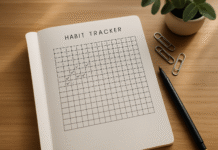
- Progress is trackable. You’ll use short daily metrics (mood, focus, tension, sleep) and a two-minute reflection.
- Tiny but consistent wins beat marathon sessions. Ten mindful minutes—done well—outperform occasional hour-long efforts.
- Safety first. Adjust or skip visualizations that feel activating; switch to neutral anchors like breath or sound.
- Sustainable roadmap included. A four-week plan shows you how to maintain gains and build capacity over time.
Quick-start checklist
- Pick a time and place. Same chair, same time (morning or evening) reduces decision fatigue.
- Set a gentle timer for 10–12 minutes. Silence the phone; enable Do Not Disturb.
- Choose one anchor (breath, ambient sound) you can return to when images drift.
- Post-practice note. Keep a small notebook or app for a 60-second log: date, minutes, mood 1–10, one sentence about what you noticed.
- Expect wandering. Minds think. Your job is to notice and return, kindly, without drama.
How to measure progress (simple KPIs)
Track these once daily (0–10 scale; lower is easier for tension):
- Stress/tension: “How tense am I right now?”
- Mood/affect: “How is my mood?”
- Focus/clarity: “Could I stay with the exercise?”
- Sleep quality (morning rating).
- Adherence: minutes practiced.
Weekly review (5 minutes): Look for direction, not perfection. Even small improvements (e.g., stress from 7 → 5) are meaningful. Note which imagery types help most.
Day 1 — Breath-Image Reset
What it is & benefits
A foundational practice that pairs breath awareness with a simple visual—like seeing the breath as a tide moving in and out. This helps cue the nervous system toward the relaxation response while training gentle, continuous attention.
Requirements & low-cost options
- Quiet seat, timer or phone in airplane mode, optional eye mask.
- No apps required; a kitchen timer works.
Step-by-step
- Sit upright but at ease. Eyes closed or softly downcast.
- Notice natural breathing—don’t change it.
- Add a visual: inhale = a wave arriving; exhale = a wave receding.
- When thoughts pull you away, mark it (“thinking,” “planning”), then return to breath + wave.
- End by noticing any shift in body or mood.
Beginner modifications & progressions
- Simplify: Use a single word image (“in,” “out”) instead of waves.
- Progress: Lengthen to 12–15 minutes or count 1–10 on breaths, restarting at 1 when distracted.
Recommended duration/metrics
- 10 minutes. Log stress, focus, and mood afterward.
Safety & common mistakes
- If breath focus triggers discomfort (common in anxiety), place attention at the nostrils or on ambient sound instead.
- Don’t force deep breathing; let the body settle first.
Mini-plan (2–3 steps)
- 2 min posture + check-in → 7 min breath + wave → 1 min reflection.
Day 2 — Body Scan with Gentle Color Wash
What it is & benefits
A mindful “tour” of the body combined with a soft, neutral color (e.g., warm daylight) that “washes” through tense regions. Body scans improve interoception and help release subtle bracing you don’t notice until you look.
Requirements
- Mat or chair. Optional blanket for warmth.
Step-by-step
- From head to toes, place attention on each region for 5–10 seconds.
- As you notice tension, imagine a steady color or light dissolving tightness on the exhale.
- Move slowly. If you drift, restart at the last region you remember.
Beginner modifications & progressions
- Simplify: Use only three zones—head/neck, torso, legs.
- Progress: Pair with gentle 4-6 breathing (inhale 4, exhale 6) during the “wash.”
Recommended duration/metrics
- 10–12 minutes. Track body tension 0–10 pre/post.
Safety & common mistakes
- Color is neutral; avoid strong personal associations if they feel activating.
- Common mistake: rushing. Slow is the practice.
Mini-plan
- 1 min settling → 8–10 min scan + color → 1 min whole-body rest.
Day 3 — Safe Place Visualization (Rapid Calm)
What it is & benefits
You’ll build a vivid, personally meaningful “calm place” (real or imagined) to access during stress spikes. This mental context switch reduces perceived threat and supports emotional regulation.
Requirements
- Quiet spot; optional ambient sound (ocean, rain) if helpful.
Step-by-step
- Recall or design a place where you feel safe and at ease (beach, garden, library).
- Layer five senses: sights (light, colors), sounds, temperature/air, textures, scents.
- Anchor with breath: each exhale deepens “being there.”
- Create a simple cue: a word or gesture you can use anytime to re-enter (e.g., touching thumb to forefinger).
Beginner modifications & progressions
- Simplify: Start with a single snapshot instead of a full scene.
- Progress: Practice “micro-visits” during the day (20–30 seconds).
Recommended duration/metrics
- 8–12 minutes. Track perceived safety/calm afterward.
Safety & common mistakes
- If your history includes trauma, screen the scene. Avoid closed spaces or elements that might trigger.
- Mistake: overengineering. Keep it simple and kind.
Mini-plan
- 2 min breath → 6–8 min scene build → 1–2 min encode cue.
Day 4 — Future-Self Alignment (Values & Direction)
What it is & benefits
Visualize a compassionate, wiser “future you” who embodies your core values—calm, clarity, integrity, patience. This clarifies priorities and reduces rumination by shifting focus from problems to principles.
Requirements
- Journal or notes app for 2–3 prompts after practice.
Step-by-step
- Set intention: “Meet my future self in three years.”
- See where you meet, how they move, what qualities they emanate.
- Ask two questions silently: What matters most right now? What tiny action today aligns with that?
- Close with one sentence you’ll act on within 24 hours.
Beginner modifications & progressions
- Simplify: Focus on a single quality (e.g., patience) and visualize one situation today where you’ll apply it.
- Progress: Record a two-minute voice memo to replay before challenging tasks.
Recommended duration/metrics
- 10–12 minutes. Track clarity 0–10 and note one aligned action.
Safety & common mistakes
- Avoid perfectionistic imagery; your future self is supportive, not critical.
- Mistake: turning this into a to-do avalanche. Keep it one action.
Mini-plan
- 2 min settling → 7 min visualization → 1–3 min journaling.
Day 5 — Compassion Imagery (Warmth Toward Self & Others)
What it is & benefits
Also known as loving-kindness, this practice uses simple phrases and visual cues (e.g., sending warm light) to cultivate care. It can soften self-criticism and reduce social stress while strengthening connection.
Requirements
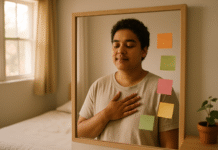
- None. Optional hand-over-heart gesture.
Step-by-step
- Visualize someone easy to care about (a mentor, pet, or benefactor).
- Silently offer phrases like: “May you feel safe. May you be healthy. May you live with ease.”
- Turn the same phrases toward yourself, then to a neutral person, and—if comfortable—someone difficult.
- Pair phrases with a gentle image of warmth spreading from the chest.
Beginner modifications & progressions
- Simplify: Work only with the “easy person” and yourself.
- Progress: Add brief compassion breaks during the day (two slow breaths, one phrase).
Recommended duration/metrics
- 10 minutes. Track self-criticism 0–10 and social tension 0–10.
Safety & common mistakes
- If compassion for self feels edgy, start with neutral or benefactor only.
- Don’t force sentiment; steady, sincere repetition is enough.
Mini-plan
- 2 min settling → 6–7 min phrases + imagery → 1 min rest.
Day 6 — Performance Rehearsal (Mindful Goal Imagery)
What it is & benefits
Borrowed from sport and performing arts, this uses slow-motion mental rehearsal to prime the mind–body loop for an upcoming situation: a conversation, presentation, exam, or workout. You rehearse process, not just outcomes.
Requirements
- A specific scenario within the next week.
- Two or three process cues (e.g., “breathe, pause, speak” or “feet grounded, eyes soft”).
Step-by-step
- Define the scene: location, time of day, key steps you’ll take.
- Run a best realistic version in first person: sense the room, your stance, your voice.
- If a worry appears, pause, breathe, and replay calmly with your cues.
- End with a short image of completion and the feeling in your body.
Beginner modifications & progressions
- Simplify: Rehearse the opening 30 seconds only.
- Progress: Add a brief “rainy day” run where things go off script—and visualize how you adapt.
Recommended duration/metrics
- 8–10 minutes. Track confidence 0–10 before/after; note one cue to use on the day.
Safety & common mistakes
- Avoid rigid “perfect” scripts; flexibility beats fantasy.
- Mistake: rehearsing failure repeatedly. If that happens, reset to breath, then re-run with your cues.
Mini-plan
- 2 min breath → 5–7 min rehearsal → 1 min finalize a cue card.
Day 7 — Gratitude Walk (Moving Visualization)
What it is & benefits
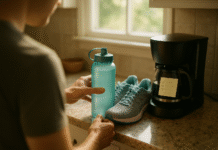
A short, slow walk that stitches awareness to specific, concrete images of appreciation—light on leaves, the feel of air, the reliability of your shoes. Movement helps restless minds; gratitude shifts attention toward sufficiency.
Requirements
- Safe route (indoors or outdoors), timer, comfortable shoes.
Step-by-step
- Walk more slowly than usual. Feel feet, knees, hips.
- Every 5–10 steps, pause to see one detail and silently name what you appreciate about it.
- On the last minute, visualize the day ahead and place one dot of gratitude in it (e.g., “the first sip of tea”).
Beginner modifications & progressions
- Simplify: Two minutes around the room if outdoors isn’t feasible.
- Progress: Alternate 1 minute walking awareness, 1 minute stillness + visualization.
Recommended duration/metrics
- 10 minutes. Track mood and restlessness pre/post.
Safety & common mistakes
- Stay aware of surroundings; eyes up, soft focus.
- Mistake: trying to feel grateful. It’s enough to notice specifics.
Mini-plan
- 1 min posture → 8 min walk + noticing → 1 min close with one gratitude for tomorrow.
Troubleshooting & common pitfalls
- “My mind won’t stop.” Good—now you’re seeing it. Use micro-anchors: feel the exhale in the belly or the weight of your hands.
- Images keep drifting. Return to the simplest sketch. Fewer details; more sensing.
- I get sleepy. Sit upright, eyes slightly open, and schedule earlier in the day.
- Strong feelings arise. Shift to neutral anchors (sound, hand on heart). Take breaks. Seek professional support if distress persists.
- All-or-nothing mindset. Ten imperfect minutes count. Consistency over intensity.
- No time. Pair with routines: right after teeth brushing or before your first coffee.
Safety notes
- If breath attention is uncomfortable, try sound, touch, or visual focus on a neutral object.
- People with trauma histories may prefer body-scan “previewing” (scan with eyes open first) and to skip safe-place imagery initially.
- Stop any practice that increases panic, dissociation, or intrusive imagery, and consult a clinician.
A simple 4-week roadmap (beyond the challenge)
Week 1 — Repeat the 7 days.
- Short, consistent sessions (10–12 minutes).
- Identify your two most helpful practices.
Week 2 — Extend & stack.
- 12–15 minutes.
- Stack two complementary practices (e.g., 6 min breath + 6 min compassion).
Week 3 — Add movement & “in-the-wild” reps.
- One gratitude walk daily; insert 20–30 second safe-place micro-visits before stressful calls or tasks.
- Begin using your performance cue in real situations.
Week 4 — Personalize & review.
- Build a two-practice “daily bundle” you can keep: one calming (breath/body) + one relational (compassion/gratitude).
- Review four weeks of logs. Note best time of day, triggers eased, and next tiny improvement.
How to know it’s working
You won’t always feel calm during practice—and that’s okay. Look for:
- Slightly quicker recovery from stressors.
- More intentional pauses before reacting.
- Improved sleep quality on average.
- A subtle shift from catastrophizing toward naming and choosing.
Even small changes compound if you keep showing up.
FAQs
1) I can’t visualize images clearly. Will this still work?
Yes. Visualization isn’t about perfect mental pictures. Sensing, labeling, and using simple cues (color, shape, warmth) are enough. Treat it like tuning a radio: clarity improves with practice.
2) How long until I notice benefits?
Some people feel a shift after the first or second session; for most, consistent practice over 2–4 weeks yields steadier changes in mood, stress, and focus. Track your daily KPIs to see the trend.
3) What if I get more anxious when I pay attention to my body?
Switch to external anchors (ambient sounds, a neutral object) or movement practices like the gratitude walk. Keep sessions shorter, and consider support from a trauma-informed clinician.
4) Can I use music or nature sounds?
Yes, if they’re steady and non-distracting. If you start relying on them, occasionally practice in silence to build adaptability.
5) Is this the same as hypnosis?
No. These are mindfulness-based practices where you remain alert, aware, and in control. The goal is present-moment attention with kindness, not trance.
6) What time of day is best?
Whatever you can repeat. Many people prefer morning for consistency or evening to transition into sleep. If sleep is a goal, finish at least 30–60 minutes before bedtime unless you’re doing a brief wind-down.
7) Can I combine this with therapy or medication?
Often yes. Many people pair mindfulness with therapy and/or medication. Coordinate with your clinician for personalized guidance.
8) What if I miss a day?
Resume the next day without self-criticism. Consistency over time matters more than streaks.
9) How do I adapt this for kids or teens?
Shorten to 3–5 minutes, use concrete images (favorite park, superhero qualities), and keep it playful. Movement-based practices often work best.
10) Do I need special equipment or an app?
No. A chair, timer, and notebook are enough. Apps can help with reminders or guided sessions, but they’re optional.
Putting it all together (a sample week at a glance)
- Mon: Day 1 Breath-Image Reset (10 min)
- Tue: Day 2 Body Scan + Color (12 min)
- Wed: Day 3 Safe Place (10 min + 2 micro-visits)
- Thu: Day 4 Future-Self (10 min + 2-minute action note)
- Fri: Day 5 Compassion (10 min + 1 compassion break midday)
- Sat: Day 6 Performance Rehearsal (10 min)
- Sun: Day 7 Gratitude Walk (10 min)
Each day: log your KPIs, one sentence about what you noticed, and one micro-commitment for tomorrow.
Conclusion
Inner peace isn’t a destination; it’s a skill you can practice in minutes a day. Over this week, you learned how to pair attention with imagery to relax, refocus, and respond more wisely. Keep it simple, keep it kind, and keep going—your nervous system learns from repetition.
CTA: Start Day 1 now—set a 10-minute timer, imagine the breath like a tide, and ride the next exhale toward calm.
References
- Meditation Programs for Psychological Stress and Well-being: A Systematic Review and Meta-analysis — JAMA Internal Medicine (Johns Hopkins/AHRQ review), January 2014. https://pmc.ncbi.nlm.nih.gov/articles/PMC4142584/
- Randomized Controlled Trial of Mindfulness Meditation for Generalized Anxiety Disorder: Effects on Anxiety and Stress Reactivity — Journal of Clinical Psychiatry, 2013. https://pmc.ncbi.nlm.nih.gov/articles/PMC3772979/
- Mindfulness Meditation Increases Default Mode, Salience, and Central Executive Network Connectivity — Scientific Reports, 2022. https://pmc.ncbi.nlm.nih.gov/articles/PMC9346127/
- 8 Things to Know About Meditation and Mindfulness — National Center for Complementary and Integrative Health, (accessed August 2025). https://www.nccih.nih.gov/health/tips/8-things-to-know-about-meditation-and-mindfulness
- Meditation and Mindfulness: Effectiveness and Safety — National Center for Complementary and Integrative Health, June 3, 2022. https://www.nccih.nih.gov/health/meditation-and-mindfulness-effectiveness-and-safety
- Relaxation Techniques: What You Need to Know — National Center for Complementary and Integrative Health, June 8, 2021. https://www.nccih.nih.gov/health/relaxation-techniques-what-you-need-to-know
- How Guided Imagery Helps You Relax — Cleveland Clinic Health Essentials, February 28, 2022. https://health.clevelandclinic.org/guided-imagery
- Meditation: What It Is, Benefits & Types — Cleveland Clinic Health Library, last reviewed May 22, 2022. https://my.clevelandclinic.org/health/articles/17906-meditation
- Investigating the Impact of Guided Imagery on Stress, Brain Functions, and Attention: A Randomized Trial — Behavioral Sciences, 2023. https://pmc.ncbi.nlm.nih.gov/articles/PMC10346678/
- The Effect of Guided Imagery on Perioperative Anxiety in Hospitalized Adult Patients: A Systematic Review of Randomized Controlled Trials — Journal of Perianesthesia Nursing, 2024. https://pmc.ncbi.nlm.nih.gov/articles/PMC11749993/
- What meditation can do for your mind, mood, and health — Harvard Health Publishing, July 16, 2014. https://www.health.harvard.edu/staying-healthy/what-meditation-can-do-for-your-mind-mood-and-health-
- How to reduce stress and anxiety through movement and mindfulness — Harvard Health Publishing, August 11, 2025. https://www.health.harvard.edu/mind-and-mood/how-to-reduce-stress-and-anxiety-through-movement-and-mindfulness