



























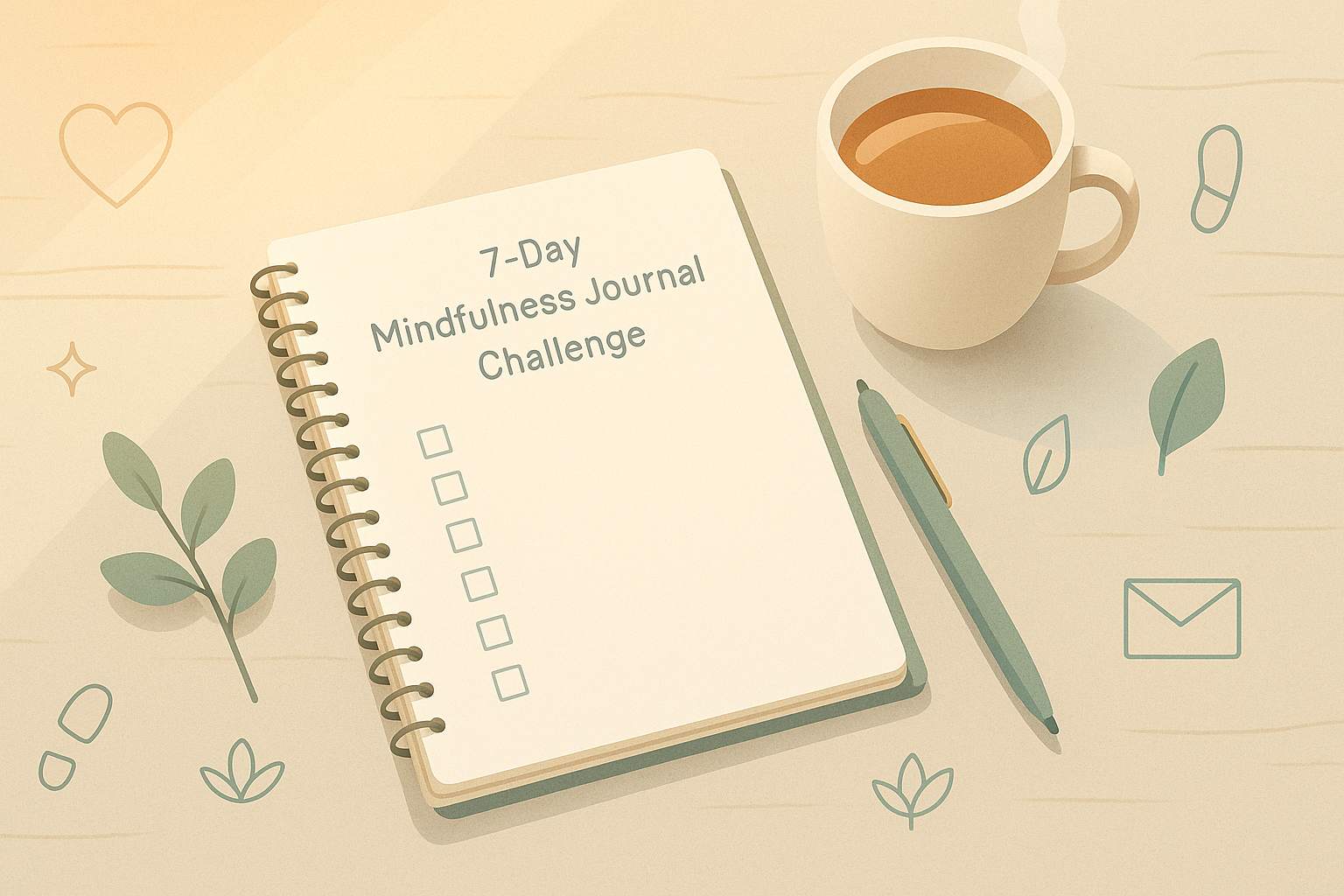
If your days feel crammed and your mind seems permanently set to “go,” you’re exactly who this 7-Day Mindfulness Journal Challenge is for. Over one focused week, you’ll build a simple, repeatable routine that trains your attention to return to the present, while also strengthening gratitude—one of the most reliable pathways to everyday wellbeing. You’ll learn how to set up your journal, measure progress, avoid common mistakes, and adapt each day’s practice to your schedule. By the end, you’ll have a small set of habits and prompts that make it easier to feel grounded, appreciative, and awake to your life.
This article offers educational information and practical tips. It isn’t a substitute for professional medical or mental health advice. If you have a history of trauma, are experiencing distress, or have any health concerns, consult a qualified professional for personalized guidance.
Key takeaways
- One week, one notebook, one daily ritual: 10–20 minutes a day is enough to build momentum and reduce mind-wandering.
- Gratitude + presence = durable wellbeing: Pairing journaling with short mindfulness practices helps your brain notice what’s working, not just what’s wrong.
- Micro-prompts beat blank pages: Use targeted questions to spark reflection, then capture concrete details (who, what, when, where).
- Track what matters: Measure presence minutes, mood before/after, and “gratitude specifics” to see real progress.
- Gentle is fast: Expect distraction. The skill is noticing and returning without judgment.
- Make it stick: A step-down plan and 4-week roadmap turn a 7-day sprint into a sustainable routine.
How the 7-day challenge works
What it is and the core purpose
This challenge is a short, structured sequence of daily practices that combine mindfulness (training attention to the present moment, without judgment) with gratitude journaling (recognizing and recording what you appreciate). The goal is to help you notice more, react less, and savor what’s good—even on busy days.
Requirements and low-cost alternatives
- Must-haves:
- A notebook or digital notes app. (Any notebook works; avoid fancy setups that become barriers.)
- A pen or pencil.
- A timer (phone timer is fine).
- Nice-to-haves (optional):
- A quiet corner, headphones, or white noise app.
- Sticky notes or page flags to mark each day.
- A glass of water or tea to anchor your ritual.
Step-by-step overview
- Choose a daily window (10–20 minutes). Mornings help set tone; evenings help with debrief and sleep.
- Set a cue and a place (example: after coffee at the kitchen table).
- Follow the day’s practice (1–5 minutes of mindfulness) then journal (5–15 minutes using the specific prompts below).
- Log simple metrics: minutes practiced; mood before/after (−2 to +2 scale); number of gratitude specifics (aim: 3–5).
- Close with a one-line intention for the next 24 hours.
Beginner modifications and progressions
- If 10 minutes feels long: Try 3 minutes of breath + 3 lines of writing.
- If you want more: Extend the mindfulness portion to 10 minutes or add a mid-day “micro check-in” (3 breaths + one sentence).
- If you’re very busy: Pair with a routine task (tea brewing, commute, lunch break).
Recommended frequency/duration/metrics
- Frequency: Daily for 7 days, ideally at roughly the same time.
- Duration: 10–20 minutes per day; total weekly time: 70–140 minutes.
- Metrics:
- Presence minutes completed.
- Mood shift (before vs. after).
- Gratitude specifics recorded (people/places/moments).
- “Return count”: how many times you noticed drifting and came back (celebrate this).
Safety, caveats, and common mistakes
- Safety: If mindfulness practices trigger distress or flashbacks, shorten sessions, keep eyes open, orient to the room (name five sights/sounds), or skip body-based practices. Seek professional support if distress persists.
- Caveats: Mindfulness and gratitude support wellbeing but are not quick fixes for complex conditions.
- Common mistakes: Trying to “clear the mind,” writing vague gratitudes (“family”) instead of specifics (“my sister’s voice note at 4:12 pm”), and skipping logs (you can’t improve what you don’t measure).
Mini-plan example (2–3 steps)
- Set a 12-minute timer.
- Do 3 minutes of breath awareness; then write 3 specific gratitudes + 1 intention.
- Record mood change (before/after) and one line about what you noticed.
Quick-start checklist
- Pick your notebook and label the first seven pages “Day 1” through “Day 7.”
- Pick your time (same daily slot if possible).
- Pick your place (consistent spot helps cue the brain).
- Create a tiny pre-ritual (pour tea, stretch, silence notifications).
- Decide your backup (if you miss your slot, your backup is lunchtime or before bed).
- Set reminders (calendar alert + sticky note at your spot).
- Tell someone you’re doing this, or invite a buddy.
Mini-plan example
- Tonight: write your “why” in one sentence.
- Tomorrow morning at 7:15: start Day 1.
- Put your journal and pen by your mug as a visual cue.
How to measure progress (so you can actually see change)
What to measure and why
- Presence minutes: Time attention spent “on the task.” You’re training a muscle; volume matters.
- Mood shift: Quick −2 to +2 scale before/after (−2 = much worse, 0 = same, +2 = much better). This captures immediate impact.
- Gratitude specifics: Count concrete items (“sunlight on the floor at 8:10 am” beats “nice weather”). Specificity deepens recall and savoring.
- Return count: Each time you notice drifting and gently return—mark a small tally. This is a success metric, not a failure log.
- Savoring seconds (optional): Time spent lingering on one positive detail (aim: 10–30 seconds daily).
How to track
- Draw a tiny grid at the bottom of each page:
Min | Mood Δ | #Grats | Returns | Savorand fill in. - At the end of Day 7, add totals and a one-paragraph reflection: What changed? What surprised you? What do you want to keep?
Beginner modifications and progressions
- Modification: If logging feels fussy, track only minutes and number of gratitudes.
- Progression: Add a weekly score out of 20 for “presence” and challenge yourself to nudge it up by 1–2 points.
Common mistakes to avoid
- Skipping logs when tired.
- Counting vague gratitudes.
- Treating “return count” as failure rather than the whole point.
Mini-plan example
- Today: photocopy or copy the mini grid into each day’s page.
- Tonight: set a repeating alarm labeled “Journal + breathe.”
Day 1 — Arrive: Breath, posture, and one clear intention
What it is & why it works
You’ll begin with breath awareness—noticing the inhale/exhale sensations and learning to return attention gently. This anchors the mind and sets a simple intention for the day.
Requirements
- Chair or cushion; timer; notebook.
Step-by-step
- Set 8 minutes for breath awareness. Sit upright but relaxed.
- Focus on one anchor (air at nostrils or belly rising/falling).
- Notice distraction without judgment. Label it (“thinking,” “planning”) and return to the breath.
- Journal (7–10 minutes):
- “What matters most today, realistically?”
- “One tiny action that aligns with that?”
- “What I’m willing to let be imperfect today?”
- Close with a one-line intention (e.g., “Move slowly between tasks”).
Beginner modifications & progressions
- Modification: Eyes open, soft gaze; shorten to 3 minutes if restless.
- Progression: Add a 60-second “micro pause” before lunch.
Recommended frequency/duration/metrics
- 8 minutes breathe + 7–10 minutes write. Track minutes, mood shift, return count.
Safety & mistakes
- If you feel dizzy, breathe naturally—no forced deep breathing.
- Avoid “performance checking” every few seconds; trust the timer.
Mini-plan
- After you write, circle one word from your intention and copy it on a sticky note.
Day 2 — Gratitude, made specific
What it is & why it works
Gratitude is the practice of noticing and appreciating helpful, beautiful, or meaningful parts of your day. Specificity is the secret—your brain encodes concrete details more vividly than generalities.
Requirements
- Notebook; timer; willingness to get granular.
Step-by-step
- Mindfulness (3 minutes): 3 slow breaths; feel the body in the chair.
- Journal (10–15 minutes):
- List three specifics—people, moments, or tiny things. Aim for sensory detail and timestamps (e.g., “the 7:22 a.m. warmth of my mug in both hands”).
- Add one why for each (why it mattered today).
- Optional: write one sentence of thanks you could say or send.
- Close: Choose one micro-act to express gratitude (text, voice note, sticky note on a colleague’s desk).
Beginner modifications & progressions
- Modification: If you feel blank, scan the last 24 hours in slices (morning, midday, evening).
- Progression: Write a short gratitude postcard or email once this week.
Recommended frequency/duration/metrics
- 3 minutes presence + 12 minutes writing; track # of specifics (goal: 3–5).
Safety & mistakes
- Gratitude isn’t denial. Name tough stuff too. You’re practicing a wider lens, not forced positivity.
- Avoid copying the same generic items daily—hunt for details.
Mini-plan
- Right now, schedule a 2-minute “gratitude ping” reminder for late afternoon to catch one fresh detail.
Day 3 — Body scan & sensory grounding
What it is & why it works
A body scan guides attention through the body from toes to head, noticing sensations without trying to change them. It builds interoceptive awareness and helps downshift from mental rumination into present-moment sensing.
Requirements
- Quiet(ish) place; chair or mat; timer.
Step-by-step
- Mindfulness (8–10 minutes): Slowly sweep attention from toes upward. Notice pressure, temperature, tingling, or absence of sensation. If you get stuck, move on.
- Journal (7–10 minutes):
- “What did I feel—exactly where and how?”
- “How did my mind react? (impatient, curious…)”
- “What small kindness does my body need today?”
- Close: Write a one-line body-care intention (e.g., “unclench jaw at red lights”).
Beginner modifications & progressions
- Modification: Keep eyes open; touch the chair/desk to orient.
- Progression: Add three sensory check-ins during the day (what do I see/hear/feel right now?).
Recommended frequency/duration/metrics
- 8–10 minutes scan + 7–10 minutes writing. Track savoring seconds if you lingered on a pleasant sensation.
Safety & mistakes
- If body scan feels triggering, skip it and use a five-senses grounding: name 5 things you see, 4 hear, 3 feel, 2 smell, 1 taste.
- Mistake: trying to force “relaxation.” The practice is noticing, not fixing.
Mini-plan
- Jot one tension-release cue on a sticky note (e.g., “drop shoulders when opening email”).
Day 4 — Compassion practice (for self and others)
What it is & why it works
Compassion shifts your attention toward care and goodwill, especially in moments of difficulty. It softens harsh self-talk, improves patience, and supports healthier relationships.
Requirements
- Timer; willingness to speak kindly to yourself.
Step-by-step
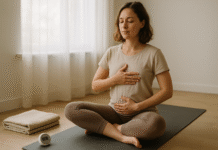
- Mindfulness (5 minutes): Notice the breath and place a hand over your heart or on your belly if that feels comfortable.
- Compassion phrases (2–3 minutes): Silently repeat phrases like “May I meet this day with kindness. May I be patient with myself. May others be safe and well.”
- Journal (8–12 minutes):
- “Where was I tough on myself today?”
- “If a friend told me the same story, what would I say back?”
- “One compassionate action I’ll take in the next 24 hours is…”
- Close: Thank someone who made your day easier, even if they’ll never read it (write it anyway).
Beginner modifications & progressions
- Modification: If phrases feel awkward, write a compassionate letter to yourself from the perspective of a caring mentor.
- Progression: Extend compassion to a difficult person by writing one neutral, humanizing observation about them (no sarcasm).
Recommended frequency/duration/metrics
- 7–8 minutes presence/phrases + 10 minutes writing. Track mood shift and note any softened self-talk.
Safety & mistakes
- If compassion practice stirs strong emotion, shorten the session, keep eyes open, or anchor attention in the feet/chair.
- Mistake: confusing compassion with passivity. You can be kind and still set clear boundaries.
Mini-plan
- Draft a one-sentence boundary you can use this week (e.g., “I’m at capacity today—can we revisit tomorrow?”).
Day 5 — Savoring a simple activity (tea, shower, or a short walk)
What it is & why it works
Savoring means lingering with a pleasant experience on purpose. When you slow down and notice, your brain encodes the good more deeply, balancing the natural tilt toward problems.
Requirements
- A daily routine you can perform slowly (tea, peeling an orange, washing hands, walking around the block).
Step-by-step
- Mindfulness (2 minutes): Arrive in your senses.
- Savor (5–8 minutes): Choose one simple activity and do it at half-speed. Track sensations (temperature, texture, smell, sound). When the mind wanders, return to sensation.
- Journal (8–10 minutes):
- “What did I notice that I’d usually miss?”
- “How did slowing down change my mood?”
- “Where else could I add 30 seconds of savoring today?”
- Close: Schedule one 30-second savoring pause later (e.g., before your afternoon email).
Beginner modifications & progressions
- Modification: If time is tight, savor three sips of water with full attention.
- Progression: Try a mindful meal once this week: first three bites with full sensory focus.
Recommended frequency/duration/metrics
- 2 minutes arrive + 5–8 minutes savor + 8–10 minutes journal. Track savoring seconds.
Safety & mistakes
- If savoring a walk, be mindful of surroundings; keep volume low if using headphones.
- Mistake: turning savoring into a performance. Imperfect attention still counts.
Mini-plan
- Put a sticky note on your kettle or fridge: “Half-speed = more taste.”
Day 6 — Values & one tiny aligned action
What it is & why it works
Values are the qualities and directions that make your actions feel meaningful (e.g., curiosity, kindness, courage). Clarifying values reduces decision fatigue and aligns your gratitude and presence with what matters.
Requirements
- Notebook; timer; willingness to be honest.
Step-by-step
- Mindfulness (3 minutes): Arrive.
- Values reflection (10 minutes):
- List five values that matter right now.
- For each, write one tiny action you can take in 24 hours (e.g., “curiosity → ask one genuine question in our team meeting”).
- Journal (5–10 minutes):
- “What gets in the way?”
- “If this were easier, what would it look like?”
- Circle one action for tomorrow and calendar it.
Beginner modifications & progressions
- Modification: If values feel abstract, scan your gratitude lists for patterns (what do these moments reveal about what you care about?).
- Progression: Add a weekly values review—which value did I live most/least?
Recommended frequency/duration/metrics
- 3 minutes arrive + 15–20 minutes reflect/journal. Track completion of your one aligned action next day.
Safety & mistakes
- Avoid turning values into rigid rules. They are directions, not demands.
- Mistake: picking actions that are too big. Tiny wins compound.
Mini-plan
- Choose one value. Write a one-line if-then plan (e.g., “If I feel defensive in the 3 pm meeting, then I’ll pause for one breath before speaking.”)
Day 7 — Integration: A gratitude letter, a mindful walk, and your next chapter
What it is & why it works
Day 7 ties it all together: a gratitude letter (or message), a mindful walk, and an honest weekly review. Expressing thanks strengthens social bonds; walking awareness integrates body and mind; reflection consolidates learning.
Requirements
- 20–25 minutes; comfortable shoes; notebook.
Step-by-step
- Mindful walk (8–10 minutes): Walk slightly slower than usual. Feel footfalls, notice surroundings, and let attention gently return when it strays.
- Gratitude letter (10–12 minutes): Write to someone who helped or inspired you. Be concrete about what they did and how it impacted you. You can send it or keep it; either way, the act of writing matters.
- Weekly review (5–8 minutes):
- Totals: minutes practiced, mood shifts, gratitude specifics.
- “What changed for me this week?”
- “Which practices do I want to keep next week?”
- Close: Draft a one-sentence plan for the next 7 days.
Beginner modifications & progressions
- Modification: If a letter feels too much, write a thank-you paragraph you could share later.
- Progression: Read your letter aloud to the person if appropriate (in person or via voice note).
Recommended frequency/duration/metrics
- 8–10 minutes walk + 10–12 minutes letter + 5–8 minutes review. Track social connection (did you send the note?).
Safety & mistakes
- Be mindful of traffic and surroundings on the walk.
- Mistake: reviewing the week like a critic. Stay curious; name wins.
Mini-plan
- Put a 10-minute “gratitude letter” block on next week’s calendar.
Troubleshooting & common pitfalls
“I can’t clear my mind.”
Good—because that’s not the job. The skill is noticing you’re distracted and returning. Each return is a rep.
“I don’t have time.”
You have micro-moments. Try 3 breaths + 3 lines. Consistency > length.
“I feel nothing when I write gratitudes.”
It’s normal at first. Add sensory detail and a why. Savor for 10 extra seconds.
“I keep judging myself.”
Note “judging” as a mental event. Add Day 4’s compassion phrases. Ask, “What would help by 1%?”
“I skipped a day. Did I ruin it?”
Nope. Begin again today. Write one line about how you want to approach the next 24 hours.
“Body scan made me anxious.”
Use five-senses grounding instead and keep eyes open. Seek professional guidance if distress persists.
“I get bored.”
Shorten, vary the anchor (breath, sound, feet), or switch to a savoring practice for a day.
“My writing turns into to-do lists.”
That’s okay—capture the tasks, then add one line of noticing (a sound, a smell, a feeling right now).
A simple 4-week roadmap (beyond the challenge)
Week 1 (This challenge):
- Daily 10–20 minutes; build the muscle.
- Metrics: minutes, mood shift, gratitude specifics, return count.
Week 2 (Stabilize):
- Keep 5 days of 10–15 minutes.
- Add one mid-day micro pause (3 breaths) and one gratitude message sent.
Week 3 (Deepen):
- Keep 5 days; extend one session to 20–25 minutes.
- Add one mindful meal (first five bites slowly).
- Choose one value; schedule a tiny aligned action.
Week 4 (Integrate):
- Keep 4–5 days; alternate practices you enjoyed most.
- Add a Sunday review: what to continue/stop/start next month.
- Consider a monthly gratitude letter and a weekly mindful walk.
By the end of four weeks, you’ll have a pocket routine—short, sturdy, and personal.
Frequently asked questions
1) When is the best time to journal—morning or night?
Either works. Morning sets intention; night aids reflection and sleep. Pick the slot you’re most likely to keep and make a backup time for hectic days.
2) How long should I spend each day?
Aim for 10–20 minutes total. If that’s too much, do 3 breaths + 3 lines. Progress comes from daily reps, not marathon sessions.
3) What if I don’t feel grateful today?
Start with neutral details (light on the wall, the weight of the pen). Add one “supporting why” (“reminded me I’m cared for”). You’re building a noticing habit, not forcing a mood.
4) Can I type instead of writing by hand?
Yes. Handwriting can slow you down (which helps), but typed notes are fine—especially if it reduces friction and keeps you consistent.
5) Is it okay if my mind wanders constantly?
Absolutely. Noticing and returning is the core skill. Track your “return count” as a success metric.
6) What should I do if mindfulness makes me uncomfortable?
Shorten the duration, keep eyes open, anchor attention to the room, or switch to savoring and gratitude practices. Consult a professional if discomfort persists or feels overwhelming.
7) How do I make this stick after the week?
Use the 4-week roadmap, keep the same daily slot, and link the habit to an existing routine (after coffee, after lunch). Consider a buddy for accountability.
8) What if my journal becomes a complaint dump?
Allow honest venting, then add two lines: one small kindness to yourself and one specific gratitude. This balances realism with resource-building.
9) Do I need a special journal format?
No. A cheap notebook and a pen you like are enough. If structure helps, draw the mini grid (Min | Mood Δ | #Grats | Returns | Savor) at the bottom of each page.
10) Can I do this with kids or a partner?
Yes. Keep it playful and brief (two gratitudes and one “rose-bud-thorn” at dinner). Model curiosity, not perfection.
11) Will this help with sleep or stress?
Many people report calmer evenings and fewer racing thoughts when they end the day with mindful breaths and concrete gratitudes. Keep expectations realistic and stay consistent.
12) What if I miss multiple days?
Restart with Day 1 and shrink the session. Momentum beats guilt.
Conclusion
Presence isn’t a personality trait—it’s a trainable skill. Pairing short mindfulness moments with specific gratitude turns ordinary days into places where attention sticks and appreciation grows. Over seven days, you practiced arriving, noticing, savoring, and thanking—then measuring the quiet gains. Keep it gentle. Keep it simple. Keep showing up.
CTA: Start Day 1 tomorrow—set a 12-minute timer, breathe for 3 minutes, then write 3 specific gratitudes and one intention.
References
- Mindfulness — American Psychological Association. Last updated 2023. https://www.apa.org/topics/mindfulness
- Mindfulness Meditation: A Research-Proven Way to Reduce Stress — American Psychological Association. October 30, 2019. https://www.apa.org/topics/mindfulness/meditation
- 8 Things to Know About Meditation and Mindfulness — National Center for Complementary and Integrative Health. Reviewed 2024. https://www.nccih.nih.gov/health/tips/8-things-to-know-about-meditation-and-mindfulness
- Meditation and Mindfulness: Effectiveness and Safety — National Center for Complementary and Integrative Health. June 3, 2022. https://www.nccih.nih.gov/health/meditation-and-mindfulness-effectiveness-and-safety
- Mindfulness & Meditation (In Focus) — Harvard University. Last updated May 2021. https://www.harvard.edu/in-focus/mindfulness-meditation/
- Mindfulness Meditation May Ease Anxiety, Mental Stress — Harvard Health Publishing. January 8, 2014. https://www.health.harvard.edu/blog/mindfulness-meditation-may-ease-anxiety-mental-stress-201401086967
- Two Mindfulness Meditation Exercises to Try — Harvard Health Publishing. Accessed 2025. https://www.health.harvard.edu/alternative-and-integrative-health/two-mindfulness-meditation-exercises-to-try
- Giving Thanks Can Make You Happier — Harvard Health Publishing. Updated August 14, 2021. https://www.health.harvard.edu/healthbeat/giving-thanks-can-make-you-happier
- Gratitude: Definition, Science, and Practices — Greater Good Science Center. Accessed 2025. https://greatergood.berkeley.edu/topic/gratitude/definition
- Why Gratitude Is Good — Greater Good Science Center. November 16, 2010. https://greatergood.berkeley.edu/article/item/why_gratitude_is_good
- Beginner’s Body Scan Meditation — Mindful.org. January 27, 2023. https://www.mindful.org/beginners-body-scan-meditation/
- A 10-Minute Body Scan Practice — Mindful.org. June 25, 2025. https://www.mindful.org/a-10-minute-body-scan-practice/