























Mindfulness and meditation help us notice what’s here; gratitude helps us appreciate what’s good about it. When you weave them together, you train attention and attitude at the same time—steadying the mind while nurturing a warmer, more resilient baseline. This guide is for beginners and seasoned practitioners who want practical, research-aligned ways to blend thankfulness into daily mindfulness without adding extra time. Brief note: this article is educational and not medical advice—check with a clinician if you have mental or physical health concerns.
Quick definition: Incorporating gratitude into mindfulness and meditation means intentionally directing awareness toward benefits, supports, and kind causes—before, during, or after practice—so attention (mindfulness) and appreciation (gratitude) reinforce each other.
Fast start (pick one today):
- Pair 10 mindful breaths with a simple thanks on each exhale.
- Do a 3-minute “thank-you body scan.”
- Write three good things, then sit for 5–10 minutes.
1. Anchor Each Session with Gratitude-Infused Breathing
The most direct way to unite gratitude with mindfulness is to tie it to the breath you’re already observing. Start by noticing inhalations and exhalations as usual. Then, on each exhale, add a small phrase such as “thank you” or “appreciate this moment.” This keeps the practice grounded in sensory awareness while gently shifting your emotional set point. You don’t need to force a feeling; simply recognize what’s helping you right now—air in your lungs, a quiet corner, a body doing its best. Over time, this pairing conditions your attention to return not only to the present but also to a posture of appreciation. It’s especially useful when motivation dips: the exhale becomes both a cue and a reminder of why you’re here. If the mind wanders, note it kindly and begin again with the next breath and the next “thank you.”
1.1 Why it matters
Linking gratitude to exhalation leverages two things: (a) mindful attention reduces unhelpful rumination and reactivity, and (b) positive emotion broadens perspective, making it easier to re-engage when you get distracted. Many practitioners find that a light, appreciative tone keeps practice from feeling like a chore. You’re not trying to be relentlessly cheerful; you’re recognizing support that’s already present.
1.2 How to do it (2–5 minutes)
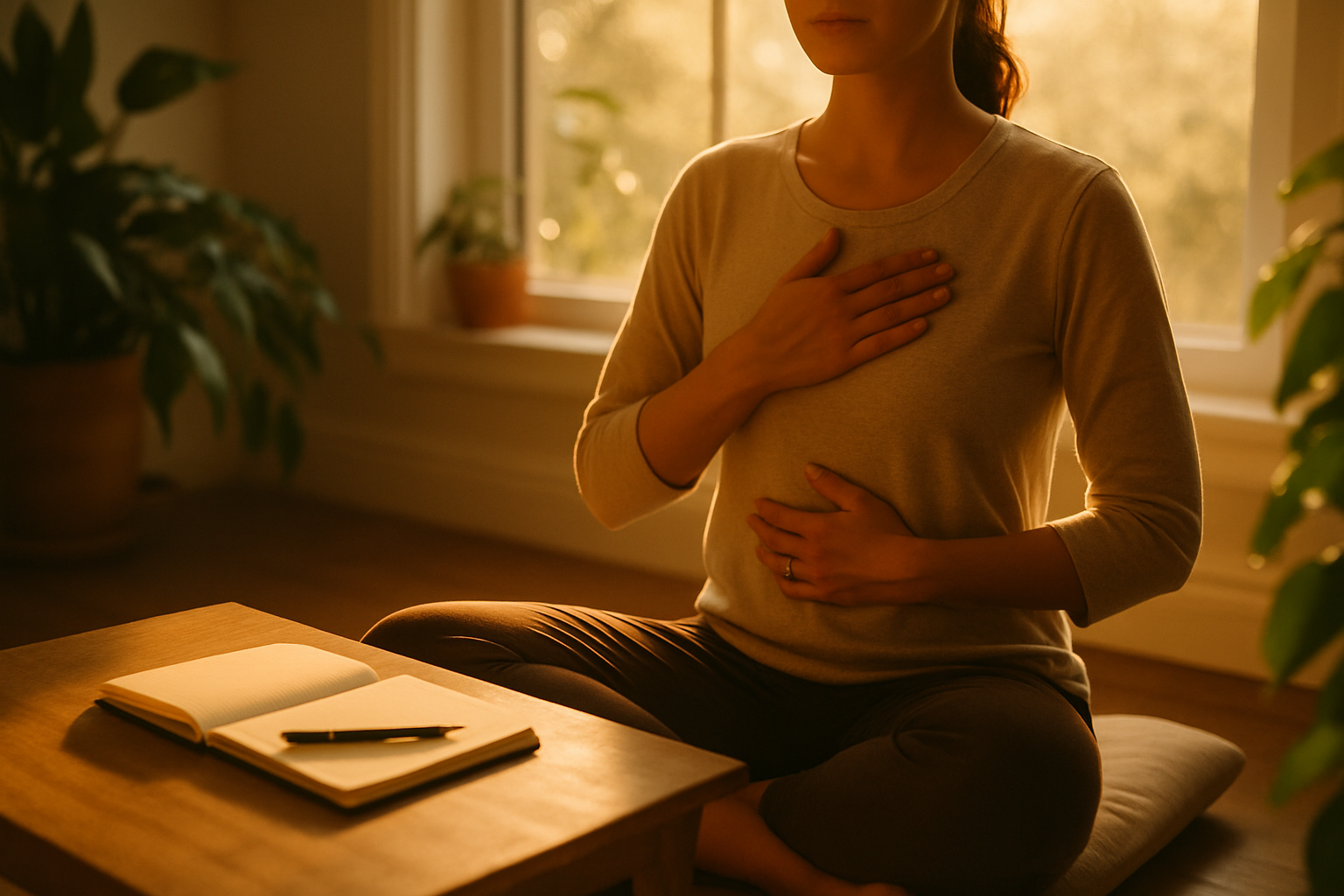
- Sit comfortably; feel the lower belly rise on inhale and fall on exhale.
- On each exhale, silently say “thank you” or “grateful for this breath.”
- If gratitude feels distant, name one neutral support (a cushion, shade, fresh air).
- When the mind wanders, note “thinking” and gently return to breath + thanks.
- Close with one fuller breath and notice any softness or warmth that’s here.
Mini-checklist: Breath felt? Phrase gentle? Shoulders relaxed? Able to resume after distraction?
Synthesis: Ten gratitude-linked breaths can reset your nervous system and your outlook; scale up to longer sits as it feels natural.
2. Run a Thank-You Body Scan to Connect Mindfulness with Care
A body scan is already a mindfulness classic; add gratitude and it turns into a quiet relationship with your own physiology. Move attention from toes to crown, not just noticing sensations but appreciating function—feet that carried you, calves that stabilize you, lungs exchanging oxygen, a heart that beats unasked. This subtle shift upgrades bare awareness into warm, accepting awareness, which many people find reduces self-criticism and increases patience when they encounter discomfort. If a part hurts, you don’t have to pretend it’s fine; you can thank the surrounding tissues and the body’s efforts to heal. This builds interoceptive literacy (clearer sensing) and a kinder narrative.
2.1 How to do it (6–12 minutes)
- Feet & legs: Sense contact/weight; “Thanks for balance and movement.”
- Hips & belly: Notice breath wave; “Thanks for digestion and steady support.”
- Chest & back: Feel ribs, heartbeats, muscles; “Thanks for protection and strength.”
- Hands & arms: Sense temperature/tingle; “Thanks for creating and holding.”
- Face & scalp: Soften jaw, brow; “Thanks for sensing and expressing.”
- Whole body: Zoom out; “Thank you for carrying me through this day.”
2.2 Common mistakes
- Rushing. Move at the speed of sensation, not the clock.
- Performing gratitude. You’re recognizing, not faking; neutral is okay.
- Over-focusing on pain. Acknowledge it, widen to include nearby ease or support.
Region note: If sitting still is uncomfortable, try this lying down (e.g., on a mat) or during pre-sleep; many people in hotter climates prefer evening when temperatures fall.
Synthesis: A thank-you body scan turns the body from an object to a partner—calming the mind while building durable respect for your own biology.
3. Prime Attention with “Three Good Things” Before You Sit
A small burst of gratitude journaling before meditation reliably tunes the mind toward helpful cues. The classic exercise—write three things that went well and why—takes 2–5 minutes and can be done in a pocket notebook or notes app. Treat it as a cognitive warm-up: you’re installing search terms so your attention naturally finds supportive details during your sit. This pre-practice priming is especially effective on stressful days when attention fixates on threats. By unpacking why each good thing happened, you wake up your sense of agency and the often-invisible network of support around you.
3.1 How to do it (2–5 minutes, then 5–10 minute sit)
- Write 3 wins (tiny is fine: “had clean water,” “friend checked in”).
- Add one sentence each on why they happened (causes/people/choices).
- Read the list once, gently smile, then sit in mindfulness for 5–10 minutes.
- During the sit, notice breaths, sounds, and any warmth sparked by the list.
- Optional: end with one appreciative sentence aloud or silently.
3.2 Numbers & guardrails
- Frequency: Most people benefit from daily or 3–4×/week.
- Length: Keep it brief to avoid perfectionism; 30–120 seconds per item is plenty.
- Tone: Specific beats grand; “sun felt warm on my face” is better than “life.”
Mini case: A busy parent writes three good things while kids brush their teeth; they then sit for 7 minutes before bed. After two weeks, they report fewer racing thoughts at lights-out and an easier time returning to the breath when distracted.
Synthesis: Pre-sit gratitude lists nudge your brain toward supportive evidence, making the ensuing meditation steadier and kinder.
4. Weave a Loving-Kindness & Gratitude Loop
Loving-kindness meditation (LKM) and gratitude are natural allies. LKM expands goodwill—“May you be safe, healthy, peaceful”—while gratitude names specific benefits and benefactors that made life easier. A loop alternates them: you send kind wishes to someone who helped you, then thank them explicitly in your mind. This pairing elevates positive emotion without sugarcoating difficulty, and it often softens social stress by highlighting reciprocity. The loop is suitable for group practice or solo sessions and fits neatly into 10–15 minutes.
4.1 Script (10–15 minutes)
- Settle: 1–2 minutes of breath awareness.
- Benefactor: Bring to mind someone who helped you recently (teacher, nurse, neighbor).
- Kind wishes: “May you be safe. May you be healthy. May you live with ease.”
- Gratitude line: “Thank you for ______. Your help made ______ possible.”
- Expand: Include self, close others, neutral people, all beings.
- Close: Return to breath; notice any warmth or softening.
4.2 Tools & variations
- Photo prompts: Glance at a photo to spark felt sense.
- Audio timers: Use a gentle chime every 60–90 seconds to shift recipients.
- “Difficult” category: If someone is challenging, keep phrases simple and brief; you’re training goodwill, not forcing closeness.
Common pitfall: Expecting to feel a lot every time. Treat phrases as seeds—you’re practicing the willingness to care and thank, not chasing a mood.
Synthesis: Alternating loving-kindness with specific thanks strengthens social connection and makes mindfulness warmer, not woollier.
5. Practice Mindful Savoring of Micro-Moments
Savoring is the skill of noticing, dwelling in, and gently elaborating positive experiences in real time. It’s a perfect bridge between daily mindfulness and gratitude because it turns ordinary moments—tea aroma, a breeze, your child’s laugh—into opportunities to feel and appreciate. You’re not chasing highs; you’re slowing down enough to let the good register. In a busy life, micro-savoring (30–90 seconds) builds a portable, repeatable ritual that complements formal sits.
5.1 How to do it (30–90 seconds, many times a day)
- Spot: Catch a pleasant or meaningful cue (sunlight, taste, kindness).
- Sense: Name 3 sense details (color, texture, sound).
- Say: Add a quiet thanks for the conditions that made it possible.
- Stay: Rest for two extra breaths before moving on.
- Share (optional): Tell someone or jot a line to amplify the moment.
5.2 Everyday examples
- Morning chai or coffee: Watch steam swirl; notice warmth in your palms; appreciate the grower, water, stove, and time that made this cup reachable.
- Transit: Feel the seat support; appreciate the infrastructure and people moving your life along.
- Nature: During dusk prayers or evening walks, linger on the sky’s gradient; thank the body for carrying you.
Mini-checklist: Was this grounded in senses? Did you explicitly appreciate causes/people? Did you give it two extra breaths?
Synthesis: Micro-savoring stitches gratitude through the day, so when you sit, appreciation is already nearby.
6. Use “Difficult Gratitude” to Stay Kind During Hard Moments
Mindfulness asks us to meet reality as it is; gratitude doesn’t contradict that. Difficult gratitude means appreciating supporting conditions even when something is painful or unresolved. You’re not grateful for the illness or the loss; you’re grateful for the nurse’s patience, the friend who stayed, the body still working in small ways, the breath carrying you through. This keeps practice honest and prevents “toxic positivity,” while training a balanced attention that includes what’s workable.
6.1 How to do it without bypassing
- Name the hard thing plainly (“I’m worried,” “This hurts”).
- Feel it safely: locate sensations (tight chest, heavy shoulders) for 10–20 seconds.
- Widen attention: include breath/ground/room.
- Find one support present right now (a caring message, steady chair, clean water).
- Offer thanks to that support; if it feels wrong, try neutral acknowledgment (“This helps a little”).
- Close with one kind phrase to yourself (“May I meet this with care”).
6.2 Numbers & guardrails
- Duration: 2–5 minutes when stirred up; longer if resourced.
- Ratio: If gratitude feels forced, keep a 2:1 ratio of mindful witnessing : appreciative note.
- Boundary: If distress spikes, pause and seek co-regulation (walk, call a friend).
Tools & prompts: Keep a small list titled “What helps even a little?” (names, places, songs, scriptures). In a rough week, that list is your on-ramp to gratitude that doesn’t deny the hard.
Synthesis: Difficult gratitude keeps mindfulness courageous and compassionate—clear about pain, generous about help.
7. Close Every Session with a Gratitude Dedication and Intention
Endings imprint memory. Closing your sit with a brief dedication—“May any calm or clarity here benefit my family, my team, and anyone I meet today”—turns private practice into shared goodwill. Add a specific thanks (“Grateful for the time and safety to practice”) and one implementation intention (“When I touch a doorknob, I’ll take one grateful breath”). This trio—dedication, thanks, cue—helps your practice transfer into the next meeting, commute, or conversation.
7.1 One-minute closer
- Notice one thing that feels steadier (breath, shoulders, mood).
- Thank a concrete support (teacher, colleague, quiet room).
- Dedicate the benefit outward in one sentence.
- Intend a tiny cue-action pair for the next hour (“At red lights, soften jaw and thank the pause”).
7.2 Habit stacking & tracking
- Stack onto anchor routines (prayer times, brushing teeth, tea).
- Track with a simple dot in a calendar; aim for 4+ dots/week.
- Review weekly: What cue worked? What thanks felt genuine?
Mini case: A manager closes each morning sit by dedicating the calm to their team and sets the cue, “Before unmuting on calls, one grateful breath.” Colleagues notice steadier tone and clearer listening over a month.
Synthesis: Dedicating, thanking, and planning the next cue ensures gratitude doesn’t end on the cushion—it walks with you.
FAQs
1) What’s the quickest way to blend gratitude into a busy mindfulness routine?
Pair it with your exhale for 10 breaths. Silently say “thank you” on each out-breath while noticing the belly fall. This takes under a minute, requires no props, and immediately shifts tone without derailing focus. If you like it, repeat at natural pauses (before emails, at red lights).
2) Should I journal before or after meditating?
Either works, but many people find before is better because it primes attention. A 2–5 minute “three good things” list helps your brain notice helpful cues during the sit. If evenings are hectic, try a post-sit list to consolidate what went well and why.
3) Won’t gratitude make me ignore real problems?
Healthy gratitude coexists with clear seeing. You can recognize pain and still appreciate supports. If you’re worried about bypassing, use the “difficult gratitude” approach: name the hard thing first, feel it briefly, then widen to include one genuine support without pretending everything is fine.
4) How long should a gratitude-infused body scan be?
Anywhere from 6 to 12 minutes is practical. Move at the speed of sensation. Shorter scans can be done at bedtime; longer ones fit weekend practice. The key is authenticity—thanking function (what a part does) rather than insisting it feel good.
5) I don’t “feel” grateful. Am I doing it wrong?
No. Treat phrases as intentions, not mood commands. Some days gratitude is a whisper. Stay concrete: name supports you can verify (water, shade, a text from a friend). Over weeks, many people notice more spontaneous warmth as the brain learns where to look.
6) Which apps or tools can help?
Any timer with soft bells works. For prompts, use a notes app or a small notebook. If you prefer guidance, choose a meditation app with loving-kindness tracks and short gratitude reflections; many also include body scans.
7) Can I do this within my religious practice?
Yes. Gratitude is found across traditions. You can frame thanks as appreciation for conditions, people, or the Divine, and align dedications with your prayer or service intentions. Keep the tone that fits your values.
8) How do I measure whether this is working?
Track four simple signals weekly: (1) ease returning to the breath, (2) fewer spikes of irritation, (3) faster recovery after stress, and (4) frequency of spontaneous thank-yous. A one-line journal or calendar dots is enough.
9) Is there a best time of day to practice?
The “best” time is the one you’ll keep. Mornings build momentum; pre-sleep practices (body scan + three good things) often settle the mind. In hot climates or busy households, evenings may be quieter and more sustainable.
10) What if my mind races when I try to be grateful?
Great—now you can practice mindfulness. Label “thinking,” feel one anchor (breath/feet), and return to your simple gratitude phrase. If racing persists, reduce to 5 breaths and extend practice via micro-savoring during the day.
11) Can I teach this to my team or family?
Yes—keep it short, opt-in, and concrete. Try a 3-minute body scan at meetings or a dinner round of “one good thing and why.” Emphasize voluntariness and model sincerity rather than demanding enthusiasm.
12) How do I keep it from becoming performative?
Anchor in senses and specifics. If you’re thanking to impress, you’ll feel brittle. If you’re noticing steam curling from tea and the friend who brought the leaves, it stays real. End with a quiet breath, not a speech.
Conclusion
Mindfulness steadies attention; gratitude trains appreciation. Together, they change what the mind returns to—not only the present moment, but also the web of supports that make it livable. You don’t need new rituals or extra time: pair thanks with your exhale, run a thank-you body scan, prime with three good things, loop loving-kindness with gratitude, savor micro-moments, practice difficult gratitude when days are rough, and close with a dedication and a tiny intention that follows you into your next task. Sustainably, these moves reduce friction, soften self-talk, and make mindfulness feel more like coming home than doing homework. Start small, keep it specific, and let the benefits compound.
One-line CTA: Pick one strategy above and try it for 7 days—ten grateful breaths, a 3-minute scan, or three good things—then notice what changed.
References
- Counting Blessings Versus Burdens: An Experimental Investigation of Gratitude and Subjective Well-Being in Daily Life. Journal of Personality and Social Psychology (Emmons & McCullough), 2003. Emmons Faculty Site
- Meditation and Mindfulness: Effectiveness and Safety. National Center for Complementary and Integrative Health (NCCIH), June 3, 2022. NCCIH
- Open Hearts Build Lives: Positive Emotions, Induced Through Loving-Kindness Meditation, Build Consequential Personal Resources. Journal of Personality and Social Psychology (Fredrickson et al.), 2008. and open-access summary PubMedPMC
- Gratitude Influences Sleep Through the Mechanism of Pre-Sleep Cognitions. Journal of Psychosomatic Research (Wood et al.), 2009. (open-access PDF via GGSC: ) PubMedGreater Good
- Meditation Leads to Reduced Default Mode Network Activity Beyond an Active Task. Frontiers in Human Neuroscience (Garrison et al.), 2015. PMC
- Mindfulness Meditation Increases Default Mode, Salience, and Central Executive Network Interconnectivity. Scientific Reports (Bremer et al.), 2022. Nature
- The Empirical Status of Mindfulness-Based Interventions: A Systematic Review of Meta-Analyses. Perspectives on Psychological Science (Goldberg et al.), 2021. PMC
- Effects of Mindfulness-Based Stress Reduction on Anxiety Symptoms in Young People: Systematic Review and Meta-Analysis. Psychiatry Research (Zhou et al.), 2020. PubMed
- Positive Psychology Progress: Empirical Validation of Interventions. American Psychologist (Seligman, Steen, Park, & Peterson), 2005. and PubMed summary Greater GoodPubMed
- The Effects of Gratitude Interventions: A Systematic Review and Meta-Analysis. BMC Psychology (Diniz et al.), 2023. PMC
- Self-Compassion: An Alternative Conceptualization of a Healthy Attitude Toward Oneself. Self and Identity (Neff), 2003. Self-Compassion
- Current Progress and Future Directions for Theory and Research on Savoring. Frontiers in Psychology (Bryant), 2021. PMC