
























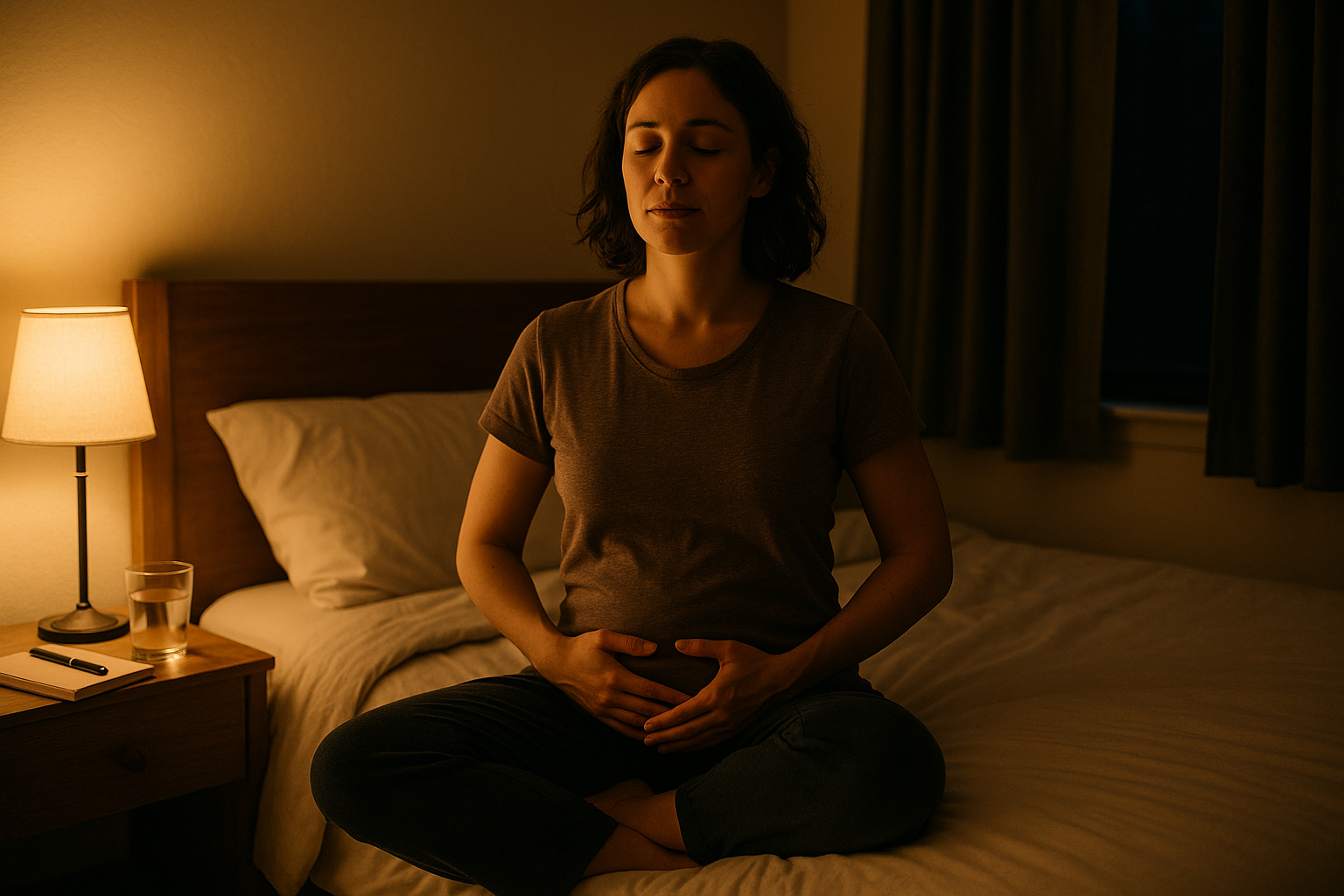
A calm, focused wind-down makes it easier for your brain and body to “let go,” shorten sleep onset, and reduce nighttime awakenings. Mindfulness practices before sleep are simple, consistent routines that direct attention to the present—breath, body, sensations, and compassionate thoughts—so pre-sleep arousal drops and rest begins to feel inevitable. This guide offers nine evidence-informed options you can rotate or combine. Quick note: this article is educational, not medical advice; if insomnia persists (three nights a week for three months), cognitive behavioral therapy for insomnia (CBT-I) remains the first-line treatment as of August 2025—talk to a sleep clinician.
Fast how-to (skim this, then dive deeper): choose one practice; do it 10–20 minutes about 60–90 minutes before lights-out; keep lights dim and screens off; if your mind races in bed, switch to a brief grounding exercise, then return to breath or body.
1. Slow Breathing at ~6 Breaths/Minute (or 4-7-8) to Switch on Calm
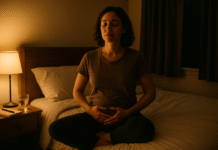
Slow, diaphragmatic breathing down-regulates the stress response and nudges your nervous system toward the “rest-and-digest” state, easing you into sleep readiness. For many adults, the sweet spot is roughly 6 breaths per minute (inhale ~5 seconds, exhale ~5 seconds). You can also try 4-7-8 breathing (inhale 4, hold 7, exhale 8) if breath holds feel comfortable. Within a few minutes, you’ll likely notice a quieter heartbeat, warmer hands, and less mental chatter—signs of parasympathetic activation. Aim for 5–10 minutes in a chair before bed, then 2–3 minutes once you’re under the covers. If you get lightheaded, pause and return to regular breathing. Over one to two weeks of nightly practice, many people report shorter sleep latency and fewer awakenings.
Why it matters
- Meta-analyses show voluntary slow breathing increases vagal-linked HRV, a marker of relaxation and emotion regulation that supports sleep.
- Small trials suggest bedtime slow breathing can reduce awakenings and stage transitions; evidence is still emerging and effects vary.
- 4-7-8 is a widely taught pattern; reputable health systems describe it as a simple way to tap the relaxation response before bed. Cleveland Clinic
How to do it
- Sit upright; one hand on belly, one on chest; inhale through nose so the belly leads.
- Start with 5-5 breathing (5 in, 5 out) for 2 minutes; then settle near 6 breaths/min.
- If you prefer, try 4-7-8 for 4–8 cycles; stop if holds feel uncomfortable.
- Keep lights dim; close the practice by noticing three calm body sensations.
- Tools: a simple metronome or a breathing app’s 6-breaths/min mode.
Bottom line: slow, nasal, belly-led breathing reliably lowers pre-sleep arousal; it’s safe, free, and a strong first choice to anchor your wind-down. ERS Publications
2. Body Scan Meditation to Move Attention from Thoughts to Sensations
A body scan redirects attention across your body—feet to scalp—without judgment. That shift from analytical thinking to sensory noticing helps unhook from worry loops and lowers muscular tension. Do it lying on your back with a thin pillow; keep your eyes closed and mouth gently closed. Expect subtle sensations: warmth, tingling, pulsation, or nothing at all. The skill is noticing and allowing. Start with 10–15 minutes; over a week, many people describe feeling heavier and drowsier by the time they reach the shoulders.
2.1 Why it matters
- Mindfulness programs that include body scans improve sleep quality compared with education controls in older adults with sleep complaints.
- Sleep organizations teach body scan as a bedtime relaxation exercise that pairs naturally with breathing.
Mini-checklist
- Set up: cool, dark room; phone on airplane mode; volume muted.
- Sequence: toes → feet → calves → knees → thighs → hips → belly → chest → hands → arms → neck → face → scalp.
- Technique: notice sensations; soften on exhales; no judging, no fixing.
- If racing thoughts return: label them “thinking,” then return to the current body area.
- Optional guide: try UCLA Mindful’s free Body Scan for Sleep (13 min).
Bottom line: by trading thoughts for sensations, a body scan reduces cognitive arousal and invites sleep pressure to surface naturally.
3. Progressive Muscle Relaxation (PMR) to Release Hidden Tension
PMR systematically tenses then relaxes muscle groups from feet to face. That contrast teaches your nervous system what “relaxed” actually feels like and interrupts the feedback loop between muscle tension and mental stress. It’s especially useful if you clench your jaw, hunch shoulders, or carry daytime stress into bed. Practice sitting in a chair 60 minutes before sleep, then use a shortened version in bed.
3.1 Numbers & guardrails
- Many guidelines include PMR as a recommended relaxation therapy for insomnia (conditional strength), often alongside breathing and imagery.
- A step-by-step patient guide from leading centers outlines how to practice safely and effectively.
How to do PMR (10–15 minutes)
- Feet & calves: inhale, gently tense 5–7 seconds; exhale and fully release 20–30 seconds.
- Thighs & glutes → belly & back → hands & arms → shoulders & neck → jaw & face.
- Keep effort at ~30–50% of max. Skip any area with pain or recent injury.
- Close by scanning for residual tight spots and softening on each exhale.
Bottom line: PMR gives a reliable, teachable path from “wired” to “heavy-limbed,” making it easier to fall asleep and stay asleep. WebMD
4. Constructive Worry + Next-Step Journal (15 Minutes Earlier in the Evening)
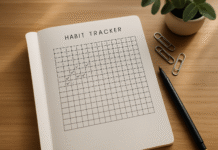
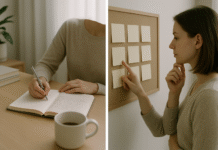
If your brain boots up at lights-out, it often means unprocessed tasks and worries are still pinging. The constructive worry technique moves that processing out of the bedroom: write two columns 60–90 minutes before bed—left: worries or unfinished items; right: one concrete next step for each (email X, schedule Y, ask Z). Then close the notebook and promise your brain you’ll revisit it tomorrow. This signals safety and reduces clock-watching in bed.
4.1 How to do it
- Set a timer for 10–15 minutes; list 5–10 items.
- Next to each, write a single next action you’ll take within 48 hours.
- End with tomorrow’s top 1–3 priorities and a brief gratitude line (see Section 5).
- Store the notebook outside the bedroom; if thoughts reappear, remind yourself “scheduled.”
Why it matters
- Sleep charities and health services teach worry time and pre-bed journaling to reduce rumination at night. IBX Insightsnhs.uk
Bottom line: make the bedroom a problem-solving-free zone—process earlier, then let your nighttime mind coast.
5. Gratitude & Self-Compassion to Shift Pre-Sleep Cognitions
A short gratitude + self-compassion practice counters the negativity bias that spikes at bedtime. Write three things that went okay or better than expected today and, if you’re self-critical, add a compassionate sentence you’d offer a friend. This isn’t toxic positivity; it’s balancing attention so your mind stops scanning for threats at midnight.
5.1 What the research suggests
- In a large community sample, higher gratitude predicted better sleep quality and duration, and less sleep latency, largely by shifting pre-sleep thoughts from negative to positive.
- Reviews of gratitude interventions find promising effects on subjective sleep quality, though more rigorous trials are needed. ScienceDirect
Mini-routine (5 minutes)
- Write 3 lines starting with “I appreciated…”
- Add 1 line of self-compassion: “It’s understandable I felt ___ today; I’m allowed to rest.”
- Take 3 slow breaths with a hand on the chest.
Bottom line: tuning pre-sleep thoughts toward appreciation and kindness reduces mental friction and helps sleep unfold.
6. Loving-Kindness (Metta) to Ease Anxiety and Soften Rumination
Loving-kindness meditation (LKM) involves silently repeating phrases of goodwill toward yourself and others (e.g., “May I be safe; may I sleep in peace”). For pre-sleep use, keep the phrases gentle and unforced. LKM isn’t about forcing sleep; it’s about reducing threat detection and softening self-criticism so arousal levels drop. Many people find it especially helpful after a conflict-heavy day.
6.1 Why it matters
- LKM reliably increases positive affect and reduces anxiety across studies; several mindfulness sleep trials include LKM as part of the practice mix.
Practice steps (8–12 minutes)
- Sit comfortably; breathe slowly.
- Direct phrases to self → a loved one → a neutral person → all beings.
- Keep phrases simple: “May I be calm. May my body rest. May I sleep in safety.”
- If mind wanders, smile slightly and return to the next phrase.
Bottom line: by warming emotional tone, LKM reduces the anxiety that keeps minds spinning at lights-out.
7. Gentle Mindful Movement (Yin/Restorative Yoga) to Prepare the Body
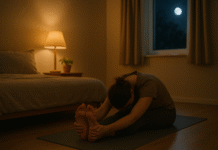
Mindful stretching and restorative yoga help release physical load from the day—hips, back, hamstrings—while pairing breath with slow movement. Keep intensity low at night: aim for 10–20 minutes of long, supported holds (e.g., legs-up-the-wall, supported child’s pose). Avoid vigorous flows or inversions late at night. If you’re in a hot climate, ensure a cool room and hydrate earlier.
7.1 Evidence snapshot
- National health agencies note some evidence that yoga improves sleep quality across populations (older adults, women with sleep problems, cancer survivors), with variable effects on clinical insomnia; use gently and consistently.
- Broader exercise reviews (2025) suggest yoga, Tai Chi, and walking are among the most beneficial movement options for people with insomnia symptoms. BMJ Evidence-Based Medicine
Mini-sequence (try 2–3 breaths per step)
- Seated forward fold with support under knees.
- Figure-4 stretch (each side) while reclining.
- Supported child’s pose with a pillow.
- Legs up the wall (5 minutes), slow nasal breathing.
- Close with 2 minutes of belly breathing on your back.
Bottom line: gentle, supported movement eases somatic “noise” and pairs perfectly with a short breathing or body-scan finish.
8. Guided Imagery & Visualization to Replace Racing Thoughts
Guided imagery directs attention toward calming, multisensory scenes—like a quiet beach at dusk—using audio or your own script. The brain can’t vividly imagine and catastrophize at the same time. Choose imagery that’s predictable and soothing, not exciting. Pair it with slow breathing, and anchor by noticing three sounds in the room when you finish.
8.1 Why it matters
- Health systems teach guided imagery as a low-risk relaxation tool to reduce anxiety and foster sleep readiness; clinical studies show benefits for anxiety and related symptoms in medical settings, with growing interest in sleep outcomes. Cleveland ClinicScienceDirect
How to start (8–10 minutes)
- Dim lights; press play on a short guided imagery audio.
- Engage all senses: colors, textures, temperature, distant sounds.
- If intrusive thoughts arise, label them and gently return to the scene.
- End by whispering, “Nothing to solve tonight.”
Bottom line: by occupying the mind’s “cinema,” imagery makes room for drowsiness to take the lead. Cleveland Clinic
9. Yoga Nidra / Non-Sleep Deep Rest (NSDR) to Drift Toward Sleep
Yoga nidra (often called NSDR) is a guided, supine practice blending body scan, breath awareness, and effortless attention. Unlike seated meditation, you lie down and follow a structured script that gradually quiets sensory input. Many people use a 10–20 minute recording 60–90 minutes before bed or as a “reset” after nighttime awakenings. Expect a liminal, half-dreamy state—sometimes you’ll fall asleep during the practice, and that’s okay.
9.1 What the evidence says (so far)
- Early randomized trials suggest yoga nidra may improve sleep in adults with insomnia; more definitive studies are underway, but it’s generally well-tolerated and feasible.
- Articles aimed at the public emphasize that most research centers on yoga nidra rather than NSDR as a label; still, relaxation and down-shift effects are consistent.
Try it tonight
- Search for a 15-minute yoga nidra for sleep audio; lie down with a thin pillow under knees.
- Follow prompts: body rotation of consciousness → breath counting → restful awareness.
- If you wake at 3 a.m., use a 5–10 minute nidra track instead of picking up your phone.
Bottom line: when you want a reliable, hands-off wind-down, yoga nidra/NSDR blends the best of breath, body scan, and imagery into one soothing sequence.
FAQs
1) How long should a mindfulness wind-down take before bed?
Most people do well with 10–20 minutes, started 60–90 minutes before lights-out. If you’re very keyed up, begin earlier with constructive worry journaling, then a 10-minute breathing or body scan closer to bedtime. For persistent insomnia, consult a clinician; CBT-I is first-line. PMC
2) Which practice should I pick if I’m anxious at night?
Begin with slow breathing (Section 1) or PMR (Section 3). Both lower physiological arousal quickly and are easy to learn. Follow with a short body scan. If intrusive thoughts dominate, add grounding (5-4-3-2-1) for 1–2 minutes, then return to breath. Harvard HealthNHS inform
3) Can I mix practices, or will that dilute the effect?
Combining is fine. A popular trio is journaling → slow breathing → body scan. Another is restorative yoga → guided imagery → yoga nidra. Consistency matters more than purity—aim for nightly practice for 2–3 weeks before judging results.
4) Is mindfulness as effective as CBT-I for chronic insomnia?
Mindfulness can improve sleep quality and reduce pre-sleep arousal, but current guidelines still recommend CBT-I as the gold-standard for chronic insomnia; mindfulness fits well as a supportive tool or as part of multicomponent programs. PMC
5) What if breathing exercises make me feel breathless or panicky?
Skip breath holds. Use gentle nasal breathing at a comfortable pace, or switch to PMR or imagery. The point is relaxation, not perfect technique. If breath discomfort persists or you have respiratory conditions, check with your clinician. British Heart Foundation
6) Does yoga before bed keep some people awake?
Intense yoga can. Stick to restorative or yin poses, keep holds passive and long, and avoid heat or vigorous flows at night. If even gentle movement energizes you, move yoga to afternoons and choose breathing/scan at night.
7) Are apps and audios worth it, or should I practice unguided?
Both work. Apps and reputable medical centers offer free guided audios (e.g., UCLA Mindful), which help beginners maintain structure. Over time, many people wean to self-guided practices they can do anywhere. UCLA Health
8) Can gratitude journaling really affect sleep?
Yes—research links gratitude with better subjective sleep quality and shorter sleep latency, mediated by more positive pre-sleep thoughts. Keep it brief: three lines are enough.
9) What is NSDR, and is it different from yoga nidra?
NSDR is a modern label for deep-relaxation audio practices (often yoga nidra scripts) done while lying down. Most research is on yoga nidra, which shows promising sleep benefits; NSDR is essentially the same experience with different branding.
10) Where does loving-kindness fit if I’m short on time?
Use 2–3 minutes of loving-kindness after breathing: two phrases for yourself (“May I be calm, may I rest”), then two for someone you care about. Even short doses can reduce anxiety and warm your inner tone before bed. PMC
11) I wake at 3 a.m. and can’t fall back asleep—what’s the best move?
Stay off screens. Try 5 minutes of slow breathing, a brief body scan, or a short yoga nidra/NSDR track. If you’re wired after 20 minutes, get out of bed and do a quiet, dim-light relaxation in another room until drowsy returns.
12) How soon should I expect results?
Some people feel calmer night one; for more stable changes, give it 2–3 weeks of steady practice. If sleep remains poor after that—or you have symptoms like loud snoring, gasping, or restless legs—seek a sleep evaluation.
Conclusion
Mindfulness before bed is less about “trying to sleep” and more about reducing pre-sleep arousal so sleep can happen on its own. Across the nine practices above—slow breathing, body scans, PMR, constructive worry, gratitude and self-compassion, loving-kindness, gentle movement, guided imagery, and yoga nidra/NSDR—the common thread is attention, gentleness, and consistency. Choose one or two to start. Keep the lights low, the environment cool and quiet, and your expectations soft. Over the coming weeks, you’ll build a reliable ritual that your brain soon recognizes as a cue to power down. If insomnia persists, partner with a clinician to explore CBT-I and rule out medical contributors like sleep apnea or restless legs. Tonight, pick one small step, try it for ten minutes, and let the rest follow.
Your one-line CTA: Tonight, set a 10-minute timer, dim the lights, and try the slow-breathing practice—then slide into a 5-minute body scan to close.
References
- Behavioral and psychological treatments for chronic insomnia disorder in adults: A clinical practice guideline, American Academy of Sleep Medicine / Journal of Clinical Sleep Medicine, 2021. Journal of Clinical Sleep Medicine
- Mindfulness meditation and improvement in sleep quality among older adults with sleep disturbances, JAMA Network / JAMA Internal Medicine, 2015. JAMA Network
- The effect of mindfulness meditation on sleep quality: A systematic review and meta-analysis of randomized controlled trials, Annals of the New York Academy of Sciences, 2019. https://onlinelibrary.wiley.com/doi/full/10.1111/nyas.13996 NYA Science Publications
- Voluntary slow breathing and heart rate variability: A systematic review and meta-analysis, Neuroscience & Biobehavioral Reviews, 2022. ScienceDirect
- The effects of pre-sleep slow breathing and music on sleep, Scientific Reports, 2020. Nature
- Relaxation exercises to help fall asleep, Sleep Foundation, updated July 24, 2025. Sleep Foundation
- Meditation and sleep, Sleep Foundation, updated Feb 26, 2024. Sleep Foundation
- Mind and body practices for sleep disorders (Provider Digest), National Center for Complementary and Integrative Health (NCCIH), reviewed 2023–2024. NCCIH
- Yoga: Effectiveness and safety, NCCIH, reviewed 2023. NCCIH
- Yoga nidra practice shows improvement in sleep in patients with chronic insomnia: A randomized controlled trial, National Medical Journal of India, 2021. PubMed
- A closer look at yoga nidra—early randomized sleep lab analyses, Journal of Psychosomatic Research (preprint/early view), 2023. PMC
- Gratitude influences sleep through the mechanism of pre-sleep cognitions, Journal of Psychosomatic Research, 2009. PubMed
- Cognitive Behavioral Therapy for Insomnia (CBT-I), Sleep Foundation, updated July 10, 2025. Sleep Foundation
- 5-4-3-2-1 Grounding Technique (patient leaflet), Hull University Teaching Hospitals NHS Trust, updated Dec 31, 2022. Hey NHS
- What is Non-Sleep Deep Rest (NSDR)?, Sleep Foundation, Feb 26, 2024. Sleep Foundation