


























Skincare doesn’t have to be complicated to work for life. This guide walks you through identifying your skin type and tailoring a timeless routine that’s gentle, flexible, and grounded in dermatology guidance. We’ll focus on practical decisions (what to use, how often, and why), plus long-lasting habits that protect your barrier and prevent regret. Quick disclaimer: this article is educational and not a medical diagnosis—see a clinician for persistent rashes, acne, eczema, rosacea, or any condition that’s painful or rapidly changing.
Fast answer: To identify your skin type, cleanse, leave skin bare for ~30 minutes, then observe. Tightness/rough patches suggest dry; all-over sheen suggests oily; T-zone shine with drier cheeks suggests combination. Then build a 4-step daily routine—cleanse, treat, moisturize, protect—using gentle, fragrance-free, non-comedogenic products and broad-spectrum SPF 30+ (as of August 2025).
1. Identify Your Baseline Skin Type (So You Stop Guessing)
Start here: your routine only “clicks” when it matches your skin’s baseline behavior. Wash with a mild cleanser, pat dry, and leave skin completely bare—no toners, serums, or creams—for about 30 minutes. If your face feels tight or looks flaky, you likely skew dry. If it looks shiny everywhere and pores are more visible, you likely skew oily. If only the forehead, nose, and chin shine while cheeks feel normal or parched, you likely have combination skin. This simple “wash-and-wait” snapshot helps you choose textures, actives, and frequencies you’ll actually tolerate. If you regularly sting, flush, or itch with new products, you may have sensitive skin and should favor fragrance-free formulas and patch test first.
1.1 How to do it (5-minute setup)
- Evening: cleanse with a gentle, non-abrasive face wash; pat dry.
- Wait ~30 minutes with bare skin in normal room conditions.
- Check feel (tight/comfortable) and look (shine/patches).
- Repeat on a different day to confirm (hormones, weather, and stress can skew results).
- Patch test any new product for 7–10 days on the inner arm before face use.
1.2 Common patterns
- Dry: tight after washing; dull or flaky; makeup clings.
- Oily: sheen by midday; frequent clogged pores; makeup slides.
- Combination: T-zone oil; cheek dryness.
Bottom line: Measure before you optimize. A two-night wash-and-wait plus patch testing prevents most routine misfires. American Academy of Dermatology
2. Lock the Four Daily Steps (Cleanse → Treat → Moisturize → Protect)
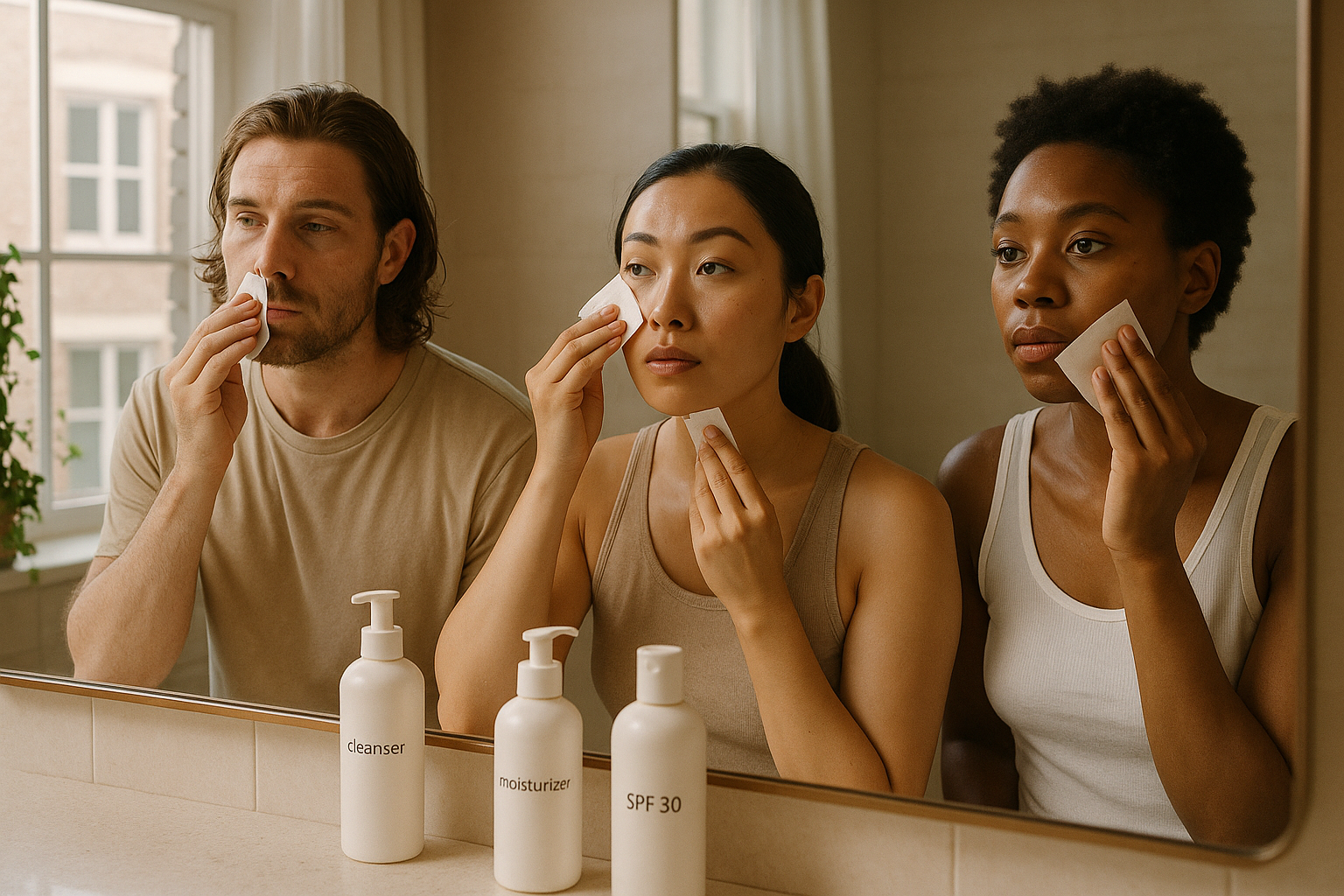
Once you know your type, commit to four simple steps morning and night (SPF in the morning). This order helps products do their job with minimal irritation: cleanse (remove oil/debris), treat (target concerns like acne or tone), moisturize (hydrate and support barrier), and protect (daytime sunscreen). Pick products suited to your skin type: oil-free, non-comedogenic for acne-prone; fragrance-free if you’re easily irritated. Consistency beats complexity—most progress arrives from months of gentle, repeated care, not a single “miracle” bottle.
2.1 How to layer (AM/PM)
- AM: Cleanser → treatment (if gentle, e.g., niacinamide/azelaic) → moisturizer → broad-spectrum SPF 30+.
- PM: Cleanser → treatment (e.g., retinoid or BPO for acne) → moisturizer.
- Add only one new product at a time; keep everything else steady for 2–3 weeks.
2.2 Guardrails
- Look for “non-comedogenic” if you clog easily; it helps (though labeling isn’t standardized everywhere).
- Favor gentle, fragrance-free basics if you’re reactive.
- Sunscreen is non-negotiable daily (see Pillar 6 for specifics).
Bottom line: Keep it four steps, keep it gentle, and keep it daily; adjust only the “treat” step when your skin goals change.
3. Choose a Cleanser That Respects Your Barrier
Your cleanser sets the tone. The goal isn’t “squeaky clean”—it’s clean without tightness. For dry/normal, cream or lotion cleansers leave more lipids behind; for oily/acne-prone, gel cleansers lift excess sebum effectively; for very sensitive, micellar water or ultra-mild syndet cleansers can reduce sting. Whichever you pick, massage briefly with lukewarm water and rinse well; harsh scrubbing can disrupt the stratum corneum and ramp up irritation. Over-cleansing (e.g., aggressive morning + night + mid-day washes) often worsens oiliness and flakes via rebound.
3.1 Numbers & guardrails
- Most people do well cleansing once or twice daily; sweat or heavy sunscreen may justify a gentle second cleanse at night.
- If your face feels tight after rinsing, switch to a milder cleanser and moisturize immediately.
3.2 Mini-checklist
- Dry: cream cleanser; minimal foaming.
- Oily: gel cleanser; avoid sand-papery scrubs.
- Sensitive: fragrance-free; patch test; avoid hot water.
Bottom line: The right cleanser leaves your face comfortable, not stripped; that “feel” is your best indicator you’re protecting your barrier.
4. Moisturize Strategically (Humectant + Emollient + Occlusive)
Moisturizers work by attracting water (humectants like glycerin and hyaluronic acid), smoothing gaps (emollients like squalane, fatty alcohols), and sealing hydration (occlusives like petrolatum). For dry or compromised skin, petrolatum and ceramide-rich formulas can meaningfully support barrier repair; for oily or acne-prone skin, lightweight gel-creams with humectants and non-comedogenic emollients hydrate without congestion. Use more at night and less during humid seasons; scale up in drier, colder weather.
4.1 Tools & textures
- Dry: cream with ceramides + cholesterol; a pea of petrolatum as a night seal on hotspots.
- Oily: gel-cream with glycerin, niacinamide; skip heavy occlusives on T-zone.
- Sensitive: simple, fragrance-free INCI; patch test 7–10 days.
4.2 Common mistakes
- Over-moisturizing oily areas (leaves you shinier, not healthier).
- Skipping moisturizer because you’re oily (dehydration can increase shine).
- Layering too many actives under moisturizer (adds irritation risk).
Bottom line: Build your moisturizer around barrier biology—humectant + emollient, then add occlusion only where and when you need it.
5. Pick Treatment Actives by Goal (and Tolerance)
Target concerns with proven actives and realistic timelines. For acne, benzoyl peroxide (BPO) and topical retinoids are first-line; for tone and texture, retinoids and azelaic acid pull weight; for redness-prone or sensitive skin, azelaic acid and niacinamide tend to be gentler starts. Begin slowly (alternate nights; short-contact if needed) and give treatments 8–12 weeks to show a clear trend.
5.1 Acne playbook (as of Aug 2025)
- BPO 2.5–5% once daily (or alternate days) is effective and often better tolerated than higher strengths; expect dryness the first weeks.
- Topical retinoids (adapalene, tretinoin): start 2–3 nights/week, then build; always moisturize.
- Azelaic acid (15–20%) helps acne and post-inflammatory marks; also used for rosacea.
5.2 Tolerance tactics
- Start with alternate-day or short-contact (wash off after ~1 hour) for BPO/retinoids, then extend as tolerated.
- Introduce one new active every 2–3 weeks to isolate reactions.
5.3 Notes for pregnancy & planning
- Avoid topical retinoids during pregnancy out of caution; consider azelaic acid or BPO instead (discuss with your clinician).
Bottom line: Choose actives for your goal, start slow, and adjust frequency before you abandon the ingredient.
6. Master Sun Protection (Daily, Measurable, Habit-Proof)
The best anti-aging, anti-spot routine is sunscreen you’ll actually wear. Use broad-spectrum SPF 30+ daily; reapply at least every two hours outdoors and sooner with swimming/sweating. “Water-resistant” means 40 or 80 minutes by test, not waterproof. Pair sunscreen with shade, a hat, and UPF clothing for reliable coverage—clothes don’t wear off. For amount, think the “teaspoon rule” for the body and a generous, even layer for face/neck (don’t forget ears and hairline). FDA Access Data
6.1 Practical guide
- Face/neck/ears: apply a generous layer; many find ~½–1 teaspoon works, spread in two passes. (Cancer agencies commonly advise ~1 tsp for face/neck/ears.)
- Body: aim for ~1 oz (a shot glass) for full-body coverage; reapply diligently.
- UPF clothing: look for UPF 30–50+; UPF 50 lets only ~1/50th of UV through.
6.2 Quick myths
- Higher SPF doesn’t extend reapplication windows—still reapply.
- No sunscreen is “waterproof” or “sweatproof.”
Bottom line: Make sun defense automatic—sunscreen + UPF + hat—and your skin (all types) ages better with fewer surprises.
7. Exfoliate Without Wrecking Your Barrier
Exfoliation smooths texture and brightens tone, but overdoing it is the fastest way to irritation. Gentle chemical exfoliants (AHAs like lactic/glycolic; BHA like salicylic) are more predictable than gritty scrubs. Start once weekly, then step up only if skin stays calm. Always moisturize after, and never exfoliate sunburnt or freshly shaved skin. If you’re using a retinoid, consider alternating nights to reduce the risk of over-exfoliation.
7.1 How to do it
- Pick one exfoliant type to start (AHA for dryness/dullness; BHA for oil/clogging).
- Apply gently (about 30 seconds of contact for scrubs; follow product directions for acids).
- Follow with moisturizer; be extra diligent with sunscreen the next day.
7.2 Guardrails
- Dry/sensitive: lactic acid or low-strength AHA, 1×/week.
- Oily: BHA 1–3×/week if tolerated.
- Combination: spot-treat T-zone with BHA; hydrate cheeks.
Bottom line: Exfoliation should make skin feel smoother and comfortable—if you’re stinging or peeling, you’re doing too much.
8. Align Habits with Skin (Diet, Stress, Climate)
Lifestyle won’t replace treatment, but it can nudge your skin in the right direction. Evidence suggests low-glycemic eating patterns may reduce acne counts for some, while links between cow’s milk and acne remain mixed; yogurt/cheese are less consistently implicated. Manage stress/sleep, clean pillowcases, and build a steady wind-down so your routine happens without thought. In hot, humid months, lighten textures; in windy or dry seasons, emphasize richer moisturizers and lip/hand care. Check your local UV index before outdoor plans and adapt: more shade/UPF on high-UV days.
8.1 Numbers & expectations
- Diet shifts (e.g., lowering GI) may help over 8–12 weeks; keep topical therapy going in parallel.
- Acne meds typically need 8–12 weeks for visible change.
8.2 Mini-checklist
- Favor sleep, exercise you enjoy, and consistent routines.
- Swap to gel textures in humid heat; richer creams in dry cold.
- Keep sunscreen and hat near the door for “don’t-forget” compliance.
Bottom line: You can’t out-wellness true dermatologic disease, but aligning diet, sleep, stress, and climate tweaks with your routine compounds results.
9. AM/PM Templates for Dry, Oily, and Combo Skin (Copy, Then Tweak)
Templates turn theory into habit. Start here, then adjust textures or frequencies based on how your skin actually behaves for two full weeks. AM is about protection and light treatment; PM is where you do most of your repair. When adding anything new, patch test and introduce one change at a time.
9.1 Dry skin template
- AM: Cream cleanser → hydrating serum (e.g., hyaluronic acid/niacinamide) → rich ceramide cream → broad-spectrum SPF 30+ (cream).
- PM: Cream cleanser → gentle retinoid 2–3 nights/week (or azelaic acid if retinoids sting) → ceramide cream → dab petrolatum on flaky hotspots.
- Weekly: Mild lactic acid 1×/week; skip if using retinoid that night.
Why it works: Maximizes water binding + lipid replacement, with measured use of actives and strong photoprotection daily.
9.2 Oily skin template
- AM: Gel cleanser → niacinamide or azelaic serum → lightweight gel-moisturizer → SPF 30+ (gel or fluid).
- PM: Gel cleanser → BPO or retinoid on acne-prone zones → gel-moisturizer.
- Weekly: BHA 1–2×/week if pores clog; avoid stacking with retinoid on the same night.
Why it works: Controls sebum and keeps pores clearer while maintaining hydration—without heavy occlusives.
9.3 Combination skin template
- AM: Gentle gel (T-zone) + cream cleanser (cheeks) → niacinamide → mid-weight moisturizer → SPF 30+.
- PM: Gentle cleanser → retinoid 2–3 nights/week (buffer with moisturizer on drier areas) or azelaic acid if sensitive → targeted moisturizer (gel on T-zone, cream on cheeks).
- Weekly: BHA on T-zone; lactic acid on cheeks on a different night.
Why it works: Zone care: treat oil where it lives, nourish drier areas, protect everywhere.
Bottom line: Templates are starting points—watch feel and look, then nudge textures and treatment nights until your skin stays calm and clear.
FAQs
1) How do I know if products are breaking me out or if it’s “purging”?
Introduce one new product at a time and patch test for 7–10 days on the inner arm first. Breakouts in new locations or lasting beyond 6–8 weeks likely indicate irritation or comedogenicity; stop and reassess. Purging is usually from actives that increase turnover (retinoids, acids) and occurs where you already break out.
2) Do I need sunscreen indoors or on cloudy days?
Yes—UVA penetrates windows and clouds. Use a broad-spectrum SPF 30+ daily; reapply if you sit near windows for long periods or go outside. Clothing with UPF adds reliable, “set-and-forget” protection.
3) What’s the right amount of sunscreen for face and body?
Think generous, even layers: many guidelines suggest ~1 ounce (a shot glass) for the body and a liberal application for face/neck/ears, with reapplication every two hours outdoors. Labels define water-resistance as 40 or 80 minutes; no product is “waterproof.”
4) I have sensitive skin. Should I avoid fragrance completely?
If you experience stinging/redness with fragranced skincare, switch to fragrance-free basics and patch test new products. Many dermatology sources advise “fragrance-free” (not just “unscented”) for sensitive skin.
5) How long until acne treatments work?
Give most topical regimens 8–12 weeks. Starting slowly (alternate-day or short-contact) can improve tolerance to BPO and retinoids without sacrificing long-term benefits.
6) Is benzoyl peroxide safe, and what strength should I use?
BPO is a long-standing first-line acne ingredient; many guidelines recommend starting with lower strengths (2.5–5%) to reduce irritation while maintaining efficacy. Expect initial dryness; moisturize and ramp up gradually.
7) Are diet changes worth it for acne?
Evidence supports trying a low-glycemic pattern and being mindful of cow’s milk if you notice a link; results vary by person. Keep topical therapy going while you experiment for 8–12 weeks.
8) Can I use retinoids if I’m pregnant or trying?
Out of caution, avoid topical retinoids in pregnancy and discuss alternatives such as azelaic acid or BPO with your clinician. If you used a retinoid before you knew you were pregnant, speak with your OB; risk from brief topical exposure appears low. ACOG
9) How often should I exfoliate?
Start once weekly and increase only if skin stays calm. Be extra gentle (short contact, lukewarm water), moisturize right after, and alternate with retinoid nights to avoid over-exfoliation.
10) Do I need UPF clothing if I already use sunscreen?
UPF clothing offers consistent, lab-tested blockage of UV (e.g., UPF 50 lets only ~1/50th through). It’s an excellent complement to sunscreen, especially for long days outdoors. The Skin Cancer Foundation
Conclusion
Great skin care isn’t about owning the most products—it’s about matching simple habits to your skin’s behavior and environment, then repeating those habits long enough to see the compounding effect. Identify your baseline with the wash-and-wait test, build a four-step routine you can do on autopilot, and protect your barrier with smart cleanser/moisturizer choices. Layer in actives deliberately (start slow, adjust frequency), make sun protection non-negotiable, and let lifestyle support the process. Over months, these nine pillars become second nature—and the result is calmer, clearer, more resilient skin that needs less drama, not more.
Your next steps: run the two-night skin-type check, pick one cleanser + one moisturizer + one sunscreen, and add just one active for your top concern. Set a reminder to reassess in 8 weeks. Your future self will thank you.
CTA: Ready to personalize? Copy the template for your skin type and swap in products you already own—then track results for 8 weeks.
References
- Skin care basics — American Academy of Dermatology (AAD), accessed Aug 2025: American Academy of Dermatology
- Skin care tips for men (label guidance on non-comedogenic, fragrance-free) — AAD, accessed Aug 2025: American Academy of Dermatology
- How to test skin care products — AAD, Aug 10, 2021: American Academy of Dermatology
- How to safely exfoliate at home — AAD, accessed Aug 2025: American Academy of Dermatology
- Sunscreen: How to Help Protect Your Skin from the Sun — U.S. FDA, Aug 16, 2024: U.S. Food and Drug Administration
- Tips to Stay Safe in the Sun — U.S. FDA, May 9, 2024: U.S. Food and Drug Administration
- How to Use Sunscreen — American Cancer Society, Jun 26, 2024: American Cancer Society
- Sun Protective Clothing / UPF — Skin Cancer Foundation, accessed Aug 2025: The Skin Cancer Foundation
- Can the right diet get rid of acne? — AAD, accessed Aug 2025: American Academy of Dermatology
- Diet and acne: a systematic review — JAAD International, 2022: https://www.jaadinternational.org/article/S2666-3287(22)00028-1/fulltext (PMC version: ) PMC
- Acne vulgaris: management (NICE Guideline NG198) — NICE, Jun 25, 2021: NICE
- Guidelines of care for the management of acne vulgaris — Journal of the American Academy of Dermatology, 2024: https://www.jaad.org/article/S0190-9622(23)03389-3/fulltext JAAD
- About benzoyl peroxide / How to use — NHS, Sep 30, 2022: nhs.uk
- Topical Tretinoin (Retin-A) — Pregnancy Fact Sheet — MotherToBaby, Jul 1, 2024: MotherToBaby
- Skin 101: Fundamentals of Skin Barrier Physiology — JCAD, 2025: JCAD
- Petrolatum: Barrier repair and antimicrobial responses — Journal of Allergy and Clinical Immunology, 2016: https://www.jacionline.org/article/S0091-6749(15)01194-X/fulltext JA Cares
- Sun Exposure in Travelers (UV & labeling context) — CDC Yellow Book, Apr 23, 2025: https://www.cdc.gov/yellow-book/hcp/environmental-hazards-risks/sun-exposure-in-travelers.html