

























Mindful breathing and focused, unhurried eating can nudge your body from “fight-or-flight” into “rest-and-digest,” priming the gut for smoother motility, better enzyme release, and fewer reflux or bloating flares. This guide distills nine practical, evidence-aligned ways to weave mindfulness into meals—especially via breath—so digestion has a chance to do its job. It’s written for anyone who wants less discomfort after eating and more steady energy during the day.
Quick answer: Mindful eating means paying full, non-judgmental attention to the sensory experience of food and to internal cues of hunger and fullness. Slow, diaphragmatic breathing before and during a meal increases parasympathetic (“rest-and-digest”) activity, which can ease GI symptoms and improve meal comfort.
Friendly disclaimer: This article is educational and not a substitute for personalized medical care. If you have persistent or severe digestive symptoms, consult a qualified clinician.
Fast start (60 seconds):
- Sit tall, place one hand on your belly, one on your chest.
- Inhale through your nose for ~4–5 seconds; exhale for ~6–8 (no strain) x 8–10 breaths.
- Take your first bites slowly; chew until the texture softens.
- Put the utensil down between bites; check in with fullness at the halfway point.
- After eating, walk gently for 5–10 minutes if you can.
1. Prime “Rest-and-Digest” With 60–90 Seconds of Diaphragmatic Breathing
Starting your meal after a short bout of slow, belly-led breathing flips your autonomic balance toward parasympathetic tone—the branch that stimulates salivation, gastric secretions, and gut motility. Practically, this means less tightness in your upper abdomen, a calmer heart rate, and a body that’s more ready to receive food. Research reviews show that slow breathing (often around six breaths per minute), especially when nasal and diaphragmatic, improves heart-rate variability (HRV)—a marker of parasympathetic activation—and reduces perceived stress, which otherwise can inhibit digestive processes. A minute is enough for a noticeable shift; two to three minutes is even better on high-stress days.
1.1 How to do it
- Sit upright with feet planted; relax your jaw and shoulders.
- Place a hand over your belly; inhale through the nose so your belly rises more than your chest.
- Exhale without force; let the belly fall.
- Aim for ~4–5 seconds in, ~6–8 seconds out (a gentle 1:1.5 ratio).
- Repeat 8–12 cycles (about 60–90 seconds).
1.2 Numbers & guardrails
- Useful range: 4–7 breaths/min if comfortable; never push into breath hunger.
- If you feel light-headed, shorten exhalations and return to natural breathing.
- For nasal congestion, breathe as slowly and comfortably as possible through the mouth and return to nasal breathing when able.
1.3 Mini-checklist
- Belly moves more than the chest
- Exhale slightly longer than inhale
- Jaw and shoulders relaxed
Bottom line: A brief, pre-meal breathing pause sets your GI system up to receive food instead of bracing against it.
2. Slow Your Bite Pace and Chew Thoroughly to Trigger the Cephalic Phase
Chewing slowly and savoring flavors isn’t just polite; it engages the “cephalic phase” of digestion—anticipatory responses (salivation, gastric and pancreatic secretions, hormonal signals) that begin before food reaches the stomach. Mindfulness here means noticing aroma, texture, and taste—and giving your body time to release enzymes like salivary amylase and to coordinate swallowing, gastric emptying, and appetite hormones. Reviews of cephalic phase responses and mastication suggest that attentive chewing improves pre-absorptive digestive readiness and can influence satiety and subsequent intake. In practical terms: more comfort during the meal and less “post-meal brick.”
2.1 How to do it
- Take smaller bites; chew until the texture becomes uniform and easy to swallow.
- Put your utensil down between bites to prevent “automatic refills.”
- Sip water in small amounts if needed, but avoid “washing down” large chunks.
- Notice taste changes—the first 5–10 chews often release new flavors.
2.2 Common mistakes
- Rushing the first third of the meal (when you’re hungriest) and over-filling the stomach.
- Eating while distracted, which weakens memory of intake and may lead to overeating later.
- “Chew counting” so rigidly that you lose pleasure—aim for texture change, not a fixed number.
2.3 Mini-checklist
- Bite size modest
- Chew to soft texture
- Utensil rests between bites
Bottom line: Savoring and thorough chewing cue digestive secretions and can moderate later intake—benefits that start in the first bites.
3. Use Simple Breathing Patterns During the Meal to Keep Stress Low
Keeping your nervous system calm during the meal maintains the parasympathetic dominance you created at the start. Two easy, discreet patterns—box breathing (4-4-4-4) and 4-7-8—both slow the rate and elongate exhalation, which is associated with greater vagal activity. You don’t need to count every breath; sprinkling 2–3 slow, quiet cycles between a few bites can prevent the “work lunch gulp” that leaves you tight-chested or gassy. Evidence links controlled breathing to reduced sympathetic arousal and improvements in HRV, a proxy for your body’s readiness to digest rather than defend.
3.1 How to do it without being obvious
- Pause your fork; inhale quietly through the nose, soft belly, soft jaw.
- Exhale longer than you inhaled; imagine fogging a mirror through the nose.
- Resume eating; repeat after two or three bites.
3.2 Numbers & guardrails
- Try 4-4-6 (inhale-hold-exhale) if 4-7-8 feels too long.
- If breath holds feel uncomfortable, skip the holds and simply lengthen the exhale.
- Avoid breath-holding in late pregnancy or if you have breathing-related conditions—use gentle exhale-lengthening only.
3.3 Mini-checklist
- Quiet nasal breaths
- Longer, easy exhale
- Shoulders stay down
Bottom line: A few calming breaths mid-meal keep digestion switched on and tension switched off.
4. Align Posture and Position to Reduce Reflux During and After Eating
How you sit—and what you do in the hour after—can change reflux risk. Mindful posture (hips slightly above knees, ribs stacked over hips, chin level) reduces abdominal pressure on the stomach. After eating, staying upright or lying briefly on your left side can lessen acid exposure; systematic reviews associate left-lateral positioning with reduced nocturnal reflux and better GERD-related quality of life. Leave vigorous exercise and deep forward folds for later, and avoid tight belts while eating. PubMed
4.1 How to do it
- During meals: sit tall with feet grounded; avoid slumping or twisting.
- Right after: light activity or left-side rest; avoid lying flat on your back.
- Before bed: finish eating 2–3 hours prior when possible.
4.2 Common mistakes
- Reclining on the couch after dinner (worse if on the right side).
- Tight waistbands or shapewear during meals.
- Doing ab-intense exercise right after eating.
4.3 Mini-checklist
- Tall, neutral posture at table
- No tight waist
- Left-side if resting
Bottom line: Posture and left-side positioning are simple, mindful levers that can meaningfully reduce reflux symptoms.
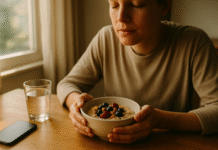
5. Create a Distraction-Light Meal Environment so Satiety Signals Register
Mindfulness is easier when you’re not juggling emails and scrolling. Controlled studies show that distraction at meals blunts awareness and memory of how much we’ve eaten, which increases subsequent intake—sometimes by 25–30%—especially in people prone to overeating. Translation: when your attention is offline, your satiation is delayed. A calm, single-task environment helps you notice fullness sooner and stop more comfortably.
5.1 How to do it
- Close the laptop and put your phone out of reach; choose one sensory input (music or conversation).
- Eat from a plate or bowl (not from a bag); pre-portion snacks.
- Use smaller utensils or chopsticks if you tend to rush.
5.2 Why it matters
- Attention shapes memory of intake, which shapes later appetite.
- Satiety hormones need time; attention buys that time.
5.3 Mini-checklist
- One screen max (preferably none)
- Food plated
- First 5 minutes device-free
Bottom line: A distraction-light setting is a quiet amplifier for the mindful cues you’re trying to hear.
6. Pair Breath and Pace With a 5–10 Minute Post-Meal Walk to Smooth Glucose
Gentle movement after eating helps shuttle glucose into muscles and can curb the post-meal spike that leaves you sluggish. A randomized crossover study (2025) found that 10 minutes of walking immediately after a meal significantly lowered peak glucose compared with sitting; prior evidence suggests even 2–5 minutes of light walking can help. Breathwise, keep nasal, easy exhalations while you stroll; it prevents breath-holding and keeps your nervous system in “digest mode.” This combination—unhurried meal, calm breath, mini-walk—often reduces the heavy, sleepy feeling that can follow large lunches.
6.1 How to do it
- Pace: comfortable, conversational walking (no need to sweat).
- Duration: 5–10 minutes is great; 2–3 minutes is still useful if time-crunched.
- Space: stairs, hallways, courtyard, or a loop around the block.
6.2 Numbers & guardrails
- If you use a glucose monitor, note the difference between a seated vs. 10-minute walk day.
- People with mobility limitations can try upright marching, seated leg cycles, or gentle standing sways for 2–5 minutes.
6.3 Mini-checklist
- Walk begins right after eating
- Comfortable pace
- Easy nasal breathing
Bottom line: Breath + brief movement is a potent, low-effort way to steady post-meal energy.
7. If You Struggle With Bloating, Belching, or Reflux, Add a Post-Meal DB Protocol
For some upper-GI symptoms—especially supragastric belching and PPI-refractory reflux—structured diaphragmatic breathing (DB) after meals has clinical backing. Trials and mechanistic studies show DB can reduce post-prandial reflux events (by increasing the pressure difference between the lower esophageal sphincter and the stomach) and meaningfully reduce belching severity and GERD symptoms. Many GI clinics now teach DB as part of non-drug therapy. The protocol is simple, but consistency matters.
7.1 How to do it (5–15 minutes)
- Sit or recline with one hand on the belly, one on the chest.
- Inhale slowly through the nose, letting the belly rise; exhale without force.
- Keep shoulders and upper chest quiet; aim for 6–10 relaxed breaths/minute.
- Continue for 5–15 minutes after meals, especially when symptoms flare.
7.2 Numbers & guardrails
- Studies often use 15 minutes post-meal for rumination/belching protocols.
- If you have dizziness or air hunger, shorten sessions and build gradually.
- Keep immediate medical care if you have alarm symptoms (unexplained weight loss, vomiting blood, severe pain).
7.3 Mini-checklist
- Belly expands on inhale
- Exhale longer or equal
- 5–15 minutes after meals
Bottom line: Consistent, coached DB can be a powerful adjunct for belching-dominant GERD and related symptoms. PubMed
8. For Rumination Syndrome or IBS, Try Gut-Directed Breathing as First-Line Care
Rumination syndrome (repeated, effortless post-meal regurgitation) and some functional gut disorders often respond to behavioral therapies led by diaphragmatic breathing and biofeedback. Reviews and guidelines recommend DB as first-line for rumination, with many patients reporting large reductions in regurgitation frequency when they practice after meals; comprehensive CBT can augment DB when symptoms persist. For IBS, mindfulness-based approaches (breath, attention training, relaxation) can reduce stress-related flare cycles and improve quality of life, especially when combined with nutrition guidance. CGH Journal
8.1 How to do it
- Learn DB from a clinician or credible tutorial; practice 10–15 minutes after meals.
- Track triggers (speed, textures, stressors) and pair DB with graded exposure to feared foods or settings.
- For IBS: combine breath practice with regular meals, fiber adjustments, gentle movement, and stress skills.
8.2 Tools/Examples
- Biofeedback-guided DB when available; otherwise, timed breathing with a metronome app.
- CBT-RD (cognitive-behavioral therapy for rumination disorder) add-ons when DB alone isn’t enough.
8.3 Mini-checklist
- DB after every meal for 2–4 weeks
- Symptom log (time, quantity, context)
- Consider referral if regurgitation persists
Bottom line: In rumination and some functional gut issues, DB isn’t just “calming”—it’s a primary therapeutic skill with measurable symptom reductions.
9. Build a 5-Minute Mindful-Meal Routine You Can Do Anywhere
A short, repeatable routine cements the habit so you don’t need perfect circumstances. The core idea is to start calm, eat attentively, and finish with gentle activity—no morality, no rigid rules. Five minutes is enough to shift digestion from stressed to supported, even in an office or on the go. Commit to trying this at one meal per day for two weeks and see how your body responds.
9.1 The 5-minute template
- Minute 0–1: Seated, breathe diaphragmatically (inhale ~4–5s, exhale ~6–8s).
- Minute 1–4: Eat slowly. Smaller bites, chew to uniform texture, utensil down between bites. Sprinkle 2–3 slow breaths as needed.
- Minute 4–5: Stand and stroll (hallway, stairs, outside) or left-side rest if walking isn’t feasible.
9.2 Optional upgrades
- Plate food away from screens; set a timer for a device-free first five minutes.
- Pre-portion seconds so you can decide mindfully rather than automatically.
- Notice first-bite flavor, midpoint satiety, and end-of-meal comfort.
9.3 Mini-checklist
- Calm start
- Attentive bites
- Gentle finish
Bottom line: Consistency beats complexity—this tiny ritual often delivers outsized digestive comfort.
FAQs
1) What exactly is “mindful eating,” and how does it relate to digestion?
Mindful eating means paying full attention to the experience of eating—taste, smell, texture—and to your body’s cues for hunger and fullness. When practiced with slow, diaphragmatic breathing, it shifts your autonomic nervous system toward parasympathetic mode, which supports salivation, gastric secretions, and coordinated motility. People often report less bloating and more comfortable fullness because they’re pacing intake and giving satiety signals time to register.
2) How many breaths should I take before a meal?
A practical target is 8–12 slow breaths (about 60–90 seconds). That’s long enough for a perceptible downshift without feeling like a ritual you’ll skip on busy days. If you’re very stressed, extend to two or three minutes. Keep the exhale slightly longer than the inhale and avoid straining—comfort is the point.
3) Does chewing a certain number of times matter?
There’s no single evidence-based number, and counting can become distracting. What matters is chewing until the texture softens and swallowing is easy. This thorough mastication engages cephalic-phase responses (salivation, gastric readiness) and is associated with better satiation and less overeating later. Start by halving your usual bite size and resting the utensil between bites.
4) I get reflux at night. Can mindful breathing help?
Breathing won’t replace medical therapy, but diaphragmatic breathing may reduce post-meal reflux events for some people by altering pressure dynamics at the lower esophageal sphincter. Also, positional tweaks help: finishing food 2–3 hours before bed and resting on your left side are both associated with less nocturnal reflux. Ask your clinician if DB could complement your plan.
5) Will a short walk truly make a difference after I eat?
Yes—brief, light-intensity walking can lower the peak of your post-meal glucose curve compared with sitting, and randomized data suggest that 10 minutes immediately after meals is particularly effective. If you can’t walk, try standing or gentle movements; even 2–5 minutes can help compared to staying seated.
6) I have IBS. Are these techniques safe?
Generally yes, and many people with IBS find calm-breathing plus slower, more attentive eating reduces symptom intensity, especially when paired with individualized nutrition guidance. If you have rumination syndrome or prominent belching, clinicians often teach diaphragmatic breathing as part of first-line therapy. Always personalize with your care team if symptoms are severe.
7) Does mindfulness help with overeating or cravings?
Evidence from trials and reviews indicates that mindfulness-based approaches can improve eating behaviors such as stress or external cue–driven eating. Eating attentively also improves memory for what you’ve eaten, which reduces later intake. These effects vary by person, but many find they’re less likely to “overshoot” fullness when they slow down and pay attention. PMC
8) Are certain breathing patterns better than others for digestion?
Patterns that slow your respiratory rate and lengthen exhalation (e.g., box breathing, 4-7-8, or simple 4-6) appear to be effective because they enhance parasympathetic tone and HRV. There’s no single “best” method; the right one is the one you can do comfortably and consistently, especially before and during meals.
9) What if I only have five minutes for lunch?
Even then, you can add one minute of breathing, eat the first few bites attentively, and take a 2–3 minute stroll afterward. The goal is not perfection but direction—tiny nudges toward calm and pace. People are often surprised at how much difference this makes to afternoon energy and comfort.
10) Can kids or older adults use these techniques?
Yes—with age-appropriate adjustments. For kids, keep it playful: “smell the soup, cool the soup” breathing and family device-free minutes. For older adults, prioritize comfortable posture, smaller bites, moist foods for easier chewing, and very gentle breath pacing. As always, adapt to medical guidance and physical ability.
Conclusion
Mindfulness at the table isn’t a vague ideal; it’s a set of small, repeatable behaviors that make digestion easier. A minute of diaphragmatic breathing primes salivation and motility. Slower bites and thorough chewing engage cephalic-phase signals so your stomach isn’t playing catch-up. An attention-friendly environment helps satiety arrive on time. And a short post-meal stroll steadies blood sugar and energy. For specific symptom patterns—like belching-dominant reflux or rumination—clinician-taught diaphragmatic breathing can be a first-line tool with growing evidence. Together these skills form a routine you can use at home, in the office, or while traveling: start calm, eat attentively, move gently.
Choose one meal today to practice the five-minute template—and notice how your body thanks you at the next one.
Try it today: Pause > Breathe > Savor > Stroll.
References
- Slow down—and try mindful eating. Harvard Health Publishing. September 18, 2022. Harvard Health
- Breathing practices for stress and anxiety reduction: Mechanisms and evidence. Frontiers in Human Neuroscience. 2023. PMC
- Immediate effects of structured and natural deep breathing on heart rate variability. Journal of Physiology-Paris. 2024. ScienceDirect
- Endocrine cephalic phase responses to food cues. Nutrients. 2020. PMC
- Anticipatory physiological regulation in feeding biology: Cephalic phase responses. Appetite. 2007. PMC
- Chewing and its influence on swallowing, gastrointestinal, and overall health: A review. Critical Reviews in Food Science and Nutrition. 2023. Taylor & Francis Online
- Positive impact of a 10-min walk immediately after glucose ingestion on postprandial glycemia. Scientific Reports. 2025. Nature
- Just 2 minutes of walking after eating can help blood sugar, study says. National Library of Medicine “Behind the Headlines” (Sports Medicine, 2022). 2022. NCBI
- Left lateral decubitus sleeping position is associated with reductions in nocturnal reflux: Systematic review. World Journal of Clinical Cases. 2023. PMC
- Effects of diaphragmatic breathing on the pathophysiology of reflux in patients with upright GERD. American Journal of Gastroenterology. 2021. PubMed
- Diaphragmatic breathing reduces belching and PPI-refractory gastroesophageal reflux symptoms. Clinical Gastroenterology and Hepatology. 2018. https://www.cghjournal.org/article/S1542-3565(17)31307-1/fulltext CGH Journal
- Rumination syndrome: Pathophysiology, diagnosis and treatment. Frontline Gastroenterology. 2022. PMC
- Eating attentively: A systematic review and meta-analysis of the effect of food-intake memory and awareness on eating. American Journal of Clinical Nutrition. 2013. PMC
- Eating attentively reduces later energy consumption in overweight and obese females. British Journal of Nutrition. 2014. https://www.cambridge.org/core/journals/british-journal-of-nutrition/article/eating-attentively-reduces-later-energy-consumption-in-overweight-and-obese-females/E0379EA076042668F767E9A95D92AFCD