


























Yoga and flexibility work can make weight loss easier by improving how you move, reducing pain, and helping you stick with healthy routines. In one line: use yoga as a low-impact way to raise weekly activity, build range of motion (ROM), and manage stress so a calorie deficit is more sustainable. Quick start: schedule 2–3 yoga sessions per week, add 10 minutes of daily flexibility, favor moderate-intensity flows on days you feel energized, and restorative sessions on recovery days. Aim for 150–300 minutes of moderate activity weekly (or equivalent), counting any yoga that reaches moderate intensity.
Brief health note: This guide is educational, not medical advice. If you have a health condition, talk to a clinician and a qualified yoga teacher before starting or changing your routine. For newcomers, avoid extreme postures and be cautious with hot yoga, especially in warm climates.
1. Pick the Right Yoga Style and Intensity to Actually Count Toward Weekly Activity
The fastest way to make yoga help weight loss is to choose styles and pace that register as moderate intensity so they “count” toward weekly activity goals. Hatha yoga is typically light intensity (about 2.5 METs), while Power Yoga averages around 4.0 METs and continuous Sun Salutations (Surya Namaskar) around 3.3 METs—often enough to qualify as moderate work depending on your effort. Since moderate intensity begins at ~3.0 METs, flows that keep you moving and breathing steadily help you log meaningful minutes as well as calories burned. Practically, that looks like Vinyasa or Power sequences on days you feel good, and gentle Hatha or Restorative on recovery days. If you’re in a hot environment or class, monitor heat exposure and hydration closely.
1.1 How to do it
- Use the talk test: during moderate effort, you can talk but not sing; during vigorous effort, you can’t say more than a few words.
- Favor Vinyasa/Power classes (45–60 minutes) 2–3×/week; sprinkle shorter Hatha sessions on off days.
- Ask teachers for continuous sequences (e.g., flows with plank–chaturanga–up dog–down dog cycles).
- Skip extreme inversions if you’re new; they don’t increase intensity much and can add risk.
- In hot climates or hot yoga, pre-hydrate, bring electrolytes, and reduce intensity at the first sign of overheating.
1.2 Numbers & guardrails
- METs & examples: Hatha ≈ 2.5 METs; Power ≈ 4.0 METs; Surya Namaskar ≈ 3.3 METs (Compendium of Physical Activities).
- What “moderate” means (as of Aug 2025): 3.0–5.9 METs; aim for 150–300 min/week of moderate activity or 75–150 min/week vigorous, or an equivalent mix.
- Kcal example: A 70-kg person doing 60 minutes of Power Yoga (≈4.0 METs) expends ≈4.0 × 70 × 1.0 = 280 kcal (estimate).
Bottom line: Match the style to your goal—choose steady, flowing sequences for moderate intensity on training days and gentle work for recovery—so yoga truly moves the needle on weekly activity targets.
2. Use Daily 10-Minute Flexibility “Snacks” to Unlock Range of Motion
Short, consistent flexibility sessions improve ROM and make all your training feel easier. A single bout of stretching yields small but real, immediate gains in ROM; over weeks, regular stretch training produces moderate, lasting increases, with static and PNF (contract–relax) methods often outperforming ballistic approaches. Better ROM means more comfortable squats, lunges, and daily movements—which helps you keep up the activity that drives fat loss. You don’t need marathon stretch sessions: 10 minutes a day, focused on hips, hamstrings, and ankles, compounds quickly and reduces the “tightness tax” that saps motivation. Treat these as “movement snacks”—brief, low-friction blocks that fit any schedule.
2.1 Mini-routine (3–7 moves)
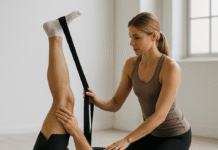
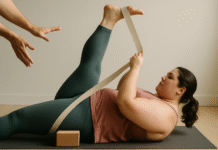
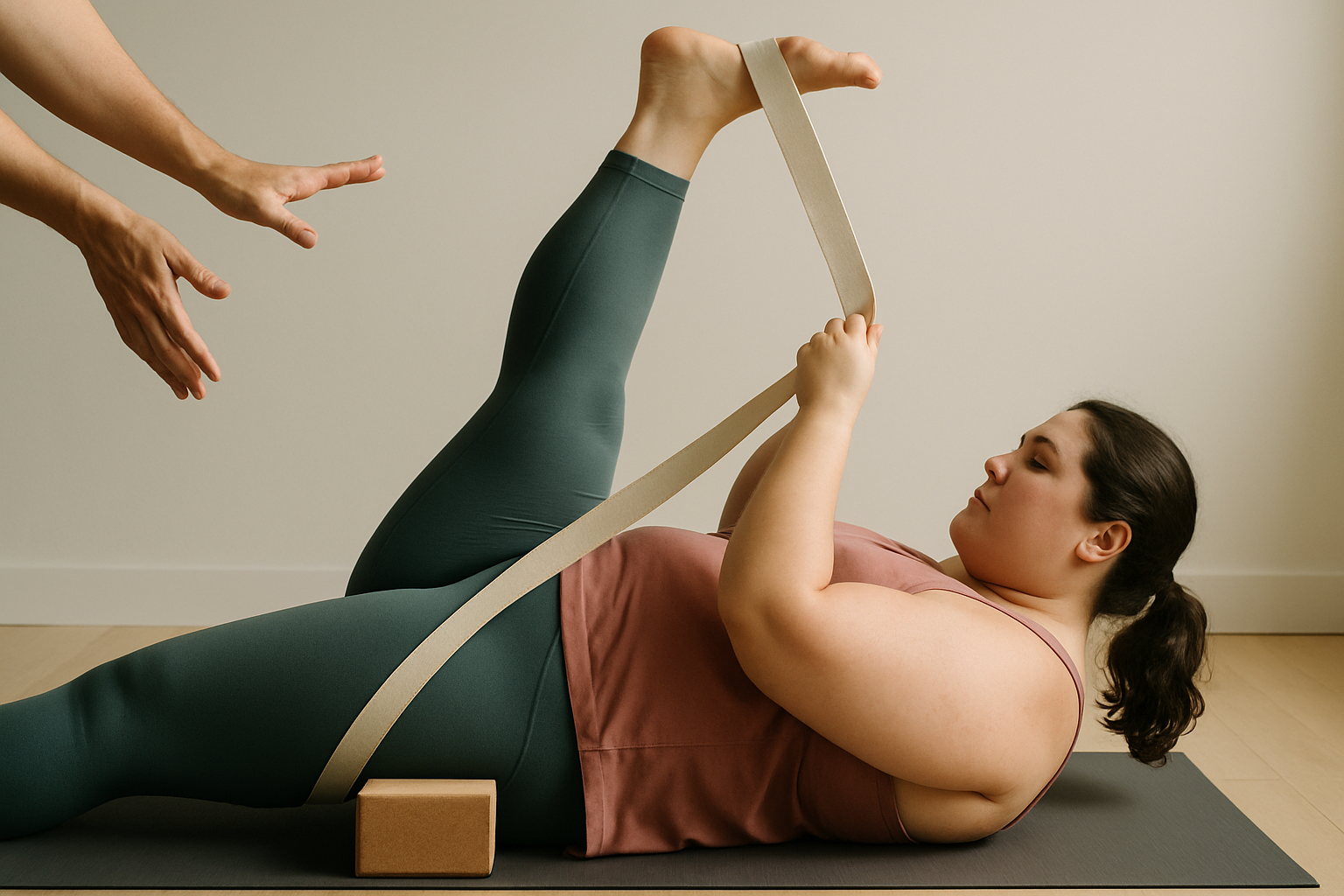
- Supine hamstring strap stretch: 2 × 30–60 s/side.
- Pigeon or figure-four (on back or seated): 2 × 30–60 s/side.
- Low lunge with rear-foot tuck (hip flexor): 2 × 30–60 s/side.
- Calf wall stretch (knee straight and bent): 2 × 30–45 s/side.
- Thoracic spine open book (gentle rotations): 6–8 reps/side.
2.2 Why it works & guardrails
- Acute effect: small ROM increase after a single session.
- Chronic effect: moderate ROM gains over ≥2 weeks; static/PNF often yield larger improvements than ballistic/dynamic.
- Practical tip: holds of 30–60 seconds per muscle are a sweet spot for flexibility, accumulated across the week.
Bottom line: Keep it short and daily—consistent micro-sessions change how your body moves, which in turn makes higher-output training more doable.
3. Pair Yoga with Strength Work to Protect Lean Mass as You Lose Fat
Yoga builds endurance and mobility, but pairing it with 2+ days/week of muscle-strengthening work preserves muscle during weight loss and keeps your resting metabolism higher. National and global guidelines recommend both aerobic minutes and regular strength training for best health; you can meet the strength requirement with bodyweight flows (think slow, controlled chair pose, plank variations, and loaded carries) or with dumbbells/resistance bands outside class. Stronger legs and core also reduce joint strain, making longer walks or cycling sessions feel better—so you can burn more calories without feeling beat up. By alternating yoga days and strength days, you maintain momentum while giving tissues a varied stimulus.
3.1 How to do it
- Weekly frame: 2–3 yoga sessions + 2 strength sessions (30–45 min), plus optional walking.
- Yoga-strength combo: End a Power/Vinyasa class with 2–3 sets each of dumbbell goblet squats, rows, and Romanian deadlifts (8–12 reps).
- At-home option: EMOM 20 minutes—Minute 1: 8–10 push-ups (on knees or box); Minute 2: 12–15 hip hinges with a backpack; Minute 3: 30-s hollow hold; Minute 4: rest.
3.2 Numbers & guardrails
- Guideline target (as of Aug 2025): 150–300 min moderate or 75–150 min vigorous weekly plus strength on 2+ days.
- Keep 1–2 reps in reserve on strength sets; if joints ache, reduce range or load and add longer eccentrics.
Bottom line: Yoga supplies mobility and low-impact conditioning; strength work preserves muscle. The combo supports a higher metabolism and better movement capacity through your cut.
4. Leverage Breathwork and Mindfulness to Curb Stress Eating and Improve Sleep
Breath-led practices (pranayama) and mindfulness can reduce stress-driven snacking and support better sleep—two levers that meaningfully affect weight-loss adherence. Studies link mindfulness training to improvements in mindful eating and fasting glucose, and broader evidence connects stress reactivity and emotional eating with higher intake of sweets and snacks; poor sleep is consistently associated with greater energy intake and worse weight-loss maintenance. While breathwork isn’t a magic bullet, 5–10 minutes of diaphragmatic breathing or box breathing after meals or before bed can downshift your nervous system, making it easier to act on your plan. In yoga classes, prioritize calm nasal breathing and longer exhales to reinforce this effect.
4.1 Mini-protocol
- After dinner: 6 minutes of 4-4-6-2 breathing (inhale 4, hold 4, exhale 6, hold 2).
- In class: keep exhale slightly longer than inhale through Sun Salutations.
- Before bed: 10 minutes of supine legs-up-the-wall + slow nasal breathing.
4.2 Evidence & guardrails
- Mindful eating training improved eating behavior and fasting glucose in trials.
- Stress reactivity is linked to higher snack intake; poor sleep correlates with worse adherence and weight outcomes.
- If breathwork causes dizziness or anxiety, shorten holds or practice seated.
Bottom line: A calmer nervous system makes consistent choices easier. Pair daily breathwork with mindful eating cues to reduce “stress calories.”
5. Protect Knees, Hips, and Wrists with Smart Props and Modifications
Joint-smart yoga keeps you moving while you lose weight, and that consistency matters because each pound lost reduces knee load by roughly four pounds per step. Use blocks, straps, bolsters, and chairs to change joint angles, lengthen levers gradually, and distribute pressure. For example, elevate hands on blocks in downward dog to unload wrists, or perform low lunges with hands on thighs to ease patellofemoral stress. New to yoga? Avoid extreme postures (deep lotus, headstands) and be cautious with hot yoga; practice under a qualified teacher. These choices minimize flare-ups so you can keep stacking active days that move weight loss forward.
5.1 Joint-friendly swaps
- Knees: replace kneeling lunges with high lunge; pad knees with folded blanket.
- Wrists: fist or forearm plank; elevate hands on blocks/wall.
- Hips: use a strap for seated forward folds; switch to figure-four on back if pigeon pinches.
- Back: prioritize cat-cow, sphinx, and supported bridge over deep forward flexion early on.
5.2 Region-specific note (hot climates)
- In warm, humid regions or summer months, favor non-heated classes, practice earlier, pre-hydrate, and schedule restorative sessions at midday to avoid heat stress.
Bottom line: Props are progress. Reducing joint irritation today lets you accumulate the activity that delivers results over months.
6. Use Yoga to Reduce Back Pain and Stay Consistent with Training
If back pain derails your exercise plans, yoga can help you stay on track. Clinical guidelines recommend non-drug therapies like yoga for low back pain, and randomized trials show yoga is as effective as physical therapy for chronic low back pain in improving function and reducing pain. Less pain means fewer skipped workouts, better sleep, and steadier calorie deficits. Start with gentle back-friendly sequences—cat-cow, sphinx, supported bridge, and short hip-flexor stretches—and progress your core work with time-under-tension planks and controlled back-body strengthening.
6.1 How to do it
- Twice weekly: 30–45 minutes of a back-care sequence; add a 10-minute daily mobility snack (cat-cow, pelvic tilts, thoracic rotation).
- Keep flexion small early; emphasize neutral spine, hip mobility, and glute engagement.
- Blend breath with movement; stop at “mild stretch” and avoid pain.
6.2 Evidence & guardrails
- Guideline: ACP recommends nonpharmacologic therapies (including yoga) for low back pain. American College of Physicians
- Trial: Yoga was noninferior to physical therapy over 12 weeks and reduced pain medication use.
Bottom line: Thoughtful yoga helps manage back pain so you can keep doing the consistent, boring work that drives fat loss.
7. Turn Sun Salutations into “Movement Snacks” to Boost Daily Burn
Short bouts of movement add up. Three 5-minute “mini flows” of Sun Salutations (Surya Namaskar) spread through the day provide roughly 15 minutes of moderate-intensity work without needing a full class. Do this six days a week and you’ve banked ~90 minutes—over half the weekly moderate target before counting any walks or strength sessions. Movement snacks also break up sitting, improving mood and focus, which indirectly curbs mindless eating. Keep the pace conversational and the transitions smooth so your heart rate stays elevated without joint strain.
7.1 Quick structure (≈5 minutes)
- 4 rounds of Surya Namaskar A, steady pace (~60–75 seconds/round).
- Optional: add a lunge step-back in rounds 3–4 for extra hip work.
- Finish with 1 minute of box breathing (4-4-4-4).
7.2 Numbers & tips
- Surya Namaskar ≈ 3.3 METs; at a brisk, continuous tempo many adults reach moderate intensity.
- Place sessions: mid-morning, mid-afternoon, and early evening for energy and appetite control.
Bottom line: Sprinkle yoga throughout your day to rack up moderate minutes with minimal friction.
8. Use Flexibility Work to Improve Lifts, Cardio Form, and Daily Posture
Better flexibility improves technique, which lets you train harder with fewer compensations. Long-term stretching increases joint ROM with moderate effects—especially with static or PNF methods—and acute sessions provide small, immediate gains helpful before technique work. In practice, improved ankle dorsiflexion deepens squats without heel lift, hip rotation eases lunges, and thoracic extension helps you hinge without rounding. Mobility isn’t about extremes; it’s about having enough ROM to move efficiently within your tasks so you can tolerate more weekly volume—what ultimately drives fat loss.
8.1 Mini-checklist before training
- Ankles: calf stretch + 10 slow knee-to-wall reps/side.
- Hips: 60-s 90/90 hold + 8 controlled lifts/side.
- T-spine: 8–10 open books/side + 30-s sphinx.
- Hamstrings: 2 × 30-s strap stretch/side.
8.2 Common mistakes
- Chasing extreme ROM instead of quality end-ranges.
- Holding long static stretches immediately before max strength efforts (save long holds for after).
- Ignoring breath—exhale into the last 10–20% of each stretch.
Bottom line: Flexibility is a performance multiplier—improve the positions, and your strength and cardio work get more effective with less wear and tear.
9. Follow a 12-Week Plan That Blends Yoga, Flexibility, and Strength
A simple, phased plan makes yoga and flexibility support—not compete with—your weight-loss program. Over 12 weeks, you’ll rotate moderate-intensity flows, strength days, and recovery sessions to meet WHO/HHS activity targets without burnout. Use RPE (effort 1–10) to regulate intensity: aim for RPE 5–6 on flow days, 7–8 on strength days, and 3–4 on restorative days. In warm climates, train earlier, choose ventilated studios, and keep restorative or chair-based sessions during peak heat. Consistent execution, not perfection, is what shrinks the waistline.
9.1 Phases & schedule
- Weeks 1–4 (Build capacity):
- Mon: Vinyasa/Power Yoga 45–60 min (RPE 5–6)
- Tue: Strength (lower-body push/pull + core) 35–45 min
- Wed: 10-min flexibility snack + 30-min brisk walk
- Thu: Hatha or Chair Yoga 30–45 min (RPE 4–5)
- Fri: Strength (upper-body push/pull + posterior chain) 35–45 min
- Sat: Sun-salutation movement snacks (3 × 5 min) + flexibility snack
- Sun: Restorative Yoga 30–40 min + breathwork 10 min
- Weeks 5–8 (Progress load):
Keep structure but add one extra Sun-salutation snack set on 2 days; add load to strength moves. - Weeks 9–12 (Consolidate):
Swap one Hatha day for a longer Vinyasa session; maintain strength; extend restorative day if sleep is poor.
9.2 Guardrails & numbers
- Target 150–300 min/week of moderate activity (yoga that hits ≥3.0 METs counts), plus 2 strength days. PubMed
- Track minutes, not just classes; if you’re short by Sunday, add a 20-minute gentle flow and a long walk.
Bottom line: Structure beats willpower. A phased plan blends yoga, flexibility, and strength so you meet evidence-based activity targets while staying fresh.
FAQs
1) Can yoga alone make me lose weight?
Yoga can contribute to weight loss by adding moderate-intensity minutes and improving adherence via lower pain and stress, but caloric intake still drives fat loss. Flows that reach ~3–5 METs (e.g., steady Vinyasa) “count” toward weekly activity goals; pairing them with diet changes and strength work is most effective.
2) Which styles of yoga are best for burning calories?
Styles with continuous movement (Vinyasa/Power) typically demand more energy than static holds alone. Hatha averages ≈2.5 METs (light), Power ≈4.0 (moderate), and Sun Salutations ≈3.3 (moderate). Your personal intensity matters—move steadily, shorten rests, and breathe rhythmically.
3) How often should I stretch for flexibility gains?
Aim for brief daily work (10 minutes) plus longer post-class holds. Acute sessions yield small ROM increases; sustained programs (≥2 weeks) produce moderate, lasting gains, with static/PNF often outperforming ballistic methods for long-term ROM.
4) Is yoga safe for beginners with joint pain or bigger bodies?
Generally, yes—when scaled and supervised. Avoid extreme postures, use props, and modify to reduce joint compression. If you’re new, skip hot yoga initially and watch for heat stress. Each pound of weight lost meaningfully reduces knee load, making movement feel better over time.
5) Does yoga help with back pain?
Evidence-based guidelines recommend nonpharmacologic care like yoga for low back pain, and randomized trials show yoga is as effective as physical therapy in improving function and reducing pain. Gentle, consistent practice helps you keep moving as you lose weight.
6) How do I know if my yoga is “moderate intensity”?
Use the talk test and breath: during moderate work, you can talk in short sentences but not sing. Track heart rate if you have a wearable, but perceived effort is enough. If you’re moving continuously and breathing a bit hard, it likely counts.
7) Can breathwork really influence my weight?
Breathwork isn’t a fat burner, but it can reduce stress-driven eating and improve sleep—both linked to better diet adherence and metabolic health markers (e.g., fasting glucose). Think of it as a behavior-support tool, not a calorie-burning one.
8) Should I avoid static stretching before workouts?
Long static holds immediately before maximal strength or explosive efforts can slightly reduce performance; keep pre-workout holds short and use dynamic mobility, saving longer static/PNF for after training or separate sessions.
9) How many calories does a typical yoga class burn?
It depends on body weight, session length, and intensity. As a rough estimate, a 70-kg person doing 60 minutes of Power Yoga (~4 METs) expends ≈280 kcal; Hatha (~2.5 METs) would be ≈175 kcal. Treat these as estimates, not precise counts.
10) What if I sit all day—will short yoga breaks help?
Yes. Multiple brief bouts of Sun Salutations or mobility (3 × 5 minutes daily) add up to meaningful moderate-intensity minutes and help offset long sitting. They also improve focus and mood, which supports better food choices. PMC
Conclusion
“Doing more” isn’t the secret—doing smarter is. The most reliable way to use yoga and flexibility during weight loss is to (1) pick styles and paces that reach moderate intensity, (2) layer in short, daily flexibility to expand usable ROM, (3) protect joints with props and aligned progressions so you can train consistently, and (4) regulate stress and sleep with breath-led practices. Anchor all of this inside a simple 12-week plan that also includes two weekly strength sessions. Over time, these choices compound: you move better, hurt less, and maintain the activity and nutrition habits that actually change body composition. Start where you are, keep it gentle on tough days, and let momentum build week by week.
Ready to begin? Block out your first two yoga sessions this week, add one 10-minute flexibility snack today, and breathe slowly for six minutes before bed tonight.
References
- World Health Organization 2020 guidelines on physical activity and sedentary behaviour, British Journal of Sports Medicine, 2020. British Journal of Sports Medicine
- Physical Activity Guidelines for Americans, 2nd edition, U.S. Department of Health and Human Services, 2018 (PDF). Health.gov
- 2011 Compendium of Physical Activities: A second update of codes and MET values (Supplemental PDF), Medicine & Science in Sports & Exercise, Ainsworth et al., 2011. Lippincott Williams & Wilkins
- 2024 Adult Compendium of Physical Activities: A third update of activity codes and MET intensities, Herrmann et al., 2024 (Open access). PMC
- Yoga: Effectiveness and Safety, National Center for Complementary and Integrative Health (NCCIH), updated 2023. NCCIH
- Noninvasive Treatments for Acute, Subacute, and Chronic Low Back Pain: A Clinical Practice Guideline From the American College of Physicians, Annals of Internal Medicine, Qaseem et al., 2017. The American College of Physicians
- Yoga, Physical Therapy, or Education for Chronic Low Back Pain: A Randomized Noninferiority Trial, Annals of Internal Medicine, Saper et al., 2017 (PMC). PMC
- A Systematic Review and Meta-Analysis on the Effects of Yoga on Weight-Related Outcomes in Overweight or Obese Adults, Preventive Medicine, Lauche et al., 2016 (PubMed abstract). PubMed
- The Safety of Yoga: A Systematic Review and Meta-Analysis of Randomized Controlled Trials, American Journal of Epidemiology, Cramer et al., 2015. Oxford Academic
- Acute Effects of Various Stretching Techniques on Range of Motion: A Systematic Review with Meta-Analysis, Sports Medicine–Open, Behm et al., 2023 (PMC). PMC
- Chronic effects of stretching on range of motion: A systematic review with meta-analysis, Journal of Sport and Health Science, Konrad et al., 2023 (PMC). PMC
- Weight loss reduces knee-joint loads in overweight and obese adults with knee osteoarthritis, Arthritis & Rheumatism, Messier et al., 2005. PubMed
- Effects of a mindfulness-based intervention on mindful eating and fasting glucose, Obesity (Silver Spring), Mason et al., 2015 (PMC). PMC
- Stress responsiveness and emotional eating: links to snack intake, Nutrients, Wijnant et al., 2021 (PMC). PMC
- CDC: Adult Physical Activity Basics (overview page), updated 2023. CDC
- NCCIH “Yoga for Health” (e-book), updated 2023 (PDF). NCCIH