





















Yoga is more than simply a workout; it may help you get stronger, more flexible, more balanced, and clearer in your mind. A lot of people wish to be able to move about more effortlessly and have stronger muscles. This article goes into great detail on seven yoga poses that can help you become more flexible and stronger. It talks about the anatomy of each posture, its benefits, how to align oneself step by step, frequent mistakes, adaptations, and advice for making these poses a part of your daily life.
People today sit for long amounts of time, perform the same things over and over again, and deal with a lot of stress. This can make muscles tight, stabilizers weak, and Range of Motion (ROM) less. Yoga is healthy for you when you do it with care and persistence.
Make Your Body More Flexible: If you do yoga positions that stretch your muscles and joints often, they will become more flexible.
Build Functional Strength: Holding poses that demand weight works stabilizer muscles, which makes you more balanced and helps your muscles last longer.
Moving and breathing at the same time minimizes the chance of getting hurt and improves your sense of where your body is in space. This makes it easier for the mind and body to function together.
This instruction will show you how to stretch your hamstrings, hip flexors, shoulders, and back muscles. It will also help you build the strength you need to keep your body open and strong. You can safely adjust and enhance each posture, no matter how long you’ve been doing it.
1. Downward-Facing Dog (Adho Mukha Svanasana)
Benefits and Anatomy
Muscles Lengthened: Lats, hamstrings, calves, and shoulders.
Your quadriceps, triceps, deltoids, and core stabilizers all became stronger.
If you practice regularly, you can improve your ankle dorsiflexion by as much as 16% in 6 weeks.
Step-by-Step Alignment:
Get on your hands and knees with your wrists under your shoulders and your knees under your hips.
Put your toes in and lift your hips. Exhale, strengthen your core, and raise your hips up and back.
Spread your fingers wide to appropriately distribute your weight. Push through the pad of your thumb and index finger.
Lengthen Spine: Pull the tailbone up toward the ceiling and let the head drop down.
Pedal Heels: Slowly bend one knee at a time and push the other heel down on the floor.
How to make things right
Rounded Upper Back: Move your shoulders away from your ears and bend your elbows a little.
Locked Knees: Keep your knees slightly bent to protect your joints.
The only weight on your shoulders is the weight you need to move back.
Changes: If you’re new to this, bend your knees deeply and pay attention to how your spine stretches.
Advanced: To make it harder, elevate one leg into Three-Legged Dog and expand your hips.
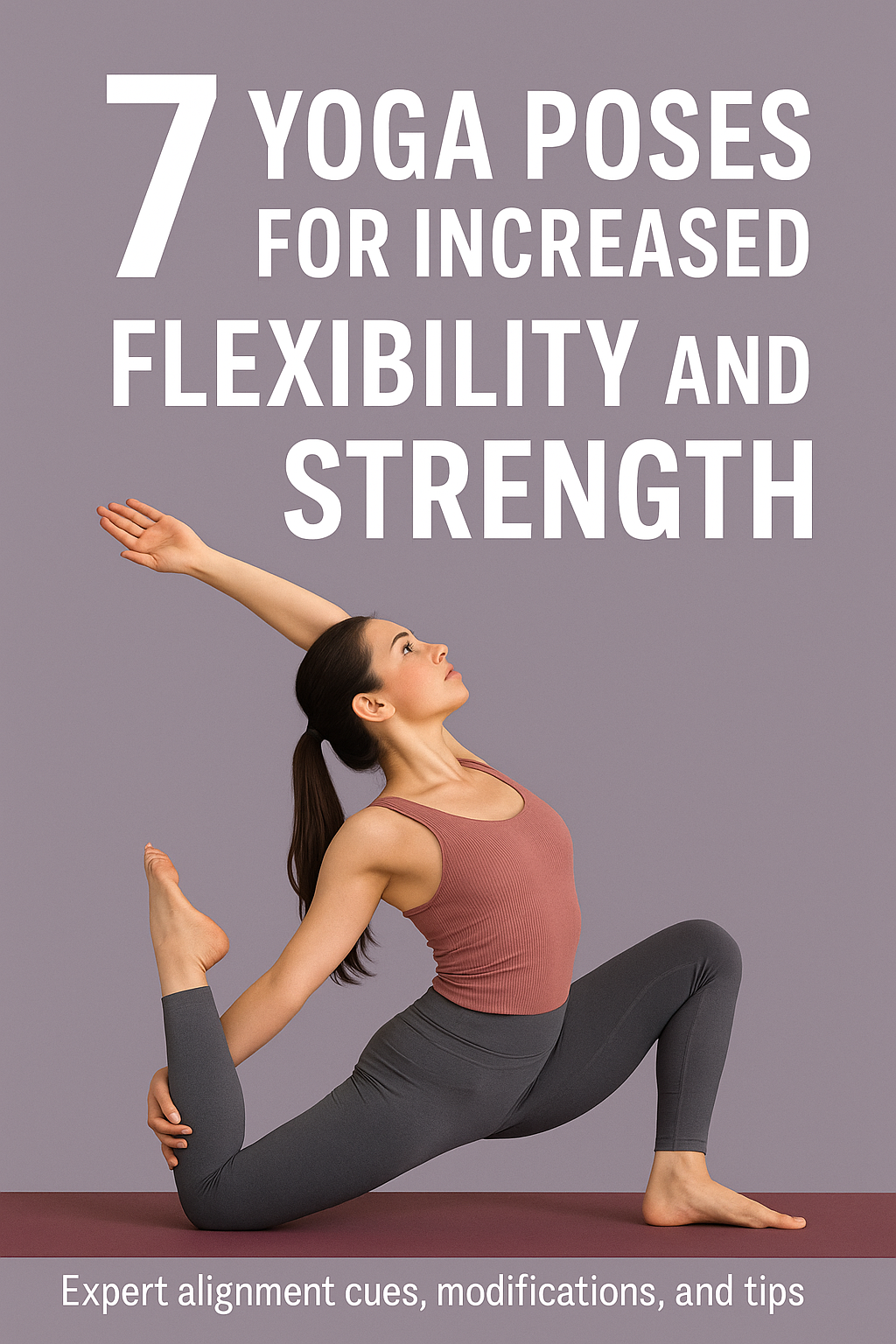
2. The advantages and anatomy of the Anjaneyasana Variation: Low Lunge with Quad Stretch
The iliopsoas, quadriceps, and hip adductors were all extended.
The core, gluteus maximus, and hamstrings (back leg) muscles got stronger.
Your lower back may pain if your hip flexors are stiff. This stance can help with the discomfort by about 30% over the course of 8 weeks.
From Downward Dog, insert your right foot between your hands and stride forward.
Put a blanket or pad under your knee on the bottom left side.
Lift your torso: Take a deep breath and raise your arms over your head or reach back for your left foot to stretch your quads.
Square Hips: Pull your tailbone down and turn your right hip out a little.
To work your core, pull your belly button toward your spine while keeping your pelvis motionless.
How to Fix Mistakes That Happen All the Time
If your knee has fallen, line it up with your ankle.
Overarching Lumbar Spine: Squeeze your glutes and lower abs.
Shoulders hunched: make collarbones wider and jaw softer.
What’s new
Use the strap: If you can’t reach it, put it around your back foot.
Hands on Blocks: Help you lift and stay balanced.
3. The anatomy and advantages of the Pyramid Pose (Parsvottanasana)
Focus: The hamstrings, calves, and gluteus medius muscles were stretched.
The quadriceps, erector spinae, and obliques all got stronger.
A study from 2020 found that exercising Pyramid Pose every day stretched the hamstrings and increased peak torque by 12% without losing strength.
Setting up in Steps: From Downward Dog: Put your right foot in front of your left foot and your hips over your front ankle.
Put your feet in front of you, with your back foot at a 45-degree angle.
Lengthen your spine: Take a deep breath and raise your body. Then, exhale and hinge at your hips, with your sternum leading the way.
You can put your hands on your hips, on blocks, or in prayer at the center of your heart.
Gaze: Look straight ahead and don’t bend your neck.
How to Fix Mistakes: Use your core to maintain your back flat if your spine is rounded.
If your front knee is locked, do a micro-bend to keep the joint healthy.
To square your hips, pull your right hip back and your left hip forward.
Changes: Stand wider. If your hamstrings are tight, lessen the intensity.
Put your hands up and utilize blocks to keep from falling.
4. Warrior II (Virabhadrasana II): What it is and how it might help
Pay attention: Stretched muscles: the groin and inner thighs.
The gluteus maximus, hip abductors, core, shoulders, and quadriceps all got stronger.
Warrior II helps older adults walk more stably by giving them functional strength.
Steps that are in sync
In Mountain Pose, stand with your feet about 3 to 4 feet apart.
Put your right foot out and your left toes in a little bit.
Knee in front: The thighs should be level with the floor, and the knee should be above the second toe.
Shoulders on top of hips, palms down, and arms at shoulder height.
Look over your front fingertips while engaging your core. Relax your jaw.
How to correct common mistakes
Push down on the outside edge of the back foot and pull the front knee outward to make it collapse inward.
Torso Leaning Forward: Raise the ribs on the sides and put the hips on top of each other.
Shoulders hunched: Roll your shoulders down your back.
Changes: Shorter Stance: Move closer if you have trouble keeping your balance.
If the depth is too much, put a block beneath your front thigh to help it.
5. What Boat Pose (Navasana) does for you and how it works
The obliques, the hip flexors, the spinal erectors, and the rectus abdominis are all stronger.
Spinal Health: Helps keep the lumbar spine in a neutral position when it is under stress.
Core exercises can help ease chronic low back pain by 25% if you do them on a daily basis.
Aligning Step by Step Start If you’re sitting, bend your knees and keep your feet flat.
Lean back a little and use your core to support your spine.
Put your feet up so that your toes are bent and your shins are parallel to the floor.
Put your arms out to the sides so that they are parallel to the floor and your hands are facing each other.
If you can, straighten your legs so they look like a “V.”
How to Fix Common Errors
Back to the Beginning: Pull your shoulders back and keep your chest open.
If your chest is falling, lift through the breastbone.
Holding your breath: Keep breathing in and out at a regular speed.
Changes: Put your hands on the floor to aid your body.
To walk forward, keep your knees bent and straighten one leg at a time.
6. Camel Pose (Ustrasana): What it does for your body and how it works
The front torso, hip flexors, and quadriceps are all muscles that got longer.
The back extensors and scapular stabilizers became stronger.
Backbends that open the heart have been linked to better posture and less shoulder strain from sitting at a desk.
Steps to Align
Kneel down with your hips over your knees and your toes either tucked in or not.
Put your hands on your lower back and point your fingers down.
Take a deep breath and lift your chest. Put your thighs out in front of you.
Let out a breath and lean back. Your neck should stay in line with your spine, and your hands should contact your heels.
Your abs and thighs can support your lower back.
How to make things right
Tighten your lower abs and press your hips forward to bend your lower back.
Don’t allow your head fall back when you gaze up, and keep your neck erect.
Shoulders hunched: place your shoulder blades in your pockets.
Changes: Hands on Hips: To get stronger before you reach your heels.
Put blocks close to your ankles so your hands may relax.
7. The Benefits and Structure of the Forward Fold in Bound Angle Pose (Baddha Konasana)
Focus: The adductor muscles in the groin and inner thighs got longer.
When you do the gentle forward fold, your lumbar spine moves, which makes it more flexible.
For your pelvis to be stable and your lower back to stay healthy, it’s vital for your adductors to be able to move more.
How to Align
Keep your knees apart and your feet together while you sit up straight.
Hold your feet by wrapping your fingers around the arches.
Breathe in and lift through the top of your head to lengthen your spine.
Exhale, bend at the hips, and point your heart toward your toes.
Let your shoulders relax so that the weight of your torso pulls you deeper into the stretch.
How to Fix Mistakes: Keep your chest open by using your upper back to round your spine.
Knees pushing down: Use blocks to keep your thighs up.
Holding Your Breath: Breathe in and out slowly and deeply.
Changes: Put a blanket under your hips to help you see your pelvis better.
Put blocks under your knees to relax the muscles in your inner thighs.
Safety tips and things to keep in mind
Listen to your body: If it hurts or feels uncomfortable, don’t make yourself stay in a position.
Always practice some easy sun salutations or joint rotations before you start.
Use things like blocks, straps, and blankets to make objects safer and simpler to get to.
Do Ujjayi or diaphragmatic breathing to help you breathe deeply while you move.
If you’re pregnant, wounded, or have a long-term sickness, you should consult a doctor first.
When you should execute these positions every day
Do it three to five times a week, with each pose lasting 30 to 60 seconds.
Progressive Overload: Slowly make the holds longer or deeper.
Do active warming like Cat–Cow first and then rest with Savasana.
Days of Rest: Go for a quiet walk or do some restorative yoga.
People regularly ask these inquiries (FAQs)
Q1: When will I see a difference in how flexible I am?
If you practice 3 to 5 times a week, you should observe an increase in ROM in 4 to 6 weeks.
Q2: Is it okay to do these positions every day?
Yes, but only if you pay attention to your body and find a good balance between work and rest.
Q3: What if I’m unable to do the whole pose?
Use blocks and straps, and keep your micro-bends. Things will get better as time goes by.
Q4: Have I ever done yoga before?
No. There are beginner-friendly adjustments to each pose. If you’re not sure, you might want to think about attending a class with a licensed teacher.
Q5: How crucial is it to breathe?
To maintain the core stable and protect the joints, it’s vitally crucial to move while breathing in and out.
In short
Doing these seven easy yoga positions together can help you get stronger and more flexible, which will help you stay safe, play sports, and accomplish everyday tasks. This practice is based on research and being aware of how your body is aligned. It helps you build muscle and relax your mind. It’s crucial to be patient and go at your own pace.
Have fun while you work on being more open and strong.
References
- National Library of Medicine. Effects of yoga on flexibility. 2017. https://www.ncbi.nlm.nih.gov/pmc/articles/PMC5435900/
- Journal of Sports Sciences. Yoga’s impact on muscular strength. 2016. https://journals.sagepub.com/doi/10.1177/0959673616660580
- Pain Medicine. Low back pain relief through hip flexor stretches. 2015. https://academic.oup.com/painmedicine/article/14/8/1139/2468151
- Journal of Orthopaedic & Sports Physical Therapy. Hamstring stretching outcomes. 2020. https://www.jospt.org/doi/10.2519/jospt.2020.8978
- Spine Health. Core exercises for low back pain. 2021. https://www.spine-health.com/treatment/exercise/core-exercises-low-back-pain
- National Center for Biotechnology Information. Yoga backbends and posture. 2017. https://www.ncbi.nlm.nih.gov/pmc/articles/PMC5381757/
- NCBI. Adductor flexibility and pelvic stability. 2019. https://www.ncbi.nlm.nih.gov/pmc/articles/PMC6956808/