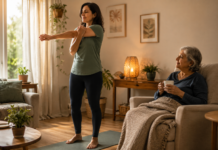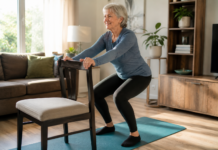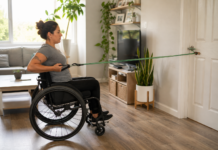
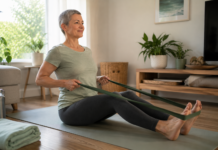

























If you train hard, your recovery has to work just as hard. The right post-workout stretches can help you cool down, restore comfortable range of motion, and set up tomorrow’s session. This guide walks you through the seven best post-workout stretches for muscle recovery, with step-by-step how-tos, beginner modifications, smart progressions, and a simple plan to put everything into practice. You’ll also find a quick-start checklist, troubleshooting tips, and ways to measure whether your post-workout stretching is actually working.
Medical note: the advice here is general. If you have pain, an injury, or a medical condition, get personalized guidance from a qualified healthcare professional before changing your routine.
Key takeaways
- Post-workout stretching is about recovery, not performance PRs. Aim for gentle, controlled holds that feel like “comfortable tension,” not pain.
- Hold most stretches 15–30 seconds and repeat 2–4 times per side; longer holds can help some people, especially older adults.
- Breathe slowly and relax into position. If you’re bracing or holding your breath, you’re going too deep.
- Consistency beats intensity. Stretch after every workout or at least 2–3 days per week; daily practice often feels best.
- Measure progress. Simple at-home checks (like how far your knee can reach toward a wall in a calf test) confirm real gains.
- No pain, no problem. Stretching shouldn’t hurt; sharp, radiating, or joint pain means back off or consult a pro.
Before you stretch: a 3-minute cool-down checklist
- Downshift your heart rate: Walk lightly or pedal easy 2–3 minutes until your breathing calms.
- Pick your targets: Choose 4–7 stretches that match what you just trained (e.g., squats = quads, hamstrings, calves, hips; pressing = chest/shoulders; running = calves/hip flexors).
- Set the dose: Start with 15–30-second holds, 2–4 rounds per side. Add time next week if it feels good.
- Breathe: Inhale through the nose, exhale longer than you inhale. Let every exhale soften the stretch.
- Stop at “gentle tension”: Pain = too far. Ease out, reset, and go shallower.
1) Standing Quadriceps Stretch (Front of Thigh)
What it is & why it helps
A classic single-leg hold that lengthens the quadriceps after squats, lunges, cycling, and runs. Loosening the quads can ease kneecap pressure and counter knee-dominant training days.
Requirements & low-cost alternatives
- No equipment. Use a wall, chair, or rail for balance.
- If standing balance is tough, use the side-lying quad stretch (lie on your side and hold your top ankle).
How to do it (step-by-step)
- Stand tall beside a wall.
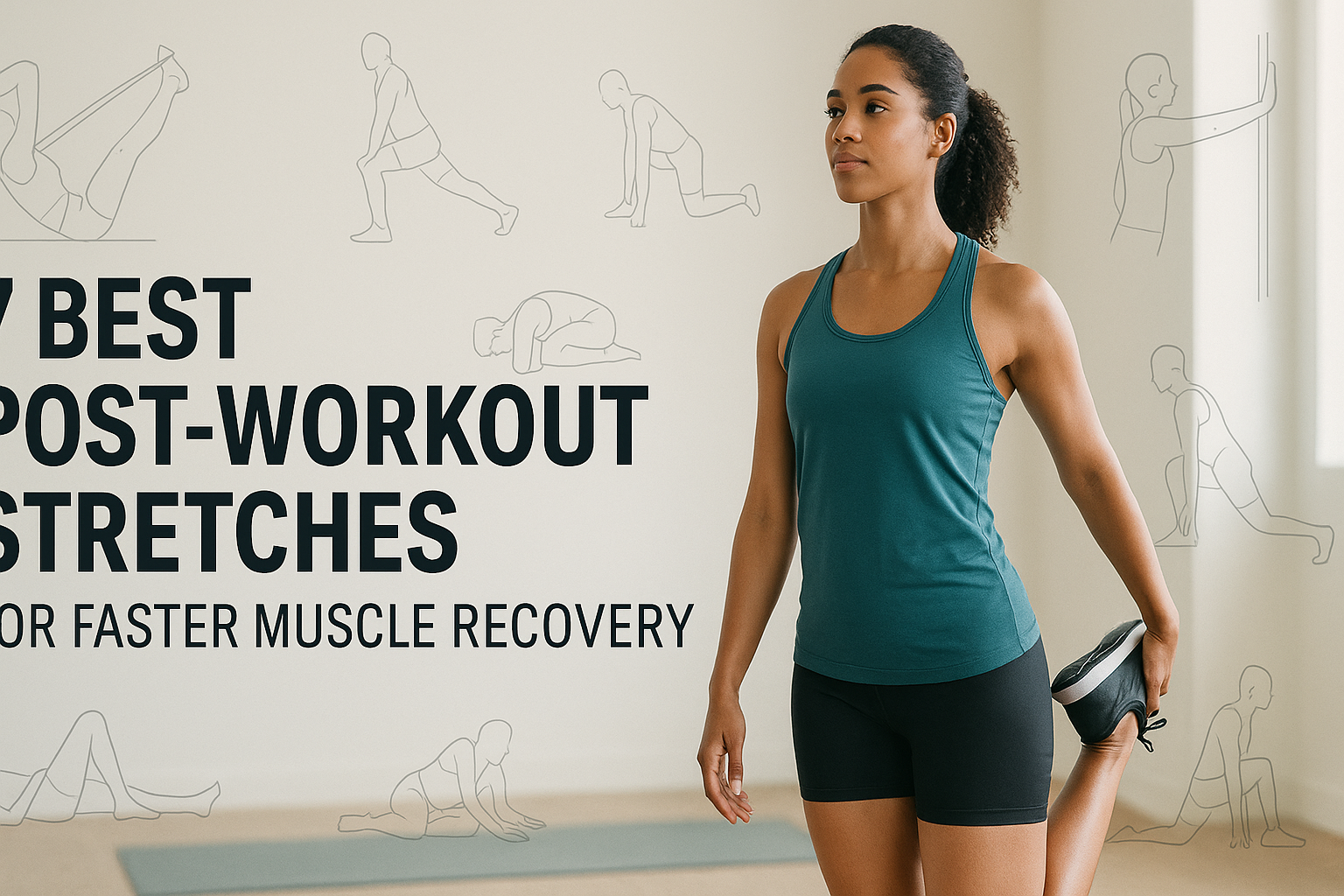
- Bend your right knee and bring your heel toward your glute; grab the ankle with your right hand.
- Gently tuck your pelvis under (imagine zipping tight jeans) and keep both knees close together.
- Stand tall—don’t let your back arch or your knee drift outward.
- Hold 15–30 seconds, breathing slowly. Repeat 2–4 times each side.
Beginner modifications & progressions
- Make it easier: Loop a towel or strap around your ankle to reduce knee bend.
- Dial it up: Squeeze the glute of the stretching leg and draw the knee a few centimeters behind the stance leg without arching your back.
- Advanced: Do a couch stretch (shin against a wall, kneel and upright your torso) after you’re comfortable with basics.
Recommended frequency & duration
- After lower-body days, and anytime your knees feel “tugged” by tight quads. 2–4 rounds of 15–30 seconds per side.
Safety, caveats & common mistakes
- Don’t yank the ankle; bring it in smoothly.
- Keep the pelvis tucked; if your low back arches, you’re shifting stress into the spine.
- Knee pain? Switch to the side-lying variation and shorten the knee bend.
Mini-plan example
- Right quad 25s → switch → Left quad 25s.
- Rest 10–15s; repeat for 3 total rounds.
2) Supine Hamstring Stretch with Strap (Back of Thigh)
What it is & why it helps
A back-friendly hamstring stretch that calms post-deadlift tightness and runners’ posterior chain fatigue without rounding your spine.
Requirements & low-cost alternatives
- Yoga strap, towel, belt, or old long sock.
- No strap? Do the doorway hamstring stretch (heel on doorframe).
How to do it
- Lie on your back, left knee bent, left foot on the floor.
- Loop a strap around the ball of your right foot; gently straighten the right knee as you lift the leg.
- Stop when you feel a firm stretch along the back of the thigh (not behind the knee).
- Keep your hips level and low back neutral on the floor.
- Hold 15–30 seconds; switch sides; 2–4 rounds each.
Beginner modifications & progressions
- Easier: Keep a small bend in the knee; slide your hands further down the strap.
- Progression: Add dorsiflexion—draw toes toward the shin to bias the calf and fascial line.
- Mobility flow: Finish each hold with 5 slow “contract-relax” breaths—gently press heel into the strap for 5–6 seconds, then exhale and ease deeper.
Recommended frequency & duration
- After deadlifts, sprints, or long sitting days. 2–4 rounds of 15–30 seconds per side.
Safety, caveats & common mistakes
- Don’t crank on the strap—if your pelvis lifts or your back flattens hard into the floor, you’re pulling too far.
- Tingling down the leg? Ease off and consult a professional to rule out nerve irritation.
Mini-plan example
- Right hamstring 20s hold → rest 10s → right 20s hold.
- Switch and repeat on the left; 2 rounds.
3) Wall Calf Stretch: Gastrocnemius & Soleus (Back of Lower Leg)
What it is & why it helps
Two simple wall positions that target the calf’s big surface muscle (gastrocnemius) and the deeper, often neglected soleus. Better calf mobility improves ankle dorsiflexion for squats, lunges, running stride, and general gait comfort.
Requirements & low-cost alternatives
- A wall or sturdy vertical surface; a step for a gentle heel drop if preferred.
How to do it (two-part series)
A) Gastrocnemius (knee straight)
- Face a wall, place hands on it.
- Step the right leg back, heel flat, knee straight, toes facing forward.
- Lean hips toward the wall until you feel a stretch high in the calf.
- Hold 15–30 seconds; switch sides.
B) Soleus (knee bent)
- From the same stance, bend the back knee slightly while keeping heel down.
- You’ll feel the stretch shift lower toward the Achilles.
- Hold 15–30 seconds; switch sides.
Beginner modifications & progressions
- Easier: Stand closer to the wall.
- Progression: Do small knee-to-wall pulses—gently glide the knee forward and back 5–8 times between holds.
- Runner’s add-on: Finish each side with 10 slow ankle circles.
Recommended frequency & duration
- Ideal after running or any session heavy on jumping or squatting. 2–4 rounds per muscle per side.
Safety, caveats & common mistakes
- Keep the heel grounded; “hovering heel” = lost stretch.
- Toes straight ahead; turning out cheats the angle.
- Sharp Achilles pain? Skip static stretching and seek professional advice.
Mini-plan example
- Right gastroc 25s → right soleus 25s → switch to left gastroc/soleus.
- Repeat the whole sequence once more.
4) Half-Kneeling Hip Flexor (Front of Hip)
What it is & why it helps
Prolonged sitting and heavy knee-dominant training stiffen the front of the hip, pulling the pelvis into anterior tilt and the low back into extension. This lunge-style stretch lengthens the hip flexors and encourages a neutral pelvic position.
Requirements & low-cost alternatives
- A folded towel or mat for the down knee.
- Alternative: Standing long-stride lunge if kneeling is uncomfortable.
How to do it
- Kneel on your left knee, right foot forward (90° at hip and knee).
- Lightly tuck the pelvis (tailbone toward heels) and brace the left glute.
- Shift your torso forward a few centimeters until you feel a stretch at the front of the left hip/quad—not the low back.
- Keep ribs down; avoid arching.
- Hold 15–30 seconds, 2–4 rounds each side.
Beginner modifications & progressions
- Easier: Keep the torso more upright and move less.
- Progression: Raise the left arm overhead and reach slightly to the right to bias the psoas; or elevate the back foot on a low step for a deeper rectus femoris bias.
- Athletic add-on: Finish with 5 gentle hip flexor contract-relax reps—press the back shin into the floor for ~5 seconds, exhale, and sink a little deeper.
Recommended frequency & duration
- After running, cycling, squats, or long sitting. 2–4 rounds of 15–30 seconds per side.
Safety, caveats & common mistakes
- Don’t over-lunge with a big arch—keep the pelvis tucked and glute engaged.
- Knee pressure? Add extra cushion or choose the standing version.
Mini-plan example
- Left hip flexor 20s (arm overhead) → switch → Right hip flexor 20s.
- Repeat for 3 total rounds.
5) Figure-4 Glute/Piriformis Stretch (Back of Hip)
What it is & why it helps
Targets deep rotators and glutes that tighten with squats, deadlifts, long runs, and desk time. Great for “sitting bones” stiffness.
Requirements & low-cost alternatives
- Floor or firm couch.
- Alternative: Seated figure-4 on a chair if getting to the floor is difficult.
How to do it (supine version)
- Lie on your back; bring both knees up.
- Cross the right ankle over the left thigh (just above the knee).
- Thread hands behind your left thigh and pull legs gently toward your chest.
- Keep the right foot flexed and the pelvis heavy on the floor.
- Hold 15–30 seconds, 2–4 rounds per side.
Beginner modifications & progressions
- Easier: Use a strap behind the left thigh so your arms can relax.
- Progression: Gently press the right knee away with the right elbow, or draw the left knee a touch more toward the chest.
- Chair alternative: Sit tall, cross ankle over knee, hinge forward from the hips.
Recommended frequency & duration
- After lower-body training or long sitting. 2–4 rounds, 15–30 seconds per side.
Safety, caveats & common mistakes
- Avoid torquing the knee; the movement comes from the hip.
- Numbness or tingling? Ease off and get checked—don’t push through symptoms.
Mini-plan example
- Right figure-4 25s → switch → Left figure-4 25s.
- Rest 15s and repeat once.
6) Thoracic “Thread-the-Needle” (Mid-Back Mobility)
What it is & why it helps
A gentle rotation drill that opens the mid-back after pressing, rowing, and posture-heavy days. Better thoracic mobility reduces the urge to compensate with the low back or shoulders.
Requirements & low-cost alternatives
- Floor space; a towel under knees if needed.
- Alternative: Open-book stretch lying on your side if kneeling bothers you.
How to do it
- Start on hands and knees, wrists under shoulders, knees under hips.
- Lift your right hand and reach it under your left arm across the body, letting the right shoulder tip toward the floor.
- Pause for 10–15 seconds in a comfortable end range; breathe.
- Return to start, then lift the right arm up toward the ceiling for a gentle open phase.
- Flow 5–8 reps slowly, then switch sides. (For a purely static cool-down, skip the “open” and hold the threaded position 15–30 seconds.)
Beginner modifications & progressions
- Easier: Place a small cushion under the head/shoulder for support at end range.
- Progression: Add a light exhale focus at the bottom to release ribcage tension; or perform an open-book on your side with knees bent 90°.
Recommended frequency & duration
- After upper-body sessions or heavy desk days. 1–2 sets of 5–8 slow reps per side or 15–30-second holds.
Safety, caveats & common mistakes
- Keep motion in the mid-back; don’t crank the neck.
- If you feel pinching in the shoulder or sharp spine pain, reduce range and re-check alignment.
Mini-plan example
- 6 slow reps right, 6 slow reps left.
- Finish with a 15-second hold per side at the easiest end range.
7) Doorway Chest/Anterior Shoulder Stretch
What it is & why it helps
Counteracts rounded-shoulder posture and tight pecs from pressing and desk work. A go-to opener for the front of the shoulders and chest.
Requirements & low-cost alternatives
- A doorway or wall corner.
- Alternative: Single-arm wall pec stretch at shoulder height.
How to do it
- Stand in an open doorway. Place forearms on the frame with elbows at shoulder height (about 90°).
- Step one foot forward and gently lean your torso through the door until you feel a stretch across the chest.
- Keep ribs down and spine neutral; don’t jut the head forward.
- Hold 15–30 seconds, 2–4 rounds.
Beginner modifications & progressions
- Easier: Slide elbows slightly below shoulder height.
- Progression: Move the arms a bit higher to bias different pec fibers; or do one side at a time and gently rotate away from the wall.
- Athletic add-on: After the hold, perform 6–8 slow scapular retractions (pinch shoulder blades back and down) to reinforce better shoulder positioning.
Recommended frequency & duration
- After push sessions or any day spent hunched at a computer. 2–4 rounds of 15–30 seconds.
Safety, caveats & common mistakes
- Don’t over-arch the low back to “get more stretch.”
- If you feel pinching at the front of the shoulder, lower the elbow angle and move more gently.
Mini-plan example
- Doorway stretch 20s → rest 10s → repeat 3x.
- Finish with 8 slow shoulder-blade squeezes.
Troubleshooting & common pitfalls
- “I feel this in the wrong place.”
Re-set alignment first. For quads/hip flexors, lightly tuck the pelvis and squeeze the glute. For calves, square the toes straight ahead and keep the heel down. For hamstrings, keep your low back neutral (don’t yank the strap). - “I don’t feel much.”
Move just 2–3 cm deeper, extend the hold to 30–45 seconds, or add a gentle contract-relax: press lightly (about half effort) into the barrier for 5–6 seconds, then exhale and soften deeper. - “I get pins and needles.”
Stop and reduce range. Nerve tension isn’t the goal of post-workout stretching—seek professional guidance if it persists. - “I’m sore tomorrow anyway.”
Stretching can improve flexibility and comfort but has a minimal effect on delayed-onset soreness by itself. For heavy sessions, pair these stretches with sleep, hydration, and light active recovery. - “My low back arches during hip flexor or doorway stretches.”
Think ribs-down, slight pelvic tuck, and gentle glute squeeze. Shrink the range until you can maintain those cues.
How to measure progress (simple at-home checks)
- Hamstrings: Sit-and-reach (or V-sit & reach).
Warm up, sit with legs straight, and reach forward in a controlled way. Track how far past your toes your fingertips reach (or how close you are). Re-test weekly. - Calves/ankles: Knee-to-wall test.
Face a wall and try to touch your knee to it while the heel stays flat. Slide your foot back until you can “just” touch the wall. Measure big-toe-to-wall distance. More distance over time = better dorsiflexion. - Shoulders/chest: Comfortable doorway angle.
Note the arm height (relative to shoulder) at which you can hold the doorway stretch without pinching. Over a month, you should tolerate slightly higher positions comfortably. - Hips: Figure-4 depth.
Track how close the supporting thigh comes toward your chest at the same effort level.
Re-test on the same day of the week, at a similar time, after a similar workout or cool-down for apples-to-apples comparisons.
A simple 4-week post-workout stretching plan
Goal: Turn good intentions into a habit and gently increase total time under stretch without forcing range.
Weekly schedule (do after your workouts; ~8–10 minutes):
- Week 1: Each stretch 2 rounds x 20–25 seconds per side.
- Week 2: 3 rounds x 25–30 seconds per side.
- Week 3: 3–4 rounds x 30 seconds per side.
- Week 4: Keep 3–4 rounds, add 5–6 contract-relax breaths on the final round for hamstrings and hip flexors; for calves, add the bent-knee soleus variation if you haven’t already.
Daily menu (choose based on what you trained):
- Lower-body days: Quads → Hamstrings → Calf (straight & bent) → Hip flexor → Glute figure-4.
- Upper-body days: Doorway chest → Thoracic thread-the-needle → (optional) calves if you were on your feet.
- Mixed/conditioning days: Pick any 4–5 stretches covering your tightest zones.
Progress checks:
- End of Weeks 2 and 4: Re-measure sit-and-reach or V-sit, knee-to-wall distance, and note subjective ease in your “tightest” stretch (0–10 comfort scale).
FAQs
1) Should I stretch before or after workouts?
Do your static holds after training for recovery and range of motion. Before workouts, use dynamic moves and warm-up sets to prep your nervous system for performance.
2) How long should I hold each stretch?
Start with 15–30 seconds per hold and 2–4 rounds per muscle. Many people feel best with about 60 total seconds per area. If you’re older or very stiff, slightly longer holds can help—ease in gradually.
3) How hard should a good stretch feel?
Aim for mild to moderate tension that eases with slow breathing. Pain, tingling, or joint pressure is a red flag—back off.
4) Can stretching prevent soreness?
It can help you feel looser, but by itself it produces only small changes in post-exercise soreness. Combine stretching with sleep, nutrition, hydration, and low-intensity movement for better recovery.
5) Will stretching make me weaker?
Long, aggressive pre-workout static holds can temporarily reduce strength and power. That’s why deep statics live after your workout. Shorter holds done as part of a proper warm-up usually aren’t an issue.
6) Is it okay to stretch every day?
Yes—light daily stretching often feels best. If that’s too much, aim for at least 2–3 days per week and add time gradually.
7) I can’t balance on the quad stretch. What now?
Hold a wall or use the side-lying version. Balance is optional; the stretch is the goal.
8) My knees or low back complain in the hip flexor stretch—help!
Add more padding under the knee, decrease the forward shift, and focus on a light pelvic tuck + glute squeeze. If discomfort persists, use the standing long-stride version and/or get personalized guidance.
9) Should I add PNF/contract-relax techniques?
Light contract-relax (press 5–6 seconds, exhale, go a little deeper) can boost flexibility once you’re comfortable with basic positions. Use it sparingly—once on the final round is enough.
10) What if I’m short on time?
Pick your top three tight spots and do 2 rounds x 30 seconds each. Even 3–4 minutes post-workout helps.
11) Is “thread-the-needle” okay after lifting, since it’s a movement, not a hold?
Yes—gentle thoracic mobility flows are great post-session, especially for upper-body days. Keep the tempo slow and the range comfortable.
12) How do I know it’s working?
Re-test simple measures (sit-and-reach, knee-to-wall distance) every 1–2 weeks and track how your body feels during warm-ups and daily tasks. You should notice smoother reps and less “pulling” in your usual tight spots.
Conclusion
Recovery is a skill. When you string together small, consistent post-workout stretches—done gently, with good breathing and alignment—you move better, feel better, and train more often. Pick two or three of the stretches above to start tonight, set a 4-week streak, and let your progress do the talking.
CTA: Save this routine, set a reminder after each workout, and start your 4-week stretch streak today.
References
- How to stretch after exercising. NHS. Page last reviewed July 8, 2022. https://www.nhs.uk/live-well/exercise/how-to-stretch-after-exercising/
- Current Concepts in Muscle Stretching for Exercise and Rehabilitation. International Journal of Sports Physical Therapy (hosted on NCBI/PMC). 2012. https://www.ncbi.nlm.nih.gov/pmc/articles/PMC3273886/
- Acute Effects of Static Stretching on Muscle Strength and Power: An Attempt to Clarify Previous Caveats. Frontiers in Physiology (hosted on NCBI/PMC). December 2019. https://www.ncbi.nlm.nih.gov/pmc/articles/PMC6895680/
- Stretching to prevent or reduce muscle soreness after exercise. Cochrane Database of Systematic Reviews (record on PubMed). 2011. https://pubmed.ncbi.nlm.nih.gov/21735398/
- Acute effects of doorway stretch on the glenohumeral internal rotation range of motion and scapular position in collegiate baseball players. JSES International (hosted on NCBI/PMC). 2021. https://www.ncbi.nlm.nih.gov/pmc/articles/PMC8568813/
- Threading the needle (exercise instructions). South Tees Hospitals NHS Foundation Trust. 2022. https://www.southtees.nhs.uk/resources/threading-the-needle/
- Reliability of three measures of ankle dorsiflexion range of motion. International Journal of Sports Physical Therapy (hosted on NCBI/PMC). 2012. https://www.ncbi.nlm.nih.gov/pmc/articles/PMC3362988/
- Knee to Wall Test. Physiopedia. Accessed August 2025. https://www.physio-pedia.com/Knee_to_Wall_Test
- GETP 11–12 Crosswalk (FITT updates, flexibility section). American College of Sports Medicine (PDF). March 2025. https://acsm.org/wp-content/uploads/2025/03/GETP11-12-crosswalk.pdf