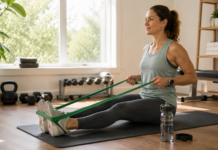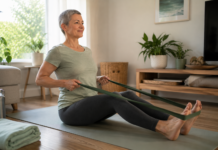























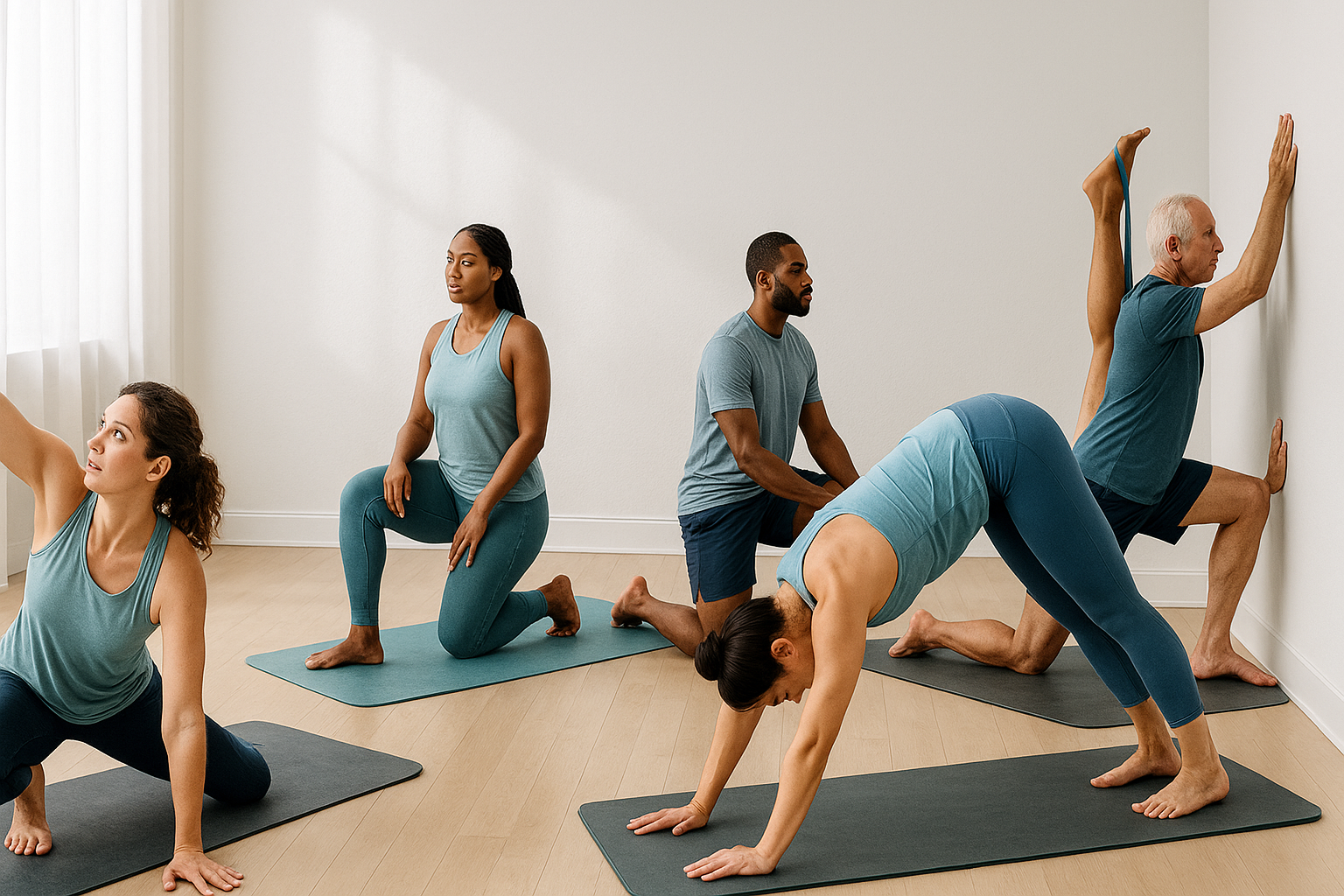
If you sit a lot, lift weights, run, or simply wake up feeling stiff, a targeted stretching routine can help you move more freely and feel better in your body. In this guide, you’ll learn exactly how to perform the top 5 stretching exercises for flexibility and mobility—complete with beginner-friendly steps, progressions, safety notes, and a four-week plan you can start today. Whether you want to squat deeper, reach overhead without pinching, or make everyday movements feel smoother, these stretching exercises meet you where you are and help you steadily build range of motion.
Medical disclaimer: This guide is for general education and does not replace personalized advice from a qualified healthcare professional. If you have pain, an injury, or a medical condition, speak with your clinician or physical therapist before starting a new program.
Key takeaways
- Do a little, often. Short, regular sessions (even 10–15 minutes) improve flexibility and mobility more reliably than occasional long ones.
- Match the method to the moment. Use dynamic stretches to warm up; use static or PNF holds after workouts or in separate sessions to build range of motion.
- Hold times matter. For most adults, aim to accumulate ~60 seconds of stretch per muscle (e.g., 2–4 sets of 15–30 seconds).
- Progress what you can measure. Track simple metrics (toe-touch distance, 90/90 hip angles, ankle-to-wall distance) weekly.
- Never stretch into pain. Mild tension is good; sharp pain, numbness, or joint pinching means back off or modify.
- Consistency beats intensity. Five to seven short sessions per week generally outperforms one heroic session.
1) World’s Greatest Stretch (Lunge with T-Spine Rotation)
What it is & why it works
A flowing, multi-joint mobility sequence that combines a deep lunge, thoracic spine rotation, and hamstring lengthening. It warms up the hips, ankles, hamstrings, and mid-back while preparing your body for squats, lunges, running, and overhead work. Because it’s dynamic and multi-planar, it’s especially useful before training or as a mid-day “anti-desk” reset.
What you need
- Optional: yoga mat; yoga blocks or sturdy books for hand support; a towel under the back knee if kneeling irritates it.
- No cost alternatives: folded bath towel, sturdy stack of books.
Step-by-step (1–2 slow breaths per step)
- Step your right foot forward into a long lunge, hands inside the foot. Back leg long, heel lifted.
- Press your left palm into the floor or a block.
- Inhale, lengthen your spine; exhale, rotate your chest to the right, reaching your right arm toward the ceiling. Eyes follow your hand.
- Hold the end position for a comfortable 2–3 second breath; return your hand to the ground.
- Shift your hips back to straighten the right knee, toes up, folding over a hamstring stretch for 2–3 seconds.
- Re-bend the front knee and repeat the rotation.
- Switch sides.
Beginner modifications
- Drop your back knee to the floor for more stability.
- Keep your front elbow braced against the knee to limit depth.
- Shorten the lunge if your hip flexors feel pinchy.
Progressions
- Add a second rotation in the other direction (reach under and across with the right arm).
- Pause 5 seconds at end-range on each rotation.
- Elevate the front foot on a small plate/book for extra hip crease depth.
Recommended frequency & dose
- Warm-up: 1–2 sets of 5–8 slow reps per side.
- Mobility session: 2–3 sets of 6–10 reps per side.
Safety & common mistakes
- Don’t arch your low back to “fake” rotation—keep your ribs down and rotate through the mid-back.
- Keep the front knee tracking over the middle toes (avoid collapsing inward).
- Avoid yanking the neck—let your eyes follow the hand naturally.
Mini-plan example
- Before lower-body workouts: 1 set of 6 reps/side.
- Desk break: 1 minute/side at the top of each hour for two hours.
2) Couch Stretch (Hip Flexors & Quads)
What it is & why it works
A targeted static stretch for the hip flexors (psoas/iliacus) and quadriceps (especially rectus femoris). It’s ideal if you sit a lot, feel a tug in the front of the hip when lunging, or struggle to keep the torso upright in split squats. Restoring length at the front of the hip often improves comfort in standing and stride mechanics when walking or running.
What you need
- A wall or couch/chair, plus a mat or folded towel for knee comfort.
Step-by-step (hold positions; breathe slowly)
- Kneel with your left knee near the wall, toes pointing up; place your left shin against the wall (or the back of a couch).
- Step your right foot forward into a half-kneel (knee over ankle).
- Tuck your tailbone (gentle posterior pelvic tilt) and lightly squeeze the left glute.
- Stay tall through the torso; avoid arching the lower back.
- Hold where you feel firm tension, not pain. Breathe for 15–30 seconds.
- Optionally, slide your body slightly closer to the wall for more intensity.
- Switch sides.
Beginner modifications
- Keep the back knee several inches away from the wall.
- Place a thick cushion under the back knee.
- Hold a dowel or chair for balance.
Progressions
- Raise the same-side arm (as the back leg) overhead and side-bend away to bias psoas.
- Elevate the front foot on a low step to increase hip extension demand.
- Contract-relax: squeeze the back leg’s hamstring/glute for 5 seconds, relax, and sink deeper.
Recommended frequency & dose
- Post-workout or separate sessions: 2–4 sets of 15–30 seconds per side (aim to accumulate ~60 seconds each).
- For older adults: 30–60-second holds may be more productive.
Safety & common mistakes
- Don’t jam the knee into unforgiving surfaces—pad it.
- If you feel pinching in the front of the hip joint, reduce depth and emphasize the tailbone tuck and glute squeeze.
- Keep ribcage stacked over pelvis; avoid leaning backward to “find” the stretch.
Mini-plan example
- After runs or long sitting: 2 sets x 20–30 seconds per side.
- On mobility days: 3 sets x 30 seconds per side with gentle contract-relax.
3) 90/90 Hip Switch (Hip External/Internal Rotation)
What it is & why it works
A seated drill that trains hip rotation—a range many adults lose with age and sitting. By improving both external and internal rotation, the 90/90 helps deep squats feel less jammed, eases cross-legged sitting, and reduces compensation at the low back. It’s a blend of active mobility and light stretching.
What you need
- Floor space and a mat; optional yoga blocks or pillows to elevate the hips.
Step-by-step
- Sit tall with your right leg in front, knee bent ~90°, shin pointing forward; left leg behind you, knee bent ~90°, shin pointing left.
- “Lift tall” through the crown of your head; place hands on the floor for light support.
- Slowly hinge your chest toward the front shin until you feel hip/glute tension; hold 2–3 breaths.
- Return upright, then switch: lift knees slightly and rotate both thighs to point the opposite way, flowing to left-front/right-back.
- Repeat smooth, controlled switches.
Beginner modifications
- Sit on a pillow to reduce hip pinch.
- Keep hands behind you for support; reduce the hinge depth.
- If knee discomfort: place a folded towel under the front knee for padding and reduce the angle.
Progressions
- Lift the back foot off the ground briefly to train active external rotation.
- Hover the hands during the switching phase (core challenge).
- Add “end-range liftoffs”: hinge forward, then gently try to lift the front ankle off the floor for 3–5 seconds.
Recommended frequency & dose
- Warm-up or mobility block: 2–3 sets of 6–10 slow switches (each direction = 1).
- Sprinkle short sets daily for best results.
Safety & common mistakes
- Avoid forcing the range; keep knees comfortable and pain-free.
- Don’t collapse the spine—stay tall and hinge from the hips.
- Move slowly; momentum masks restrictions.
Mini-plan example
- Morning routine: 2 sets of 8 switches, then 20-second forward hinge holds per side.
- Pre-squat day: 1 set of 6 switches + 5 end-range liftoffs per side.
4) Strap-Assisted Hamstring Stretch (PNF Contract-Relax)
What it is & why it works
A supine hamstring stretch using a strap (belt or towel works) and PNF contract-relax—a technique where you contract against resistance briefly, then relax into a slightly greater range. This approach is effective for improving straight-leg raise range and easing posterior-chain tightness that limits hinge patterns and running stride.
What you need
- A yoga strap, towel, or belt; floor or mat; optional pillow for head support.
Step-by-step (one cycle = contract 5–6s, relax and hold 15–20s)
- Lie on your back with one leg extended on the floor. Loop the strap around the mid-foot of the other leg and raise it toward the ceiling with a gentle knee bend.
- Find a mild stretch in the back of the thigh or knee; keep the non-stretching leg relaxed.
- Contract: gently press your heel into the strap (as if trying to lower the leg) for 5–6 seconds while resisting with your hands.
- Relax: exhale, reduce effort, and bring the leg a few centimeters higher into the new range; hold 15–20 seconds.
- Repeat the contract-relax cycle 2–3 times per leg.
Beginner modifications
- Bend the knee slightly to avoid nerve tension behind the knee.
- Keep the down leg bent, foot on the floor, if your lower back feels tight.
- Use a long towel if you can’t comfortably reach the strap ends.
Progressions
- Dorsiflex the foot (toes toward shin) in the final 5 seconds to bias calf/hamstring.
- Add an adduction bias: cross the raised leg slightly toward midline to target lateral hamstrings.
- Finish with a 10–15 second isometric at the new end range (gentle heel press).
Recommended frequency & dose
- After training or on rest days: 2–3 contract-relax cycles per leg (accumulate ~60 seconds of stretch per side).
- Weekly total: aim for ≥5 minutes “time-under-stretch” across sessions for hamstrings.
Safety & common mistakes
- Stop if you feel shooting, electric, or numb sensations—reduce knee extension and intensity.
- Keep the pelvis neutral; avoid yanking the leg with upper-body effort.
- Contracts are gentle (about 30–50% effort), not maximal.
Mini-plan example
- Post-run routine: 2 cycles/leg (about 2 minutes total).
- Evening unwind: 3 cycles/leg while breathing slowly through the nose.
5) Downward Dog to Pedal (Posterior Chain & Shoulders)
What it is & why it works
A classic yoga flow that lengthens calves and hamstrings while opening the shoulders and upper back. The pedal—alternating bending and straightening of knees—lets you explore each side’s restriction and shift load gently across ankles, knees, and hips. This is useful both before activity (as a dynamic primer) and after (as a relaxing hold).
What you need
- Mat or non-slip surface; optional yoga blocks for hand elevation.
Step-by-step
- Start on hands and knees, hands shoulder-width, knees hip-width.
- Tuck your toes and lift hips high, forming an inverted “V.”
- Press through palms; lengthen your spine by sending your chest toward your thighs.
- Soften knees to keep the back long.
- Pedal: bend one knee while pressing the opposite heel toward the floor; alternate slowly for 8–10 reps.
- Settle into a comfortable hold for 15–30 seconds, breathing steadily, then lower down.
Beginner modifications
- Keep a generous knee bend to avoid rounding the back.
- Elevate hands on blocks or the edge of a couch.
- If wrists are sensitive, place hands slightly wider and grip the mat.
Progressions
- Straighten both legs and hold for 30–45 seconds.
- Add small shoulder “shrugs” (protract/retract) to mobilize the shoulder girdle.
- Flow from Downward Dog to a runner’s lunge and back for extra hip opening.
Recommended frequency & dose
- Warm-up: 1–2 sets of 6–10 pedals/side + 15–20-second hold.
- Cooldown/mobility: 2–3 sets of 20–45-second holds, relaxed nasal breathing.
Safety & common mistakes
- Prioritize a long spine over straight knees—bend them as much as needed.
- Spread the fingers and distribute weight across the whole hand (not just the wrists).
- If shoulders feel pinchy, slightly externally rotate the arms (elbow pits facing forward) and elevate hands.
Mini-plan example
- Pre-run: 1 set of 10 pedals/side + 20-second hold.
- Evening: 2 sets of 30-second holds with calm breathing.
Quick-Start Checklist & Warm-Up
Before you stretch (2–4 minutes total):
- Hydrate lightly and wear comfortable clothing.
- Micro-warm-up: march in place or take the stairs for 60–90 seconds until you feel warm.
- Check your breath: slow, nasal breathing to keep intensity in check.
- Pick your goal (e.g., easier squats → emphasize hips/ankles; desk relief → hips/pecs/T-spine).
- Select 2–3 moves from the Top 5 that match your goal.
- Set a timer (10–15 minutes) so you never feel rushed.
- Use props (blocks, books, straps) to fit the stretch to your body.
- Pain rule: tension OK, pain no; back out if you feel pinching, burning, or numbness.
- Log a metric (e.g., toe-touch distance) to track progress weekly.
- Cool down with 2–3 slow breaths lying on your back if you feel amped.
Troubleshooting & Common Pitfalls
“I don’t feel the stretch where I’m supposed to.”
Reposition pelvis and ribs. In the couch stretch, a small tailbone tuck and gentle glute squeeze shifts sensation to the front of the hip instead of the low back.
“My hamstring stretch feels nervy behind the knee.”
Bend the knee slightly and point the toes slightly away. Nerve tension often feels sharp or electric—respect it and modify.
“Static stretching before lifting kills my power.”
Long pre-lift holds (≥60 seconds per muscle) can temporarily reduce force output. Keep warm-ups dynamic and save long static holds for after training or later in the day.
“I keep losing balance in 90/90.”
Sit on a pillow to elevate the hips; keep hands on the floor for support until you own the range.
“My shoulders feel jammed in Downward Dog.”
Broaden the shoulders, rotate elbow pits slightly forward, bend knees, and elevate hands on blocks to shift load away from shoulders.
“I get knee pain in lunges.”
Track the knee over the middle toes, shorten the stance, and pad the back knee. Discomfort should be muscular, not joint pain.
“I’m not getting more flexible.”
Increase frequency before intensity. Add brief, daily 5–10 minute bouts and ensure you accumulate ~60 seconds per muscle group per session.
How to Measure Progress (Simple Tests)
- Toe-Touch Distance: From standing, hinge forward with soft knees. Measure how many centimeters you are from the floor (or how many past your toes).
- 90/90 Angle Check: Use a phone goniometer app or visual check—how close is the front shin to a right angle when you hinge forward comfortably?
- Straight-Leg Raise: Lying supine, raise one leg straight. Estimate the hip angle or note how close your heel is to vertical.
- Ankle to Wall: Stand facing a wall, big toe 5–8 cm away. Bend the knee toward the wall without lifting the heel. Increase the distance as mobility improves.
- Overhead Reach Test: Back against a wall, ribs down. Raise straight arms overhead—can thumbs touch the wall without rib flare or low-back arch?
Track these weekly in a notes app. Celebrate small changes (2–5° or 1–2 cm) consistently over several weeks.
A Simple 4-Week Starter Plan
Goal: Build a consistent habit and noticeable improvement in hip and hamstring range while maintaining shoulder comfort and ankle capacity.
Structure: 5 short sessions/week (10–15 minutes). If you lift or run, do dynamic versions pre-workout and static/PNF after.
Week 1 — Find Your Positions
- Day A (Lower-body focus): World’s Greatest Stretch 2×6/side → 90/90 switches 2×6 → Downward Dog to pedal 1×10/side.
- Day B (Anterior hip focus): Couch Stretch 3×20s/side → 90/90 forward hinge holds 2×20s/side.
- Day C (Posterior chain focus): Strap-Assisted Hamstring PNF 2 cycles/side → Downward Dog hold 2×20s.
- Days D & E: Repeat A and B.
- KPI: Record toe-touch distance and ankle-to-wall result on Day 1 and Day 7.
Week 2 — Accumulate Time Under Stretch
- Add one set to each movement or extend holds to 30 seconds.
- Introduce gentle contract-relax in the couch stretch (5s contract, 20–25s relax).
- KPI: 90/90 forward hinge depth (how far chest travels comfortably toward shin).
Week 3 — Own the End Range
- Add end-range liftoffs in 90/90 (3–5 seconds × 3 reps/side).
- In hamstring PNF, finish each cycle with a 10-second relaxed hold.
- Downward Dog: explore 45-second holds with smooth breathing.
- KPI: Straight-leg raise (estimate or photo reference).
Week 4 — Integrate & Maintain
- Combine flow sequences: World’s Greatest Stretch → Down Dog → Runner’s Lunge (repeat 2–3 rounds).
- Maintain couch stretch 3×30–45s/side on two days.
- Use one “maintenance” day with just 10 minutes of your stiffest areas.
- KPI: Re-test all Week 1 measures and note improvements.
After Week 4: Shift to a maintenance rhythm: daily 5–10 minutes of priority areas plus longer post-workout holds 2–3×/week.
FAQs
1) Should I stretch before or after my workout?
Before workouts, use dynamic moves (like World’s Greatest Stretch, 90/90 switches, Downward Dog with pedals) to warm tissues and practice ranges you’ll use. Save longer static or PNF holds for after training or separate sessions to build flexibility.
2) How long should I hold a stretch?
Most adults do well holding each stretch 15–30 seconds, repeated to accumulate about 60 seconds per muscle group. Older adults may benefit from 30–60-second holds.
3) How often should I stretch?
Aim for at least 2–3 days per week, with daily short bouts being ideal if you’re working on a specific restriction.
4) Is stretching supposed to hurt?
No. You’re looking for firm tension and mild discomfort—never sharp pain, numbness, or joint pinching. Back off and modify if you feel those.
5) What’s the difference between flexibility and mobility?
Flexibility is your passive range (how far a joint moves when assisted). Mobility is your active control through that range. The routine above blends both.
6) Does static stretching reduce strength or power?
Long static holds (around 60 seconds or more per muscle) immediately before power or max-strength efforts can reduce performance for a short period. Shorter holds (<60 seconds) are less likely to have meaningful effects.
7) Can I replace stretching with strength training through full ranges?
Strength work through full, controlled ranges can improve flexibility in many cases. Stretching remains helpful for targeted restrictions and relaxation.
8) How do I know if I’m overdoing it?
Lingering joint soreness, increased stiffness the next day, or pain during daily movements are signs to reduce intensity, volume, or frequency.
9) What if my hamstrings always feel tight even though I stretch?
Consider load-tolerance and neural tension. Mix in hamstring strengthening (RDLs, Nordic regressions) and try bending the knee slightly in stretches. If symptoms persist, consult a clinician.
10) I get wrist pain in Downward Dog—what now?
Elevate hands on blocks, widen your stance, spread your fingers, and focus weight into the whole hand (not just the heel of the palm). You can also substitute a forearm-based hip-hinge stretch.
11) How quickly will I see results?
Many people notice small improvements in 2–4 weeks when consistent. Track weekly metrics to keep motivation high.
12) Can these stretches help with posture?
They can reduce stiffness in areas that contribute to rounded shoulders or anterior pelvic tilt, which often makes posture feel easier, but posture is dynamic—pair stretching with strength and movement breaks.
Conclusion
You don’t need an hour a day or a gymnast’s patience to move better. Pick two or three of these top stretches, keep sessions short and consistent, and measure tiny wins weekly. That’s the recipe for hips that glide, hamstrings that give, shoulders that open, and a body that feels more like yours again.
CTA: Save this routine, set a 10-minute timer, and start with two moves today—you’ll feel the difference by next week.
References
- Acute Effects of Static Stretching on Muscle Strength and Power: An Attempt to Clarify Recent Debates. Sports Medicine – Open, 2019. https://pmc.ncbi.nlm.nih.gov/articles/PMC6895680/
- Acute Effects of Various Stretching Techniques on Range of Motion: A Systematic Review with Meta-Analysis. Sports Medicine – Open, 2023. https://sportsmedicine-open.springeropen.com/articles/10.1186/s40798-023-00652-x
- Current Concepts in Muscle Stretching for Exercise and Rehabilitation. Journal of Strength and Conditioning Research, 2012. https://pmc.ncbi.nlm.nih.gov/articles/PMC3273886/
- Effect of Acute Static Stretch on Maximal Muscle Performance: A Systematic Review. PubMed abstract (Kay & Blazevich), 2012. https://pubmed.ncbi.nlm.nih.gov/21659901/
- Immediate and Long-Term Effectiveness of Proprioceptive Neuromuscular Facilitation and Static Stretching on Knee ROM, Flexibility, and EMG in Older Adults. International Journal of Environmental Research and Public Health, 2022. https://pmc.ncbi.nlm.nih.gov/articles/PMC10095393/
- Strength Training versus Stretching for Improving Range of Motion: Systematic Review and Meta-Analysis. International Journal of Environmental Research and Public Health, 2021. https://pmc.ncbi.nlm.nih.gov/articles/PMC8067745/
- The Relation Between Stretching Typology and Stretching Duration: The Effects on Range of Motion. Sports Medicine, 2018. https://pubmed.ncbi.nlm.nih.gov/29506306/
- Flexibility Versus Mobility: Why You Need Both. ACSM’s Health & Fitness Journal, 2023. https://journals.lww.com/acsm-healthfitness/fulltext/2023/11000/shareable_resource__flexibility_versus_mobility_.3.aspx
- A Guide to Basic Stretches. Mayo Clinic, accessed August 12, 2025. https://www.mayoclinic.org/healthy-lifestyle/fitness/in-depth/stretching/art-20546848
- How to Warm Up Before Exercising. NHS, 2022. https://www.nhs.uk/live-well/exercise/how-to-warm-up-before-exercising/
- How to Stretch After Exercising. NHS, 2022. https://www.nhs.uk/live-well/exercise/how-to-stretch-after-exercising/
- Warm Up, Cool Down. American Heart Association, January 16, 2024. https://www.heart.org/en/healthy-living/fitness/fitness-basics/warm-up-cool-down
- The 90/90 Hip Stretch: How to Do It and Why It Helps. Cleveland Clinic Health Essentials, May 10, 2022. https://health.clevelandclinic.org/90-90-stretch
- Couch Stretch: How to Do It, Variations, Muscles Targeted. Healthline, November 20, 2019. https://www.healthline.com/health/couch-stretch
- Downward-Facing Dog (Adho Mukha Svanasana): How to Practice. Yoga Journal, July 23, 2025. https://www.yogajournal.com/poses/downward-facing-dog/