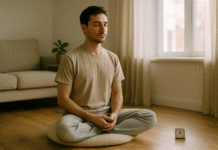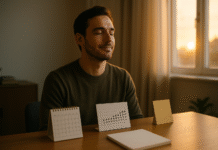


























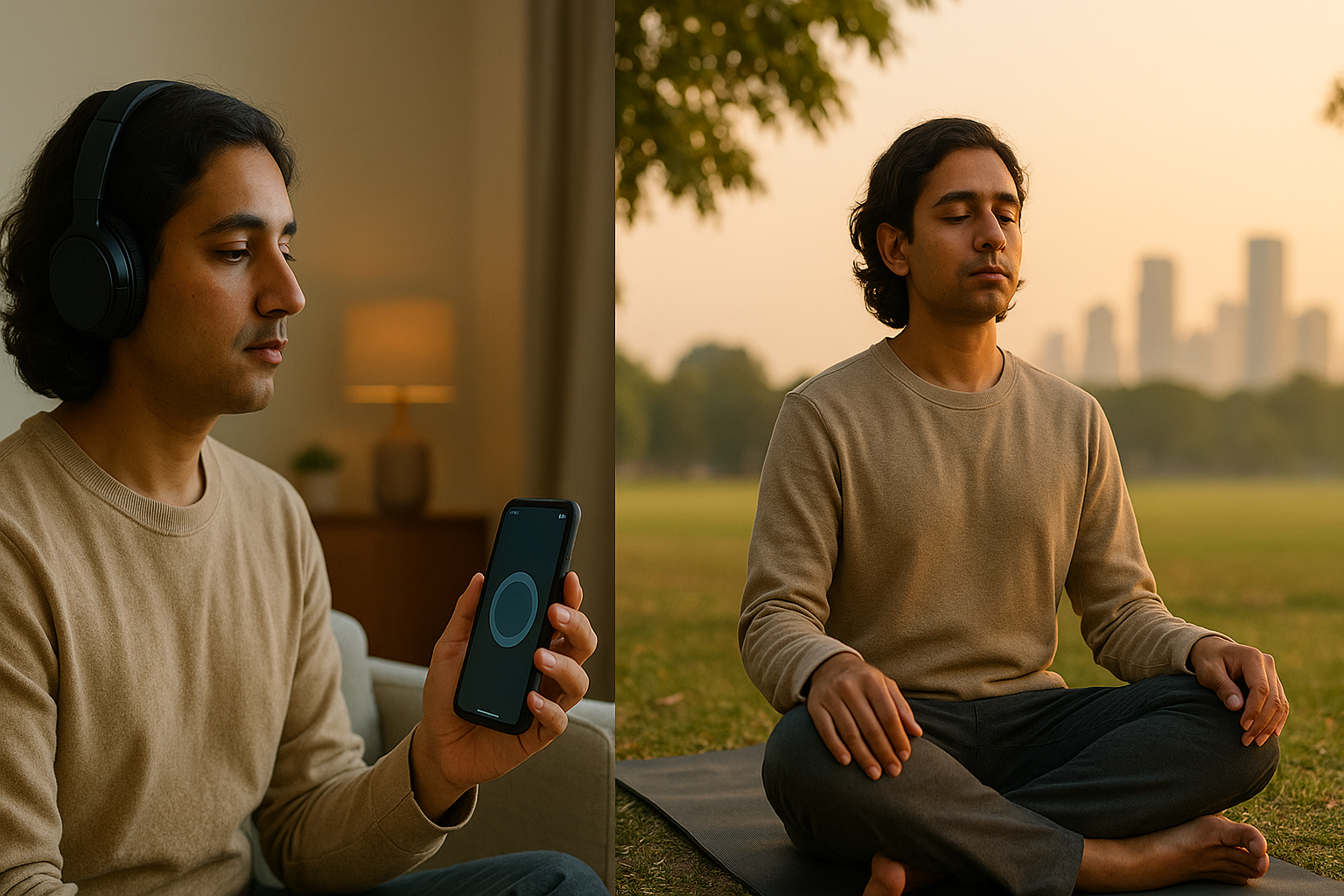
Guided breathwork uses an instructor, script, or app to pace and cue your breathing; independent breathwork is self-directed using a pattern you already know. Choose guided work for learning, structure, and accountability, and go independent for flexibility, personalization, and deeper focus—most people do best with a blend of both. This guide walks you through 11 practical steps to pick the right mix for your goals, time, and temperament, with safety guardrails and example plans you can start today.
Quick start: define your goal, check safety, pick one technique, test both formats for two weeks, track a simple metric (mood, sleep, or HRV), then iterate.
Brief note: This article is educational and not medical advice. If you have cardiovascular, respiratory, psychiatric, or pregnancy-related concerns, consult a qualified clinician before starting new breathwork practices.
1. Define Your Primary Goal Before You Pick a Format
Start by naming the job you want breathwork to do; your goal determines whether guided or independent practice is the better fit right now. If your target is quick stress relief, a short independent pattern you can run anywhere (e.g., a “physiological sigh” or 1:2 inhale-to-exhale pacing) is ideal. If you’re learning from scratch, want accountability, or aim to recondition chronic patterns (sleep, anxiety, or blood pressure), guided sessions outperform because they reduce guesswork and keep cadence steady. Write your top goal in one sentence—stress downshifting, sleep onset, focus for work blocks, emotional regulation, or endurance recovery—and let that steer the next choices. Expect to revisit your goal every 4–8 weeks as your needs change.
1.1 How to do it
- Pick one primary goal for the next 14 days (e.g., “fall asleep faster” or “feel calmer by mid-afternoon”).
- Choose a matching technique: slow breathing (5–6 breaths/min) for calm; 4-7-8 for winding down; box breathing for focus.
- Decide the setting: guided (coach/app) if you want structure; independent if you need speed and portability.
1.2 Numbers & guardrails
- Calm/focus goals often respond to 5–10 minutes daily; sleep goals to 10–20 minutes before bed.
- For acute stress: 1–3 minutes of exhale-weighted breathing can help.
- Reassess fit after 10–14 sessions; keep what’s working and drop the rest.
Mini example: If your goal is “reduce meeting anxiety,” use guided box breathing during practice (evenings, 10 mins) and an independent 60-second downshift (long exhale) right before meetings.
Bottom line: Clear goals stop you from hopping between techniques and make the guided vs independent choice obvious.
2. Check Safety & Contraindications Up Front
Choose the safest path first: if you’re prone to dizziness, panic, or hyperventilation, prioritize slow, gentle patterns and consider guided pacing to avoid over-breathing. People with asthma, COPD, uncontrolled hypertension, arrhythmia, or during pregnancy should confirm suitability with a clinician; diaphragmatic and paced-breathing drills are typically considered low-risk when performed calmly, but supervision and personalization matter. Guided sessions also help you maintain nasal breathing and comfortable ranges instead of “chasing sensations.” Independent practice is fine once your technique is stable, symptoms are minimal, and you can keep a smooth, light breath without breath-holding stress.
2.1 Safety checklist
- Start easy: smooth nasal inhales, relaxed mouth or nasal exhales, no straining.
- Skip forceful patterns (rapid or extended breath holds) if you have medical concerns.
- Stop if you feel faint, tingly, or panicky; return to normal breathing or sip water.
- Sit or lie down for early sessions; avoid water and driving during practice.
- Get clearance if pregnant or managing heart/lung conditions.
2.2 Why guided helps here
- External pacing reduces overshooting count lengths.
- Cues remind you to keep shoulders and chest relaxed, diaphragm engaged.
- A coach or app can adjust tempo in real time based on your feedback.
Mini example: If long breath holds spike your anxiety, switch to a 1:2 pattern (e.g., inhale 3s, exhale 6s) with a guided metronome for two weeks, then retry independent versions once you’re comfortable.
Bottom line: Safety first—guided practice shines when risk management and technique precision matter.
3. Match Techniques to Outcomes (Then Decide Guided vs Solo)
Different breath patterns shift physiology in different ways, so choose by effect. Slow “coherent” breathing (~5–6 breaths/min) tends to increase heart-rate variability and calm arousal; box breathing (4-4-4-4) improves focus and composure; 4-7-8 can help downshift for sleep; and cyclic sighing (double-inhale + long exhale) has shown mood benefits in brief daily doses. Guided formats are valuable when learning counts, holds, and nasal mechanics; independent formats are best once the pattern is ingrained and you want portability.
3.1 Tools/Examples
- Coherent breathing: 5–6 breaths/min; use an app pacer or watch vibration.
- Box breathing: equal counts; start 3-3-3-3, build to 4-4-4-4.
- 4-7-8: quiet inhale 4, hold 7, exhale 8; 4–8 cycles is plenty.
- Physiological sigh: one or two cycles when stressed; repeat for 1–2 minutes.
3.2 Numbers & guardrails
- Stick with one technique for 10–14 days before judging.
- If holds feel edgy, shorten or remove them; lengthen only the exhale.
- Keep effort at 3–4/10—comfortable, smooth, sustainable.
Mini example: For afternoon focus, use guided box breathing for 10 minutes daily in week 1; in week 2, do two independent 90-second refreshers between tasks.
Bottom line: Choose the mechanism first; the format follows.
4. Use Guided Sessions to Learn Form and Build Confidence
Guided breathwork accelerates learning by externalizing timing, posture, and pacing—especially helpful for beginners or anyone coming back after a long break. A steady voice or metronome reduces cognitive load: you can feel the breath rather than count it. Guided sessions also deliver progressive plans (duration, tempo, and complexity), accountability reminders, and optional education on physiology, which increases buy-in and consistency. Once you can maintain a smooth, low-effort rhythm with minimal cueing, independence becomes easier and safer.
4.1 How to get the most from guidance
- Choose a guide whose tone and tempo feel calming, not performative.
- Use headphones for clearer cues and fewer distractions.
- Favor short, daily sessions over rare long sessions.
4.2 Common mistakes (and fixes)
- Overfocusing on numbers: prioritize smoothness and comfort.
- Chest breathing: place a hand on belly to cue diaphragmatic expansion.
- Racing counts: slow the metronome; a comfortable pace beats strict math.
Mini example: New to breathwork? Do a 10-minute guided coherent-breathing session daily for 14 days. Track “calm after” on a 1–10 scale; once you hit ≥7 consistently, try independent days.
Bottom line: Guidance is like training wheels—use them long enough to groove the pattern, then transition.
5. Deploy Independent Practice for Portability and Habit Strength
Independent breathwork is your pocket tool for real life: a minute before a presentation, between tasks, or when you wake at 3 a.m. It works because you’ve encoded a simple pattern you can run without audio or screens. Choose one or two “always available” patterns (e.g., 1:2 exhales or a single physiological sigh) that don’t require counting beyond 3–6 seconds. Independent sessions also support deeper states when you already know the terrain; sitting or lying quietly, you can extend duration without commentary and tune in to subtle sensations.
5.1 Mini-checklist
- Pick one portable pattern; practice it in at least three locations (desk, commute, bed).
- Keep a “micro-dose” version (30–90 seconds) and a “standard” version (5–10 minutes).
- Anchor to triggers you already have: kettle on, calendar alert, bedtime.
5.2 Common pitfalls
- Overcomplicating: too many ratios; simplify to one.
- Losing cadence: silently count the first 3 breaths, then feel the rhythm.
- Inconsistency: pair with an existing habit (e.g., after brushing teeth).
Mini example: Do a 60-second 1:2 pattern (inhale 3s, exhale 6s) every time you sit down to work, plus a 5-minute session before bed.
Bottom line: Independent practice wins when you need speed, privacy, and zero setup.
6. Get the Dose Right: Timing, Duration, and Frequency
You’ll see more benefit from consistent, bite-sized doses than from occasional marathons. For stress and mood, research suggests even 5 minutes daily of structured breathing can help; blood pressure and sleep aims respond to daily slow breathing for 5–20 minutes. Guided sessions help you ramp up safely; independent practice helps you squeeze in micro-doses. Choose a daily minimum you can keep on your worst day and a “stretch” target for good days.
6.1 Numbers & guardrails
- Daily floor: 3–5 minutes.
- Sweet spot: 5–10 minutes for calm/focus; 10–20 minutes for sleep wind-down.
- Micro-doses: 1–3 minutes during acute stress.
- Progression: add 1–2 minutes per week, not per day.
6.2 Scheduling tips
- Pair slow breathing with fixed anchors: afternoon slump, commute, bedtime.
- For sleep, stop screens 30–60 minutes prior; dim lights; keep it quiet.
- For focus, use before deep work blocks or meetings.
Mini example: Week 1: guided 6-minute coherent breathing at 9 p.m. + 60-second independent sighing after lunch. Week 2: extend night session to 8 minutes; add a 2-minute pre-meeting downshift.
Bottom line: Small daily doses add up; pick a floor you can always hit.
7. Use Simple Tools: Metronomes, Apps, and Biofeedback
Tools can make both guided and independent practice more effective. A pacer app, smartwatch vibration, or a simple timer keeps cadence honest without mental math. If you like data, heart-rate variability (HRV) biofeedback devices can show your heart-breath coupling in real time and help you find your personal “resonance” pace (~4.5–6.5 breaths/min for many people). Start lightweight (free pacer, built-in phone timer), and only add complexity if it improves consistency or insight.
7.1 Tool stack ideas
- Beginner: free breathing pacer, noise-blocking headphones.
- Intermediate: timer shortcuts (1, 3, 5, 10 minutes), offline audio.
- Advanced: HRV biofeedback apps/sensors to identify resonance breathing.
7.2 How to evaluate a tool
- Does it reduce friction and improve consistency?
- Does it help you feel calmer or sleep faster within 2 weeks?
- Can you practice without it when needed?
Mini example: Use a metronome at 5.5 breaths/min for two guided weeks; then practice independently at the same tempo, checking HRV once weekly to keep you on track.
Bottom line: Tools should simplify, not complicate—pick the least you need to keep going.
8. Track What Matters: Mood, Sleep, HRV, and RHR
Measurement turns “I think it helps” into “I know what works for me.” Keep it simple: track one primary metric aligned to your goal. For calm and mood, rate 1–10 before and after sessions. For sleep, track sleep latency (minutes to fall asleep) and overnight awakenings. If you’re data-oriented, add resting heart rate (RHR) and HRV once weekly to monitor recovery and down-regulation. Use guided sessions initially to standardize practice conditions, then test independent sessions while holding time-of-day and duration constant to isolate effects.
8.1 Mini-dashboard (pick 1–3)
- Mood calm score (1–10): before/after.
- Sleep latency (minutes): nightly.
- RHR (bpm) / HRV (ms): weekly average.
- “Cravings to check phone” (1–10): for focus.
8.2 Example experiment
- Weeks 1–2 (guided): 8 minutes/night, coherent breathing; track sleep latency.
- Weeks 3–4 (independent): same dose/time; compare averages.
- Keep only the format that beats your baseline by a meaningful margin (e.g., ≥20% faster sleep onset).
Mini example: Your sleep latency drops from 35 to 22 minutes on guided weeks and to 24 minutes on independent weeks—keep guided at night and independent micro-doses by day.
Bottom line: Track the fewest numbers that drive decisions.
9. Optimize Your Environment and Posture
Guided or independent, conditions matter. You’ll breathe more smoothly in a quiet, comfortably cool space with a neutral spine and relaxed belly. For desk sessions, sit upright with feet on the floor; for sleep work, lie on your side or back with slight head elevation. Nasal breathing typically promotes calmer, slower patterns and better moisture/filtration. If your environment is hot or humid (e.g., monsoon season), use a fan or AC to reduce discomfort and perceived breathlessness; if air quality is poor, practice indoors with an air purifier and lighter counts.
9.1 Quick setup checklist
- Posture: long spine, soft shoulders, belly free to expand.
- Breath path: in through the nose; exhale through nose or softly pursed lips.
- Soundscape: silence or low-volume white noise; avoid music with strong rhythms.
- Lighting: dimmer for sleep work; natural light for focus sessions.
9.2 Region-specific notes
- In hot climates, practice earlier or later in the day; daytime heat can raise breath rate.
- In urban settings with noise, use headphones or practice during quieter hours.
Mini example: In a warm evening room, you drop to 4–5 breaths/min with a fan on low; your perceived effort falls from 6/10 to 3/10—proof that environment helps the technique.
Bottom line: Set the stage so your breath can do the work.
10. Blend Formats Into a Weekly Plan You’ll Keep
Most people thrive on a hybrid plan: guided sessions to build and maintain skill, independent micro-doses for real-life moments. Create a weekly template that reflects your rhythms—workdays versus weekends, daytime stressors, and bedtime windows. Keep it flexible: the “floor” keeps your streak alive; the “ceiling” adapts to busy days. Re-plan every 4 weeks based on your logs.
10.1 Sample plan (mix and match)
- Mon–Fri: Guided 8–10 minutes after dinner; independent 60–90 seconds before meetings.
- Sat–Sun: Independent 10–15 minutes mid-morning outdoors.
- Every night: 4–7-8 or 1:2 pattern for 10 minutes in bed (guided if needed).
10.2 Accountability options
- Put sessions on your calendar with 10-minute reminders.
- Use streak trackers or share your plan with a friend.
- Schedule an occasional live session with a coach to refresh technique.
Mini example: Over four weeks, you complete 25/28 days (89%) by keeping your 5-minute floor and hitting the 10-minute stretch on calm days.
Bottom line: The best plan is the one you’ll actually do; blend formats to fit your week.
11. Troubleshoot: When to Switch Back to Guidance (or Go Solo)
If you plateau, feel more anxious, or keep abandoning sessions, change format. Guidance helps when you rush counts, over-breathe, or can’t relax at bedtime; it also supports gradual exposure if breath holds trigger anxiety. Conversely, go independent if the voice distracts you, you have limited privacy, or you want to practice during commutes or between tasks. Troubleshooting is normal—it’s a sign you’re paying attention.
11.1 Common issues & fixes
- Dizziness/tingling: shorten counts, drop holds, lengthen exhale gently, sit or lie down.
- Restlessness at night: switch to quieter guidance or independent exhale-weighted breathing.
- Boredom: vary location/time of day; keep the technique constant for two weeks.
11.2 Decision cues
- Return to guided if your logs show worsening sleep/mood or inconsistent cadence.
- Stay independent if you’re consistent, calm, and can downshift quickly without prompts.
Mini example: After two restless weeks, you swap bedtime independence for a softer guided track and sleep latency improves by 25%; keep the change.
Bottom line: Treat format as a dial, not a switch—adjust to get the response you want.
FAQs
1) What’s the core difference between guided and independent breathwork?
Guided breathwork uses external pacing—voice, prompts, or a metronome—to teach form and keep timing steady; it’s best for learning, accountability, and safety. Independent breathwork is self-directed once you know a pattern; it’s fast, portable, and discreet. Many people do guided sessions for skill building and independent “micro-doses” during the day for stress and focus.
2) How long before I notice benefits?
For mood and calm, some people feel better during the first session; measurable changes often appear within 1–2 weeks of daily 5–10-minute practice. Sleep improvements may take 2–4 weeks. Track one metric (calm rating, sleep latency, or resting heart rate) so you can see progress and fine-tune your plan.
3) Is slow breathing safe if I have asthma, COPD, or heart issues?
Gentle diaphragmatic and paced-breathing drills are commonly used, but individual conditions vary. If you have respiratory or cardiovascular diagnoses—or are pregnant—get personalized guidance from a clinician. Start with comfortable, slow exhales, avoid forceful holds, and practice seated or lying down.
4) Which technique is best for stress relief?
Exhale-weighted patterns (e.g., 1:2 inhale-to-exhale) and brief “physiological sighing” can reduce arousal quickly, while coherent breathing around 5–6 breaths/min supports steady calm. Try one approach for two weeks; pick the format (guided vs independent) that keeps you consistent and relaxed.
5) Can breathwork lower blood pressure?
Slow, deep breathing practiced daily can contribute to lower blood pressure for some people and may reduce systolic readings by a modest amount. Use it alongside, not instead of, lifestyle and medical care. Measure at the same time of day and share results with your clinician.
6) What if long breath holds make me anxious?
Skip the holds and lengthen only the exhale. A safe starting point is 3 seconds in, 6 seconds out for 1–3 minutes. Use guided pacing until it feels easy; later, keep an independent 60–90-second downshift for stressful moments.
7) Do I need an app or sensor?
No. A timer or silent count is enough. Apps help with pacing and accountability; HRV sensors can help advanced users find a personal resonance rate. Use tools only if they make practice easier and more consistent.
8) How does breathwork compare to meditation?
They often overlap: many meditations use the breath as an anchor. Breathwork is typically more structured and physiological (counted patterns), making it easier for some people to start. You can layer mindfulness onto breathwork by noticing sensations and thoughts without judgment.
9) Is it okay to practice before workouts?
Yes—use brief, steady patterns (e.g., box breathing) for focus or to steady nerves. Save longer, down-regulating sessions for after training or in the evening; very slow breathing right before high-intensity exercise may dampen arousal too much for peak performance.
10) Can teenagers or older adults use breathwork?
Generally yes, as long as the practice is gentle and comfortable. Teach simple, count-light patterns and avoid long breath holds. For older adults or anyone with health concerns, start seated, keep sessions short, and progress slowly with guidance as needed.
11) What’s the minimum effective dose?
Aim for a 3–5 minute daily floor and build from there. Add 60–90-second micro-doses before meetings, commutes, or bedtime. Consistency beats duration; evaluate every two weeks and adjust format to fit your life.
12) How do I know I’m doing it “right”?
Your breath feels smooth and light, shoulders stay soft, and you finish calmer or sleepier (depending on the goal). If you’re getting dizzy or anxious, the counts are too long or forceful—shorten them, lengthen the exhale, or switch to a guided track until it’s comfortable.
Conclusion
Guided vs independent breathwork isn’t an either/or decision—it’s a progression and a toolkit. Guided sessions teach mechanics, keep pacing honest, and offer accountability when you’re building the habit or navigating sensitive terrain. Independent practice gives you speed, privacy, and on-demand regulation in real-world moments. Start with one clear goal, pick a technique matched to that goal, and commit to a small daily dose you can always keep. Track one or two metrics that matter to you, and adjust format every few weeks based on evidence from your own life. With that approach, breathwork becomes less of a ritual and more of a reliable lever you can pull to calm your body, focus your mind, and sleep more soundly.
Your next step: choose one technique and one 5-minute slot today—then press play or go solo.
References
- Brief Structured Respiration Practices Enhance Mood and Physiology — Cell Reports Medicine (Jan 17, 2023). https://pubmed.ncbi.nlm.nih.gov/36630953/
- How Breath-Control Can Change Your Life: A Systematic Review — Frontiers in Human Neuroscience (Sep 7, 2018). https://pmc.ncbi.nlm.nih.gov/articles/PMC6137615/
- Relaxation Techniques: Breath Control Helps Quell Errant Stress Response — Harvard Health Publishing (Jul 24, 2024). https://www.health.harvard.edu/mind-and-mood/relaxation-techniques-breath-control-helps-quell-errant-stress-response
- Relaxation Techniques: What You Need to Know — National Center for Complementary and Integrative Health (Jun 8, 2021). https://www.nccih.nih.gov/health/relaxation-techniques-what-you-need-to-know
- Diaphragmatic Breathing: Exercises & Benefits — Cleveland Clinic (n.d.). https://my.clevelandclinic.org/health/articles/9445-diaphragmatic-breathing
- Breathing Exercises for Stress — NHS (n.d.). https://www.nhs.uk/mental-health/self-help/guides-tools-and-activities/breathing-exercises-for-stress/
- Breathing Exercises to Lower Your Blood Pressure — Harvard Health Publishing (Sep 1, 2023). https://www.health.harvard.edu/heart-health/breathing-exercises-to-lower-your-blood-pressure
- Sleep Disorders and Complementary Health Approaches — National Center for Complementary and Integrative Health (n.d.). https://www.nccih.nih.gov/health/sleep-disorders-and-complementary-health-approaches
- Heart Rate Variability Biofeedback: How and Why Does It Work? — Frontiers in Psychology (Jul 2, 2014). https://www.frontiersin.org/journals/psychology/articles/10.3389/fpsyg.2014.00756/full
- A Practical Guide to Resonance Frequency Assessment for Heart Rate Variability Biofeedback — Frontiers in Neuroscience (Oct 15, 2020). https://www.frontiersin.org/journals/neuroscience/articles/10.3389/fnins.2020.570400/full
- Breathing and Relaxation Exercises — NHS Inform (Jan 28, 2025). https://www.nhsinform.scot/healthy-living/mental-wellbeing/stress/breathing-and-relaxation-exercises/