












A personal motivation board or playlist is a curated set of visuals, words, and songs that act as reliable cues to nudge you into the feelings and behaviors you want—on busy days, low-energy mornings, and everything in between. Done well, it’s more than a collage or a mixtape; it’s a system that reminds you what matters and makes doing it feel easier. In this guide, you’ll build one that’s evidence-informed, personal, and sustainable, whether you prefer a physical board, a digital dashboard, or a music-first approach.
Quick-start (skim this if you’re in a rush): define your goals; pick your medium (board or playlist); collect process-focused photos and quotes; add songs that fit the activity (e.g., 125–140 BPM for tougher workouts); place the board where your habits happen and keep the playlist one tap away; review weekly and prune what’s stale.
1. Ground Your Board or Playlist in Clear Goals and Your “Why”
Start by anchoring everything to a small set of specific, personally meaningful goals; this ensures your board or playlist pulls you toward actions you actually want to take. Motivation sticks best when it supports autonomy (your choice), competence (you can do it), and relatedness (it connects you to others), so articulate why each goal matters to you in plain language. Write one sentence per goal—“I train 3×/week to feel energetic for my kids,” or “I study 45 minutes daily to qualify for the next role.” This personal clarity helps every image, quote, and track earn its place. The aim here isn’t to make something inspirational in theory; it’s to build a tool you will use when you’re stressed, tired, or distracted. Self-determination research shows that goals aligned to your own values are more motivating and sustainable than those driven by pressure or comparison, so start with your values and then choose the visuals and songs that evoke them.
How to do it
- Write 2–3 outcome goals and 3–5 tiny process goals (e.g., “10-minute evening walk”).
- For each, jot a one-sentence “why” that you can feel, not just think.
- Keep goals within your control (behaviors), not outcomes (scale weight, test scores).
Tools/Examples
- Notes app or Notion template titled “Why + Wins.”
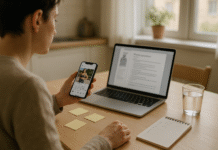
- Sticky notes that later migrate onto your board.
- A short voice memo that becomes your playlist intro track.
Synthesis: When your “why” is explicit, every image and song has a job—evoke the feeling and identity that make the behavior easier today, not just “someday.”
2. Choose the Right Medium and Format You’ll Actually Use
Pick a format that matches your routines and constraints, because the best board or playlist is the one you’ll interact with daily. If you love tactile tools, a corkboard or magnetic board near your desk or workout space works great. If you live on your phone, a digital board in Notion/Pinterest or a homescreen widget is more accessible. If sound drives your mood, lead with a playlist and add a small gallery to your lock screen or watch face. Consider bandwidth and environment, too: if you commute underground or face unreliable Wi-Fi, download your playlists and offline images. Structure follows function—if your main use is training, you might prioritize music and add a small panel of process images; if it’s studying, emphasize quiet visuals and a lyric-free “deep work” set.
Mini-checklist
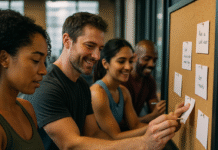
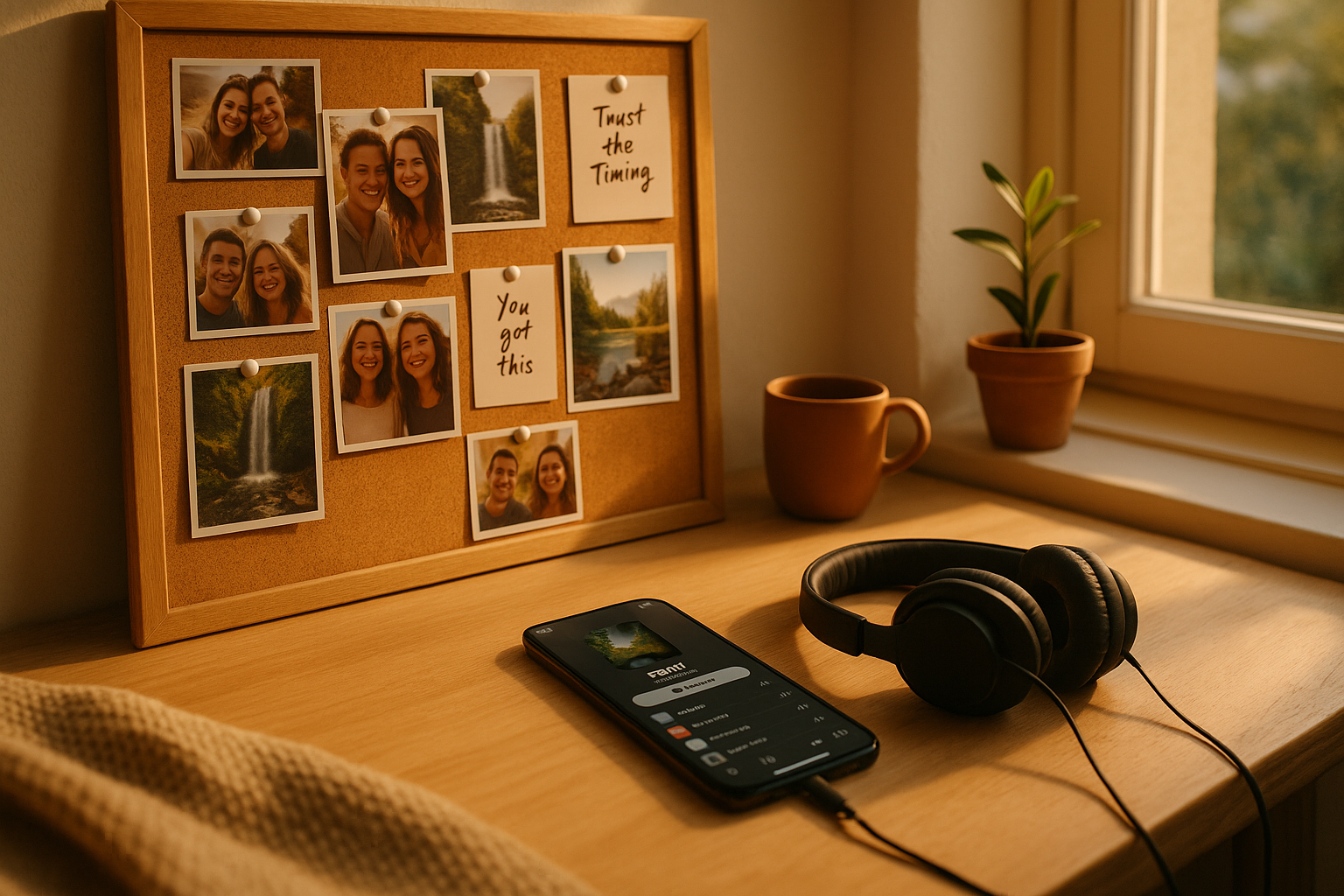
- Physical board: corkboard + pins + photo prints; add a small shelf for headphones.
- Digital board: Notion gallery, Pinterest board, or a dedicated “Motivation” album.
- Playlist: create separate sublists for warm-up, peak-focus or peak-effort, and cooldown.
- Access: one-tap widget or shortcut; offline downloads for low-connectivity moments.
Numbers & guardrails
- Keep each surface simple: 9–16 visuals per board pane, 30–50 tracks per playlist (about 2–3 hours) so you cycle variety without decision fatigue.
Synthesis: Choose a medium that fits your daily context and constraints; convenience beats aesthetics because friction is the enemy of use.
3. Curate Images That Cue Identity and Process—Not Just Outcomes
Select photos that make you feel like the kind of person who does the habit, not just someone who achieves the result. Research warns that indulging in positive fantasies about idealized futures can sap energy and reduce effort; instead, practice mental contrasting—pair the desired future with the present obstacles—so your visuals stay honest and action-prompting. For example, include a photo of your local park at dawn (where you’ll actually run), your worn-in shoes, and a calendar snapshot, alongside a picture that embodies “strong and present with family.” This blend keeps aspiration grounded in reality and promotes follow-through. Add one or two images that make obstacles concrete (e.g., a rainy window for “bad weather days”) next to a counter-cue image (“hoodie + cap ready”).
How to do it
- For each goal, collect 3–4 images: place, tools, people, process.
- Pair each aspirational image with an “obstacle” image and a simple plan you’ll write (see Step 4).
- Refresh with your own photos where possible; familiarity increases emotional resonance.
Common mistakes
- Only using “after” photos or luxury imagery.
- Overcrowding: too many images dilute signal.
- Generic stock photos that don’t map to your real environment.
Synthesis: Imagery that mirrors your real context—and acknowledges hurdles—nudges honest action better than wishful collages.
4. Add Words That Work: Quotes, Mantras, and “If–Then” Plans
Use words to sharpen attention and remove ambiguity. A single quote can shift state, but the biggest leverage comes from implementation intentions—simple “If X, then I will Y” plans that pre-decide your next move. Meta-analyses show they reliably increase goal attainment across behaviors; write them on sticky notes pinned next to relevant images or put them in your playlist descriptions. Keep language concrete: “If it’s 6:30 a.m., I put on my shoes and start a 10-minute warm-up track,” or “If I finish lunch, I open the Anki deck before checking messages.” Commit to 2–4 if–then plans per goal and place them where you’ll see them at the right moment.
Tools/Examples
- Board: thin index cards with IF–THEN lines beside each image cluster.
- Digital: “Description” field in Spotify/Apple Music; Notion callouts with ⚡ emoji.
- Phone: Shortcuts that open a specific playlist at a scheduled time.
Mini-checklist
- Specific cue (time, place, feeling).
- Visible plan (put it where the cue occurs).
- One action (start small: 2–10 minutes).
Synthesis: Quotes inspire; if–then plans operationalize—together they transform intention into automatic action.
5. Build a Soundtrack That Fits the Task (BPM, Lyrics, and Length)
Match music to the job. For workouts or energetic chores, research suggests an asynchronous tempo band of roughly 125–140 BPM aligns well with moderate to vigorous effort; it can improve affect and performance and reduce perceived exertion. For reading, writing, or language-heavy tasks, instrumental tracks generally beat lyrics, which often impair comprehension; save lyric-forward songs for repetitive or light cognitive tasks. Keep playlists long enough to avoid repetition fatigue (2–3 hours) and include warm-up and cooldown segments to shape your state. As of August 2025, multiple reviews and experiments continue to support tempo–intensity alignment and caution about lyrics during heavy reading.
Numbers & guardrails
- Warm-up: 2–3 tracks at 100–120 BPM.
- Peak: 8–15 tracks at 125–140 BPM for hard intervals or focused sprints.
- Cooldown/flow: 3–6 tracks at 90–110 BPM or ambient/instrumental.
Tools/Examples
- Use BPM analyzers inside Spotify/Apple Music; tag “no lyrics” for deep work.
- Add “energy arc” markers by inserting short interludes to signal phase changes.
Synthesis: The right tempo and lyric load make your playlist functionally useful—less willpower, more automatic state shifts.
6. Sequence for Your Day: Energy Arcs and Context Windows
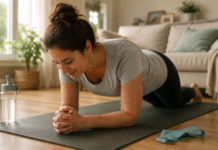
Design how your board or playlist unfolds across the day so you meet the moment with the right cue. Mornings might feature bright, high-contrast visuals and energizing tracks to prime movement; afternoons could switch to calming images and lyric-free focus music; evenings lean toward reflective photos and mellow tunes for recovery. Place the physical board where the corresponding behavior happens (by your running shoes, on the fridge, near your desk), and structure a “three-phase” playlist: warm-up, peak, cooldown. The goal is to minimize friction and maximize mood fit—your board and playlist become a day-long story that guides attention and effort.
How to do it
- Build AM / PM sub-boards or sub-playlists.
- Set phone widgets to rotate images based on time of day.
- Use alarms/shortcuts that open specific playlist sections.
Mini-checklist
- Phase markers: brief instrumental interludes signal transitions.
- Context alignment: match visuals/songs to location (home office vs. gym).
- Stop rules: when cooldown ends, you’re done—prevents overtraining/overwork.
Synthesis: Sequencing respects your natural energy curve so your cues arrive when they can do the most good.
7. Make It Frictionless: Place Cues Where Habits Happen
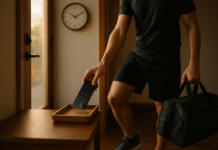
Put your cues on the path of the behavior. A board behind your monitor gets ignored if your workout starts in the hallway; a playlist buried three taps deep won’t get played when you’re rushing. The cure is obsessive convenience: headphones on a hook by the door, a board at eye level near the mat, a homescreen widget for your “Start Focus” mix. Habit science shows that consistent context cues build automaticity over weeks to months; your job is to make the right cue impossible to miss at the right moment.
Tools/Examples
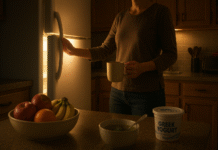
- Place a small “micro-board” (4–6 images) on the fridge for meal choices.
- Use NFC tags: tap phone to a sticker to open “Study Sprint” playlist.
- Smart speaker routines: “Hey… Focus time” triggers instrumentals + lamp brightness.
Numbers & guardrails
- Aim for ≤1 second to start your next cue: one tap, one voice command, one glance.
- Review placement weekly; if you skipped a habit, move the cue closer.
Synthesis: Proximity and one-tap access transform inspiration into action—because the best cue is the one you can’t ignore.
8. Organize with Tags, Themes, and Simple Rules
Give your board and playlist a light information architecture so editing is easy and use is intuitive. Group visuals by theme (health, family, craft), or state (calm, courage, focus). Do the same with music—tag tracks by BPM range, lyric presence, and energy. Create simple “skip rules” (e.g., always skip any track that distracts you twice in a week) and pruning routines (swap 10% of items each month). This organization helps you evolve the set without rebuilding from scratch and keeps novelty high enough to stay emotionally engaging.
How to do it
- Use Notion or Pinterest sections; use colored pins or washi tape for themes.
- In Spotify/Apple Music, add “custom tags” via playlist notes or emojis in titles.
- Keep a “parking lot” playlist/album for maybes you’re testing.
Mini-checklist
- Three tags max per item (keep it simple).
- One source of truth per goal (so you know where to edit).
- Monthly 10% refresh to prevent staleness.
Synthesis: Light structure keeps your system nimble—organized enough to manage easily, flexible enough to keep you engaged.
9. Personalize for Preference, Culture, and Self-Concordance
Make the set deeply yours. Self-Determination Theory suggests motivation lasts longer when goals and tools feel self-chosen and competence-building; music research adds that preference amplifies affective and performance benefits. If ghazals, qawwali, or classic rock move you, use them; if family photos or local landscapes mean more than stock images, lean on those. When studying or writing, prefer instrumental tracks in your working language; when doing repetitive tasks, feel free to use lyrical favorites. Include nods to community—mentors, teammates, family—so relatedness cues are visible and audible in your set. PMC
Region-specific notes
- If your internet is spotty or mobile data is limited, download offline playlists and cache images; schedule updates on Wi-Fi.
- Consider cultural/religious contexts for imagery and lyrics so cues feel supportive, not distracting.
Mini-checklist
- Autonomy: do I like this item?
- Competence: does it make the task feel doable?
- Relatedness: does it connect me to people who matter?
Synthesis: Personal meaning is a performance multiplier—your preferences aren’t a nice-to-have; they are the method.
10. Turn It Into a Habit: Tiny Starts, If–Then Triggers, and Time Frames
Your board or playlist works best when paired with small, repeatedly cued behaviors. Use the implementation intentions you wrote and “habit stacking” (“After I brush my teeth, I start my 3-track morning set”). Expect habit formation to take weeks to months; one real-world study found a median of 66 days (range 18–254) to reach near-automaticity—so pick tiny actions you can repeat almost daily and let repetition do the work. Track completions for a month with simple marks or toggles; the point is consistency, not perfect streaks.
How to do it
- Define a 2–10 minute minimum version of each habit.
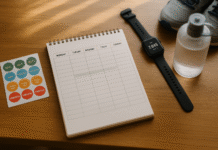
- Use a visible tally (paper, app) for the first 30 days.
- Rehearse the if–then plan out loud once daily for a week.
Mini-checklist
- Same cue, same place, same time as often as feasible.
- Forgive misses fast and restart next cue; no “start over Monday.”
Synthesis: Small, consistent reps wired to visible cues turn your board or playlist from inspiration into automatic routine.
11. Measure What Matters and Iterate Every Week
Review how your board or playlist actually performs. Rate each track and image on a 1–5 “did this help me start?” scale after use. Notice friction points: do lyrics derail reading? does a photo feel stale? Swap low-scoring items, and log small wins (“2 more intervals,” “finished draft section”). A weekly 10–15 minute edit keeps novelty high and removes “meh” items that otherwise dull the system. Consider a simple A/B: one week use lyric-free focus tracks for reading, the next week try low-volume lofi and compare task completion time or perceived effort.
Tools/Examples
- Create a simple table in Notion: Item | Context | Helped Start? (1–5) | Notes.
- Use playlist “liked” hearts or star ratings as quick data.
- Put a recurring calendar nudge for a Sunday refresh (swap 10%).
Numbers & guardrails
- Cap total items: ≤16 visuals per board pane; 30–50 tracks per playlist.
- Replace or retire bottom 10% weekly; archive instead of deleting so you can revisit.
Synthesis: Data-light iteration keeps your cues fresh and functional—edit weekly so tomorrow’s self gets an easier start.
12. Keep It Safe, Realistic, and Ethics-Forward
Your cues should lift you, not harm you. Avoid imagery that triggers unhealthy comparison or reinforces unrealistic body ideals; favor process, community, and skill. Be mindful of hearing health—prolonged exposure above ~85 dB can risk damage—so keep volumes reasonable and take breaks. Remember that boards and playlists are tools, not magic; positive fantasies alone can backfire, while mental contrasting + plans improves follow-through. Finally, revisit goals quarterly; as life shifts, your cues should shift too. LSE Research Online
Mini-checklist
- Content safety: no images that spike shame or rumination.
- Hearing health: keep volume under safe levels; prefer good-fitting headphones.
- Quarterly audit: re-align to current priorities; ask “does this still help me start?”
Synthesis: A good system is kind, honest, and adaptable—safe for your mind and ears, and tuned to real life.
FAQs
1) What’s the difference between a vision board and a motivation board?
A vision board often emphasizes end-state images (dream house, medal). A motivation board emphasizes process cues—places, tools, people, and small steps you take today. Because indulging in idealized fantasies can reduce effort, many people find a motivation board paired with mental contrasting and if–then plans leads to better follow-through than a purely aspirational collage.
2) How many songs should a motivation playlist have?
Two to three hours (about 30–50 tracks) balances novelty with familiarity. That length reduces repeat fatigue while giving you enough choice to match phases (warm-up, peak, cooldown). Use BPM tags to speed selection and remove anything you skip twice in a week to keep the set sharp.
3) Are lyrics always bad for focus?
Not always—but for reading and language-heavy tasks, multiple studies report that music with lyrics can impair comprehension compared to silence or instrumental tracks. For repetitive tasks, lyrics may be fine or even helpful if you enjoy them. Test both and track your results over a week. SAGE Journals
4) What tempo works best for workouts?
For moderate-to-vigorous effort, research points to ~125–140 BPM for asynchronous use (not necessarily synchronized steps). Warm-ups and cool-downs can be slower. Preferences matter, so start within that band and adjust by feel.
5) How long until this becomes automatic?
Habit formation varies widely. One real-world study found a median of 66 days with a range from 18 to 254 days to reach near-automaticity. That’s why tiny, repeatable actions and visible cues matter more than willpower bursts. CentreSpring MD
6) What if I hate looking at my board after a few weeks?
That’s normal—novelty wears off. Schedule a 10% refresh each week, swap in new images or songs, and archive the rest. Keep your rules simple: if something doesn’t help you start twice in a row, replace it.
7) Can I use podcasts or audiobooks instead of music?
Yes. For easy runs, chores, or long walks, narrative audio can be perfect. For higher-intensity exercise or deep work, music’s tempo and affect are often more effective at shaping arousal and attention than spoken word. Try both and measure start rates and perceived effort.
8) How do I include family or friends without losing focus?
Add two or three photos that evoke support or shared identity (teammates, family), and one short voice memo from someone you trust. Relatedness can enhance motivation, but too many social images can distract—curate sparingly.
9) Are there risks to “too much positivity” on a board?
Yes. When positivity slips into fantasy—only showcasing triumphant end-states—you can feel you’ve already “arrived,” sapping energy to act. Balance aspiration with obstacles and concrete if–then plans.
10) What gear or apps do you recommend?
Any that reduce taps: Spotify/Apple Music with BPM/energy filters, Notion or Pinterest for galleries, phone widgets for one-tap access, NFC tags, and a basic corkboard with pins. The tool doesn’t need to be fancy; it needs to be near the habit.
11) How do I use this if I share space or work in a quiet office?
Make a pocket-size “micro-board” (4–6 wallet photos) and noise-isolating headphones. Use a lyric-free, low-tempo playlist for work blocks and switch to higher-energy tracks only on breaks or commutes.
12) I’ve tried boards before—how is this different?
You’re building a system: values → cues → if–then plans → frictionless access → weekly edits. That loop, plus realistic imagery and task-fit music, is what converts inspiration into daily action.
Conclusion
A great personal motivation board or playlist is deceptively simple: it shows or plays what your next action feels like, in the place and moment you need it. Start by clarifying your “why,” then select images that reflect your real context and add if–then plans that pre-decide your moves. Make your music fit the job—tempo and lyrics tuned to the task—and place cues on the path of your habits so starting takes one tap or one glance. Expect to iterate; prune what goes stale and celebrate the items that consistently help you begin. As the weeks pass, those tiny starts accumulate into real momentum—because you’re not relying on willpower alone; you’re designing your environment to cooperate.
Next step: pick one goal, build a 12-item micro-board or a 12-track starter playlist today, and use it once before tomorrow morning.
References
- Karageorghis, C. I., & Priest, D.-L. (2011). Music in the exercise domain: A review and synthesis (Part II). International Review of Sport and Exercise Psychology. https://pmc.ncbi.nlm.nih.gov/articles/PMC3339577/
- Greco, F., et al. (2022). The effects of music on cardiorespiratory endurance and muscular strength: A review. Frontiers in Psychology. https://pmc.ncbi.nlm.nih.gov/articles/PMC9037123/
- Sun, Y., et al. (2024). Impact of background music on reading comprehension: The role of lyrics. Frontiers in Psychology. https://pmc.ncbi.nlm.nih.gov/articles/PMC11027201/
- Gollwitzer, P. M., & Sheeran, P. (2006). Implementation Intentions and Goal Achievement: A Meta-Analysis of Effects and Processes. Advances in Experimental Social Psychology. https://www.sciencedirect.com/science/article/pii/S0065260106380021
- Gollwitzer, P. M. (n.d.). Implementation Intentions. NCI (overview PDF, citing 2006 meta-analysis). https://cancercontrol.cancer.gov/sites/default/files/2020-06/goal_intent_attain.pdf
- Lally, P., et al. (2010). Modelling habit formation in the real world. European Journal of Social Psychology. https://onlinelibrary.wiley.com/doi/abs/10.1002/ejsp.674
- Deci, E. L., & Ryan, R. M. (2000). The “What” and “Why” of Goal Pursuits: Human Needs and the Self-Determination of Behavior. Psychological Inquiry. https://selfdeterminationtheory.org/SDT/documents/2000_DeciRyan_PIWhatWhy.pdf
- Ryan, R. M., & Deci, E. L. (2000). Self-Determination Theory and the Facilitation of Intrinsic Motivation, Social Development, and Well-Being. American Psychologist. https://selfdeterminationtheory.org/SDT/documents/2000_RyanDeci_SDT.pdf
- Oettingen, G., & Mayer, D. (2002). The Motivating Function of Thinking About the Future: Expectations versus Fantasies. Journal of Personality and Social Psychology. https://www.prospectivepsych.org/sites/default/files/pictures/Oettingen-Mayer_Expectations-versus-fantasies-2002.pdf
- Karageorghis, C. I., & Terry, P. C. (2011). Inside Sport Psychology (music chapter summary referenced in reviews). *Cited in Delleli et al., 2023, review. Frontiers in Sports and Active Living. https://pmc.ncbi.nlm.nih.gov/articles/PMC10701429/
- Souza, A. S., et al. (2023). Should We Turn off the Music? Music with Lyrics Interferes with Cognitive Performance. Experimental Psychology. https://pmc.ncbi.nlm.nih.gov/articles/PMC10162369/