

























Gratitude in the morning isn’t just “being nice”—it’s a fast, repeatable way to tune your attention toward what’s working, who helped, and how you want to show up. This guide gives you ten practical morning gratitude exercises that fit into 1–10 minutes, even on busy days. You’ll learn simple prompts, breathwork pairings, and small social actions that reliably lift mood, sharpen focus, and strengthen relationships. While these practices are grounded in research, this article is educational and not a substitute for professional care; if you’re navigating depression or trauma, consider adding support from a qualified clinician.
What are morning gratitude exercises? They’re brief, intentional activities—like writing “3 good things,” savoring your first sip of coffee, or sending a one-line thank-you—that train your brain to notice benefits and benefactors at the start of the day.
Quick start: 1) Pick one exercise below; 2) Set a 3–5 minute timer; 3) Do it before checking your phone.
1. 3 Good Things Journal (3 Minutes)
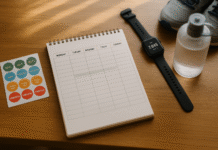
This exercise works because it’s concrete, short, and repeatable: you list three specific, positive moments from the last 24 hours and note why they happened. Start by recognizing one small win (e.g., “caught a green light”), one human help (“colleague shared a template”), and one sensory joy (“cool breeze at dawn”). In two to three sentences each, write why each occurred—your effort, someone’s kindness, or good fortune. This turns vague “gratitude” into a quick causal reflection that strengthens a sense of agency and connection. It suits hectic mornings because you can do it standing at the counter while the kettle boils, and it doubles as a memory catalog you’ll enjoy skimming later. Over time, your attention bias shifts: you notice positives faster because you’ve trained yourself to expect to record them.
1.1 How to do it (step-by-step)
- Open a notebook and date the page; title it “3 Good Things.”
- Write three bullet points on yesterday or this morning; be specific (“saw a neighbor smile at 6:45 a.m.”).
- For each, add “because…” and name a reason (effort, help, luck).
- Optional: star the one you want to repeat today; jot one action that makes it likelier.
- Close the journal and place it where you’ll see it tomorrow.
1.2 Why it works
Gratitude journaling, including “counting blessings,” has been linked with increases in well-being and positive affect, and reductions in negative emotions. Meta-analyses suggest small but reliable boosts to life satisfaction and mood, especially when practices are simple and consistent. Morning use primes your mindset for the rest of the day.
Synthesis: Three fast entries plus a “because…” line give you a mood lift and a mini action plan—ideal before your day accelerates.
2. Gratitude Meditation with Breath (5 Minutes)
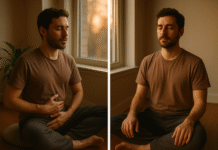
Start by sitting comfortably, placing one hand over your heart and one on your belly, and letting your exhale be slightly longer than your inhale. In the first minute, bring to mind one person, one place, and one privilege you’re grateful for, letting each image settle on the out-breath. The second and third minutes expand to include a recent challenge and the support that helped you through it; the point isn’t to “force positivity,” but to acknowledge help and resources that made coping possible. In the final two minutes, silently send thanks outward—“May they be well”—and then inward—“May I meet the day with steadiness.” This practice works even if you’re not a “meditation person,” because the breath offers a simple anchor while your attention names specific gratitudes.
2.1 How to do it (timed)
- Minute 0–1: Inhale for 4, exhale for 6. Name a person, place, privilege.
- Minute 1–3: Recall a recent difficulty and the supports that helped.
- Minute 3–5: Offer silent thanks outward, then inward; finish with one intention (e.g., “answer with patience”).
2.2 Numbers & guardrails
- Duration: 5 minutes (extend to 8–10 on weekends).
- Breath: Light and comfortable—no breath-holding.
- If emotions spike, open your eyes, soften focus on a steady object, and take two normal breaths.
Synthesis: Pairing breath with naming specific supports creates a calm, grateful state you can carry into your first meeting or school drop-off.
3. One-Line Thank-You Message (2 Minutes)
An ultra-short thank-you text or voice note turns private gratitude into a social investment. In the first minute, pick someone who made your life easier in the last 48 hours: the teammate who sent clean notes, the ride-share driver who waited, the neighbor who returned your delivery. In the second minute, send one line with three parts—specific, why it mattered, forward link. For example: “That summary you sent saved me 20 minutes—thanks! I’ll pay it forward by sharing my template.” This is not performative; it’s precise appreciation that strengthens trust, and it’s the fastest way to inject warmth into your morning without scrolling.
3.1 Mini-template
- “Yesterday’s ___ you did was clutch because ___. I appreciate you. Next time, I’ll ___ to make your day easier too.”
3.2 Tips & pitfalls
- Do: Be concrete (time saved, stress reduced).
- Don’t: Add asks; keep it a pure thank-you.
- Do: Rotate recipients to avoid favoritism.
- Don’t: Overthink—send it before coffee cools.
Synthesis: Two minutes of specific appreciation deepens relationships that will support you later in the day.
4. Savor Your First Sip: Sensory Gratitude (2–4 Minutes)
Savoring is gratitude through the senses: it slows you down long enough to register micro-pleasures you usually blow past. With your first sip of tea or coffee, pause and label three sensations: aroma, warmth, and flavor. Then note the chain that made it possible: growers, water, electricity, a barista’s training, your mug. This is not a lecture—it’s a 90-second attention exercise that turns a default habit into a tiny ceremony. If you don’t drink caffeine, try your shower: first 20 seconds label temperature, pressure, and sound; then notice how your shoulders drop. By naming specifics, you turn vague “I’m grateful” into concrete appreciation, which your brain encodes more strongly.
4.1 How to do it
- Hold the cup; describe the aroma in one word.
- Take a small sip; name flavor notes (bitter, bright, nutty).
- Feel the warmth in your hands and chest; exhale slowly.
- Whisper a quick “thanks” for each link in the chain that got this into your hand.
- Optional: snap a photo and label it “Morning savor #1.”
4.2 Common mistakes
- Rushing and multitasking; put the phone face-down.
- Generic labels (“nice”) instead of specifics.
- Turning it into a chore; two minutes is enough.
Synthesis: Savoring transforms an automatic routine into an anchor of calm, priming your attention for more gratitude finds all morning.
5. Morning Gratitude Walk or Stretch (5–10 Minutes)
A short walk, balcony stretch, or even standing in sunlight while you rotate your joints can double as a gratitude scan. As you move, mentally tag five things: a sound you enjoy, something growing, a clean surface someone maintains, a skill you’re grateful to have, and a person you’ll thank today. If heat, cold, or air quality is an issue, switch to an indoor mobility flow by a window—neck rolls, shoulder circles, hip hinges—while looking for “gratitude cues” in your space (photos, tools, light patterns). Movement lifts energy and loosens mental rumination, so your gratitude entries come faster and feel more authentic. Time-box it to keep it doable on workdays.
5.1 Options by setting
- Urban: Walk one block; count five maintained features (crosswalk paint, trash pickup, transit schedules).
- Suburban: Notice three textures (bark, concrete, glass) and who maintains them.
- Homebound: Chair stretches with a gratitude slideshow on your phone (photos of helpers and small joys).
5.2 Mini-checklist
- Comfortable shoes or stable surface.
- Timer set for 5–10 minutes.
- One person to thank after the walk.
Synthesis: Motion plus mindful noticing gives you five easy gratitude targets and a small physical reboot before emails hit.
6. Micro Gratitude Letter (7 Minutes)
Classic gratitude letters are powerful but long; this micro version fits your morning. Choose one person (living or from your past) whose actions still benefit you—your teacher who taught you to outline, a mentor who edited your CV, a sibling who drove you to exams. Write a 120–150 word note with three parts: the moment (what they did), the ripple (how it continues to help), the thanks (what you feel today). You may send it, read it aloud, or keep it private; either way, you’ll surface concrete memories that spark warmth and motivation. Doing this once weekly keeps it special while maintaining a cadence you can actually sustain.
6.1 Structure
- The moment: “In 2016, you showed me how to…”
- The ripple: “Because of that, today I…”
- The thanks: “I felt calmer this morning remembering it. Thank you.”
6.2 Sending vs. keeping
- Send: When the relationship is active or you want to reconnect gently.
- Keep: When contact isn’t possible or safe; read it aloud for the same effect.
Synthesis: A 7-minute letter revives a meaningful bond in your memory—and sometimes in real life—providing purpose that carries into the day.
7. The Countertop Gratitude Jar (1 Minute Daily)
The jar is external memory that makes gratitude visible. Place a clear jar and small slips near where your morning starts—kettle, toothbrush, keys. Each morning, write one short note (“Neighbor’s wave,” “Pain-free run,” “New pencil feels great”) and drop it in. Family or housemates can contribute; kids love picking a color for their notes. On the first weekend of each month, read a handful; you’ll be surprised what you forgot. This tiny ritual turns gratitude into a micro-habit with social spillover, and the jar itself becomes a cue: when you see it, you remember to notice and name something good.
7.1 Setup tips
- Keep pen and slips within arm’s reach.
- Put the jar where you must pass each morning.
- Cap each note at one line; brevity keeps it fun.
7.2 Variations
- Digital: Use a shared family note on your phone.
- Solo: One note per weekday; pull five at month-end.
- Kids: Trade notes and read aloud on Fridays.
Synthesis: One line into a clear jar each morning compounds into a month of bright memory cues—and a mood boost on rough days.
8. Constraint Reframe (3 Minutes)
Gratitude doesn’t mean pretending problems are fine. The constraint reframe honors reality while asking, “What useful thing is hiding inside this hassle?” In the morning, pick one annoyance you’re facing—slow commute, tight budget, a noisy neighbor. On a scrap of paper, write Constraint → Hidden gift → Action. For instance, “Tight budget → forced creativity with home lunches → try a new spice blend.” This is not toxic positivity; it’s a deliberate reappraisal that nudges your brain to look for resources you can deploy today. It takes three minutes, fits between tasks, and leaves you with a small, controllable next step.
8.1 How to do it
- Name the constraint honestly (no sugarcoating).
- List one skill or lesson it’s forcing you to practice (patience, planning, communication).
- Choose one micro action consistent with that lesson.
- Close by writing, “Grateful for the training effect.”
8.2 Common mistakes
- Dismissing real pain; use this only for solvable hassles.
- Leaping to huge actions; keep it “one-day sized.”
- Blaming yourself; focus on skill-building, not self-critique.
Synthesis: Reframing a single constraint into a training plan turns frustration into fuel—and keeps your gratitude grounded in reality.
9. Helper Highlight (2–5 Minutes)
Behind every smooth morning is invisible labor—bus drivers, utility technicians, night-shift cleaners, app engineers maintaining uptime. The Helper Highlight spotlights one such contributor and names their impact on your day. Ask, “Whose effort am I relying on right now?” Then note one way you can respect that effort: handling your dishes, leaving a generous tip, submitting a clear ticket, or voting for better services. If you work on a team, pick an internal helper (ops, QA, support) and send a one-line appreciation (see Section 3). This practice builds humility and reciprocity—key to better collaboration later in the day.
9.1 Two-step script
- Name the helper: “I’m riding on ___’s work.”
- Name the respect action: “Today I’ll ___ to honor it.”
9.2 Workplace version
- Start stand-up with a 20-second helper highlight.
- Rotate so quieter roles get seen.
- Capture highlights in a shared note to reinforce culture.
Synthesis: Seeing and thanking one helper each morning trains fairness in your attention—and makes you a better colleague, neighbor, and citizen.
10. Best Possible Morning Preview (3–5 Minutes)
Visualize one slice of the upcoming day going well and pre-thank the people, tools, and effort involved. This is not fantasy; it’s a mental rehearsal anchored in gratitude. Close your eyes, picture a specific event (a 9:30 a.m. call, school drop-off), and run a short script: “I appreciate the prep I did last night, the colleague who will ask good questions, the calm pace I’ll keep.” Then list two supportive moves you can make beforehand—printing an agenda, leaving five minutes early. Gratitude plus planning reduces anxiety and increases follow-through because you’re rehearsing the supports that make success likely.
10.1 How to do it
- Choose one event today that matters.
- Picture it going well; name three supports you’ll rely on.
- Write two pre-actions you’ll take now or right after breakfast.
- End with one sentence of thanks for Future-You.
10.2 Mini case
- Event: 9:30 a.m. client call.
- Supports: Clear brief, stable Wi-Fi, a colleague’s data.
- Pre-actions: Draft three questions; restart router.
- Thanks: “Grateful for the prep that lets me listen fully.”
Synthesis: Previewing success through gratitude sets a calm, competent tone—and hands you a tiny checklist you can act on immediately.
FAQs
1) How long should a morning gratitude session take?
Most people stick with practices that take 1–10 minutes. A realistic base is 3 minutes on weekdays and up to 10 minutes on weekends. What matters most is consistency—doing something small daily builds a stronger “attention habit” than doing a long session once a week. If you’re busy, start with Section 3’s one-line message or Section 4’s savoring practice.
2) Is gratitude the same as affirmations or mindfulness?
They overlap but aren’t identical. Gratitude targets benefits and benefactors—naming what helped and who helped. Affirmations focus on self-belief statements (“I can handle this”), and mindfulness trains nonjudgmental awareness of the present moment. Many readers combine them: a short mindful breath (Section 2) followed by concrete thanks for something specific.
3) What if I don’t feel grateful in the morning?
Start with descriptive noticing, not forced emotion. Label three specific, neutral details (light on the wall, warm water, quiet street) and the people or systems behind them. Emotion often follows attention. On tough days, try the constraint reframe (Section 8) to honor difficulty without pretending it’s fine. If persistent numbness or low mood lasts weeks, consider professional support.
4) Can gratitude become “toxic positivity”?
It can if used to deny pain or pressure others to “look on the bright side.” Healthy gratitude acknowledges reality and includes thanks for supports amid challenges. Use Section 8’s guardrails: choose solvable hassles for reframing and avoid self-blame. When stakes are high (grief, trauma), keep practices private and gentle, and pair with appropriate help.
5) Which exercise works best according to research?
Results vary by person and context. Simple “counting blessings” or “three good things” journaling shows consistent, small improvements in well-being; gratitude letters and social expressions add relationship benefits. Meta-analyses suggest effects are usually small but meaningful when practices are specific and regular. The best choice is the one you’ll actually do most mornings.
6) Does gratitude help sleep if I practice it in the morning?
Sleep-linked benefits are strongest when journaling near bedtime, but morning gratitude can still reduce daytime worry and rumination, which may indirectly improve sleep quality. Try pairing morning gratitude with one evening note if sleep is your main goal, and keep both brief to stay consistent.
7) How can I involve my family or housemates?
Use the countertop jar (Section 7) and read a few slips together on Fridays. Try “helper highlights” at breakfast by naming one person outside the home you’ll thank today. With kids, keep it concrete and short—ask for one “good thing” from yesterday and one “person who helped,” then celebrate the answers.
8) I repeat the same items—does that reduce the effect?
Repetition is normal; many stable gratitudes (a partner’s steadiness, reliable transit) appear often. Keep them fresh by adding specifics and because statements. Rotate in a weekly gratitude letter (Section 6) to surface less obvious memories, and use Section 10 to pre-thank supports for an event happening later today.
9) What tools do I need?
A small notebook and pen are enough. Optional helpers: a timer, sticky notes, and a clear jar. Digital fans can use a notes app or shared family doc. The key is placing cues where your morning naturally unfolds—by the kettle, bathroom mirror, or keys.
10) How do I make this a habit without willpower battles?
Habit-stack it. Anchor one exercise to an existing morning behavior (“after I start the kettle, I write 3 good things”). Keep it under five minutes, lower friction (pen open, jar visible), and celebrate completion with a tiny reward (first sip, stretch). If you miss a day, reset with the shortest exercise the next morning.
Conclusion
Morning gratitude works best when it’s short, specific, and socially connected. By naming three concrete good things, pairing breath with appreciation, sending one-line thanks, savoring your first sip, and previewing your day with pre-gratitude, you shift attention from autopilot to awareness. The compound effect is subtle but real: a steadier mood, a stronger sense of agency, and warmer relationships that make the rest of your day smoother. Start with just one exercise for a week, then stack a second on weekends. Keep cues visible and your phone on pause for the first five minutes. In a month, your jar will be fuller, your journal pages dotted with specifics, and your mornings calmer—and you’ll have a reliable routine to lean on when days get messy.
CTA: Pick one exercise now, set a 3-minute timer, and try it before you check your phone.
References
- Emmons, R. A., & McCullough, M. E. (2003). Counting blessings versus burdens: An experimental investigation of gratitude and subjective well-being in daily life. Journal of Personality and Social Psychology, 84(2), 377–389. https://pubmed.ncbi.nlm.nih.gov/12585811/
- Diniz, G., et al. (2023). The effects of gratitude interventions: A systematic review and meta-analysis. Frontiers in Psychology. https://pmc.ncbi.nlm.nih.gov/articles/PMC10393216/
- Harvard Health Publishing. (2021, Aug 14). Giving thanks can make you happier. https://www.health.harvard.edu/healthbeat/giving-thanks-can-make-you-happier
- American Psychological Association. (2018). Gratitude — APA Dictionary of Psychology. https://dictionary.apa.org/gratitude
- Newman, D. B., et al. (2021). Comparing daily physiological and psychological benefits of gratitude and optimism. Affective Science. https://pmc.ncbi.nlm.nih.gov/articles/PMC9070006/
- Boggiss, A. L., et al. (2020). A systematic review of gratitude interventions: Effects on physical health and health behaviors. Journal of Psychosomatic Research. https://www.sciencedirect.com/science/article/abs/pii/S0022399920301847
- Choi, H., et al. (2025). A meta-analysis of the effectiveness of gratitude interventions. Proceedings of the National Academy of Sciences. https://www.pnas.org/doi/10.1073/pnas.2425193122
- Chen, Y., et al. (2024). Gratitude and mortality among older US female nurses. JAMA Psychiatry. https://jamanetwork.com/journals/jamapsychiatry/fullarticle/2820770
- Greater Good in Action. (n.d.). Three Good Things — Practice. University of California, Berkeley. https://ggia.berkeley.edu/practice/three-good-things
- SIU School of Medicine. (n.d.). Three Good Things. https://www.siumed.edu/gme/three-good-things