


























If “calming sounds” videos help you drift off, you’re not imagining it. ASMR (Autonomous Sensory Meridian Response) is a sensory–emotional reaction many people feel when exposed to soft triggers like whispering, tapping, and gentle, rhythmic sounds. In simple terms, ASMR uses predictable, low-intensity audio cues to nudge your nervous system toward rest while keeping you pleasantly absorbed. Studies suggest ASMR can lower heart rate by roughly 2–4 beats per minute and promote a calm, soothed state—useful for winding down at night or taking the edge off daytime stress.
Quick definition (for skimmers): ASMR is a tingling or deeply relaxed state triggered by specific soft sounds or close-up “personal attention” cues. Evidence shows it can decrease heart rate and create a calm-but-alert physiological profile distinct from ordinary relaxation or musical “chills.”
Friendly heads-up: ASMR content isn’t medical treatment. If you have ongoing insomnia, anxiety, depression, or hearing concerns, consider speaking with a qualified clinician.
1. It Lowers Heart Rate and Eases Physiological Tension
ASMR helps many listeners settle into a quieter physiological state fast. Laboratory studies show that when ASMR-sensitive participants watch or listen to ASMR, their heart rate drops in a meaningful—if modest—way. In one widely cited experiment, the average reduction was about 3.4 beats per minute compared with control conditions. That change is on par with some audio-based stress interventions and suggests ASMR nudges the nervous system away from a fight-or-flight set point toward a rest-and-digest mode. While not everyone experiences tingles, even non-tinglers sometimes show small heart-rate shifts, which may explain why ASMR can feel soothing even without the classic “scalp tingle.”
1.1 Why it matters
Lower heart rate is a proxy for reduced sympathetic dominance—a sign your body is exiting “go mode.” In practical terms, fewer spikes in heart rate during an evening wind-down can translate to an easier sleep onset and a steadier, more comfortable calm. Recent work also hints that ASMR audio may reduce pulse rate compared with nature sounds, underlining that its effect isn’t just any pleasant noise; the timing, texture, and intimacy of ASMR cues seem to matter.
1.2 Numbers & guardrails
- Typical lab-observed HR change: ~−2 to −4 bpm during ASMR vs control.
- Heart rate drops even when participants report weaker tingles in-lab vs at home, suggesting the effect may be underestimated in studies.
- Not universal: if you don’t experience ASMR or find it distracting, other wind-down tools may work better for you.
Bottom line: ASMR can physiologically “take the edge off,” especially near bedtime, by reliably trimming heart rate in sensitive listeners.
2. It Creates a “Calm but Alert” Signature (Not Just Sedation)
ASMR’s physiology isn’t identical to a nap or slow breathing alone. In several experiments, ASMR reduced heart rate while increasing skin conductance (a sign of mild arousal), and separate research captured small but significant pupil dilations during the exact moments tingles were reported. That combination—quieter heart plus subtle arousal markers—looks like a calm-yet-engaged state: you’re soothed, attentive, and less fidgety, not zoned out. This profile differs from music-induced “chills,” which typically raise heart rate.
2.1 Why that’s useful
- Relaxed focus: Perfect for pre-sleep rituals that benefit from attention (journaling, stretching, reading).
- Gentle absorption: Predictable, low-intensity cues occupy attention just enough to keep rumination at bay.
- Distinct from sedation: You stay responsive to your environment—helpful for daytime breaks.
2.2 Common mistakes
- Overly loud tracks: Louder isn’t better; high volume can flip calm into agitation.
- Busy soundscapes: Layered music under whispers can reduce tingles for many listeners.
- Harsh transients: Sharp taps or poorly mixed sibilants can trigger discomfort rather than comfort.
Bottom line: ASMR steers you into a relaxed-but-attentive lane—ideal for easing stress without making you groggy. PMC
3. It Can Support Faster Sleep Onset and Better Sleep Habits
Emerging evidence (as of August 2025) links ASMR exposure to improved mood, reduced arousal, and downstream sleep benefits. In adults with and without insomnia or depression symptoms, ASMR sessions have been associated with lower state arousal and better mood—which often means fewer barriers to falling asleep. Small trials and surveys echo this, and a randomized comparison suggests ASMR and binaural beats both improved insomnia severity and sleep quality metrics across several weeks. Caveat: effects vary, and more tightly controlled, sleep-lab polysomnography is still needed.
3.1 How to try it (15-minute pre-sleep test)
- Pick a single trigger (e.g., gentle brushing or soft tapping) with no background music.
- Set volume to a comfortable, quiet level (well below 60% device max).
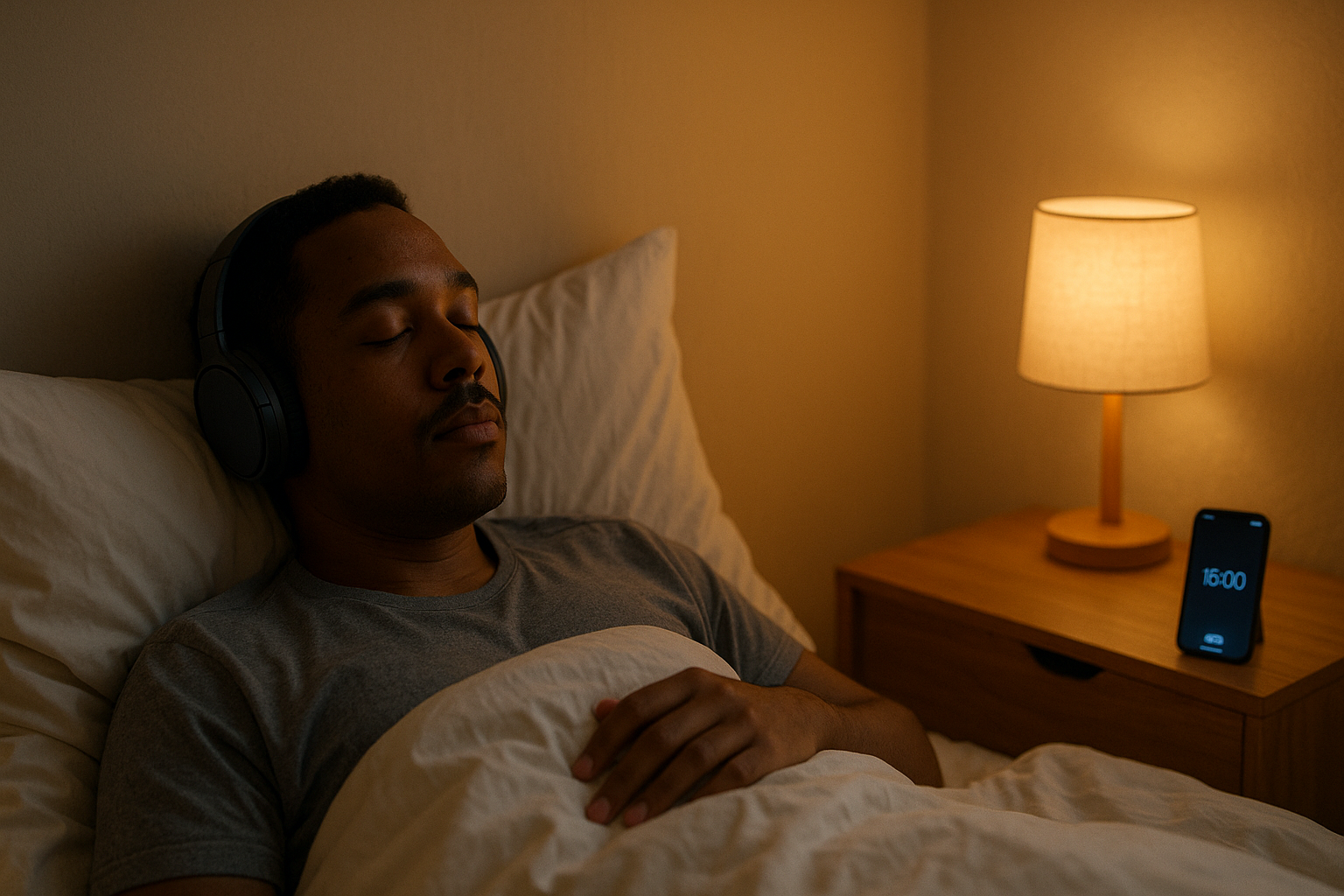
- Listen through over-ear headphones for 10–15 minutes while doing a calm activity (stretching, dim-light reading).
- Stop 15 minutes before lights out to transition into darkness.
- Repeat nightly for 1–2 weeks; track sleep latency subjectively.
3.2 Numbers & guardrails
- Multi-week programs using short daily ASMR sessions have reported significant improvements on Perceived Stress, Insomnia Severity, and sleep quality questionnaires.
- Don’t chase tingles—some benefits appear without them.
- If insomnia persists or worsens, consult a clinician and consider CBT-I.
Bottom line: Treat ASMR as a structured pre-sleep cue: short, quiet, and consistent. For many, it reduces “tired but wired” nights.
4. It Reduces Subjective Stress and State Anxiety
When researchers compared ASMR with binaural beats in a randomized, double-blind trial, both interventions reduced perceived stress over several weeks; ASMR also increased beta activity on EEG, pointing to relaxed alertness rather than sedation. Other lab studies show mood lifts (less sadness, lower tension) and reduced depressive feelings in those who experience tingles. The takeaway: for many, ASMR is a low-effort, low-risk way to downshift from stress without “switching off” completely.
4.1 Mini-checklist for a de-stress break (8–12 minutes)
- Choose one predictable track (whisper reading or brush strokes).
- Keep volume modest; avoid music underlays.
- Pair with box breathing (4-4-4-4) if you want extra wind-down.
- Finish by standing up and doing 60 seconds of gentle shoulder rolls.
4.2 Common pitfalls
- Endless scrolling: Sampling dozens of clips can re-activate stress. Pick one and stick with it.
- Multitasking: ASMR works best when it has your ears’ full attention.
- Harsh earbuds: If sibilance bothers you, try over-ear headphones or speakers.
Bottom line: ASMR is a solid add-on for stress management—lightweight, scalable, and compatible with busy days.
5. It Engages Brain Networks Linked to Reward, Affiliation, and Attention
Early neuroimaging suggests ASMR experience comes with measurable brain differences. Individuals who experience ASMR show reduced functional connectivity in the default mode network (DMN) at rest and atypical patterns across other resting-state networks. Task-based imaging and first-wave fMRI work have also reported activation in regions linked with reward and affect. While the field is still small, these results parallel what many listeners describe: a soothing, socially tinged absorption that feels close and caring (e.g., “personal attention” role-plays).
5.1 Why it matters
- DMN differences may help explain why ASMR triggers can grab attention without feeling startling.
- Social grooming hypothesis: Soft, close-mic cues may simulate affiliative care, helping downshift autonomic arousal.
- Practical implication: Intimate, one-on-one style recordings often feel more soothing than wide, ambient mixes.
5.2 Guardrails
- Neuroimaging samples are small; think promising, not definitive.
- Use these insights to choose content style (whispered personal attention, slow hand sounds) rather than to self-diagnose anything.
Bottom line: Brain studies align with the lived experience of ASMR: gentle, intimate cues can engage attention and reward systems in ways that feel safe and reassuring.
6. Personalization Is the Point: Triggers, Pitch, and Recording Style
ASMR isn’t one-size-fits-all. Survey and lab research show strong preferences for certain triggers (whispers, soft-spoken reading, brushing, tapping) and production choices. Many experienced listeners prefer binaural or “ear-to-ear” recordings, slower pacing, low-pitched sounds, and no background music. When videos get too busy—extra layers, fast rhythms, distant mic placement—tingles and calm can fade. Expect some trial and error: a trigger that melts one person can grate on another (especially if you’re misophonia-prone).
6.1 Build your trigger palette
- Sound category: Whisper reading, fabric rustle, page turns, brush strokes, gentle tapping.
- Pitch & texture: Many prefer lower pitch and soft transients over bright, sharp clicks.
- Mic technique: Close-mic, binaural or dual-mono, minimal room noise.
- Pacing: Slow, predictable, repetitive.
- Mixing: Dry signal or very light room tone; avoid music beds.
6.2 Small experiments that pay off
- Try the same track for 7 nights to isolate its effect.
- Switch between binaural (headphones) and speakers to see which you tolerate best.
- Note triggers that cause micro-tension (jaw clench, flinches) and retire them.
Bottom line: Treat ASMR like a personal toolkit—dial in your own trigger set, mic style, and tempo for the most reliable calm.
7. Safe Listening Matters: Volume, Duration, and Headphone Choice
Because ASMR is often consumed via headphones, safe listening is essential—especially at bedtime when we’re tempted to turn things up to mask ambient noise. Health authorities recommend staying below about 60% of your device’s maximum volume and minimizing long exposures above ~85 dBA. Noise-canceling or well-sealed over-ear headphones can help you listen at lower levels. If kids or teens use ASMR, be extra cautious: smaller ear canals can amplify sound pressure.
7.1 Practical safety checklist
- Keep volume modest: Aim for <60% of device max; if you can’t hear a nearby conversation, it’s probably too loud.
- Limit exposure: Louder = shorter; consider a 15–30 minute timer.
- Prefer over-ear or speakers at night; avoid sleeping with hard earbuds.
- Use device safety features: iOS/Android decibel alerts and volume limits.
- Mind the room: Reduce outside noise (close a window) so you don’t crank volume. CDC
7.2 When to take a break
- Ringing in ears after listening, “fullness,” or sound sensitivity.
- Need to keep escalating volume to “feel” it.
- Ear discomfort or headache that tracks with sessions.
Bottom line: The calm you want shouldn’t come at the cost of hearing health—keep it quiet, timed, and comfortable.
8. A Simple, Research-Aligned Wind-Down Protocol (15 Minutes)
You don’t need a complex routine to benefit from ASMR. Here’s a tight pre-sleep protocol that mirrors how studies structured sessions (short, consistent, predictable):
Five steps (about 15 minutes total):
- Minute 0–1: Setup. Dim lights, switch your screen to red-shift/night mode, and set a 15-minute audio timer.
- Minute 1–3: Baseline breaths. 6 deep nasal breaths (4-second inhale, 6-second exhale).
- Minute 3–13: Listen. One single ASMR track—whisper reading or brush/tap—with no background music. Keep volume below 60% and avoid scrolling.
- Minute 13–15: Off-ramp. Stop audio, sit quietly, then lights out.
- Bonus: Pair with a mild stretch (cat-cow or hamstring floss) to bleed off muscle tension.
8.1 Why it works
- Predictability: Repetition conditions your brain to associate the sequence with sleep.
- Mild attentional load: The sound captures just enough focus to deter rumination.
- Physiology: The combo of slow breathing + low-intensity sound can blunt heart-rate reactivity before bed.
8.2 Personalization tips
- Try binaural whispers if you enjoy “ear-to-ear” proximity; switch to soft tapping if whispers feel too intimate.
- If tingles distract you, choose neutral rustles or page turns.
- Prefer speakers if earbuds irritate your ears or if you’re noise-sensitive.
Bottom line: Keep it short, quiet, and consistent. The protocol is easy to test in a single week and scales well with other sleep hygiene habits.
9. Who Benefits Most (and When to Skip It)
ASMR helps many—but not all—listeners. About a third to half of people in lab samples report tingles to classic triggers; others simply feel calm without tingles—or feel nothing at all. People who like slow, predictable, close-mic cues tend to benefit more. Conversely, if you’re prone to misophonia (strong aversive reactions to certain sounds like chewing or sibilants), some triggers can feel unbearable. The good news: with careful selection (e.g., brushing instead of whispers), some misophonia-prone listeners still find soothing tracks they tolerate. If ASMR consistently irritates you, skip it and use alternatives like white noise, pink noise, or guided breathing.
9.1 Quick decision guide
- Likely helpful if… you enjoy soft, repetitive sounds; like one-to-one voice proximity; prefer gentle, predictable pacing.
- Maybe helpful if… you don’t tingle but still feel less tense during quiet, textured audio.
- Probably skip if… mouth sounds or sibilants reliably spike irritation; you must crank volume to “feel” calm.
9.2 Alternatives to try
- Pink/white/brown noise at low levels.
- Guided breathing tracks (4-7-8; box breathing).
- Nature loops (rain, distant surf) with no sudden transients.
Bottom line: ASMR is a tool, not a test; if it’s not your tool, there are plenty of others to reach the same goal—calm.
FAQs
1) What exactly is ASMR—and do I need the “tingles” to benefit?
ASMR is a pleasant, relaxing response to specific, gentle audio-visual cues (whispers, tapping, soft brushing). Many people feel tingles on the scalp or spine, but not everyone does. Research suggests even without tingles, ASMR sessions can lower heart rate and reduce perceived stress, so you may still benefit from calm and focus.
2) How is ASMR different from white noise, nature sounds, or music?
White noise and nature sounds are steady backdrops; music can be emotionally rich and variable. ASMR’s hallmark is close-mic intimacy and micro-texture (e.g., a single brush stroke), which capture attention gently without startling. Physiologically, ASMR shows a calm-but-alert pattern (lower heart rate, sometimes higher skin conductance), distinct from music “chills,” which often raise heart rate.
3) Is ASMR safe to listen to every night?
For most people, yes—if you keep the volume modest and sessions short. Health organizations advise staying below about 60% of your device’s max volume and avoiding long exposures above ~85 dBA. If you notice ringing in your ears or need to keep turning volume up, take a break and reassess.
4) Does ASMR actually help with insomnia?
Evidence is promising but still early. Studies report improved mood and reduced arousal in adults with and without insomnia, and multi-week listening programs have improved insomnia severity scores. If insomnia persists, combine ASMR with CBT-I or seek clinical guidance; don’t rely on audio alone.
5) I have misophonia—should I avoid ASMR?
Not necessarily, but choose triggers carefully. Mouth sounds and harsh sibilants can be aversive. Softer textures (fabric rustle, page turns) or brush sounds may be more tolerable. If any track reliably spikes irritation, stop—there’s no reason to “push through.”
6) Do I need fancy headphones or binaural microphones to get results?
You don’t need studio gear. Many listeners prefer over-ear headphones or even small speakers. Surveys show strong preferences for binaural or ear-to-ear recordings, slow pacing, and minimal background music, but start with what you have and upgrade only if needed.
7) Is there any brain science behind ASMR?
Yes, early neuroimaging shows differences in resting-state connectivity (e.g., default mode network) among people who experience ASMR, and some task-based studies report activation in regions linked to reward and affect. Samples are small, but the direction aligns with the “affiliative, cared-for” feeling many describe.
8) How long should I listen for best results?
Short sessions (10–20 minutes) are a good starting point. Research protocols often used brief daily exposures to reduce stress and improve sleep measures over weeks. Use a timer to avoid all-night playback, which can nudge volumes higher or disrupt sleep if earbuds become uncomfortable.
9) Are whisper tracks better than tapping or brushing?
There’s no universal best. Many people like whispered personal attention; others prefer tactile sounds like slow brushing or paper rustles. Survey work suggests a general preference for lower-pitched, gently paced sounds, ideally without background music—so audition a few styles and note how your body responds.
10) If ASMR doesn’t work for me, what else should I try?
Try pink noise (warmer than white), guided breathwork (4-7-8), or nature loops with minimal sudden transients. If sleep issues persist, speak with a clinician—behavioral therapies (like CBT-I) have strong evidence and can pair with audio tools effectively.
Conclusion
ASMR sits at a useful intersection of psychology, acoustics, and self-care: softly textured sounds and intimate mic work create a predictable sensory “cocoon” that helps many people relax without losing alertness. The research base—while still growing—has repeated signals: small but reliable heart-rate reductions; a calm-yet-engaged physiological profile; better mood and less perceived stress; and, for some, easier sleep onset and improved sleep-related scores. Just as importantly, ASMR is personal: the right trigger, pitch, and pacing for you might be different from a friend’s. That’s a feature, not a bug—when you dial in a few reliable tracks and keep volume modest, ASMR becomes a flexible tool you can deploy before bed or during a midday reset. Respect your hearing, keep sessions short, and use a simple, consistent protocol. If you like how you feel, keep going; if it’s not your thing, there are plenty of neighboring options (noise colors, breathing, nature sounds) to reach the same calmer shore.
Ready to try? Pick one quiet, slow ASMR track tonight, set a 15-minute timer, and notice how your breath and shoulders feel at the end.
References
- Poerio GL, Blakey E, Hostler TJ, Veltri T. More than a feeling: Autonomous sensory meridian response (ASMR) is characterized by reliable changes in affect and physiology. PLOS ONE. June 20, 2018.
- Engelbregt HJ, Brinkman K, van Geest CCE, et al. The effects of autonomous sensory meridian response (ASMR) on mood, attention, heart rate, skin conductance and EEG in healthy young adults. Experimental Brain Research. 2022. (PMC article) PMC
- Valtakari NV, Hooge ITC, Benjamins JS, Keizer A. An eye-tracking approach to ASMR: The physiology and nature of tingles in relation to the pupil. PLOS ONE. December 26, 2019.
- Smith SD, Fredborg BK, Kornelsen J. An examination of the default mode network in individuals with ASMR. Social Neuroscience. 2017;12(4):361-365. PubMed: PubMed
- Smith SD, Fredborg BK, Kornelsen J. An examination of five resting-state networks using fMRI in individuals with ASMR. NeuroImage. 2020; (abstract). ScienceDirect
- Lee M, Lee HJ, Ahn J, Hong JK, Yoon IY. Comparison of ASMR and binaural beats effects on stress reduction: a randomized, double-blind trial. Scientific Reports. 2022. Nature
- Smejka T, Wiggs L. The effects of ASMR videos on arousal and mood in adults with and without depression and insomnia. Journal of Affective Disorders. 2022;301:60–67. PubMed: PubMed
- Hozaki D, Shiota M, Fujiwara T, Songari E. More relaxing than nature? The impact of ASMR content on psychological and parasympathetic markers. Neuroscience of Consciousness. 2025; niaf012. Oxford Academic
- Barratt EL, Spence C, Davis NJ. Sensory determinants of the ASMR: understanding triggers and production. PeerJ. 2017;5:e3846. (PDF) E-Space
- World Health Organization. Deafness and hearing loss: Safe listening (Q&A). March 21, 2025. World Health Organization
- NIOSH/CDC. Noise-Induced Hearing Loss: About Noise. Accessed 2025. CDC
- NIDCD/NIH. Do you know how loud is too loud? September 24, 2020. NIDCD
- Trenholm-Jensen EA, et al. An exploratory qualitative study of the ASMR experience. PLOS ONE. 2022. PLOS
- Smith SD, Fredborg BK, Kornelsen J. An examination of five resting-state networks in ASMR. NeuroImage. 2019 (PubMed listing). PubMed