




























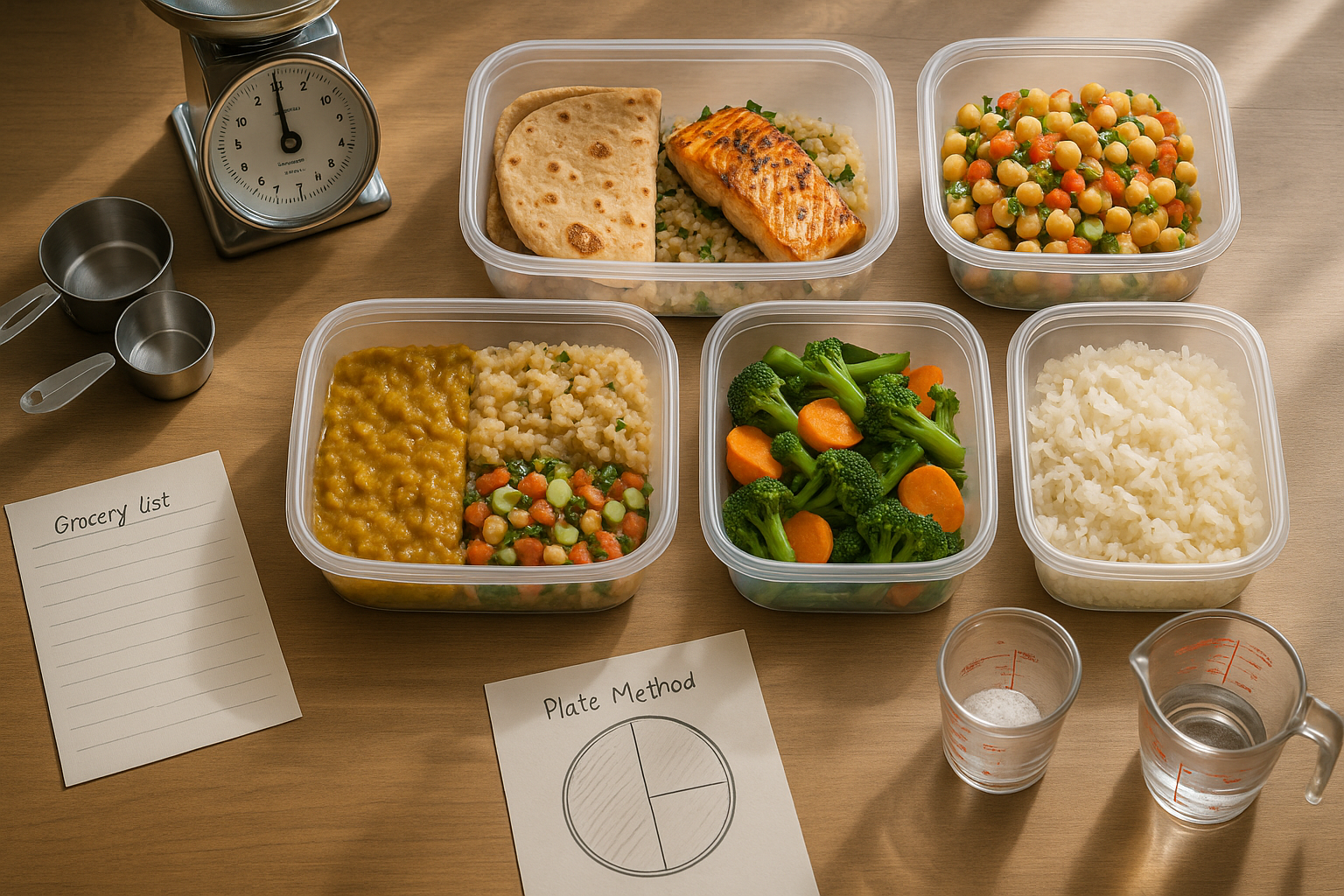
Nutrition education is the skill of understanding how proteins, carbohydrates, and fats supply energy and essential nutrients—and using that knowledge to plan meals you can actually cook and afford. In practice, it means learning evidence-based ranges for each macronutrient, then building a weekly shopping and cooking routine that keeps you within those guardrails most days. This guide explains the “why” behind macros and turns it into step-by-step meal planning you can personalize—whether you cook Mediterranean, South Asian, or a blend of both. Brief note: this article is educational and not a substitute for medical advice; if you have a medical condition, work with a qualified clinician or registered dietitian.
1. Protein: How Much You Need and Where to Get It
Protein is the macronutrient most associated with fullness and tissue repair; it also supports immune function and healthy aging. For most healthy adults, a practical daily target is at least 0.8 g of protein per kilogram of body weight (g/kg)—about 55 g at 70 kg/154 lb—with higher intakes (1.0–1.2 g/kg) often advised for older adults to help maintain muscle. If you train regularly or aim to lose fat while keeping muscle, intakes of roughly 1.2–2.0 g/kg can be appropriate as of August 2025, depending on training load and total calories. Quality matters less than total intake over the day, but distributing protein across meals (e.g., 20–40 g per meal) appears to support muscle protein synthesis. You can meet needs with poultry, fish, eggs, dairy, tofu/tempeh, lentils, beans, and mixed dishes like dal+roti or beans+rice. Choose minimally processed sources most often and consider cultural preferences (e.g., halal meats, vegetarian staples).
Why it matters
Protein supports muscle repair after daily activity and training, helps with satiety during weight management, and provides essential amino acids the body cannot make.
Numbers & guardrails
- Baseline: ≥0.8 g/kg/day; older adults often benefit from 1.0–1.2 g/kg/day.
- Active/athletes: ~1.2–2.0 g/kg/day depending on sport and goals.
- Per-meal anchor: ~0.25–0.4 g/kg (≈20–40 g for many adults).
- Two fish meals weekly for omega-3s (see Pillar 3).
Tools/Examples
- Example day (75 kg / 165 lb):
- Breakfast: 200 g yogurt + nuts (~20 g).
- Lunch: 1 cup cooked dal + 1 chapati + salad (~18–22 g).
- Dinner: 120 g cooked chicken or paneer (~30–35 g).
- Snacks (milk/soy milk, egg, or hummus) to fill the gap.
Synthesis: hit your daily total first, then refine distribution by meal and preference.
2. Carbohydrates: Fuel, Fiber, and the Role of Quality
Carbohydrates are your most versatile training and daily-life fuel; they also deliver fiber, vitamins, and phytochemicals. For healthy adults, a broad evidence-based range is 45–65% of daily calories from carbohydrate; the right spot for you depends on total energy needs, activity, and tolerance. Quality matters: choose whole grains (e.g., oats, brown basmati), pulses (dal, chickpeas), fruit, and minimally processed starches more often than refined sweets. Added sugars are best kept under 10% of daily calories as of August 2025, both for weight management and dental health. Glycemic index (GI) and glycemic load (GL) can help compare carb quality, but real-world meals (mixed with protein/fat/fiber) blunt extremes; think pattern over perfection.
Numbers & guardrails
- AMDR: 45–65% of calories from carbohydrate (adults).
- Added sugars: <10% of calories (≈≤50 g/day on a 2,000-kcal plan).
- Training days: see Pillar 7 for g/kg targets by intensity.
- Fiber target: see Pillar 4.
How to do it
- Prioritize starches that come with fiber: whole-grain roti, brown basmati, quinoa, potatoes with skin, corn, and beans.
- Use fruit to satisfy sweetness; keep sweet beverages occasional.
- For South Asian plates, balance rice/roti with generous sabzi (veg) and a protein (dal, fish, chicken, paneer).
Close: choose carbohydrate foods that carry nutrients and fiber; let added sugars play a small, deliberate role.
3. Fats: Types, Omega-3s, and Smart Cooking Choices
Fat is essential for cell membranes, hormone production, and vitamin absorption. Adults generally do well at 20–35% of calories from total fat, with an emphasis on unsaturated sources (olive, canola, soybean, peanut, and mustard oils; nuts; seeds; avocados; oily fish). Limit saturated fat to <10% of calories by shifting towards lean meats, low-fat dairy or fortified soy alternatives, and plant oils. Industrial trans fat should be as low as possible (ideally <1% of energy); in many regions it’s being removed from the food supply, but watch for partially hydrogenated oils in older products. For heart and brain health, aim for two servings of fatty fish each week (e.g., salmon, sardines, mackerel).
Common mistakes
- Equating “low-fat” with healthy; the type of fat matters more than “calories from fat.”
- Using ghee liberally without accounting for saturated fat; try tempering flavors with less ghee plus spices, or blend ghee with canola/olive oil.
- Forgetting plant omega-3s (ALA) from walnuts, flax, chia.
Mini-checklist
- Cook mostly with unsaturated oils.
- Choose fish twice weekly; consider local low-mercury options.
- Keep high-fat fried foods occasional; bake/air-fry instead.
Bottom line: favor unsaturated fats and fish; minimize trans fat and keep saturated fat modest.
4. Fiber: Your Microbiome’s Favorite Macro Lever
Fiber isn’t a macronutrient by calories, but it’s central to carbohydrate quality and digestive/metabolic health. Higher fiber intakes are consistently associated with lower risk of heart disease and type 2 diabetes. A practical rule is ≈14 g of fiber per 1,000 kcal, which translates to about 25 g/day for many women and 38 g/day for many men (adjust with energy needs). Aim for a mix of soluble fibers (e.g., oats, beans, fruit) that help cholesterol and glycemic control and insoluble fibers (e.g., whole-wheat roti, vegetables) for bowel regularity. If your current intake is low, increase gradually and hydrate to avoid GI discomfort.
How to do it
- Build your base with 2–3 cups of vegetables and 2 fruits daily.
- Swap refined grains for whole-grain roti, brown basmati, millet (bajra), or barley (jau).
- Add pulses at least once daily (dal, chana, rajma); they boost both protein and fiber.
Quick example
- Lunch bowl: 1 cup chana masala (~12 g fiber) + 1 cup mixed veg (~4 g) + ½ cup brown rice (~1.5 g) already gets you most of the way.
Synthesis: chasing the fiber number naturally improves carbohydrate quality, fullness, and cardiometabolic risk markers.
5. Energy Balance and Portioning: Plates, Hands, and Scales
Calories still govern weight change over time, but you don’t need to count every gram to eat well. Start by estimating daily energy needs from your body size, activity, and goals; then use food structure to stay close without micromanaging. The plate method (½ vegetables, ¼ protein, ¼ grains/starches, plus fruit/dairy as desired) is a simple visual that works across cuisines. For portable heuristics, a kitchen scale and measuring cups are precise, while hand-based estimates (palm-size protein, cupped-hand carbs, thumb-size fats) keep you on track when eating out. Portion awareness is especially helpful for energy-dense foods like oils, nuts, sweets, and fried items.
Steps that work
- Anchor each meal with a protein and vegetable first; then size the starch to appetite and activity.
- Keep oils to measured spoonfuls when cooking.
- Use smaller plates/bowls for calorie-dense dishes like biryani; add a side salad or raita to increase volume.
Numbers & guardrails
- Label cues: 5% DV is “low,” 20% DV is “high” for a nutrient like sodium or saturated fat.
- Sodium: aim <2,300 mg/day unless medically indicated otherwise.
Takeaway: structure your plate and measure selectively; precision where it matters, flexibility elsewhere.
6. Meal Planning Templates: From Grocery List to Leftovers
Meal planning turns your macro knowledge into meals you’ll actually eat. Start by sketching 3–4 dinner templates you enjoy (e.g., “dal + veg + roti,” “fish + grain + salad,” “chicken/paneer curry + rice + cucumber raita”). Shop once or twice weekly around those templates, batch-cook base components, and plan for leftovers as next-day lunches. For South Asian kitchens, soaking beans/chickpeas ahead, pressure-cooking batches of dal, and freezing par-cooked chapati dough can make midweek cooking fast. Rotate proteins (fish, poultry, eggs, tofu/paneer, pulses) and mix grains (roti, brown rice, quinoa, millet) for variety and micronutrient coverage.
How to do it
- Plan the week: pick 3 mains and 2 “flex” nights; list ingredients; shop once.
- Batch-cook: big pot of dal; tray of roasted vegetables; 2 cups dry rice; a grilled protein.
- Assemble: mix-and-match components into balanced plates in 10 minutes.
Mini checklist
- Keep pantry pulses, canned fish, tomatoes, onions, garlic, spices.
- Stock frozen veg and ready-to-wash greens for busy days.
- Reuse sauces (e.g., tomato-onion masala) across multiple proteins.
Synthesis: when the shopping list mirrors your templates, “what’s for dinner?” becomes a 5-minute decision.
7. Timing & Distribution: When Macros Help Most
You don’t have to “eat by the clock,” but timing can sharpen performance and recovery. For training days, carbohydrate per kilogram (g/kg) is a practical guide: lighter activity might need ~3–5 g/kg/day; moderate training ~5–7 g/kg/day; heavy endurance or team sport days often 6–10 g/kg/day, with very long events up to 8–12 g/kg/day. A pre-exercise snack 1–3 hours before (e.g., fruit + yogurt or toast + peanut butter) and a carb-plus-protein meal within 2 hours after can help glycogen and repair. For protein, spreading intake across meals (e.g., 20–40 g) supports muscle protein synthesis; larger single doses don’t necessarily add benefit. Hydration and sodium replacement matter in hot climates—pair water with salty foods if you sweat heavily.
Numbers & guardrails
- Light → 3–5 g/kg carbs; Moderate → 5–7 g/kg; Heavy → 6–10 g/kg; Extreme → 8–12 g/kg.
- Protein: ~0.25–0.4 g/kg per meal.
- Post-training: 1–1.2 g/kg carbs in the first 4 hours for endurance blocks if you must go again soon.
Practical examples
- Evening workout? Make lunch the carb-heavier meal; keep dinner carb-moderate with plenty of veg and protein.
- Fasting window? Place the most active hours inside your eating window and front-load protein.
Bottom line: use g/kg ranges to size carbs by training, and distribute protein steadily for insurance.
8. Label Reading & Grocery Triage: Added Sugars, Sodium, and Servings
Food labels are your fast filter. Start at serving size and calories, then scan protein, fiber, saturated fat, sodium, and added sugars. The % Daily Value tells you if a nutrient is low (≈5% DV) or high (≈20% DV) per serving. “Added sugars” are listed separately to help you keep them under 10% of calories. For sodium, most adults should aim below 2,300 mg/day; compare brands and choose the lower-sodium option when practical. Ingredient lists run from most to least by weight—if sugar or refined flour is upfront, it’s more of a treat. Beware marketing terms like “net carbs” (not an FDA term) and understand that “low-fat” sometimes means higher sugar.
Fast triage at the store
- Breakfast cereal: ≥4 g fiber and ≤6–8 g added sugar per serving.
- Bread/roti flour: aim for whole-grain first ingredient.
- Sauces/pickles: check sodium; choose lower-sodium or use sparingly.
- Snacks: nuts/seeds > fried chips; plain yogurt + fruit > sweetened cups.
Mini case
- Two tomato sauces: A has 9 g added sugar and 480 mg sodium/½-cup; B has 3 g and 220 mg. Same price? Choose B and season at home.
Synthesis: labels make invisible nutrients visible—use them to keep sugar, sodium, and saturated fat in check while prioritizing protein and fiber.
9. Dietary Patterns & Preferences: Vegetarian, Vegan, Halal, and Beyond
You can meet macro needs across many patterns. Vegetarian and vegan diets are healthful and nutritionally adequate when planned well, including for athletes and across life stages. Protein variety is the key: lentils, chickpeas, kidney beans, soy (tofu/tempeh), seitan, dairy or fortified soy milk, nuts, and seeds cover amino acid needs over the day—there’s no requirement to “combine” proteins in the same meal. In halal diets, fish, poultry, eggs, dairy, and plant proteins make it easy to reach protein targets; choose lean cuts and unsaturated oils. If lactose is an issue, use lactose-free milk or fortified soy/yogurt alternatives and rely on tofu, pulses, and greens for calcium. For South Asian plates, a classic dal + roti + sabzi structure nails protein+carb+fiber; round out with yogurt/raita and fruit.
Tools/Examples
- Vegetarian plate templates:
- Tofu/paneer + veg stir-fry + brown rice
- Chana masala + mixed veg + roti
- Lentil soup + salad + whole-grain bread
- Fortified foods to watch: soy milk/yogurt (calcium, vitamin D, B12 in some), iodized salt.
Numbers & guardrails
- Protein: same g/kg targets; just prioritize higher-protein plants and soy.
- Omega-3: aim for ALA (walnuts, flax, chia); consider algae-based DHA/EPA if you don’t eat fish.
In short: align macros with your values and culture—you won’t sacrifice health or performance.
10. Your Weekly Workflow: Budget, Batch, and Build Flexibility
Consistency comes from friction-reduction. Each weekend, spend 30–45 minutes planning 3 mains + 2 quick backups and make a focused list. Batch-cook a protein (grilled chicken, tandoori fish, or spiced tofu/paneer), a pot of dal or beans, and 6–8 cups of mixed roasted veg. Cook a grain base (brown basmati, quinoa) and pre-slice salad veg. Store in clear containers so you can “see” your options. Keep backup meals for chaotic nights: eggs + toast + veg, tuna/bean salad wraps, or leftover dal over rice. Track a few anchor metrics (protein grams, fruit/veg servings, added sugar “budget”) to steer without obsessing.
Mini-checklist
- Pantry: pulses, canned fish, tomatoes, coconut milk, whole spices, olive/canola/mustard oils.
- Fridge/Freezer: eggs, yogurt/fortified soy, paneer/tofu, frozen veg, pre-portioned fish or chicken.
- Tools: rice cooker/Instant Pot, kitchen scale, a big oven tray, 6–8 BPA-free containers.
Example micro-plan (3 dinners → 6+ meals)
- Mon/Tue: Salmon or masala-baked tofu + quinoa + cucumber-tomato salad.
- Wed/Thu: Dal tadka + mixed roasted veg + roti.
- Fri: Chicken/paneer korma (lighter on ghee) + brown basmati + raita.
Leftovers become lunches; add fruit and a handful of nuts for snacks.
Takeaway: a repeatable workflow makes healthy eating default—even when life gets busy.
FAQs
1) What’s the simplest definition of macronutrients?
Macronutrients are the three energy-providing nutrients—protein, carbohydrate, and fat—plus alcohol, which also provides calories but no essential requirement. Protein repairs tissues and supports satiety, carbs fuel activity and deliver fiber, and fat supports hormones and vitamin absorption. Understanding their roles helps you assemble balanced meals quickly.
2) How do I pick my exact protein target?
Start with 0.8–1.0 g/kg/day if you’re sedentary to moderately active. If you lift weights, run, or want to preserve muscle during fat loss, 1.2–1.6 g/kg/day is a practical middle. Endurance or heavy training can reach 1.6–2.0 g/kg. Older adults often benefit from 1.0–1.2 g/kg. Choose a number, hit it for 2–3 weeks, assess hunger, energy, and progress, then adjust.
3) Do I need to count calories to plan meals?
Not necessarily. Many people succeed using structure: a protein + veg base, then starch and fat sized to activity and appetite. Counting can help for short periods to calibrate portions, but a plate method, hand estimates, and label reading keep you aligned without daily tracking.
4) Are carbs “bad” at night?
Total daily intake matters more than clock time. If you train in the evening, carbs at dinner replace glycogen and can improve sleep. If you’re less active at night, keep portions moderate and emphasize vegetables and protein. Consistency over weeks beats timing minutiae.
5) How should I use glycemic index (GI)?
GI ranks carbs by their effect on blood glucose in isolation. In mixed meals with protein, fat, and fiber, GI differences shrink. Use GI to choose whole grains, beans, and fruit more often, but don’t let it overrule overall diet quality, preferences, or nutrition goals.
6) What about saturated fat, ghee, and coconut oil?
Saturated fat is best kept below 10% of calories for most adults. Enjoy ghee and coconut in small amounts for flavor, but cook primarily with unsaturated oils (olive, canola, soybean, peanut, mustard). For heart health, include fatty fish twice a week or plant omega-3s if fish isn’t an option.
7) I follow a vegetarian/halal diet. Can I still hit protein targets?
Yes. Combine higher-protein plants (lentils, chickpeas, beans), soy foods (tofu/tempeh), dairy or fortified soy milk/yogurt, nuts, and seeds. Over the day, you’ll cover all essential amino acids—no need to combine them in the same mouthful. South Asian plates make this easy with dal + roti + sabzi patterns.
8) How much fiber is “enough,” and how do I increase it without bloating?
Aim for roughly 14 g per 1,000 calories (≈25–38 g/day for many adults). Increase gradually over 2–3 weeks, drink water, and spread fiber across meals. Start with one extra fruit/veg serving daily and a pulse/whole-grain swap; your gut will adapt.
9) What’s the fastest way to read a label?
Check serving size → scan protein, fiber, saturated fat, sodium, added sugars → use %DV (5% low, 20% high) to compare brands. Ingredient order reveals heavy hitters. Choose products with higher fiber/protein and lower saturated fat, sodium, and added sugars.
10) Do I need supplements to “fix” my macros?
Usually no. Food first. A basic multivitamin/mineral or targeted supplements (e.g., vitamin D if deficient, algae-based omega-3s for non-fish eaters) can fill gaps, but they don’t replace balanced meals. Discuss personal needs with a clinician.
Conclusion
Nutrition education becomes powerful when it moves from abstract percentages to your actual plate. Start with these pillars: set a realistic protein target, choose carb quality and fiber-rich foods, favor healthy fats and fish, and organize meals with plate templates and a weekly workflow. Use g/kg carb ranges around your training, read labels to keep added sugars and sodium in check, and adapt the plan to your culture and values—vegetarian, halal, or omnivorous. Over time, the small daily choices—stocking pulses, roasting vegetables, weighing oils once, adding a second fish meal—compound into better energy, appetite control, and health markers.
Next step: pick three dinner templates for the coming week, write the grocery list, and batch-cook one pot of dal/beans and one protein on Sunday.
References
- Dietary Guidelines for Americans, 2020–2025 (9th ed.), U.S. Department of Agriculture & U.S. Department of Health and Human Services, 2020. Dietary Guidelines
- Daily Value on the Nutrition and Supplement Facts Labels, U.S. Food & Drug Administration, March 5, 2024. U.S. Food and Drug Administration
- How to Understand and Use the Nutrition Facts Label, U.S. Food & Drug Administration, March 5, 2024. U.S. Food and Drug Administration
- Added Sugars on the Nutrition Facts Label, U.S. Food & Drug Administration, March 5, 2024. U.S. Food and Drug Administration
- Description of the Acceptable Macronutrient Distribution Range (AMDR), National Academies of Sciences (NASEM) Bookshelf, 2024. NCBI
- Dietary Reference Intakes for Energy, Carbohydrate, Fiber, Fat, Fatty Acids, Cholesterol, Protein, and Amino Acids, Institute of Medicine, 2005. posnutricao.ufv.br
- Dietary Fiber (review article), Advances in Nutrition, 2011. PMC
- Guideline: Sugars Intake for Adults and Children, World Health Organization, March 4, 2015. World Health Organization
- Trans fat — Fact sheet, World Health Organization, January 24, 2024. World Health Organization
- Fish and Omega-3 Fatty Acids, American Heart Association, August 23, 2024. www.heart.org
- Nutrition and Athletic Performance (Joint Position Stand), Academy of Nutrition and Dietetics, Dietitians of Canada, and American College of Sports Medicine, 2016. (PDF link inside) PubMedsky.sausport.com
- International Society of Sports Nutrition Position Stand: Protein and Exercise, Journal of the International Society of Sports Nutrition, 2017. BioMed Central
- What is MyPlate?, USDA, n.d. MyPlate
- Healthy Eating Plate, Harvard T.H. Chan School of Public Health, n.d. The Nutrition Source
- Pakistan Dietary Guidelines for Better Nutrition, Government of Pakistan (Ministry of Planning), 2019. Pakistan Cabinet Secretariat
- Glycemic Index — database & education, University of Sydney GI, n.d. glycemicindex.com