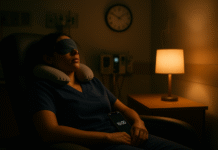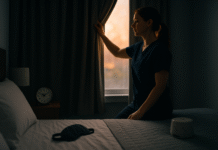















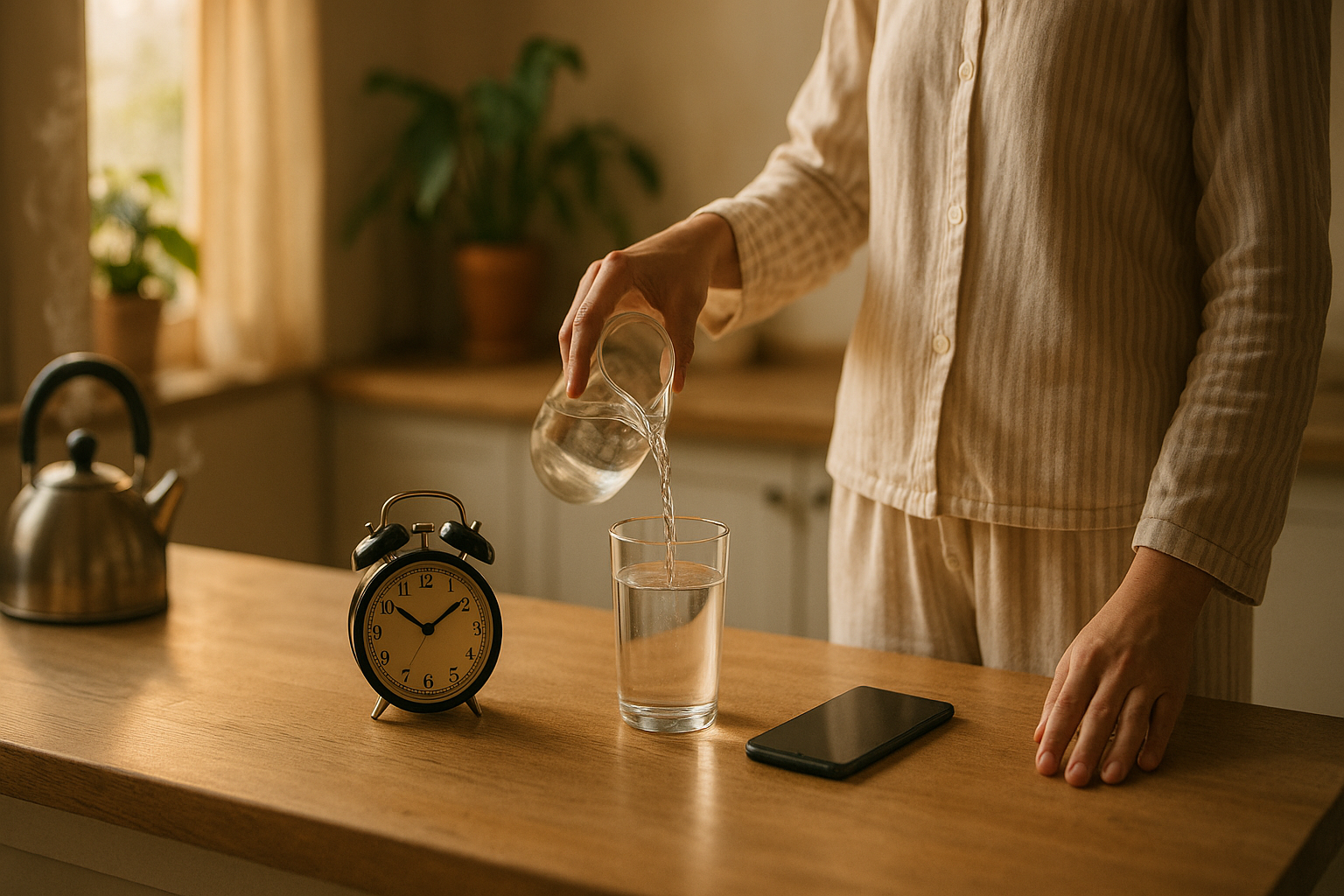
A calm, screen-free morning gives your brain time to fully “boot up,” align with natural light, and set priorities before notifications hijack your attention. In this guide, you’ll learn practical, research-informed steps to keep phones, TVs, and laptops out of your first hour—without feeling deprived or behind. It’s written for anyone who wants steadier energy, better focus, and a gentler start to the day. Quick note: this article is educational, not medical advice; if you live with a health condition or are adjusting medications, talk with a clinician about routine changes.
In one sentence: waking up without screens means protecting the first 30–60 minutes after you rise from phone, TV, and computer use, and replacing them with light, water, movement, and paper planning.
If you want a fast start, try this five-step mini-sequence: put your phone in another room, use a physical alarm, get 5–10 minutes of morning light, drink 300–500 ml of water, do 3 minutes of slow breathing, then write 3 priorities on paper.
1. Exile Your Phone and Use a Physical Alarm
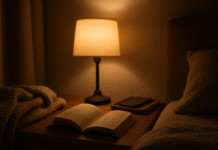
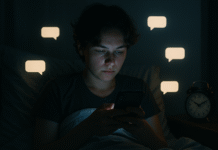
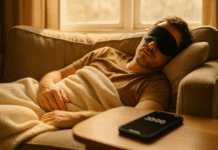
The most reliable way to wake without screens is to make your phone physically unavailable and wake up with a non-screen alarm. When your phone sleeps in another room, you remove the default dopamine loop of checking messages, headlines, or social feeds in bed. A simple analog clock (or a basic digital alarm with no smart display) gets the job done without coaxing you into tapping notifications “just for a second.” This small environmental change is more powerful than willpower because it prevents the cue from appearing at all. If you’re worried about missing urgent calls, most basic alarms include a backup battery and you can set your phone to route only starred contacts to a separate device (or keep it out of reach, screen facedown, in the hallway).
1.1 How to do it
- Place your phone to charge in the kitchen or living room; set it to Do Not Disturb overnight.
- Put a simple alarm clock on your nightstand and test volume the night before.
- If you need a backup, set a second alarm across the room to get you moving.
- For emergencies, enable “allow calls from favorites” and share your landline/partner’s number with key people.
- Pair your alarm with an immediate, screen-free action (water, curtains, light).
1.2 Numbers & guardrails
- Keep the phone at least one closed door away (≈5–10 meters).
- Give yourself a 30–60 minute “no phone” window after waking.
- If you must keep the phone inside the bedroom, store it in an opaque pouch or drawer out of reach.
Synthesis: Removing the cue removes the behavior; a cheap alarm clock plus distance turns “no screen mornings” from an intention into the default.
2. Get Morning Light Within 30 Minutes
Getting outside light early anchors your body clock to daytime, boosts alertness, and helps you feel sleepy at a more appropriate hour that night. Outdoor light intensity is many times higher than typical indoor lighting even on cloudy days, and your eyes’ light sensors respond to that intensity to set circadian timing. That’s why opening your phone in bed can’t compete with stepping into daylight—phones are bright to your eyes but deliver a fraction of the full-spectrum, high-lux exposure you get outdoors. Aim to step outside soon after waking, ideally before coffee, to signal “daytime” clearly to your brain.
2.1 How to do it
- Step outdoors for 5–10 minutes within 30 minutes of waking; face the horizon and keep sunglasses off unless medically necessary.
- If you can’t go outside, stand by a sunlit window; if it’s dark seasonally, consider a 10,000-lux light box at arm’s length (follow device guidance).
- Combine light with a brief walk to stack benefits (circulation, movement, and light in one).
2.2 Numbers & guardrails
- Outdoor morning light: often 1,000–10,000+ lux vs ~100–500 lux indoors.
- Light-box sessions: commonly 20–30 minutes at ~10,000 lux, angled slightly downward; avoid later evening use to prevent sleep delay.
- People with bipolar disorder, eye conditions, or on photosensitizing medications should consult a clinician before using bright-light devices.
Synthesis: A few minutes of real daylight does more for your wakefulness and circadian rhythm than any scroll—make it your first “screen-free caffeine.”
3. Drink 300–500 ml of Water Before Coffee
You lose water overnight through breathing and sweating; starting with a glass of water replenishes fluids and can improve subjective alertness. Hydration supports blood volume, circulation, and mood; even mild dehydration (around 1–2% body mass) can affect how you feel and think. Make it effortless by staging a clean glass and filled bottle within arm’s reach the night before. You can add a squeeze of lemon for taste if you like, but plain water is perfect.
3.1 How to do it
- Keep a 500 ml bottle by your sink or on your nightstand (filled the night before).
- Drink 300–500 ml upon waking, then refill the bottle for later.
- If you exercise or live in a hot climate, sip more during your light walk.
3.2 Numbers & guardrails
- Aim for 300–500 ml on waking; total daily needs vary by body size, activity, and climate.
- Avoid large fluid boluses if your doctor has you on fluid restriction.
- Coffee and tea count toward hydration later; starting with water avoids confusing thirst for hunger or fatigue.
Synthesis: A pre-coffee glass of water is a low-effort way to feel more awake without touching a screen.
4. Do 3–5 Minutes of Slow Breathing to Reset
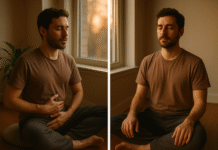
Slow, controlled breathing shifts your nervous system toward a calmer, more focused state while gently raising alertness. Techniques like 4-6 breaths per minute, box breathing, or the “physiological sigh” (two short inhales, one long exhale) can reduce heart rate and steady your mind. It’s perfect for mornings because it’s fast, accessible, and screen-free—no app required. You can sit at the edge of the bed or stand by a window and breathe while watching the light.
4.1 How to do it
- Try 4-7-8: inhale 4 seconds, hold 7, exhale 8; repeat for 6 cycles.
- Or practice 5 breaths/minute: inhale 6 seconds, exhale 6 seconds for 3–5 minutes.
- For a quick reset, do one “physiological sigh”: inhale through the nose, top up briefly, then long exhale through the mouth; repeat 3–5 times.
4.2 Numbers & guardrails
- 3–5 minutes is enough to feel a shift; advanced: 10 minutes.
- Keep the effort gentle—no breath-holding to discomfort or lightheadedness.
- If you’re pregnant or have respiratory conditions, use comfortable, doctor-approved patterns.
Synthesis: Slow breathing gives you a calm, focused baseline—exactly the headspace you want before the world’s notifications arrive.
5. Add 5–10 Minutes of Gentle Mobility or Stretching
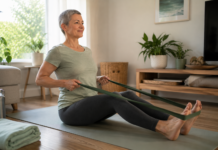
Light movement increases circulation, warms stiff tissues, and lifts mood without spiking stress hormones. Think joint circles, neck rolls, cat-cow, ankle pumps, or a few body-weight squats—enough to wake your body, not turn the morning into a workout. Gentle mobility also helps you notice small aches before they govern your day, and pairs nicely with sunlight or a walk. The key is consistency: keep it simple so you’ll repeat it.
5.1 How to do it
- Cycle through 6–8 moves: neck circles, shoulder rolls, thoracic rotations, hip hinges, ankle pumps, calf raises, deep squats to comfortable depth.
- Do 5–10 reps per move with easy breathing.
- If you prefer yoga, try 3 rounds of sun salutations or a short child’s-pose/forward-fold flow.
5.2 Numbers & guardrails
- Total time: 5–10 minutes; intensity: conversational.
- Pain is a stop signal; modify ranges of motion to comfort.
- If you have injuries, use a plan from a qualified professional.
Synthesis: A tiny dose of movement primes your body and mood, helping you feel switched on—without switching on a screen.
6. Take a 5–10 Minute “Micro-Commute” Walk
A short outdoor walk is a powerful screen-free bridge from sleep to day. It stacks daylight, gentle cardio, temperature change, and a moving horizon—signals that it’s time to be awake. Even in busy cities, a loop around the block or a stroll to the nearest tree line works. If safety or weather is an issue, walk hallways or climb stairs while near a bright window.
6.1 How to do it
- Put shoes by the door the night before; step outside immediately after water and breathing.
- Walk a familiar, low-decision route (2–4 blocks, or 5–10 minutes out-and-back).
- Add a simple cue—count 50 steps, then look at the sky; repeat.
6.2 Numbers & guardrails
- Duration: 5–10 minutes minimum; bonus if you reach 1,000–2,000 steps.
- Pace: comfortable, you could hold a conversation.
- In extreme weather, shorten duration and prioritize light near a window.
Synthesis: A micro-commute gives you movement and morning light in one—an easy, reliable anchor for a phone-free start.
7. Keep Breakfast Simple and Protein-Forward (and Time Your Caffeine)
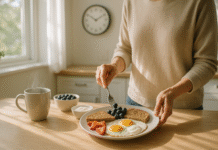
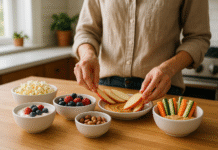
A steady breakfast can stabilize energy and mood, especially if your evenings run late or your mornings are active. A protein-forward meal (e.g., eggs, yogurt, tofu scramble, cottage cheese, legumes) supports satiety and reduces the mid-morning snack spiral. Consider delaying caffeine 30–60 minutes while you hydrate and get light; many people feel fewer energy dips when they don’t drink coffee immediately on waking. None of this needs a recipe app or a timer on your phone—repeatable, simple options are best.
7.1 How to do it
- Choose 2–3 “default” breakfasts you can make half-asleep:
- Greek yogurt + berries + nuts.
- Eggs + whole-grain toast + tomatoes.
- Overnight oats + chia + milk + fruit (prepped at night).
- Brew coffee/tea after water and light; enjoy it with or after breakfast.
- If you train in the morning, include carbohydrates (fruit, toast, oats).
7.2 Numbers & guardrails
- Protein target: many adults feel good around ~20–30 g at breakfast (individual needs vary).
- Caffeine: common safe daily range for healthy adults up to ~400 mg; sensitivity varies.
- If you have reflux, diabetes, or specific dietary needs, follow clinician guidance.
Synthesis: A simple, protein-forward breakfast and considered caffeine timing deliver steady energy—no apps or screen-timers required.
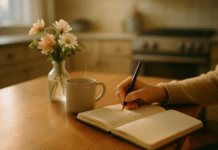
8. Use Paper Planning: 3 Priorities and One Friction
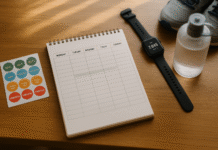
Before screens, decide your day on paper. A short handwritten plan—three priorities and one likely roadblock—protects your focus when you eventually open email or messaging. Writing by hand reduces the urge to “fix” the list endlessly and makes the plan physically present on your desk. It also provides a breadcrumb trail: when distractions hit, you can look back down and re-orient.
8.1 How to do it
- On a small card or notebook, write: “Top 3” and “One friction.”
- For each priority, write the very first action (e.g., “open file X,” “draft outline paragraph 1”).
- Place the card at your workstation or carry it in a pocket.
8.2 Numbers & guardrails
- Limit to 3 priorities to force tradeoffs; add a separate “parking lot” for later ideas.
- Keep the handwriting session to 2–5 minutes; time box it with your analog clock.
- If your job is reactive (e.g., support), define 3 “success inputs” (e.g., response time, tickets triaged, follow-ups sent).
Synthesis: Paper planning sets your direction before digital noise arrives; three priorities and one friction keep the day realistic and focused.
9. Set Up a “First-Steps Station” the Night Before
Frictionless mornings are made in the evening. When your water bottle is filled, clothes are laid out, keys and headphones are visible, and your journal is open to a fresh page, you remove a dozen tiny decisions that otherwise push you toward the phone. This “first-steps station” is a visible cluster of the first things you’ll touch after waking. It’s not aesthetic minimalism; it’s practical cue design.
9.1 How to do it
- Stage an area with: filled water bottle, analog clock, journal and pen, folded clothes, shoes, and a visible “Top 3” template.
- Put your phone charger outside the bedroom; plug in there so the habit becomes automatic.
- If you brew coffee, pre-fill the kettle or machine; if you walk, put the leash and jacket by the door.
9.2 Numbers & guardrails
- Limit the station to 6–8 items you will actually use.
- Keep it in your line of sight when you wake; if space is tight, use a tray you can move.
- Refresh the setup each evening in 2–3 minutes; set a tiny timer on your kitchen clock if helpful.
Synthesis: A pre-built “first-steps station” removes morning friction and makes the screen-free path the easiest path.
10. Automate Screen Boundaries with Focus/Downtime
You don’t need willpower if your devices are already quiet. Schedule Focus/DND and app limits to extend through your first hour, so when you finally retrieve your phone it’s still calm. The key is automating this the night before; your morning self shouldn’t have to toggle anything. If your platform allows it, whitelist urgent contacts so true emergencies get through while everything else waits.
10.1 How to do it (set at night)
- Enable Do Not Disturb or Focus from bedtime until 60 minutes after your typical wake time.
- Set App Limits for news/social/email during that window.
- Use “Allowed People” to permit calls from family, caregivers, or work on-call lines.
- Turn off lock-screen previews; require Face/Touch ID to open messaging apps.
10.2 Numbers & guardrails
- Default block: 30–60 minutes post-wake; adjust to life demands.
- Keep notifications off on your lock screen all day if possible; you’ll check on your terms.
- If you’re on call, use a distinct ringtone and visual cue on a separate device.
Synthesis: Automation protects your morning attention so you don’t have to—your future self will thank you.
11. Use Audio-Only Cues with Screens Off
Audio can set mood and pace without pulling you back to visuals. A small radio, smart speaker with screen disabled, or a pre-set playlist on an old MP3 player creates ambiance for coffee, stretching, or journaling. The goal is to keep hands and eyes off screens while still enjoying music, news headlines later, or guided breathing—ideally sources that don’t provoke doomscrolling.
11.1 How to do it
- Prepare a 15–30 minute “AM Flow” playlist the night before on a device you won’t touch (auto-play, no screen).
- Use a kitchen radio for weather and traffic; avoid talk shows that spike stress.
- Record a 30-second voice memo to yourself with a kind reminder of today’s “why.”
11.2 Numbers & guardrails
- Keep audio under ~70 dB (you can talk over it comfortably).
- Prefer instrumental or low-lyric tracks if words distract you.
- If you find yourself hunting tracks, downgrade to a single album or nature sounds.
Synthesis: Music and gentle audio give your morning texture and rhythm—without the visual hooks that pull you into a feed.
12. Start with One Small Win: Make the Bed or a 2-Minute Tidy
A tiny, visible win early signals progress and reduces the urge to reach for the phone to feel “caught up.” Making the bed, wiping the counter, or putting dishes away gives order to your space and momentum to you. It also creates a cue to keep going: when the environment looks “in progress,” your brain is more likely to continue screen-free activities you’ve staged.
12.1 How to do it
- Choose one: make the bed, run a 2-minute tidy, or clear the sink.
- Set a visible analog timer if you tend to drift; stop when it dings.
- Pair the task with your audio playlist or after your micro-commute.
12.2 Numbers & guardrails
- Cap the tidy at 2–5 minutes; perfection is the enemy of momentum.
- If you share a space, pick a task that doesn’t disturb others.
- When mornings are rushed, do the bed pull-up only (smooth duvet, call it done).
Synthesis: Small wins build identity—“I’m someone who moves”—and that identity competes powerfully against the reflex to scroll.
FAQs
1) How long should a screen-free morning be?
Most people benefit from 30–60 minutes. That window is long enough to get light, water, a little movement, and a plan, yet short enough to fit school runs or commutes. If your mornings are hectic, start with 10 minutes and add five minutes each week until you find a durable groove.
2) What if I need my phone for alarms or safety?
Use a basic alarm clock and keep the phone in a nearby hallway or locked screen-down on a shelf. Turn on Do Not Disturb with “Allowed Contacts” so true emergencies can reach you. The point isn’t zero technology—it’s removing high-friction visuals and notifications from your first minutes.
3) Is a sunrise alarm considered a screen?
No. Sunrise alarms emit light without prompting interaction, and they can help you wake more gently, especially in winter. If you’re sensitive to early light, place the device a couple of meters from the bed and set a ramp-up you tolerate well.
4) I’m not hungry in the morning—do I need breakfast?
Not necessarily. If you prefer later meals and feel steady, hydrate and get light first. If you train early or feel “hangry” mid-morning, a protein-forward option (yogurt, eggs, tofu) often helps. Personal medical conditions should guide your choice.
5) What’s the ideal time for coffee?
A practical approach is to hydrate and get light first, then enjoy coffee 30–60 minutes after waking. Many people report fewer energy dips when they don’t drink coffee immediately. Sensitivity varies; healthy adults often stay within ~400 mg caffeine per day, depending on guidance and tolerance.
6) Does a Kindle or e-reader count as a screen?
E-ink devices are lower glare and lower stimulation than phones, but they’re still screens. If reading helps you wake calmly, you can use a paper book or an e-reader with strict rules: airplane mode, no backlight blasts, and a 10–15 minute cap.
7) How do I prevent relapsing into morning scrolling?
Change the environment, not just the intention. Charge the phone outside the bedroom, pre-stage water and a journal, and schedule Downtime/Focus that lasts past your wake time. Track streaks on paper and reward yourself weekly for consistency rather than perfection.
8) Can morning light really improve sleep at night?
Yes—morning light exposure helps set your circadian phase so you feel sleepy earlier that evening. Even on cloudy days, outdoor light levels beat typical indoor lighting by a wide margin. If mornings are dark seasonally, a 10,000-lux light box used early can be helpful (with clinician guidance where needed).
9) What if I share a room and don’t want to wake others?
Prep a silent routine: a gentle analog alarm across the room, clothes set out, water bottle ready, and a paper plan. Do breathing exercises, mobility work, and journaling in a different room. Use a headlamp on low or a small lamp with a warm bulb rather than overhead lights.
10) How long until this feels natural?
Habit research suggests new behaviors can take weeks to months to feel automatic, with wide variation by person and complexity. Start tiny, tie the routine to a fixed cue (your alarm or opening the curtains), and measure success by repetition, not intensity—five minutes done daily beats a perfect routine you abandon.
Conclusion
Screen-free mornings aren’t about moral purity—they’re about controlling the first inputs your brain receives. By removing the phone from your bedside, getting real daylight, hydrating, breathing slowly, moving gently, taking a short walk, and deciding your day on paper, you stack cues that make clarity and momentum the default. Adding a simple breakfast and mindful caffeine timing stabilizes energy, while a pre-staged “first-steps station,” scheduled Focus/Downtime, audio ambiance, and one small win keep the routine friction-light and satisfying. None of these steps require heroics; they’re ordinary actions arranged in a smart order. Start with one or two that fit your life, protect them for a week, and then layer in the next. Your reward is a calmer nervous system, steadier focus, and mornings that feel yours again.
Ready to begin? Tonight, charge your phone in the kitchen and put a glass by the sink—tomorrow starts there.
References
- Light and Sleep, Sleep Foundation, updated 2023. https://www.sleepfoundation.org/how-sleep-works/light-and-sleep
- Clinical Practice Guideline for the Treatment of Intrinsic Circadian Rhythm Sleep-Wake Disorders, American Academy of Sleep Medicine, 2015. https://aasm.org/clinical-resources/practice-standards/practice-guidelines/
- Caffeine Safety: Scientific Opinion, European Food Safety Authority (EFSA), 2015. https://efsa.onlinelibrary.wiley.com/doi/10.2903/j.efsa.2015.4102
- Caffeine, MedlinePlus (NIH), reviewed 2024. https://medlineplus.gov/caffeine.html
- Physical Activity Basics—Benefits of Physical Activity, Centers for Disease Control and Prevention (CDC), reviewed 2024. https://www.cdc.gov/physicalactivity/basics/
- Zaccaro A. et al., How Breath-Control Can Change Your Life: A Systematic Review, Frontiers in Human Neuroscience, 2018. https://www.frontiersin.org/articles/10.3389/fnhum.2018.00353/full
- Armstrong L.E. et al., Mild Dehydration Affects Mood in Healthy Young Women, Journal of Nutrition, 2012. https://academic.oup.com/jn/article/142/2/382/4630743
- Ganio M.S. et al., Mild Dehydration Impairs Cognitive Performance and Mood in Men, British Journal of Nutrition, 2011. https://www.cambridge.org/core/journals/british-journal-of-nutrition/article/abs/effects-of-mild-dehydration-on-cognitive-performance-and-mood-in-men/
- Lally P. et al., How are habits formed: Modelling habit formation in the real world, European Journal of Social Psychology, 2009. https://onlinelibrary.wiley.com/doi/10.1002/ejsp.674
- Leidy H.J. et al., The role of protein in weight loss and maintenance, American Journal of Clinical Nutrition, 2015. https://academic.oup.com/ajcn/article/101/6/1320S/4564493
- Blue light has a dark side, Harvard Health Publishing, updated 2020. https://www.health.harvard.edu/staying-healthy/blue-light-has-a-dark-side
- Journaling for mental health, American Psychological Association (APA), 2022. https://www.apa.org/topics/mental-health/journaling