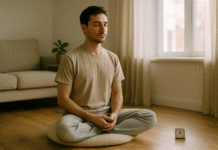


























Conscious breathing is the deliberate control of breath to shift your nervous system from “fight or flight” toward relaxation. In practice, even five minutes a day of paced, intentional breathing can lower arousal and improve mood—sometimes more reliably than equal-time mindfulness alone.
Quick start (60 seconds): Sit tall. Inhale through your nose for 4. Exhale through your mouth for 6–8 (quiet, slow). Repeat for one minute, then notice: shoulders heavier, jaw softer, heart rate steadier. If you already feel calmer, that’s your parasympathetic system doing its job.
Medical note (not a diagnosis): Breathing practices are generally safe for healthy people, but avoid intense hyperventilation or long breath-holds, and talk to a clinician if you’re pregnant, have heart/lung or seizure conditions, panic disorder, or any concerns.
1. Diaphragmatic (“Belly”) Breathing Switches Off the Stress Alarm
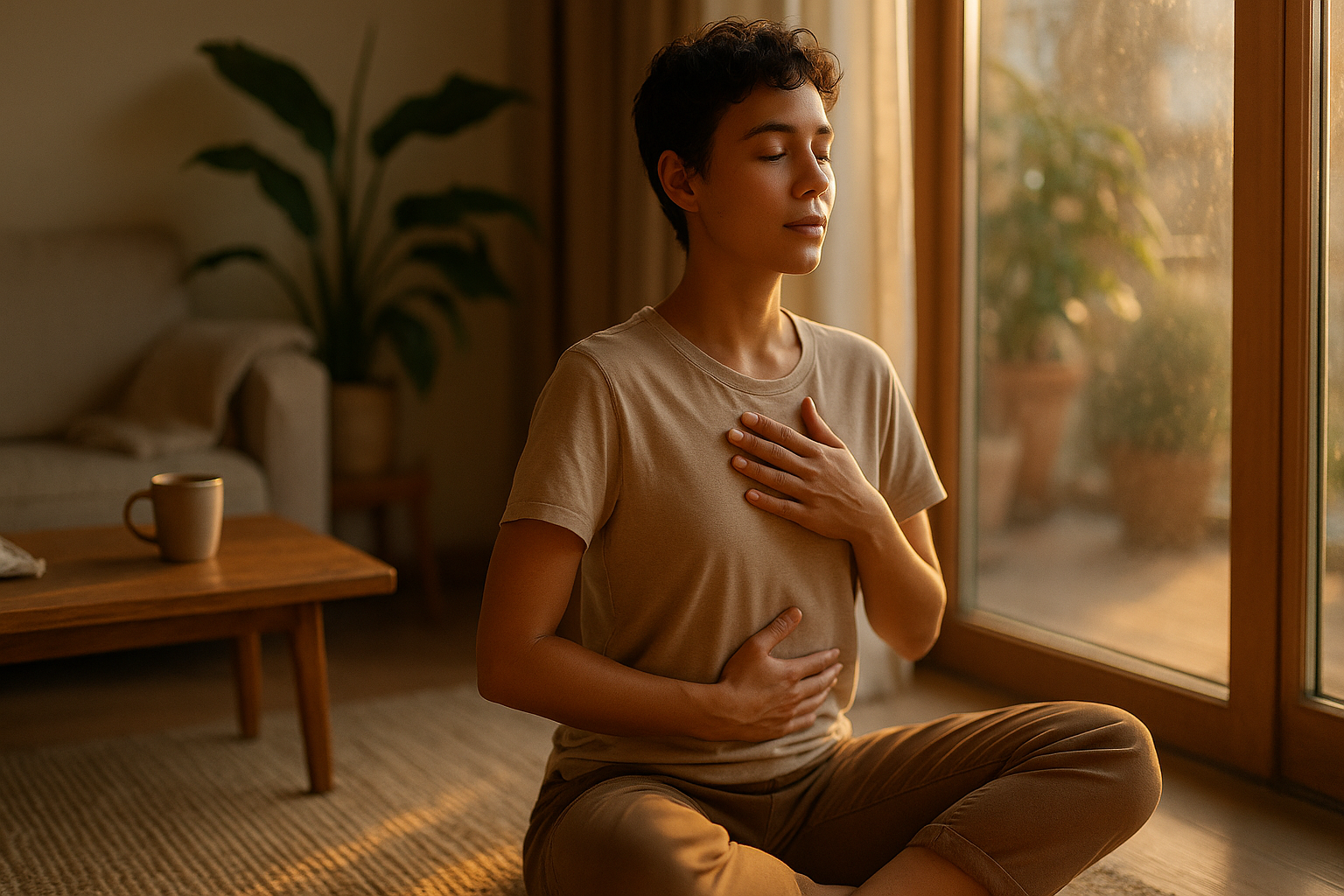
Diaphragmatic breathing lowers the work of breathing, encourages fuller exhalation, and gently stimulates the vagus nerve—helping ease the fight-or-flight response. For stress relief, it’s foundational: slowing, deepening, and moving the breath down tends to reduce muscle tension and steady heart rate within minutes. You’ll know you’re doing it when your lower ribs and abdomen expand on the inhale while the upper chest stays relatively quiet. This style is taught across clinical and mind-body settings because it’s simple, portable, and effective for both everyday stress and hyperventilation-prone moments. Practiced a few minutes, a few times daily, it builds a default pattern of calmer breathing you can access under pressure.
1.1 How to do it (2–5 minutes)
- Sit or lie comfortably; place one hand on the chest, one on the belly.
- Inhale through the nose so the lower hand rises; keep the upper hand as still as possible.
- Exhale through pursed lips slightly longer than the inhale.
- Aim for 5–6 breaths per minute (about 5–6 seconds in, 6–7 seconds out).
- Practice 2–3 sets/day, especially before known stressors.
1.2 Common mistakes
- Forcing huge inhales (can feel dizzy).
- Lifting the chest and shoulders instead of expanding the ribs/belly.
- Rushing the exhale—keep it slow and easy.
Bottom line: Make belly breathing your baseline; everything else in this guide builds more easily on it.
2. Lengthening the Exhale (Cyclic/Physiological Sigh) Calms You Fast
Extending the exhale directly down-regulates arousal and slows respiratory rate, signaling safety to your nervous system. A powerful version is the cyclic sigh: inhale through the nose, take a quick second “top-up” inhale, then a long, unhurried mouth exhale. In a randomized study, 5 minutes daily of exhale-emphasized breathing improved mood and reduced resting respiratory rate more than equal-time mindfulness; cyclic sighing performed best among tested techniques. This makes it ideal for “in-the-moment” stress, pre-meeting nerves, or evening wind-down when your thoughts are racing. The extra inhale fully inflates tiny air sacs, and the extended exhale promotes CO₂ normalization and vagal tone—physiological levers for feeling settled fast. PubMed
2.1 Mini-checklist
- Ratio: Keep exhale ~2× the inhale (e.g., 3 in + 6 out).
- Dose: 1–5 minutes is usually enough.
- Anytime use: During spikes of anxiety, before sleep, or after difficult news.
2.2 Why it works
Longer exhales and sighs reduce respiratory rate and can lower perceived stress; your heart and breath re-sync at calmer tempos.
Bottom line: When you need quick relief, lengthen the exhale—cyclic sighing is a reliable, rapid reset. Stanford Medicine
3. Resonance Frequency Breathing Boosts HRV and Stress Resilience
Breathing at or near your resonance frequency (often around 6 breaths per minute) maximizes heart rate variability (HRV), a marker linked with emotional regulation and resilience. At this rate, your breathing, heart rhythms, and baroreflex (blood-pressure stabilizing reflex) align, producing large, efficient oscillations that feel like a steady, soothing tide. Studies show the optimal rate varies by person (~4.5–7 breaths/min), and HRV biofeedback can help you discover yours. Regular practice has been associated with improved stress, anxiety, and even modest blood-pressure reductions in some groups; think of it as precise, evidence-based pacing for your nervous system.
3.1 Numbers & guardrails
- Start at 6 breaths/min (inhale 4–5s, exhale 5–6s).
- Personalize between 4.5–7 breaths/min.
- Practice 10–20 minutes/day, 3–5 days/week.
3.2 Tools/Examples
- Use a timer or metronome app; some wearables show HRV trends.
- If you own HRV biofeedback gear, run a short assessment across rates to find your peak HRV amplitude.
Bottom line: Find your resonance pace to train a more adaptable, less reactive stress response. PMC
4. Box (Tactical) Breathing Re-Centers You Under Pressure
Box breathing—inhale, hold, exhale, hold, in equal counts—is a square for your breath and your mind. It’s widely taught to first responders and service members as a quick way to steady attention, reduce sympathetic overdrive, and regain control when stakes are high. The brief holds add a “pause” between impulses, while the even rhythm discourages over-breathing. Use it before presentations, difficult conversations, or when emotions surge. Start with a comfortable count (3s or 4s each side), not the longest you can manage—ease is the goal.
4.1 How to do it (4×4×4×4)
- Inhale nose 4.
- Hold 4.
- Exhale nose or pursed lips 4.
- Hold 4. Repeat 4 rounds. Medical News Today
4.2 Common mistakes
- Straining on the holds (keep them light).
- Lifting shoulders; keep ribs soft, jaw unclenched.
Bottom line: A simple, equal-count pattern that buys you space to choose your next move instead of reacting.
5. 4-7-8 Breathing Helps Downshift Into Sleep and Ease Anxiety
The 4-7-8 pattern (inhale 4, hold 7, exhale 8) lengthens exhalation and adds a gentle retention that many find soporific. Popularized for bedtime wind-down and “edge-off” moments, it’s essentially a paced-breathing recipe that biases the parasympathetic system. People often report a calmer pulse and less rumination after a few rounds. Begin seated or lying down; because of the longer hold, start with 2–4 cycles, rest, and add more if comfortable. Avoid if breath-holds feel unpleasant or if you have conditions where they’re discouraged; you can still get most of the benefit by skipping the hold and simply extending the exhale.
5.1 Steps
- Seal the lips; inhale nose for 4.
- Hold the breath 7 (gentle, not clenched).
- Exhale mouth with a soft whoosh for 8.
- Repeat 2–4 cycles; stop if light-headed.
5.2 Tip
Use it when you wake at night: one or two rounds often nudge you back toward sleep.
Bottom line: A classic, exhale-heavy cadence that’s especially handy at bedtime.
6. Pursed-Lip Breathing Eases Breathlessness and Panic
When anxiety spikes or you feel short of breath, pursed-lip breathing slows exhalation, helps keep airways open, and counters over-breathing. It’s a staple in pulmonary rehab and a practical tool for stress: by extending the out-breath 2–3× longer than the inhale, CO₂ levels normalize and the sense of control returns. You don’t have to wait until you’re gasping—practice a few minutes daily so it’s familiar when you need it. Pairing pursed lips with belly breathing is especially effective during panic sensations or post-exercise wind-down.
6.1 How to do it (any posture)
- Inhale nose ~2–3 seconds.
- Purse lips as if blowing out a candle; exhale gently for 4–6+ seconds.
- Keep shoulders relaxed; repeat until calmer. Cleveland Clinic Abu Dhabi
6.2 When to use
- During hyperventilation episodes; after exertion; anytime breathing feels “tight.” Hopkins Medicine
Bottom line: A reliable brake pedal for breath and mind when anxiety or breathlessness creeps in.
7. Nasal Breathing (Most of the Time) Supports Relaxation Chemistry
Breathing through the nose filters and humidifies air and, importantly, mixes inhaled air with nitric oxide (NO) produced in the paranasal sinuses—a gas that can aid oxygen uptake and help regulate blood flow. While the details are complex, nasal breathing tends to promote calmer, more efficient respiration than habitual mouth-breathing, which is often faster and drier. For stress work, this matters: smoother airflow and slightly higher CO₂ tolerance reduce the drive to over-breathe when anxious. Make nasal inhalation your default during all techniques here unless a cue says otherwise. If chronic congestion forces mouth-breathing, consider medical evaluation and gentle alternatives until it’s resolved.
7.1 Mini-checklist
- Default: Inhale nose; exhale nose or pursed lips.
- Hum/“mm” sighs: Occasionally hum on exhale; it briefly increases nasal NO.
- Sleep: If you’re curious about mouth-taping, discuss risks with a clinician first. ATS JournalsWIRED
7.2 Region note
In dry climates, nasal breathing’s humidification helps keep airways comfortable, which supports slower, steadier practice.
Bottom line: Use your nose—it’s a built-in ally for calmer, more efficient breaths.
8. HRV Biofeedback and Apps Personalize Your Calm
HRV biofeedback pairs paced breathing with real-time heart-rhythm feedback, guiding you toward your most calming breathing rate. Over weeks, this can improve emotional regulation and stress outcomes in various groups. You can start with simple timers, then consider validated options (e.g., clinically reviewed apps from reputable organizations) if you want numbers. Look for guidance features (coaching cues, resonance-rate discovery) and trend charts, not just pretty visuals. Used consistently—10–20 minutes, several days per week—biofeedback becomes a skills-builder for staying steady under stress.
8.1 Getting started
- Try a free diaphragmatic breathing app from a health agency to learn pacing.
- If you add a sensor-based system, follow its resonance-rate assessment to tailor your breath. mobile.health.milApple
8.2 What to track
- Breaths/min, exhale length, and session minutes.
- HRV or “coherence” trend over weeks (not day-to-day noise).
Bottom line: Feedback turns guesswork into progress—use it to find and reinforce your calming pace.
9. A 5-Minute Daily Plan Builds a Lower-Stress Baseline
Consistency beats intensity. As of January 2023, research shows that five minutes a day of structured breathwork can meaningfully improve mood and reduce anxiety, with exhale-emphasized methods performing especially well. For most people, the simplest sustainable plan is: morning (2–3 minutes of belly breathing at ~6 breaths/min), afternoon (1–2 minutes cyclic sighing after a stressful task), and evening (2 minutes of extended-exhale or 4-7-8 before bed). Stack it to an existing routine—after brushing teeth, post-lunch, pre-lights-out. Keep a small log so your wins are visible; it’s easier to sustain what you can see.
9.1 Mini-checklist
- Time: 5 minutes total/day to start.
- Trigger: Tie to existing habits (calendar or phone reminders help).
- Adjust: If dizzy or restless, shorten holds and lengthen exhales.
9.2 What the synthesis says
Programs that avoid fast-only breathing, use ≥5-minute sessions, and include guided training or repetition tend to work better.
Bottom line: Small, daily, repeatable sessions create the biggest long-term stress payoff.
10. Slow Breathing Supports Blood Pressure and Heart Health (Adjunct)
Slow, paced breathing can modestly lower systolic ~7 mmHg and diastolic ~3 mmHg on average in meta-analyses, with the best results coming from regular, device- or coach-guided practice. While not a replacement for medical care, it’s a low-risk adjunct that may complement exercise, nutrition, and sleep strategies. Aim for 5–6 breaths/min in comfortable sessions, adjusting to your own resonance pace over time. If you have hypertension, coordinate with your clinician and track readings; think “additive” benefit across weeks rather than instant fixes.
10.1 How to do it (example block)
- 5 minutes: 4s inhale / 6s exhale.
- 10 minutes: 4.5s in / 5.5s out (≈6 breaths/min).
- Progress: Add minutes 2–3×/day, most days of the week. Frontiers
10.2 Guardrails
Slow breathing is safe for most, but check with your clinician if you have cardiovascular disease or take medications affecting heart rate/blood pressure.
Bottom line: It won’t replace your plan, but it’s a smart, evidence-backed add-on for calmer days and healthier numbers.
11. Safety, Contraindications, and Smart Modifications
Breathwork spans gentle practices (like those above) and high-ventilation methods that can provoke dizziness, tingling, or distress. For stress relief, favor slow, exhale-biased techniques. People with epilepsy/seizure history, certain psychiatric conditions, uncontrolled hypertension, cardiovascular disease, or who are pregnant should avoid intense hyperventilation or long breath-holds and talk to a clinician before experimenting. If you feel panicky or light-headed, stop, sit, and do a few rounds of pursed-lip or belly breathing until steady. For asthma, breathing exercises may help quality of life but probably don’t reduce symptoms—so stick with your prescribed plan and use breathwork as supportive, not substitutive. And the old paper-bag method for panic? Not recommended anymore; choose diaphragmatic and extended-exhale techniques instead.
11.1 Red-flag symptoms (seek care)
- Chest pain, severe shortness of breath, fainting, or neurological symptoms.
- Panic or trauma responses that worsen with breathing practices.
11.2 Safer defaults
- Nasal inhale, soft, longer exhale, no forced holds.
- 5–6 breaths/min for most sessions; pause if uncomfortable.
Bottom line: Keep it slow and gentle. When in doubt, skip holds, lengthen exhales, and consult a professional if you have medical conditions.
FAQs
1) What is “conscious breathing,” exactly?
It’s simply choosing a pace and pattern for your breath—usually slower, smoother, and exhale-emphasized—to shift your autonomic nervous system toward rest-and-digest. In studies, five minutes daily improved mood and lowered respiratory rate; longer programs can enhance HRV and stress resilience.
2) How quickly should I feel calmer?
Many people notice changes within 60–120 seconds, especially with exhale-emphasized methods like cyclic sighing or pursed-lip breathing. These reduce respiratory rate and provide a sense of control, which can blunt stress spikes fast.
3) Is nose breathing really better than mouth breathing for stress?
Generally, yes: nasal inhalation filters and humidifies air and mixes it with sinus-derived nitric oxide, which can aid oxygen uptake and support calmer, more efficient breathing. Use nose in, mouth or nose out, unless instructed otherwise or congestion prevents it.
4) What if breath-holds make me anxious?
Skip them. You can still benefit by lengthening the exhale (e.g., 4 in, 6–8 out) without any holds. Holds can be challenging for some conditions; choose gentle, exhale-heavy options.
5) How do I find my best breathing rate?
Start near 6 breaths/min. If you use HRV biofeedback, run a brief test across 4.5–7 breaths/min and pick the rate that yields your highest, smoothest HRV. Without devices, choose the cadence that feels calming and sustainable. SpringerLink
6) Can breathing lower my blood pressure?
Modestly, yes. Meta-analyses show average reductions around 7/3 mmHg with regular slow-breathing routines. Treat it as an adjunct to medical care and lifestyle changes, and track your numbers with your clinician.
7) Is 4-7-8 safe for beginners?
Often, but the 7-second hold may feel long at first. Start with shorter holds or remove them, keeping a long exhale. If you’re pregnant or have heart/lung issues, get personalized guidance. Verywell Mind
8) What should I do during a panic surge?
Sit, place a hand on your belly, and do pursed-lip or cyclic sigh breathing for 1–3 minutes. These extend the exhale, slow respiratory rate, and can reduce the urge to over-breathe more safely than paper-bag methods. Cleveland ClinicNurse.com
9) Do apps and wearables really help?
They can. Guidance and feedback improve adherence and help you find effective pacing. Look for evidence-aware tools and treat metrics as trends over weeks, not daily grades. The Washington Post
10) How much is “enough” each day?
Aim for 5 minutes total to start. Many people benefit from 10–20 minutes/day split into short doses. The key is regularity: brief daily practice beats long sessions you won’t keep.
11) Are there risks with intense breathwork styles?
Yes—fast, high-ventilation methods and long breath-holds can provoke dizziness, tingling, or distress and have contraindications (e.g., pregnancy, epilepsy, panic disorder). Stick with gentle, slow techniques for stress relief. ScienceDirect
12) Does this replace therapy or medication?
No. Conscious breathing is a potent supportive tool. If stress, anxiety, or sleep issues persist or worsen, combine breathwork with evidence-based care under a professional’s guidance. NCCIH
Conclusion
Stress narrows your world: shorter breaths, faster pulse, tighter muscles, racing thoughts. Conscious breathing widens it again—on demand. Start with belly breathing to build a calmer baseline, then layer tools for specific moments: lengthen the exhale (cyclic sigh) when nerves spike, use box breathing to reset under pressure, or settle into resonance frequency to train your system toward flexibility and ease. Keep nasal inhalation, soft shoulders, and gentle pacing as your constants. For structure, adopt the 5-minute daily plan and track small wins; add HRV biofeedback if you enjoy numbers. Slow breathing can even nudge blood pressure in a healthier direction over time. Most importantly, choose the techniques that feel good in your body—because the practices you enjoy are the ones you’ll keep.
CTA: Take 60 seconds right now—inhale for 4, exhale for 8, repeat—and notice what changes.
References
- Breathing techniques to help you relax, Harvard Health Publishing, May 4, 2018. Harvard Health
- Relaxation techniques: Breath control helps quell errant stress response, Harvard Health Publishing, Jul 24, 2024. Harvard Health
- Russo MA et al., The physiological effects of slow breathing in the healthy human, Frontiers in Human Neuroscience, 2017. PMC
- Lehrer PM et al., Heart rate variability biofeedback: how and why does it work?, Frontiers in Psychology, 2014. https://www.frontiersin.org/articles/10.3389/fpsyg.2014.00756/full Frontiers
- Steffen PR et al., The Impact of Resonance Frequency Breathing on Measures of Heart Rate Variability, Frontiers in Public Health, 2017. PMC
- Lalanza JF et al., Methods for Heart Rate Variability Biofeedback (HRVB), Applied Psychophysiology & Biofeedback, 2023. PMC
- Pizzoli SFM et al., A meta-analysis on heart rate variability biofeedback and depressive symptoms, Scientific Reports, 2021. Nature
- Garg P et al., Effect of breathing exercises on blood pressure and heart rate: a meta-analysis, Hypertension Research, 2023. PMC
- NCCIH, Relaxation Techniques: What You Need to Know, June 8, 2021. NCCIH
- Balban MY et al., Brief structured respiration practices enhance mood and reduce physiological arousal, Cell Reports Medicine, Jan 17, 2023. https://www.cell.com/cell-reports-medicine/fulltext/S2666-3791(22)00474-8 Cell
- Cleveland Clinic, Diaphragmatic Breathing Exercises & Benefits, 2023. Cleveland Clinic
- Navy & Marine Corps Public Health Center, Combat Tactical Breathing (Box Breathing), c.2014. Navy Medicine
- Lundberg JO et al., High nitric oxide production in human paranasal sinuses, Nature Medicine, 1995. PubMed
- Cleveland Clinic, Nose Breathing vs. Mouth Breathing: Which Is Better?, Jul 25, 2024. Cleveland Clinic
- Bentley TGK et al., Breathing Practices for Stress and Anxiety Reduction: A Systematic Review and Synthesis, Global Advances in Integrative Medicine and Health, 2023. PMC
- Cleveland Clinic, Hyperventilation Syndrome, Mar 29, 2023. Cleveland Clinic
- MyHealth Alberta, Hyperventilation: Care Instructions, 2024. myhealth.alberta.ca