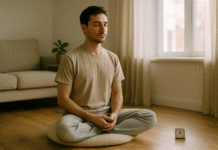










Color visualization is the practice of pairing guided imagery with specific hues to influence mood, attention, and bodily comfort. In simple terms: you picture color on purpose to steer your nervous system toward relaxation, focus, or relief. Used thoughtfully, it can complement medical care for stress, pain, and rehabilitation—not as a cure, but as a practical self-regulation tool you can learn in minutes and refine over weeks. Below you’ll find nine evidence-informed techniques, clear scripts, and safety guardrails. Quick note: color visualization should support—not replace—your clinician’s advice. If you have a medical or mental health condition, use these methods as adjuncts and consult your care team.
1. Build Your Personal Color–Feeling Map
The fastest way to get benefits from color visualization is to personalize which hues reliably evoke calm, alertness, or comfort for you. Research shows color can carry meaning and affect emotion and behavior, but responses vary by context, culture, and personal history; there’s no universal “healing color.” Start by mapping your own associations so the imagery you use matches how your brain already tags those hues. In practice, you’ll sample a few colors, notice the body sensations and moods each one evokes, and keep the ones that consistently help. This step prevents generic, one-size-fits-all scripts from falling flat, and it’s essential if certain colors feel agitating (for example, bright reds during stress). Give yourself a week of brief, daily trials; by the end you’ll have a mini-palette that actually works for you, which becomes the backbone for all later techniques.
1.1 Why it matters
- Color meaning is context-dependent; anchoring to your lived experience boosts relevance.
- Personal palettes reduce trial-and-error and increase adherence to practice.
- Culture and setting matter (e.g., white is associated with purity in some regions and mourning in others), so personalization respects differences.
1.2 How to do it (5–7 minutes)
- Sit comfortably. Breathe naturally for 60 seconds.
- One by one, imagine a soft wash of these: sky-blue, forest-green, warm-amber, gentle-pink, cool-violet.
- For each, notice: heart rate/shoulders/jaw, mental speed (racing vs. settled), and any emotion word that fits.
- Score each color for calm, comfort, and clarity on a 0–10 scale; jot the highest-scoring three.
- Note any “no-go” colors to avoid during stress.
Synthesis: Your color–feeling map is your personalization engine; you’ll reuse this palette to cue relaxation, attention, or analgesia in the remaining techniques.
2. Color Breathing for Nervous System Downshift
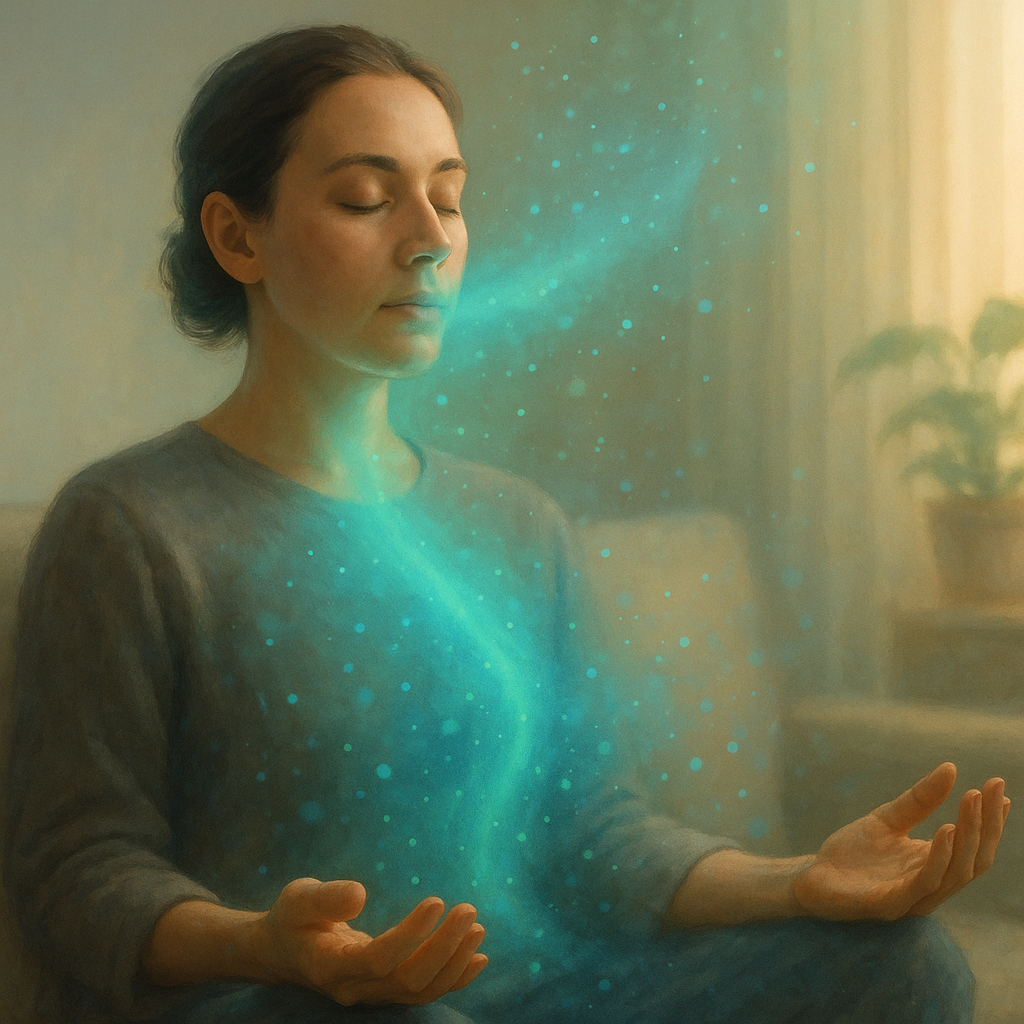
Color breathing pairs slow, paced breathing (about 5.5–6 breaths per minute for many adults) with a calming hue to increase heart-rate variability (HRV) and settle the stress response. The mechanism is straightforward: slow diaphragmatic breaths stimulate the baroreflex and vagal pathways linked with parasympathetic activity; adding a soothing color image (often blue/green) focuses attention and reduces cognitive noise. You’ll inhale a color that symbolizes ease and exhale a different color that represents tension leaving the body. Expect a noticeable shift in 2–4 minutes and deeper calm by 10 minutes. This is an all-purpose reset before medical appointments, difficult conversations, or sleep.
2.1 How to do it (timed script)
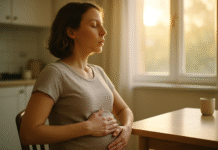
- Sit upright; one hand on chest, one on belly.
- Set a 6-count inhale / 6-count exhale (≈5 breaths per minute).
- Inhale a soft sky-blue from the nostrils to the heart.
- Exhale a gray haze out through the mouth, jaw relaxing.
- Repeat for 5–10 minutes (use a metronome app if helpful).
2.2 Numbers & guardrails
- Aim for 5–10 minutes daily; most notice a shift by minute 3.
- If lightheaded, shorten to 4-count in / 6-count out or breathe through the nose only.
- People with significant cardiopulmonary issues should clear breathwork with a clinician.
Mini example: Before a blood draw, you breathe blue-in/gray-out for 3 minutes; your self-rated tension drops from 7/10 to 4/10.
Synthesis: Color breathing leverages physiology plus imagery; it’s a reliable baseline routine you can use before any of the other techniques.
3. Cooling (or Warming) Color Shield for Pain Relief
For acute discomfort (headache flares, muscle strain, post-procedure soreness), use a color shield to modulate pain perception. Expectancy and attention shape pain; placebo/anticipation circuits in the brain can dial nociception up or down. You’ll choose cooling blue/teal for hot, throbbing pain or warming amber/gold for stiff, cold tightness. Layer the color over the painful area like a translucent gel and pair it with slow breathing. This doesn’t “cure” a condition, but many people experience modest, meaningful relief (e.g., 1–3 points on a 0–10 scale), especially when practiced consistently.
3.1 How to do it
- Rate pain 0–10; note quality (hot, tight, stabbing).
- Pick blue/teal for heat/inflammation or amber/gold for chill/rigidity.
- On each inhale, paint the area with the color; on each exhale, imagine excess sensation draining away as a dull gray.
- After 3 minutes, add a “pain dial”: visualize a numbered knob turning from 7 down to 4 as the hue deepens.
- Re-rate pain after 5–8 minutes; record the change.
3.2 Common mistakes
- Forcing imagery; keep it soft and moving.
- Holding breath during concentration; keep a smooth rhythm.
- Using a color that feels wrong; switch to your personal palette.
Mini case: A runner with calf strain does 8 minutes of amber warmth plus a pain dial before stretching; pain drops from 6/10 to 3/10, allowing gentle mobility work.
Synthesis: Color shields don’t treat the underlying cause but can downshift pain perception enough to function and engage with your care plan.
4. Pre-Procedure Calm: Green Corridor Imagery
Hospitals and clinics can spike anxiety; pre-procedure guided imagery reliably reduces perioperative worry for many people. This script uses forest-green and earth tones to guide attention away from threat cues. You’ll walk a mental “green corridor,” timing steps with slow breathing until your body learns that the environment is safe enough. Use it in waiting rooms, before injections, or when machines beep loudly.
4.1 How to do it (2–6 minutes)
- Sit; feet on the ground. Set in-6 / out-6 breathing.
- Picture a leafy corridor with dappled light; each inhale brightens the greens by 10%, each exhale softens ambient sounds by 10%.
- Count 10 steps; with each step, shoulders drop 2 mm and jaw softens.
- Add a phrase: “In safety, out tension.”
- Open eyes briefly, scan the room, and carry one green detail back into the scene (a plant, a nurse’s scrubs) to link real and imagined cues.
4.2 Mini-checklist
- Headphones with ambient forest sounds (optional).
- A sticky note on your phone: “Green corridor x 2 min.”
- Practice at home 3× before the actual appointment.
Numeric example: Anxiety rating falls from 8/10 to 5/10 after 3 minutes, and to 4/10 after a second round in the waiting area.
Synthesis: Pre-procedure green imagery is a portable, discreet way to reclaim agency and reduce stress reactivity in clinical settings.
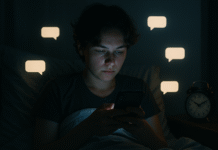
5. Indigo Night Sky for Sleep Onset
Racing thoughts at bedtime are often sustained by cognitive arousal and sympathetic tone. The indigo night sky technique blends dim-light imagery with extended exhalations to cue drowsiness. You’ll imagine a starry, deep-blue dome that subtly darkens each cycle as your exhale length grows. It doesn’t “knock you out,” but it helps many people transition from alert problem-solving to restful drifting within 10–20 minutes.
5.1 How to do it
- Lights low; screens off. Lie on your side.
- Start with 4-in / 6-out nasal breathing; every 2 minutes, add +1 to the exhale up to 8.
- Picture a deep indigo sky; on each exhale, the color shade drops one notch and distant sounds blur by 5%.
- If thoughts pop up, place them as tiny gray clouds moving off the horizon.
- Continue until you miss a count (a sign you’re drifting); stop “trying” and let breathing go natural.
5.2 Tips & guardrails
- If you feel air hunger, keep exhale ≤ inhale and increase total minutes instead.
- Don’t chase perfection; aim for “a little sleepier”, not instant sleep.
- Pair with consistent wake time for 2 weeks to reset rhythm.
Synthesis: Indigo imagery turns down cognitive brightness; combined with gentle breath pacing, it nudges the brain toward sleep without pressure.
6. Color-Cued Motor Imagery for Rehab (Movement Relearning)
Mental rehearsal activates motor networks and can assist rehabilitation after injury or neurological events when paired with standard therapy. Adding color makes the imagery easier to anchor and sequence. You’ll assign distinct hues to phases of a movement (e.g., orange for “initiate,” blue for “glide,” green for “finish”), then rehearse at slow speed before physical practice. Expect better smoothness and confidence, not magic recovery; coordinate with your clinician or physiotherapist.
6.1 How to do it (example: shoulder flexion)
- Sit; breathe in-6 / out-6 for one minute.
- Phase colors: Orange (start), Blue (mid-path), Green (end range).
- Eyes closed: visualize the arm moving pain-free through the colors in slow motion (15–20 seconds).
- Do 5 reps mentally, then 2–3 gentle physical reps within your safe range.
- Log effort and comfort (0–10) for mental vs. physical sets.
6.2 Tools/Examples
- Metronome at 40–60 bpm to slow pace.
- For gait: emerald footprints along a hallway; imagine heel-strike landing in each print.
- For hand opening: fingers glow gold as they extend, blue as they relax.
Mini case: A post-stroke patient pairs 10 minutes of color-coded hand opening imagery with daily physio. After 3 weeks, therapist notes smoother initiation and slightly increased active range; the patient reports lower fear of movement and better adherence.
Synthesis: Color tags add structure and salience to motor imagery—use them to bridge from mental practice to safe, real movement.
7. Pediatric “Rainbow Bubble” for Needle Pain and Fear
Children respond well to concise, playful imagery. The Rainbow Bubble script gives a kid a clear job: blow a bright bubble that grows on the exhale and carries discomfort away. Pick their favorite two colors to start; keep the language simple and tempo quick (30–60 seconds). This doesn’t eliminate the prick, but it can reduce distress and perceived pain—especially when caregivers rehearse it the night before.
7.1 How to do it (caregiver script)
- “Let’s breathe in a tiny blue dot… now blow out a big purple bubble.”
- “Each time you blow, the bubble gets bigger and floats higher.”
- “When the nurse says ‘1-2-3,’ we blow our biggest bubble yet.”
- “If you like, squeeze my hand once while you blow.”
- Repeat 4–6 breaths; celebrate effort, not bravery.
7.2 Mini-checklist
- Practice at home 2–3 times (30 seconds each).
- Bring a sticker of the bubble’s colors for the clinic visit.
- If a child dislikes a color, switch immediately.
Numeric example: During a blood draw, the child’s observed distress scale drops from moderate to mild using 5 bubble breaths; they request the bubble game again at the next visit.
Synthesis: Simple, colorful, and timed to the procedure, the Rainbow Bubble gives kids a role and reduces anticipatory fear.
8. Color Visualization in Integrative Oncology (Symptom Support)
In cancer care, mind–body techniques like guided imagery can help some patients cope with anxiety and treatment-related discomfort. Color scripts must be gentle, brief, and tailored to energy levels. Think short blue-green breaths for calm, golden warmth for comfort, and emerald waves for ease during infusions. The goal isn’t to treat cancer—it’s to support quality of life, help with procedure-related stress, and complement conventional care safely.
8.1 How to do it (three micro-scripts)
- Infusion calm (2 minutes): in-6/out-6 while picturing a soft teal stream entering the body and circulating as ease.
- Evening release (3 minutes): breathe in gold warmth to the chest, exhale gray fatigue through the feet.
- Scan day reset (2 minutes): inhale forest-green, exhale sound fading by 10% each cycle.
8.2 Guardrails & coordination
- Share practices with your oncology team; imagery is adjunctive, not a replacement.
- Watch for dizziness; shorten sessions or return to natural breathing.
- Choose colors that feel supportive, never forced or symbolic in ways that distress you.
Synthesis: In integrative settings, color imagery is a low-risk add-on that can ease symptom burden and give patients a sense of agency during a demanding journey.
9. The 10-Minute Daily Protocol & Progress Tracking
Consistency transforms color visualization from a neat idea into a practical skill. This protocol weaves the earlier techniques into a 10-minute daily routine and adds tracking so you can see what actually helps. You’ll start with color breathing, add a targeted script (pain, sleep, or anxiety), and finish with a quick note about which hues worked best. Over 2–4 weeks, most people refine a dependable playbook for common stressors.
9.1 Daily protocol (10 minutes)
- Minutes 0–3: Color breathing (blue-in/gray-out at in-6/out-6).
- Minutes 3–8: Pick one focus (pain shield, green corridor rehearsal, indigo night sky preview).
- Minute 8–10: Journal: color(s) used, ratings (calm/comfort/clarity 0–10), and any changes (e.g., pain 6→4).
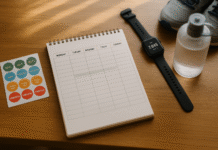
9.2 Tracking template (weekly)
- Mon–Sun rows, columns for color, technique, minutes, before/after ratings.
- Flag Top 3 color-technique pairs by biggest average improvement.
- After Week 2, retire low-yield combinations and double down on winners.
Mini example: Over 14 days, blue breathing + amber pain shield averages −2.1 points on pain; green corridor before meetings reduces anxiety −1.8 points. You keep those, drop violet, which felt distracting.
Synthesis: A short, structured routine plus simple metrics turns color visualization into a personalized, data-informed self-care habit.
FAQs
1) Is there scientific evidence that color itself heals the body?
There isn’t strong evidence that specific colors directly “heal” tissues or organs. However, studies show that color can influence attention, mood, and behavior, and guided imagery can reduce anxiety and modulate pain for some people. Color works here as a useful focus cue inside evidence-informed imagery and breathing—not as a medical treatment. Use it to complement, not replace, professional care.
2) How long until I notice any effect?
Many people feel a small shift (e.g., less muscle tension or slower thoughts) within 2–4 minutes of color breathing. Pain modulation often needs 5–8 minutes and consistent practice. Rehab imagery benefits accrue over weeks as you pair mental rehearsal with therapy. Track 0–10 ratings so you can see real changes instead of guessing.
3) Which colors should I start with if I’m anxious?
Begin with blue or green because many people associate them with calm landscapes and open sky. That said, personalization matters—if blue feels cold or sterile to you, it may not help. Try two or three hues for a week, logging calm/comfort/clarity scores, and keep the top performers for your toolkit.
4) Can color visualization help with chronic pain?
It can be a helpful adjunct. Expect modest relief (often 1–3 points on a 0–10 scale) when combined with breathwork, pacing, physical therapy, and your clinician’s plan. Focus on consistency: brief sessions 1–2 times daily often beat occasional long ones. If pain worsens or new symptoms appear, contact your clinician.
5) Is this safe if I have a heart or lung condition?
Imagery is generally low risk, but breath pacing should be adjusted for comfort. If you have cardiopulmonary issues or feel dizzy when slowing your breathing, keep inhalation and exhalation even and shorter (e.g., in-4/out-4) and talk with your clinician before structured breathwork. Imagery itself can proceed without breath holds or long exhalations.
6) How does this compare with mindfulness meditation?
Mindfulness trains open, non-judgmental awareness of present-moment experience. Color visualization is directive: you intentionally guide attention and imagery toward a target state (calm, comfort). Some people blend both—mindful noticing followed by a color script—to good effect. Choose the style you’ll actually practice.
7) Will this interfere with my medications or procedures?
No—imagery is non-pharmacologic. The key is to inform your care team so they can coordinate and ensure practices are appropriate for your situation (for example, using imagery to manage scan anxiety or pre-procedure stress). Avoid using visualization to delay urgent medical evaluation.
8) Can I teach this to a child?
Yes. Keep it playful and short (30–60 seconds), let the child pick the colors, and time it to the moment (e.g., breathing “rainbow bubbles” during a shot). Practice once or twice at home first so the script is familiar, and always defer to clinical staff during procedures.
9) What if a color makes me more anxious?
Stop and switch. Associations can be personal; certain hues may link to hospitals or stressful memories. Your color–feeling map is designed to identify and avoid those triggers. If a color consistently agitates you, remove it from your palette and test another.
10) How do I know if it’s working beyond placebo?
Placebo and expectancy shape all symptom experiences; the practical question is whether your tracked outcomes improve (sleep latency, pain ratings, pre-procedure anxiety) without harm or cost. Use the weekly template and look for consistent trends over 2–4 weeks. If a technique doesn’t move the needle, pivot or retire it.
Conclusion
Color visualization sits at the intersection of psychology and physiology: it gives your mind something concrete to do while your body shifts toward calm and comfort. By pairing personalized hues with paced breathing, targeted scripts, and simple tracking, you transform vague “relaxation” advice into an actionable, measurable routine. The nine techniques above cover daily regulation (color breathing), moments of need (pain shield, pre-procedure calm), sleep transitions (indigo night), rehabilitation support (color-cued motor imagery), pediatric care (rainbow bubble), integrative oncology contexts, and a one-page protocol to pull it all together. None of this replaces clinical care, but each method can make care more livable—reducing distress, building confidence, and improving follow-through on what matters. Start with your color–feeling map and 3 minutes of blue-in/gray-out breathing today; expand to the scripts that match your life. CTA: Pick one technique, practice it tonight for five minutes, and log the before/after—your data will tell you what to keep.
References
- Relaxation Techniques: What You Need to Know, National Center for Complementary and Integrative Health (NCCIH), June 8, 2021. https://www.nccih.nih.gov/health/relaxation-techniques-what-you-need-to-know
- Color and Psychological Functioning: A Review of Theoretical and Empirical Work, Annual Review of Psychology (A.J. Elliot & M.A. Maier), 2014/2015. https://pmc.ncbi.nlm.nih.gov/articles/PMC4383146/
- A Meta-analysis of Brain Mechanisms of Placebo Analgesia, JAMA Network/Open access via NIH PMC (L.Y. Atlas & T.D. Wager), 2014. https://pmc.ncbi.nlm.nih.gov/articles/PMC7671088/
- Neural Circuit Basis of Placebo Pain Relief, Nature (C. Chen et al.), 2024. https://www.nature.com/articles/s41586-024-07816-z
- Guided Imagery for Anxiety Disorder: Therapeutic Efficacy and Clinical Utility, Indian Journal of Psychiatry (D. Kumari et al.), 2023. https://pmc.ncbi.nlm.nih.gov/articles/PMC10871407/
- The Effect of Guided Imagery on Perioperative Anxiety in Hospitalized Adults: Systematic Review, Perioperative Care and Operating Room Management (M.A. Anamagh et al.), 2024. https://www.sciencedirect.com/science/article/pii/S2666262024000226
- Society for Integrative Oncology–ASCO Guideline: Integrative Medicine for Pain Management in Oncology, Journal of Clinical Oncology (J.J. Mao et al.), 2022; PDF posted April 2024. https://end-overdose-epidemic.org/wp-content/uploads/2024/04/mao-et-al-2022-integrative-medicine-for-pain-management-in-oncology-society-for.pdf
- Mental Practice with Motor Imagery in Stroke Recovery (Randomized Trial), Neurorehabilitation and Neural Repair (M. Ietswaart et al.), 2011. https://pmc.ncbi.nlm.nih.gov/articles/PMC3097892/
- Leveraging Motor Imagery Rehabilitation for Individuals with Spinal Cord Injury: Review, Healthcare (M.F. Almufareh et al.), 2023. https://pmc.ncbi.nlm.nih.gov/articles/PMC10572951/
- A Practical Guide to Resonance Frequency Assessment for Heart Rate Variability Biofeedback, Frontiers in Neuroscience (F. Shaffer & C. Meehan), 2020. https://pmc.ncbi.nlm.nih.gov/articles/PMC7578229/
- Effect of Resonance Breathing on HRV: Randomized Trial, Cureus (S. Chaitanya et al.), 2022. https://pmc.ncbi.nlm.nih.gov/articles/PMC8924557/
- The Effect of Guided Imagery on Procedural Pain in Children During Venipuncture, Issues in Comprehensive Pediatric Nursing (Z. Erkut et al.), 2024. https://www.tandfonline.com/doi/abs/10.1080/02739615.2023.2165492
- Relaxation Techniques for Pain Management in Labour, Cochrane Review, March 28, 2018. https://www.cochrane.org/evidence/CD009514_relaxation-techniques-pain-management-labour
- The Impact of Visualization on Stroke Rehabilitation in Adults: Systematic Review, Biomedicines (A. Calderone et al.), 2025. https://www.mdpi.com/2227-9059/13/3/599