


















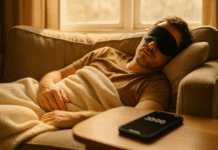
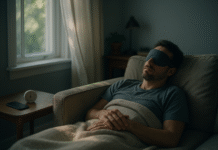


“Beauty sleep” isn’t a myth—it’s the nightly window when your skin restores its barrier, balances inflammation, and repairs daily UV and pollutant damage. Practically, that means consistent, good-quality sleep translates into better hydration, smoother texture, and a naturally brighter tone over time. Adults generally do best with at least seven hours a night; when sleep falls short, the face can look more dull, puffy, or uneven, and fine lines are more obvious. Researchers have even shown that sleep-restricted people are perceived as less healthy and less attractive—proof that your complexion broadcasts how well you’re resting.
Quick answer: Beauty sleep = consistently hitting your personal sleep need on a stable schedule in a dark, cool, quiet room—and pairing it with simple, barrier-friendly nighttime skincare.
Friendly disclaimer: If you suspect a sleep disorder (e.g., loud snoring, gasping, or extreme daytime sleepiness), see a clinician; targeted care (like CPAP for sleep apnea) improves health and indirectly benefits skin by restoring restorative sleep.
1. Keep a Consistent Sleep–Wake Window (Your Skin’s Clock Loves Predictability)
A consistent bedtime and wake time—seven days a week—is one of the highest-leverage “beauty sleep” moves. Your skin has its own circadian clock that schedules cell turnover, DNA repair, and barrier maintenance. When your sleep is stable, those processes happen on time, and you wake up better hydrated with less redness and fewer “mystery” flares. Conversely, irregular sleep (like sleeping in on weekends and staying up very late) can desynchronize your body clocks and blunt nightly repair. In lab and animal studies, the epidermis becomes more vulnerable to UV damage when the skin clock is out of sync; that’s a signal that timing matters, not just total hours. Build your life around a realistic, repeatable sleep window and your complexion will start looking more even and resilient within weeks.
1.1 Why it matters
- The epidermis runs time-of-day programs for proliferation and UV-response; circadian disruption increases vulnerability. PMC
- Consistency strengthens melatonin rhythms that cue antioxidant defenses and nightly repair.
1.2 How to do it
- Pick a wake time you can keep within ±30 minutes, even on weekends.
- Back-calculate bedtime so you can meet your sleep need (see Habit #2).
- Use a dim-light “get ready for bed” alarm 60–90 minutes before bedtime.
Mini-checklist: Same wake time daily → Dim lights 90 min pre-bed → In bed at target bedtime.
Synthesis: When your sleep happens at predictable times, your skin does, too—better barrier recovery, steadier tone, and fewer “tired-face” days.
2. Hit the Right Sleep Dose: 7–9 Hours for Most Adults (Personalize Yours)
Most healthy adults need at least seven hours of sleep nightly; many feel and look best around eight to nine. Less than seven hours is linked with insufficient sleep and the classic signs you see in the mirror: dull tone, puffiness, and more pronounced lines. Dermatology research also connects chronic poor sleep with slower barrier recovery and more visible signs of intrinsic aging. Rather than chasing a perfect number, set a floor of seven hours and adjust by look-and-feel data for two weeks. If your afternoon energy, mood, and skin brightness are consistently better at 8:15 than 7:15, that’s your dose.
Numbers & guardrails
- Adults: 7+ hours recommended; many thrive at 7.5–8.5 hours.
- Skin signal: Poor sleepers show diminished barrier function and more signs of intrinsic aging. PubMed
Tools/Examples
- Keep a simple sleep diary (bedtime, wake time, perceived sleep quality, afternoon energy, and “skin check” notes).
- Adjust in 15-minute steps every 3–4 nights until daytime feel and morning skin look align.
Synthesis: Protect at least seven hours, then fine-tune. Your skin is a responsive biofeedback screen—use it to calibrate your sleep dose.
3. Dim the Lights and Tame Screens 60–90 Minutes Before Bed
Bright evening light—especially short-wavelength “blue”—delays melatonin and pushes your sleep (and skin repair) later. Studies show blue light suppresses melatonin about twice as long as comparable green light and shifts circadian timing more strongly. The fix isn’t to fear your phone; it’s to lower total light dose and make your wind-down less interactive. Aim for warm, low-lux lighting (lamps, not ceiling lights), switch screens to “very dim + warm,” and prefer passive, calming content if you do use a device. Even better: make the last 30–60 minutes tech-free to let melatonin rise and your skin’s repair window start on time.
How to do it
- Lighting: Use lamps with warm bulbs (sub-2700K), turn off overheads, and close bright apps.
- Screens: Night mode + lowest brightness; stop all screens 30–60 minutes pre-bed.
- Content: Swap doom-scrolling for a paperback, light stretching, or skincare (Habit #6).
Common mistakes
- “Blue-blocking” glasses while sitting under bright ceiling LEDs—total light intensity still matters.
- Catching up on messages in bed; interactivity is arousing even if brightness is low.
Synthesis: Gentle light and calmer content let melatonin rise, helping you fall asleep earlier—and look more rested tomorrow.
4. Engineer Your Bedroom: Cool, Dark, Quiet—and Around 30–50% Humidity
Your skin—and sleep—love a cool room, minimal noise, blackout darkness, and moderate humidity. The Sleep Foundation advises a cool bedroom (about 65–68°F / 18–20°C) to match the body’s natural overnight temperature drop; staying too warm fragments sleep and can worsen puffiness. For humidity, the EPA-cited range of 30–50% RH keeps airways and skin from drying out while avoiding mold and dust mite growth that spike above ~60%. Combine blackout curtains or an eye mask, earplugs or white noise, and breathable bedding. In hot climates or during heat waves, pre-cool the room, run a fan to move air across skin, and keep a carafe of water nearby to rehydrate on waking.
Mini-checklist
- Temperature: Target ~18–20°C (65–68°F).
- Humidity: Maintain ~30–50% RH; avoid >60%.
- Light/noise: Blackout + mask; earplugs/white noise. Sleep Foundation
Region-specific note: In persistently humid locales, a dehumidifier keeps RH below 60%; in dry seasons, a cool-mist humidifier prevents itchy skin without overheating the room. Sleep Foundation
Synthesis: A well-tuned sleep environment reduces awakenings—and fewer awakenings mean more time in the skin-loving deep and REM stages.
5. Time Your Stimulants and Nightcaps: Caffeine and Alcohol Have Curfews
Caffeine lingers. A controlled trial found that 400 mg taken six hours before bedtime still reduced total sleep time; that’s why sleep clinicians recommend cutting caffeine at least six hours pre-bed (earlier if you’re sensitive). Alcohol is sneaky: it may help you fall asleep but fragments the second half of the night, decreasing REM and leading to groggier, dull-looking mornings. Simple guardrails: stop caffeine after early afternoon (no “emergency” 5 p.m. coffee), cap total daily caffeine, and keep alcohol light and early (ideally none within 3–4 hours of bed). Your morning face will thank you.
Practical guardrails
- Caffeine: Last dose ≥6–8 hours pre-bed; aim ≤200–300 mg/day.
- Alcohol: Avoid within 3–4 hours of bedtime; keep to low amounts if you choose to drink.
- Hidden sources: Chocolate, pre-workout, some pain relievers.
Mini case: If bedtime is 11:00 p.m., set a caffeine curfew at 3:00–5:00 p.m.; if you have a 7:00 p.m. dinner with wine, switch to sparkling water by 8:00 p.m.
Synthesis: Treat caffeine and alcohol like “sleep inputs”—timed well, they won’t steal your glow by cutting into deep, restorative sleep.
6. Pair Nighttime Skincare With Sleep’s Repair Window
Sleep and skincare are teammates. Cleansing away sunscreen, pollution, sweat, and makeup prevents clogged pores and irritation that can sabotage your glow. Dermatologists specifically warn that sleeping in makeup can worsen acne, even if the products are labeled non-comedogenic. After cleansing, lock in hydration with a gentle moisturizer; if you use a retinoid, apply a pea-sized amount at night and buffer with moisturizer to minimize irritation (and use sunscreen the next day). Skip strong peels on nights you’re short on sleep; a fragile barrier plus active acids can mean more redness by morning.
How to do it (5-minute routine)
- Cleanse: Lukewarm water; avoid harsh scrubbing.
- Treat (optional): Retinoid or azelaic acid, thin layer.
- Moisturize: Ceramide or glycerin formula; consider an occlusive on dry spots.
- Lips/eyes: Simple balm; no stinging actives.
Common mistakes
- Skipping cleanser “just this once.”
- Layering multiple strong actives on the same night you had alcohol or little sleep.
Synthesis: Your skin repairs while you sleep; a minimalist, barrier-friendly routine clears the way for that natural overnight work.
7. Downshift Stress Before Lights-Out (Your Skin Shows It)
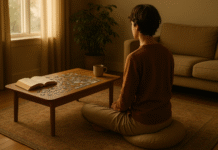
Stress hormones don’t just churn in your mind—they show up on your skin as redness, itch, breakouts, and slower healing. Dermatology groups note stress exacerbates conditions like eczema and psoriasis and can ramp up oil production in acne-prone skin. A brief, consistent wind-down (10–20 minutes) lowers arousal so you fall asleep faster and stay asleep longer. Keep it simple: 4-7-8 breathing, a short journal brain-dump, light stretches, or a warm shower. If intrusive thoughts are your blocker, put a notepad by the bed and write a tomorrow-list before you dim the lights. American Academy of Dermatology
Mini routine (choose two)
- Breathwork: 5 rounds of 4–7–8.
- Heat: 10-minute warm shower, then a cool bedroom.
- Mind: 3-line “worry list” + one next action.
- Body: Cat-cow and hamstring stretch, 4 minutes total.
Synthesis: Lowering nighttime stress makes it easier to fall asleep—and calmer nights show up as calmer skin.
8. Get Morning Daylight and Move Earlier (Daytime Inputs Shape Nighttime Sleep)
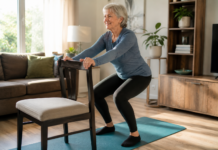
Morning light is a powerful anchor for your circadian rhythm: 10–30 minutes outdoors soon after waking helps set tonight’s melatonin surge, making it easier to fall asleep on time. Office workers with ample daylight report longer sleep and better quality than those without windows; add even a short lunchtime walk if mornings are jammed. Exercise is also a sleep ally, but finish moderate-to-vigorous sessions at least 2–3 hours before bed so your core temperature can fall. On busy days, a brisk 15-minute walk in daylight plus a light body-weight circuit after work still helps—your skin will appreciate the better sleep and improved circulation.
How to do it
- Light: 10–30 minutes outside within 1–2 hours of waking; skip sunglasses unless needed for safety/comfort.
- Movement: Aim for 150+ minutes/week; keep intense sessions away from bedtime.
- Desk days: Put a walking meeting on your calendar; eat lunch by a window.
Synthesis: Daylight in the morning + movement in the day = stronger melatonin signal at night—and a clearer, brighter complexion.
9. Protect Sleep During Travel and Shift Work (Keep an “Anchor”)
Jet lag and night shifts can wreck your glow if you let them, but strategy helps. For travel across time zones, start shifting sleep and light exposure toward destination time a day or two before departure. After landing, time bright light to the new morning and curb it at night; short, early-day naps are OK, but avoid long late-day naps. For night shifts, sleep as soon as you get home, reduce light exposure on the commute (dark glasses), and keep part of your sleep window consistent on days off so your clock isn’t constantly flipping. These tactics don’t just restore energy; they protect your skin by safeguarding deep, restorative sleep.
Mini-checklists
Jet lag (eastbound example)
- Shift bedtime/wake by 30–60 minutes earlier for 2–3 days pre-trip.
- Seek morning light at destination; limit evening light.
- Hydrate; avoid late alcohol.
Night shift
- Sleep as soon as you get home; use dark glasses after shift.
- Make the room cave-dark, cool, quiet; nap before next shift if needed. CDC
Synthesis: You can’t eliminate schedule strain, but you can shield your skin by protecting a reliable core of sleep with smart light and timing tactics.
10. Measure, Iterate, and Give It 3–4 Weeks
Skin responds to better sleep—but not overnight. Because epidermal turnover typically takes roughly 15–30 days, expect meaningful changes (steadier tone, fewer dry patches, calmer T-zone) to emerge over 3–4 weeks of consistent habits. Track simple metrics: time in bed, perceived sleep quality, energy, and a weekly “skin note” (hydration, redness, breakouts). If you’re not improving, tweak one input at a time: bring the caffeine cutoff earlier, lower bedroom temperature by 1–2°C, or add morning daylight. If symptoms like loud snoring, gasping, or morning headaches persist, book a sleep evaluation; treating sleep apnea dramatically improves restorative sleep and morning appearance. AASM
Simple tracker template
- Sleep: Bedtime / wake time / awakenings.
- Inputs: Caffeine last dose / alcohol timing / exercise time / sunlight time.
- Skin note (weekly): Hydration, texture, redness, breakouts (0–3 scale).
Synthesis: Commit for one skin cycle—then adjust based on data. Small, steady changes compound into a lasting glow.
FAQs
1) What exactly is “beauty sleep,” in one sentence?
It’s consistent, good-quality sleep that arrives on a stable schedule in a cool, dark, quiet room—enough hours for your body to cycle through deep and REM sleep so your skin can repair its barrier, regulate oil and inflammation, and retain moisture. The result is fewer flares, smoother texture, and a brighter tone. (See the habits above.)
2) How many hours do I need for visible skin benefits?
Most adults need at least seven hours; many see their best daytime energy and complexion around eight. Use a two-week experiment and adjust by 15 minutes until you feel alert in the afternoon and your skin looks more hydrated on waking. Chronically sleeping less than seven hours correlates with “insufficient sleep” and the tired look you’re trying to avoid.
3) How fast will I see changes if I fix my sleep?
Expect early wins (less puffiness, fewer late-day dull patches) within a few nights, and more obvious texture/brightness changes after one full skin-turnover cycle—about 3–4 weeks for many adults. Take a weekly selfie in the same lighting to make the progress obvious.
4) Do blue-light blockers actually help my sleep and skin?
What helps most is reducing total evening light and making content less interactive. Blue-light-blocking lenses can reduce short-wavelength exposure, but bright overhead LEDs or stimulating apps can still delay melatonin. The low-tech combo—dim, warm lamps plus a 30–60 minute tech-free wind-down—works reliably. AASM
5) Can I “catch up” with naps instead of sleeping at night?
Short, early-day naps (10–20 minutes) can boost alertness, but they don’t fully replace consolidated nighttime sleep for skin or hormones. If you’re severely short on sleep, a brief nap is fine—just avoid long, late naps that push bedtime and fragment the night.
6) What’s the best bedroom temperature and humidity for a glow-friendly sleep?
Aim for ~18–20°C (65–68°F) and ~30–50% relative humidity; this supports sleep continuity and keeps skin from drying out while avoiding mold/dust mites that increase above ~60% RH. In heat waves, pre-cool the room and use a fan across exposed skin; in dry seasons, consider a cool-mist humidifier.
7) Is alcohol really that bad for sleep?
Yes. Alcohol can hasten sleep onset but it fragments the second half of the night and cuts REM—so you wake groggy and puffy. Keep drinks light and early, and avoid them in the last 3–4 hours before bed if you want your morning face to cooperate. PMC
8) What about caffeine timing—how late is too late?
Clinical data show a standard 400 mg dose taken six hours before bedtime still reduces total sleep time, which is why many people set a caffeine curfew in the early afternoon. Sensitive sleepers should stop even earlier.
9) Does poor sleep really show on my face?
Yes—and others notice. In a BMJ study, sleep-restricted people were rated as less healthy and less attractive than when well-rested. You’ll also notice more dullness and fine lines after several short nights; restore your schedule and the difference is visible.
10) I snore loudly and wake up tired—could sleep apnea be ruining my glow?
Possibly. Loud, frequent snoring with choking/gasping and daytime sleepiness are classic obstructive sleep apnea signs. A sleep evaluation (home test or lab study) and treatment can restore deep sleep and improve morning appearance alongside major health benefits.
Conclusion
Your nightly glow is built from ordinary, repeatable choices: a consistent schedule, enough total hours, gentle light, a cool dark room, smart timing of caffeine and alcohol, a simple barrier-first skincare routine, and a 10–20 minute wind-down. None of this is flashy—but the payoff compounds. Stable sleep strengthens circadian rhythms in your skin, which organizes repair, balances oil and inflammation, and improves barrier recovery. Pair that with daylight exposure and earlier movement during the day, and you’ve stacked every card in favor of brighter mornings. Give yourself one full skin-turnover cycle of consistent practice—about a month—to judge. Track your inputs, keep the tweaks small, and notice the new baseline: steadier tone, fewer “emergency concealer” moments, and a healthier, more vibrant face looking back at you.
Start tonight: set your caffeine curfew, dim the lamps, wash your face, and get to bed on time—your glow will follow.
CTA: Ready to lock in beauty sleep? Pick one habit above and put it on your calendar now.
References
- About Sleep – Recommended Hours by Age, Centers for Disease Control and Prevention (CDC), May 15, 2024, https://www.cdc.gov/sleep/about/index.html
- FastStats: Sleep in Adults, CDC, May 15, 2024, https://www.cdc.gov/sleep/data-research/facts-stats/adults-sleep-facts-and-stats.html
- Axelsson J, et al. “Beauty sleep: experimental study on the perceived health and attractiveness of sleep-deprived people,” BMJ, 2010, https://www.bmj.com/content/341/bmj.c6614
- Oyetakin-White P, et al. “Does poor sleep quality affect skin ageing?” Clinical and Experimental Dermatology, 2015, https://onlinelibrary.wiley.com/doi/abs/10.1111/ced.12455
- The Best Temperature for Sleep, Sleep Foundation, July 11, 2025, https://www.sleepfoundation.org/bedroom-environment/best-temperature-for-sleep
- Humidity and Sleep: Optimize Your Sleep Environment, Sleep Foundation (EPA-cited), March 8, 2024, https://www.sleepfoundation.org/bedroom-environment/humidity-and-sleep
- Harvard Health Publishing, “Blue light has a dark side,” July 24, 2024, https://www.health.harvard.edu/staying-healthy/blue-light-has-a-dark-side
- Drake C. et al., “Caffeine Effects on Sleep Taken 0, 3, or 6 Hours before Going to Bed,” Journal of Clinical Sleep Medicine, 2013, https://pubmed.ncbi.nlm.nih.gov/24235903/
- Alcohol and Sleep, Sleep Foundation, July 16, 2025, https://www.sleepfoundation.org/nutrition/alcohol-and-sleep
- Geyfman M. et al., “BMAL1 controls circadian cell proliferation and UVB susceptibility in the epidermis,” PNAS, 2012, https://www.pnas.org/doi/10.1073/pnas.1209592109
- American Academy of Dermatology (AAD), “10 skin care habits that can worsen acne,” accessed Aug 2025, https://www.aad.org/public/diseases/acne/skin-care/habits-stop
- Boubekri M. et al., “Impact of Windows and Daylight Exposure on Overall Health and Sleep Quality of Office Workers,” Journal of Clinical Sleep Medicine, 2014, https://jcsm.aasm.org/doi/10.5664/jcsm.3780
- AASM Health Advisory: Obstructive Sleep Apnea—Symptoms and Screening, American Academy of Sleep Medicine, Sept 16, 2019, https://aasm.org/advocacy/position-statements/sleep-apnea-screening-health-advisory/
- CDC Yellow Book, “Jet Lag Disorder,” April 23, 2025, https://www.cdc.gov/yellow-book/hcp/travel-air-sea/jet-lag-disorder.html
- DermNet NZ, “Structure of the epidermis,” accessed Aug 2025, https://dermnetnz.org/cme/principles/structure-of-the-epidermis