











If your brain feels overcaffeinated by endless scrolling, offline hobbies offer a gentle handbrake. Offline hobbies are analog, screen-free activities you can do at home or outside that restore focus, lift mood, and help you relax. They work because they blend mindful attention, tactile feedback, and steady progress—antidotes to the jittery stop-start pace of digital life. In this guide, you’ll find 12 practical, low-cost hobbies—from reading and knitting to board games and calligraphy—each with starter steps, realistic time and budget ranges, and ideas for solo or social versions. Quick note: this is general wellbeing guidance, not medical advice—please seek a professional for clinical concerns.
How to start this week (quick steps):
- Pick one hobby that already sounds fun (not “shoulds”).
- Block 20–40 minutes on two days; treat it like an appointment.
- Assemble a tiny kit (book + bookmark; needles + yarn; pen + paper).
- Add a “friction reducer” (leave tools visible, silence notifications).
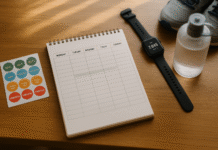
- Track mood/energy before and after to notice what helps most.
1. Reading That Actively Lowers Stress
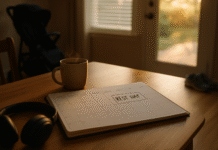
Reading is one of the fastest, most portable ways to downshift your nervous system; short sessions can slow heart rate, relax muscles, and quiet intrusive thoughts. Start with material that fits your current attention span—short stories, essays, or a comforting genre—so success feels easy. Paper beats screens for many people at night because it dodges notifications and blue light, but daylight reading spots are great, too. Mix “comfort reads” (re-reads, light fiction) with “stretch reads” (new genres or topics) to keep the habit joyful and fresh. Make it social with a tiny book club: two friends, one book, and a simple rule—one hour of reading a week, 30 minutes to chat.
How to do it
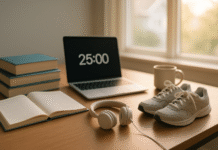
- Create a reading ritual: same chair, warm drink, lamp, and a 25-minute timer.
- Use a frictionless queue: stack 3–5 books within reach so you never stall.
- Chunk your progress: aim for 10–15 pages per sitting at first.
- Pair with bed wind-down: 6–15 minutes before sleep can help you settle.
- Try formats: paper for bedtime, audiobooks for walks/chores, library holds for budget wins.
Mini numbers & guardrails
- Time: 10–30 minutes counts; two or three sessions weekly is a strong start.
- Budget: free with libraries; used paperbacks often $1–$5.
- Goal cue: a simple log (pages read, mood before/after).
Close with this reminder: reading is not a productivity contest—aim for immersion, not completion.
2. Knitting (or Crochet) For Calm, Flow, and Tangible Progress
Knitting offers rhythmic, repetitive motion that soothes the stress response while giving you tactile proof of progress—few things are as satisfying as a scarf growing under your hands. It blends light cognitive load (counting stitches) with hand-eye rhythm, which nudges you into flow. Unlike screen-time, knitting fills “micro-moments” (commute, waiting rooms) with something quiet and restorative. Start with garter-stitch squares or a simple beanie; crochet’s single-hook method can be even easier for beginners. Group knitting—meetups, circles, or a friend on a couch—adds social warmth without pressure.
How to get started
- Beginner kit: worsted-weight yarn + 5–5.5 mm needles (or 5 mm crochet hook).
- First project: dishcloth or rectangle scarf; avoid patterns with many decreases.
- Learn the loop: one 20-minute video + 15 minutes of practice beats marathon tutorials.
- Track rows: use stitch markers or a row-counter app (phone in Do Not Disturb).
- Fix mistakes: keep a lifeline (threaded through stitches) to rescue later.
Common pitfalls
- Choosing fiddly yarn (splitty, fuzzy) that hides stitches.
- Starting too tight; loosen grip to avoid sore hands.
- Overscoping (complex colorwork) before muscle memory sets in.
Wrap-up: small, repeatable wins build confidence—finish something tiny, then level up.
3. Board Games & Tabletop Role-Playing For Connection (and Brain Gains)
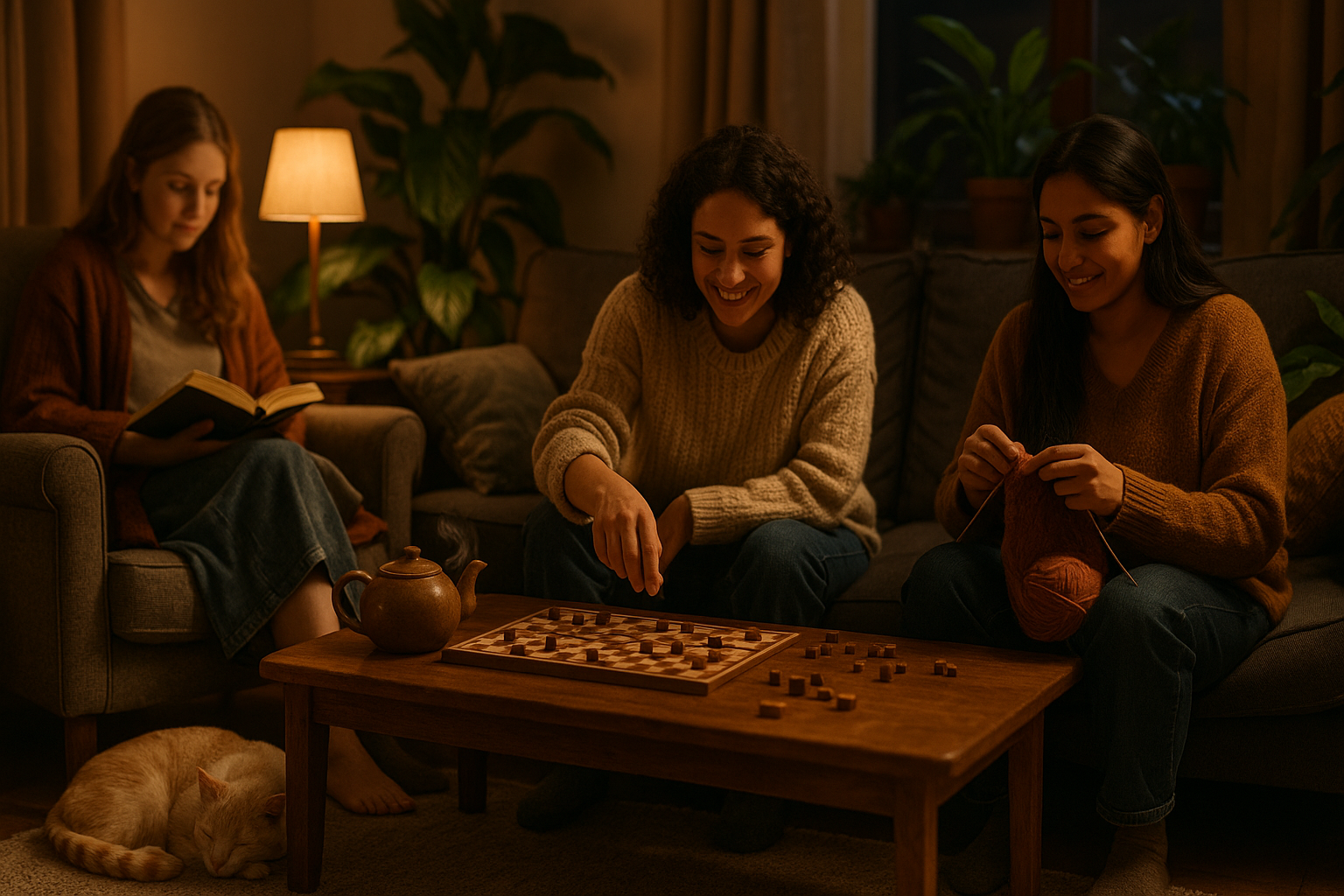
Tabletop games combine light strategy, storytelling, and face-to-face play—perfect for unwinding without a screen while strengthening social bonds. The key is matching complexity to the group and mood: calming co-ops for low-energy nights (e.g., Calico, Cascadia), quick fillers for laughs (Sushi Go!, Love Letter), and campaign nights for deep immersion (a friendly Dungeons & Dragons one-shot). Board games exercise planning and memory; role-playing games (RPGs) add collaborative problem-solving and gentle role-practice for social skills. Importantly, the table becomes a scheduled oasis—phones down, snacks out, shared focus on the same thing.
How to form a low-stress game night
- Pick a vibe: cooperative, competitive, or storytelling?
- Right length: 20–45 minutes on weeknights; save long games for weekends.
- Teach simply: start with theme, end condition, and what you do on your turn.
- Rotate hosts: share snacks/rules so one person isn’t the bottleneck.
- Safety tools (for RPGs): “lines & veils,” X-card, and session-zero expectations.
Mini case
- New group chooses Codenames (15 minutes) + Ticket to Ride (45 minutes). After two weeks, they try a 2-hour RPG one-shot with pre-made characters. Result: everyone stays engaged and wants more—difficulty scaled just right.
Bottom line: keep it light, keep it kind; the goal is laughter and connection, not crushing victory.
4. Journaling & Expressive Writing To Clear Mental Clutter
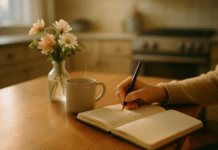
Journaling can be as simple as capturing three lines about your day or as structured as “expressive writing,” where you write freely about emotions or events for 15–20 minutes. The act of labeling feelings and shaping them into words helps you process stress, reframe challenges, and notice patterns you can change. It’s also forgiving: you don’t need to be “good” at writing to benefit. Many people prefer pen and paper because it slows thinking and reduces the urge to edit; others like tactile index cards for tiny wins.
Approaches to try
- Three-by-three: three sentences about what happened, what you felt, and what you need next.
- Morning pages (lite): 10 minutes stream-of-consciousness; don’t reread for a week.
- Gratitude with texture: one specific moment + why it mattered + how to repeat it.
- Prompt deck: shuffle cards like “Name one thing you postponed and why.”
- Expressive bursts: 15–20 minutes, 3–4 times over two weeks when emotions run high.
Mini-checklist
- A pen that glides, a notebook you like, and a place you can return to nightly.
- A simple closing cue: circle one actionable sentence (“Email Sam about boundary.”).
Remember: your journal serves you. If a format feels heavy, simplify until it invites you back.
5. Sketching & Drawing For Mindful Focus
Drawing focuses your attention on edges, light, and proportion—the kind of open-eyed concentration that pushes out ruminative thoughts. You don’t need talent; you need reps. Start with a soft pencil and cheap paper to remove pressure. Ten small sketches of household objects will work your visual muscles far better than one “perfect” portrait. Sketching is also portable: a pocket notebook turns bus rides, coffee lines, and park benches into mini art studios. Many people find that drawing makes the world feel more interesting, which lifts mood.
Tools & drills
- Starter kit: HB and 2B pencils, kneaded eraser, A5 sketchbook.
- Warm-ups: 1-minute gesture drawings, 10 blind-contour lines, 10 value boxes.
- Subjects: mugs, shoes, plants, folded towels—simple forms with clear shadows.
- Timer practice: two 10-minute sessions beat one 20-minute “when I have time.”
- Once weekly: a slightly longer 30–45 minute session to see progress.
Common mistakes
- Chasing realism too soon; focus on shapes and values first.
- Over-erasing; let imperfect lines teach your hand.
Close: let the pencil record what you see today; accuracy grows quietly with repetition.
6. Analog Photography To See (and Savor) Your World
Photography—especially film or fully manual digital—slows you down. Composing a frame, adjusting exposure, and waiting for a result turn casual looking into intentional seeing. This shift in attention can crowd out anxious loops while leaving you with tangible artifacts of your days. Film (35mm or instant) adds tactile rituals—loading, winding, archiving prints—that many people find soothing and screen-free. Prefer zero chemicals? Try a “walk with a camera” rule: shoot 12 frames on manual, then put the camera away.
How to make it mindful, not fussy
- Constrain choices: one camera, one lens (35–50mm), one film stock for 5 rolls.
- Shot lists: “3 reflections, 3 shadows, 3 hands at work, 3 tiny textures.”
- Analog feel without chemicals: instant cameras or mail-in film labs.
- Monthly zine: print 8–12 photos on ordinary paper; staple and date it.
- No screen rule: review contact sheets or prints only once a week.
Region notes
- If labs are scarce locally, group mail-ins with friends to split shipping; or use a second-hand instant camera for same-day prints.
Synthesis: photography multiplies moments of presence; keep gear simple so attention stays outside the viewfinder.
7. Houseplants & Gardening For Gentle, Green Therapy
Tending plants delivers steady, sensory routines—water, prune, repot—that build patience and offer quiet wins. Indoors, one or two resilient plants (snake plant, pothos) add texture and small daily care; outside, balcony herbs or a community plot deepen the ritual. Gardening pairs light movement with nature contact, both linked to lower stress and improved mood. It’s also social: seed swaps and neighborhood garden days connect you to people without small-talk pressure.
Starter plan
- Indoors: 2 plants + sticky note with watering cadence; rotate weekly for even light.
- Outdoors: container herbs (basil, mint), 6 hours of sun, drip tray, and mulch.
- Tools: hand trowel, pruners, watering can; gloves if dealing with thorns.
- Maintenance ritual: 10 minutes Saturday mornings: prune, dust leaves, water, note pests.
- Scale slowly: add a plant only when current ones have thrived for 4–6 weeks.
Mini case
- A small balcony with two herb boxes yields weekly mint tea and basil pasta; the grower reports “micro-pride” moments that punctuate stressful workdays.
Takeaway: plants make time visible—tiny care today, small growth tomorrow.
8. Cooking & Baking As Hands-On Self-Care
Cooking and baking create built-in structure: mise en place, step-by-step focus, and an edible reward. The sensory richness—aroma, texture, warmth—pulls attention into the present, while the clear start/finish boosts self-efficacy (“I can make a thing”). Start small: one-pan roast vegetables, a simple dal, or a loaf of no-knead bread. If cooking alone feels flat, cook in parallel with a friend on speakerphone, or host a monthly “potluck practice” where everyone tries a new recipe.
How to keep it soothing (not stressful)
- Choose “few-step” recipes: <30 minutes, <10 ingredients, 1–2 pans.
- Batch tiny: double sauces and freeze; avoid marathon meal-prep at first.
- Prep station: knife, board, towel, bin for scraps; clean while simmering.
- Baking starter: banana bread, brownies, or scones—high success rate.
- Share outcomes: gift a neighbor a slice; connection amplifies the reward.
Weekly template
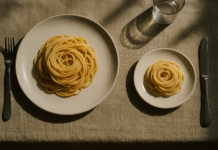
- Mon: 15-minute pasta + salad.
- Wed: sheet-pan veggies + protein.
- Sat/Sun: one “project” bake or soup you can freeze.
Bottom line: the kitchen is a studio; let curiosity, not perfection, lead.
9. Puzzles (Crosswords, Jigsaws, Logic) For Quiet, Absorbing Focus
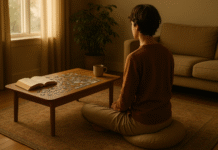
Puzzles offer structured challenge with immediate feedback—each fit or filled square sparks a small dopamine “click.” Crosswords build vocabulary and pattern recognition; jigsaws train visual scanning and patience; logic puzzles tickle reasoning. Keep difficulty matched to mood—choose Monday-level crosswords or 500-piece jigsaws for wind-down, save cryptics or 1,000-piece sets for rainy weekends. A coffee-table jigsaw can be a gentle “social magnet” in shared spaces—people drift over, place a few pieces, chat, and move on.
Practical setup
- Lighting: bright, even light prevents eye strain and frustration.
- Containment: use a puzzle mat or board that can slide under a couch.
- Piece sorting: edges first, then color/texture piles.
- Crossword tools: erasable pen/pencil; start with early-week grids.
- Time boxing: 15–20 minutes after dinner to avoid bedtime over-arousal.
Micro-example
- Place a 500-piece nature jigsaw near the window; add 20 pieces each evening. After a week, the “click-click” rhythm becomes the day’s most calming ritual.
Synthesis: pick puzzles that feel like a hug, not a test—you’re aiming for absorption, not achievement.
10. Walking In Nature (Hiking, Park Loops, Birdwatching)
A regular nature walk blends gentle cardio with sensory richness—rustling leaves, shifting light, birdsong—that reliably quiets mental noise. Even a 20–40 minute loop in an urban park can improve mood, reduce rumination, and reset attention. If “hiking” sounds intense, think “unhurried walking with noticing.” Birdwatching adds a playful scavenger-hunt layer; bring a pocket guide or app (used offline), or simply count how many species you can spot by color or size.
Make it sticky
- Same time, same place: your brain loves ritual—e.g., weekday lunch loop.
- Comfort kit: breathable shoes, water, small snack, sun protection.
- Noticing game: “5 greens, 4 textures, 3 sounds, 2 shadows, 1 cloud.”
- Buddy system: invite a friend monthly; solo walks the rest.
- Weather plan: light rain = hooded jacket and short route; extreme heat = morning walks and shade.
Region-specific note
- In hotter climates, aim for dawn/dusk and carry electrolytes; in colder ones, layer and favor wind-sheltered routes.
Wrap-up: consistency matters more than distance—nature works in small, repeated doses.
11. Calligraphy & Hand-Lettering For Meditative Precision
Calligraphy slows you down to a breath-paced rhythm: posture, pen angle, stroke order, release. It’s essentially moving meditation with an immediate visual payoff. The practice trains patience and micro-control while rewarding even short sessions; a few alphabets a week compound into graceful muscle memory. You don’t need fancy tools: a brush pen or dip nib, smooth paper, and a guide sheet will take you far. Make it social by lettering postcards to friends or labeling jars and gifts.
Starter flow
- Tools: entry brush pen (e.g., Pentel), smooth marker paper, basic guide sheets.
- Warm-ups: drills (upstrokes, downstrokes, ovals) for 5 minutes.
- Letters: lowercase first; group by shapes (o-a-d-g, then i-l-t).
- Words: short phrases you love (“deep breath,” “tea time”).
- Session: 15–25 minutes, 3 times weekly; stop while it still feels fun.
Common mistakes & fixes
- Heavy pressure on upstrokes: think feather-light going up.
- Rushing spacing: count “one-and” between letters to slow down.
- Paper scratches: use smoother paper or turn the sheet.
Takeaway: let the pen teach your pace; beauty emerges from repetition, not force.
12. Playing An Acoustic Instrument (Guitar, Ukulele, Piano) For Agency & Joy
Making music is deeply regulating: you control tempo and dynamics, feel vibrations in your hands, and hear immediate feedback as notes lock into place. Beginners often flourish on ukulele or keyboard due to low initial friction—three chords unlock dozens of songs. Short, consistent sessions beat heroic marathons. If you’ve avoided lessons out of fear of judgment, try self-paced tutorials plus a monthly check-in with a friendly teacher, or join a local strum circle where everyone sounds imperfect together.
Practice that fits real life
- The 10-minute rule: chord changes or scales for 7 minutes, one song for 3.
- Visible instrument: stand or hook so you’ll actually play.
- Backing tracks: slow a favorite track to 70–80% tempo and play along.
- Micro-goals: “Clean G-C-D changes x10” or “Left-hand five-finger pattern.”
- Social spark: once a month, trade a simple duet with a friend.
Mini numbers & gear
- Budget: ukulele $40–$80; entry keyboard $100–$200.
- Strings: change when dull or hard to tune; piano—no consumables needed.
- Noise: choose daytime or use mute options where possible.
Synthesis: treat music as playful craft, not performance; the body learns joyfully when pressure is light.
FAQs
1) What makes offline hobbies different from just “taking a break”?
Offline hobbies structure your downtime around focused attention and tangible feedback (pages read, rows knitted, pieces placed), which calms the nervous system more reliably than passive scrolling. They also produce artifacts—notes, stitches, photos—that reinforce progress and identity (“I’m a reader,” “I knit”). Over time, that identity shift helps stress-proof your routine.
2) I’m overwhelmed—how do I choose one hobby to start?
Pick the lowest-friction option you’re already curious about. If you have a book nearby, start with reading. If you love textures, try knitting; if you want more connection, try a short board game. Commit to two 20-minute sessions this week, then reassess how you felt before and after. Let enjoyment, not shoulds, pick the winner.
3) How much time do I actually need?
Surprisingly little. Most activities here deliver benefits in 10–30 minute sessions. Aim for 2–3 sessions per week to start. The key is consistency, not duration. Tiny, repeated contact with a calming activity beats occasional big pushes.
4) What if I have kids or roommates and no quiet space?
Choose hobbies that scale to noise: jigsaws on a coffee table, coloring or sketching with kids, or a “family read-in” where everyone picks a book for 15 minutes. Use portable kits (a knitting pouch, a journal roll-up) so you can claim small pockets of time on the couch or at the table.
5) Are these hobbies expensive?
They can be very low-cost. Libraries and used bookshops cover reading; yarn and basic needles can be under $15; a deck-builder or party game costs less than dinner out; plants propagate for free. Look for tool libraries, community centers, and second-hand options to experiment before investing.
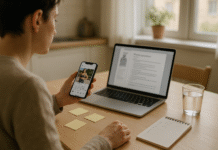
6) I struggle to stay off my phone—any tips to keep sessions screen-free?
Set Do Not Disturb, put the phone in another room, or use a wind-up kitchen timer. Make your hobby tools visible (book on pillow, guitar on stand, puzzle on board). Ritual cues—lamp on, tea made—tell your brain, “we’re doing the relaxing thing now.”
7) Can offline hobbies replace therapy or medication?
No. Hobbies are supportive practices that improve wellbeing and coping, but they’re not substitutes for professional care. If you face persistent anxiety, depression, or health issues, consult a clinician; you can still use these activities alongside treatment as restorative anchors.
8) How do I make hobbies social without turning them into obligations?
Keep it light and flexible. Try a fortnightly board-game hour, a rotating “soup & sketch” night, or a micro book club (two friends, one novella). Name a default activity so planning doesn’t become a chore, and allow “hard passes” without guilt.
9) What if I drop the habit after a week?
That’s normal. Treat restarts as part of the plan. Reduce friction (simpler project, shorter sessions), pair the hobby with an existing cue (after dinner), and track one small metric (rows, minutes, pages). Progress, not perfection, builds momentum.
10) How do I measure whether a hobby is actually helping me unwind?
Use a quick before/after check-in: rate stress 1–10 and note one body cue (breath, jaw tension). After two weeks, look for a trend. You can also notice spillovers—better sleep onset, gentler mornings, improved patience. If a hobby consistently feels draining, switch.
11) Are there offline hobbies I should avoid at bedtime?
Anything that’s highly activating—intense strategy games, fast instrument practice, or spicy foods from a cooking session—can be too stimulating late at night. Evening-friendly options include reading, light knitting, gentle puzzles, and calligraphy in warm light.
12) I live in a small space—what fits?
Prioritize packable kits: a shoebox puzzle board, a roll-up calligraphy mat, a single plant plus a watering syringe, a compact keyboard or ukulele on a wall hook. Vertical storage and trays let you set up and tear down in under 2 minutes.
Conclusion
Picking up an offline hobby isn’t about rejecting technology; it’s about rebalancing attention so your mind can coast instead of constantly braking. Each activity in this list offers a different relaxation channel: reading for narrative immersion, knitting for rhythmic flow, board games for playful connection, journaling for clarity, drawing for mindful focus, photography for intentional seeing, gardening for green rituals, cooking for sensory satisfaction, puzzles for quiet absorption, nature walks for reset, calligraphy for breath-paced precision, and music-making for embodied joy. Start with one, protect two short sessions this week, and make the setup friction-free. As you settle into a rhythm, you’ll find that the day feels roomier and your mood steadier—not because life got simpler, but because you now have reliable places to rest your attention.
Your next step: pick the easiest hobby on this list and schedule a 20-minute session today—then notice how you feel afterward.
References
- Health Benefits of Reading Books, WebMD, Nov 25, 2024. https://www.webmd.com/balance/health-benefits-of-reading-books
- Reading for Stress Relief, University of Minnesota—Taking Charge of Your Wellbeing, 2024. https://www.takingcharge.csh.umn.edu/reading-stress-relief
- Emotional and physical health benefits of expressive writing, Advances in Psychiatric Treatment (Cambridge University Press), 2005. https://www.cambridge.org/core/journals/advances-in-psychiatric-treatment/article/emotional-and-physical-health-benefits-of-expressive-writing/ED2976A61F5DE56B46F07A1CE9EA9F9F
- Effects of Expressive Writing on Psychological and Physical Health, Psychiatry (Edgmont) via NIH/PMC, 2013. https://pmc.ncbi.nlm.nih.gov/articles/PMC3830620/
- The Benefits of Knitting for Personal and Social Wellbeing in Adulthood, British Journal of Occupational Therapy, 2013. https://journals.sagepub.com/doi/abs/10.4276/030802213×13603244419077 (open-access PDF: https://www.simplypsychology.org/wp-content/uploads/riley-et-al-2013-the-benefits-of-knitting-for-personal-and-social-wellbeing-in-adulthood-findings-from-an-international.pdf)
- Playing board games, cognitive decline and dementia: a French population-based cohort study, BMJ Open, 2013. https://pmc.ncbi.nlm.nih.gov/articles/PMC3758967/
- Aging with board games: fostering well-being in the older population, Frontiers in Psychology, 2024. https://pmc.ncbi.nlm.nih.gov/articles/PMC11608991/
- Nature experience reduces rumination and subgenual prefrontal cortex activation, Proceedings of the National Academy of Sciences, 2015. https://www.pnas.org/doi/10.1073/pnas.1510459112 (PubMed: https://pubmed.ncbi.nlm.nih.gov/26124129/)
- Gardening for health: a regular dose of gardening, Clinical Medicine via NIH/PMC, 2018. https://pmc.ncbi.nlm.nih.gov/articles/PMC6334070/
- Why gardening makes us feel better, Royal Horticultural Society, updated 2021–2024. https://www.rhs.org.uk/advice/health-and-wellbeing/articles/why-gardening-makes-us-feel-better
- Study Shows Crossword Puzzles Beat Computer Games in Slowing Memory Loss, Duke University School of Medicine (NEJM Evidence coverage), Nov 29, 2022. https://medschool.duke.edu/news/study-shows-crossword-puzzles-beat-computer-games-slowing-memory-loss
- Jigsaw Puzzling Taps Multiple Cognitive Abilities and Is a Potential Protective Factor for Cognitive Aging, Frontiers in Aging Neuroscience, 2018. https://pmc.ncbi.nlm.nih.gov/articles/PMC6174231/
- The role of music in promoting health and wellbeing: a systematic review, European Journal of Public Health, 2023. https://academic.oup.com/eurpub/article/33/4/738/7199198 (open-access summary: https://pmc.ncbi.nlm.nih.gov/articles/PMC10393487/)
- Houseplants Have Powerful Health Benefits, TIME, Feb 14, 2023. https://time.com/6258638/indoor-plants-health-benefits/
- Active Visual Art Therapy and Health Outcomes: Systematic Review, JAMA Network Open, 2024. https://jamanetwork.com/journals/jamanetworkopen/fullarticle/2823638 (open-access: https://pmc.ncbi.nlm.nih.gov/articles/PMC11393726/)
- Creative Arts Interventions for Stress Management and Prevention—A Systematic Review, Frontiers in Psychology, 2018. https://pmc.ncbi.nlm.nih.gov/articles/PMC5836011/
- Understanding the association of calligraphy activities with peace of mind and self-focused attention, Frontiers in Psychology, 2024. https://pmc.ncbi.nlm.nih.gov/articles/PMC11417683/
- Calligraphy and meditation for stress reduction, Evidence-Based Complementary and Alternative Medicine, 2014. https://pmc.ncbi.nlm.nih.gov/articles/PMC3928403/
- Psychosocial Benefits of Cooking Interventions: A Systematic Review, Health Education & Behavior, 2018. https://pmc.ncbi.nlm.nih.gov/articles/PMC5862744/
- Culinary medicine cooking workshops as add-on therapy in depression (pilot), Nutrients, 2024. https://www.mdpi.com/2072-6643/16/22/3973