


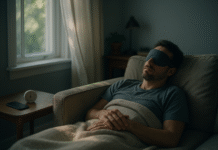

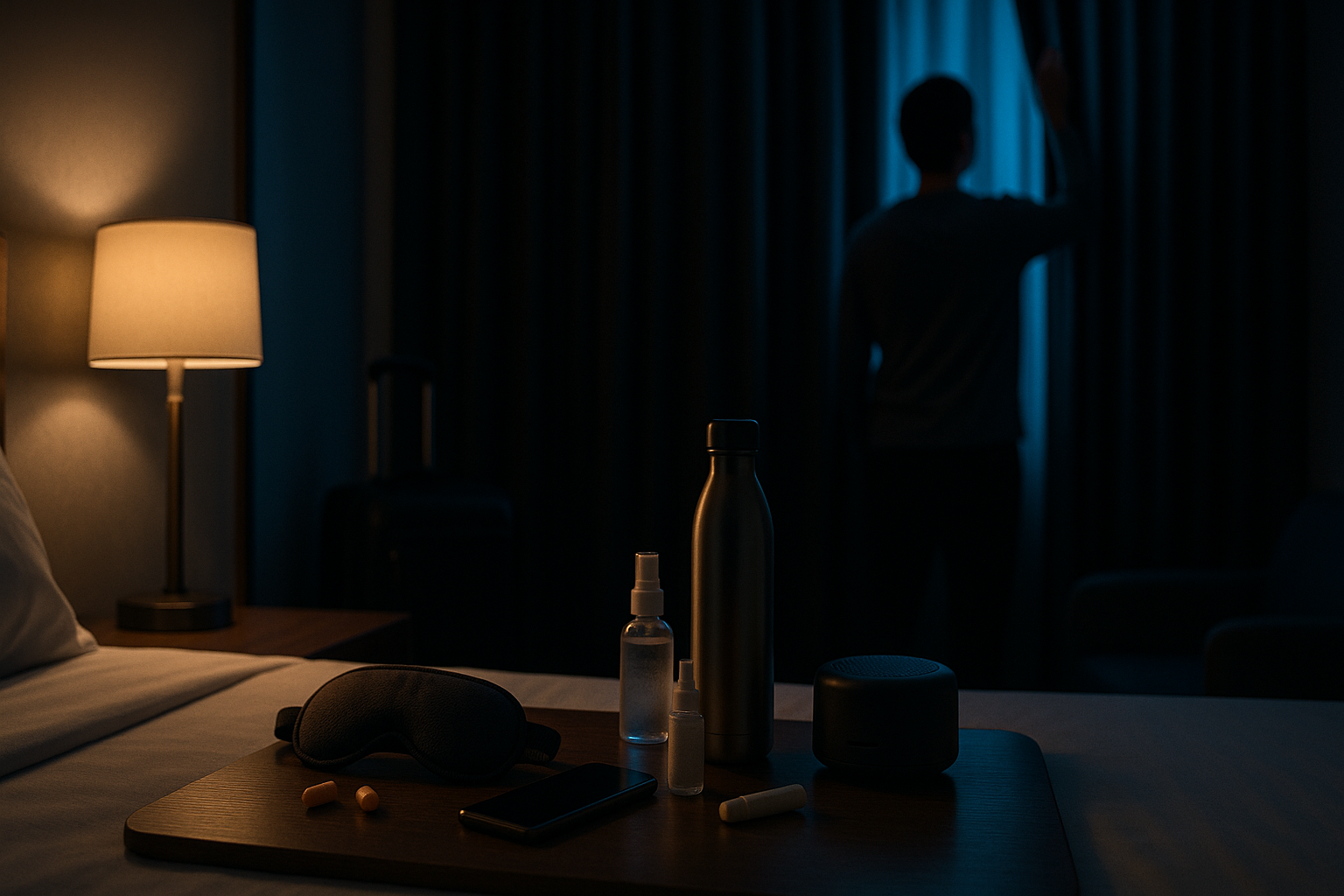
If you travel often, the fastest way to protect your sleep is to control light, timing, and your sleeping environment. This guide shows frequent travelers how to apply practical hygiene habits—from hydration and hand care to portable gear and circadian timing—so you arrive rested and stay sharp. It’s written for business road warriors, flight-hopping creatives, and anyone who clocks serious miles. Quick answer: prioritize timed light exposure, keep caffeine and alcohol strategic, stay hydrated, and carry a simple sleep kit to make any room cool, dark, and quiet.
Medical note: This article is informational and not a substitute for personal medical advice. If you have a sleep disorder, use prescription sleep aids, or manage chronic conditions, talk with your clinician before changing routines or using supplements.
Fast-start checklist (skim this before your next trip): Shift your sleep window 1–3 days pre-trip, seek daylight on arrival mornings, dim screens at night, hydrate in-flight, avoid heavy meals late, stop caffeine 6–8 hours before bed, limit alcohol in the evening, power-nap 20–30 minutes if needed (not late local afternoon), and use an eye mask + earplugs + white noise to standardize any room.
1. Lock a Pre-Trip Sleep Window and Shift It Toward Your Destination
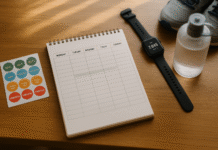
The most reliable way to cut jet lag is to start adjusting before you fly. Begin by locking consistent bed/wake times for 2–3 nights, then nudge that window in the direction of your destination (earlier for eastbound, later for westbound). Doing this primes your body clock for the new light/dark cycle so you land closer to local time. Pair the schedule shift with the right light timing—more morning light when moving earlier, more late-day light when shifting later—to accelerate adaptation. Travelers who follow a structured pre-shift usually feel less groggy, think more clearly during meetings, and need fewer recovery days.
1.1 Why it matters
Jet lag is a circadian rhythm mismatch. Your internal “home clock” won’t instantly sync to a new time zone, but pre-flight advances or delays plus targeted light exposure shorten that mismatch. Evidence-based routines from sleep medicine recommend sleep scheduling and light timing as core treatments for jet lag, with melatonin used selectively.
1.2 How to do it
- Eastbound: Move bedtime/wake time 30–60 minutes earlier each day for 2–3 days. Get bright light soon after waking; wear sunglasses and dim screens late evening.
- Westbound: Shift 30–60 minutes later per day. Seek late-afternoon/early-evening light; keep mornings dimmer for a day or two.
- Buffer the schedule: Land a day early for critical events when possible.
- Use a plan: Apps based on circadian science (e.g., light-timing planners) can generate personalized schedules.
Synthesis: Locking and nudging your sleep window, synchronized with light, is the single highest-leverage habit to reduce jet lag’s impact.
2. Master Light: Seek It Strategically, Block It Aggressively
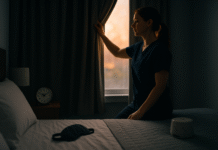
Light is your body clock’s strongest cue. The right light at the right time speeds adjustment; the wrong light slows it. On flight day and the first 48 hours after arrival, be deliberate: treat morning light as medicine when you need to wake earlier on local time, and block evening light to wind down. Inside planes and hotels, use tools to simulate this rhythm: blue-light-reduced screens, dim warm bulbs at night, and an eye mask when you need daytime sleep.
2.1 Numbers & guardrails
- Morning daylight (15–30 minutes) jump-starts alertness and anchors the day.
- Evening dimming (1–2 hours pre-bed): reduce bright/blue light to let melatonin rise.
- Eye mask + blackout: essential when the room won’t go dark or you’re trying a recovery nap.
2.2 Mini-checklist
- Sit near a window during breakfast; take a 10–20 minute daylight walk after landing.
- Sunglasses late-evening if you must be out under bright lights.
- Night modes on devices after sunset; face phone down on the nightstand.
Synthesis: Treat light like a prescription: dose morning exposure, taper evening brightness, and block light when you need to protect sleep.
3. Hydration on the Fly: Work With Dry Cabin Air
Aircraft cabins are famously dry; humidity often falls into the low-teens after takeoff. That dry air can irritate eyes and airways and may increase insensible water loss, making you feel parched and fatigued. While the science on outright dehydration risk is mixed, practical hydration clearly supports comfort and alertness during and after long flights. Combine steady water sips with smart choices—go easy on diuretics like alcohol, and don’t rely on very sugary beverages.
3.1 How to do it
- Bring a reusable bottle and ask crew to top it off; aim for a few sips every 15–20 minutes while awake.
- Alternate beverages: for each coffee, tea, or alcoholic drink, add one full glass of water.
- Nasal & skin comfort: a saline spray and lip balm curb dryness; consider moisturizing eyedrops if you’re prone to irritation.
- Arrival routine: rehydrate with 500–700 ml water across the first hour on the ground.
3.2 Numbers & guardrails
- Typical cabin relative humidity: ~10–20%.
- Alcohol and caffeine can fragment sleep and can contribute to fluid loss; keep both strategic (see Sections 4 and 9).
Synthesis: Don’t overcomplicate it—steady water, fewer dehydrating choices, and dryness care make flights more comfortable and recovery smoother.
4. Time Your Food and Caffeine to Protect Night Sleep
Meal timing and stimulants can make or break your first nights on local time. Heavy late meals push your body toward wakefulness, and caffeine lingers (average half-life ~5 hours, sometimes longer), disrupting sleep even when you feel tired. On travel days, front-load bigger meals and keep evenings lighter. Use caffeine earlier for performance, then taper well before bed.
4.1 Numbers & guardrails
- Caffeine cut-off: avoid caffeine 6–8 hours before local bedtime; sensitive travelers may need 10 hours.
- Daily caffeine limit (general adult guidance): ≤400 mg from all sources.
- Evening food: choose lighter, earlier dinners; if hungry pre-bed, a small snack (e.g., yogurt, fruit, or a few nuts) beats a full meal.
4.2 Mini-checklist
- Know your caffeine map: espresso ≈ 60–80 mg; 12-oz drip coffee ≈ 150–200 mg; black tea ≈ 40–70 mg; energy drinks vary widely.
- Skip spicy/greasy late meals that can cause reflux when lying down.
- Hydrate with water alongside any afternoon coffee.
Synthesis: Treat food as a timer and caffeine as a tool—use both earlier, taper later, and you’ll fall asleep faster and sleep deeper.
5. Nap Smart: Short, Early, and Strategic
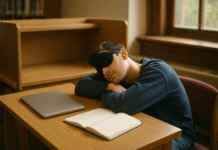
Naps can rescue performance after a red-eye or early arrival, but unmanaged naps can sabotage your first night. The sweet spot is a short, early nap that relieves sleep pressure without stealing from nighttime sleep. Think of it as a bridge, not a new habit: use it to function safely (e.g., driving) or perform well in afternoon meetings, then commit to a proper local bedtime.
5.1 How to do it
- Aim for 20–30 minutes (set two alarms), ideally before 3 p.m. local time.
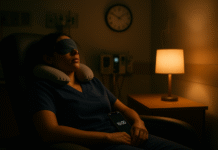
- Use eye mask + earplugs to fall asleep quickly and keep it brief.
- If you must nap longer (e.g., safety-critical performance), plan a 90-minute full cycle, but expect some grogginess on wake.
5.2 Mini-case
- Land 8 a.m. after an overnight flight. Plan 30 minutes at 1:30 p.m., then walk outside for sunlight. Keep bedtime 9:30–10:30 p.m. local.
Synthesis: A short, early nap restores function without wrecking your night—use it deliberately and pair it with daylight afterward.
6. Build a Minimalist Travel Sleep Kit
A small kit standardizes your sleep anywhere. The goal is repeatable comfort: darkness, quiet, cool air, clean hands, and a familiar pillow feel. You don’t need much—an eye mask, earplugs, white-noise app or small sound machine, a compact travel pillow, and hand-hygiene basics. If you use CPAP, pack it as a medical device with power options and know screening procedures.
6.1 Tools/Examples
- Darkness: contoured eye mask, travel-size blackout clips or a few binder clips for curtains.
- Quiet: foam or silicone earplugs; noise-canceling headphones if you prefer audio.
- Comfort: neck pillow for flights; lightweight layer to manage temperature.
- Hygiene: alcohol hand sanitizer ≥60%, small pack of wipes for high-touch surfaces.
- Medical devices: CPAP users—pack in a separate bag; it’s an assistive device and allowed in carry-on with special screening.
6.2 Mini-checklist
- Pre-trip: confirm outlet adapters, extension cord, and any battery needs (carry spare lithium batteries in carry-on only).
- Keep sanitizer accessible and wash hands before eating or touching your face.
Synthesis: A tiny kit neutralizes noisy neighbors, bright rooms, and germy surfaces—making decent sleep portable.
7. Make Any Room Cool, Dark, and Quiet in 5 Minutes
Hotel rooms vary wildly, but your sleep recipe doesn’t. Cooler temps, minimal light, and steady sound dramatically improve sleep quality. Aim for a comfortably cool room and eliminate stray light sources (including the alarm clock glow). If the HVAC hum or street noise fluctuates, add a constant sound layer to mask peaks.
7.1 How to do it
- Cool: set the thermostat to a comfortable, slightly cool setting and use breathable bedding.
- Dark: close blackout curtains; if they gap, use binder clips; cover LEDs with bandages or tape.
- Quiet: run a white-noise app/device; place a towel at the door gap to block hallway noise.
7.2 Numbers & guardrails
- Many sleep organizations suggest a cool bedroom; roughly the mid-60s °F (~18–20 °C) works well for many adults.
- Keep screens off or in night mode at least 30 minutes before bed.
Synthesis: Five minutes of room prep—cooler air, blackout, steady sound—often makes the difference between tossing and a full, restorative night.
8. Move Daily—But Not Right Before Bed
Physical activity improves sleep quality and daytime alertness, especially on travel days loaded with sitting. Even short bouts—lobby stretches, brisk walks, stair intervals—help. The caveat: intense workouts too close to bedtime can make falling asleep harder, especially when your clock is already confused. On arrival day, schedule movement earlier and use light exposure to reinforce the new daytime.
8.1 How to do it
- Morning/early-afternoon: 20–40 minutes brisk walking or moderate cardio.
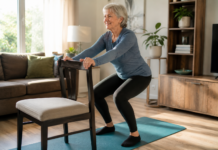
- Micro-moves: walk the terminal, take stairs, do mobility 5–10 minutes in your room.
- Evening guardrail: finish vigorous exercise ≥3 hours before planned bedtime.
8.2 Mini-checklist
- Pack shoes you’ll actually wear.
- Keep a body-weight routine (squats, lunges, planks) saved on your phone.
- Pair a daylight walk with coffee earlier; skip stimulants later.
Synthesis: Consistent, earlier movement improves sleep—use it to reset after long sits, then taper effort as bedtime nears.
9. Treat Alcohol as a Sleep Disruptor, Not a Nightcap
Alcohol can make you feel sleepy, but it fragments sleep and suppresses REM, leaving you less restored. On the road, that tradeoff worsens jet lag and next-day performance. If you choose to drink, keep it moderate and earlier, and avoid it in the 3–4 hours before bedtime. Hydrate alongside any alcohol, and never combine with sedatives without clear medical guidance.
9.1 How to do it
- Skip on red-eyes and first nights in a new time zone.
- If drinking socially, cap to 1 drink and stop ≥3 hours before bed.
- Alternate water 1:1 with alcoholic drinks.
9.2 Mini-checklist
- Know local pour sizes; a “glass of wine” may be 150–200 ml.
- Watch for middle-of-the-night wakeups after late drinking—that’s a red flag your sleep is being fragmented.
Synthesis: For better sleep depth and next-day clarity, push alcohol out of your pre-bed window or skip it entirely on key nights.
10. Keep Hands Clean and High-Touch Surfaces Tidy
Good hand hygiene isn’t just about infection; it also prevents the minor colds that derail sleep and productivity on the road. Wash with soap and water when you can; otherwise use alcohol-based sanitizer (≥60%). Give quick attention to high-touch items you’ll handle at night—phone, remote, doorknobs—so you’re not transferring grime as you unwind.
10.1 How to do it
- Wash hands for 20 seconds before eating and after transit.
- Use sanitizer ≥60% alcohol when sinks aren’t available; rub until dry.
- Wipe the TV remote, door handles, and phone screen on check-in.
10.2 Mini-checklist
- Keep sanitizer in your pocket or bag side pouch.
- Avoid touching your face after transit until you’ve cleaned hands.
- Pack a few disinfecting wipes; use on tray tables and armrests before long stints.
Synthesis: Simple, consistent hand care keeps you healthier, reduces trip disruptions, and indirectly safeguards sleep.
11. Use Melatonin Thoughtfully—If Your Clinician Says It’s Right for You
Melatonin signals darkness to your body clock and, when timed correctly, can help with jet lag. It can be useful when your schedule forces sleep at an unusual local time (e.g., early local bedtime after an eastbound flight). But timing and dose matter, and melatonin can interact with medications. Talk with your clinician first—especially if pregnant, managing chronic conditions, or giving it to children.
11.1 Numbers & guardrails
- Many adult protocols use low doses (often 0.5–3 mg) 30–60 minutes before a targeted bedtime; more isn’t necessarily better.
- Timing matters more than dose: take it when you want your clock to see “night.”
- Quality control: choose reputable brands with third-party testing.
11.2 How to get value
- Combine melatonin with correct light timing and sleep schedule shifts; don’t use it as a standalone fix.
- Trial at home before a major trip to see how you respond.
Synthesis: Melatonin can be effective for jet lag when timed precisely and medically appropriate—use it deliberately, not casually.
12. If You Use CPAP, Travel With It—and Keep It Clean
For travelers with sleep apnea, consistent CPAP use is non-negotiable. The good news: CPAP is a medical device that airlines allow in carry-on, and you can keep therapy consistent wherever you sleep. Pack it in a dedicated bag, prepare for security screening, bring an extension cord, and review your battery/plug needs for international trips. Clean your mask and tubing regularly so you’re not breathing through accumulated oils or dust.
12.1 How to do it
- Carry on your CPAP in its own bag; it’s an assistive device and doesn’t count against your carry-on allowance.
- At security, remove the device from its case if asked; masks/tubing can usually remain bagged.
- Pack adapters, extension cord, and any spare filters; keep distilled water needs in mind per airline rules.
12.2 Mini-checklist
- Label your device with your name and contact info.
- Wipe down mask cushion daily; do a deeper clean per manufacturer guidance.
- Confirm power at hotels or request a room near an outlet.
Synthesis: Consistent, clean CPAP use on the road preserves sleep quality and daytime performance—plan the logistics and bring it every time.
FAQs
1) What’s the single most effective habit to cut jet lag?
Timed light exposure paired with a gradual sleep schedule shift 1–3 days before travel is the highest-leverage change. Light is your body clock’s main cue: seek morning light when you need to be earlier on local time, and reduce evening light to bring melatonin up. Add a steady sleep window and you’ll usually adapt faster.
2) Is it better to sleep on the plane or stay awake?
It depends on arrival timing. If sleeping aligns with your destination night, sleep on board (use eye mask, earplugs, neck pillow). If it’s daytime at destination, limit yourself to short naps to avoid stealing from local nighttime sleep. Always choose safety—if you must drive shortly after landing, a short pre-drive nap is smart.
3) How much water should I drink during a long-haul flight?
There’s no one number for everyone, but steady sipping works well: a few mouthfuls every 15–20 minutes while awake. Cabin air is dry, so lip balm, saline spray, and eyedrops can help comfort. Avoid relying on alcohol or very sugary drinks; alternate with water to stay balanced.
4) When should I stop caffeine on travel days?
Aim to stop 6–8 hours before local bedtime (sensitive travelers may need 10 hours). Use caffeine earlier for performance—pair with daylight and movement—and taper in the afternoon. Keep total daily intake ≤400 mg unless your clinician tells you otherwise.
5) Do blue-light filters on phones actually help?
They reduce the melatonin-suppressing component of light, but overall brightness and timing matter too. Night modes help when you must use devices, yet the best choice within 1–2 hours of bed is to minimize screens, dim room lights, and use an eye mask if needed.
6) Are alcohol or a “nightcap” good ideas after a long flight?
Not if you care about sleep quality. Alcohol can shorten time to sleep but fragments the night and suppresses REM, leaving you groggy. If you drink, keep it moderate and early, hydrate alongside, and avoid the last 3–4 hours before bedtime.
7) Should I take melatonin for jet lag?
It can help when timed correctly, but it’s not for everyone and can interact with medications. Discuss with your clinician first, especially if you’re pregnant, have chronic conditions, or plan to give it to kids. If appropriate, low doses (often 0.5–3 mg) 30–60 minutes before a targeted bedtime are commonly used in studies—paired with proper light timing.
8) What if I wake at 2–3 a.m. local time and can’t get back to sleep?
Stay calm and dark: keep lights low, avoid screens, and try a quiet routine (breathing, progressive muscle relaxation). If you’re awake >20 minutes, get out of bed and read something low-stimulus until sleepy. The next day, prioritize morning light, movement, and no late caffeine, and avoid long late-day naps.
9) Is there an ideal hotel room temperature for sleep?
Many adults sleep best slightly cool. Aim roughly for the mid-60s °F (~18–20 °C) with breathable bedding. If the room won’t cool, drop the thermostat as low as allowed, use a fan, and switch to lighter covers.
10) Do I need a fancy travel pillow, or will any do?
Comfort beats branding. Choose a pillow that stabilizes your head without tilting your neck. Inflatable models save space; memory-foam rings are quieter. Pair with eye mask and earplugs and you’ll get more out of short plane naps.
11) I travel with CPAP—can I bring it onboard without fees?
Yes. CPAP is an assistive medical device and allowed in carry-on; it typically doesn’t count against your bag limit. Be ready to remove the machine for X-ray; masks/tubing can often stay in the bag. Pack adapters, an extension cord, and any battery per airline rules.
12) What should be in a basic travel health/sleep kit?
Keep it simple: eye mask, earplugs, sanitizer ≥60% alcohol, a few disinfecting wipes, lip balm, saline nasal spray, white-noise app/device, and a collapsible bottle. If you take essential medications or use CPAP, include those plus adapters and spares. This kit standardizes decent sleep anywhere.
Conclusion
Frequent travel doesn’t have to mean chronically bad sleep. The repeatable formula is simple: time your light, lock a consistent sleep window that you nudge toward local time, hydrate through dry flights, eat and caffeinate earlier, and engineer your room to be cool, dark, and quiet. Layer in a compact sleep kit and, if medically appropriate, precise melatonin timing. These habits compound fast—better mood, clearer thinking, more resilient immune function, and stronger performance in the hours that matter.
Before your next itinerary, pick two habits from this guide to implement immediately (for most travelers: light timing and caffeine cut-off), then add one more each trip. Your body clock will learn the drill.
Ready to upgrade your next trip? Pack your sleep kit today and schedule your light like a pro.
References
- Jet Lag Disorder (CDC Yellow Book), Centers for Disease Control and Prevention, April 23, 2025. https://www.cdc.gov/yellow-book/hcp/travel-air-sea/jet-lag-disorder.html
- Healthy Sleep Habits, American Academy of Sleep Medicine (Sleep Education), April 2, 2021. https://sleepeducation.org/healthy-sleep/healthy-sleep-habits/
- How to Get Over Jet Lag: Tips, Suggestions, and Treatments, Sleep Foundation, July 29, 2025. https://www.sleepfoundation.org/travel-and-sleep/how-to-get-over-jet-lag
- Jet Lag—Diagnosis and Treatment, Mayo Clinic, November 19, 2022. https://www.mayoclinic.org/diseases-conditions/jet-lag/diagnosis-treatment/drc-20374031
- A Brief Introduction to Passenger Aircraft Cabin Indoor Air Quality, ASHRAE Journal (archival revision), October 2020. https://www.ashrae.org/file%20library/technical%20resources/ashrae%20journal/walkinshaw-october-2020–archival-revision.pdf
- Up in the Air: Evidence of Dehydration Risk and Long-Haul Flight, Nutrients (PMC), 2020. https://www.ncbi.nlm.nih.gov/pmc/articles/PMC7551461/
- Hand Sanitizer Facts & Guidelines, Centers for Disease Control and Prevention, March–April 2024. https://www.cdc.gov/clean-hands/about/hand-sanitizer.html and https://www.cdc.gov/clean-hands/data-research/facts-stats/hand-sanitizer-facts.html
- Spilling the Beans: How Much Caffeine Is Too Much?, U.S. Food & Drug Administration, August 28, 2024. https://www.fda.gov/consumers/consumer-updates/spilling-beans-how-much-caffeine-too-much
- Caffeine Effects on Sleep Taken 0, 3, or 6 Hours Before Bedtime, Journal of Clinical Sleep Medicine (PMC), 2013. https://www.ncbi.nlm.nih.gov/pmc/articles/PMC3805807/
- Guideline Update: Circadian Rhythm Sleep Disorders, American Academy of Sleep Medicine (Practice Parameters), 2007. https://aasm.org/resources/practiceparameters/pp_circadianrhythm.pdf
- Advancing Circadian Rhythms Before Eastward Flight, Sleep (PubMed), 2005. https://pubmed.ncbi.nlm.nih.gov/15700719/
- Nebulizers, CPAPs, BiPAPs, and APAPs—What Can I Bring?, Transportation Security Administration, current page. https://www.tsa.gov/travel/security-screening/whatcanibring/items/nebulizers-cpaps-bipaps-and-apaps