
















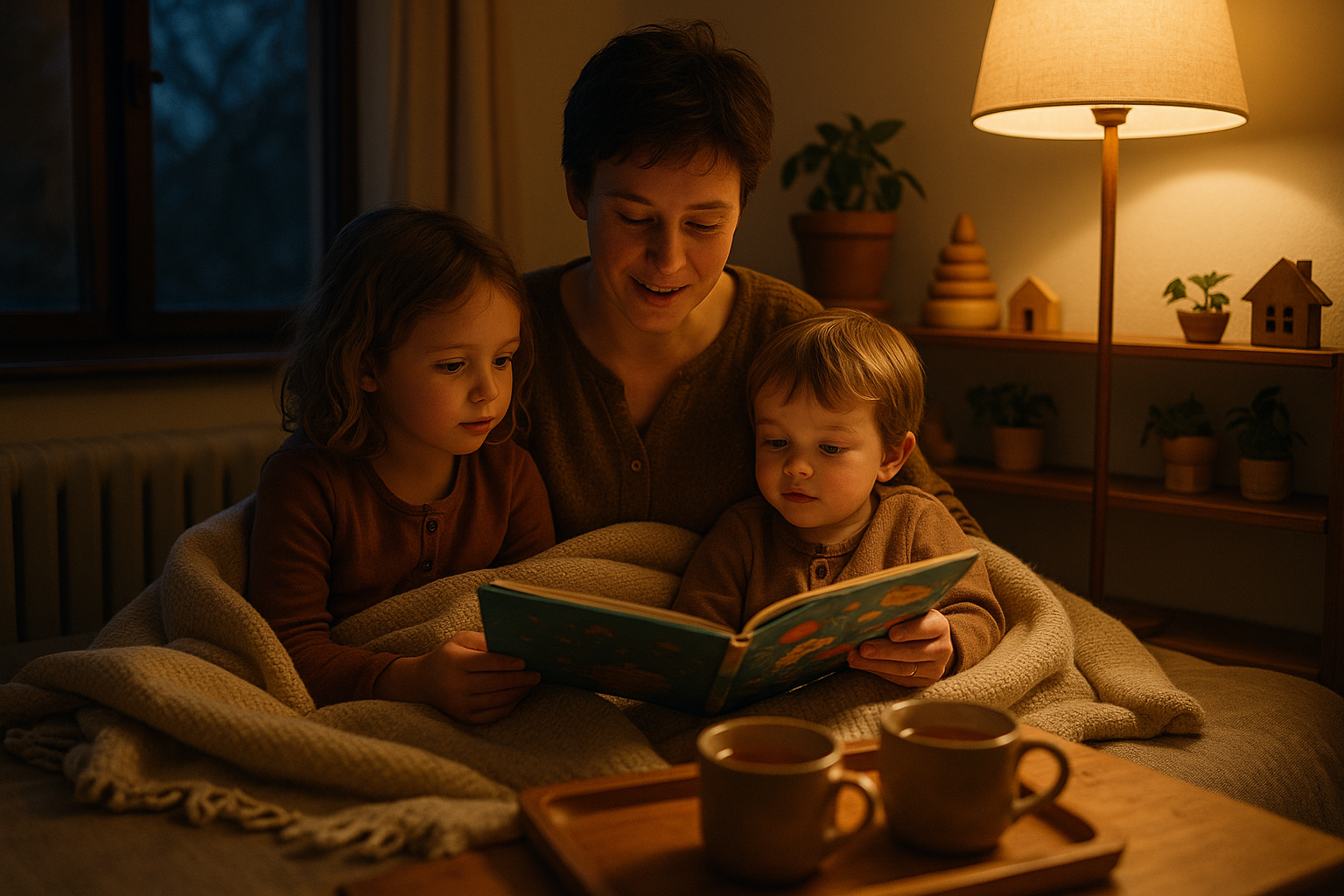
Rest isn’t just sleep; it’s a family culture that teaches kids how to notice their energy, downshift their bodies, and choose calming activities on purpose. Teaching kids about rest means building predictable, low-stimulus rituals that tell the brain, “you’re safe; it’s time to slow down.” In practical terms, that looks like short, repeatable traditions—storytime, nature walks, tea and talk—that anchor your day or week. This guide gathers 12 proven traditions with steps, time estimates, and guardrails you can adapt for toddlers through tweens. It’s written for busy families who want less chaos and more calm. Quick note: this article offers general, non-medical guidance. If you’re concerned about sleep, sensory needs, or behavior, speak with your pediatrician or a qualified clinician.
Quick start: how to build a rest tradition (in 5 steps).
- Pick one small ritual you can do most days. 2) Tie it to an existing anchor (after dinner, Saturday morning). 3) Keep it short (15–40 minutes). 4) Reduce light/noise/screens. 5) Involve kids in setup and choices so it sticks.
1. Hold a Weekly “Rest Hour” (A Mini Family Sabbath)
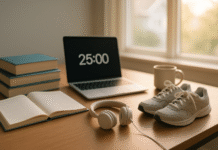
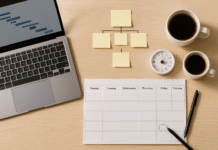
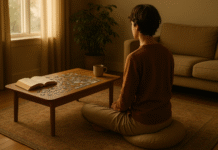
A simple, weekly “Rest Hour” teaches kids that rest is scheduled on purpose, not only when we’re exhausted. Choose a consistent time—say, Sunday 3–4 p.m.—and protect it like an appointment. Announce the start with a small ritual (lighting a candle, ringing a chime, or setting a sand timer) so kids feel the shift. Activities should be low-sensory and screen-free: independent reading, puzzles, coloring, journaling, or gentle stretching together. The point isn’t silence or perfection; it’s creating a repeatable pocket of slowness that children can trust. Over time, kids begin to anticipate Rest Hour, gather their supplies, and self-direct calm choices. Keep expectations light: if it devolves into giggles one week, that’s still practice at downshifting.
1.1 Why it matters
Children thrive on predictability. A weekly Rest Hour builds a rhythm where bodies and brains learn a reliable cue: this is when we go quiet. That repetition strengthens self-regulation and gives everyone—adults included—permission to pause.
1.2 How to do it
- Pick a fixed day/time and place (e.g., living room rug, balcony, or shaded courtyard).
- Create a simple opener (play the same 30-second instrumental, light a candle, or flip a “Rest Hour” card).
- Offer a “menu” of quiet options kids can choose from.
- Use an analog timer kids can see; start with 20–30 minutes and expand to 60.
- End the hour with a one-sentence reflection: “What felt restful today?”
Numbers & guardrails: Start at 20 minutes for ages 3–5, 30–45 minutes for ages 6–10, and 45–60 minutes for 11–12. If siblings bicker, assign separate “nests” (pillows/blankets) 2–3 meters apart. If energy is high, begin with 3 minutes of slow “balloon breathing” before settling. A short closing (sharing one word) helps transition back without whiplash. Over months, you’ll notice kids setting up on their own—that’s your sign the habit is taking root.
2. Make Storytime a Daily Wind-Down Ritual
Daily storytime is the simplest route to rest: it lowers stimulation, cues sleepiness, builds connection, and grows language. Choose a consistent slot (before nap or bedtime, after dinner, or post-bath), dim the lights, and read for 10–25 minutes. Use a cozy setup—a lamp, a blanket, two or three favorite books—to turn storytime into a sensory cue. Keep voice and pacing gentle; pause to ask warm, open prompts (“What do you notice in this picture?”). Let children hold the book or turn pages so their bodies are engaged without hype. If your child is learning to read, alternate pages; if you’re multilingual, rotate languages to link rest with family identity.
2.1 Tools & examples
- Book baskets: Rotate 6–10 titles weekly to keep novelty low but interest high.
- Calming genres: Nature picture books, gentle poetry, family stories, wordless books for quiet narration.
- Reading nook: Floor cushions, soft lamp (2700–3000K), and a small shelf within kid reach.
- Audiobooks: On travel days or when you’re tired, use a single speaker (not headphones) to keep it communal.
2.2 Common mistakes
- Too many choices: A packed shelf invites debate; use a small curated basket.
- Bright overheads: Harsh light wakes brains up; use one warm lamp.
- Racing the clock: Build a 15–20 minute buffer so you’re not rushing to “finish a chapter.”
Numbers & guardrails: For ages 3–6, plan 10–15 minutes; for 7–10, 15–25; older kids can add silent reading after. If bedtime is 8:30 p.m., lights dim at 7:45, storytime 8:00–8:20, lights out at 8:30. Keep screens off at least an hour before bed to protect melatonin. A simple closing phrase—“That’s our story; now it’s time to rest”—becomes a powerful cue over time.
3. Take Slow Nature Walks With “Sit Spots” and Listening Games
A weekly slow walk trains kids to notice, not rush. Instead of covering distance, explore a nearby park, neighborhood green strip, or courtyard garden with an eye for small life—ants, leaves, textures, evening birdsong. Begin with a “sit spot”: two minutes of quiet observation on a bench or blanket. Then walk at child pace for 20–40 minutes, playing listening games (“Name three sounds,” “Find five greens”) or sensory scavenger hunts (“something smooth, something round”). Nature’s soft fascination calms attention and downshifts nervous systems. You’re teaching kids that rest can be active, gentle movement—not only lying down.
3.1 How to do it
- Choose cooler times (early morning or dusk), especially in hot climates; carry water and a small first-aid kit.
- Set expectations: “We’re moving slowly and noticing.”
- Pack a small nature journal and a pencil; stop to sketch one tiny thing.
- Keep phones on airplane mode; use them only for a single photo at the end.
3.2 Numbers & region notes
- Time & distance: 25–45 minutes, 0.5–2 km total, depending on age and weather.
- Safety: In monsoon seasons, choose paved paths; avoid standing water; use insect protection.
- Urban walks: Tree-lined streets, campus greens, temple/church/mosque courtyards, or botanical gardens all work.
Close with a one-minute gratitude share: “Name one thing nature gave you today.” That small reflection locks in the calm and helps kids internalize the purpose of the walk.
4. Create “Quiet Play Baskets” for Self-Directed Calm
Quiet play baskets convert fidgety energy into focused calm without screens. Curate two or three baskets by theme—puzzles, wooden blocks, threading beads, coloring, origami, magnetic tiles, simple mazes. Keep each basket minimal (5–8 items) and rotate weekly to reduce overstimulation. During rest windows (morning lull, after school, pre-dinner), invite kids to choose one basket and play nearby while you read, cook, or sip tea. This builds the skill of settling themselves—an essential ingredient of rest—and turns “I’m bored” into “I know what to do.”
4.1 Setup checklist
- Shallow baskets or trays with handles (kids can carry them).
- A printed “menu card” with 3–4 ideas (“Build a bridge,” “Sort by color”).
- A small sand timer (5–10 minutes) to spark focus streaks.
- A mat or placemat to define the play space.
4.2 Common pitfalls & fixes
- Too many pieces: Cap at 100 pieces; excess creates visual noise.
- No rotation: Swap contents weekly; keep a closet “library.”
- Messy endings: Add a 2-minute tidy song to close the activity.
Numbers & guardrails: For 3–6 year-olds, 10–20 minutes is realistic; for 7–10, 20–35 minutes; for 11–12, offer more complex kits (model-building, crosswords). If siblings argue, use separate mats at least 1.5 meters apart. Over time, children will ask for their basket during Rest Hour—a sign the routine is working.
5. Build a “Calm Corner” With Sensory Tools
A calm corner gives kids a physical place to practice downshifting. Choose a quiet spot (bedroom corner, hallway nook) and add a soft rug, pillows, and a small shelf. Stock two or three sensory tools: a breathing ball (Hoberman sphere), a weighted lap pad, fidget stones, a glitter jar, noise-dampening headphones, or a soft plush. Post a simple visual guide: “1) Sit. 2) Breathe slowly 5 times. 3) Choose one tool. 4) Rest until you feel ready.” Make it optional, never a punishment. Visit together when emotions rise so kids associate the space with comfort and choice.
5.1 Tools & examples
- Breathing props: Pinwheel, paper windmill, or a feather for “slow exhale” practice.
- Lighting: Warm lamp (2700K), dimmer or fairy lights; avoid bright overheads.
- Sound: A small speaker for gentle instrumental music; or a white noise machine to block street noise.
5.2 Numbers & guardrails
- Time: 3–10 minutes for younger kids, up to 15 for older.
- Boundaries: One child at a time; siblings can have staggered turns.
- Refresh: Rotate tools monthly to keep novelty and reduce clutter.
End visits with a short body check: “What changed in your body?” That reflection teaches interoception—the inner sense that helps kids notice when rest is needed.
6. Practice Micro-Mindfulness: Breathing & Senses Routines
Two-minute mindfulness teaches children to notice and release tension quickly. Keep it concrete: “starfish breathing” (trace a hand, inhale up a finger, exhale down), “smell the cocoa, blow the cocoa,” or the classic 5-4-3-2-1 senses check (name 5 things you see, 4 you can feel, 3 you hear, 2 you smell, 1 you taste). Layer these into daily micro-moments—before school, after homework, in the car, or right before lights out. The goal isn’t perfect stillness; it’s building a reflex: when the body revs up, we have a tool to settle.
6.1 How to teach it
- Model once, then practice together for 60–120 seconds.
- Use visual anchors: a printed hand outline for starfish; a senses card by the door.
- Keep language consistent (“Inhale through the nose, slow exhale through the mouth”).
- Celebrate attempts, not outcomes.
6.2 Numbers & examples
- Daily dose: 2–3 mini-practices, 60–120 seconds each.
- Case: Before piano lessons, do 5 starfish breaths; after dinner, do a 5-4-3-2-1 walk on the balcony.
- Group version: Classroom or siblings can use a chime as a start cue; one leader, short turn-taking.
Close with one sentence kids can repeat: “I can slow my breath; my body listens.” That puts agency in their hands.
7. Use Music & Rhythm to Cue Slowdown
Slow, predictable rhythms can nudge breathing and heart rate downward, especially when paired with dim light and a calm activity. Create a “wind-down playlist” of soft instrumentals or lullabies; play it at the same time daily (e.g., during bath or after dinner). Keep volume low; avoid songs that invite dancing. For younger kids, add rhythmic movements—rocking, gentle swaying, or synchronized “stretch and reach” to the beat. For older kids, pair music with journaling, sketching, or puzzles. Over time, the first notes become a reliable signal: we’re heading into rest.
7.1 Playlist tips
- Choose 6–10 tracks with steady, slower tempos.
- Avoid lyrics at bedtime; instrumentals reduce mental stimulation.
- Use one speaker in a common area; keep devices out of bedrooms.
- Start the playlist 30–45 minutes before lights out.
7.2 Numbers & guardrails
- Length: 20–40 minutes total; loop if needed.
- Noise control: Keep background below normal conversation volume so kids can still hear your voice.
- Special cases: For noise-sensitive children, try nature sounds or white noise instead.
A predictable soundscape makes the environment do some of the work; you won’t have to rely only on willpower to slow everyone down.
8. Add a Simple Family Tea (or Cocoa) Time
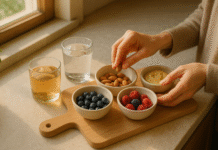
A warm drink and a five-minute chat is rest in a cup. Make a small ritual after school or on weekend mornings: brew decaf tea, warm milk, or cocoa; sit together, no devices; ask one or two gentle questions (“Rose, Thorn, Bud”—one good thing, one hard thing, one thing you’re looking forward to). Keep it short; the point is connection, not a long debrief. Kids learn that gathering, sipping, and speaking kindly can steady emotions and reset the afternoon.
8.1 How to do it
- Prep a tray with mugs, a small snack, and napkins.
- Set a 10–15 minute timer; end before fidgets kick in.
- Use conversation cards or a jar of prompts for variety.
- Rotate “host” duties so each child pours and serves sometimes.
8.2 Numbers & region notes
- Time: 10–20 minutes is plenty.
- Heat safety: For young kids, cool drinks to ~40–45°C (104–113°F).
- Cultural swaps: In South Asia or the Middle East, try karak chai without caffeine for kids; in colder climates, warm milk with spices.
End with a closing phrase (“Tea time is done—thank you, host!”). That tidy ending keeps the ritual from drifting into noise and screens.
9. Tame Evenings: Dim Light, Lower Noise, Gentle Movement
Evening physiology matters. Bright overhead lights, loud rooms, and rough play can all spike alertness. Create a family “evening mode” 60–90 minutes before bedtime: dim lamps, reduce ambient noise, and shift to low-intensity movement (stretching, yoga, or tidy-up to soft music). Consider blackout curtains, a door sweep to reduce hallway light, and a soft lamp in kid spaces. Combined with storytime, these changes act like a runway: the body glides down toward sleep instead of falling off a cliff.
9.1 Practical steps
- Swap bright bulbs for warm ones (around 2700K) in bedrooms and reading areas.
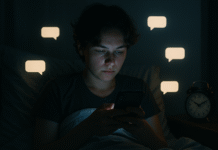
- Turn off big, bright screens after dinner; if needed for homework, enable night mode and stop 60 minutes before bed.
- Cap roughhousing an hour before lights out; choose board games, coloring, or reading instead.
- Keep voices soft; model the volume you want.
9.2 Numbers & guardrails
- Wind-down window: 60–90 minutes before bedtime.
- Noise: Aim for calm conversation volume; avoid overlapping loud audio sources.
- Movement: 5–10 minutes of gentle stretching can release fidgets without revving everyone up.
A consistent evening environment teaches kids that rest is a whole-home practice, not only an instruction in their room.
10. Park Devices: Create a Household Tech Basket
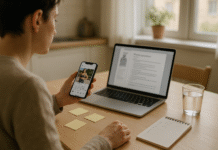
Screens are stimulating and can crowd out restorative play. Create a neutral, repeatable rule: all portable devices (parents’ too) live in a charging basket outside bedrooms after a set time. Pair the rule with attractive alternatives—book baskets, puzzles, or drawing pads—so you’re not only saying “no,” you’re saying “yes” to rest. Use a family media plan so kids know when and where screens are okay and when they’re off.
10.1 How to do it
- Place a charging station in the kitchen or living room.
- Set a daily “device bedtime” (e.g., 7:30 p.m.).
- Make a simple chart of “green” (ok), “yellow” (ask), and “red” (no) times/places for screens.
- Model it: adults put phones in the basket first.
10.2 Guardrails & swaps
- Late homework exception: If an older child needs a device, use it at the dining table, not the bedroom.
- Boredom plan: Keep a visible list of low-stimulus options to replace scrolling.
- Guests: Have a polite script (“We park devices after dinner—it helps everyone wind down.”).
By moving devices out of bedrooms and setting clear norms, you’re making rest the path of least resistance.
11. Protect the After-School “Decompression Window”
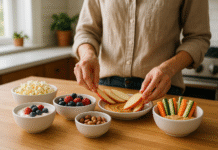
Right after school, most kids need a release valve before homework or activities. Build a 30–45 minute decompression window: snack + water, light movement, and a quiet choice. Keep questions minimal for the first 15 minutes (“Glad you’re home; snack’s on the table”). Some kids want solitude; others want gentle play with you. The aim is physiological reset: stabilize blood sugar, hydrate, shift the body, then choose a calming activity. Without this step, afternoons often spiral into crankiness and conflict.
11.1 Flow that works
- Minute 0–10: Wash hands, sip water, eat a protein + carb snack.
- Minute 10–20: Gentle movement—trampoline, scooter ride, or 10 minutes at the playground.
- Minute 20–45: Quiet basket, reading, or drawing.
- Then: Homework or music practice starts on a timer.
11.2 Numbers & guardrails
- Time: 30–45 minutes total; shorten to 20 on activity-heavy days.
- Snack: Aim for ~10–15 g protein + complex carbs (e.g., yogurt + fruit, hummus + pita).
- Special cases: Neurodivergent kids may need a longer solo period or a specific sensory input (swinging, deep pressure).
Protecting this window reduces battles later; you’re meeting the body’s needs before asking for focus.
12. Celebrate Seasonal Rest Traditions (Stargazing, Journaling, Rain Walks)
Seasonal rituals make rest feel special and memorable. Choose one per season and repeat it annually: spring dawn bird walk with hot cocoa; summer stargazing picnic; monsoon or autumn rain walk with boots and umbrellas; winter candlelit poetry night. Add a nature journal entry or a photo each time. Kids learn that rest can be adventurous and tied to place—cool morning air, evening constellations, the sound of rain. When you repeat a tradition yearly, you’re building a story your children will carry into adulthood.
12.1 Ideas by season
- Spring: Dawn birdsong count + sketch one bird.
- Summer: Backyard or rooftop stargazing; learn one constellation.
- Monsoon/Autumn: Slow rain walk; listen for roof or leaf sounds; warm towels ready at home.
- Winter: Candlelit reading night with blankets and poems.
12.2 Numbers & safety
- Time: 30–60 minutes, once per month or per season.
- Weather: Check forecasts; pack layers and insect protection as needed.
- Urban tips: Use balconies, rooftops, courtyards, or community gardens if parks are far.
Close each seasonal ritual with a simple log (“Summer Rest Night 2025: We saw Mars!”). That tiny act makes rest measurable and visible.
FAQs
1) What does “teaching kids about rest” actually mean?
It means helping children recognize when their bodies and minds need to slow down and giving them simple, repeatable ways to do it. You’re building a skill set—breathing, quiet play, dim light, calm conversation—that kids can apply at home, school, or on trips. Over time, those cues become internalized, so they don’t rely solely on adults to regulate.
2) How long should a rest ritual be for different ages?
Shorter is better to start. Try 10–15 minutes for preschoolers, 15–25 for early primary ages, and up to 40–60 for older kids. For weekly rituals like Rest Hour, begin low and grow; the goal is consistency, not duration. If children are restless, lead with one minute of breathing or a quick stretch to help bodies settle.
3) Are screens always “bad” for rest?
Screens are stimulating, and bright light at night can disrupt the body’s sleep signals. They also crowd out quieter activities that build self-regulation. Rather than demonizing screens, create clear boundaries—no devices in bedrooms, a set “device bedtime,” and meaningful alternatives like book baskets or puzzles—so rest has room to happen.
4) What if my child resists quiet time or says it’s boring?
Validate the feeling, start smaller, and offer choice within boundaries. For example, “Rest Hour is 20 minutes; you can choose coloring, a puzzle, or reading.” Use visual timers so kids see progress. Rotate materials, sit together for the first few minutes, and end with a positive share. Over weeks, resistance typically drops as the routine becomes predictable.
5) How do I adapt rest traditions for neurodivergent kids?
Keep sensory profiles front and center. Some children need deep pressure, swinging, or chewable jewelry to calm; others need less sound or light. Offer fewer choices, predictable visuals (first/then cards), and shorter intervals with breaks. Consider separate rest spaces for siblings. If you’re unsure, consult an occupational therapist for personalized strategies.
6) What if evenings are chaotic with activities and homework?
Compress the routine: dim lights, start a short wind-down playlist, and do 10 minutes of quiet baskets or storytime. Move device parking earlier, keep dinner simple, and protect a 20–30 minute “no scheduling” buffer most nights. Even a small, consistent calm window can shift the tone of the whole evening.
7) How can I involve older kids and tweens without eye-rolls?
Give ownership. Let them make the playlist, host tea time, choose the seasonal ritual, or curate the book basket. Invite them to design a “chill kit” (journal, puzzles, headphones) and schedule their own decompression window after school. Treat rest like training for focus, mood, and performance—not as “baby” time.
8) We live in a busy city with little green space. What nature options work?
Try balcony or rooftop “sit spots,” tree-lined streets, community gardens, temple/church/mosque courtyards, or campus greens. The goal is not wilderness; it’s a change of sensory input—sky, leaves, breeze, birds. Bring a small journal and do a five-minute observation. Even a short courtyard walk can deliver the reset you need.
9) How do we keep traditions going when routines change (travel, guests, holidays)?
Shrink and rename rather than skip. On trips, do “mini Rest Hour” for 10 minutes with a single basket; swap tea time for a shared fruit plate; move storytime to audiobooks. Use a travel pouch with a timer, pencils, and a small puzzle. A flexible, portable version keeps the habit alive until you’re home.
10) What tangible benefits should we expect?
Families report smoother bedtimes, fewer after-school meltdowns, improved focus during homework, and better sibling dynamics. Over months, kids begin initiating quiet choices on their own. You’ll also notice that adults benefit—lower evening stress and more pleasant transitions—because rituals support the whole household, not just children.
11) How many traditions should we adopt at once?
Start with one daily (storytime or decompression window) and one weekly (Rest Hour). Run them for three weeks before adding another. The magic is in repetition, not variety. When a ritual feels automatic—kids gather supplies without prompting—you’re ready to layer in the next.
12) How do we measure progress without turning rest into a chore?
Track inputs, not just outcomes. Use a simple monthly habit grid for “Rest Hour,” “Storytime,” and “Nature Walk.” Celebrate streaks with a low-key reward like choosing the seasonal ritual. You’re looking for trend lines—more calm starts, fewer conflict spikes—not perfection.
Conclusion
Teaching kids about rest is less a single “hack” and more a set of small, repeatable traditions that make calm the default. When you hold a weekly Rest Hour, read aloud daily, take slow nature walks, and shape a quieter evening environment, you’re giving children a template they’ll reuse for life: notice your body, choose a gentle activity, and protect routines that help you feel safe and steady. The details—timers, baskets, warm lamps, tea trays—are small on purpose; they’re easy to set up, easy to repeat, and easy for kids to own. Start with one daily ritual and one weekly ritual, attach them to anchors you already have, and grow slowly. In a few months, you’ll likely find that your home sounds different in the evenings, that after-school transitions are softer, and that kids reach for their own calming choices. That’s the win: children who can rest without being told.
Ready to begin? Choose your first tradition, set a day and time, and make calm your family’s favorite habit.
References
- How Much Sleep Do I Need? Centers for Disease Control and Prevention (CDC), updated 2024. https://www.cdc.gov/sleep/about_sleep/how_much_sleep.html
- Media and Children Communication Toolkit (Family Media Plan). American Academy of Pediatrics / HealthyChildren.org, updated 2023. https://www.healthychildren.org/English/media/Pages/default.aspx
- Blue light has a dark side. Harvard Health Publishing, originally 2012, updated 2020. https://www.health.harvard.edu/staying-healthy/blue-light-has-a-dark-side
- Nature is good for you. American Psychological Association (APA), 2020. https://www.apa.org/monitor/2020/04/nurtured-by-nature
- Sleep in children and teens: What’s normal. National Sleep Foundation, 2021. https://www.thensf.org/sleep-in-children-and-teens/
- Mindfulness for Children and Teens. Child Mind Institute, 2022. https://childmind.org/article/mindfulness-for-children-and-teens/
- Benefits of Reading Aloud. Reading Rockets (WETA), 2023. https://www.readingrockets.org/
- Greenspace and Health: Evidence Review. World Health Organization (WHO) Regional Office for Europe, 2016. https://www.euro.who.int/en/health-topics/environment-and-health/urban-health/publications/2016/urban-green-spaces-and-health-a-review-of-evidence
- Media Use Guidelines for Children. American Academy of Pediatrics Policy Summary, 2016 (with ongoing updates). https://publications.aap.org/pediatrics/article/138/5/e20162591/60694/Media-and-Young-Minds
- The Experience of Nature: A Psychological Perspective. Kaplan & Kaplan, Cambridge University Press, 1989. https://www.cambridge.org/9780521341394/