



























If you’re winding down at night, hot tea without caffeine is one of the simplest ways to tell your body, “We’re done for the day.” In this guide, you’ll learn exactly which herbal teas to use, how to brew them, and how to turn a simple mug into a reliable sleep cue—safely and pleasantly. Quick answer: the best bedtime drink rituals center on truly caffeine-free herbal infusions (not just “decaf”), mildly sweet (or unsweetened), sipped in low light about an hour before bed, and paired with relaxing habits like slow breathing. This article is informational and not a substitute for medical advice; if you’re pregnant, taking medicines, or managing a condition, check with your clinician first.
1. Choose a Truly Caffeine-Free Base (Not Just “Decaf”)
The most important bedtime choice is to pick an herbal tisane that contains no caffeine whatsoever. “Decaf” green or black tea still contains a few milligrams of caffeine, which can matter if you’re sensitive or drinking late. By contrast, most herbal infusions—chamomile, lemon balm, passionflower, lavender, rooibos, ginger, hibiscus—are naturally caffeine-free. Start your ritual about 60–90 minutes before your target bedtime so you have time to sip, relax, and make one last bathroom trip before lights out. Keep the room dim and quiet while you brew to stack the cues your brain associates with sleep.
1.1 How to do it
- Scan the label: Look for “herbal tea,” “tisane,” or “caffeine-free.” Avoid yerba mate, guayusa, cacao nibs/cocoa shells, or “energy” blends—these often include stimulants.
- Portion & steep: A simple guardrail is 1–2 teaspoons (≈2–3 g) of loose herb per 240 mL water, steeped 5–10 minutes (roots often need longer).
- Keep it warm, not scalding: Sip at a comfortable temperature; “very hot” (>65°C/149°F) beverages can irritate your esophagus.
- Time your fluids: If nocturia wakes you, sip from a small cup (150–200 mL) and finish at least 45–60 minutes before bed.
- Mind decaf: Decaf still has residual caffeine; herbal tisanes do not.
1.2 Mini-checklist
- Herbal, not decaf
- Small mug, early enough
- Dim lights, no screens
- Pleasant aroma—breathe it in
A consistent, caffeine-free base gets you 80% of the way there; the sections below fine-tune the remaining 20%.
2. Chamomile: The Classic, Gentle Nightcap
Chamomile is the archetypal bedtime cup. While research on insomnia outcomes is mixed, many people experience a subtle “exhale” effect—less mental chatter and softer edges around stress. It’s widely available, mild-tasting, and pairs well with other calming herbs. For many, chamomile is less a sedative “knockout” and more a ritual cue: the familiar honey-apple aroma, steam on your face, and a predictable brewing routine become part of your sleep script. That’s often all you need to transition out of task mode.
2.1 How to do it
- Dose & steep: Use 2–3 g whole blossoms (≈1.5 tsp) in 240 mL just-off-boil water for 7–10 minutes.
- Blend ideas: Chamomile + lavender for aroma, or chamomile + lemon balm for a mellower mind.
- When to avoid: If you’re allergic to ragweed or related plants, skip chamomile.
2.2 Mini-checklist
- Gold blossoms, apple-honey aroma
- 7–10 minute steep, covered
- Sip slowly; breathe the steam
- Pair with 5 slow breaths (see Section 11)
Chamomile’s strength is reliability and comfort—an easy, low-risk first choice to anchor your ritual.
3. Lemon Balm: Quiet the “Tabs” in Your Brain
Lemon balm (Melissa officinalis) brings a bright, lemony note with a reputation for smoothing anxious edges—great for the people whose brains keep “opening tabs” at 10 p.m. Evidence points to mild anxiety reduction and calmer mood, which indirectly supports sleep. As a tea, lemon balm tastes gentle and blends beautifully with chamomile or passionflower. It’s not a sedative hammer; think of it as pressing the mental “volume down” button so sleep can surface.
3.1 How to do it
- Dose & steep: 2 tsp (≈2 g) dried leaf per 240 mL water, 7–10 minutes.
- Blend ideas: Lemon balm + chamomile + lavender = calm, aromatic trio.
- Taste tip: Add a lemon slice or vanilla bean scrap to amplify the citrus-herbal vibe.
3.2 Common pitfalls
- Too weak: A brief 2–3 minute steep won’t deliver much; give it a full 8–10 minutes.
- Sugary add-ins: Skip heavy sweeteners; a ½ tsp honey is plenty (never give honey to infants under 1 year).
- Thyroid meds: If you take thyroid medication or have a thyroid condition, discuss lemon balm with your clinician (herbal-drug considerations exist).
Lemon balm earns a permanent spot in bedtime rotations for its soothing flavor and mellowing effect—especially on “busy-brain” nights.
4. Passionflower: Ease Pre-Sleep Tension
Passionflower (Passiflora incarnata) is a go-to for people who feel wound up even when they’re tired. Small human trials suggest modest benefits for subjective sleep quality, and a larger body of research supports its role in stress reduction. As tea, it’s gentle and slightly grassy; commonly used solo or in blends with chamomile and lemon balm for a “soft landing.”
4.1 How to do it
- Dose & steep: 1–2 tsp (≈1–2 g) dried aerial parts per 240 mL, 10 minutes.
- Best timing: About 60 minutes before bed.
- Blend ideas: Passionflower + chamomile (body) + lemon balm (mind).
4.2 Numbers & guardrails
- Expectation set: Improvements are typically modest; aim for calmer nights, not a sedative punch.
- Pregnancy: Avoid passionflower in pregnancy unless your clinician approves.
- Interactions: If you take sedatives or sleep meds, discuss passionflower first.
Passionflower shines when the problem is pre-sleep tension, not severe insomnia—use it to nudge your nervous system toward neutral.
5. Valerian Root (Occasionally): Stronger, Earthier, and Not for Everyone
Valerian (Valeriana officinalis) is earthy, even pungent—and polarizing. Evidence for insomnia is mixed, and some guidelines don’t recommend it as a primary treatment. That said, some individuals find occasional valerian helpful on especially restless nights. Consider it a tool you deploy sparingly rather than a nightly staple.
5.1 How to do it
- Dose & steep: 1–2 tsp (≈2–3 g) dried root per 240 mL, 10–15 minutes. Cover your cup; volatile compounds dissipate.
- Taste fix: Blend with lavender or lemon balm; add a small cinnamon stick to round the edges.
- Timing: Use on nights you’re extra restless, not every night.
5.2 Common mistakes
- Daily use without benefit: If you don’t notice a clear effect after 1–2 weeks, discontinue.
- Stacking sedatives: Avoid combining with alcohol, benzodiazepines, or other sedatives without medical guidance.
- Next-day fog: If you feel groggy in the morning, reduce dose or switch to a gentler herb.
Valerian is optional; if you dislike the aroma or feel foggy the day after, skip it—there are many gentler options below.
6. Lavender: Lead With Aroma, Support With a Light Sip
Lavender (Lavandula angustifolia) is better known for aromatherapy than tea, but a light lavender infusion can complement the scent-forward relaxation. Clinical research on oral lavender oil (Silexan) shows anxiety reduction, which may improve sleep indirectly. For a bedtime ritual, inhale deeply over the mug, then sip a mild brew—this is about calming the nervous system, not sedation.
6.1 How to do it
- Dose & steep: ½–1 tsp dried culinary lavender per 240 mL, 5 minutes (it gets bitter if over-steeped).
- Aroma-first ritual: Warm the cup, cup your hands, and take 5 slow nasal breaths before sipping.
- Blend ideas: Lavender + chamomile + vanilla is fragrant and gentle.
6.2 Mini-checklist
- Use culinary lavender only
- Keep it light to avoid bitterness
- Pair with slow breathing (see Section 11)
- Skip if floral flavors aren’t your thing
Lavender’s main value is sensory: smell + warmth + dim light—a trio your brain learns to associate with sleep.
7. Rooibos Chai: A Cozy, Caffeine-Free Nightcap
Craving the comfort of chai without the caffeine? Rooibos (Aspalathus linearis) is naturally caffeine-free and makes a rich, amber base for a bedtime “chai.” It’s smooth, low in tannins, and plays beautifully with warming spices. This is the option for tea lovers who miss the ritual of a milky, spiced mug after dinner—but want zero stimulation.
7.1 How to do it
- Base: 2 tsp rooibos + cardamom, cinnamon, and a coin of fresh ginger.
- Steep: 7–10 minutes (rooibos tolerates long steeps).
- Finish: Add a splash of warm milk (dairy or oat/almond) if you enjoy it. Sweeten lightly (½ tsp honey) if desired (never for infants under 1).
7.2 Tips & swaps
- Vanilla pod scrap = dessert-like aroma with no sugar.
- Caffeine-free guarantee: Rooibos is not Camellia sinensis—no caffeine by nature.
- GERD note: If cinnamon or ginger bother your reflux, reduce or omit them.
Rooibos chai scratches the evening-chai itch while staying squarely in the sleep-friendly lane.
8. Hibiscus (With a Blood-Pressure Note)
Hibiscus (Hibiscus sabdariffa) delivers a tart, cranberry-like cup that’s both refreshing and caffeine-free. A bonus: regular intake may lower blood pressure in people with elevated readings. That’s good news for cardiovascular health—but it also means you should be thoughtful if you’re on antihypertensives or tend toward low blood pressure. Flavor-wise, hibiscus is punchy; many prefer it blended at bedtime so it doesn’t feel too bright.
8.1 How to do it
- Blend: Hibiscus + chamomile or rooibos softens the tartness.
- Steep: 5–7 minutes; longer can get quite sour.
- Sweetness: A ¼–½ tsp honey balances tartness (skip for infants).
8.2 Guardrails
- BP meds: If you take blood pressure medicines, discuss routine hibiscus with your clinician.
- Staining: Deep red pigment can stain mugs and linens—rinse promptly.
- Acidity: If you have reflux, blend or choose gentler herbs.
Enjoy hibiscus as a supportive add-in, especially earlier in the evening; dial it back if you notice lightheadedness.
9. Ginger: Settle the Stomach, Settle the Night
If indigestion or queasiness keeps you up, ginger is a practical, caffeine-free fix. It’s widely used for nausea, including during pregnancy (typically in food/tea form and modest amounts), and many people find that a small, warm mug after dinner settles the stomach. Ginger isn’t a sedative; it supports sleep indirectly by removing physical discomfort.
9.1 How to do it
- Simmer: 4–6 thin slices fresh ginger in 300 mL water for 8–10 minutes, then rest 2–3 minutes before sipping.
- Soften the edges: Add a slice of lemon or a small piece of cinnamon.
- Timing: Ideal after the evening meal or 60–90 minutes before bed.
9.2 Notes
- Pregnancy: Culinary amounts (e.g., ginger tea) are commonly used for mild nausea; confirm with your clinician before higher doses or supplements.
- Reflux: For some, ginger soothes; for others, spices worsen reflux—adjust to your body.
- Sweetness: Keep sugar low; the goal is comfort, not a glucose spike.
When your gut calms, your mind often follows—ginger can be the nudge that lets the rest of your routine work.
10. Avoid Nighttime Diuretics & Reflux Triggers (Dandelion, Peppermint, Overly Hot Sips)
Nighttime drinking is a balance: enough to enjoy the ritual, not so much that you’re up at 2 a.m. Some popular herbal teas—dandelion (diuretic) and, for some people, peppermint (can aggravate reflux)—aren’t ideal right before bed. Also, very hot beverages can irritate your esophagus; let your tea cool to a comfortable warmth.
10.1 What to limit near bedtime
- Dandelion: Traditionally diuretic → may increase bathroom trips.
- Peppermint: Can relax the lower esophageal sphincter in some—worsening reflux.
- “Very hot” sips: Avoid consistently drinking >65°C/149°F liquids.
10.2 Better swaps
- For digestion: Ginger or chamomile instead of dandelion/peppermint.
- For mint lovers: Blend spearmint lightly with chamomile (often gentler than strong peppermint).
- For richness: Rooibos in place of black tea or cocoa.
A little strategy here prevents your soothing ritual from backfiring into nocturia or heartburn.
11. Make It a Ritual: Light, Breath, and Consistency
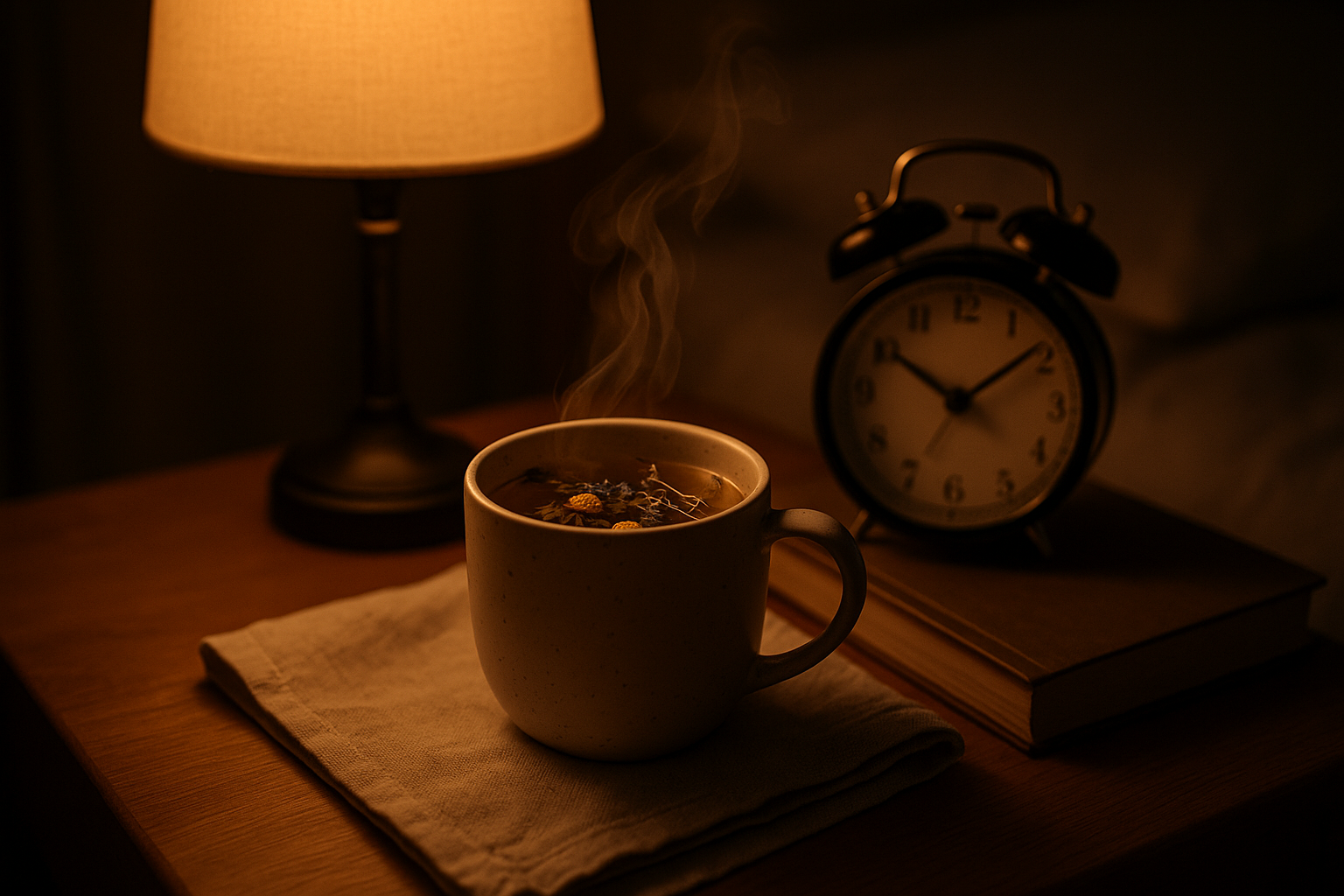
The mug is the prop; the ritual is the magic. Humans sleep best with predictable cues: dimmed lights, fewer screens, and slow breathing to downshift your nervous system. Layer your tea with 5–10 minutes of quiet breathwork (e.g., slow nasal breaths at ~6 per minute), then a short read or stretch. Over a week or two, your brain will start associating these steps with sleep onset—so the process itself becomes sleepy.
11.1 Mini routine (10–15 minutes)
- Dim lights → put devices away
- Start your caffeine-free tea
- 5 slow breaths over the steam (inhale 4, exhale 6–8)
- Sip slowly while journaling one “done for today” line
- Bedroom check: cool, quiet, dark
11.2 Tools that help
- A kettle with thermometer to avoid too-hot sipping
- A small mug (keeps total fluid modest)
- A bedside lamp with warm bulb (2700K or lower)
Stacking small, consistent cues multiplies the effect—your nightly tea becomes a reliable “now we rest” signal.
FAQs
1) What exactly counts as “hot tea without caffeine”?
Any herbal infusion (tisane) made from plants other than Camellia sinensis—like chamomile, lemon balm, passionflower, lavender, rooibos, ginger, or hibiscus—is naturally caffeine-free. “Decaf” versions of black/green tea still contain a little caffeine, which may affect sensitive sleepers, so stick to herbal for bedtime.
2) When should I drink bedtime tea so I don’t wake to pee?
Aim to finish your cup 45–60 minutes before lights out, and keep the serving 150–200 mL. If nocturia is frequent, shrink the cup further or shift your tea earlier in the evening and make your last bathroom trip part of the ritual.
3) Can I sweeten bedtime tea?
Lightly. If you like sweetness, ¼–½ tsp honey usually suffices. Avoid large sugar hits close to bedtime. Never give honey to infants under 1 year due to the risk of infant botulism.
4) Is chamomile proven to treat insomnia?
Evidence is mixed—some studies show modest benefit, others show no clear effect. Many people still find chamomile helpful as a calming cue. If you don’t notice a benefit after a couple of weeks, try another herb or focus on the ritual elements.
5) Which herbs should I avoid at night?
Skip dandelion (diuretic) right before bed. If you have reflux, avoid strong peppermint and very acidic infusions (like straight hibiscus). Licorice-root heavy blends can raise blood pressure in high amounts—best avoided as a nightly staple.
6) I have high blood pressure—can hibiscus help?
Studies suggest regular hibiscus can modestly lower blood pressure in people with elevated readings. If you already take antihypertensives or tend toward low BP, talk to your clinician before making hibiscus a daily habit and monitor how you feel.
7) What if I’m pregnant?
Stick to culinary amounts of widely used herbs (e.g., ginger tea for mild nausea). Avoid passionflower and high-dose herbal products unless your clinician clears them. In pregnancy, keep servings small and routines gentle; your care team can personalize advice.
8) How hot should my tea be?
Comfortably warm. Habitually drinking very hot liquids (above 65°C/149°F) can irritate your esophagus; let it cool a bit before sipping. Your tongue is a good guide—if it feels too hot, it is.
9) Will valerian knock me out?
Not usually. Valerian’s effects vary; some find it helpful, others notice little or get next-day grogginess. If you try it, use it occasionally, avoid stacking with other sedatives or alcohol, and stop if you don’t see clear benefit.
10) What non-tea habits should I pair with my mug?
Dim lights, put devices away, do 5–10 minutes of slow breathing or gentle stretching, and keep your bedroom cool and quiet. The tea is one cue; the routine you build around it tells your brain it’s time to power down.
Conclusion
A soothing bedtime drink doesn’t need to be complicated. The most reliable formula is simple: choose hot tea without caffeine, brew it well, and embed it in a short, repeatable wind-down. Start with chamomile or lemon balm on most nights; add passionflower when pre-sleep tension spikes; lean on ginger for queasy evenings; and enjoy rooibos chai when you want something cozy without the caffeine. Keep serving sizes modest and timing early enough to avoid middle-of-the-night bathroom trips. Pair the mug with dim lights, slow breaths, and quiet—signals your nervous system learns to trust. With a week or two of consistency, your cup becomes less of a beverage and more of a bedtime switch.
Ready to begin? Pick one herb tonight, brew it gently, breathe the steam, and let your day close on your terms.
Make your next cup your best sleep cue.
References
- Chamomile: Usefulness and Safety. National Center for Complementary and Integrative Health (NCCIH). (n.d.). NCCIH
- A Double-Blind, Placebo-Controlled Investigation of the Effects of Passiflora incarnata (Passionflower) Herbal Tea on Subjective Sleep Quality. Phytotherapy Research. 2011. PubMed
- Efficacy of Silexan in Patients with Anxiety Disorders: A Meta-Analysis. International Journal of Psychiatry in Clinical Practice. 2023. PMC
- Sleep Disorders and Complementary Health Approaches. NCCIH. (n.d.). NCCIH
- Caffeine Content of Drinks. UC Davis Student Health & Counseling Services. 2014. https://shcs.ucdavis.edu/blog/caffeine-content-drinks Mayo Clinic Press
- Q&A on the Carcinogenicity of the Consumption of Very Hot Beverages. International Agency for Research on Cancer (IARC), WHO. 2016. https://www.iarc.who.int/featured-news/media-centre-iarc-news-iarc-monographs-evaluation-of-drinking-coffee-mate-or-very-hot-beverages/ AASM
- Making Sleeping More Comfortable in Late Pregnancy. University Hospitals Coventry & Warwickshire NHS (patient leaflet). (n.d.). https://www.uhcw.nhs.uk/download/clientfiles/files/Maternity%20Leaflets/Making%20sleeping%20more%20comfortable%20in%20late%20pregnancy.pdf PMC
- Hibiscus sabdariffa L. Tea (Tisane) Lowers Blood Pressure in Prehypertensive and Mildly Hypertensive Adults. Journal of Nutrition. 2010. PubMed
- A Systematic Review and Meta-Analysis of the Effects of Hibiscus on Blood Pressure. Nutrition Reviews. 2022. PMC
- Healthy Sleep Habits. Sleep Education by the American Academy of Sleep Medicine. 2021. Sleep Education
- Honey and Infant Botulism—Advice for Parents and Caregivers. Centers for Disease Control and Prevention. 2024. https://www.cdc.gov/botulism/infant-botulism.html IARC
- Influence of a 30-Day Slow-Paced Breathing Intervention on Sleep Quality and Cardiac Vagal Activity. Frontiers in Psychology. 2019. PMC