




























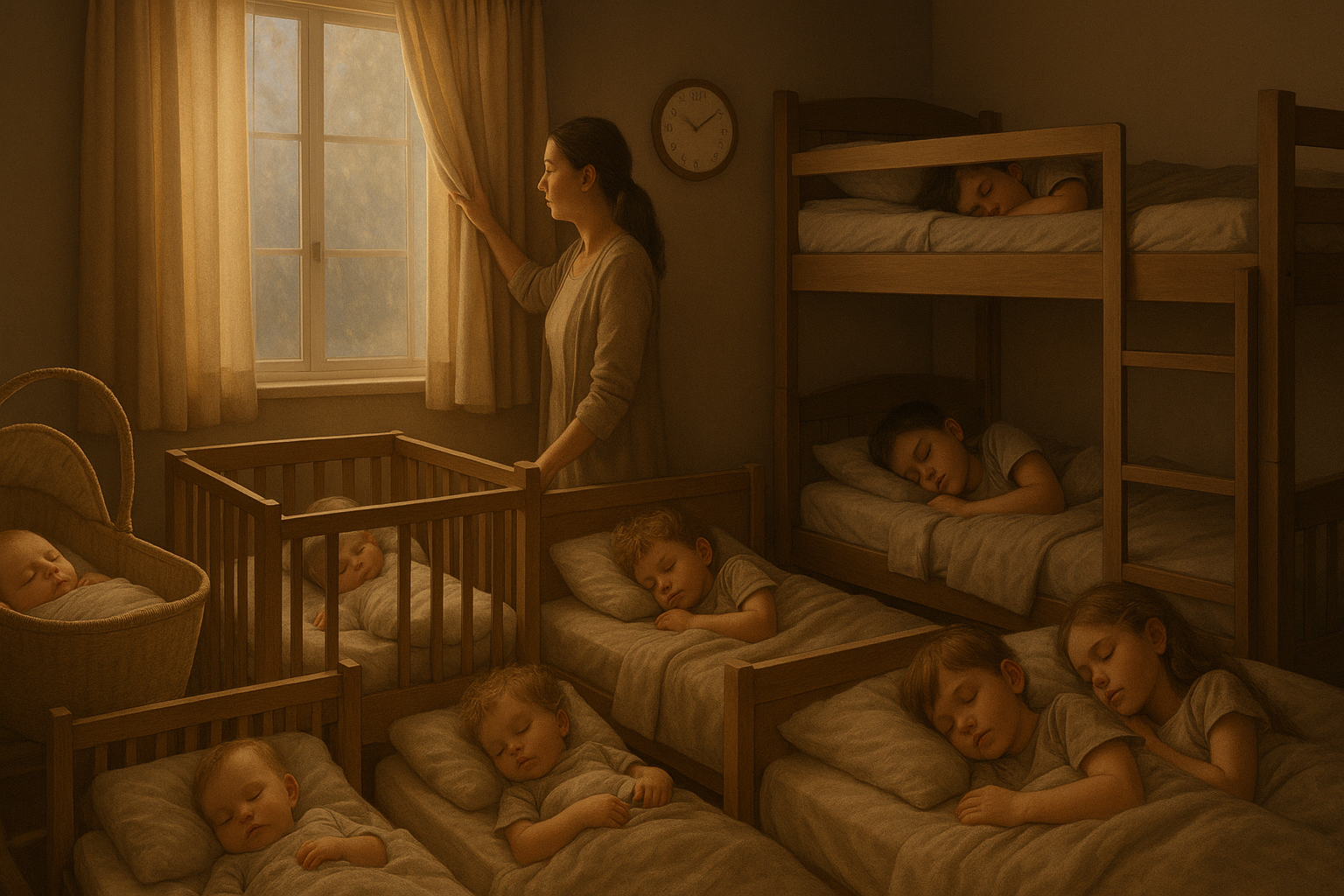
If you’ve ever wondered why your baby naps in fragments while your school-age child seems wired at 9 p.m., you’re bumping into biology: children’s circadian rhythms—the internal 24-hour clock that times hormone release, body temperature, and sleep–wake cycles—mature with age. This guide walks through eight age-based sleep patterns, translating clock science into realistic routines, nap timing, and bedtimes that fit family life. You’ll get clear ranges, practical “guardrails,” and tools to troubleshoot common problems like early rising or bedtime resistance. Brief disclaimer: this article is informational and not a substitute for personalized medical advice; consult your pediatrician for concerns about growth, breathing, or behavior.
Quick definition: Children’s circadian rhythms are 24-hour biological cycles that help regulate sleep pressure and melatonin timing; sleep patterns by age reflect how this clock and homeostatic sleep drive consolidate from fragmented newborn sleep into stable school-night schedules. As of August 2025, leading organizations agree on broad, age-specific sleep ranges; within those ranges, your child’s chronotype, temperament, and environment create normal variation.
1. Newborns (0–2 Months): Fragmented Sleep Before the Clock
Newborn sleep is fragmented and around-the-clock; aiming for strict bedtimes or long “night stretches” at this stage fights biology more than it helps. In the first eight weeks, circadian rhythms are not yet synchronized, so babies sleep in short bouts driven mostly by feeding needs and an immature homeostatic sleep drive. Total sleep typically spans 14–17 hours per 24 hours, split into 8–10+ naps and multiple overnight feeds. Light cues and gentle routines help lay foundations, but your top jobs are safe sleep, responsive feeding, and preventing overtiredness rather than enforcing a schedule. Expect day–night confusion to gradually ease as melatonin rhythms begin organizing toward the end of this window.
Why it matters
- The newborn brain prioritizes growth and neural wiring; frequent waking supports feeding and temperature regulation.
- Circadian markers (melatonin, body temperature rhythms) are still ramping up; forcing consolidation can backfire with more crying.
Numbers & guardrails
- Total sleep: ~14–17 hours/24h (some healthy newborns fall slightly outside).
- Wake windows: often 45–60 minutes; sleepy signs trump the clock.
- Feeds: every 2–3 hours (or per medical guidance); growth and weight gain take precedence over sleep goals.
- Bedtime: floats—often late evening; stability comes later.
Tools & examples
- Light: expose baby to daylight during wake times; dim lights after sunset.
- Environment: white noise, room temp ~20–22°C (68–72°F), swaddle if approved.
- Safety: Back to sleep, firm flat surface, no soft objects; avoid bed-sharing per pediatric guidance.
Synthesis: In the newborn phase, protect sleep by following sleepy cues, feeding on demand, and using light/dark to begin teaching the difference between day and night—consistency, not clock control, is the win.
2. Young Infants (3–5 Months): Day–Night Rhythm Emerges
By about 3 months, many infants show a clearer day–night pattern as circadian signals strengthen and overnight sleep starts to stretch. You can start anchoring the day with a predictable morning wake time and a regular bedtime routine, while still allowing flexibility for naps that vary by length. Total sleep typically consolidates to 12–16 hours in 24 hours, with 3–5 daytime naps and 1–3 overnight feeds. Sleep pressure becomes more reliable, so timing naps and bedtime around consistent windows can reduce overtiredness and false starts.
How to do it
- Anchor points: Choose a 30–60 minute window for morning wake and bedtime.
- Nap rhythm: Many infants do best with 3–5 naps; cap late-day naps to protect bedtime.
- Bedtime routine (10–20 minutes): feed → wash → PJs → short story/song → crib drowsy but awake (as tolerated).
- Light: morning outdoor light within 60 minutes of wake to advance/strengthen the clock.
Numbers & guardrails
- Total sleep: 12–16 hours including naps.
- Wake windows: roughly 75–120 minutes, lengthening across the day.
- First nap: often 60–90 minutes after wake; watch sleepy cues.
- Overnight: some infants manage a 4–6 hour stretch; variability is normal.
Common mistakes
- Too-late bedtime: leads to more night waking.
- Overlong late nap: pushes bedtime and fragments overnight sleep.
- Inconsistent light exposure: blunts circadian signals.
Synthesis: With rhythms emerging, use consistent anchors, bright morning light, and age-appropriate wake windows to encourage longer night stretches while keeping naps flexible.
3. Older Infants (6–8 Months): Consolidation and Skill Surges
Between 6 and 8 months, many infants settle into 3 naps → 2 naps transitions as daytime wakefulness increases. Total sleep usually lands in 12–15 hours, with 10–12 hours overnight (often with 0–1 feeds) and 2–3 daytime naps. Mobility and cognitive leaps spike night wakings; responding consistently while protecting timing is key. Introducing solids can shift evening routines; aim to keep feeding and wind-down predictable.
Why it matters
- The circadian clock is now robust enough that regular timing yields measurable benefits in sleep efficiency.
- Separation awareness and new skills (rolling, sitting) can cause “practice” wakings; schedules buffer the turbulence.
Numbers & guardrails
- Total sleep: 12–15 hours.
- Wake windows: typically 2–3 hours; many thrive on 2–2.5–3 hour pattern across the day.
- Naps: two longer naps + optional catnap; begin catnap fading if bedtime creeps late.
- Bedtime: often 6:30–8:00 p.m., anchored by last nap wake.
Mini-checklist
- Morning light and afternoon outdoor time.
- Keep the last nap short (20–30 min) if needed to protect bedtime.
- Consistent pre-sleep cues; consider a lovey if safe.
Synthesis: Treat timing as a gentle framework: prioritize two quality naps, keep bedtime steady, and expect temporary regressions during developmental bursts.
4. Late Infancy (9–12 Months): Two-Nap Rhythm and Night Stretch
By 9–12 months, most babies run a two-nap schedule with a more consolidated night. Typical totals remain 12–15 hours (10–12 overnight, 2–3 daytime). Appetite grows and mobility expands, so daytime nutrition and activity support deeper sleep. Separation anxiety can spike bedtime protests; staying calm and consistent helps. Many infants can sleep through the night without feeds; discuss any planned weaning with your pediatrician.
How to do it
- Sample day: 7:00 wake → 9:30–10:15 Nap 1 → 2:00–3:00 Nap 2 → 7:15 bedtime.
- Spacing: aim for ~3–4 hours awake before bedtime.
- Active days: crawling/cruising play and sunlight increase sleep pressure and clock alignment.
- Teething/illness: keep timing familiar; offer comfort and resume baseline once well.
Numbers & guardrails
- Total sleep: 12–15 hours/24h.
- Naps: 2 (60–120 min each combined).
- Bedtime window: 6:30–8:00 p.m.; protect with nap caps as needed.
- Night feeds: many can do 0 feeds; individual variation is normal.
Common mistakes
- Long morning nap stealing from afternoon nap, causing overtired evenings.
- Skipping outdoor light, weakening circadian strength.
- Inconsistent response at bedtime, prolonging protests.
Synthesis: A steady two-nap rhythm, predictable bedtime, and daily light/activity are your best levers for reliable, longer nights.
5. Toddlers (1–2 Years): One Nap, Big Feelings, Big Sleep
Toddlers typically need 11–14 hours across 24 hours, usually 10–12 hours overnight with one mid-day nap (60–120 minutes). Around 14–18 months, many transition from two naps to one; bedtime resistance can increase as autonomy and language bloom. Circadian timing grows stronger, so consistent schedules pay off—especially a fixed morning wake window and nap start. Guard against overtiredness (which can look like hyperactivity) by keeping bedtime early when naps are short.
How to do it
- Nap anchor: start the single nap around 12:00–1:30 p.m.; adjust with daycare schedules as needed.
- Bedtime: often 7:00–8:00 p.m. if nap is 60–120 minutes; earlier if nap is skipped.
- Rituals: predictable, brief (15–30 minutes) with calm choices to support autonomy.
- Environment: blackout curtains and white noise help toddlers settle.
Numbers & guardrails
- Total sleep: 11–14 hours (including nap).
- Nap length: 60–120 minutes (cap near 2 hours if bedtime drifts late).
- Wake window before bed: ~4–5 hours after nap wake.
- Night waking: short episodes are common; keep responses consistent and low-stimulation.
Common mistakes & fixes
- Too-late nap → push nap earlier by 15 minutes/day until settled.
- Extended bedtime routine → keep structure but shorten steps; use a visual routine chart.
- Early rising → consider a slightly later nap (not later bedtime), and morning light exposure.
Synthesis: One well-timed nap, an age-appropriate bedtime, and calm autonomy-supporting routines keep toddler sleep sturdy through big developmental leaps.
6. Preschoolers (3–5 Years): Quiet Time, Dropping the Nap
Preschoolers need 10–13 hours in 24 hours. Many 3-year-olds still nap; by 4–5 years, naps often fade, replaced by quiet time to prevent late-day meltdowns. Bedtime consistency—paired with strong morning light—keeps the clock aligned. Behavioral insomnia (stalling, extra requests) is common; firm, warm boundaries and predictable routines are the antidote.
Why it matters
- As naps drop, circadian timing and sleep pressure must carry the night; late bedtimes plus long naps often erode overnight quality.
- Structured wind-down and consistent limits teach self-regulation and protect parental sanity.
Numbers & guardrails
- Total sleep: 10–13 hours.
- If napping: keep nap ≤90 minutes, ending by 3 p.m.
- If no nap: advance bedtime by 30–60 minutes.
- Bedtime: 7:00–8:30 p.m. works for most families.
Tools & examples
- Quiet time kit: books, puzzles, soft music for 30–45 minutes if not napping.
- Behavioral plan: bedtime pass (one extra request), sticker chart for staying in bed.
- Screens: end at least 60 minutes before bed; use warm dim lights.
Synthesis: As naps fade, trade daytime sleep for earlier, steadier bedtimes and low-conflict routines to keep nights long and restful.
7. Early School-Age (6–8 Years): Homework, Sports, and the Stable Clock
Children 6–8 years generally need 9–12 hours overnight with no naps. Circadian rhythms are sturdy, but social schedules (homework, activities) can collide with biology. The best buffer is a fixed rise time seven days a week, consistent bright light in the first hour of the day, and a bedtime that preserves at least 9–10 hours on school nights. Evening sports or screens can delay sleep onset; adjust routine timing and light to protect melatonin.
How to do it
- Morning: outdoor light and movement (walk to school, brief yard time).
- Evening: target dinner 2–3 hours before bed; wind-down begins 60 minutes before lights out.
- Activities: if practice ends late, shift dinner earlier, provide a recovery snack, and shorten routine but keep the sequence.
Numbers & guardrails
- Total sleep: 9–12 hours (aim for the upper end before growth spurts/tests).
- Bedtime math: For a 7:00 a.m. wake, lights out 7:30–8:30 p.m. to net 10–11 hours.
- Screens: avoid within 60 minutes of bedtime; use night-mode if needed earlier.
Common mistakes
- Weekend drift: sleeping in >60–90 minutes makes Monday hard; limit drift and get bright morning light on weekends.
- Overscheduling: chronic late practices erode sleep—advocate for earlier slots when possible.
Synthesis: Protect school-night sleep by reverse-engineering bedtime from wake time, using morning light and predictable routines to keep the circadian clock on track.
8. Late School-Age (9–12 Years): Pre-Teen Shifts Without the Teen Delay—Yet
Kids 9–12 years still need 9–12 hours nightly, but social pressures, homework, and devices begin to challenge consistency. Puberty-related circadian delay is starting for some but not as pronounced as in teens. The goal is to preserve nine or more hours on most nights, with digital hygiene and light management to prevent creeping bedtimes. Consistent schedules promote attention, mood, and immune health—payoffs that show up in school and sports.
How to do it
- Digital sunset: phones/tablets out of bedrooms; charge in the kitchen.
- Study plan: prioritize earlier study blocks; reserve last 30–60 minutes for low-arousal tasks or reading.
- Light strategy: bright morning light (curtains open at alarm), dim warm light after dinner; consider a small warm desk lamp for homework.
Numbers & guardrails
- Total sleep: 9–12 hours; many thrive at 10–11 hours during growth spurts.
- Bedtime math: For a 6:30 a.m. wake, aim for 8:00–9:00 p.m. lights out.
- Caffeine: ideally none; if present, avoid after noon.
Region-specific note
- In regions without daylight saving time, keep schedules steady year-round; in places with DST changes, advance bedtime by 10–15 minutes nightly in the week before the spring clock change to smooth the transition.
Synthesis: Pre-teens benefit from teen-style sleep protection—digital boundaries, morning light, and steady schedules—before true adolescent circadian delay kicks in.
FAQs
1) What are children’s circadian rhythms in simple terms?
They’re the body’s 24-hour timing system that coordinates sleep–wake patterns, hormones (like melatonin and cortisol), body temperature, digestion, and alertness. In babies, this clock is immature and organizes over the first months; in school-age kids, it’s robust and responds strongly to consistent light/dark cues and regular sleep–wake times. Understanding the clock helps you time naps and bedtimes for easier settling and fewer night wakings.
2) How many hours should my child sleep at each age?
As of August 2025, consensus ranges are: newborns 14–17 hours; infants (4–12 months) 12–16; toddlers (1–2 years) 11–14; preschoolers (3–5) 10–13; school-age (6–12) 9–12. These totals include naps where relevant. Children near either end of a range can be normal if mood, growth, and daytime function are good.
3) What’s the difference between sleep pressure and circadian timing?
Sleep pressure builds the longer we’re awake (think of it like a sand timer); circadian timing is the internal clock that tells the brain when to release melatonin and expect sleep. Good sleep happens when bedtime aligns both with sufficient pressure and the circadian “night.” Misalignments (too early with low pressure, or too late against the clock) cause resistance and night waking.
4) Do I need blackout curtains and white noise?
They’re not mandatory but are often helpful. Blackout curtains reduce early-morning light that can advance wake times, and white noise masks household sounds, which is particularly useful for babies, toddlers, and apartment living. Aim for a constant, low-frequency sound at safe volumes (below ~50 dB in the crib area).
5) How do I handle travel or time changes?
For 1–2 hour shifts, adjust wake and sleep by 15–20 minutes per day toward the new time while prioritizing bright morning light and dim evenings. For bigger shifts or daylight saving time, begin the adjustment 5–7 days ahead if possible. Keep naps at local times on arrival to re-anchor the clock quickly.
6) My preschooler dropped the nap and now bedtime is chaos—what helps?
Advance bedtime by 30–60 minutes, add a predictable 20–30 minute wind-down, and build in a quiet-time buffer after school (books, Lego, drawing). Protect morning light; keep dinner earlier and balanced in protein and complex carbs to avoid post-bedtime hunger spikes.
7) Are melatonin supplements safe for kids?
Melatonin is a hormone, not a sedative. In many regions it’s available over the counter, but it’s not a first-line solution. Discuss with your pediatrician before using; dosage, timing, and purity vary, and behavioral timing changes (light, routine, and schedule) usually work better for otherwise healthy children.
8) How much weekend catch-up sleep is okay?
Try to keep wake times within 60–90 minutes of weekdays. Big swings weaken the clock and make Monday hard. If your child is perpetually short on sleep, adjust school-night bedtime earlier rather than relying on weekend recovery.
9) What if my child seems to need less sleep than peers?
Some kids are short sleepers and do fine at the low end of ranges. Watch daytime clues: consistent mood, focused learning, and good growth suggest they’re okay. If crankiness, inattention, or frequent illness show up, aim for more sleep and consult your clinician.
10) Which “red flags” mean I should seek medical advice?
Loud snoring most nights, gasping, long pauses in breathing, persistent restless legs, chronic insomnia, frequent night terrors after preschool age, or extreme daytime sleepiness are reasons to talk with your pediatrician. These can point to conditions like obstructive sleep apnea or iron deficiency that benefit from targeted care.
11) Does exercise help kids sleep better?
Yes—regular daytime activity, especially outdoor play, strengthens circadian rhythms and increases sleep pressure. Schedule vigorous activity earlier (before late evening) to avoid pushing bedtime; light stretching or gentle yoga fit well in wind-down routines.
12) How do screens affect sleep in children?
Evening blue-enriched light can suppress melatonin and delay sleep. End screen time at least 60 minutes before bed and keep devices out of bedrooms. If screens are unavoidable earlier in the evening, enable night modes and reduce brightness, but still prioritize an off-screen wind-down.
Conclusion
From newborns who sleep in snippets to pre-teens juggling homework and sports, children’s circadian rhythms evolve in predictable ways. The thread that ties each stage together is timing: bright morning light, regular wake and sleep anchors, and right-sized naps where appropriate. When timing aligns with biology, settling becomes easier, nights stretch longer, and mornings feel calmer—without resorting to quick fixes that ignore the clock. Use the age-specific guardrails in this guide, but also pay attention to your child’s mood, energy, and learning; these outcomes matter more than hitting a single “perfect” number of hours. If you run into obstacles—early rising, bedtime stalling, or frequent night waking—adjust one lever at a time: bring bedtime earlier, trim a late nap, boost morning light, or simplify the routine. And remember, consistency beats intensity: small, repeatable habits—applied for a week or two—rewire sleep far better than dramatic one-night overhauls.
Ready to start? Choose a fixed morning wake time, step outside for light within an hour, and protect a calm, 20-minute wind-down tonight.
References
- Recommended Amount of Sleep for Pediatric Populations: A Consensus Statement of the American Academy of Sleep Medicine, American Academy of Sleep Medicine (AASM), 2016. https://aasm.org/resources/pdf/pediatricsleepdurationconsensus.pdf
- Recommended Amount of Sleep for Pediatric Populations (PMC summary), Journal of Clinical Sleep Medicine / National Library of Medicine (NIH), 2016. https://pmc.ncbi.nlm.nih.gov/articles/PMC4877308/
- About Sleep: How Much Sleep Do I Need?, Centers for Disease Control and Prevention (CDC), May 15, 2024. https://www.cdc.gov/sleep/about/index.html
- Sleep and Health: How Much Sleep Do Students Need?, CDC Physical Education and Physical Activity, July 2, 2024. https://www.cdc.gov/physical-activity-education/staying-healthy/sleep.html
- Healthy Sleep Habits: How Many Hours Does Your Child Need?, HealthyChildren.org (American Academy of Pediatrics), November 16, 2020; updated materials and related pages accessed 2024–2025. https://www.healthychildren.org/English/healthy-living/sleep/Pages/healthy-sleep-habits-how-many-hours-does-your-child-need.aspx
- Sleep, HealthyChildren.org (American Academy of Pediatrics), page updated June 4, 2024. https://www.healthychildren.org/English/ages-stages/baby/sleep/Pages/default.aspx
- Development of the Circadian System in Early Life: Maternal and Environmental Factors, Frontiers in Neuroscience (PMC), 2022. https://pmc.ncbi.nlm.nih.gov/articles/PMC9109407/
- Development of Circadian Rest-Activity Rhythms During the First Year of Life, Frontiers in Pediatrics (PMC), 2022. https://pmc.ncbi.nlm.nih.gov/articles/PMC9189964/
- National Sleep Foundation’s Updated Sleep Duration Recommendations, Sleep Health / PubMed, 2015. https://pubmed.ncbi.nlm.nih.gov/29073398/
- How Much Sleep Do You Need? (age tables), Sleep Foundation, July 11, 2025. https://www.sleepfoundation.org/how-sleep-works/how-much-sleep-do-we-really-need