



























Cooking at home is one of the most reliable ways to improve diet quality, save money, and feel in control of what you eat. This guide breaks the process into 12 practical, beginner-friendly steps—from stocking a smart pantry to mastering a few core techniques—so you can confidently cook week after week. In short, learning to cook healthy meals at home means building a simple system you can repeat: plan balanced plates, shop with a list, use straightforward techniques, season with herbs and acids (not just salt), and batch-prep for busy days. The steps below teach you how.
Health note: Nutrition needs vary. The ideas here are general education, not medical advice. If you have a condition (e.g., diabetes, kidney disease, food allergies), follow guidance from your clinician or a registered dietitian.
At a glance, the 12 steps you’ll master:
- Stock a smart pantry and a few tools
- Use balanced plate templates
- Shop with a list and read labels
- Learn five core cooking methods
- Season boldly without excess salt
- Batch cook and meal-prep safely
- Build quick, nourishing breakfasts and snacks
- Cook proteins properly (including temps)
- Make vegetables the star, fast
- Choose smart carbs and whole grains
- Use healthy fats and the right oils
- Make your system sustainable long-term
1. Stock a Smart Pantry and a Few Tools
A healthy kitchen starts with ingredients and tools that make cooking easier than takeout. You don’t need a chef’s arsenal; a few well-chosen basics let you cook 80% of everyday meals. Aim for a sharp chef’s knife, a large cutting board, a 12-inch skillet (cast iron or heavy nonstick), a medium saucepan, a sheet pan, and a digital thermometer for doneness and food safety. For storage, get microwave-safe glass containers with tight lids and a couple of freezer-safe silicone bags. In your pantry, anchor meals with whole grains, legumes, healthy fats, and flavor makers so you’re always a few steps from dinner. With this kit and pantry, cooking becomes the path of least resistance—no extra trips, fewer excuses, and faster decisions at 6 p.m.
How to do it
- Tools checklist: chef’s knife, cutting board, skillet, saucepan, sheet pan, thermometer, fine-mesh strainer, flexible spatula, measuring spoons/cups.
- Pantry staples: oats; brown rice or basmati; whole-wheat pasta; quinoa; canned tomatoes; canned beans (chickpeas, black beans); lentils; tuna; extra-virgin olive oil; canola or avocado oil; vinegar (apple cider, red wine); low-sodium broth; spices (cumin, paprika, turmeric, chili, cinnamon); garlic/onion.
- Fridge/freezer anchors: eggs, plain yogurt, firm tofu or paneer, frozen mixed vegetables, frozen berries, chicken thighs or fish fillets.
Numbers & guardrails
- Buy bulk grains/legumes in 1–2 kg bags to cut cost per serving.
- Keep two cutting boards (one for produce, one for raw meat) to avoid cross-contamination.
- Use your thermometer for confidence: it’s the fastest way to a juicy, safe result.
Synthesis: A minimal kit and a reliable pantry remove friction, turning “what’s for dinner?” into “which template am I using tonight?”
2. Use Balanced Plate Templates
Start with the outcome you want: a meal that’s filling, nutritious, and simple. The easiest way is a balanced plate template: roughly ½ vegetables, ¼ protein, ¼ whole grains or starchy carbs, plus a spoonful of healthy fats. Templates reduce decision fatigue and help you improvise with what you have. For example, “grain bowl,” “stir-fry,” “sheet-pan dinner,” and “soup-plus-salad” are flexible formats that work with different cuisines and seasons. Using a template also helps portion naturally—more color and fiber from plants, enough protein for satisfaction, and smart carbs for energy.
How to do it
- Templates to memorize:
- Grain bowl: cooked whole grain + roasted/sauteed veg + protein + dressing.
- Stir-fry: quick-cooked veg + lean protein + sauce + rice/noodles.
- Sheet pan: tray of seasoned veg + protein roasted together.
- Soup + salad: broth-based soup + crunchy chopped salad.
- Visual cues: Fill half your plate/bowl with vegetables before adding the rest.
- Flavor frames: Mediterranean (olive oil, lemon, herbs), South Asian (turmeric, cumin, coriander), East Asian (ginger, garlic, soy/tamari).
Numbers & guardrails
- Aim for one palm-size portion of protein per adult (varies by person).
- Fill ½ plate with non-starchy veg to boost fiber and reduce calories naturally.
- Add 1–2 Tbsp olive oil, nuts, or seeds to include healthy fats.
Synthesis: Templates make healthy eating the default; once you see the plate this way, building meals becomes plug-and-play.
3. Shop with a List and Read Labels
Grocery shopping is meal prep’s first step. A small list tied to your meal templates keeps trips short and spending focused. Read labels to compare two similar items quickly: check serving size, fiber, added sugar, and sodium. Choose whole-grain breads/pastas (look for “100% whole grain” as the first ingredient) and canned goods labeled “no salt added” or “low sodium.” Buying seasonal produce (or frozen) stretches your budget and improves flavor. With practice, shopping becomes a 20–30 minute routine, not a weekend time sink.
Mini checklist
- Plan 3–4 dinners and 2–3 breakfasts/snacks; buy only what those require.
- Compare unit prices (per 100 g) to find the best value.
- Stock frozen vegetables/fruit for backup—nutritious, affordable, and prepped.
- Choose plain yogurt and oats; add sweetness yourself with fruit and a drizzle of honey.
Numbers & guardrails
- On labels, a higher-fiber choice often means ≥3–5 g per serving.
- Aim for lower sodium options; many healthy eaters keep daily sodium ≤2,300 mg.
- The Daily Value for fiber is 28 g/day, so pick items that help you get there.
Synthesis: A tight list + label literacy = fewer impulse buys, better nutrition, and a cart that maps to real meals you’ll cook.
4. Learn Five Core Cooking Methods
You don’t need fancy recipes; you need techniques that work for almost any ingredient. Master roasting, sautéing, steaming, simmering, and stir-frying. Roasting concentrates flavor with minimal effort—think sheet-pan broccoli and chicken thighs. Sautéing and stir-frying are ideal for quick, colorful weeknights. Steaming preserves texture and nutrients in delicate veg or fish. Simmering builds soups, dals, and stews you can batch for days. Once these are second nature, recipes become suggestions, not rules.
Tools & examples
- Roast (200–230°C / 400–450°F): sheet-pan veg + protein; flip once.
- Sauté (medium-high): preheat pan, add a thin oil film, cook in batches to avoid steaming.
- Steam (gentle): 3–8 minutes for veg; finish with olive oil and lemon.
- Simmer: beans, lentils, tomato sauces; low bubbles, lid ajar.
- Stir-fry: high heat, small cuts, move constantly; finish with a light sauce.
Numbers & guardrails
- Choose oils that fit the heat: olive oil for low-to-medium sauté or dressings; canola/avocado/peanut for higher heat.
- Use your thermometer to nail doneness and food safety (see Step 8).
- Don’t overcrowd pans; leave ~1–2 cm between pieces for browning.
Synthesis: A handful of techniques turns random groceries into dinner—quickly, reliably, and with great texture.
5. Season Boldly Without Excess Salt
Flavor doesn’t come only from salt or heavy sauces. Build layers with aromatics (onion, garlic, ginger), spices, fresh herbs, and acids (lemon, lime, vinegar). A squeeze of citrus or a splash of vinegar at the end brightens everything from soups to roasted veg. Toasting whole spices (cumin, coriander, mustard seeds) for 30–60 seconds unlocks deeper flavor. When you season intentionally, you can comfortably reduce sodium while food tastes more alive.
How to do it
- Start with aromatics: soften onions/garlic in a teaspoon of oil before adding other ingredients.
- Toast spices: bloom ground or whole spices briefly in the pan.
- Finish with acid: lemon juice, rice vinegar, or yogurt add tang and balance.
- Use fresh herbs: cilantro, parsley, dill, mint—add off heat for freshness.
Numbers & guardrails
- Cook with less salt initially; finish at the table to control intake.
- Many people aim for ≤2,300 mg sodium/day, and some benefit from ~1,500 mg—check your needs with a clinician.
- Keep salt-free spice blends on hand (e.g., chili-garlic, lemon-pepper without sodium).
Synthesis: Spices, herbs, and acids let you reduce salt without sacrificing pleasure—arguably the biggest unlock for lifelong healthy cooking.
6. Batch Cook and Meal-Prep Safely
Batch cooking turns a single hour into multiple meals. Make a big pot of soup, dal, or chili, roast two sheet pans of vegetables, and cook a tray of grains. Portion into containers for grab-and-go lunches or quick dinners. Safety matters: cool foods promptly, store in shallow containers, and reheat thoroughly. Label containers with the date so you actually use what you made. This approach saves money, reduces stress on busy nights, and keeps your “healthy default” always within reach.
Mini checklist
- Cook once, eat 3–4 times: double recipes on purpose.
- Cool within 2 hours; refrigerate in shallow containers.
- Reheat leftovers to steaming hot throughout before eating.
- Freeze extras in single portions for fast future meals.
Numbers & guardrails
- Most cooked leftovers keep 3–4 days in the fridge; many freeze well for months.
- Reheat to ~74°C / 165°F for safety.
- Label with name + date; rotate older items forward.
Synthesis: Prep in batches and store safely, and you’ll always have a healthy meal “one reheat away.”
7. Build Quick, Nourishing Breakfasts and Snacks
Breakfast and snacks are where diets drift toward sugar and ultra-processed choices. Solve that with fast templates you can assemble half-asleep: overnight oats, yogurt parfaits, egg scrambles, smoothies, toast with nut butter and fruit, or hummus with veg. Prioritize fiber + protein + healthy fats to stay full and steady through the morning. Keep grab-and-go options (hard-boiled eggs, pre-cut veg, roasted chickpeas) visible at eye level in the fridge for better choices under time pressure.
Tools & examples
- Overnight oats: oats + milk/yogurt + chia + fruit; fridge overnight.
- Yogurt bowl: plain yogurt + berries + nuts + drizzle of honey.
- Eggs + veg: 2 eggs scrambled with spinach/tomato; whole-grain toast.
- Smoothie: milk/yogurt + banana + frozen berries + peanut butter + oats.
Numbers & guardrails
- The Daily Value for fiber is 28 g—breakfast that delivers 8–10 g makes the rest of the day easier.
- Keep added sugars modest; sweeten with fruit first.
- Add 1–2 Tbsp nuts/seeds for healthy fats and crunch.
Synthesis: Simple, repeatable breakfast/snack formulas prevent 11 a.m. crashes and reduce later overeating.
8. Cook Proteins Properly (Including Safe Temperatures)
Protein makes meals satisfying and supports muscle repair. Rotate plant proteins (lentils, beans, tofu, tempeh) with fish, eggs, and poultry to balance nutrition, cost, and variety. Cooking technique and safety matter: juicy chicken and flaky fish depend on not overcooking, while ground meats and poultry must reach safe temperatures. A digital thermometer removes guesswork so you can cook confidently and avoid dryness.
How to do it
- Chicken thighs: season, roast at high heat until the center reads done; rest briefly.
- Fish fillets: pat dry, pan-sear 2–4 minutes per side until just opaque and flakes.
- Lentils/beans: simmer gently with aromatics; finish with lemon and herbs.
- Tofu: press, cube, toss with spices and cornstarch; roast or stir-fry until crisp edges.
Numbers & guardrails
- Safe internal temps (approximate): poultry 74°C/165°F, ground meats 71°C/160°F, whole cuts of beef/pork/lambl 63°C/145°F with rest time, fish until opaque and flakes easily.
- Portion cues: start with a palm-size piece of animal protein or 1–1½ cups cooked legumes per person, then adjust to hunger and activity.
Synthesis: Mastering doneness and safety transforms proteins from “dry or risky” to “juicy and dependable” every time.
9. Make Vegetables the Star—Fast
If vegetables feel like an afterthought, flip the script. Make them the main event with quick, flavorful techniques: sheet-pan roasts, 10-minute stir-fries, and chopped salads with hearty add-ins (chickpeas, feta, seeds). Use frozen vegetables as a weeknight superpower—they’re picked at peak ripeness, prepped, and often less expensive. Pair veg with protein and a grain for complete meals, or pile them into wraps and bowls. The more you enjoy vegetables, the easier healthy eating becomes.
How to do it
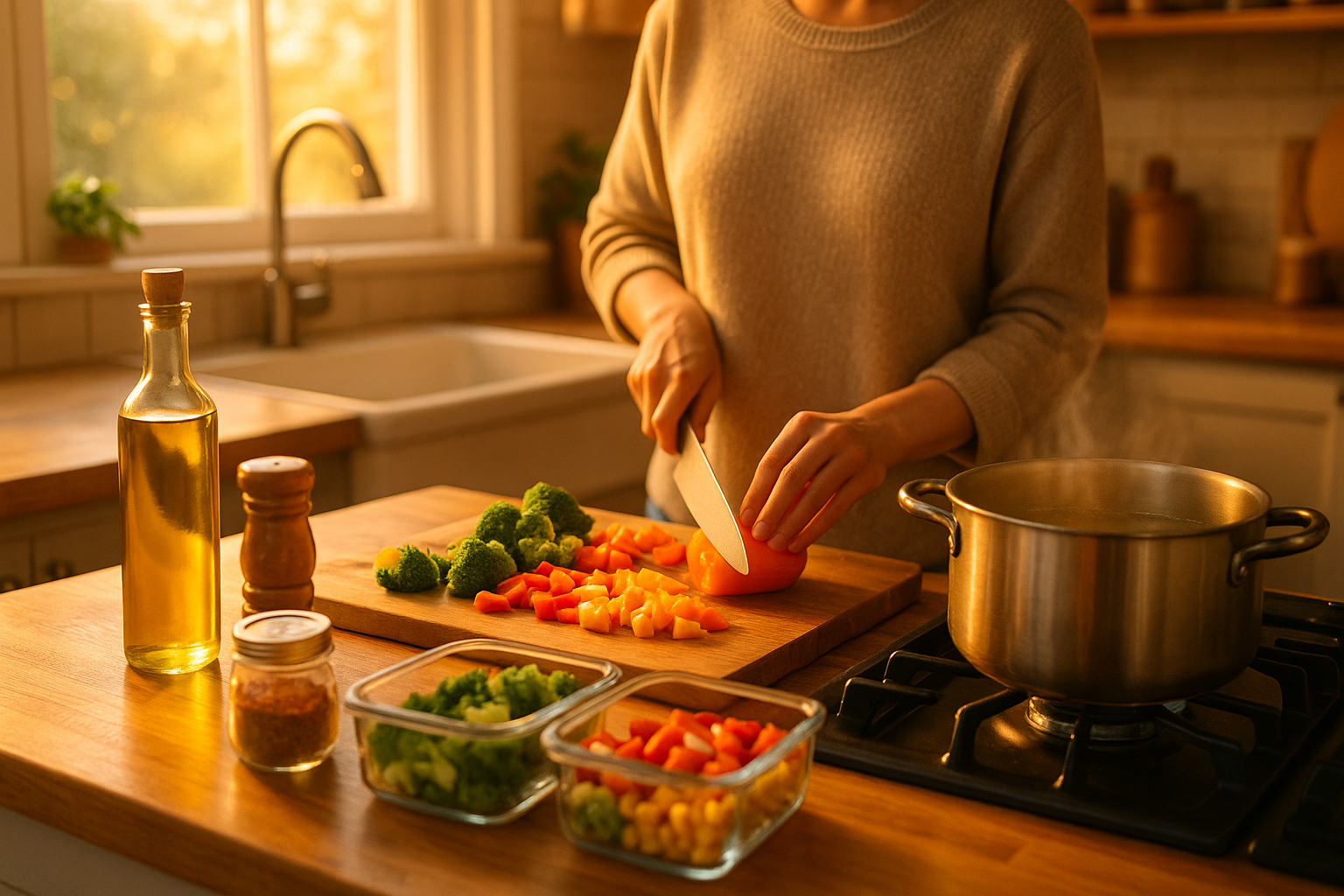
- Sheet-pan mix: broccoli, carrots, onions (or okra/cauliflower); toss with olive oil, spices; roast hot.
- Stir-fry: bell peppers, green beans, mushrooms; finish with a quick sauce of soy/tamari + ginger + rice vinegar.
- Chopped salad: cucumber, tomato, herbs, lemon-olive oil dressing; add beans or grilled chicken.
Numbers & guardrails
- Aim for 2–3 cups veg per day; filling half your plate gets you there naturally.
- Roast at ~220°C/425°F for caramelized edges; stir-fry over high heat for color and crunch.
- Keep frozen veg on standby; no washing/chopping required.
Synthesis: When vegetables are delicious and convenient, you’ll eat more of them—without forcing it.
10. Choose Smart Carbs and Whole Grains
Carbs aren’t the enemy; refined, low-fiber carbs that digest too fast are the problem for many people. Favor whole grains, legumes, and starchy veg (potatoes, sweet potatoes) that bring fiber, minerals, and long-lasting energy. For blood-sugar steadiness, pair carbs with protein and healthy fats, and consider the glycemic index as a rough guide—lower-GI choices (e.g., intact grains, lentils) tend to be steadier than white bread or sugary cereals. Cook larger batches of grains for the week to make “smart carbs” the easy default.
How to do it
- Rotate brown rice, quinoa, bulgur, whole-wheat pasta, oats.
- Mix half white, half brown rice while you transition if you prefer texture.
- Use beans/lentils to stretch meat and add fiber (think chili, khichdi, dal-and-rice).
- Add a fat/acid finish (olive oil + lemon) to boost flavor.
Numbers & guardrails
- A quick cue: look for ≥3–5 g fiber per serving on packaged grains.
- Low GI is often defined as ≤55, high GI ≥70; pair higher-GI foods with protein/fat to steady the meal.
- Batch-cook 4–6 cups cooked grain on Sunday for the week.
Synthesis: Choosing fiber-rich carbs and pairing them well gives you energy without the rollercoaster.
11. Use Healthy Fats and the Right Oils
Fats carry flavor and help you feel satisfied. The goal isn’t to avoid fat—it’s to choose unsaturated fats (olive oil, nuts, seeds, avocado, fatty fish) more often and limit saturated fat from heavily processed foods. Match oils to cooking method: extra-virgin olive oil shines in dressings and low-to-medium heat; canola, avocado, or peanut oil handle higher heat. Store oils in a cool, dark place to prevent rancidity, and mind portions—oils are energy-dense, so a little goes a long way.
How to do it
- Keep two oils: one flavorful (extra-virgin olive) and one high-heat (canola/avocado/peanut).
- Add nuts/seeds to salads and bowls for crunch and healthy fats.
- Use yogurt-based sauces as creamy, lighter alternatives to heavy cream.
Numbers & guardrails
- Many healthy patterns keep saturated fat to <10% of daily calories.
- A typical drizzle is 1–2 teaspoons per portion—taste first, then add more if needed.
- Replace butter in sautéing with olive oil most days; save butter for special dishes.
Synthesis: Right-sized, well-chosen fats improve flavor and satiety—key for sticking with home cooking.
12. Make Your System Sustainable Long-Term
Healthy cooking sticks when it fits your life. Build a repeatable weekly rhythm: choose 3–4 dinner templates, shop with a list, batch-prep a couple of components, and keep a “back-pocket” meal (eggs + veg, dal + rice, tuna salad + toast) for emergencies. Track what worked in a notes app; rotate hits every 2–3 weeks so meals feel new. Celebrate small wins, not perfection—your goal is consistency, not culinary school. Over time, your kitchen becomes a place of easy defaults, not effort.
Mini checklist
- Pick your templates for the week; write them on the fridge.
- Prep once (60–90 min): a grain, a protein, a dressing, and cut veg.
- Keep two emergency meals always on hand.
- Review Sundays: what you loved, what to change next week.
Numbers & guardrails
- A 60–90 minute prep typically yields 6–10 portions for the week.
- Aim for 3 home-cooked dinners per week to start; add more as it gets easier.
- Keep your pantry restock list taped inside a cabinet; update as you use items.
Synthesis: Systems beat motivation. Make healthy cooking automatic, and lasting dietary change follows.
FAQs
1) Is cooking at home really healthier than eating out?
Generally, yes—home cooking lets you control ingredients, portions, and cooking methods. Restaurant meals often rely on more salt, added sugars, and saturated fat to maximize flavor and consistency. At home, you can build meals around vegetables, lean proteins, and whole grains, and you decide how much oil or salt to use. Even simple swaps (baking instead of deep-frying, yogurt-based sauces instead of heavy cream) make a big difference over time.
2) I’m short on time. What’s the minimum to meal-prep effectively?
One focused 60–90-minute session sets up most of your week. Cook a pot of grains, roast two trays of vegetables, and prep a protein (beans, baked chicken thighs, tofu). Mix a simple dressing and cut some grab-and-go veg. With those components, you can assemble bowls, wraps, salads, and stir-fries in minutes. If even that’s hard, keep “emergency” meals—eggs, canned beans, frozen veg—so dinner is never more than 10–15 minutes away.
3) Are frozen vegetables and fruits as healthy as fresh?
Often, yes. Frozen produce is typically harvested at peak ripeness and flash-frozen, locking in nutrients. It’s also pre-washed and pre-chopped, which cuts prep time and reduces waste. Use frozen items in cooked dishes (stir-fries, soups, sheet-pan roasts) or smoothies; reserve delicate raw salads for fresh produce. Keeping frozen veg on hand guarantees a vegetable side even when you haven’t shopped in a week.
4) What oil should I cook with most days?
Keep two: extra-virgin olive oil for dressings and low-to-medium heat sautéing, and canola, avocado, or peanut oil for higher heat cooking. These oils emphasize unsaturated fats, which are generally better than saturated fats for everyday use. Match oil to method, store in a cool, dark place, and measure by the teaspoon to control portions. Save butter/ghee for flavor accents rather than the default cooking fat.
5) How do I season food well without adding lots of salt?
Start flavor in the pan with aromatics (onion, garlic, ginger), then bloom spices briefly in oil. Layer herbs (cilantro, parsley, dill) and finish with acid—lemon, lime, or vinegar—to brighten dishes, which lets you use less salt. Toasting spices, charring veg edges, and adding a little heat (chili flakes) also boost perceived saltiness so meals taste vivid with less sodium.
6) What are safe internal temperatures for common proteins?
Use a digital thermometer. Poultry should reach 165°F/74°C; ground meats like beef or turkey 160°F/71°C; whole cuts of beef, pork, or lamb 145°F/63°C with a rest; fish should be opaque and flake easily. These targets help prevent foodborne illness while keeping food juicy. Temperature beats guessing—no more cutting into meat to check (which leaks juices and dries it).
7) How long can I keep leftovers?
Most cooked leftovers are safe 3–4 days in the refrigerator when cooled within two hours and stored in shallow, airtight containers. Reheat thoroughly until steaming hot throughout (about 165°F/74°C). For longer storage, freeze portions; many dishes keep quality for several months. Label and date your containers so you eat the oldest first and waste less.
8) How can I lower grocery costs while eating healthier?
Plan 3–4 dinners around affordable staples (beans, lentils, eggs, frozen veg, oats, rice) and buy in bulk where it makes sense. Shop with a list, compare unit prices, and use seasonal or frozen produce. Stretch animal proteins by combining them with legumes (e.g., half ground beef, half lentils in chili). Batch-cook to avoid pricey takeout on busy nights, and keep a couple of emergency meals on hand.
9) Do I need special equipment to start?
No. A sharp chef’s knife, cutting board, 12-inch skillet, saucepan, sheet pan, and a digital thermometer cover most recipes. Add a fine-mesh strainer, measuring cups/spoons, and a flexible spatula for comfort. Upgrade gradually based on what you cook most (e.g., rice cooker, pressure cooker, blender). The best tool is the one you’ll use frequently.
10) What’s the simplest healthy meal I can make tonight?
Try a sheet-pan dinner: toss chopped vegetables (broccoli, carrots, onions) and chicken thighs or tofu with olive oil, salt, pepper, and your favorite spice blend. Roast at 425°F/220°C until the protein is done and the veg are caramelized. Serve over cooked grain and finish with lemon or yogurt sauce. It’s hands-off, balanced, and scales for leftovers.
11) How do I choose better carbs without going “low-carb”?
Favor whole grains (brown rice, oats, quinoa), legumes, and starchy vegetables. Check labels for ≥3–5 g fiber per serving. Pair carbs with protein and healthy fats—yogurt with fruit and nuts, dal with rice, eggs on whole-grain toast—to steady energy and hunger. If you love white rice or bread, mix with whole grains or smaller portions while filling half the plate with vegetables.
12) I cook for different tastes at home. How do I keep peace (and sanity)?
Use modular meals. Make a base (grain + roasted veg), offer two proteins (e.g., chickpeas and chicken), and keep toppings/sauces on the side (yogurt-herb, chili oil, lemon wedges). Everyone assembles their own bowl to taste. This reduces separate cooking while accommodating preferences, spice tolerance, or dietary needs.
Conclusion
Healthy home cooking isn’t about mastering complicated recipes—it’s about building a repeatable system that makes good choices automatic. With a small set of tools, a reliable pantry, and flexible plate templates, you can assemble balanced meals in minutes. Core techniques like roasting and stir-frying deliver flavor fast, while smart seasoning keeps sodium in check. Batch cooking and safe storage ensure you always have a fallback option, and simple breakfasts and snacks prevent the mid-day slump. Over time, rotating through favorite templates keeps meals fresh without extra work.
Start small: pick three dinner templates for next week, make a shopping list, and block 60–90 minutes to prep a grain, a protein, a dressing, and some vegetables. Tape your plan to the fridge and keep two emergency meals on hand. Consistency—not perfection—creates lasting dietary change. Ready to make it real? Choose your three templates and shop once this weekend.
References
- Dietary Guidelines for Americans, 2020–2025. U.S. Departments of Agriculture and Health & Human Services, 2020. https://www.dietaryguidelines.gov
- The New Nutrition Facts Label: Dietary Fiber and Daily Value. U.S. Food & Drug Administration, updated 2022. https://www.fda.gov/food/nutrition-education-resources-materials/new-nutrition-facts-label
- Healthy Eating Plate & Healthy Eating Pyramid. Harvard T.H. Chan School of Public Health, n.d. https://www.hsph.harvard.edu/nutritionsource/healthy-eating-plate/
- MyPlate: The 5 Food Groups. U.S. Department of Agriculture, n.d. https://www.myplate.gov/
- Sodium and Salt. American Heart Association, updated 2023. https://www.heart.org/en/health-topics/high-blood-pressure/understanding-blood-pressure-readings/sodium-and-salt
- Safe Minimum Internal Temperature Chart. USDA Food Safety and Inspection Service, updated 2022. https://www.fsis.usda.gov/food-safety/safe-food-handling-and-preparation/food-safety-basics/safe-temperature-chart
- Leftovers and Food Safety. USDA Food Safety and Inspection Service, updated 2020. https://www.fsis.usda.gov/food-safety/safe-food-handling-and-preparation/food-safety-basics/leftovers-and-food-safety
- Keep Food Safe: Clean, Separate, Cook, Chill. Centers for Disease Control and Prevention, updated 2024. https://www.cdc.gov/foodsafety/keep-food-safe.html
- Glycemic Index – What is GI? University of Sydney, Glycemic Index Foundation, n.d. https://glycemicindex.com/
- The Best Cooking Oils for Your Health. Cleveland Clinic Health Essentials, updated 2024. https://health.clevelandclinic.org/healthy-cooking-oil
- Food Expenditure Series (Food at Home vs. Away From Home). USDA Economic Research Service, updated 2024. https://www.ers.usda.gov/data-products/food-expenditure-series/