

























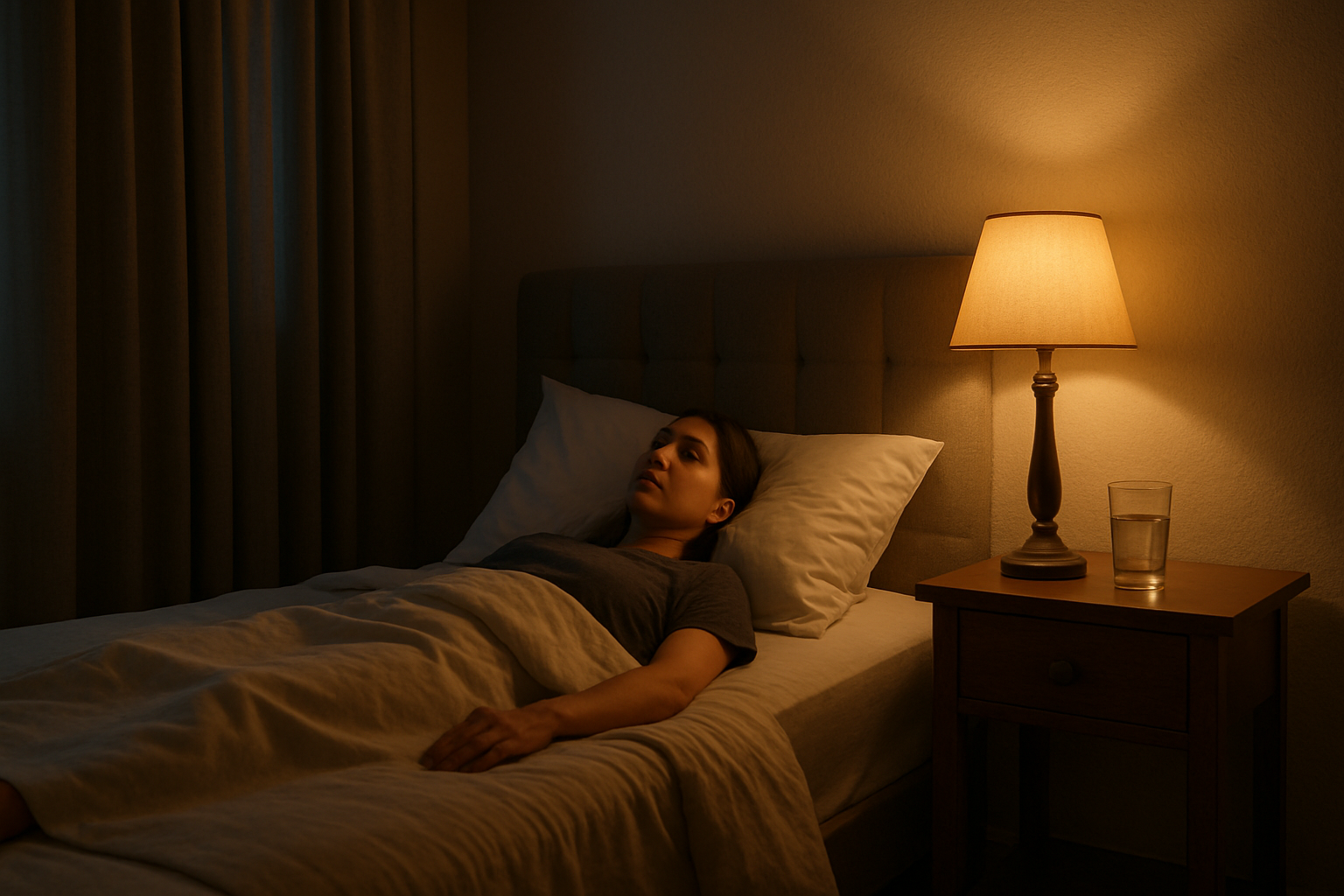
Progressive muscle relaxation at bedtime is a simple, evidence-based way to quiet your nervous system so you can fall asleep faster and sleep more deeply. In this guide, you’ll learn exactly how to do it in 10 practical steps designed for real-world nights—busy minds, tight shoulders, and all. You’ll get the right sequence, timing, and cues, plus options if you’re short on time or dealing with pain. Quick definition: Progressive muscle relaxation (PMR) is a head-to-toe method of gently tensing a muscle group for ~5–7 seconds and then releasing for ~10–20 seconds, noticing the contrast to trigger the body’s relaxation response. For a fast start, try: lie down → slow your breathing → work through each muscle group (tense–release) → end with three easy breaths.
Medical note: This educational guide is not a substitute for medical care. If you have an injury, uncontrolled pain, cardiovascular or respiratory conditions, pregnancy-related concerns, or any medical question, consult a clinician before starting.
1. Prepare Your Space and Body
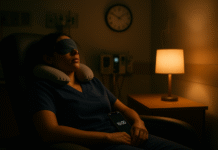
Your setup directly affects how quickly PMR eases you into sleep, so start by making the environment comfortable and low-effort. Aim for a quiet, dim room around 60–67°F (15–19°C), a supportive pillow, and a position you can hold without fidgeting. Lying on your back with arms at your sides and feet slightly apart is a good default, but side-lying is also fine if it’s more comfortable. Silence distractions, set your phone to Do Not Disturb, and decide whether you’ll use an audio guide or your own cues. Finally, take three easy nasal breaths—long, unforced exhales—to signal “wind-down” to your nervous system.
1.1 Why it matters
Comfort reduces micro-arousals (tiny wake-ups) and makes the tense–release contrast feel more obvious. When your body isn’t busy fighting a cold room, an awkward pillow, or unpredictable notifications, your attention is freer to notice the “melt” sensation after each release. That noticing is the active ingredient that calms the system you’re trying to settle.
1.2 Mini-checklist
- Lights low and consistent (lamp or warm backlight, not overhead).
- Temperature comfortable; add a light blanket if you tend to chill.
- Position you can sustain for 10–15 minutes without strain.
- Phone silenced; timer set for 10–15 minutes if you like structure.
- Optional: a short track of brown noise at low volume.
Close this step by gently unclenching your jaw and letting your tongue rest on the floor of your mouth; you’ll start PMR already a notch calmer.
2. Learn the Sequence of Muscle Groups
A consistent order prevents second-guessing, keeps you moving forward, and helps your brain anticipate relaxation. Use this simple sequence from the ground up: feet, calves, thighs, glutes/hips, abdomen, chest, hands, forearms, upper arms, shoulders/upper back, neck, jaw, eyes/forehead/scalp. You’ll tense one area at a time, never holding your breath, then release as if you’re melting into the mattress. If any area is injured or painful, skip it—PMR works perfectly even when you omit zones.
2.1 Suggested sequence (head-to-toe flow)
- Feet & toes
- Calves (lower legs)
- Thighs
- Glutes & hips
- Abdomen
- Chest & upper back (gentle)
- Hands
- Forearms
- Upper arms
- Shoulders & upper back
- Neck (very gentle)
- Jaw, eyes, forehead, scalp
2.2 Numbers & guardrails
- Tense: ~5–7 seconds at about 60–70% effort (not a max squeeze).
- Release: ~10–20 seconds; longer if it feels good.
- Breathing: inhale during the tension, slow exhale as you release.
- Pace: total session ~10–15 minutes; the shortened version ~5 minutes.
End each group by noticing three sensations: warmth, heaviness, and softening. That quick mental label cements the contrast that makes PMR effective.
3. Master the Tense–Release Timing
The magic of PMR is contrast: tension sets a reference point so relaxation feels obvious. To nail it, pair a gentle 5–7-second squeeze with a longer 10–20-second release, and keep your breathing smooth. If you catch yourself straining, downshift—this is not strength training. Think “firm but friendly” squeeze, then imagine the muscle slackening like a rope losing its knot.
3.1 How to do it (micro-script)
- Inhale naturally and begin a 60–70% squeeze in the target muscle.
- Count slowly to 5 (or say “one-one-thousand…” to “five-one-thousand”).
- Exhale like you’re fogging a window and let go all at once.
- Wait, notice warmth/heaviness, and enjoy the after-feel for 10–20 seconds.
- Mentally say “soft” or “heavy” to anchor the feeling.
3.2 Mini example
If you’re working your calves: point your toes gently to tighten the lower legs as you inhale for ~5 seconds; as you exhale, release the point and allow the heels to get heavier into the mattress. Notice the change in temperature or weight. That’s what you’re aiming for in each region.
Wrap this step by deciding your counting style (seconds vs breaths). Consistency will make the rest of PMR feel automatic.
4. Feet and Calves: Build a Calm Foundation
Start where most of us store tension without noticing—feet and lower legs. Tight shoes and long days can leave micro-clenches here that feed a restless body. Begin by focusing on your toes and the arches; a gentle curl of the toes and light pointing of the feet creates enough tension to feel the contrast without cramping. Then move up to the calves, which respond well to a simple ankle point.
4.1 Step-by-step
- Feet: Curl toes toward the soles and gently arch for ~5–7 seconds. Release on a slow exhale; feel the soles spread and cool.
- Calves: Point toes away (plantarflex) to lightly tighten calves. Hold ~5–7 seconds, then release and let the heels sink.
- After-feel: Name the sensations—“warm,” “heavy,” “loose.”
4.2 Common pitfalls
- Cramping from over-squeezing—dial effort back to 60%.
- Holding your breath—pair every release with a longer exhale.
- Rushing—count a full 10–20 seconds after the release.
Finish by scanning from toes to knees and noticing that the lower legs now feel a touch heavier than the rest of you. That unequal weight is your cue that PMR is working.
5. Thighs, Hips, and Glutes: Release Big Muscle Habit Tension
Large muscle groups quietly hoard stress. When you relax thighs, hips, and glutes, your body often drops a gear into deeper calm. Keep the squeeze friendly; you’re looking for firmness, not strain. If you have hip or knee pain, stay within a pain-free range or skip and spend more time on the release sensation instead.
5.1 How to do it
- Thighs: Squeeze quads (imagine straightening knees into the mattress) for ~5–7 seconds; release and feel warmth spread.
- Glutes & hips: Gently tighten your buttocks as if stabilizing your pelvis; avoid clenching the lower back. Release into softness.
- Abductors/adductors (optional): Press thighs lightly toward each other, then release, noticing the pelvis settle.
5.2 Mini-checklist & guardrails
- Keep low back neutral; no arching.
- Stay under 70% effort to avoid joint discomfort.
- If pregnant or with pelvic pain, skip glute squeezes and simply breathe into the hips on the release.
As these big groups let go, many people feel the bed “catch” them more fully. Take one breath to appreciate that extra contact—it primes your core to relax next.
6. Abdomen, Chest, and Breath: Unlock the Core Without Strain
Your core influences breathing and arousal. We want a gentle abdominal brace and a soft chest release—never breath-holding or pressure. Think of “hugging” your midsection for a brief moment, then letting it spread and slacken as your exhale lengthens. Keep your throat open and jaw easy so the breath stays quiet.
6.1 How to do it safely
- Abdomen: On an inhale, lightly draw your navel toward your spine (as if zipping snug jeans) for 5 seconds. Exhale and let the belly balloon and widen.
- Chest & upper back: Imagine hugging a pillow—tighten chest/upper back gently, then release and feel shoulder blades melt.
- Breath: Let the release ride a long exhale (count 6–8), then pause in the stillness before the next natural inhale.
6.2 Common mistakes
- Over-bracing (creates agitation). Fix: cut the effort in half.
- Breath-holding. Fix: whisper-exhale like you’re fogging glass.
- For reflux or late meals: avoid strong abdominal squeezes; use shallow tension and longer, easy releases.
After this step, many people notice a quieter heartbeat perception and fewer urge-to-sigh sensations—both signs that your system is de-throttling.
7. Hands, Forearms, and Upper Arms: Let Go of “Desk Clench”
Hands are honesty detectors; if your mind is busy, fingers betray it. This is where PMR often flips from “doing” to “melting.” Start with a soft fist, then travel up the forearms into the upper arms. If you type or scroll a lot, expect a striking before/after contrast.
7.1 Step-by-step
- Hands: Make a gentle fist, thumbs outside fingers, 5–7 seconds. Release and let fingers lengthen and fall open.
- Forearms: Flex wrists slightly toward you to feel the forearms “wake,” then release and notice the forearms grow heavier.
- Upper arms: Tighten biceps/triceps lightly (as if stabilizing a grocery bag), then release and feel warmth.
7.2 Mini case
After a long laptop day, your first hand release may feel buzzy or tingly. That’s normal perfusion and nervous system downshift. Label it “warm” and move on—no need to analyze.
Close this step by resting the backs of your hands on the bed, palms half-open, and noticing that the urge to fidget has dropped.
8. Shoulders, Neck, Jaw, and Face: Quiet the Headwaters of Stress
These areas store “day residue.” The key is gentleness—especially at the neck and jaw. Think of setting down a heavy backpack. You’ll do a light shoulder squeeze, a micro neck brace (or skip if you have neck issues), and tiny facial tensions that dissolve beautifully on the release.
8.1 How to do it
- Shoulders/upper back: Shrug toward your ears just a little for 5 seconds. Exhale and let shoulders slide down and outward.
- Neck (optional/very gentle): Imagine holding a peach under your chin without squashing it. Release and feel the throat soften.
- Jaw: Touch molars together lightly (not grinding) for 5 seconds; release, letting lips barely part and tongue rest low.
- Eyes/forehead/scalp: Squeeze eyes shut gently, knit the brow, then release and feel your forehead spread wide; imagine your scalp loosening.
8.2 Safety & comfort tips
- TMJ or jaw pain: skip clenching; just exhale and picture the jaw “unhooking.”
- Neck pain: skip neck tension; focus on a long exhale and the pillow supporting you.
- Headache nights: very light facial squeezes only; more time on releases.
As your face softens, your breathing usually slows another notch. Let your eyes stay closed and enjoy that sense of your head “floating” on the pillow.
9. Link PMR With Calming Breath and Imagery
PMR works alone, but pairing it with slow breathing and a simple image deepens the effect. The easiest combo is a longer exhale pattern, like 4-to-6 breathing (inhale 4 counts, exhale 6). Add a calming visual—warm light moving down your body, or waves washing tension away—and the brain follows the script you’re giving it.
9.1 Simple combined practice
- Choose a breath (4-6 or 4-7-8 if comfortable).
- As you tense, inhale; as you release, exhale for longer.
- Picture a soft light or gentle breeze moving from head to toe.
- Between muscle groups, rest in the image for one extra breath.
9.2 Mini-checklist for momentum
- Keep visuals uncomplicated; you’re not making a movie.
- If counting annoys you, switch to phrases like “easy in / slow out.”
- If imagery isn’t your thing, just focus on the feeling words (warm, heavy, soft).
After one or two nights, this combo becomes a bedtime ritual cue. Your brain starts relaxing as soon as you take the first long exhale.
10. Make It a Nightly Habit (Track, Adapt, Troubleshoot)
Consistency is what converts PMR from a technique into a sleep superpower. Aim for 10–15 minutes most nights, but give yourself flexible options: a 5-minute “abbreviated PMR” on busy evenings and a full 12-group session when you can. Track what helps—time of night, position, audio guide—so you can repeat wins and drop what doesn’t serve you.
10.1 Practical routines
- Standard (10–15 min): All groups, standard timing.
- Abbreviated (5 min): Four big zones—lower body, upper body, jaw/face, full-body release.
- On-the-spot (2 min): Hands, shoulders, jaw only, then three long exhales.
10.2 Tools & tips
- Use a simple timer or an app with PMR tracks (e.g., Insight Timer, Healthy Minds Program).
- Pair PMR with a consistent pre-sleep routine (lights down → brush teeth → PMR).
- If you get sleepy mid-session, let sleep happen—the goal isn’t to finish; it’s to drift off.
Finish by writing a one-line script you like (“soften and sink”) and repeating it on your final exhale. That tiny ritual becomes your personal “sleep switch.”
FAQs
1) What exactly is progressive muscle relaxation and how does it help sleep?
Progressive muscle relaxation is a structured method of tensing then releasing muscle groups to create a felt contrast between effort and ease. That contrast activates the body’s relaxation response, lowering physiological arousal—slower breathing, reduced muscle tone, calmer heart-brain chatter—which makes it easier to fall asleep. It’s simple, teachable, and works even if you’re new to mind-body techniques.
2) How long should a bedtime PMR session take?
A full session takes about 10–15 minutes if you include all major muscle groups and spend ~10–20 seconds savoring each release. On busy nights, a 5-minute abbreviated version—lower body, upper body, jaw/face, then a full-body “melt”—still calms the system. Consistency matters more than perfect length; most people notice a difference within a week or two.
3) Is PMR safe if I have chronic pain, TMJ, pregnancy, or heart issues?
PMR is generally gentle, but safety comes first. Keep tension under ~70% effort, skip any painful areas, and focus more on the release and breathing. If you have TMJ, avoid jaw clenching; imagine the jaw “unhooking” as you exhale. Pregnancy often favors side-lying positions; skip strong abdominal work. Anyone with cardiac, respiratory, or musculoskeletal conditions should check with a clinician before starting.
4) Can PMR replace sleep medication or CBT-I?
PMR is one of several behavioral tools often included in cognitive behavioral therapy for insomnia (CBT-I). For some people, it reduces sleep-onset latency and bedtime anxiety enough to cut reliance on medication; for others, it works best alongside stimulus control, sleep scheduling, and cognitive strategies. If you’re using prescription sleep meds, discuss any changes with your prescriber.
5) What if PMR makes me feel more awake?
Two common culprits are over-effort and mental “performance mode.” Try dialing tension down to 50–60%, lengthening your exhales, and giving yourself permission to stop mid-session if sleep arrives. Switch to the abbreviated version or even a simple hands-shoulders-jaw sequence. If you prefer movement, try a warm shower and two minutes of light stretching before PMR.
6) How is PMR different from a body scan or Yoga Nidra?
A body scan is primarily observational—you notice sensations without changing them. Yoga Nidra follows a guided script of awareness and imagery. PMR is active: you intentionally create tension, then release it to highlight contrast. Many people stack them—PMR to discharge muscle tone, then a body scan or Nidra to float into sleep.
7) Can I do PMR sitting up or in a chair?
Yes. While bed is ideal at night, chair-based PMR works well if you can lean back with head support. Keep feet flat, hands relaxed on thighs, and use the same tense–release timing. If you tend to nod off in a chair before bed, great—transfer to bed as soon as you’re drowsy to avoid a second wind.
8) How many weeks until PMR feels natural?
Most people feel early benefits within 3–7 nights, and the routine starts to feel automatic after 2–3 weeks. That’s when your brain begins anticipating the sequence and relaxing sooner. Keep the ritual short and pleasant; your only job is to show up most nights and enjoy the releases.
9) What if I fall asleep halfway through?
That’s success, not failure. The purpose of PMR at bedtime is to drift off. If you wake later and want to resume, pick up wherever you left off or do the abbreviated four-zone version. Over time, you may find you rarely reach the final muscle groups—and that’s a good sign.
10) Are apps or audio guides helpful, and which ones should I try?
Many people find audio support helpful for pacing. Look for tracks specifically labeled “progressive muscle relaxation” with 10–15-minute options and clear cues (tense–release timing, breathing prompts). Popular places to start include Insight Timer, UCLA Mindful, and reputable hospital or university health libraries that offer free PMR recordings.
Conclusion
Progressive muscle relaxation at bedtime gives you a repeatable way to cue your nervous system for sleep. By moving systematically from feet to face with gentle effort and longer releases, you teach your body the feeling of “letting go on purpose.” Add longer exhales and a simple image, and you’ll stack the deck even more in favor of drowsiness. The real leverage comes from habit: a 10–15-minute session most nights, with a 5-minute backup for busy evenings. Personalize the sequence, skip any painful areas, and let sleep interrupt you whenever it wants. Tonight, try the first three groups (feet, calves, thighs) and notice the difference—then build toward the full sequence this week.
CTA: Save this guide and use the 10-step PMR routine at bedtime tonight.
References
- Progressive Muscle Relaxation: Benefits & How to Do It — Cleveland Clinic (Accessed Aug 2025). https://my.clevelandclinic.org/health/articles/14605-progressive-muscle-relaxation
- How to Do Progressive Muscle Relaxation — Sleep Foundation (Accessed Aug 2025). https://www.sleepfoundation.org/relaxation-techniques/progressive-muscle-relaxation
- Relaxation Techniques for Health: What You Need To Know — National Center for Complementary and Integrative Health, NIH (Updated 2024; Accessed Aug 2025). https://www.nccih.nih.gov/health/relaxation-techniques-what-you-need-to-know
- Management of Chronic Insomnia Disorder in Adults: A Clinical Practice Guideline — American College of Physicians, Annals of Internal Medicine (2016). https://www.acpjournals.org/doi/10.7326/M15-2175
- Behavioral and Psychological Treatments for Chronic Insomnia in Adults: Clinical Practice Guideline — American Academy of Sleep Medicine (2021). https://aasm.org/clinical-resources/clinical-practice-guidelines/
- Relaxation techniques: Breath control helps quell errant stress response — Harvard Health Publishing (Updated 2020; Accessed Aug 2025). https://www.health.harvard.edu/mind-and-mood/relaxation-techniques-breath-control-helps-quell-errant-stress-response
- Progressive Muscle Relaxation (Patient Guide, PDF) — University of Michigan Health (Revised 2020; Accessed Aug 2025). https://www.med.umich.edu/1libr/PMR.pdf
- Relaxation and Stress Management — NHS Inform (Accessed Aug 2025). https://www.nhsinform.scot/healthy-living/mental-wellbeing/stress-relaxation/relaxation