














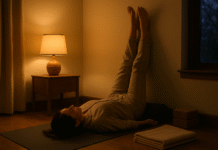



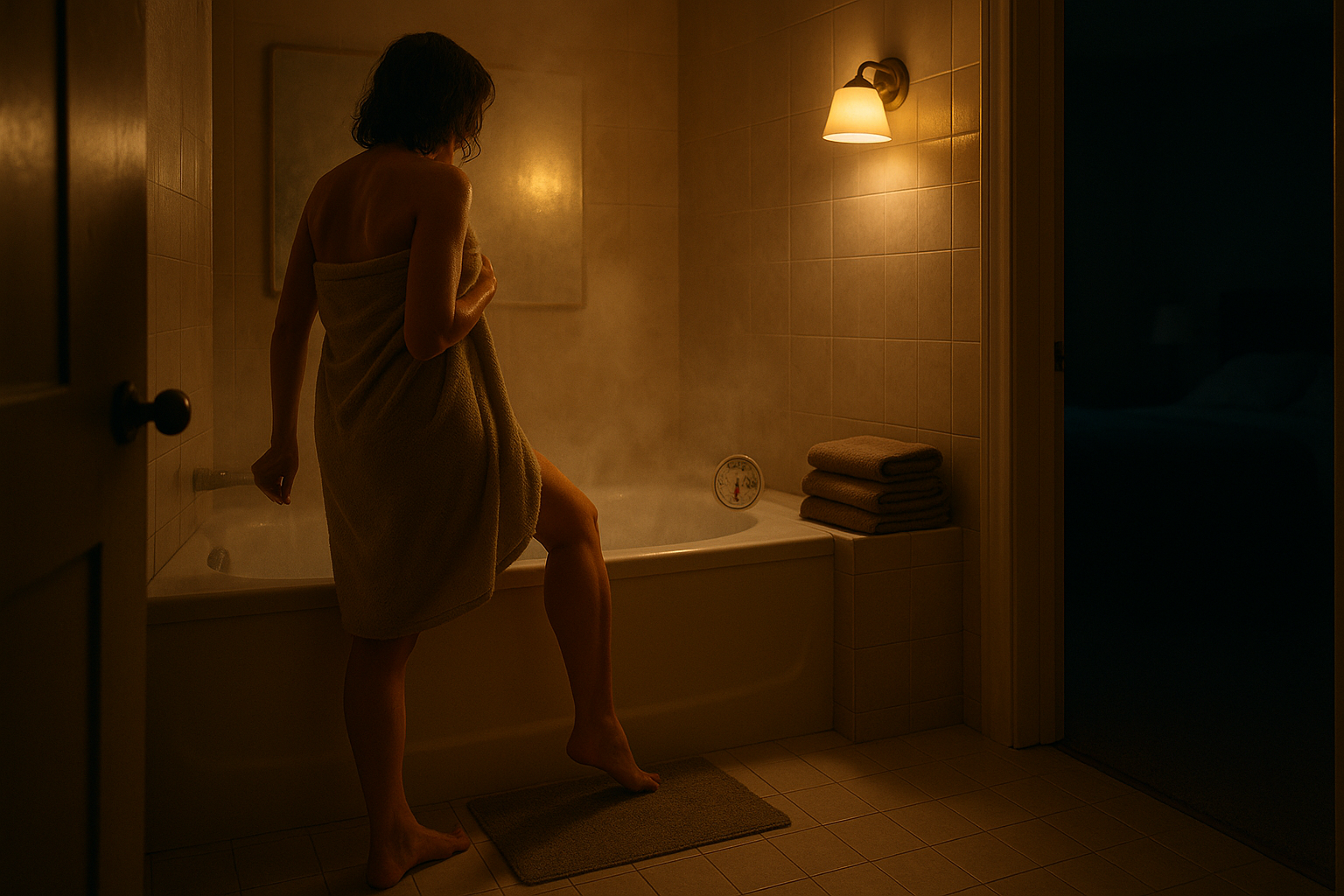
A warm bath before bed isn’t just soothing—it’s one of the simplest, most evidence-based ways to prime your body for sleep. The core idea is straightforward: warming your skin in the evening promotes heat loss after you step out, which helps your core temperature drift downward—a natural cue that it’s time to sleep. Taken 1–2 hours before bedtime, for about 10–20 minutes at roughly 40–42 °C (104–108 °F), a warm bath can shorten sleep-onset latency and improve sleep efficiency for many people.
Quick start (sleep-smart bath in 6 steps):
- Set the tub to ~40–42 °C (104–108 °F).
- Soak 10–20 minutes, then towel dry.
- Finish 60–120 minutes before lights-out.
- Keep your bedroom cool and dark for the “after-bath” cooldown.
- Hydrate lightly; avoid alcohol.
- Safety: prevent scalds (keep water heater near 49 °C/120 °F) and stand up slowly to avoid dizziness. PMC
Friendly disclaimer: This guide is informational and not medical advice. If you’re pregnant, have cardiovascular issues, low blood pressure, neuropathy, or any condition affecting temperature regulation, use conservative temperatures/timing and consult your clinician first.
1. Fall Asleep Faster (Sleep-Onset Latency Drops)
A warm bath taken in the evening can directly reduce the time it takes to fall asleep. The mechanism is elegantly simple: warming the skin—especially hands and feet—promotes vasodilation and heat loss once you get out, which steepens the evening decline in core temperature that naturally precedes sleep. Studies show that scheduling a warm bath (or shower) about 1–2 hours before bedtime can cut sleep-onset latency, often by around 10 minutes in aggregate analyses, which is a meaningful change if you routinely stare at the ceiling after lights-out. This effect shows up in lab settings and everyday use, and it correlates strongly with changes in the distal-to-proximal skin temperature gradient (DPG), a validated predictor of how quickly you’ll fall asleep.
1.1 Why it works
- Thermoregulation: Heating the skin boosts peripheral blood flow; the post-bath cooldown accelerates the core temperature drop tied to sleep initiation.
- DPG signal: A higher DPG (warmer hands/feet vs. trunk) predicts shorter sleep-onset latency more strongly than core temperature alone.
1.2 How to do it
- Timing: Finish 60–120 minutes before your target bedtime.
- Temperature: Aim for ~40–42 °C (104–108 °F).
- Duration: 10–20 minutes is usually sufficient.
1.3 Mini-checklist
- Warm the bathroom; cool the bedroom.
- Dry feet well and wear light socks to keep the DPG favorable as you wind down.
- Dim lights and avoid screens during the cooldown.
A consistent pre-sleep bath ritual can turn “tired but wired” bedtimes into smoother transitions, shaving minutes off the path to sleep.
2. Sleep More Soundly (Better Sleep Efficiency & Quality)
Beyond faster sleep onset, water-based passive body heating (a warm shower or bath) can improve sleep efficiency and self-rated sleep quality. A 2019 systematic review and meta-analysis found that baths at 40–42.5 °C, scheduled 1–2 hours before bedtime, were associated with shorter sleep latency and better efficiency, with some studies noting subjective improvements in sleep depth and satisfaction. While results vary by individual and study design, the direction of effect is consistently positive when timing and temperature are in the therapeutic window.
2.1 Numbers & guardrails
- Temp & timing: ~40–42 °C for 10–20 minutes, 1–2 hours pre-bed performed best across pooled studies.
- Environment: Pair with a cool, dark bedroom to maintain the post-bath cooling trajectory.
2.2 Common mistakes
- Too hot, too late: Very hot water or a last-minute bath can leave you flushed and alert.
- Over-bathing: Long, scalding soaks can cause light-headedness and counteract relaxation.
2.3 Mini-checklist
- Keep water in the therapeutic range.
- End the bath at least an hour before lights-out.
- Transition into low light, low noise, and no screens.
Used well, a warm bath sets up the physiology for high-quality sleep instead of simply “knocking you out” temporarily—quality, not just quantity.
3. Sync With Your Circadian Clock (Thermoregulatory Alignment)
Sleep onset is tightly linked to body-temperature rhythms: we get sleepy as core temperature falls and as heat moves from the core to the extremities. A warm bath is a practical way to nudge that process along, aligning your bedtime with the natural evening decline in core temperature. Research highlights the DPG as a more powerful predictor of sleep onset than core temperature alone; by warming your hands and feet in the bath, you amplify heat loss afterward and send a stronger “sleep now” signal. This thermoregulatory alignment doesn’t replace good sleep scheduling, but it makes your chosen bedtime more physiologically “sticky.” PMC
3.1 Why it matters
- Circadian phase & sleep drive: Thermoregulation helps initiate sleep; aligning your routine to that rhythm reduces “tired but awake” mismatches. Nature
- Microclimate management: Warmth now → cooling next. That sequence is the cue your brain expects near sleep onset.
3.2 How to do it
- Schedule: Anchor your bath to a fixed bedtime (e.g., bath ends 90 minutes before 11:00 pm).
- Bedroom: Keep the room cool to preserve the post-bath decline in core temperature.
3.3 Mini-checklist
- Warm extremities; avoid heavy meals/alcohol that blunt thermoregulation.
- Dim lights to avoid circadian confusion.
- Keep the post-bath window screen-free to let sleep pressure build.
By making thermoregulation your ally, a warm bath helps your biological night “start on time,” instead of drifting later. PubMed
4. De-Stress and Calm the Nervous System
A warm bath functions as an intentional off-switch for cognitive and physiological arousal. Hydrotherapy and balneotherapy studies associate warm-water immersion with reductions in anxiety and depressive symptoms, and with shifts consistent with parasympathetic (rest-and-digest) dominance. While methodologies vary, the trend is clear: a short soak is a low-effort way to downshift before bed, complementing other relaxation techniques. Pairing a bath with quiet breathing, soft music, or gentle stretching can deepen the effect. SpringerLinkPMC
4.1 Tools & examples
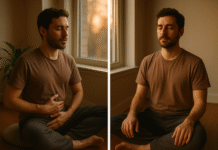
- Breathing add-on: Try 4-6 breathing while soaking (inhale 4, exhale 6) to reinforce parasympathetic tone.
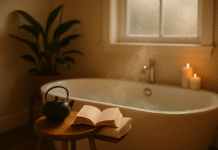
- Ritual stack: Light a (unscented or skin-safe) candle, queue a wind-down playlist, and keep the bathroom lights low.
4.2 Mini-checklist
- Keep the water warm, not scalding.
- Avoid stimulating podcasts/news; choose mellow audio.
- End with a brief cool rinse if you tend to feel flushed.
A calmer nervous system at lights-out is the simplest route to fewer middle-of-the-night awakenings and easier returns to sleep.
5. Soothe Sore Muscles & Ease Physical Discomfort
Warm-water immersion increases skin blood flow and can ease muscle tension, joint stiffness, and perceived pain—especially after long days or workouts. While cold water is often touted for recovery, many people sleep better when they feel physically supple and comfortable, and a warm bath can help you reach that state before bed. Laboratory and clinical observations report increased heart rate and circulation in warm water alongside subjective relaxation—changes that, timed correctly, dovetail with the thermoregulatory sleep benefits after you step out.
5.1 How to do it
- Focus areas: Let water cover the lower back and hips; gently mobilize tight areas.
- Add-ons: A clean, textured bath pillow or rolled towel under the neck; gentle self-massage for calves/forearms.
5.2 Numbers & guardrails
- Temperature: 40–41.5 °C (104–107 °F) is usually comfortable.
- Duration: 10–20 minutes; longer soaks increase dizziness risk.
5.3 Mini-checklist
- Hydrate lightly before and after.
- Stand up slowly and hold a rail or edge.
- Skip alcohol; it dilates vessels and can worsen orthostatic symptoms.
The goal isn’t deep tissue therapy; it’s gentle relaxation so your body feels safe to drift into sleep.
6. Gentle Cardiovascular “Decompression” (With Safety in Mind)
Warm water widens blood vessels, which can lower blood pressure temporarily and ease vascular tension—a reason many people feel “loosened up” after a soak. Observational and interventional studies (including work in older adults and hot-spring contexts) have linked evening bathing with next-morning reductions in systolic pressure. If you have controlled hypertension, brief warm immersion is typically well tolerated; still, hot tubs and very hot baths can cause excessive drops in blood pressure and light-headedness, especially if you stand abruptly.
6.1 Numbers & guardrails
- Keep it reasonable: 100–105 °F (38–40.5 °C) is a sensible range if you’re sensitive to heat.
- Duration: Start with 10 minutes; avoid prolonged, very hot soaks.
- Stand slowly; sit on the tub edge if you feel woozy.
6.2 Mini-checklist
- Hydration: Sip water; avoid alcohol pre-bath.
- Support: Install grab bars and a non-slip mat.
- When to ask your doctor: History of syncope, arrhythmia, uncontrolled BP, autonomic dysfunction.
Used judiciously, a warm bath can relax the cardiovascular system without courting dizziness—set the temperature and time to your personal “sweet spot.”
7. Especially Helpful for Older Adults (Plus Practical Safety)
For many older adults, pre-bedtime bathing shortens the slide into sleep—thanks again to the DPG effect—while also offering a predictable wind-down cue. Large-scale data in older populations show that hot-water bathing before bedtime is associated with shorter sleep-onset latency and a higher DPG, reinforcing that the mechanism generalizes beyond lab studies. That said, older adults are also more prone to orthostatic drops in blood pressure and scald injuries, so a few extra precautions make the practice both effective and safe.
7.1 Safety first
- Prevent scalds: Set the water heater around 49 °C/120 °F. Johns Hopkins Public Health
- Avoid hypotension: Keep water comfortably warm (not hot) and stand slowly; consider a bath seat or hand-held shower.
7.2 Mini-checklist
- Have a non-slip mat and grab bars installed.
- Keep a phone or alert device within reach.
- End the bath 90 minutes before planned bedtime to allow a gentle cooldown.
With sensible guardrails, older adults can get the same sleep-onset benefits as younger people—sometimes more—without sacrificing safety.
8. Pregnancy-Friendly Relaxation (When Kept Warm, Not Hot)
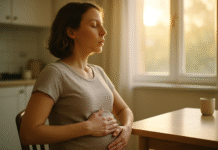
Pregnancy can make sleep elusive; a warm bath (not a hot tub) can be a safer, soothing option for many. The key is avoiding sustained elevations in core temperature, which are linked to fetal risk in early pregnancy. Professional guidance advises against hot tubs and saunas; in contrast, a brief warm bath at a comfortable temperature that doesn’t overheat you can help with back tension and pre-sleep relaxation. Keep the upper chest and face out of the water, listen to your body, and keep the bathroom cool so you feel warm—not overheated. American Pregnancy Association
8.1 Guardrails
- Skip hot tubs/saunas.
- Use mild warmth: Comfortable water you can enter without flushing; keep soaks short.
- Cool room, low lights: Encourage the gentle post-bath cool-down that favors sleep.
8.2 Mini-checklist
- If you feel too warm, step out immediately.
- Hydrate lightly; avoid essential oils unless your clinician approves.
- Get personalized advice if you have any pregnancy complications.
Handled prudently, a warm bath can become a steady, safe pre-sleep ritual during pregnancy—just nowhere near the “hot tub” zone.
9. A Reliable, Low-Tech Sleep Aid You Can Personalize
Perhaps the most practical benefit: a warm bath is a non-drug, low-cost tool you can tailor—temperature, timing, duration—to your body and schedule. That makes it ideal for building a repeatable bedtime routine that reduces screen time, lowers stress, and conditions your brain to expect sleep. Sleep-medicine guidance regularly lists a warm bath among effective wind-down behaviors; combine it with fixed bed/wake times, a cool dark room, and light-dimming to reinforce the habit loop night after night. AASM
9.1 Personalization tips
- If you run “hot”: Use the lower end of the temperature range and shorten the soak.
- If you run “cold”: A slightly warmer, slightly longer bath may feel better—just finish earlier to allow full cooldown.
- If you’re sensitive to heat: Try a warm foot bath to warm extremities without whole-body immersion. PubMedScienceDirect
9.2 Mini-checklist
- Keep a simple log (time/temp/duration and how you slept).
- Adjust one variable at a time each week.
- Pair with consistent lights-out/wake-up times.
Because it’s customizable and habit-forming in the best way, a warm bath can anchor your nightly routine as a gentle, long-term sleep ally.
FAQs
1) What’s the best temperature for a pre-bed bath?
Most research clusters around 40–42 °C (104–108 °F). Warmer isn’t better; very hot water can leave you flushed or dizzy. If you’re heat-sensitive, stay closer to 38–40 °C (100–104 °F) and keep the soak brief.
2) When should I bathe for the biggest sleep benefit?
Finish 1–2 hours before bedtime. That window lets your core temperature fall after you step out, which cues sleep initiation and improves efficiency. Sleep Foundation
3) Is a hot shower as good as a bath?
Yes—both count as water-based passive heating. Choose what’s practical; timing and temperature matter more than the format. Baths may be gentler for sore muscles; showers are faster and easier to control.
4) Do Epsom salts help me sleep?
They can feel nice, but magnesium absorption through skin is uncertain and evidence is mixed; enjoy salts for the sensory experience, not as a proven magnesium supplement. If you have kidney disease, avoid magnesium salts unless your clinician says otherwise. PubMed
5) What if I get dizzy after a hot bath?
That’s a sign of blood-pressure drop. Shorten your soak, lower the temperature, hydrate, and stand up slowly. Install non-slip mats and grab bars; if dizziness persists or you have heart issues, talk to your clinician.
6) Is it safe for older adults?
Yes—with extra safety steps: moderate temperature, short soaks, non-slip surfaces, and careful standing. Pre-bed bathing can shorten time to sleep in older adults when done safely. CDC
7) Is it safe during pregnancy?
A warm bath can be soothing, but avoid hot tubs/saunas and any soak that overheats you. Keep baths brief and comfortable; ask your clinician if unsure.
8) What bedroom temperature pairs best with a pre-bed bath?
Aim for a cool room so your body continues to shed heat after the bath. Most sleep experts recommend cooler environments for better sleep continuity.
9) Can kids use a warm bath to sleep better?
Yes—children often respond well to a consistent, calming bath routine before bed. Keep water comfortably warm (not hot) and follow standard bath safety supervision for age.
10) I only have 10 minutes—worth it?
Absolutely. Even 10 minutes in the right temperature range, timed about 1–2 hours pre-bed, can help. Focus on consistency (most nights of the week) over marathon soaks.
Conclusion
A warm bath before bed is a rare combination of simple, soothing, and science-supported. By briefly warming your skin and then letting your body naturally cool, you reinforce the internal signals that initiate sleep. That same ritual also relaxes tense muscles, eases mental load, and—done safely—can gently decompress the cardiovascular system. The playbook is short: keep water warm, not hot; soak 10–20 minutes; finish 1–2 hours before lights-out; and pair the post-bath phase with a cool, dark, screen-free bedroom. Start small, keep a note of what timing and temperature work best for you, and iterate weekly. Tonight, give yourself that 15-minute head start—then coast into a quieter, deeper night’s sleep.
CTA: Run a warm bath this evening, end it 90 minutes before bed, and feel the difference.
References
- Haghayegh S. et al. “Before-bedtime passive body heating by warm shower or bath to improve sleep: a systematic review and meta-analysis.” Sleep Medicine Reviews, 2019. ScienceDirect
- Sleep Foundation. “Showering Before Bed.” Updated July 16, 2025. Sleep Foundation
- Tai Y. et al. “Hot-water bathing before bedtime and shorter sleep onset latency are accompanied by a higher distal-proximal skin temperature gradient in older adults.” Journal of Clinical Sleep Medicine, 2021. Journal of Clinical Sleep Medicine
- Kräuchi K. et al. “Functional link between distal vasodilation and sleep-onset latency?” American Journal of Physiology – Regulatory, Integrative and Comparative Physiology, 2000. Physiology Journals
- Harding E.C. & Franks N.P. “The Temperature Dependence of Sleep.” Frontiers in Neuroscience, 2019. https://www.frontiersin.org/articles/10.3389/fnins.2019.00336/full Frontiers
- American College of Obstetricians and Gynecologists (ACOG). “Can I use a sauna or hot tub early in pregnancy?” Accessed Aug 2025. ACOG
- U.S. Consumer Product Safety Commission. “Avoiding Tap Water Scalds.” Accessed Aug 2025. U.S. Consumer Product Safety Commission
- AASM. “Don’t Let Stress Prevent You from Getting a Good Night’s Sleep.” Aug 2024. AASM
- Becker B.E. “Biophysiologic Effects of Warm Water Immersion.” International Journal of Aquatic Research and Education, 2009. ScholarWorks
- Yamasaki S. et al. “Night-Time Hot Spring Bathing Is Associated with a Lower Blood Pressure the Next Morning in Older Adults.” International Journal of Environmental Research and Public Health, 2023. PMC
- Cleveland Clinic. “Orthostatic Hypotension (Low Blood Pressure).” Accessed Aug 2025. Cleveland Clinic
- Sleep Foundation. “How to Build a Better Bedtime Routine for Adults.” Updated July 22, 2025. Sleep Foundation
- National Geographic. “Love Epsom salt baths? Here’s how they affect your body.” June 26, 2024. National Geographic
- Shin T.W. et al. “Are hot tubs safe for people with treated hypertension?” Canadian Family Physician, 2003. PMC
- Harvard Health Publishing. “Hot baths and saunas: Beneficial for your heart?” Oct 1, 2020. Harvard Health