

























A great morning doesn’t need to be complicated—just consistent. This guide shows you exactly how to start strong with simple, practical steps that boost energy, focus, and long-term wellbeing. You’ll learn what to do (and why), how to fit it into real life, and the small guardrails that keep momentum going. Brief note: this article is educational and not a substitute for personalized medical advice; if you have specific conditions or medications, check with your healthcare provider.
Quick answer: creating a morning routine for health means designing a repeatable first hour that rehydrates you, anchors your circadian clock with light and movement, protects attention, and primes your body with protein, calm, and a plan.
At a glance, try this: drink water, get outdoor light, move 5–10 minutes, eat or plan a protein breakfast, breathe or meditate for 3 minutes, set your top 1–3 priorities, delay caffeine a bit, avoid doomscrolling, wake at a consistent time, and track it all.
1. Rehydrate Before Anything Else
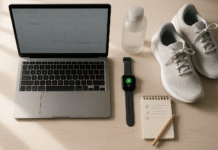
Start your day by replacing fluid lost overnight; even mild dehydration can sap energy, slow thinking, and make workouts feel harder. The simplest win is a glass of water within the first 10–15 minutes of waking, before coffee or breakfast. Aim for roughly 300–500 ml (10–17 oz) right away, then another glass within the first hour. If you live in a hot or humid climate, or your room runs dry from AC, nudging that total to 500–750 ml (17–25 oz) across the first hour is reasonable. For most people, plain water is perfect; if you sweat heavily in the morning (e.g., a commute walk or early workout), a pinch of salt or a light electrolyte mix can help you start balanced. Keep it visible—set a filled bottle on your nightstand or kitchen counter the night before—so it’s the first cue your brain sees.
1.1 Why it matters
Hydration underpins everything else in your routine—mood, alertness, digestion, and exercise readiness. After 6–8 hours without fluids, your body is primed for a top-up. Rehydrating early also makes healthy choices easier: it takes the edge off “sleepy hunger,” helps prevent mistaking thirst for cravings, and smooths the path to that first walk or stretch.
1.2 Numbers & guardrails
- First drink: 300–500 ml water within 15 minutes of waking.
- First hour total: 500–750 ml if it’s hot/humid or you’ll be active.
- Add a pinch of salt or mild electrolyte if you sweat early.
- If you take thyroid meds or similar, follow your prescriber’s timing rules.
- Coffee still counts toward fluids but isn’t a substitute for your first water.
Mini-checklist: Bottle filled the night before, glass within arm’s reach, optional squeeze of lemon for taste, and a second glass scheduled around your light exposure or movement. Close the loop by noticing how much better your first hour feels when you start hydrated.
2. Get Natural Morning Light
Go outside within 30–60 minutes of waking for natural light—even if it’s cloudy—and your brain will get a powerful “daytime” signal. That light input, especially blue-enriched morning light, helps set the circadian clock that governs energy timing, hormone cycles, and sleep quality later. Five to fifteen minutes is enough in bright conditions; on overcast days, aim 20–30 minutes. You don’t need to stare at the sun (never do that), and you don’t need special gear—just be outside with your eyes open, ideally without sunglasses unless necessary for comfort or medical reasons. Pair light with a brief walk to compound benefits: movement further tells your system “the day has started,” boosting alertness in a gentle, sustainable way.
2.1 How to do it
- Step outside soon after your first glass of water.
- Face the general direction of daylight without looking directly at the sun.
- Bright day: 5–10 minutes; cloudy: 20–30 minutes.
- Winter or high latitudes: increase exposure time; consider a 10,000-lux light box as a supplement, used per manufacturer guidance.
- Safety: apply sunscreen and wear a hat if UV index is high; protect your eyes if needed.
2.2 Common mistakes
- Getting light through a window only (indoor light is typically ~100–500 lux vs. 10,000+ lux outdoors).
- Delaying light until late morning (can push your sleep later).
- Overdoing midday sun without protection; morning light is ideal for circadian cues with lower UV intensity.
Finish with a note-to-self: your best sleep tonight starts with the light you get this morning.
3. Move Gently to Wake Your Body
Your goal isn’t to “crush it” at sunrise; it’s to wake up tissues, joints, and circulation so you feel limber and alert. Five to ten minutes of light, enjoyable movement is enough—think mobility flows, a brisk walk, or easy cycling. This primes your nervous system, raises core temperature slightly, and eases stiffness from sleep. If you train later in the day, the morning mini-session doesn’t steal performance; it increases daily activity, which supports cardio-metabolic health. If you prefer to train in the morning, keep this segment as your ramp-up, then extend into your main workout.
3.1 A simple 8-minute flow
- 1 min: Cat–cow + thoracic rotations.
- 1 min: Hip openers (world’s greatest stretch).
- 2 min: Glute bridges + bird dogs.
- 2 min: Calf raises + ankle circles.
- 2 min: Brisk hallway or stair walk.
3.2 Numbers & guardrails
- RPE (effort) 3–4/10 for a wake-up session.
- Step count target: add 800–1,200 steps in the first hour.
- If you feel dizzy on standing, start seated with ankle pumps and deep breathing.
- Joint pain? Keep ranges small and pain-free; warm joints before loading.
Close the loop by pairing movement with your light exposure—walk outside right after water—so three habits (water, light, movement) chain together with a single cue.
4. Eat (or Plan) a Protein-Forward Breakfast
If you eat breakfast, make it protein-forward to stabilize energy, curb mid-morning cravings, and support muscle maintenance. A range of 20–30 g of protein is a solid target for most adults, paired with fiber and healthy fats. Examples: Greek yogurt with fruit and nuts; eggs with whole-grain roti and sautéed vegetables; tofu scramble with avocado; or cottage cheese with berries and chia. If you prefer not to eat in the first hour, at least plan your first protein-rich meal so you don’t default to low-quality snacks. Protein at the first meal supports satiety and may help distribute intake more evenly across the day.
4.1 Tools & examples (5 minutes or less)
- No-cook: 1 cup Greek yogurt + 2 tbsp nuts + 1 cup berries (~25 g protein).
- Quick cook: 3 eggs + spinach + a slice of whole grain (~18–20 g; add a glass of milk to reach 28–30 g).
- Plant-based: Tofu scramble (150 g) + veggies + tahini (~22–25 g).
- On-the-go: Protein smoothie (milk or soy milk + scoop whey/pea + banana + oats) (25–30 g).
4.2 Common mistakes
- All-carb breakfasts (pastry + juice) that spike and crash energy.
- “Protein” that’s really low (e.g., 1 egg = ~6 g; you likely need more).
- Skipping without a plan, then grabbing ultra-processed snacks by 11 a.m.
A steady, protein-anchored first meal makes the rest of your routine easier to keep.
5. Practice a 3–5 Minute Mindfulness or Breath Routine
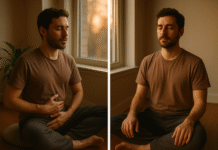
A tiny dose of calm in the morning pays dividends. Three to five minutes of mindfulness, breathwork, or gratitude journaling can reduce stress reactivity, improve focus, and help you respond—not just react—to whatever the day brings. Think of it as installing a “lag” between trigger and response. Sit comfortably, set a timer, and choose a simple practice: focus on the breath, do box breathing (inhale 4, hold 4, exhale 4, hold 4), or write three things you’re grateful for. You don’t need incense, an app subscription, or perfect posture—only consistency.
5.1 How to do it (pick one)
- Mindful breath (3–5 min): Notice your inhales/exhales; when the mind wanders, gently return.
- Box breathing: 4–4–4–4 cycles for 3–5 minutes; extend exhale if anxious.
- Gratitude journal: Three specific items, each with a “because …” sentence to deepen meaning.
- Body scan: Start at the forehead, move down to toes, naming sensations neutrally.
5.2 Mini-checklist & tools
- Timer (phone on airplane mode), comfortable seat, optional journal.
- Apps (if helpful): Insight Timer, Headspace, Calm.
- If mornings are chaotic, attach this to another cue—sit for 3 minutes right after your water or light walk.
End with one intentional breath and a mental headline for your day.
6. Set Priorities with a 2-Minute Plan
Your morning attention is precious; use two focused minutes to set up your day. Write down the top 1–3 outcomes that would make today a win, and identify the first small action for each. If your calendar already looks full, triage by value: what moves the needle vs. what merely looks busy? Then pre-decide obstacles: “If my commute is delayed, I’ll walk 10 minutes at lunch; if a meeting overruns, I’ll protect my 3 p.m. focus block.” This tiny planning burst reduces indecision, snowballs early wins, and prevents busywork from hijacking your morning momentum.
6.1 Mini framework (use daily)
- Top 3 outcomes: One must be health (walk, lift, stretch, prep dinner).
- First actions: 5 minutes or less each—send an email, fill the bottle, lay out shoes.
- Implementation intentions: “If X happens, then I’ll do Y.”
- Time box: Reserve a 25–50 minute deep-work block where possible.
6.2 Common pitfalls
- Over-planning the whole day (creates friction and guilt).
- Vague outcomes (“be healthy” vs. “walk 12 minutes after lunch”).
- No contingency plans; a single disruption topples your routine.
Close with a glance at your calendar and commitment to a single health anchor you’ll protect no matter what.
7. Time Your Caffeine Strategically
Coffee or tea can be a useful tool—used thoughtfully. Consider waiting 60–90 minutes after waking before your first caffeinated drink to allow your natural alertness to rise and to avoid chasing a mid-morning crash. Keep total intake moderate: up to 400 mg caffeine/day for most healthy adults (roughly 3–4 small cups of brewed coffee), and avoid caffeine in the late afternoon/evening—aim to stop 6–8 hours before bedtime. If you’re caffeine-sensitive or pregnant, your safe limit may be lower; choose decaf or herbal options. Pair caffeine with your first protein/fiber meal rather than on an empty stomach if you’re prone to jitters.
7.1 Numbers & guardrails
- First cup: ~60–90 minutes after waking (optional; notice how you feel).
- Daily total: ≤ 400 mg for most adults; less if sensitive, pregnant, or advised by a clinician.
- Cutoff time: 6–8 hours before bedtime.
- Tea counts: black (~40–70 mg/cup), green (~20–45 mg), matcha higher per gram; check labels.
7.2 Common mistakes
- Using caffeine to paper over chronic sleep debt.
- Afternoon espresso that quietly sabotages tonight’s sleep.
- Energy drinks with large, fast-hitting doses plus additives you don’t need.
Use caffeine to complement good habits, not compensate for missing ones.
8. Protect Your First Hour from Screens
Your first hour sets the tone for your attention. Diving into social feeds, news alerts, and work email immediately triggers context-switching and stress, making it harder to complete your routine or focus on deep work later. Instead, create a notification-free bubble for the first 30–60 minutes. Airplane mode or Do Not Disturb is enough; if you must check for urgent items (e.g., on-call work), run a single 1–2 minute scan and then return to your routine. Consider a lock-screen widget or printed checklist of your morning steps so you engage with your plan instead of your inbox.
8.1 Practical guardrails
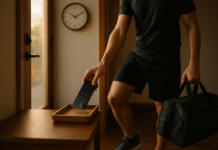
- Phone parking: Leave it charging in another room overnight.
- Grayscale mode: Reduce the pull of colorful apps.
- Single-check rule: One quick check (if required), then device away.
- App blockers: Use Focus modes or app limits until your routine is done.
8.2 Mini case
Try this for seven mornings: keep phone on airplane mode until you finish water, light, movement, and 2-minute plan. Track how many uninterrupted minutes you get for deep work later. Most people report smoother mornings and fewer “where did the time go?” moments.
A protected first hour amplifies every other habit.
9. Keep a Consistent Wake Time (Skip the Snooze)
Consistency—especially wake time—is the backbone of a strong routine. Waking at roughly the same time helps align your circadian rhythm, making it easier to fall asleep and wake naturally over time. Snoozing repeatedly fragments sleep and can leave you groggier. Choose a gentle alarm (progressive light or soft chime), place it across the room if needed, and pair your wake time with an immediate cue (water and light) so you’re up and moving. On weekends, keep your wake time within about an hour of weekdays to avoid “social jet lag.”
9.1 How to make it stick
- Alarm strategy: One alarm, out of reach, with a rising tone.
- Light cue: Open curtains or step outside within minutes.
- Wind-down rhythm: A consistent bedtime makes a consistent wake time possible.
- If you’re underslept: Prioritize an earlier bedtime tonight over a late morning nap.
9.2 Numbers & notes
- Most adults thrive on 7–9 hours of sleep; adolescents and older adults have different needs.
- If nights are short due to caregiving/shift work, emphasize naps before 3 p.m. and strict caffeine cutoffs.
- Travel or Ramadan schedules? Anchor wake time to local dawn as best you can, and lean on light, hydration, and gentle movement to re-sync.
Treat wake time as your routine’s master switch; when it’s steady, everything else clicks more easily.
10. Stack and Track: Make Habits Stick
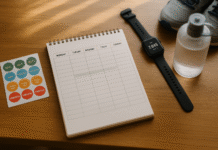
The best routine is the one you’ll repeat. “Habit stacking” ties a new action to an existing cue (e.g., “After I brush my teeth, I’ll drink water”), making the behavior automatic. Tracking gives you feedback and satisfaction—two levers that keep motivation alive. Use a minimalist tracker (paper grid, notes app, or a simple habit app) with your exact steps: Water → Light → Move → Protein → Breathe → Plan → Coffee → Screen-free → Consistent Wake. Keep your streak visible, but don’t let a miss kill momentum—aim for “never miss twice.” Celebrate consistency over perfection, and adjust the steps to fit seasons, travel, or family rhythms.
10.1 Tools/Examples
- Paper: Bullet journal with a monthly grid; mark each habit daily.
- Apps: Streaks, Habitify, TickTick, or Notion templates.
- Tiny rewards: First coffee after completing water + light + movement.
- Environment tweak: Set water bottle, shoes, and sunglasses out the night before.
10.2 Mini-checklist
- One cue per habit.
- One-minute version for bad days (e.g., 60-second stretch, 3 gratitude lines).
- Weekly review: keep, cut, or tweak one step.
- Reset rule: if you break the chain, restart with the smallest possible version.
Habit science is simple but profound: clear cues, tiny steps, immediate wins, and honest tracking.
FAQs
1) What’s the fastest morning routine that still helps?
If you’re slammed, do a 10-minute version: drink 300–500 ml water, step outside for 5 minutes of light while walking, then one minute of stretches and one minute of mindful breathing. Jot your top task on a sticky note. You’ve hydrated, anchored your body clock, moved, calmed your mind, and set intention—all in ten minutes. Add protein at your first meal and you’re covered.
2) Should I eat breakfast if I’m not hungry?
Not necessarily. Many people prefer a later first meal. If you delay breakfast, still plan a protein-forward option (20–30 g) for when you do eat to avoid low-quality snacking. Pair your fasted morning with water, light, movement, and calm; these aren’t dependent on eating. If you get shaky or irritable without food, a small protein/fiber snack can stabilize you.
3) Is coffee bad if I drink it right after waking?
It’s not “bad,” but waiting 60–90 minutes can feel better for some people, reducing mid-morning dips. More important: cap total caffeine around ≤400 mg/day (lower if sensitive or pregnant) and stop 6–8 hours before bedtime. If your sleep is struggling, experiment with a later first cup and an earlier cutoff.
4) How much morning sunlight is safe?
You want time-based light, not sunburn. In early morning, UV is typically lower; 5–10 minutes on a bright day or 20–30 minutes when cloudy is a good circadian cue. Wear sunscreen and a hat if the UV index is high. Never stare at the sun. If daylight is scarce (winter, high latitudes), increase time or consider a 10,000-lux light box following safety guidance.
5) I wake up groggy—what should I change first?
Tackle three levers in order: consistent wake time, light exposure within minutes, and hydration. Add a 5-minute mobility flow to raise core temperature. If you’re still foggy after a week, audit sleep duration/quality and late-evening caffeine or screens. Persistent grogginess despite adequate sleep warrants a chat with your clinician.
6) What if I exercise intensely in the morning?
Use Habit 3 as your warm-up, then proceed to your main session. If the workout exceeds 45–60 minutes, consider protein + carbs around the session (before or after) and hydrate more aggressively (add electrolytes if it’s hot or you sweat heavily). Keep caffeine moderate and avoid stacking multiple stimulants.
7) Can I combine gratitude journaling and planning?
Yes—many people keep a single notebook with a top-of-page gratitude line and a bottom-of-page “Top 3 outcomes.” The emotional lift of gratitude plus the clarity of priorities is a strong pairing. Time-box to 3–5 minutes total so you don’t drift into over-planning.
8) How do I keep my phone from derailing me?
Set Do Not Disturb, park your phone in another room, and use a paper checklist for the first hour. If you must check something urgent, set a 1-minute timer for a single scan, then put the phone face-down again. App blockers and grayscale help reduce the pull of notifications and color-driven interfaces.
9) Are electrolyte drinks necessary in the morning?
Usually not. Plain water covers most needs. If you sweat significantly early (hot climate, outdoor commute, morning training), a low-sugar electrolyte mix with sodium can help. Start small and notice if headaches, lightheadedness, or early fatigue improve.
10) How long until the routine feels natural?
Most people notice benefits in 3–7 days (clearer mornings, steadier energy). Full “autopilot” may take a few weeks. Keep steps small, track your streak, and apply the “never miss twice” rule. If life gets chaotic, fall back to the one-minute version of each habit to keep the chain alive.
Conclusion
Creating a morning routine for health isn’t about perfection; it’s about reliable cues that make the rest of your day easier. When you rehydrate, collect morning light, move gently, and protect your attention, you set a physiological and psychological foundation that compounds. A protein-forward first meal, a few calm breaths, and a two-minute plan keep cravings, stress, and chaos from hijacking your momentum. Timing caffeine and sticking to a steady wake time round out the structure; stacking and tracking make it sustainable. Start with the smallest versions: a glass of water, five minutes outside, and three minutes of breathing. Then layer in the rest as capacity allows. In a month, your mornings—and likely your evenings—will feel markedly different.
Do this tomorrow: water on waking, outside for light + 5-minute walk, 2-minute plan, then coffee—after you’ve done the first three.
References
- Circadian Rhythms, National Institute of General Medical Sciences (NIH), updated 2023. https://www.nigms.nih.gov/education/fact-sheets/Pages/circadian-rhythms.aspx
- Physical Activity Guidelines for Americans, 2nd Edition, U.S. Department of Health and Human Services, 2018. https://health.gov/paguidelines/second-edition/
- Get the Facts: Caffeine and Your Health (“Spilling the Beans”), U.S. Food & Drug Administration, updated 2024. https://www.fda.gov/consumers/consumer-updates/spilling-beans-how-much-caffeine-too-much
- Healthy Sleep Recommendations, American Academy of Sleep Medicine & Sleep Research Society, 2015. https://aasm.org/resources/pdf/sleepdurationrecommendations.pdf
- Water & Healthy Drinks, Centers for Disease Control and Prevention, updated 2024. https://www.cdc.gov/healthyweight/healthy_eating/water-and-healthier-drinks.html
- Sun Protection and UV Radiation, World Health Organization, updated 2020. https://www.who.int/news-room/questions-and-answers/item/radiation-uv
- Mindfulness Meditation: What You Need To Know, National Center for Complementary and Integrative Health (NIH), updated 2024. https://www.nccih.nih.gov/health/mindfulness-meditation-what-you-need-to-know
- Leidy HJ, et al. The role of protein in weight loss and maintenance. Am J Clin Nutr, 2015;101(6):1320S–1329S. https://academic.oup.com/ajcn/article/101/6/1320S/4564491
- Emmons RA, McCullough ME. Counting Blessings Versus Burdens: An Experimental Investigation of Gratitude and Subjective Well-Being in Daily Life. J Pers Soc Psychol, 2003;84(2):377–389. https://doi.org/10.1037/0022-3514.84.2.377
- Mark G, Gudith D, Klocke U. The Cost of Interrupted Work: More Speed and Stress. CHI Proceedings, 2008. https://dl.acm.org/doi/10.1145/1357054.1357072