



























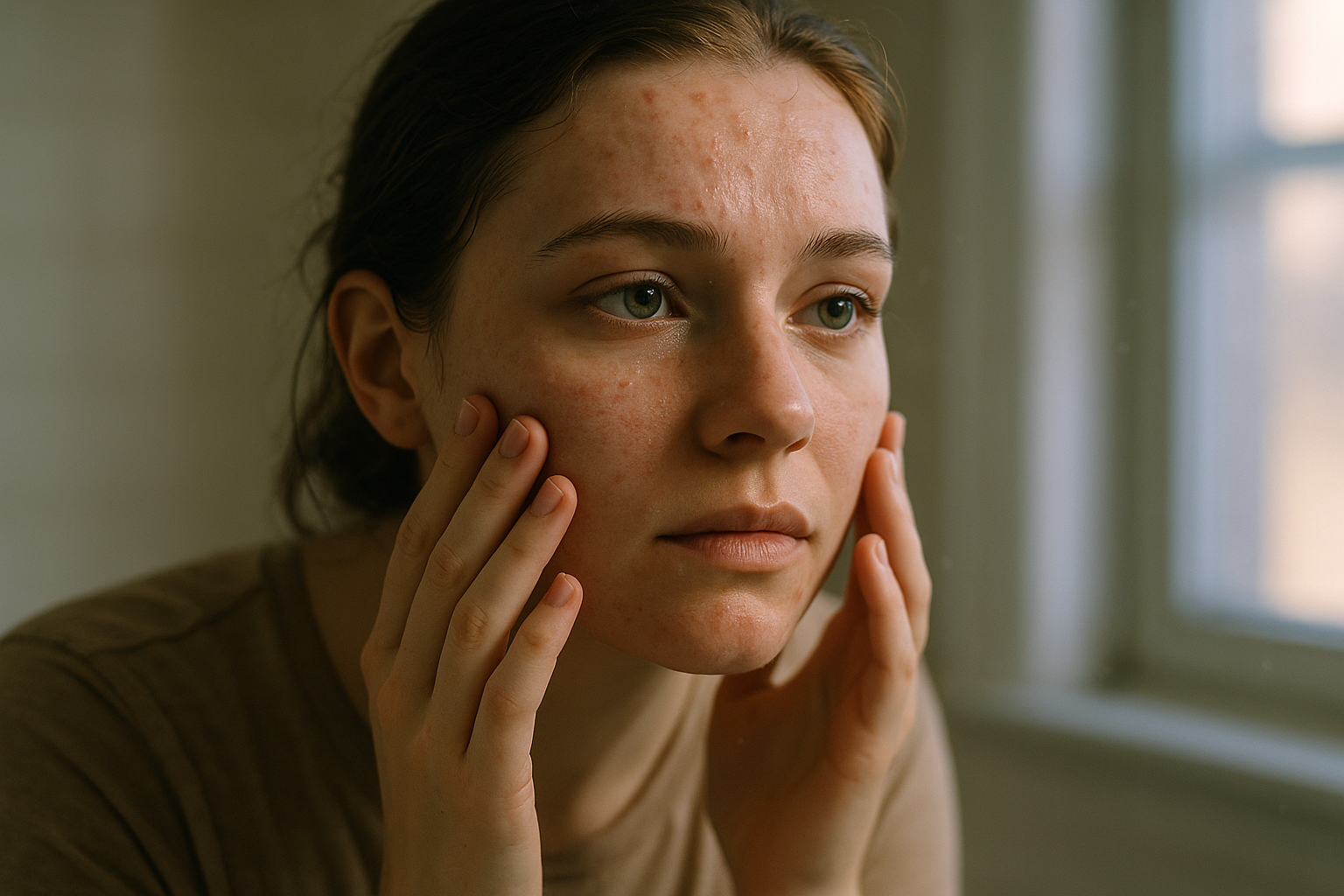
Stress doesn’t just live in your head—it shows up on your face. When you’re anxious, your body releases hormones and neurochemicals that can increase oil, weaken your skin barrier, and stoke inflammation. This article unpacks exactly how the “stress and skin” connection works and gives you practical, science-backed fixes you can use today. Brief note: this is general education, not medical advice—see a clinician for diagnosis or treatment, especially if symptoms are severe or worsening.
In short: stress activates the brain–skin axis (notably the HPA axis), raising cortisol and neuropeptides that boost sebum, impair barrier repair, and trigger inflammatory cascades—conditions that make acne and other flare-ups more likely.
Quick plan (for busy days): cleanse gently; use a non-comedogenic moisturizer with ceramides/niacinamide; spot-treat with benzoyl peroxide or salicylic acid; practice 4-7-8 breathing for 3 minutes; commit to a screen-off bedtime routine to protect sleep.
1. The Brain–Skin Axis: Cortisol, CRH, and Sebum Drive Stress Breakouts
Stress triggers your central HPA axis: the hypothalamus releases CRH, the pituitary releases ACTH, and your adrenals release cortisol. Skin isn’t a passive bystander—it has its own local HPA-like system and receptors in sebaceous glands. Under stress, CRH and cortisol signal sebocytes to ramp up lipid synthesis and alter inflammation, priming pores for comedones and papules. That’s why exam weeks, deadlines, or major life events can coincide with oilier T-zones and new lesions. Importantly, this isn’t just theory: acne-involved sebaceous glands show stronger CRH signaling than normal skin, and reviews continue to link HPA activation to acne pathophysiology. Understanding this loop helps you target both mind and skin: lower stress inputs while using actives that normalize desquamation and oil. Wiley Online Library
1.1 Why it matters
- CRH/cortisol → sebum: neuroendocrine signals can directly increase sebocyte activity. MDPI
- Local skin HPA: skin expresses CRF/ACTH machinery, making it responsive to stress. PMC
- Clinical correlation: higher stress often parallels more lesions in observational cohorts. PMC
1.2 Mini-checklist
- Normalize oil and comedogenesis (retinoid + benzoyl peroxide).
- Pair skincare with daily stress-downshifts (breathwork, movement, outdoor light).
- Track your “flare calendar” against stressful periods to personalize prevention.
Bottom line: stress hormones don’t just make you feel tense—they literally tell oil glands to work overtime. Pair topical control with stress reduction to cut the signal at both ends.
2. Barrier Breakdown: Why Stressed Skin Dehydrates, Stings, and Breaks Out Faster
A healthy barrier regulates water loss and keeps irritants out. Psychological stress—and even short bouts of sleep loss—slows barrier recovery and increases transepidermal water loss (TEWL). Practically, that means your skin becomes leakier and more reactive, making once-tolerable products sting and pores clog more easily under occlusive conditions. Classic human studies showed barrier impairment during academic stress; newer work details how stress upregulates 11β-HSD1, increasing local glucocorticoids that further erode barrier integrity. The result: drier, inflamed skin that paradoxically breaks out more because the barrier is unstable.
2.1 Numbers & guardrails
- Acute stress and sleep deprivation delay barrier repair in controlled trials.
- Psychological stress raises cutaneous glucocorticoids (via 11β-HSD1), impairing barrier function.
- Reviews confirm stress as a barrier disruptor across conditions. PubMed
2.2 What to do
- Simplify actives during high-stress phases; prioritize a ceramide-rich moisturizer twice daily.
- Add niacinamide (2–5%) for barrier support and oil moderation (evidence varies but trend is favorable).
- Shield with broad-spectrum sunscreen; UV + stress intensifies inflammation.
Bottom line: when life heats up, think “repair first.” A resilient barrier reduces irritation, helps actives work, and lowers breakout risk.
3. Neurogenic Inflammation: Substance P, Mast Cells, and That Angry Flush
Nerves talk to skin. Under stress, peripheral nerve endings release Substance P, which can stimulate sebaceous glands, mast cells, and keratinocytes, amplifying redness, swelling, and oil. Elevated stress scores correlate with higher serum Substance P and worse acne in clinical studies. Mast-cell degranulation releases histamine and cytokines that recruit more inflammation—an accelerant for papules and pustules. This neuro-immune crosstalk helps explain why a single tense day can turn a small comedone into a throbbing bump by evening. ScienceDirect
3.1 Tools/Examples
- Cold compress for 2–3 minutes can downshift neurogenic flare sensations.
- Topicals: benzoyl peroxide for lesions; azelaic acid for inflamed redness; non-sedating antihistamines may help itch per clinician guidance.
- Mind-body: paced breathing reduces sympathetic drive within minutes.
3.2 Mini case
A student notes cheek papules surge during exam weeks. Adding nightly adapalene 0.1%, AM benzoyl peroxide 2.5%, and 5-minute breathing breaks reduced inflammatory flares within 6 weeks.
Bottom line: nerves, glands, and immune cells form a fast feedback loop. Interrupt it with calming behaviors and anti-inflammatory topicals.
4. Sleep & Circadian Rhythm: Missed Shut-Eye, More Spots
Poor sleep doesn’t just bring eye bags—it weakens barrier function and heightens inflammatory tone, making acne and eczema flares more likely. Skin follows a circadian rhythm that coordinates repair at night; shift work, doom-scrolling, and late caffeine can desynchronize this timing. Reviews as of August 2025 link inadequate sleep to impaired barrier recovery and heightened susceptibility to inflammatory dermatoses. Protecting sleep (timing, light, temperature) is a high-leverage acne strategy that many overlook. PMC
4.1 How to do it
- Same-time lights-out window; dim screens 60–90 minutes before bed.
- Morning outdoor light (5–10 minutes) anchors circadian clocks.
- Cool, dark room; consider white noise if urban noise disrupts sleep.
- Watch evening stimulants; finish heavy meals 2–3 hours before bed.
4.2 Region note
In hot, humid climates, keep bedrooms cool and dehumidified; sweat + occlusion can worsen follicular blockage overnight. Prioritize light gel moisturizers at night.
Bottom line: your nightly routine is potent skin care—guard it like a prescription.
5. Microbiome Shifts: From Cutibacterium Strains to the Gut–Skin Axis
Acne isn’t just “too much bacteria”—it’s which strains and how your immune system responds. Modern reviews show different C. acnes phylotypes associate with acne versus healthy skin. Stress can alter microbial communities indirectly (sleep changes, barrier damage) and systemically via the gut–skin axis, where dysbiosis and stress hormones modulate immune signaling and sebum. Early trials suggest select synbiotics can reduce lesion counts in mild acne, though protocols vary and this remains adjunctive, not primary therapy.
5.1 Why it matters
- Microbiome diversity and strain-level differences matter more than sheer bacterial load.
- Stress and hormones correlate with acne biophysical markers and lesion counts. PMC
5.2 Practical steps
- Don’t over-sterilize: use gentle cleansers; avoid harsh scrubs that fragment the barrier.
- Consider dietary fiber and fermented foods to nourish gut microbes; discuss probiotics with a clinician if you’re curious.
- Stick to evidence-based topicals first; treat microbiome tactics as supportive.
Bottom line: microbes are partners in your skin ecosystem—support balance, don’t carpet-bomb.
6. Diet Under Pressure: High-GI Foods, Dairy, and Stress Eating
When anxious, many reach for high-glycemic snacks that spike insulin and IGF-1, pathways that promote sebum and keratinocyte growth. RCTs and systematic reviews link higher glycemic load with worse acne (with some mixed data), and several cohorts associate certain dairy patterns with acne, especially in adolescents and Western diets. The strongest stance today: low-glycemic patterns may help some people, while dairy links vary by age and context—so personalize rather than ban everything. Mind the stress piece: cortisol can nudge cravings toward high-calorie foods, driving a cycle of spikes and flares. Harvard Health
6.1 How to experiment (4 weeks)
- Swap refined carbs for low-GI staples (lentils, oats, brown rice, non-starchy veg).
- Keep protein + healthy fats in each meal to blunt glucose spikes.
- If dairy seems suspect, trial reduced skim/ whey for 4 weeks and note changes.
6.2 Guardrails
- Evidence is mixed on dairy, especially in adult female acne—avoid absolutism. PMC
- Reintroduce foods methodically; use photos or an app to correlate diet and lesions.
Bottom line: feed calm chemistry—steady glucose and personalized dairy choices can reduce one major driver of stress-acne.
7. Habit Loops: Touching, Popping, and Excoriation (Skin-Picking)
Stress often shows up in hands-to-face habits. Picking and popping seed inflammation deeper, spread bacteria, and prolong healing. For some, this crosses into excoriation (skin-picking) disorder, a DSM-5 condition characterized by recurrent picking with distress and repeated attempts to stop. Recognizing where you are on this spectrum changes the fix: from pimple patches and fidgets for mild urges to CBT/habit-reversal with a mental-health professional when picking is compulsive. Dermatologists strongly advise against DIY popping; they can safely drain select lesions when needed.
7.1 Tools that help
- Hydrocolloid patches: block fingers; some have actives to calm the spot. American Academy of Dermatology
- Competing responses: silicone putty, stress balls, textured rings.
- Mirror rules: low-magnification only; limit “inspection time” with timers.
7.2 When to get help
- Bleeding, scabbing, or scarring from picking.
- Significant shame/avoidance or lost time due to the behavior.
Bottom line: protect healing skin from your own hands; get behavioral support if urges feel out of control.
8. The Stressed-Skin Routine: Gentle, Consistent, Evidence-Based
When life is chaotic, keep your routine simple and tolerable so you’ll actually do it. For many, the most effective, low-friction stack is: gentle cleanser, non-comedogenic moisturizer, daily sunscreen, plus one leave-on acne active (e.g., adapalene 0.1% nightly or benzoyl peroxide AM). Add salicylic acid if you’re blackhead-prone; consider niacinamide for oil and barrier support. Dermatology guidelines (updated 2024) strongly back benzoyl peroxide, topical retinoids, and combinations; azelaic acid can help with inflammatory lesions and post-inflammatory marks. JAAD
8.1 Starter template
- AM: gentle cleanse → benzoyl peroxide 2.5–5% thin layer on acne-prone zones → moisturizer → SPF 30+.
- PM: cleanse → adapalene 0.1% pea-sized to full face → moisturizer (sandwich if sensitive).
- Spot care: salicylic acid 0.5–2% or benzoyl peroxide; hydrocolloid patches detour picking.
8.2 Fine-tuning
- If irritation climbs, alternate nights for retinoids and buffer with moisturizer.
- Consider clindamycin + benzoyl peroxide fixed-dose combos for inflammatory acne (prescription). PMC
- Pregnancy: avoid retinoids; review any topical with your OB/derm.
Bottom line: in stressful seasons, minimalism wins—backed by guidelines and built for adherence.
9. Rapid Calm Tactics for Flare Days (That Actually Change Chemistry)
You can dial down sympathetic arousal in minutes, and your skin will feel the difference. Brief paced-breathing lowers heart rate and can reduce perceived itch/pain. Exercise snacks (even 10–15 minutes) improve insulin sensitivity and mood. Cooling the face/neck decreases neurogenic sensations. Pair these with a micro-routine (cleanse → calm moisturizer → spot treat) to interrupt spirals of frustration and picking. These are not replacements for therapy or medication when needed; they’re first-aid for the stress-skin loop. PMC
9.1 10-minute playbook
- 2 minutes box breathing (4-4-4-4).
- Rinse face with cool water; pat dry; apply light moisturizer; apply spot treatment.
- 8-minute brisk walk, stairs, or squats to reset mood and glucose.
9.2 Mini-checklist
- Hydrate; avoid new actives on already inflamed skin.
- Hands busy: fidget tool + hydrocolloid patch on any “target” lesions.
Bottom line: quick nervous-system resets + gentle skin steps can keep a bad day from becoming a bad week.
10. Longer-Term Stress Care: Sleep, Boundaries, CBT/Mindfulness, and Support
Chronic anxiety needs a plan. Good sleep anchors cortisol rhythms; cognitive-behavioral strategies reduce catastrophic thinking; mindfulness improves awareness of picking triggers; social connection buffers stress. Dermatology and psychiatry groups increasingly emphasize psychodermatology—treating mind and skin together improves outcomes and quality of life. Protecting “edges” (news limits, work hours, alcohol/caffeine windows) reduces physiological arousal that otherwise spills into the skin. American Psychiatric Association
10.1 What to build over 6–8 weeks
- Sleep routine + morning light + consistent wake time (see Section 4).
- CBT skills (thought logs, behavioral activation); look for therapists familiar with BFRBs.
- Mindfulness 5–10 min/day; pair with skincare to make it automatic.
10.2 Guardrails
- If anxiety/depression symptoms are significant, seek professional support early.
- Track skin + mood weekly; adjust goals to reduce all-or-nothing pressure.
Bottom line: resilient routines lower baseline arousal so fewer signals ever reach your sebaceous glands.
11. When to See a Professional—and What Treatments Help Most
If breakouts are moderate-to-severe, scarring, or not improving after 8–12 weeks of consistent OTC care, see a board-certified dermatologist. Evidence-based options include topical retinoids, benzoyl peroxide, azelaic acid, and combinations; for more severe cases, oral antibiotics, hormonal therapies (spironolactone, certain contraceptives), and isotretinoin are well-supported. If picking is compulsive or causes distress, add a mental-health professional to the team; CBT-HRT has strong clinical rationale for excoriation disorder. Choose clinicians by credentials, fit, and access; many practices offer telederm for acne follow-ups. American Academy of Dermatology
11.1 Red flags to act on
- Rapidly worsening acne with painful nodules/cysts or early scarring.
- Signs of infection after picking (increasing redness, warmth, pus, fever).
- Significant mood changes, shame, or avoidance linked to skin.
11.2 Visit prep
- Bring a meds/skincare list and photos of flares.
- Ask about treatment timelines (most need 8–12 weeks) and side-effect management so you can stick with the plan.
Bottom line: the fastest path to clear skin under stress is a dual-specialty approach—derm to treat lesions and mental-health support to calm the triggers.
FAQs
1) Does stress really cause acne—or just make it worse?
Stress doesn’t usually “create” acne out of nowhere, but it amplifies the biology that fuels it: more cortisol/CRH signaling to sebocytes, slower barrier repair, and pro-inflammatory neuropeptides like Substance P. For someone acne-prone, that’s enough to turn a few comedones into inflammatory lesions during stressful weeks. Managing stress and using guideline-backed topicals together works best.
2) What’s the fastest way to calm a stress pimple?
Keep it simple: cleanse, apply benzoyl peroxide spot treatment or a salicylic acid leave-on, and use a hydrocolloid patch to prevent picking. Avoid layering multiple new actives at once; you’ll likely irritate the barrier. If you’re prone to big nodules, ask your dermatologist about intralesional options for emergencies.
3) Which ingredients are best when I’m stressed and sensitive?
Look for ceramides and niacinamide (2–5%) to support the barrier, plus azelaic acid for redness and post-inflammatory marks. Keep retinoids but reduce frequency if stinging rises. Sunscreen is non-negotiable. Evidence for niacinamide on oil is mixed but promising; it’s generally well-tolerated. PMC
4) How long until a routine change shows results?
Most evidence-based acne treatments take 8–12 weeks to show meaningful improvement. That’s a normal biological timeline for turnover and inflammation resolution. If you see no change by then—or if you’re scarring—book with a dermatologist for stronger options.
5) Does a low-glycemic diet really help acne?
It can for some. RCTs and systematic reviews suggest lower glycemic load may reduce inflammatory lesions, though not everyone responds and study designs vary. Treat it as a 4-week experiment, not a moral rule, and reintroduce foods methodically to test your own response. PubMed
6) Should I cut dairy to clear my skin?
Evidence is mixed and context-dependent (age, sex, diet patterns). Some cohorts link dairy—especially skim—to acne in youth; other analyses in adult female acne don’t find a clear association. If you suspect a link, trial a short reduction and track outcomes without compromising nutrition.
7) Is stress-sleep debt really that bad for skin?
Yes. Sleep loss weakens your barrier and heightens inflammation; circadian disruption can impair overnight repair. Protecting sleep is a surprisingly potent skin strategy, especially during chronic stress or shift work.
8) I can’t stop picking—what now?
Start with hydrocolloid patches and “competing response” tools (fidget rings, putty). If picking continues or causes wounds/scars, consult a clinician about CBT/habit-reversal, the leading behavioral approach for excoriation disorder. Pair this with a gentle routine to speed healing. American Psychiatric Association
9) Are topical retinoids safe to use during stressful flare-ups?
Yes—retinoids remain first-line for comedones and prevention; adjust frequency if irritation rises. If you’re pregnant or trying, don’t use topical retinoids—talk to your OB/derm about alternatives like azelaic acid. American Academy of Dermatology
10) Do probiotics help stress acne?
They’re not first-line, but early studies of synbiotics show modest lesion reductions in mild cases. Quality, strain, and dosing vary—discuss with a clinician, and prioritize proven topicals first. PMC
Conclusion
Anxiety changes skin chemistry in measurable ways: hormones elevate oil, nerves ignite inflammation, and barrier repair slows—an ideal setup for breakouts. The good news is that you can meet stress on both fronts: inside (sleep, CBT skills, rapid calm tactics, supportive nutrition) and outside (a simple, guideline-backed routine you can stick to even on hard days). Think of it as closing loops: fewer stress signals reach oil glands; a stronger barrier shrugs off irritation; consistent actives prevent micro-clogs from becoming papules. Give your plan 8–12 weeks, track what correlates with flares, and escalate to professional care early if you’re scarring or stuck.
Take the next step today: choose one stress tool (breath or walk) and one skincare upgrade (retinoid or benzoyl peroxide) and run them daily for two weeks—then reassess and iterate.
References
- Stress and Skin: An Overview of Mind–Body Therapies as a Treatment Strategy, Journal of Integrative and Complementary Medicine, 2021. https://pmc.ncbi.nlm.nih.gov/articles/PMC8480446/
- Neuroendocrine Signaling in the Skin with a Special Focus on the HPA Axis, Endocrinology and Metabolism, 2022. https://pmc.ncbi.nlm.nih.gov/articles/PMC9744652/
- Involvement of the Corticotropin-Releasing Hormone System in the Pathogenesis of Acne Vulgaris, British Journal of Dermatology, 2009. https://pubmed.ncbi.nlm.nih.gov/19077080/
- Psychological Stress Perturbs Epidermal Permeability Barrier Homeostasis, JAMA Dermatology, 2001. https://jamanetwork.com/journals/jamadermatology/fullarticle/478156
- Stress-Induced Changes in Skin Barrier Function, Journal of Investigative Dermatology, 2001. https://www.sciencedirect.com/science/article/pii/S0022202X15413296
- Psychological Stress Deteriorates Skin Barrier Function by Modulating 11β-HSD1, Scientific Reports (Nature), 2018. https://www.nature.com/articles/s41598-018-24653-z
- Correlation Between Stress Scale and Serum Substance P with Severity of Acne Vulgaris, Dermatology Research and Practice, 2021. https://pmc.ncbi.nlm.nih.gov/articles/PMC7935437/
- The Role of the Skin Microbiome in Acne, International Journal of Molecular Sciences, 2024. https://pmc.ncbi.nlm.nih.gov/articles/PMC11546345/
- Sleep in Dermatologic Conditions: A Review, International Journal of Women’s Dermatology, 2025. https://www.sciencedirect.com/science/article/pii/S2950198925000236
- The Sleep–Skin Axis: Clinical Insights and Therapeutic Approaches, Dermatopathology (MDPI), 2025. https://www.mdpi.com/2673-6179/5/3/13
- Guidelines of Care for the Management of Acne Vulgaris, Journal of the American Academy of Dermatology, 2024. https://pubmed.ncbi.nlm.nih.gov/38300170/
- Diet and Acne: A Systematic Review, International Journal of Dermatology, 2022. https://pmc.ncbi.nlm.nih.gov/articles/PMC8971946/
- A Low-Glycemic-Load Diet Improves Symptoms in Acne Vulgaris: Randomized Controlled Trial, American Journal of Clinical Nutrition, 2007. https://pubmed.ncbi.nlm.nih.gov/17616769/
- Acne: Diagnosis and Treatment (patient page), American Academy of Dermatology, updated 2023. https://www.aad.org/public/diseases/acne/derm-treat/treat
- Pimple Popping: Why Only a Dermatologist Should Do It, American Academy of Dermatology, 2023. https://www.aad.org/public/diseases/acne-and-rosacea/pimple-popping-why-only-a-dermatologist-should-do-it
- Obsessive-Compulsive and Related Disorders (Excoriation), American Psychiatric Association, (accessed Aug 2025). https://www.psychiatry.org/patients-families/obsessive-compulsive-disorder/what-is-obsessive-compulsive-disorder
- Adapalene – StatPearls (review), NCBI Bookshelf, updated 2023. https://www.ncbi.nlm.nih.gov/books/NBK482509/
- The Effect of 2% Niacinamide on Facial Sebum Production, Journal of Cosmetic and Laser Therapy, 2006. https://pubmed.ncbi.nlm.nih.gov/16766489/