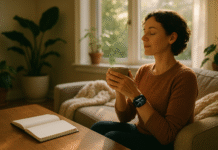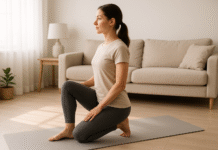
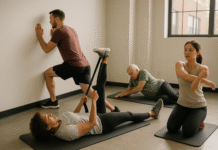
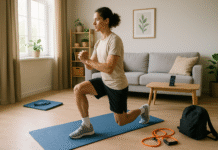

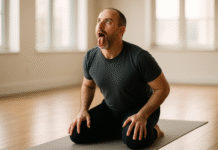











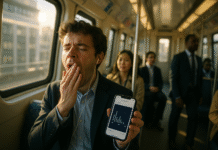

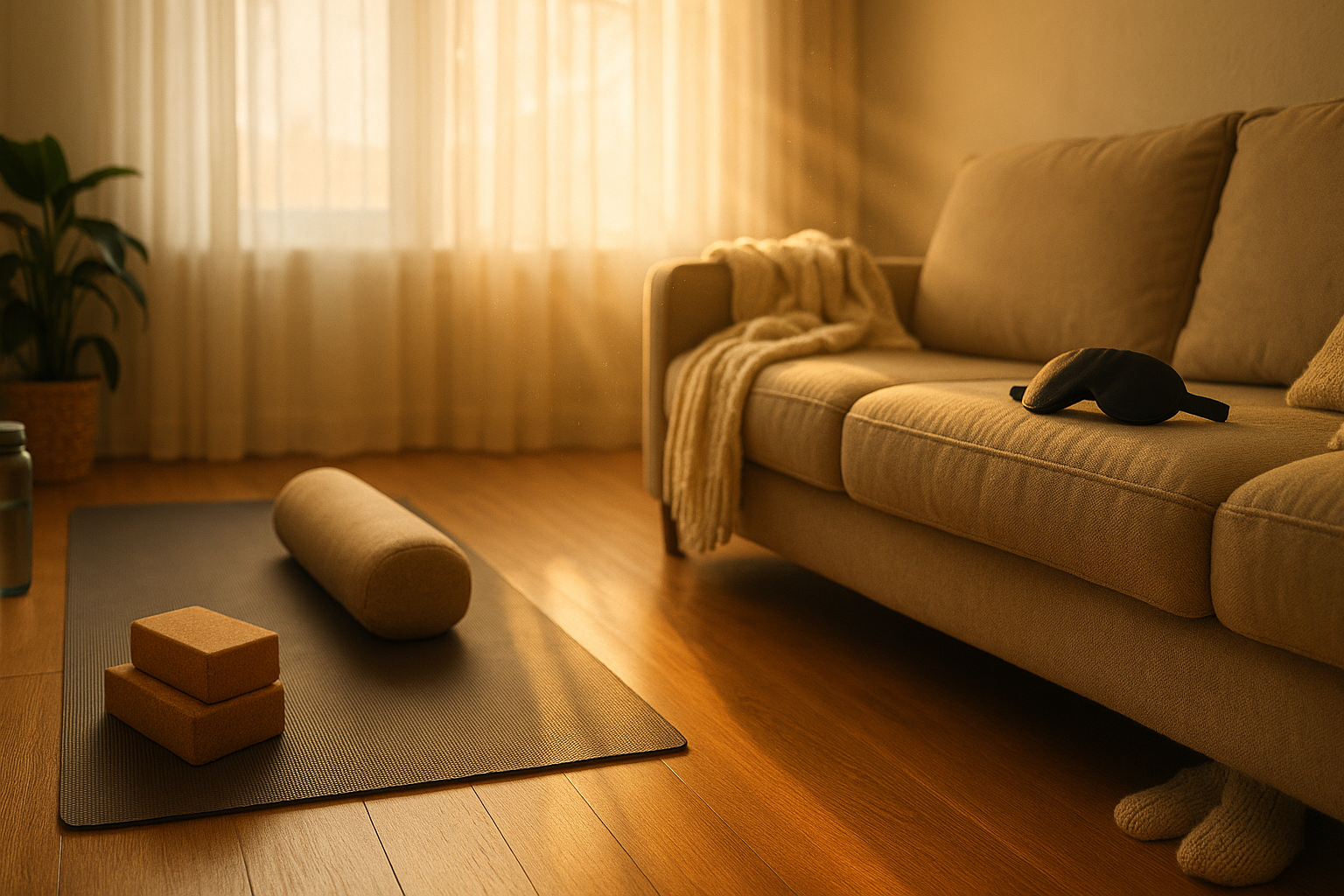
On a day off, the hardest choice can be whether to move gently or curl up and snooze. “Active rest” means low-intensity movement that promotes recovery—think gentle yoga, mobility, breathwork, or a slow walk. “Passive rest” means true inactivity—lying down, closing your eyes, or napping. In one line: use active rest to circulate and reset; use passive rest to restore alertness and sleep debt. Most adults do best when nightly sleep sits at 7+ hours and daytime naps stay short and early, so the day’s choice also depends on how you slept last night and how you want to feel tonight.
Brief note: This guide is general education—not medical advice. If you have pain, a sleep disorder, or a recent injury, check with a qualified clinician before changing routines.
1. Start With Your Biggest Deficit: Sleepiness, Stress, or Soreness?
If you’re fighting heavy eyelids and slow reaction time, a brief nap is often more efficient than forcing movement; if you’re wired-and-tired from stress yet alert, breath-led yoga tends to downshift the nervous system without grogginess; if you’re stiff or achy from training or desk time, gentle yoga or mobility work may ease tension better than lying still. Begin by naming your main deficit: sleepiness, stress, or soreness. Adults generally need 7 or more hours of nightly sleep for health; when you’re significantly underslept, a planned short nap can restore vigilance for a few hours without wrecking the night, provided it’s early and brief. Meanwhile, if you slept fine but feel frazzled, slow breathing at ~6 breaths/min and restorative poses can increase heart-rate variability (HRV) markers of parasympathetic tone. For stiffness, active recovery improves comfort and function even when its performance advantages are modest or mixed in studies—so if moving feels good and pain-free, it usually helps.
1.1 How to do it
- If sleepy: plan a 10–20 minute nap, lights out, cool room, alarm set.
- If stressed: 8–12 minutes of slow nasal breathing (≈6 breaths/min), then 2–3 quiet restorative shapes.
- If sore/stiff: 15–25 minutes of gentle range-of-motion yoga (no end-range pain).
- Reassess after 30–60 minutes; if symptoms persist, switch modalities.
1.2 Numbers & guardrails
- Night sleep target (adults): 7+ hours on average.
- Nap timing: early afternoon; duration 10–20 minutes for most.
- Soreness: choose pain-free movements; stop with sharp pain or increasing symptoms.
Bottom line: match the remedy to the deficit; don’t nap for stress you could breathe through, and don’t yoga through genuine sleepiness.
2. Let the Clock Decide: Use Circadian Timing to Your Advantage
Your body’s natural dip in alertness occurs in early afternoon, making this the sweet spot for a short, strategic nap. Aim for a window roughly 1–3 p.m., and keep it brief to avoid sleep inertia—the groggy hangover that can follow deeper sleep. When timed well, even 10–20 minutes boosts alertness and mood for several hours; after poor night sleep, a 60–90-minute “recovery nap” can help but risks undermining bedtime. If it’s late afternoon or early evening, yoga generally beats napping because late naps are likelier to delay sleep onset and fragment the night. Timing matters for yoga too: a calming sequence and breathing within 2–3 hours of bedtime can ease arousal without raising heart rate much, especially if you keep poses gentle.
2.1 How to do it
- Early day & alertness dip: choose a 10–20 min power nap.
- Evening or post-work: choose gentle yoga + breathwork instead of a nap.
- After short sleep (<6 h): if you must nap longer, try ~90 min (full cycle) and keep it early.
2.2 Numbers & guardrails
- Best nap window: early afternoon; avoid late-day naps.
- Sleep inertia risk grows around 30–60 min naps; resolves within ~30 min after waking.
Bottom line: use time-of-day as a tiebreaker—nap early and short, move later and light.
3. Check Last Night’s Sleep: Underslept? Nap. Well-Slept but Wired? Yoga.
When you’ve logged less than your personal sleep need (most adults: 7–9 hours), you’ll often get more return on a short nap than on stretching through fogginess. Meta-analyses show naps reliably improve vigilance and mood for up to two hours post-nap, particularly when you’re sleep-restricted. If you slept adequately yet feel mentally taxed from meetings, screens, or social load, try breath-led yoga or Yoga Nidra to reduce arousal without debt-like drowsiness. Yoga Nidra and slow breathing both show beneficial effects on cardiovascular markers and HRV, which correlate with better stress regulation; this makes them strong tools for “wired” states that don’t need more sleep. Sleep Foundation
3.1 Mini-protocols
- Short on sleep: dark room, timer for 15–20 min, optional eye mask.
- Well-slept but wired: 10 min of 6-breaths/min nasal breathing, then 10–15 min restorative shapes (bolster under knees, supported child’s pose, legs up the couch).
3.2 Quick example
- You slept 5 h 45 m after a late night. Choose a 20-min nap at 1:15 p.m. to restore alertness. If you slept 8 h but feel spun up, choose 25 min of breath-led yoga at 6 p.m.
Bottom line: let last night’s sleep steer you—repay debt with a brief nap; calm a revved system with yoga.
4. If You’re Sore or Stiff, Favor Gentle Yoga as Active Recovery
For garden-variety soreness, desk tightness, or the day after a workout, gentle yoga functions as active recovery: it coaxes circulation, maintains range of motion, and reduces perceived tension. Evidence on active recovery’s performance edge is mixed (it’s not a miracle), but its comfort and mobility benefits are real for many people, and it keeps you moving without load. For backs and hips, yoga has small-to-moderate short-term advantages over doing nothing, especially for function—though not always clinically large. On a rest day, 15–30 minutes of easy Hatha, restorative, or Yin-style holds can soothe stiffness without trading away nighttime sleep the way a late nap might.
4.1 How to do it
- Warm start: 2–3 minutes of diaphragmatic breathing.
- Flow-then-hold: 2–3 light rounds (cat-cow, half sun), then 3–5 supported holds (supine twist, low lunge on blocks, legs up).
- Exit gently: 60–90 seconds of quiet sitting; no strain, no end-range pain.
4.2 Numbers & guardrails
- Keep effort <3/10; breathe slow and easy.
- If pain radiates, numbness appears, or pain increases the next day, stop and seek guidance.
Bottom line: for stiffness and mild DOMS, yoga’s low-dose movement often beats lying still; just keep it mellow.
5. For Stress and Mental Overload, Use Breath-Led Yoga to Shift Your Nervous System
If your main symptom is mental chatter, tension, or a racing pulse, breath-centered yoga—including simple pranayama or Yoga Nidra—is usually the cleaner first move. Slow-paced breathing around ~6 breaths/min is repeatedly linked with increases in HRV and baroreflex efficiency, markers of parasympathetic (rest-and-digest) activation. Yoga Nidra has emerging evidence for cardiovascular benefits, and several reviews suggest yoga practices can lower blood pressure and improve stress metrics, though effect sizes vary across populations and methods. Practically, this means a 15–25 minute breath-first session can deliver the “rested” feeling without the sleep inertia or nighttime disruption risk of a late nap.
5.1 Mini-sequence (15–20 minutes)
- 3–5 min nasal breathing at ~6 breaths/min (inhale ~4–5 sec, exhale ~5–6 sec).
- 8–12 min restorative poses (supported bound angle, legs up, prone belly-down rest).
- 2–3 min stillness with eyes closed; optional brief body scan.
5.2 Common mistakes
- Forcing deep breaths (creates more tension).
- Holding end-range stretches.
- Using stimulating backbends late at night.
Bottom line: when stress is the problem, make the breath the medicine—then add shapes to support it.
6. Pain or Injury? Err Toward Passive Rest and Clinician-Guided Movement
Acute pain, new tingling, or a flare after overreaching is a sign to de-load first. Passive rest (lying down, eyes closed, even a very short nap if sleepy) reduces immediate load; from there, add only clinician-approved movement. For nonspecific low back pain, guidelines favor non-drug options (including yoga) as part of care, yet yoga’s gains over alternatives are typically small and short-term; choose gentle, neutral-spine shapes and avoid aggressive stretching. If pain improves with brief rest, a few minutes of breath-led yoga may be reintroduced; if pain persists or radiates, prioritize evaluation. Don’t use a nap to escape pain if it delays assessment or masks red flags.
6.1 Red flags (seek care promptly)
- New or worsening numbness/weakness.
- Significant trauma, fever, unexplained weight loss.
- Loss of bladder/bowel control.
- Night pain that doesn’t change with position.
6.2 Gentle options
- Supine knees-to-chest (pain-free range), supported hamstring flossing, pelvic tilts, or simply diaphragmatic breathing for 3–5 minutes.
Bottom line: protect irritated tissue first; add motion later, and keep yoga therapeutic—not heroic.
7. Protect Tonight’s Sleep: Avoid Sleep Inertia and Late-Day Naps
If you’ve ever woken from a nap feeling worse, you met sleep inertia. It’s more likely when you nap 30–60 minutes and wake from deeper sleep; it usually fades within 30 minutes but can tank performance in the moment. To dodge it, keep most naps 10–20 minutes and early afternoon; if you truly need a longer recovery nap, aim for ~90 minutes (one full cycle) and take it early. The American Academy of Sleep Medicine recommends adults limit daytime naps to ~20–30 minutes—a range that boosts alertness while preserving night sleep. If it’s after 3–4 p.m., choose gentle yoga instead of napping to protect bedtime. PMC
7.1 Quick checklist
- Timer set 10–20 min; dark, cool, quiet.
- Stop caffeine 6–8 h before bed (exception: see coffee-nap below).
- If groggy after a nap: bright light, a glass of water, and a 5-minute easy walk.
7.2 When to skip the nap
- Chronic insomnia or difficulty falling asleep at night.
- Very late day; choose a calm yoga session instead.
Bottom line: short and early naps help; long or late naps cost you later.
8. Choose a Concrete Protocol: A 20-Minute Yoga or Nap You Can Repeat
Indecision is exhausting. Pick a repeatable 20-minute protocol for both yoga and napping so the choice is easy and the result predictable. For naps, one proven trick is the coffee-nap: drink a small coffee, lie down immediately, and wake as caffeine kicks in ~20 minutes later—useful for shift workers and heavy eyelids; avoid late in the day. For yoga, a “breath-first, joints-friendly” micro-sequence keeps arousal low and comfort high. Having both playbooks ready prevents overthinking and helps you get the rest you actually need.
8.1 20-minute power-nap
- Minute 0: optional ~100–150 mg caffeine (skip if sensitive).
- Minutes 1–2: darken room, eye mask on, alarm set 20 min.
- Minutes 2–19: eyes closed, light blanket; let thoughts drift.
- Minute 20: wake, open blinds, brief stretch or 2-minute walk.
8.2 20-minute restorative yoga
- 3 min nasal breathing at ~6 breaths/min.
- 4 min supported child’s pose.
- 4 min reclining bound-angle with bolster under knees.
- 4 min supine twist (2 min/side).
- 3–5 min legs-up with easy breath.
Bottom line: pre-built routines reduce decision fatigue and make rest repeatable.
9. Or Stack Them: Smart Mix-and-Match Templates for Different Days
You don’t have to choose only one. Some days, the right answer is a short nap plus a brief yoga session in either order. If you’re groggy, a 10–15 minute nap followed by 8–12 minutes of slow breathing and gentle shapes can clear inertia and reset mood. If you’re keyed up but not sleepy, start with breath-led yoga and only nap if drowsiness persists. In shift-work or after travel, a carefully timed coffee-nap followed by a 5–10 minute mobility flow can steady both alertness and body comfort (use sparingly and not late). Let your schedule, last night’s sleep, and evening goals decide the stack. PMC
9.1 Sample day-off templates
- Sleep-debt day: 20-min nap at 1 p.m., 15-min restorative yoga at 6 p.m.
- Stress-heavy day: 20-min gentle yoga at 2 p.m.; skip nap unless eyes are drooping.
- Travel/shift day: coffee-nap ~1 p.m.; 10-min mobility before dinner.
9.2 Quick rules to remember
- Early & short = nap; late & wired = yoga.
- Protect bedtime; never trade tonight’s sleep for a marginal midday gain.
Bottom line: stack strategically when needed—rest isn’t either/or.
FAQs
1) What’s the simplest definition of active vs. passive rest?
Active rest uses low-intensity movement—gentle yoga, mobility, slow walking—to promote circulation and recovery without fatigue. Passive rest means inactivity—lying down, relaxation, or napping—to restore alertness and reduce sleep pressure. Use active rest when you’re stiff or stressed; use passive rest when you’re sleepy or underslept. Most adults still need 7+ hours at night regardless.
2) How long should a nap be if I want to feel better fast?
Aim for 10–20 minutes in the early afternoon. This window boosts alertness and mood with a low risk of sleep inertia. If you’re severely sleep-restricted, a ~90-minute recovery nap (early) may help, but it’s more likely to affect bedtime—so use sparingly.
3) Will a nap hurt my nighttime sleep?
Short, early naps typically do not harm night sleep, while long or late naps can delay sleep onset and fragment the night. Keep naps brief and early; if you already struggle to fall asleep, favor yoga or quiet rest instead of daytime sleep. Mayo Clinic
4) What kind of yoga is best for a rest day?
Choose restorative, gentle Hatha, or Yin-style sequences that keep effort low and emphasize breath. Focus on comfort, support (bolster/blocks), and slow exits from poses. For stress, add 6-breaths/min nasal breathing; for stiffness, include light mobility. Evidence suggests yoga can modestly help function and pain in low back pain, but results vary.
5) Is a “coffee-nap” legit or just internet lore?
There’s research and expert guidance behind it. Drinking caffeine right before a ~20-minute nap can reduce sleep inertia and improve alertness as caffeine peaks when you wake. It’s most useful earlier in the day and unwise late afternoon or evening. PubMed
6) I’m sore from workouts. Nap or yoga?
If soreness is your main issue and you slept okay, choose gentle yoga for active recovery to maintain range of motion and comfort. Evidence for performance benefits is mixed, but perceived comfort and mobility often improve. If you’re also sleepy, consider a short nap first, then a short yoga session.
7) What if I have back pain?
Start conservative. Guidelines for nonspecific low back pain support non-drug approaches (including movement and sometimes yoga), yet advantages are generally small and short-term. Avoid aggressive end-range poses; if pain radiates or worsens, get evaluated and prefer passive rest.
8) Does breathwork really change stress physiology?
Slow-paced breathing (~6 breaths/min) is associated with increased HRV and baroreflex efficiency, reflecting parasympathetic activation. Many people find it calms them within minutes, and adding gentle shapes maintains the effect. It’s a low-risk way to “downshift” on rest days. Frontiers
9) I’m older—are naps still okay?
Yes, with care. Reviews in older adults suggest brief, planned naps can be neutral or beneficial for mood and alertness, but frequent long naps may signal underlying health or disrupt night sleep. Keep them short and early, and discuss frequent daytime sleepiness with a clinician. Frontiers
10) Can I do yoga right before bed?
A gentle, breath-led sequence can ease arousal before bedtime, but keep it mellow and avoid stimulating flows or strong backbends. If you’re drowsy, consider skipping movement and doing a very short body scan instead to let sleep arrive naturally. (General principle: protect the night.)
Conclusion
On a day off, the right rest isn’t random—it’s matched to your deficit and timing. If you’re drowsy, a short, early nap restores vigilance for a few hours; if you’re wired or stiff, breath-led gentle yoga lowers arousal and eases tension without the downside of sleep inertia. Use the clock as a guide: naps belong to the early afternoon, yoga thrives late day when you want to protect bedtime. Keep both options prepared with repeatable 20-minute protocols so the decision is easy, and stack them strategically when a single tool won’t do. Above all, prioritize nighttime sleep—the foundation that makes every rest day better—and listen for red flags that warrant professional care.
Take the next step: Pick one protocol from Section 8 and try it this week—then adjust based on how you feel that night.
References
- Recommended Amount of Sleep for a Healthy Adult, American Academy of Sleep Medicine & Sleep Research Society, 2015. https://pmc.ncbi.nlm.nih.gov/articles/PMC4434546/
- About Sleep (Recommended Sleep Duration by Age), Centers for Disease Control and Prevention, May 15, 2024. https://www.cdc.gov/sleep/about/index.html
- Can a Nap Without Sleep Help Your Brain? (AASM nap guidance), SleepEducation.org (AASM), July 29, 2025. https://sleepeducation.org/can-a-nap-without-sleep-help-your-brain-new-research-explores-the-possibilities/
- Effects of a Short Daytime Nap on the Cognitive Performance: A Systematic Review and Meta-Analysis, Sleep Medicine Reviews, 2021. https://pubmed.ncbi.nlm.nih.gov/34639511/
- Systematic Review and Meta-Analyses on the Effects of Napping on Cognitive Performance, Sleep Medicine Reviews, 2022. https://pubmed.ncbi.nlm.nih.gov/36041284/
- What Is a Coffee Nap?, Sleep Foundation, July 22, 2025. https://www.sleepfoundation.org/sleep-hygiene/coffee-nap
- An Evidence-Based Approach for Choosing Post-Exercise Recovery Techniques, Frontiers in Physiology, 2018. https://pmc.ncbi.nlm.nih.gov/articles/PMC5932411/
- Yoga for Chronic Non-Specific Low Back Pain (Cochrane Review), Cochrane, Nov 18, 2022. https://www.cochrane.org/evidence/CD010671_yoga-chronic-non-specific-low-back-pain
- Noninvasive Treatments for Acute, Subacute, and Chronic Low Back Pain: Clinical Practice Guideline, American College of Physicians, 2017. https://www.acpjournals.org/doi/10.7326/M16-2367
- Effects of Voluntary Slow Breathing on Heart Rate Variability: Systematic Review & Meta-Analysis, Neuroscience & Biobehavioral Reviews, 2022. https://www.sciencedirect.com/science/article/abs/pii/S0149763422002007
- Yoga Nidra for Cardiovascular Health: Systematic Review & Meta-Analysis, Complementary Therapies in Clinical Practice, 2025. https://www.sciencedirect.com/science/article/pii/S0965229925001062
- Influence of Mid-Afternoon Nap Duration on Sleep Inertia and Performance, Sleep, 2023. https://academic.oup.com/sleep/article/46/4/zsad025/7034889