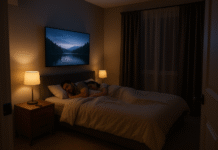





















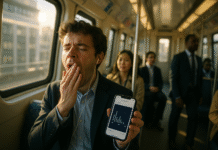
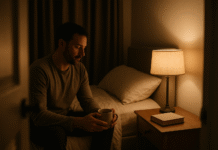
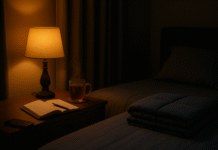
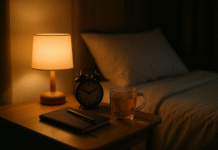

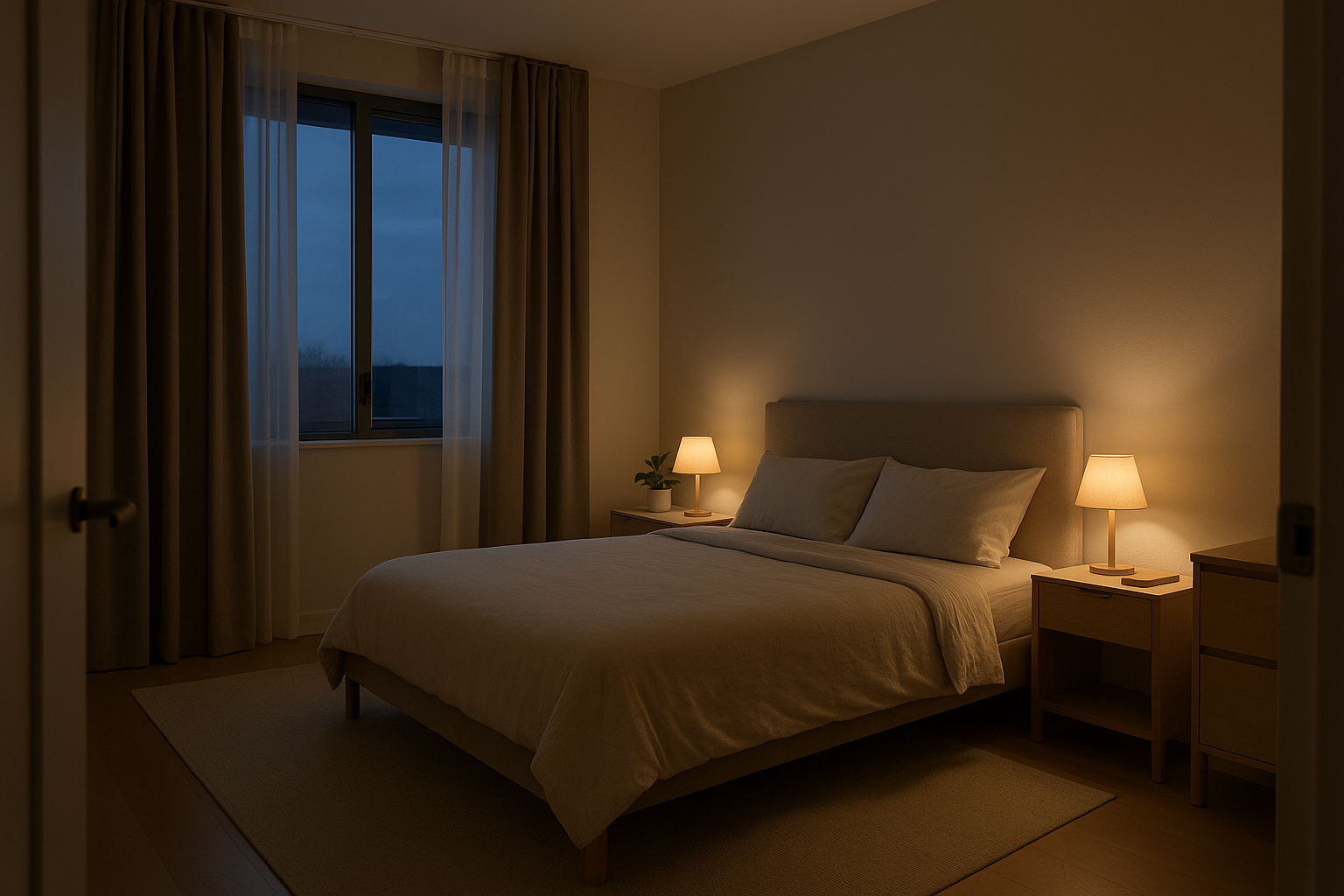
A sleep-friendly bedroom isn’t a Pinterest fantasy—it’s a carefully tuned environment that manages light, sound, temperature, air quality, and layout so your body’s sleep systems can do their job. In practice, that means a room that’s dark at night, quiet, cool, well-ventilated, and free of obstacles. If you only need the fast answer: keep it cool (around 60–67°F / 15.6–19.4°C), darken fully, limit noise, and place the bed on a solid wall with reach-friendly storage. Below you’ll find a practical, research-guided playbook—12 principles—to turn any bedroom into a restorative sleep space.
Quick-start steps: set your thermostat to a cool nighttime range, install blackout shades, add a warm-dim bedside lamp, seal noise leaks and consider a fan/white-noise device, declutter pathways, and use low-VOC materials. Within a week, most people feel the difference.
1. Place the bed on a solid wall and orient for calm
Start by anchoring the bed’s headboard to a solid wall (no windows behind if you can help it) and giving yourself a clear, straight line of sight to the doorway without being directly in the swing path. This simple move reduces drafts, stray light, and startle responses from door or hallway activity. Avoid placing the bed under large beams or soffits that visually “press” down on you, and try not to back the headboard against a bathroom wall shared with noisy plumbing. If windows must be behind the bed, upgrade to true blackout plus a sealed headboard to limit light seams and drafts. Centering the bed also balances reach to lighting, outlets, and night storage so you aren’t craning or twisting before sleep. Finally, leave safe walkways on both sides; your last steps of the day shouldn’t be a slalom course.
1.1 Why it matters
A stable, protected bed position reduces arousal triggers (movement, light, noise) and creates consistent cues for your brain that “this spot is for sleep.” Small reductions in startle and micro-awakenings compound into more continuous sleep.
1.2 How to do it
- Put the headboard on the most continuous interior wall.
- Keep the bed outside the door swing and not directly opposite a mirror that reflects windows/lamps.
- If you must back to a window, use a tightly fitted headboard and layered window treatments.
- Keep at least one reachable outlet and a switch within arm’s length from each side.
- Aim for two nightstands (or shelves) at mattress height to avoid shoulder/wrist strain reaching down.
Mini-checklist: solid wall ✔︎, no drafty window at head ✔︎, line of sight to door ✔︎, reachable lighting ✔︎, safe walk path ✔︎. Close with a quick stand-in-place test: sit on the bed, turn lights off/on, and simulate a 2 a.m. reach to water—if anything feels awkward, re-tune.
2. Match mattress & pillows to your body—not the marketing
The “best” mattress is the one that keeps your spine neutral in your typical sleep positions and disperses pressure at the shoulders/hips without sinking your lumbar spine. Side sleepers usually need more pressure relief through the shoulder (often medium to medium-soft), back sleepers often do best with medium to medium-firm support to avoid hyperextension, and stomach sleepers typically need the firmest feel to limit swayback. Pillow height should fill the space between the neck and shoulder without cranking your head forward or sideways; many side sleepers prefer a 10–13 cm loft, while back sleepers are closer to 8–10 cm and stomach sleepers even lower. Prioritize breathable foams/latex or coil-hybrid cores if you run warm, and consider washable fiber pillows if you have dust sensitivities. Whatever you choose, rotate and replace on realistic timelines: pillows about every 1–2 years; mattresses roughly every 7–10 years, sooner if impressions exceed ~2.5 cm or pain returns.
2.1 Numbers & guardrails
- Spinal check: Lie as you normally sleep. Have a partner snap a photo from behind; the nose-sternum-navel line should be straight for back sleepers; side sleepers’ cervical and lumbar curves should look neutral, not banana-shaped.
- Edge test: Sit and roll toward the edge—if you “slide,” you may need firmer perimeter support.
- Heat test: If your core temp spikes, choose open-cell foam, coil units, or phase-change covers.
Mini-checklist: neutral alignment, pressure relief at weight-bearing points, breathable core, pillow loft matched to position, easy-wash covers. Stick to these basics and ignore threadbare claims about “universal” firmness.
3. Control light in layers: blackout, task, and warm-dim at night
For sleep, darkness is medicine. Block outside light fully with blackout shades (side channels help) and layer sheers for daytime privacy without turning the room into a cave. At night, switch to warm, low-intensity lighting (around 2700K or lower) and keep any needed nightlight dim and red-leaning, which interferes least with melatonin. During the day, get bright light—ideally outdoors—in the morning to reinforce your circadian timing. As of August 2025, major health sources still recommend a cool, dark, quiet bedroom and limiting bright screens before bed; Harvard Health specifically notes dim red light as least disruptive at night.
3.1 How to layer lighting
- Ambient: ceiling fixture on a dimmer for chores and cleaning.
- Task: bedside lamps with opaque shades or adjustable arms; set to warm color temps.
- Path: a very dim plug-in nightlight near the floor to guide midnight trips (aim down, not eye-level).
3.2 Common mistakes
- Leaving bright digital clocks or chargers glowing—cover indicators with light-blocking stickers.
- Installing only one overhead fixture—add bedside task lights so you don’t need to stand to switch off.
- Relying on “blue-light” filter glasses instead of actually dimming light and screens 1–2 hours pre-bed.
Synthesis: Control daylight with sheers/blackouts and artificial light with dim, warm fixtures; this one-two punch strengthens sleepy cues at night and alert cues by day.
4. Quiet the room and mask what remains
Noise wakes you even when you don’t remember it. The World Health Organization’s community noise guideline for bedrooms is ~30 dB LAeq indoors at night for continuous noise and ≤45 dB LAmax for single events—targets that can be hard in cities but are useful as design goals. Start by sealing easy leaks (door sweeps, weatherstripping, soft-close hardware), adding soft surfaces (curtains, upholstered headboard, rugs), and placing bookcases or acoustic panels on echo-prone walls. If you can’t reduce the source, mask it with a steady fan, white/pink noise, or gentle HVAC airflow to lower the contrast between peaks and background. For neighbors or street noise, double-cell honeycomb shades plus blackout curtains work surprisingly well and look intentional. Earplugs can help intermittently (choose soft foam or silicone that fits comfortably).
4.1 Tools & tactics
- Add door seals and a solid-core door if you’re renovating.
- Use thick curtains (≥300 gsm) with tight side returns.
- Consider a sound machine/fan at constant volume near the noise entry point.
- Place the bed away from shared walls with TV/speakers on the other side.
Mini-checklist: seal gaps, soften surfaces, choose layered window treatments, add consistent masking, move bed if needed. Even partial wins (5–10 dB) can turn a choppy night into solid sleep. For simpler guidance, the National Sleep Foundation also recommends quieting the room and using white noise or earplugs as needed.
5. Keep it cool and steady: temperature & humidity
Most sleepers do best in a cool bedroom; widely cited guidance puts the sweet spot roughly at 60–67°F (15.6–19.4°C). Pair that with stable humidity to reduce dryness, congestion, mold, and dust mites. U.S. public-health and building references commonly suggest keeping indoor RH below 60%, ideally around 30–50%. Use a simple hygrometer and adjust with a humidifier/dehumidifier or by tweaking HVAC and ventilation. If partners disagree on warmth, cool the room but warm the sleeper—throw blankets, socks, a hot-water bottle for feet (which can paradoxically help the core cool), and individualized duvet inserts. Place the thermostat a bit lower 60–90 minutes before bedtime so the room reaches setpoint by lights-out rather than chilling you after you’re tucked in.
5.1 Numbers & guardrails
- Start at 65°F (18°C) and nudge ±1°F per night until you wake comfortable.
- Aim for 30–50% RH most of the year; under 60% RH is the upper limit to discourage mold.
- Use breathable bedding if you routinely overheat.
Synthesis: Cool air plus moderate humidity is a cornerstone of sleep-ready bedrooms—set it, test it, then lock it in. US EPA
6. Breathe easier: ventilation, filtration & cleaner air
Good air feels invisible—no noticeable odors, no stuffiness. Open windows when outdoor air is clean and conditions allow; otherwise, rely on HVAC MERV-rated filters and, where helpful, a portable air cleaner. The U.S. EPA’s consumer guide explains the basics of portable cleaners and HVAC filters; industry guidance from AHAM offers an easy sizing rule: pick a unit whose smoke CADR ≈ two-thirds of your room’s square footage (e.g., 12 ft × 10 ft room = 120 ft² ⇒ look for smoke CADR ≈ 80+ cfm). Choose HEPA or high-efficiency particulate filters for allergens, and avoid ozone-generating devices. Place the unit where airflow isn’t blocked (not behind a dresser) and run it on higher settings before bed. Keep pets out if allergies are in play and wash bedding regularly.
6.1 Numeric example
- Room: 11 ft × 14 ft = 154 ft² → target smoke CADR ≈ 100–110 cfm.
- If ceilings exceed 8 ft, go up a model.
Mini-checklist: clean HVAC filter, spot-vent bathrooms, portable cleaner sized by CADR, no ozone, fresh wash routine. Cleaner air lowers congestion and reduces night-time awakenings.
7. Choose calming colors and low-VOC materials
Muted, low-saturation palettes (warm neutrals, soft greens/blues) reduce visual “noise,” but the chemistry of finishes matters as much as color. Many paints, sealers, and adhesives release volatile organic compounds (VOCs) that can irritate eyes and airways, especially right after application. To minimize this, select low- or zero-VOC paints and look for third-party certifications such as Green Seal GS-11; ventilate well during and after painting. For floors, choose low-emission options and seal exposed composite wood. If you’re sensitive, avoid heavy fragrances and strong cleaners in the sleep environment. Finish with natural textures—wood, linen, wool—for a grounded look without sensory overload.
7.1 Tools/labels to know
- Green Seal GS-11 for paints/coatings.
- GREENGUARD for low-emitting products (furniture, finishes).
- CARB certification for air cleaners sold in California (bonus if you also need filtration).
Synthesis: A quiet palette plus low-emission materials reduces irritants and keeps the room feeling calm and breathable.
8. Win the window: daylight by morning, blackout by night
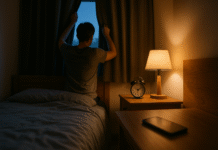
Windows should do two jobs: give you light when you want it and block it when you don’t. Combine sheers (soften daylight and maintain privacy) with true blackout (sleep-time darkness), ideally in the same color as your walls so they visually recede. In the first hour after waking, open shades fully or step outside—bright light is the strongest cue to anchor your body clock, making it easier to fall asleep the next night. You don’t need specialized tech to benefit; even ordinary morning light helps. Consider a sunrise alarm if dawn is late in winter. At night, close all layers and check for light leaks at edges; a blackout track or magnetic sides can seal seams. PMC
8.1 Region note
In bright, hot climates, low-E glazing plus exterior shading (awnings, shutters) can reduce heat gain by day so your bedroom is cool enough by evening without over-reliance on AC.
Synthesis: Treat windows like dials, not on/off switches—soft daylight early, total darkness late—to align your circadian rhythm.
9. Get textiles right: sheets, duvet, and tactile cues
Your skin is your largest sensory surface; bedding that’s scratchy, clammy, or noisy will wake you. For most people, breathable natural fibers work best. Percale cotton sheets feel crisp and airy, useful for hot sleepers; sateen feels silkier and slightly warmer. There’s no magic “highest thread count”—quality depends on fiber and weave, with many sleepers doing well in the 200–400 range (higher isn’t always better and can trap heat). Choose duvet/comforter weights seasonally, and if you share a bed, consider split duvets to end the tug-of-war. For pillows, washable covers and encasements help keep allergens down; launder sheets weekly in warm/hot water if allergies are present.
9.1 Mini checklist
- One set of percale and one of sateen for seasonal swap.
- Breathable mattress protector (not crinkly vinyl).
- Duvet weight matched to climate; consider two lighter layers instead of one heavy.
Synthesis: Choose textures your half-asleep self loves to touch—and that don’t trap heat—to keep micro-arousals to a minimum.
10. Design the flow: clear paths, balanced storage, zero clutter zones
Visual clutter is cognitive clutter. Create clear paths from door→bed→bath with no shin-level obstacles, trailing cords, or teetering laundry baskets. Keep nightstands simple and consistent on both sides—lamp, water, book, maybe a plant or photo—so the last thing you see isn’t a pile of paperwork. Use closed storage for most items and open display sparingly for the few objects that truly make you exhale. Put hampers and chargers outside sightlines from the pillow so your brain doesn’t rehearse tomorrow’s chores at lights-out. If your space is small, go vertical: wall-mount shelves, choose a bed with drawers, or add an under-bed roll-out.
10.1 How to declutter without drama
- Start with “reach zones” (arms’ length from the pillow).
- Give every item a home (hook for robes, tray for rings, bin for remotes).
- Close the loop by making the morning bed-reset part of your routine.
Synthesis: Flow and order reduce nighttime hassles and pre-sleep rumination—every tidy gesture is a tiny sleep aid.
11. Set tech boundaries and tame evening screens
Treat the bedroom as a device-light zone after dusk. Even modest evening light, especially from bright screens, can nudge your clock later and reduce sleepiness. The practical approach: put chargers outside the bedroom, use Do Not Disturb timers, and keep any necessary screen dimmed and warm-tinted. If you must read on a device, invert colors or use dedicated e-ink at minimal brightness. Most public-health sleep pages continue to recommend turning off electronics 30+ minutes before bed and keeping the room dark. If you need a nightlight for safety, choose a very dim red one positioned low.
11.1 Mini-checklist
- Phone charges in the hallway.
- Alarm clock with no glaring digits (or with a blackout cover).
- Nightlight < 5 lumens, red-leaning, aimed at the floor.
Synthesis: Reducing evening light and notifications is free performance—less stimulation, easier sleep.
12. Build in safety & accessibility without killing the vibe
Great bedrooms are safe bedrooms. Add non-slip backing under rugs, secure tall furniture, and keep a low-glare path light to the bathroom. If mobility is limited, prefer lever handles over knobs and a bed height that allows knees and hips to be level when sitting. Keep water reachable to reduce midnight trips, and store meds outside the bedroom unless prescribed otherwise. Place a laundry basket and waste bin where you actually use them (not where you wish you did), which prevents piles. Finally, mind indoor air during projects—ventilate when painting, and let new furniture off-gas in a spare room if possible.
12.1 Quick safety pass
- Trip hazards cleared? ✔︎
- Path lighting dim/aimed? ✔︎
- Furniture stable? ✔︎
- Finishes low-emission and well-ventilated? ✔︎
Synthesis: Safety features can be invisible when planned up front; the best bedroom “disappears” so sleep can take center stage.
FAQs
1) What’s the single most impactful change I can make on a tight budget?
Darken the room properly. True blackout (with side channels or wraparound curtains) eliminates the most common sleep disruptor and pairs well with a cheap fan for noise masking and slight cooling. Add a warm-dim bedside lamp so you’re not flipping an overhead at bedtime. Evidence-based sleep pages consistently prioritize cool, dark, quiet as first-line changes.
2) Is there a perfect bedroom temperature for everyone?
No. Physiology and climate matter, but a widely referenced range is 60–67°F (15.6–19.4°C). Start near 65°F and nudge by a degree each night until you wake comfortable. If partners disagree, cool the room and use individualized duvet layers. Public guidance from sleep organizations and health agencies continues to support a cool room for better sleep.
3) Do I need to buy “circadian” light bulbs?
Not necessarily. The brightness, timing, and placement of light matter more than specialized bulbs. Keep evenings dim and warm and get bright morning light (preferably outdoors). If you like tech, smart dimmers or warm-dim bulbs help automate routines, but they’re optional. Harvard Health still advises dim red for nightlights as least disruptive.
4) Are white-noise machines safe and effective?
They’re a practical way to mask sporadic noises. Safety comes down to keeping volume reasonable and placement away from your ear; a fan can do the same job. For more severe noise, combine masking with sealing gaps and heavier curtains. WHO guidance for sleep environments underscores the value of lower indoor noise levels at night.
5) Which sheets keep me cooler—percale or sateen?
Percale (plain weave) is typically crisper and airier; sateen feels silkier and a bit warmer. Focus less on extreme thread counts and more on fiber quality and weave; many great sets live in the 200–400 range. If you sleep hot, try percale or linen and a lighter duvet fill.
6) Is an air purifier worth it in the bedroom?
If you have allergies, live with pets, or notice stuffiness, yes. Choose a unit with HEPA-level filtration and size it using the CADR ≈ two-thirds of room area rule of thumb. Keep doors/windows in mind (open doors mean larger effective space) and place the unit so air can circulate. The EPA’s guide and AHAM’s CADR guidance explain the basics clearly.
7) What humidity level should I aim for?
Keep indoor humidity below 60%, ideally around 30–50% for most homes. This range reduces mold growth, dust mites, and some irritants. Measure with a hygrometer; adjust with humidifier/dehumidifier as seasons change. EPA pages continue to recommend this target range. US EPA
8) Does paint choice really affect sleep?
Color influences mood, but emissions influence comfort. Choose low- or zero-VOC paints and ventilate well until fully cured. Look for independent certifications like Green Seal GS-11. If you’re sensitive to smells, schedule painting when you can sleep in another room for a few nights.
9) What’s the right way to light the path to the bathroom?
Use very dim, low-mounted lighting (think toe-kick LEDs or tiny plug-ins) with warm/red color. The goal is navigation, not illumination—keep it out of your eyes and pointed at the floor. This preserves melatonin and reduces wake-after-sleep onset.
10) If I can’t block all street noise or light, is the rest a waste?
Not at all. Sleep is additive: every improvement—cooler air, dimmer bulbs, better bedding, fewer trip hazards—shaves off arousal triggers. Use a layered approach: partial blackout + masking fan + comfortable bedding + low-VOC finishes can transform sleep even in imperfect apartments. The key is consistency.
Conclusion
The most effective bedroom isn’t the trendiest—it’s the quietest, darkest, coolest, best-ventilated, and easiest to move through at 2 a.m. Treat your bedroom like a system: bed placement reduces startles; blackout and warm-dim lighting manage circadian cues; noise sealing and masking reduce awakenings; temperature and humidity sit in a comfortable band; air stays clean with ventilation and filtration; materials stay low-emission; and storage keeps pathways clear. When these pieces work together, your brain stops scanning the environment and starts sleeping.
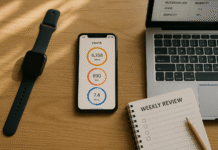
Your next steps are simple and concrete: pick one high-impact change (often blackout or temperature), add a second (masking + decluttered pathways), and schedule a weekend tune-up (window layers, low-VOC paint touch-ups, better sheets). Measure the difference by how you feel at wake-up, not just by gadgets. Then lock the routine with a bedtime dim-down and device-parking ritual.
CTA: Tonight, dim the lights early and set your room to 65°F—tomorrow morning, note how you feel and iterate.
References
- Guidelines for Community Noise. World Health Organization (WHO). 1999. https://iris.who.int/bitstream/handle/10665/66217/a68672.pdf
- About Sleep. Centers for Disease Control and Prevention (CDC). May 15, 2024. https://www.cdc.gov/sleep/about/index.html
- Sleep Tips. National Sleep Foundation. Accessed August 2025. https://www.thensf.org/sleep-tips/
- Blue light has a dark side. Harvard Health Publishing. July 24, 2024. https://www.health.harvard.edu/staying-healthy/blue-light-has-a-dark-side
- Guide to Air Cleaners in the Home (2nd ed.). U.S. Environmental Protection Agency (EPA). March 11, 2025. https://www.epa.gov/indoor-air-quality-iaq/guide-air-cleaners-home
- Air Filtration Standards (CADR 2/3 rule). Association of Home Appliance Manufacturers (AHAM). Accessed August 2025. https://ahamverifide.org/ahams-air-filtration-standards/
- Volatile Organic Compounds’ Impact on Indoor Air Quality. U.S. Environmental Protection Agency (EPA). Last updated August 15, 2023. https://www.epa.gov/indoor-air-quality-iaq/volatile-organic-compounds-impact-indoor-air-quality
- Standard for Paints, Coatings, Stains, and Sealers (GS-11). Green Seal. 2024 edition. https://greenseal.org/wp-content/uploads/GS-11-Standard-Ed-4.0-10.2024.pdf
- Therapeutics for Circadian Rhythm Sleep Disorders. (Review) Sun & Pandi-Perumal et al., Frontiers in Neuroscience / NIH PMC. 2022. https://pmc.ncbi.nlm.nih.gov/articles/PMC9886819/
- Sateen vs Percale Sheets. Sleep Foundation. January 31, 2023. https://www.sleepfoundation.org/best-sheets/sateen-vs-percale-sheets
- What is the Best Thread Count for Sheets? Sleep Foundation. January 31, 2023. https://www.sleepfoundation.org/best-sheets/best-thread-count-for-sheets
- Bright Light Therapy – Patient Resource. SleepEducation.org (American Academy of Sleep Medicine). May 6, 2021. https://sleepeducation.org/patients/bright-light-therapy/