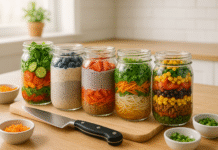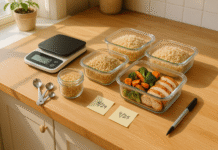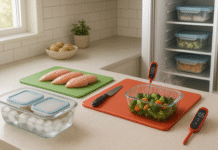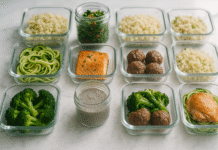






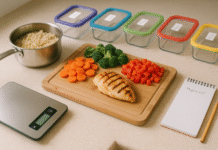












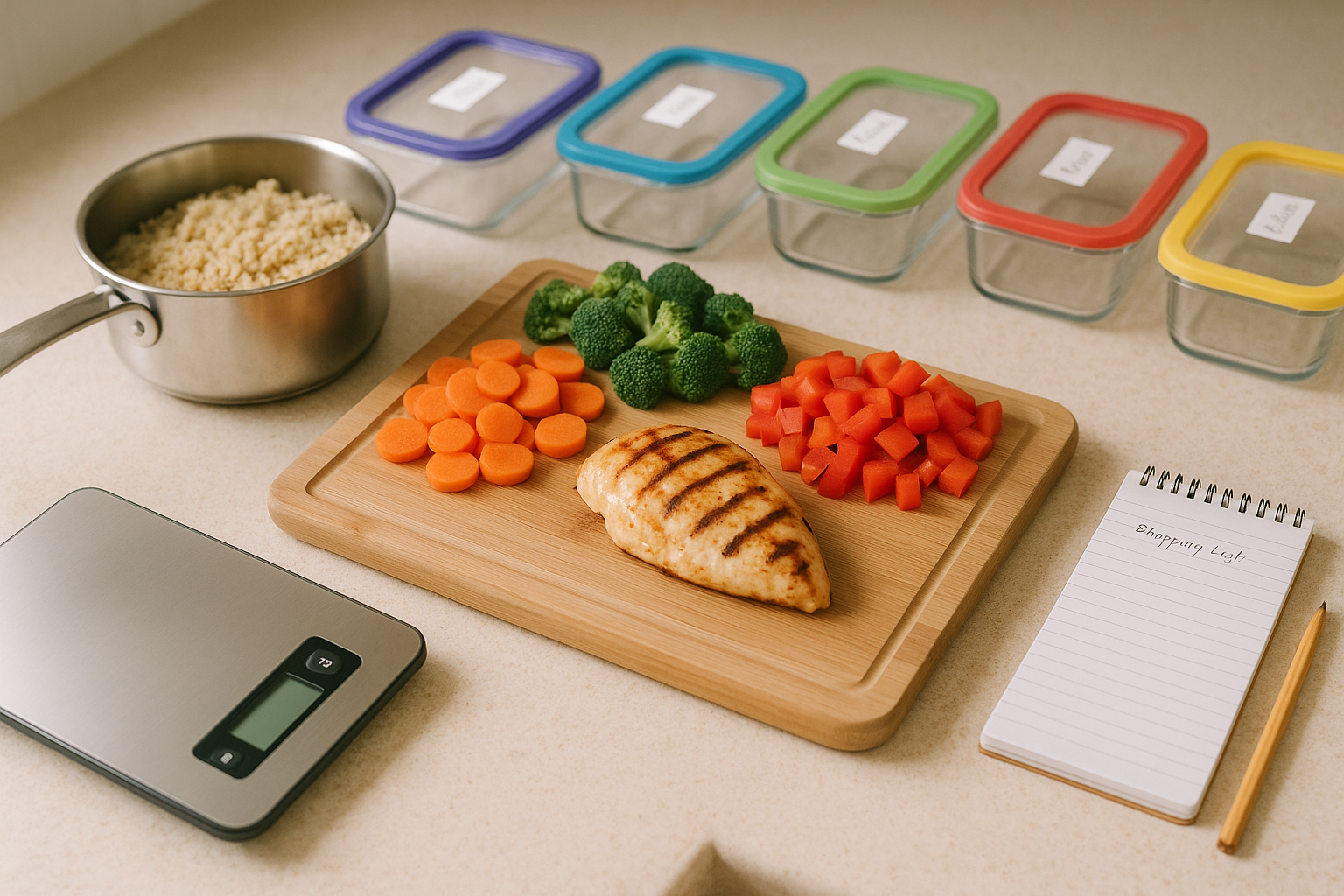
Meal prepping means planning, cooking, and storing meals in advance so you can eat balanced food with less daily effort. In short: you make a few bigger decisions once, then reap the benefits all week. This guide is for beginners who want practical, safe, and affordable ways to start. It covers scheduling, shopping, batch-cooking, storage, and quick assembly—plus safety guardrails so you can prep with confidence. Friendly note: this is general education, not personal medical advice; follow local food safety guidance.
Quick definition: Meal prepping is the process of planning, cooking, and portioning meals ahead of time—often 3–5 days—so that eating well becomes faster and easier.
At a glance, your 10 steps: set goals, block time, pick a menu framework, make a smart list, set up your kitchen, batch-cook efficiently, portion & label, store safely, reheat & assemble fast, then iterate for variety and scale.
1. Decide Your Goal and Boundaries (Time, Budget, Diet)
Start by deciding exactly what you want meal prep to do for you this week; that clarity determines the menu, containers, batch size, and shopping list. If your goal is “save 60 minutes on weekdays,” you’ll make different choices than if your goal is “hit 110–130 g protein daily” or “pack three school lunches.” Define your budget range and the number of meals you’ll prep (e.g., 8 lunches + 6 breakfasts). If you have dietary needs (vegetarian, halal, gluten-free, low-sodium), set those constraints now so the list and recipes align. Finally, decide your freshness window—how many days you’ll keep items in the fridge versus what you’ll freeze for later. This upfront alignment avoids overbuying, reduces waste, and keeps prep day calm rather than chaotic.
1.1 Why it matters
Clear constraints stop decision fatigue midweek. You’ll know exactly which components to cook, how much to portion, and when to freeze. It also prevents “menu creep” where you try to prep too many dishes and burn out.
1.2 How to do it
- Pick metrics: time saved per weekday, number of boxes packed, or grams of protein/fiber daily.
- Set a budget: e.g., PKR 7,000–10,000 (~US$25–35) for 12–14 portions using grains/beans.
- Choose a span: 3–4 fridge days + 3–4 frozen portions as a safety valve.
- Mark constraints: equipment (no oven?), workplace microwave? family allergies?
- Write it down: a one-page “prep brief” keeps the rest of the steps focused.
Mini example: If lunches out cost PKR 800 each and you prep 10 lunches at ~PKR 350 each, you save ~PKR 4,500 in a week—plus 10 queue-free meals. That clarity makes the 2–3 hour prep session feel worth it.
Bottom line: Decide what “success” looks like before you shop or cook; it turns meal prep from a chore into a results-driven routine you can repeat.
2. Block Your Prep Window and Choose a Repeatable Rhythm
The best meal prep schedule is the one you can keep. Most beginners thrive with one longer session on the weekend (90–150 minutes) and a lighter midweek top-up (30–45 minutes for produce, sauces, or a fresh protein). Blocking time on your calendar—and treating it like a meeting—protects the habit. A steady rhythm lets you rotate ingredients without reinventing the wheel: maybe Sundays are for roasting trays, simmering a pot of grains/beans, and assembling breakfasts, while Wednesdays refresh salads, fruit, and a quick stir-fry. If you share a kitchen, coordinate with housemates or family so the oven and sink are free, and plan dishwashing time into the block so you finish truly “done.”
2.1 How to do it
- Pick fixed slots: e.g., Sun 5–7 pm + Wed 7–8 pm.
- Sequence tasks: start long items (grains/beans) first; quick-chop veggies while they cook.
- Batch chores: sharpen knives, line pans, and clear counter space before you begin.
- Set a timer: aim to finish each “wave” (e.g., two sheet pans + a pot) in 40–50 minutes.
- End with reset: wipe surfaces, run dishwasher, take out trash so next week starts clean.
2.2 Numbers & guardrails
Expect 10–14 complete portions from a 2-hour session if you focus on modular components (protein + grain + veg + sauce). Track how many boxes you actually eat to right-size next week’s quantities.
Bottom line: Make prep time non-negotiable on your calendar and standardize your flow so the work feels lighter each week.
3. Choose a Simple Menu Framework (Healthy Plate, MyPlate, or Modular Bowls)
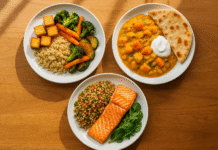
A simple framework prevents bland repetition while ensuring balanced nutrition. Two popular, beginner-friendly options are Harvard’s Healthy Eating Plate (½ vegetables/fruit, ¼ whole grains, ¼ healthy protein, plus healthy oils and water) and USDA’s MyPlate (five food groups: fruits, vegetables, grains, protein foods, and dairy/fortified soy). Use either as your “board” to mix and match proteins (chicken, beans, tofu, eggs, lentils), grains (brown rice, bulgur, quinoa, whole-grain roti/pasta), and colorful veg (leafy greens, peppers, carrots, cucumbers). Anchoring to a plate model makes tasting, satiety, and micronutrient coverage more consistent across the week without tracking macros unless you want to. As of August 2025, both models remain reliable high-level guides for balanced meals.
3.1 Tools/Examples
- Framework pick: Healthy Eating Plate or MyPlate as your weekly template. MyPlate
- Protein roster: chicken thighs, eggs, paneer/tofu, lentils/chickpeas, canned tuna/salmon.
- Grain roster: brown rice, quinoa, farro/bulgur, whole-grain pasta, millet, oats.
- Veg prep: roast a tray (broccoli, carrots, onions) + fresh crunch (cucumber, lettuce).
- Flavor kit: 2 sauces (e.g., tahini herb, chili-garlic yogurt) + 2 spice blends.
3.2 Mini checklist
- 1 protein + 1 grain + 2 veg + 1 sauce per meal.
- Add fruit or yogurt on the side for breakfast or snacks.
- Include healthy fats (olive/canola oil, nuts/seeds) in cooking or toppings.
Bottom line: Pick a plate model and a modular set of ingredients; it’s the easiest way to stay balanced without micromanaging every nutrient.
4. Build a Smart Grocery List and Shop Efficiently
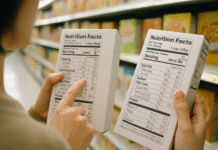
A good list is the difference between confident prep and fridge regret. Start from your menu framework and count portions: if you need 10 lunches, that might be 1.8–2.0 kg cooked protein total (e.g., 1.2 kg raw chicken + 2 cans beans), ~1.2 kg cooked grains, and 2–3 kg mixed vegetables. Group the list by store section (produce, bakery, dry goods, chiller, frozen) and shop the perimeter first to prioritize fresh items. Buy “workhorse” staples in bulk (rice, oats, beans, frozen veg) and seasonal produce for value and flavor. Scan labels for sodium and added sugars, especially in sauces and canned goods. Finally, plan a small “freezer buffer”—bread, tortillas, frozen veg/fruit—so a missed shop doesn’t derail your week.
4.1 List structure
- Per meal math: target 350–650 kcal meals depending on your needs; adjust components.
- Batch sizing: 500 g dry rice → ~1.4 kg cooked; 250 g dry pasta → ~600 g cooked.
- Canned goods: low-sodium beans, crushed tomatoes, tuna; rinse beans to reduce sodium.
- Produce map: one roastable tray veg set + one raw/crisp set for contrast.
- Snacks: nuts, fruit, yogurt; pre-portion to avoid mindless grazing.
4.2 Budget tips
Shop weekly sales for proteins, buy whole chickens or larger packs to cook once and portion, and favor hardy veg (cabbage, carrots) that last the full week. Keep the list on your phone and reuse it—just tick and untick items each week.
Bottom line: Plan portions backward from your target meals, then shop a repeatable list in store order to save time and money.
5. Set Up Your Kitchen for Speed (Tools, Flow, and Food Safety Habits)
Before lighting a burner, set the stage. Clear your counter; put knives, cutting boards, and containers within easy reach; and line sheet pans with parchment/foil to minimize scrubbing. A large pot, two sheet pans, a skillet, and a rice cooker or instant pot cover most beginner prep needs. Keep a “scrap bowl” for peels and trimmings, and run hot soapy water in the sink for quick rinses as you go. Most importantly, build food-safety habits into the flow: wash hands for 20 seconds before and after handling raw foods, keep raw meats separate from ready-to-eat items, and clean surfaces between tasks. These small habits prevent cross-contamination and keep your whole week of food safe.
5.1 Core tools
- Chef’s knife + paring knife, cutting boards (separate for raw proteins), tongs, spatula.
- Rice cooker/instant pot; oven thermometer if your oven runs hot/cool.
- Digital probe thermometer for doneness checks; kitchen scale for fast portioning.
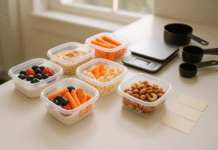
- Glass containers (750–1000 ml for mains; 250–500 ml for sides/sauces).
5.2 Food safety refresh (as of Aug 2025)
- Clean, Separate, Cook, Chill—the four pillars—lower foodborne illness risk.
- Keep fridge ≤4 °C (≤40 °F) and freezer ≤-18 °C (0 °F) for storage safety.
Bottom line: A tidy, tool-ready workspace and automatic safety habits make prep day faster and your results safer.
6. Batch-Cook Efficiently (Sheet Pans, One-Pots, and Safe Temperatures)
Batch cooking is about parallelizing heat sources and choosing techniques that scale. Roast two trays at once (protein on one, vegetables on the other), simmer a pot of grains or beans, and sear a quick protein on the stovetop while the oven works. Favor forgiving cuts (chicken thighs, beans, lentils, tofu) and sturdy veg (broccoli, carrots, onions) that reheat well. Use spice blends and sauces to create variety without extra cooking time. Always cook to safe internal temperatures—use a thermometer instead of guesswork—and avoid letting food sit out on the counter after cooking; prompt chilling matters. The goal is to leave your session with fully cooked, cooled, and safely stored components you can assemble in minutes later.
6.1 Techniques that scale
- Sheet-pan roasting: 220 °C/425 °F for 18–30 minutes; swap trays halfway.
- One-pot grains/legumes: big batches of brown rice, quinoa, lentils; keep lids on.
- Stovetop quick protein: eggs, shrimp, tofu, paneer, ground meat in 10–15 minutes.
- Sauce station: blitz two sauces while items cook (e.g., chimichurri, peanut-lime).
6.2 Numbers & guardrails
- Keep cooked foods out of the danger zone (4–60 °C / 40–140 °F); refrigerate promptly if not serving immediately.
- Use a probe thermometer to hit safe minimums (e.g., poultry 74 °C/165 °F). (See FoodSafety.gov tables.)
Bottom line: Run multiple heat sources at once, season smartly, and cook to safe temps so your batch is both tasty and safe.
7. Portion, Label, and Store Safely (Fridge vs. Freezer, Time Limits, and the “2-Hour Rule”)
Right after cooking, divide food into shallow containers so it cools quickly; large, deep pots trap heat and keep food in the danger zone. Label each container with contents and date. As of August 2025, U.S. food-safety guidance says to refrigerate or freeze perishable foods within 2 hours of cooking or purchase (within 1 hour if ambient temperature is above 32 °C / 90 °F). Keep the refrigerator at ≤4 °C (≤40 °F) and the freezer at ≤-18 °C (0 °F). In the fridge, most cooked leftovers are best eaten within 3–4 days; for longer storage, freeze portions and rotate. Stash the most perishable items in the coldest zones (not the door), and keep raw proteins below ready-to-eat foods to prevent drips.
7.1 Mini checklist
- Divide hot food into shallow containers; place in the fridge promptly.
- Label with date + meal (e.g., “Tue lunch: lentil stew”).
- Use FIFO rotation: oldest meals first; freeze anything you won’t eat by day 3–4.
- Keep fridge ≤4 °C (≤40 °F); freezer ≤-18 °C (0 °F).
- Store ready-to-eat foods above raw meats; keep the door for condiments/drinks.
7.2 Numbers & guardrails (as of Aug 2025)
- 2-hour rule (1 hour if >32 °C/90 °F); leftovers 3–4 days in the fridge.
- It’s safe—and recommended—to refrigerate hot leftovers promptly; use shallow containers to speed cooling.
Bottom line: Portion fast, label clearly, and follow temperature/time rules to keep your prepped food safe and fresh.
8. Reheat and Assemble in Minutes (Microwave, Skillet, Air Fryer, Oven)
Reheating is where meal prep pays off: you’re transforming safe, cooked components into a fresh-tasting plate in under 10 minutes. Use the microwave for speed (add a splash of water and vented lid to keep grains tender), the skillet for stir-fries and saucy proteins, the oven or air fryer to re-crisp roasted vegetables or cutlets, and the kettle to quickly loosen thick soups. Reheat leftovers to 74 °C/165 °F throughout; stir or flip halfway for even heating. Avoid reheating the same portion more than once—portion what you’ll eat and keep the rest cold. Finish with fresh elements (herbs, lemon, chopped cucumber) and one of your sauces to restore brightness without extra cooking.
8.1 Quick assembly patterns
- Bowl: grain + protein + roast veg + fresh veg + sauce + crunchy topping.
- Wrap: whole-grain tortilla + protein + slaw + yogurt sauce; crisp in a dry pan.
- Soup-plus: reheat a stew; add quick-wilt spinach and a squeeze of lemon.
- Egg-topper: fried/poached egg turns leftovers into a complete, satisfying meal.
8.2 Safety notes
Use a thermometer for thick stews/casseroles to confirm ≥74 °C/165 °F. If defrosting, thaw in the fridge overnight or use the microwave’s defrost function and cook immediately; never thaw on the counter.
Bottom line: Match the reheating method to the food, hit safe temperatures, and add fresh finishes to make prepped meals feel newly cooked.
9. Keep Meals Interesting (Flavor Systems, Texture, and Seasonal Swaps)
Variety prevents “prep fatigue.” Rotate flavor systems weekly—Mediterranean (lemon, olive oil, oregano), South Asian (garam masala, ginger, chilies), East Asian (soy, sesame, scallion), Middle Eastern (tahini, cumin, sumac), Mexican-inspired (lime, chili, cilantro). Pair textures: roast something for char, keep something crisp and raw, and include a creamy element like yogurt or hummus. Change just one component (protein or grain or sauce) and a familiar bowl feels new. Use seasonal produce to lower cost and boost taste; hardy veg (cabbage, carrots) carry well across a full week. Build two sauces per week so flavor changes are effortless at mealtime.
9.1 Flavor vault (pick two per week)
- Green herb: cilantro-mint chutney or chimichurri.
- Nutty-creamy: tahini-lemon or peanut-lime.
- Spicy-bright: chili-garlic oil or harissa-yogurt.
- Savory-sweet: miso-ginger or teriyaki-style glaze.
9.2 Mini case
Week 1: chicken thighs + brown rice + roast broccoli + tahini herb.
Week 2: swap protein to chickpeas and sauce to chili-garlic yogurt; keep rice/broccoli. Two small changes, totally different vibe.
Bottom line: Rotate sauces and one core component for fresh variety without extra prep time.
10. Troubleshoot and Scale (Families, Work Lunches, and Special Diets)
As you repeat the cycle, track what you actually eat and where bottlenecks appear. Families may need larger trays or double-batch proteins; solo preppers might favor more freezer portions to avoid waste. If your workplace microwave is crowded, pack “cold-assemble” lunches (grain salads, wraps). For higher-protein needs, front-load beans, eggs, tofu, fish, or chicken and add Greek yogurt or cottage cheese as sides. If you’re vegetarian, mix complementary proteins (beans + grains) and keep B-12-fortified options in rotation. When scaling up, invest in more containers and possibly a second sheet pan; if scaling down, halve recipes and freeze leftovers in single portions. Keep a log of what worked, what didn’t, and which combos you loved—then iterate.
10.1 Common mistakes & fixes
- Overcooking grains/veg: undercook slightly if you’ll reheat later.
- Soggy textures: store sauces separately; re-crisp in air fryer/oven for 3–6 minutes.
- Flavor fatigue: new sauce + fresh herb/lemon works wonders.
- Waste: freeze surplus on day 3; use FIFO; keep a weekly “clean-out” meal.
- Time creep: cap sessions at 2 hours; pick 3–4 components max.
10.2 Region-specific notes
In hotter climates, chill promptly, transport meals in insulated bags with ice packs, and keep fridge temps honest with a thermometer. The 2-hour/1-hour rule still applies in warm kitchens and during commutes.
Bottom line: Measure your real life, not an ideal; scale smart, freeze wisely, and refine week by week.
FAQs
1) What is the fastest beginner meal-prep plan I can try this weekend?
Choose one protein (e.g., chicken thighs or chickpeas), one grain (brown rice or bulgur), and two vegetables (roast + fresh). Make two sauces. In 90 minutes you’ll have 8–10 mix-and-match portions. Portion into labeled containers, refrigerate what you’ll eat in 3–4 days, and freeze the rest. This minimalist setup proves the concept without overwhelming you.
2) Do I have to eat the same thing every day?
No. Use a modular approach: keep components separate (protein, grain, veg, sauce) and assemble different combinations. For example, rice + chickpeas + tahini one day, bulgur + chicken + chili-yogurt the next. A rotation of two sauces and a fresh herb or lemon wedge keeps meals from feeling repetitive.
3) How long do leftovers last in the fridge, and when should I freeze?
Most cooked leftovers are best within 3–4 days in the refrigerator. If you won’t eat a portion by day 3, freeze it to preserve quality. Label containers with the date so you can practice FIFO (first in, first out) and avoid waste. For longer stashes, aim to eat frozen meals within a few months for best texture. Food Safety and Inspection Service
4) Is it safe to put hot food in the fridge?
Yes—cooling quickly is safer than letting food sit out. Transfer hot dishes to shallow containers so heat dissipates fast, and refrigerate within 2 hours (1 hour if room is very warm). Modern fridges can handle the load, and rapid chilling limits time in the 4–60 °C (40–140 °F) danger zone. Food Safety and Inspection Service
5) What temperatures should I use for storage and reheating?
Keep your refrigerator ≤4 °C (≤40 °F) and freezer ≤-18 °C (0 °F). Reheat leftovers to 74 °C (165 °F) and check thick foods in the center with a thermometer. These guardrails cut foodborne-illness risk and keep quality high.
6) Which containers are best for meal prep?
Glass containers with tight-fitting lids handle reheating and don’t retain odors. Use 750–1000 ml for mains and 250–500 ml for sides. For portability, a few leak-proof bento-style boxes are helpful. Always label with the date and contents so you can rotate efficiently.
7) How do I keep produce crisp instead of soggy?
Store sauces separately. Keep washed greens wrapped in a paper towel in a vented container, and put cut vegetables in airtight boxes with a little airflow (or use dedicated produce drawers). Re-crisp roasted veg in an oven or air fryer for a few minutes before serving.
8) What if I don’t have an oven?
Use stovetop one-pot methods (big skillet or wok) and a rice cooker/instant pot. You can sear proteins, steam or sauté vegetables, simmer grains/legumes, and even make “sheet-pan” style mixes in batches on the stovetop. A countertop air fryer or toaster oven can substitute for roasting in small kitchens.
9) How do I plan for different dietary needs in one household?
Cook neutral bases (grains, roast veg) and set out two proteins (e.g., chicken and chickpeas) plus flexible sauces. Each person assembles their plate to fit preferences or allergies. This keeps the cooking workload similar while honoring different needs.
10) Can meal prep help with a tighter budget?
Yes. Buying staples in bulk, choosing seasonal produce, and cooking once for multiple meals reduce per-portion costs. Track your average spend per portion compared to eating out, then redirect savings toward better ingredients, spices, or a small tool upgrade that further speeds prep.
11) What’s the right serving size for a prepped meal?
It depends on your energy needs, but many find 350–650 kcal meals work for lunches and lighter dinners. Use a simple plate model to keep balance: half vegetables, a quarter whole grains, a quarter protein, with healthy fats and water. Adjust portions up or down based on hunger and activity.
12) How do I transport meals safely to work or school?
Use an insulated bag with an ice pack, especially in hot climates or long commutes. Keep food cold (≤4 °C / ≤40 °F) until reheating, and follow the 2-hour rule from fridge to serving if you’re not packing with ice. Reheat to 74 °C/165 °F before eating.
Conclusion
Meal prepping works because it turns daily decisions into a single, structured session. You set a goal, block time, choose a balanced framework, shop a short list, and run a tidy, safe cooking flow. Portioning promptly, labeling clearly, and following temperature/time rules protect your investment—and your health. The payoff is consistency: less stress on busy days, lower costs, and meals that truly fit your routine and preferences. As you iterate, log what you ate and loved, freeze surplus early, and rotate sauces and components to keep flavors lively. With ten repeatable steps and a few simple tools, you can make “what’s for dinner?” a solved problem most days of the week.
Ready to begin? Pick one protein, one grain, two vegetables, and two sauces—and book your first 90-minute prep.
References
- Leftovers and Food Safety, USDA Food Safety and Inspection Service (FSIS), July 31, 2020 — https://www.fsis.usda.gov/food-safety/safe-food-handling-and-preparation/food-safety-basics/leftovers-and-food-safety
- Are You Storing Food Safely?, U.S. Food & Drug Administration (FDA), January 18, 2023 — https://www.fda.gov/consumers/consumer-updates/are-you-storing-food-safely
- 4 Steps to Food Safety, FoodSafety.gov (USDA/HHS), September 18, 2023 — https://www.foodsafety.gov/keep-food-safe/4-steps-to-food-safety
- Cold Food Storage Charts, FoodSafety.gov (USDA/HHS), September 19, 2023 — https://www.foodsafety.gov/food-safety-charts/cold-food-storage-charts
- About Four Steps to Food Safety, U.S. Centers for Disease Control and Prevention (CDC), April 29, 2024 — https://www.cdc.gov/food-safety/prevention/index.html
- Dietary Guidelines for Americans, 2020–2025 (9th ed.), U.S. Department of Agriculture & U.S. Department of Health and Human Services, December 2020 — https://www.dietaryguidelines.gov/resources/2020-2025-dietary-guidelines-online-materials
- Healthy Eating Plate, Harvard T.H. Chan School of Public Health — The Nutrition Source (accessed Aug 2025) — https://nutritionsource.hsph.harvard.edu/healthy-eating-plate/
- Meal Planning (Tip Sheet), MyPlate.gov (USDA) — https://www.myplate.gov/tip-sheet/meal-planning
- Safe Food Handling, U.S. Food & Drug Administration (FDA), March 5, 2024 — https://www.fda.gov/food/buy-store-serve-safe-food/safe-food-handling
- Meal Prep Guide, Harvard T.H. Chan School of Public Health — The Nutrition Source — https://nutritionsource.hsph.harvard.edu/meal-prep/