





















If you’re new to breathwork, the fastest way to feel a difference is to practice a few simple patterns consistently. This guide gives you seven beginner-friendly techniques, exactly how to do them, and when to use each. It’s designed for busy people who want calmer nerves, clearer focus, and better sleep without complicated routines. In a sentence: breathwork is the intentional control of your inhale, exhale, and rhythm to shift your body from stress to steadiness. For most beginners, 3–10 minutes a day is enough to notice benefits within a week.
Quick-start steps (skim and try): 1) Sit upright, shoulders soft. 2) Breathe through your nose when possible. 3) Lengthen your exhale. 4) Keep effort at a “5/10”—never strain. 5) Practice one technique below for 3–5 minutes.
Important: This article is educational and not a substitute for medical care. If you have heart or lung disease, are pregnant, have uncontrolled blood pressure, dizziness, or panic symptoms, consult a clinician before starting new breathing practices. As of August 2025, the techniques below are supported by reputable clinical guidance and research summarized in the References.
1. Diaphragmatic (Belly) Breathing: Your Everyday Reset
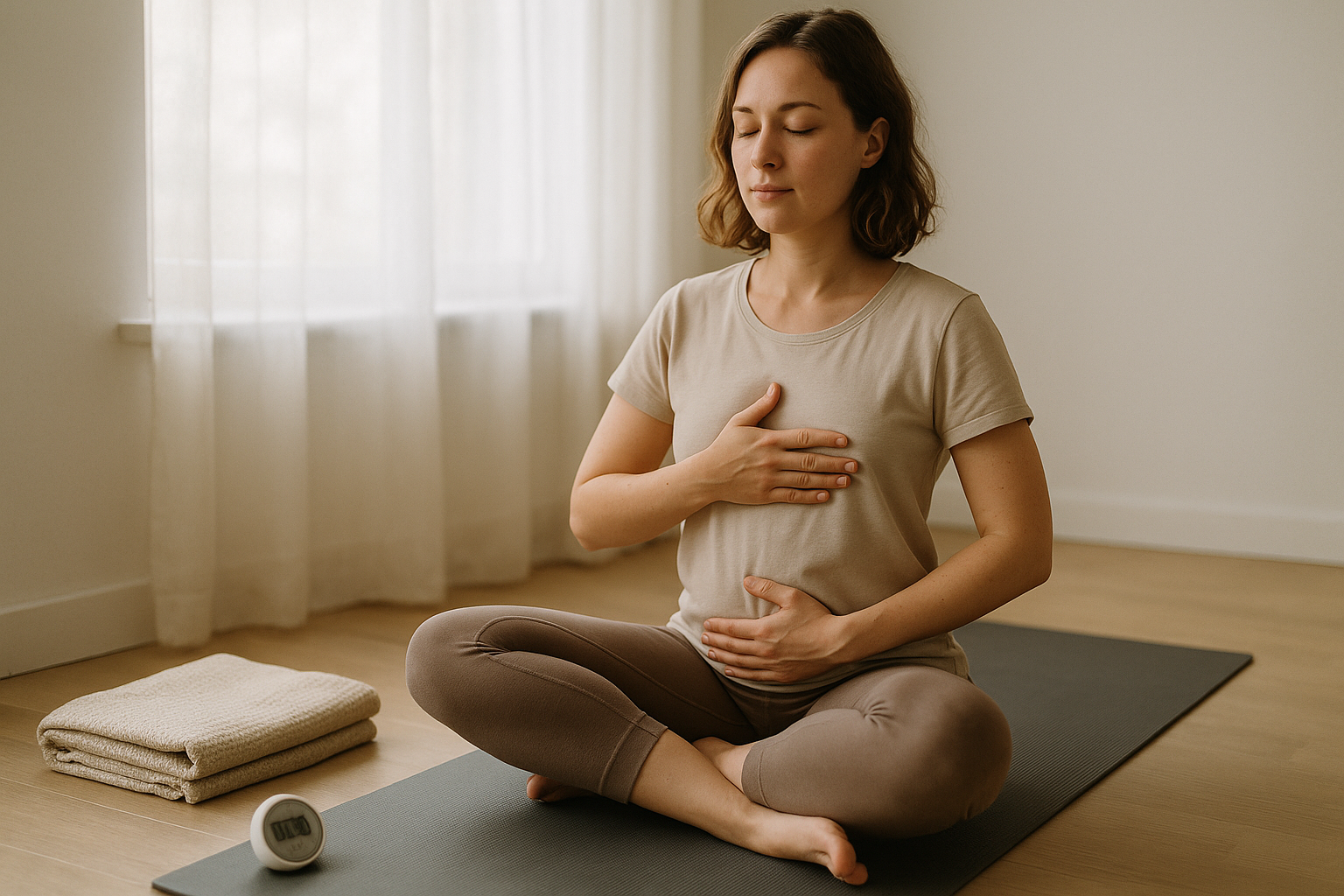
Diaphragmatic breathing is the foundation for all breathwork and the easiest way to calm your nervous system quickly. It teaches you to use the diaphragm—a dome-shaped muscle under your lungs—so your belly softens on inhale and gently falls on exhale. Beginners feel immediate benefits: slower heart rate, less muscle tension, and a sense of “space” in the chest. Health systems routinely teach this method because it’s safe, low effort, and works whether you’re sitting at a desk or winding down for bed. Start here if you’re unsure which technique to pick; it improves breathing mechanics you’ll use in every other exercise.
1.1 Why it matters
Using the diaphragm reduces inefficient, upper-chest breathing that often accompanies stress. It can help reduce blood pressure and ease anxiety by nudging your body toward the parasympathetic (“rest-and-digest”) state. It’s also a cornerstone in pulmonary rehab and physical therapy, which speaks to its practicality across fitness levels.
1.2 How to do it (3–5 minutes)
- Sit or lie down; place one hand on your belly, one on your chest.
- Inhale through your nose for ~4 seconds, letting your belly rise first.
- Exhale through your nose (or pursed lips) for ~6 seconds; belly gently falls.
- Keep shoulders and jaw relaxed; aim for slower, smoother breaths.
- If you feel lightheaded, shorten the counts and reduce effort.
1.3 Numbers & guardrails
- Pace: ~6–8 breaths/minute is comfortable for beginners.
- Time: 3–10 minutes, 1–3×/day.
- Make exhale slightly longer than inhale (e.g., 4 in / 6 out).
Mini-checklist: Nose breathing? ✔️ Belly moves first? ✔️ Exhale longer? ✔️ No strain? ✔️
Bottom line: Master this, and every other technique becomes easier and more effective.
2. Box Breathing (4-4-4-4): A Calm, Balanced Rhythm
Box breathing is a simple, rhythmic pattern—inhale, hold, exhale, hold, each for the same count—that steadies your mind fast. It’s popular with clinicians, athletes, and first responders because it’s portable and structured. For beginners, it offers just enough counting to keep your attention without feeling complicated. Use it before a meeting, during a commute (not while driving), or whenever you want a crisp “reset” in under two minutes.
2.1 Why it matters
The gentle breath-holds in box breathing can enhance CO₂ tolerance and engage the parasympathetic system, helping to quiet the “fight-or-flight” response. The even, square rhythm also reduces mental chatter by giving you a tight, repeatable loop to follow.
2.2 How to do it (1–3 minutes)
- Sit tall. Inhale through your nose for 4.
- Hold for 4 (no straining).
- Exhale through your nose for 4.
- Hold for 4.
- Repeat 6–10 cycles. If 4 is hard, use 3; if easy, progress to 5.
2.3 Common mistakes
- Forcing the holds (skip holds if you feel air hunger).
- Lifting shoulders or clenching jaw.
- Breathing through the mouth without need.
Mini-checklist: Smooth, not stiff; holds are gentle; shoulders quiet.
Bottom line: When you need structure and speed, box breathing is a reliable anchor.
3. 4-7-8 Breathing: Wind Down and Sleep Easier
The 4-7-8 pattern is an exhale-lengthening technique often used to downshift at night or after a stressful moment. It’s straightforward—inhale for 4, hold for 7, exhale for 8—and many beginners report a near-instant “softening” effect. Evidence suggests exhale-emphasized breathing can reduce heart rate and blood pressure acutely and improve heart rate variability (a marker of nervous system balance). Expect mild lightheadedness at first; it passes as your body learns the slower rhythm.
3.1 How to do it (1–4 minutes)
- Sit or lie down. Place tongue gently on the roof of your mouth.
- Exhale fully to start.
- Inhale through your nose for 4 → Hold for 7 → Exhale through pursed lips for 8 (a soft “whoosh”).
- Complete 4 cycles to start; over days, build to 8 cycles.
3.2 Numbers & guardrails
- Keep effort low; shorten counts (e.g., 3-5-6) if you strain.
- Great pre-sleep routine: 2–4 minutes in bed.
- If breath-holds feel uncomfortable, skip the hold and simply lengthen the exhale (e.g., 4 in / 6–8 out).
3.3 Notes from research (as of August 2025)
- A 2022 physiology study reported that 4-7-8 breathing acutely improved heart rate variability and lowered blood pressure in young adults (especially when well-rested).
- Cleveland Clinic provides a practical walkthrough and safety tips for beginners.
Bottom line: A small practice with an outsized payoff for winding down. Cleveland Clinic
4. Resonant (Coherent) Breathing: Build Nervous System Resilience
Resonant breathing targets a sweet spot—about 5–6 breaths per minute—that maximizes coordination between your heart and breath. Many people notice a deep sense of steadiness after 5–10 minutes. It’s excellent for daily training: it can raise heart rate variability (HRV) and, over time, support healthier blood pressure. For beginners, a metronome or app makes pacing easy.
4.1 Why it matters
At roughly 0.1 Hz (one breath cycle every 10 seconds), the cardiorespiratory system tends to “sync,” which improves baroreflex sensitivity (your body’s ability to regulate blood pressure) and enhances HRV. This has been observed across studies and underpins biofeedback-based stress programs.
4.2 How to do it (5–10 minutes)
- Set a timer for 6–10 minutes.
- Breathe in for 5 seconds and out for 5 seconds (or 4.5 in / 5.5 out).
- Keep the breath smooth and nasal; relax face and shoulders.
- If you feel air hunger, shorten to 4 in / 6 out (same 10-second cycle).
4.3 Numbers & guardrails
- Pace goal: 6 breaths/minute (total cycle ≈10 seconds).
- Frequency: 1× daily or 3–4×/week; many notice changes in 2–4 weeks.
- Useful tools: metronome apps, HRV wearables, or biofeedback devices.
Mini-checklist: Even flow, no gasping, exhale equals or slightly exceeds inhale.
Bottom line: Your best all-around “training” breath for resilience and HRV.
5. Alternate Nostril Breathing (Nadi Shodhana): Focus and Balance
Alternate nostril breathing (ANB) involves inhaling through one nostril and exhaling through the other in a gentle sequence. Beginners like it because the hand positions keep you engaged, and many people feel clearer, more focused, and less tense within minutes. Evidence on acute anxiety reduction is mixed, but broader literature suggests yogic breathing, including ANB, can support autonomic balance, attention, and well-being with regular practice.
5.1 How to do it (2–6 minutes)
- Sit tall. Use your right hand: thumb closes right nostril; ring finger closes left.
- Exhale fully.
- Inhale left, close left → Exhale right.
- Inhale right, close right → Exhale left.
- That’s one cycle. Continue 5–10 cycles, breathing slowly and lightly.
5.2 Common mistakes & safety
- Forcing breaths or breath-holds—keep it gentle.
- Practicing while congested; wait until nasal passages are clear.
- If you feel dizzy or anxious, stop and return to diaphragmatic breathing.
5.3 What the research says (as of August 2025)
- A randomized pilot found 15 minutes of ANB didn’t significantly reduce induced anxiety in yoga-naïve adults; however, other trials and reviews show cardiorespiratory and attention benefits with regular practice over weeks.
Bottom line: A mindful, hands-on pattern that sharpens focus and can support balance over time.
6. Pursed-Lip Breathing: When You Feel Short of Breath
Pursed-lip breathing lengthens your exhale by gently narrowing your lips, which helps keep airways open longer. It’s a staple in pulmonary rehab for COPD, but it’s also useful for anyone who gets winded on stairs, during exercise, or in anxious moments. The feeling is simple: inhale quietly through your nose, then exhale like you’re blowing out a candle—slowly, softly. Within a minute, most people feel steadier.
6.1 How to do it (1–3 minutes)
- Sit or stand with shoulders relaxed.
- Inhale through your nose for 2–3 counts (not a big breath).
- Purse lips as if to whistle; exhale gently for 4–6 counts.
- Repeat for 1–3 minutes, especially during or after exertion.
6.2 When to use it
- Climbing stairs, walking uphill, or carrying groceries.
- During anxious spells when breathing feels tight.
- As a finisher after a run or workout cooldown.
6.3 Numbers & guardrails
- Aim for exhale ≈ 2× inhale.
- Keep face and throat soft; if you feel dizzy, slow down and sit.
- If you have chronic lung disease, ask your clinician how to pair this with your activity plan.
Mini-checklist: Nose in, pursed lips out, exhale longer, no forcing.
Bottom line: A quick, reliable tool to reclaim ease when breathing feels hard.
7. Mindful Breath Awareness: The Beginner’s Daily Practice
Mindful breathing is simply paying non-judgmental attention to the sensations of breathing—often with a light count—to stabilize attention and calm reactivity. It’s the simplest practice to make daily: no ratios to remember, no special postures. Over weeks, it can reduce anxiety and improve mood; in head-to-head research for anxiety disorders, an 8-week mindfulness program performed as well as a first-line medication, highlighting how powerful regular breath-centered attention can be when supported by training and consistency.
7.1 How to do it (5–10 minutes)
- Sit comfortably. Close your eyes or soften your gaze.
- Breathe naturally through your nose.
- Pick a light focus: the coolness at your nostrils, your belly’s rise/fall, or a gentle count (e.g., inhale “1,” exhale “2,” up to 10, repeat).
- When the mind wanders (it will), notice and return to the breath—kindly, without scolding yourself.
7.2 Make it stick
- Tie it to existing habits: after brushing teeth or before opening email.
- Use a timer (5–10 minutes) and keep posture easy but alert.
- If evenings are busy, try 3 minutes after lunch or between meetings.
7.3 Notes from research (as of August 2025)
- A landmark randomized clinical trial found mindfulness-based stress reduction (MBSR) was noninferior to escitalopram for anxiety disorders.
- Meta-analysis suggests breathwork practices can improve stress, anxiety, and mood; a 2023 RCT found brief exhale-focused sighing practices improved mood and reduced respiratory rate more than mindfulness in healthy adults.
Bottom line: The simplest daily habit to pair with any technique here—and a strong foundation for long-term calm. Nature
FAQs
1) How long should a beginner practice each day?
Most people do well with 3–10 minutes daily. Choose one technique, set a 5-minute timer, and stop while it still feels easy. Consistency beats marathon sessions—short, regular practice improves your body’s “calm reflex” faster than occasional long sessions. Over time, you can add a second 5-minute block or layer techniques (e.g., diaphragmatic → resonant).
2) Which technique works fastest for anxiety?
For quick relief, try box breathing (1–3 minutes) or 4-7-8 (2–4 minutes). Both lengthen exhalation and reduce mental noise via counting. If you’re very keyed up, start with pursed-lip exhalations to avoid over-breathing, then shift to box breathing once you feel steadier. Evidence also supports exhale-focused practices for mood regulation.
3) Nose vs. mouth: which is better?
Nose breathing is generally preferable because it warms, humidifies, and filters air and can support healthier nitric oxide levels in the nasal passages. Mouth breathing is fine during exertion or when your nose is congested. If allergies or a deviated septum make nose breathing hard, talk to a clinician.
4) Can breathwork lower blood pressure?
Slow, regular breathing—especially around 6 breaths/minute—can help reduce blood pressure and improve HRV over time. Emerging clinical guidance highlights paced, exhale-emphasized breathing as a helpful adjunct to lifestyle care. Keep expectations realistic: think months, not days, and continue any prescribed treatment.
5) I get dizzy when I slow my breath. What should I do?
You may be over-breathing (blowing off too much CO₂) or forcing breath-holds. Shorten the counts, drop the holds, and keep effort at 5/10. Try diaphragmatic or pursed-lip breathing for 1–2 minutes, then ease back into a gentle rhythm. If dizziness persists or you have a medical condition, stop and consult a clinician.
6) Is alternate nostril breathing safe for beginners?
Yes for most, but avoid it if you’re congested or it makes you anxious. Evidence for immediate anxiety relief is mixed, yet regular practice shows promising effects on autonomic balance and attention. Keep it gentle, skip holds, and stop if uncomfortable.
7) What’s the best technique for sleep?
Start with 4-7-8 in bed for 2–4 minutes. If you prefer a steady rhythm, try resonant breathing (5 in / 5 out) earlier in the evening to prime your system. Many people also benefit from a short mindful breathing practice to quiet racing thoughts.
8) How soon will I notice results?
Many feel calmer immediately after a session. For baseline changes—better sleep quality, quicker recovery from stress—practice most days for 2–4 weeks. HRV-oriented benefits from resonant breathing often accumulate over weeks of consistent practice.
9) Are breath-holds necessary?
No. Breath-holds can be useful (box, 4-7-8), but they’re optional—especially if you have heart or lung conditions or feel uncomfortable. You can get strong benefits by simply slowing and smoothing your breathing and lengthening the exhale a bit.
10) Can breathwork replace therapy or medication for anxiety?
Breathwork is a powerful tool, but it’s not a universal replacement for clinical care. In a large trial, mindfulness training (which centers on breath awareness) performed as well as escitalopram for anxiety disorders; still, decisions about treatment should be made with your clinician.
Conclusion
Breathwork works because it’s the most direct way to influence your nervous system without equipment: you can slow your breath, lengthen your exhale, and change how your body feels in minutes. For beginners, the smartest plan is simple and consistent. Start with diaphragmatic breathing for 5 minutes, add box breathing for stressful moments, use 4-7-8 to wind down at night, and schedule a resonant breathing session 3–4 times a week to build long-term resilience. Sprinkle in alternate nostril breathing when you want focus and pursed-lip breathing when you feel winded. Anchor it all with mindful breath awareness so returning to calm becomes second nature. Pick one technique today, set a timer, and practice gently—your calm, clear baseline is just a few breaths away.
Try this one-line routine: Five minutes, once a day: 2 min diaphragmatic → 2 min resonant → 1 min box. Keep it easy, nasal, and exhale-heavy.
References
- Diaphragmatic Breathing, Cleveland Clinic Health Library, last reviewed Mar 30, 2022. Cleveland Clinic
- Box Breathing: How to Ease Stress and Anxiety in 4 Minutes, Cleveland Clinic Health Essentials, Aug 17, 2021. https://health.clevelandclinic.org/box-breathing Cleveland Clinic
- Pursed Lip Breathing: Technique, Purpose & Benefits, Cleveland Clinic Health Library, last reviewed Jan 6, 2023. Cleveland Clinic
- Nose Breathing vs. Mouth Breathing: Which Is Better?, Cleveland Clinic Health Essentials, Jul 25, 2024. https://health.clevelandclinic.org/nose-breathing-vs-mouth-breathing Cleveland Clinic
- Steffen PR et al. The Impact of Resonance Frequency Breathing on Measures of Heart Rate Variability, Front Public Health, 2017. https://pubmed.ncbi.nlm.nih.gov/28572858/ PubMed
- Vierra J et al. Effects of Sleep Deprivation and 4-7-8 Breathing Control on HRV and Blood Pressure, Physiol Rep, 2022. PMC
- Corliss J. Breathing exercises to lower your blood pressure, Harvard Heart Letter, Sep 1, 2023. Harvard Health
- Kamath A et al. Effect of Alternate Nostril Breathing Exercise on Experimentally Induced Anxiety, J Evid Based Complementary Altern Med, 2017. PMC
- Jahan I et al. Effects of Alternate Nostril Breathing Exercise on Cardiorespiratory Tasks, J Basic Clin Physiol Pharmacol, 2021. PMC
- Balban MY et al. Brief Structured Respiration Practices Enhance Mood and Reduce Physiological Arousal, Cell Reports Medicine, Jan 17, 2023. PMC
- Hoge EA et al. Mindfulness-Based Stress Reduction vs Escitalopram for Anxiety Disorders: A Randomized Clinical Trial, JAMA Psychiatry, 2022 (issue date 2023 Jan). PMC
- Garg P et al. Effect of Breathing Exercises on Blood Pressure and Heart Rate: Systematic Review & Meta-analysis, J Family Med Prim Care, 2023. PMC