
















Sleep changes with age, but your need for consistent, good-quality rest does not—most adults 65+ still benefit from about 7–8 hours nightly. The most effective bedtime rituals for seniors are simple, repeatable habits that lower arousal and cue your body clock: a 30-minute wind-down with dim lights; a warm bath or foot soak 1–2 hours before bed; 10–15 minutes of gentle mobility plus diaphragmatic breathing; a cooler, darker, quieter bedroom; and a brief “worry journal” to park tomorrow’s tasks while timing evening fluids and medicines wisely. These practical steps reduce the most common barriers to sleep—racing thoughts, temperature discomfort, and nighttime bathroom trips—without relying on pills.
Quick start (at a glance): 1) dim lights and put away screens 60 minutes before bed; 2) take a 10–15 minute warm soak 1–2 hours before lights-out; 3) do light stretches or Tai Chi and slow breathing for 10 minutes; 4) cool your room to ~18–20 °C and mask noise; 5) write a 2-minute “to-tomorrow” list, then taper fluids. This guide is educational and not a substitute for care; if you snore loudly, stop breathing at night, or have chronic insomnia, see your clinician or a sleep specialist.
1. A Consistent 30-Minute Wind-Down Window (Dim Lights, Low Stimulation)
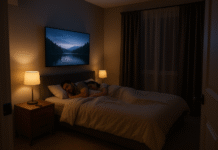
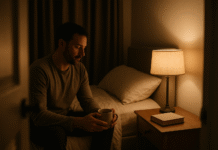
A reliable wind-down is the single most helpful bedtime ritual for seniors because it tells your brain, “sleep is next.” Start by dimming lights and reducing stimulation for 30–45 minutes before your target bedtime. This short window is enough to lower cognitive load, reduce physiological arousal, and allow melatonin to rise—particularly important because evening bright light suppresses melatonin and can delay your body clock. Keep activities calm and predictable (light reading, a puzzle, or soft music), and finish screen time at least 60 minutes before bed. If you wake early for bathroom trips, use this window to do a final bathroom visit and apply any pain-relief creams or heat packs so aches don’t wake you later. The goal isn’t to “try to sleep,” but to make sleep the next obvious step in a calm sequence.
1.1 Why it works
- Cues your circadian rhythm: Evening brightness delays melatonin; dim, warm light does the opposite and nudges your clock toward sleepiness.
- Lowers arousal: Quiet, familiar tasks reduce sympathetic (“fight-or-flight”) activation, easing the transition to rest.
- Reduces “bed equals worry”: If your routine is calm and repeatable, your brain stops treating bedtime as performance time.
1.2 How to do it
- Set an anchor: Choose a fixed lights-out time and begin wind-down ~30–45 minutes before (e.g., 10:00 pm wind-down, 10:30 pm lights-out).
- Change the lighting: Use lamps with warm bulbs; avoid overheads. If you need to get up at night, use low, amber nightlights to prevent falls without blasting your eyes.
- Put devices away: Turn off TV, tablets, and phones; if needed, enable blue-light filters and set “Do Not Disturb.”
- Gentle activity only: Organize pills, set out morning clothes, or read something pleasant—not the news.
- Bathroom check: Final bathroom visit now; apply topical pain relief if helpful.
Mini-checklist: Dim lights ✔️ Devices down ✔️ Calm task ✔️ Bathroom ✔️ Bed ready ✔️
Close with one cue you repeat nightly (e.g., turn down the duvet, spritz pillow mist). Over several nights, your brain begins to associate that cue with sleep.
2. A Warm Bath (or Foot Soak) 1–2 Hours Before Bed
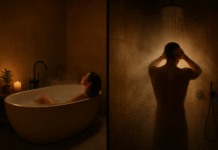
A short warm bath or foot soak taken 1–2 hours before bedtime helps many older adults fall asleep faster. Passive body heating raises skin temperature slightly; as you cool afterward, your core temperature drops and sleep pressure increases. A 2019 meta-analysis found that water-based heating at 40–42.5 °C for as little as 10–15 minutes, timed 1–2 hours before bed, shortened sleep-onset latency and improved sleep efficiency. If a full bath isn’t practical, a warm shower or foot bath can create the same effect (and may be easier and safer). Always test water temperature carefully, use grab bars or a bath seat as needed, and avoid overheated bathrooms that might cause dizziness.
2.1 Numbers & guardrails
- Water temp: 40–42.5 °C (104–108.5 °F); comfortably warm, not hot.
- Duration: 10–15 minutes; longer isn’t better if it overheats you.
- Timing: Schedule it to finish ~90 minutes before lights-out.
- Safety: Non-slip mat, grab bar, and stable seating reduce fall risk; check with your clinician if you have cardiovascular issues.
2.2 Alternatives & mini-case
- Foot soak: A basin with warm water and a towel nearby reduces fall risk and still aids cooling afterward.
- Warm shower + robe: Shower, then dry and sit with a robe to cool gradually.
- Heat pack: If bathing isn’t possible, a warm (not hot) pack on calves or feet for 10 minutes can gently warm distal skin.
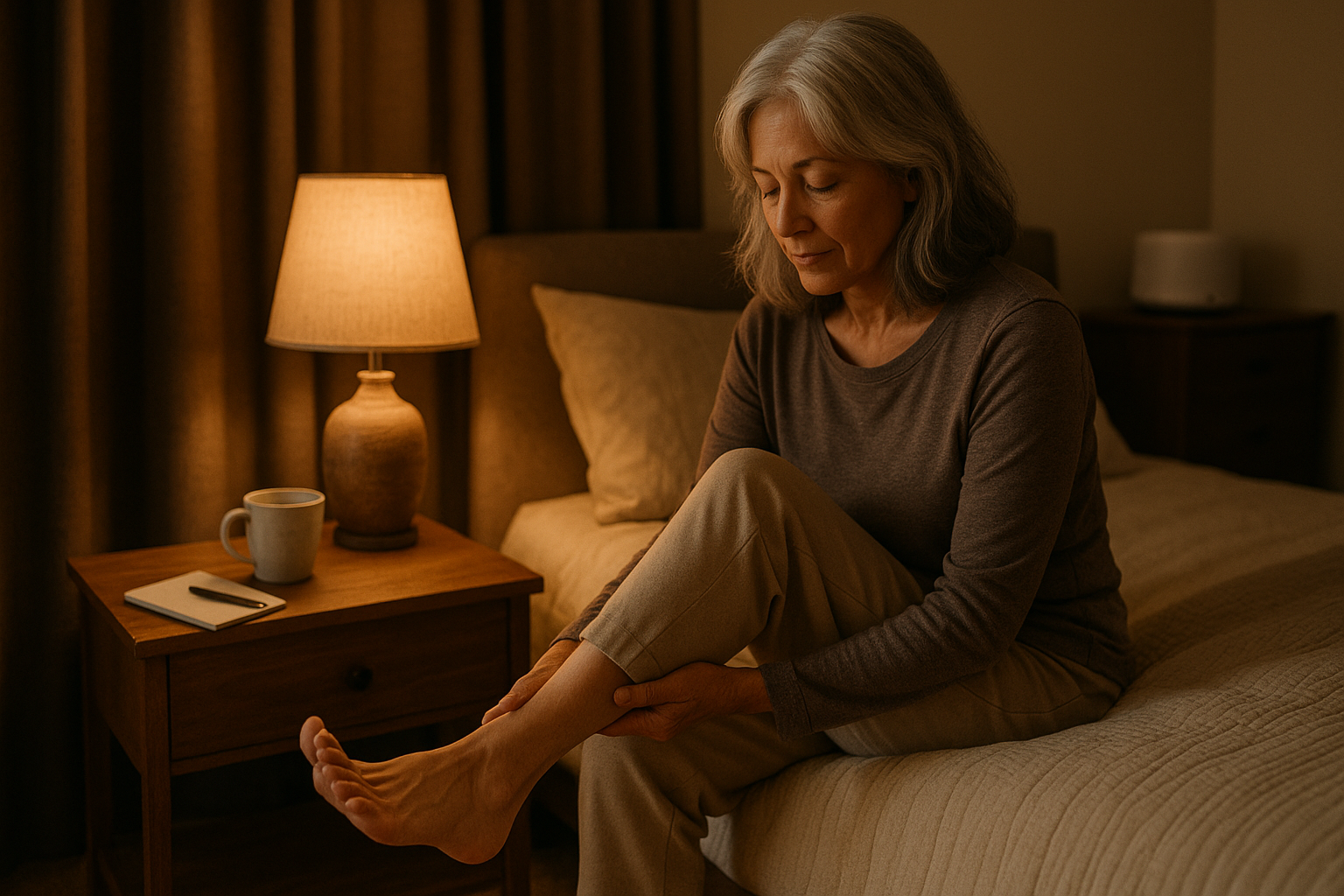
Mini-case: A 72-year-old with knee arthritis can’t manage the tub. She switches to a 12-minute foot soak at 41 °C right after her evening TV show, then reads under a lamp. After a week, she’s falling asleep about 15 minutes sooner.
Finish your soak with a glass of water if you’re thirsty and a brief rest in a chair; you should feel pleasantly drowsy, not flushed.
3. Gentle Mobility + Diaphragmatic Breathing (10–15 Minutes)
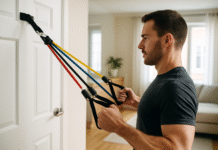
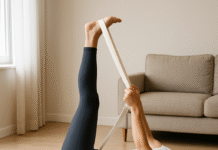
A short session of light stretching or Tai Chi, paired with slow belly breathing, calms the nervous system and reduces muscle tension so bed feels safe and comfortable. Randomized trials show Tai Chi can improve sleep quality in older adults, and larger studies suggest sustained benefits over months. Meanwhile, diaphragmatic breathing slows heart rate and can lower blood pressure, signaling “rest and digest.” Think of this ritual as “de-tensing the body” before you lie down. Keep movements slow, focus on range-of-motion rather than exertion, and avoid balance-challenging poses if you’re unsteady; seated versions work just as well. PMC
3.1 How to do it
- Choose 4–6 moves (8–10 minutes):
- Seated neck rotations × 5 each way
- Shoulder rolls × 8
- Seated hamstring hinge (hands on thighs) × 5 breaths
- Ankle circles × 10 each
- Gentle torso twist × 5 each side
- Optional: simple Tai Chi “wave hands like clouds” or “parting the horse’s mane” for 2–3 minutes
- Add breathing (2–5 minutes): Inhale through the nose for 4, pause 1–2, exhale for 6–8. Hand on belly to feel the rise/fall.
- Finish with stillness (1 minute): Eyes closed, notice loosened areas; whisper a cue (“time to rest”).
3.2 Tools & tips
- Chair-based is fine: If balance is an issue, do all movements seated.
- Pain-friendly: Stay in a pain-free range; micro-moves count.
- Breathing choices: If 4-7-8 feels natural, you can try it; the point is slow, steady exhales.
- When to stop: Skip this if you feel breathless, dizzy, or if pain flares—switch to only breathing that night. Cleveland Clinic
A week of this simple pairing often reduces “body restlessness.” If insomnia persists >3 months, ask about CBT-I, the first-line treatment for chronic insomnia in adults.
4. Reset the Room: Cooler, Darker, Quieter
Environment matters more than we think, especially for aging bodies that regulate temperature less efficiently. Most people sleep best around 18–20 °C (65–68 °F) with minimal light and stable, low noise. Keep your bedroom cool, dark, and quiet—and add safe, low-glare nightlights along the path to the bathroom. If outside noise is unavoidable, consider a simple sound masker (white or pink noise) or soft foam earplugs; evidence is mixed but suggests masking can help if the problem is disruptive noise. Use breathable bedding (cotton/linen) and keep pets out if they wake you. In hot climates or during heat waves, cross-ventilation, a fan, or a quiet air conditioner can protect sleep and health.
4.1 Numbers & guardrails
- Temperature: Aim for ~18.3 °C (65 °F), adjust by a degree or two for comfort.
- Light: Blackout curtains or an eye mask; nightlights under ~5–10 lux for safety.
- Noise: If you try a sound machine, keep volume modest and away from your head; avoid TV (variable sound spikes). Harvard Health
4.2 Common mistakes
- Overheating the room: Warm bedrooms delay the core-temperature drop that helps you nod off.
- Bright bathroom lights at 2 am: Install a motion-activated, low-blue nightlight instead.
- Too-loud sound machines: Higher volumes may irritate or, over time, pose hearing risks—use only to mask intrusive noise. PubMedScienceDirect
Small environmental tweaks rarely feel dramatic in one night, but they compound quickly; many older adults notice fewer awakenings within a week when the room is cooler and darker.
5. The “Worry Journal” + Next-Day Plan (and Smarter Evening Fluids/Med Timing)
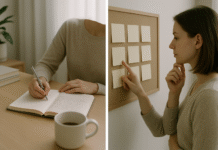
Racing thoughts are a top reason seniors can’t fall back asleep. A brief bedtime journaling ritual helps: write tomorrow’s top 3 tasks, a single first step for each, and one thing you’re grateful for. This “mind dump” reduces cognitive load so your brain doesn’t keep rehearsing plans in bed. Pair it with smart fluid timing to cut nocturia: drink normally in the day, then taper fluids in the last 2–3 hours and take a final bathroom visit at the end of your wind-down. If you use diuretics or meds that can disrupt sleep, ask your clinician whether timing can be adjusted. Avoid caffeine after midday and alcohol at night; both can fragment sleep and increase nighttime urination. Sleep Foundation
5.1 How to do it (2–5 minutes)
- Two-minute plan: List tomorrow’s top 3 and the first tiny action for each.
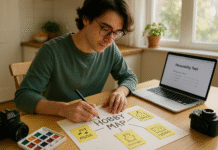
- Worry parking: Write one lingering worry plus your earliest next step; close the notebook.
- Gratitude cue: Note one small, specific good thing from today.
- Fluid taper: From ~2–3 hours before bed, sip only if thirsty; avoid large drinks.
- Last stop: Bathroom visit, then lights-out.
5.2 Region-specific notes (hot climates, shared homes)
- Hot evenings: Hydrate well earlier in the day; use a cool foot soak instead of large bedtime drinks.
- Shared households: If bathrooms are far or busy, go earlier, and keep a clear, well-lit path.
- Medical conditions: Diabetes, kidney disease, or diuretic use can increase nocturia—coordinate timing with your clinician. MDPI
This ritual takes minutes but pays off quickly; together with the other four, it gives your brain a simple, repeatable “close of day” story that makes sleep feel easy again.
FAQs
1) How many hours of sleep do seniors actually need?
Most adults 65+ need about 7–8 hours a night. Some feel best near 7; others closer to 8. If you wake refreshed and function well without daytime sleepiness, you’re likely getting enough. Consistency matters more than any single night.
2) Are daytime naps okay?
Short, early-afternoon naps (10–30 minutes) can boost alertness without harming nighttime sleep. Avoid long or late naps, which can delay bedtime and reduce sleep drive. If you’re napping because you’re exhausted most days, address nighttime sleep first and review medicines that may cause fatigue. Mayo Clinic
3) What’s the best bedroom temperature?
Aim for ~18.3 °C (65 °F), give or take a couple of degrees. Cooler rooms help your core temperature drop—an essential signal for sleep. During heat waves, prioritize cooling strategies like fans, breathable bedding, and AC if available.
4) Do warm baths really help?
Yes—when warm (40–42.5 °C) and timed 1–2 hours before bed for 10–15 minutes. The post-bath cool-down helps you fall asleep faster. A warm shower or foot soak works if a tub is impractical.
5) Should I try a sound machine?
If street or household noise wakes you, gentle white or pink noise can help mask disruptions. Keep the volume modest and device several feet away. Evidence is mixed overall, but it’s reasonable when the problem is external noise. Do not rely on a TV, which has variable loudness.
6) Is melatonin helpful for seniors?
Melatonin can help with body-clock issues (e.g., delayed sleep timing) when correctly timed, but it isn’t a cure-all for insomnia. Talk with your clinician about whether timing or dose is appropriate for you; CBT-I remains the first-line treatment for chronic insomnia. AASM
7) Which evening drinks are best—or worst?
Avoid caffeine after midday and alcohol close to bedtime—both fragment sleep. To reduce nighttime bathroom trips, taper fluids 2–3 hours before bed and take a final bathroom visit during your wind-down. If you’re very thirsty at night, take small sips and discuss underlying causes with your clinician.
8) My mind races at night. What should I do?
Use the “worry journal”: write tomorrow’s top three tasks and one next step for each, plus one worry and your earliest action. If thoughts continue, practice slow belly breathing in bed and redirect attention to the breath or a neutral word. If this persists most nights for >3 months, ask about CBT-I.
9) Does gentle exercise close to bedtime keep me up?
Vigorous workouts within a few hours of bed can be too stimulating, but gentle mobility and Tai Chi can calm the body and improve sleep in older adults. Keep it light, slow, and pain-free. PubMed
10) When should I see a doctor or sleep specialist?
If you snore loudly, gasp for air, or have witnessed breathing pauses; wake with morning headaches; have chronic insomnia (>3 months); or feel unusually sleepy during the day, seek evaluation. Treatable conditions like sleep apnea, restless legs, or medication effects are common in older adults.
Conclusion
Great sleep in later life rests on repeatable, calming cues. A 30-minute wind-down, a timed warm soak, 10–15 minutes of gentle mobility plus diaphragmatic breathing, a cooler/darker/quieter room, and a short “worry journal” with smarter evening fluid timing work together to reduce both mental and physical roadblocks. None of these rituals is complicated—but their power comes from consistency. Give yourself two weeks to practice the sequence most nights, adjust one variable at a time, and notice what changes (e.g., time to fall asleep, nighttime awakenings, energy). If long-standing insomnia or symptoms of a sleep disorder persist, ask your clinician about CBT-I or a referral to a sleep specialist. Tonight, pick one ritual to start—then build your personalized stack. Begin your wind-down tonight, and claim tomorrow’s energy.
References
- About Sleep — Centers for Disease Control and Prevention (May 15, 2024). CDC
- Sleep and Older Adults — National Institute on Aging (Feb 6, 2025). National Institute on Aging
- A Good Night’s Sleep (Older Adults Booklet) — National Institute on Aging (2020–2021). eastonad.ucla.edu
- Management of Chronic Insomnia Disorder in Adults — American College of Physicians Guideline, Annals of Internal Medicine (2016). ACP Journals
- ACP Recommends Cognitive Behavioral Therapy as Initial Treatment for Chronic Insomnia — ACP Newsroom (May 3, 2016). American College of Physicians
- Before-bedtime passive body heating by warm shower or bath to improve sleep: A systematic review and meta-analysis — Haghayegh et al., Sleep Medicine Reviews (2019). PubMed
- The Best Temperature for Sleep — Sleep Foundation (updated Jul 11, 2025). Sleep Foundation
- Bedroom Environment: What Elements Are Important? — Sleep Foundation (updated Jul 10, 2025). Sleep Foundation
- Improving Sleep Quality in Older Adults with Moderate Sleep Complaints: A Randomized Controlled Trial of Tai Chi Chih — Irwin et al., Sleep (2008). Oxford Academic
- Diaphragmatic Breathing — Cleveland Clinic (accessed 2023). Cleveland Clinic
- Behavioral and psychological treatments for chronic insomnia disorder in adults: An American Academy of Sleep Medicine Clinical Practice Guideline — Edinger et al., Journal of Clinical Sleep Medicine (2021). PMC
- Systematic review: auditory stimulation and sleep — Capezuti et al., Journal of Clinical Sleep Medicine (2022). PMC
- Relaxation Exercises to Help Fall Asleep — Sleep Foundation (updated Jul 24, 2025). Sleep Foundation
- Drinking Water Before Bed — Sleep Foundation (updated Jul 16, 2025). Sleep Foundation
- Guideline Update: Circadian Rhythm Sleep Disorders — American Academy of Sleep Medicine (2007/2015 updates cited within). AASM