

























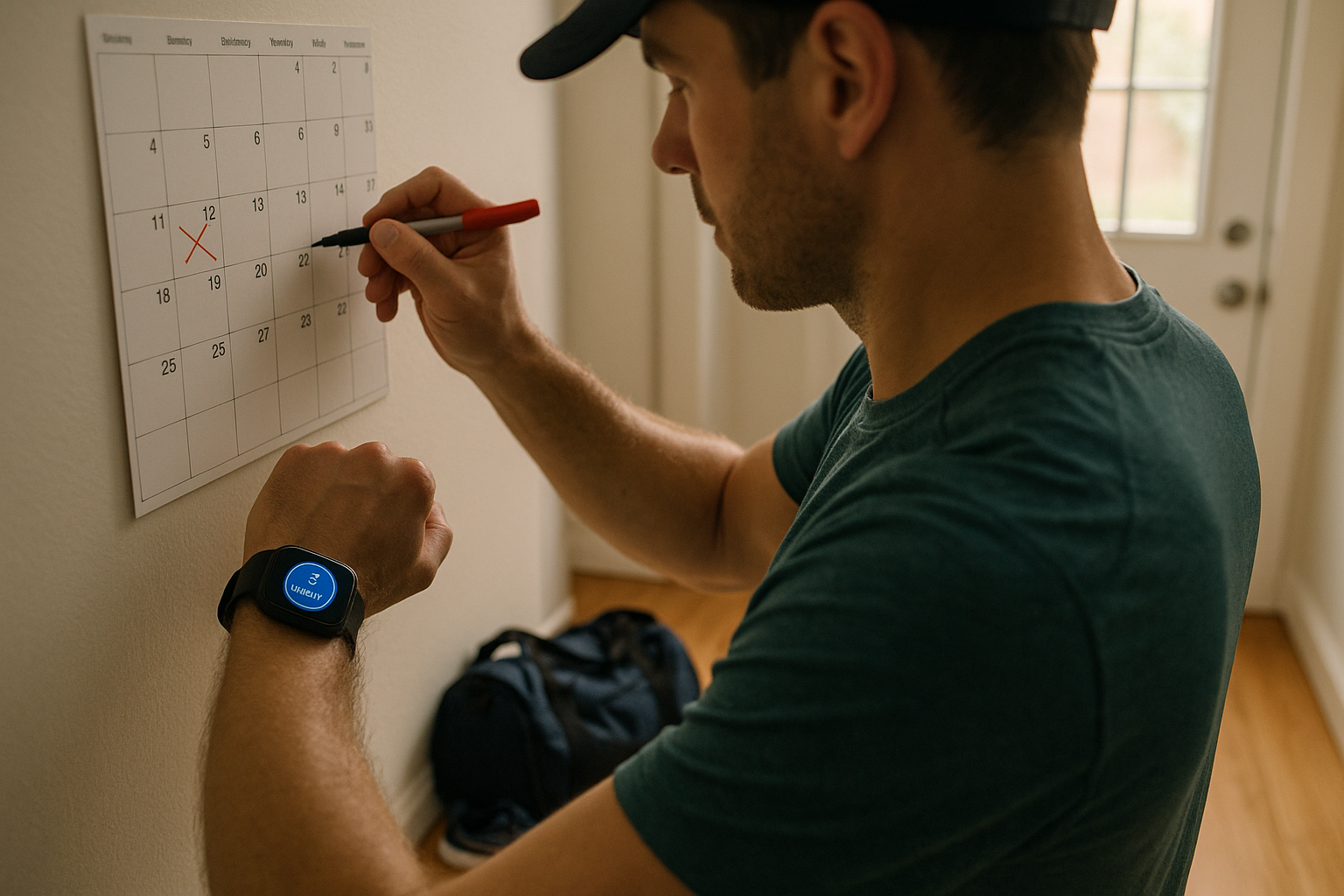
Streaks are a powerful nudge: a visible chain of completed days that keeps you showing up when motivation dips. If you’ve ever felt a surge of pride watching your app light up with consecutive workouts, you already know the appeal. This guide turns that spark into a safe, sustainable system. You’ll learn how to define what “counts,” set recovery into the plan, pick metrics that matter, and handle the inevitable curveballs of life without losing momentum. Quick note: this article is educational, not medical advice—if you have a health condition, speak with a qualified professional.
In one sentence: A workout streak is the number of consecutive days you complete a planned movement session; the smartest streaks bake in recovery and track progress, not just days.
1. Decide Exactly What “Counts” (So Your Streak Actually Means Something)
A streak only helps if it reflects the behavior you want to reinforce, so start by defining the rules in plain language. The first decision is scope: are you counting any purposeful movement (e.g., brisk walking, mobility, light cycling) or only structured training sessions (e.g., lifting, intervals)? Next, set a time or effort floor (such as “≥20 minutes or RPE 5/10”) to keep the streak honest without making it fragile. Finally, codify exceptions—travel days, illness, or heat waves—so you’re not negotiating with yourself at 10 p.m. Your rules should support your goal (health, performance, or both), align with global activity guidance, and remain simple enough to apply in 10 seconds.
Why it matters
Ambiguity invites loopholes and guilt. Clear criteria transform the streak from a vanity metric into a reliable behavior marker. When “what counts” is explicit, you’ll resist both extremes: padding with micro-efforts that don’t move the needle, and all-or-nothing perfectionism that breaks after a single miss.
How to do it
- Pick a scope: “Any purposeful movement” vs. “Planned training only.”
- Set a floor: e.g., ≥20 minutes OR a short protocol like 12 minutes mobility on recovery days.
- Include recovery options: Gentle yoga, mobility, or a 20–30 minute walk can count.
- Define non-negotiables: E.g., fever, acute injury, or unsafe heat pauses the streak.
- Write it down: One sentence in your app notes, journal, or calendar.
Numbers & guardrails
- For general health, anchor your week to 150–300 minutes moderate or 75–150 vigorous activity plus 2+ strength sessions.
- Include at least 1–2 easier days each week to manage fatigue.
Close your section with this commitment: your streak rules should make consistency easier, not braver.
2. Set a “Minimum Viable Session” to Protect the Chain
Consistency is built on your worst days, not your best. A Minimum Viable Session (MVS) is the smallest meaningful workout that still aligns with your goal and keeps the chain unbroken. The key is “meaningful”: five push-ups in pajamas won’t build fitness, but 15–20 minutes of mobility, walking, or light cycling will preserve momentum, aid recovery, and keep the identity of “I’m someone who trains.” On high-fatigue or high-schedule days, the MVS gives you a dignified, productive way to show up.
How to set it
- Time-based floor: 15–20 minutes.
- Menu of options: 20-minute brisk walk; 15-minute mobility flow; 5×3 compound lifts with light load; easy spin.
- Effort cap: Keep MVS at RPE 3–5/10—it should feel easy-moderate.
- Contextual tweak: During deload weeks, the MVS is the plan.
Mini case
If your plan was a 45-minute interval run but you’re slammed, switch to 20 minutes easy (RPE 3/10) and a 5-minute calf/hip mobility finisher. You’ve honored the streak and aided recovery—tomorrow’s quality session will be better for it.
Synthesis: The MVS converts “all or nothing” into “always something,” protecting your streak and your long-term progress.
3. Bake Recovery Into the Streak (Rest Days Count—By Design)
A smart streak is not a daily max-effort challenge. Physiologically, fitness improves during recovery, when you sleep, refuel, and let tissues adapt. Counting active recovery or true rest as valid streak days prevents the common burnout spiral: hard-hard-hard-stop. Aim for at least one easier day weekly; lifters typically benefit from 24–48 hours between hard sessions for a given muscle group. Prioritize sleep—adults generally need 7+ hours—and protein intake to support tissue repair.
Why it matters
Without recovery, accumulated fatigue masks fitness, motivation dips, and injury risk rises. For general health and most non-elite goals, the optimal pattern is consistent moderate work with regular easy days, not heroic spikes.
Recovery toolkit
- Sleep: Target 7–9 hours; guard a consistent wake time.
- Nutrition: Protein at ~1.2–2.0 g/kg/day supports training; distribute across meals.
- Active recovery ideas: 20–40 minutes easy zone-1/2 cardio, mobility, light yoga, casual cycling.
- Deloads: Every 4–8 weeks, reduce volume/intensity 20–40% for 5–7 days.
Numbers & guardrails
- If a day’s RPE >7/10 or HRV/subjective fatigue is notably off, swap to an MVS or rest.
- Count complete rest or 20 minutes easy as a streak-valid recovery day per your rules.
Synthesis: When recovery counts, you keep the chain intact and the needle moving—safely.
4. Progress Gradually: Use RPE and Small Increases to Avoid Burnout
The fastest way to kill a streak is to escalate too quickly. Progress should feel almost boring: small, steady increases in volume (time, sets, distance) or intensity (speed, load) guided by how you feel. A pragmatic method is Rate of Perceived Exertion (RPE) on a 0–10 scale: most base work at RPE 3–5, quality work at RPE 7–8, and rare peak efforts at RPE 9–10. Adjust week to week by no more than ~5–10% in a single variable for non-beginners; beginners can sometimes increase a bit faster the first few weeks.
How to do it
- Pick a primary variable: Minutes for cardio, sets×reps×load for lifting, or total steps.
- Nudge one thing at a time: Add 5 minutes to runs, 1 set to key lifts, or 2.5–5 kg to compound moves when RPE allows.
- Use RPE notes: “Felt like 6/10 today → hold load.”
- Insert easy weeks: Every 4–8 weeks, reduce volume 20–40%.
Common mistakes
- Chasing PRs on recovery weeks.
- Stacking intensity across multiple days.
- Changing everything at once—distance, pace, and hills.
Numeric example
Running 20-minute easy sessions at RPE 4? Add 2–3 minutes per run next week (22–23 minutes). If average RPE rises above 6, hold steady for a week.
Synthesis: Gentle progression guided by RPE keeps you fresh enough to keep showing up tomorrow—and the day after.
5. Track More Than Days: Volume, Intensity, and Load Tell the Real Story
A bare streak counter can hide risky patterns. To make streaks useful, track one simple measure of volume and a marker of intensity. For runners, that’s minutes and a perceived effort or pace range; for lifters, total volume (sets×reps×load) and a top-set RPE. A 7-day moving average helps you spot spikes, while a 28-day average shows your training base. The gap between these averages is a quick “is this a jump?” sanity check.
What to track
- Cardio: Minutes per session, average RPE, notes on terrain/heat.
- Strength: Sets×reps×load, top-set RPE, target muscles.
- Recovery flags: Sleep hours, soreness (0–10), illness/stress notes.
- Weekly sums: Total minutes, total sets, or step counts.
Simple dashboard (5 minutes/week)
- Log sessions in your app or spreadsheet.
- Record RPE and duration/volume.
- Review weekly totals vs. last 4-week average; circle any >10–15% jumps.
- If spiking, shift next session to MVS or easy.
Tools/Examples
- Wearables: Apple Watch rings, Garmin Connect, Google Fit.
- Apps: Strava, Streaks, Habitify, Notion templates, a humble spreadsheet.
Synthesis: When your streak sits on top of sane loads, it becomes a compass—not a cliff.
6. Use a Tracker You’ll Actually Open (Friction Beats Features)
The “best” app is the one you’ll use every day. Fancy features don’t matter if logging feels like homework. Prioritize one-tap logging, visible streak indicators, and calendar views that reveal gaps before they happen. Syncing with your watch or phone sensors reduces manual entry. Bonus points for widgets or notifications that appear when you typically train.
Setup checklist
- Choose a home base: one calendar/app for streaks and notes.
- Turn on autosync: steps, minutes, heart rate where available.
- Add a widget: lock-screen or homescreen streak tile.
- Create a “MVS” button: a saved routine or quick-add template.
Automation ideas
- Time-based reminders: e.g., 6:30 p.m. nudge if nothing logged.
- Location-based cues: alert when you arrive at the gym.
- If-This-Then-That: if it’s a recovery day, push a 20-minute mobility routine link.
Mini case
If you’re a desk-worker, place a standing mat and resistance bands beside your chair. When your buzz goes off, stand, 2×10 band pulls, 10 air squats, then walk for 10 minutes—log as MVS if needed.
Synthesis: Reduce taps and decisions, and your streak becomes the path of least resistance.
7. Script Your “If-Then” Plans and Environmental Cues
Motivation is fickle; plans and cues do the heavy lifting. An implementation intention ties a situation to an action: “If it’s 7 a.m., then I start my 20-minute mobility flow.” Layer physical cues—shoes by the door, gym bag packed, water bottle filled—to make the first step automatic. These pre-made decisions shorten the distance between thinking and doing, which is where streaks often die.
Why it works
You’re converting abstract goals into concrete triggers, a technique shown to boost follow-through. The brain stops negotiating because the next step is preloaded.
How to implement
- Time-based: “If it’s 6:30 p.m., then I walk for 20 minutes.”
- Place-based: “When I get to the office, I take the stairs to the 5th floor.”
- Event-based: “After I brew coffee, I do 10 minutes of mobility.”
- Pack the night before: Shoes, clothes, headphones, and a 90-second warm-up primed.
Mini-checklist
- 1 written plan for weekdays and 1 for weekends.
- 2 visible environmental cues in your training spaces.
- A backup slot on your calendar for “bad days.”
Synthesis: With cues and if-then scripts, you don’t will yourself to train—you simply follow the plan you already made.
8. Create a “Streak Freeze” Policy for Illness, Travel, and Heat
Life happens. Instead of letting chaos erase your progress, define a streak freeze—temporary pause rules that protect health and sanity. Illness with fever, acute injury, severe air quality, or unsafe heat are legitimate reasons to pause. For travel, maintain the streak with an MVS (e.g., hotel room circuits, corridor walks). In hot/humid climates, shift intensity earlier in the day, hydrate, and prefer shaded or indoor sessions; if conditions are extreme, freeze and move on.
When to freeze vs. modify
- Freeze: fever, chest symptoms, acute injury, or extreme environmental risk.
- Modify: mild head-cold without fever, sore muscles, schedule crunch—switch to MVS.
- Travel: choose bodyweight circuits, bands, walking, or stairs.
Region-specific notes
- In hot seasons, train at cooler hours, reduce intensity, extend warm-ups, and shorten sessions. Indoors or shaded routes beat bravado. Prioritize fluids and electrolytes if sweating heavily.
Mini protocol
- Name it: “Freeze active due to fever—resume when 24 hours fever-free.”
- Log it anyway: Mark the freeze on your calendar so the story remains visible.
- Restart small: Resume with MVS or a 20–40% deload for 3–5 days.
Synthesis: A freeze is not a failure; it’s a feature that keeps your streak honest and your body safe.
9. Review Weekly (and Every 4–8 Weeks) to Turn Streaks Into Progress
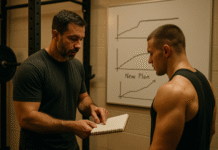
A counter that never informs change is just decoration. End each week with a five-minute review: tally volume, scan RPE notes, identify one win and one bottleneck, and schedule next week’s sessions with at least one recovery day. Every 4–8 weeks, run a mini-audit: compare your 28-day average to the last cycle, set a small progression target, and plan a deload if you’ve been pushing.
Weekly review checklist
- Did I hit my MVS on tough days?
- Where did RPE drift high? Adjust next week’s load or swap in recovery.
- Any >10–15% jump in total minutes/volume? Smooth the curve.
- Lock sessions on the calendar with default times.
Monthly audit (30 minutes)
- Compare 7-day vs. 28-day averages.
- Revisit goals; if your priority shifted (e.g., from steps to strength), update “what counts.”
- Plan a deload week (20–40% lighter) before a peak or travel period.
Numeric example
If your 28-day average is 160 minutes/week, next month target 175–180. Keep most sessions at RPE 3–5, insert one RPE 7–8 day, and maintain a recovery day.
Synthesis: Reviews transform streaks from a badge into a blueprint—small course corrections that compound into big results.
FAQs
1) What exactly is a workout streak, and how long should mine be?
A workout streak is simply consecutive days with a movement session that meets your pre-set criteria. There’s no universal ideal length; the value lies in the daily decision it reinforces. Many people find 30–90 days long enough to cement routines, while others prefer open-ended streaks that include recovery days so they can continue indefinitely.
2) Do rest or active recovery days “count” toward the streak?
They can—and usually should. Counting rest or gentle movement prevents the burnout pattern of several hard days followed by a forced layoff. Use clear rules: e.g., complete 20 minutes easy or a mobility flow to count the day, or mark a complete rest day as valid once per week.
3) How long does it take to build an exercise habit?
In real-world studies, habit automaticity often grows over weeks to months and varies by person and behavior. A commonly cited average is about two months, but the range is wide. Rather than chasing a number, focus on consistent cues, small wins, and low friction—your streak will help automate the routine.
4) I missed a day—did I just ruin everything?
No. A single miss doesn’t erase your progress. Decide in advance what happens: either reset (useful early on) or resume with an MVS the next day. Many people adopt a “never miss twice” rule. If misses cluster, shorten workouts, lower RPE, or rework your cues and timing.
5) How do I avoid injury while keeping a long streak?
Track something beyond days—minutes, sets, RPE—and avoid sharp >10–15% weekly jumps. Keep at least one recovery day and consider deload weeks every 4–8 weeks. If pain changes your movement pattern or persists beyond a few days, pause or modify and consult a professional.
6) Should I prioritize minutes, steps, or calories burned?
Minutes (with an effort note) are the most universal and least gameable for health goals. Steps are great for baseline activity, and calories can be noisy. Strength plans should track sets×reps×load and a top-set RPE. Pick one primary metric and stick with it.
7) Is training every day a good idea if I rotate muscle groups?
Daily training can work if you vary intensity and focus, but most people thrive with at least one easier day each week. Upper/lower splits or alternating strength and easy cardio are better than daily full-body max efforts. Remember: recovery counts toward your streak.
8) What about hot weather or poor air quality—do I break the streak?
Safety first. Move indoors, train earlier, reduce intensity, and shorten sessions. If conditions are extreme, freeze the streak per your rules and resume when safe. Health saved today is progress preserved tomorrow.
9) Can I run a streak while lifting heavy or training for a race?
Yes, if the streak includes recovery and you track load. Keep most runs at easy effort, structure 1–2 quality days weekly, and lift with planned rest between heavy days. Race-specific blocks should still include easy or MVS days that “count.”
10) What tools are best for visual streaks?
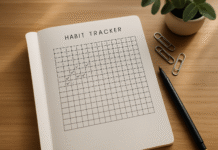
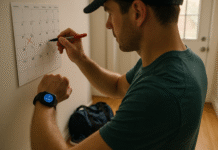
Whatever you’ll open daily: Apple Watch rings, Garmin Connect, Strava, or a minimal Streaks/Habitify tile. A wall calendar with X’s works, too. Prioritize one-tap logging, calendar views, and widgets that keep the streak front-and-center.
11) How do I keep motivation after the novelty fades?
Shift focus from the counter to meaningful milestones: walking upstairs without puffing, adding a rep to your lift, lower RPE at the same pace. Schedule a monthly audit, plan a micro-reward after deloads, and keep your MVS handy for low-energy days.
12) What should I eat to support a streak?
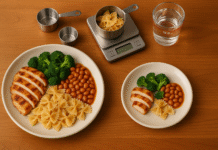
Keep it simple: prioritize protein (roughly 1.2–2.0 g/kg/day if you’re active), eat a variety of plants, and hydrate. Timing can be flexible—aim to include protein evenly across meals. On hard days, a carb-rich snack before/after can improve performance and recovery.
Conclusion
A streak doesn’t make you fit; what you do inside it does. Define what counts in one sentence, protect your chain with a Minimum Viable Session, and treat recovery as part of the plan. Progress with small, RPE-guided nudges; track volume and intensity so the counter reflects reality; and use tools you’ll actually open. Script simple if-then plans and environmental cues to carry you through low-motivation days. When life intrudes—illness, travel, heat—lean on your streak freeze rules and return with a gentle ramp. Finally, review weekly and every 4–8 weeks so the streak becomes a feedback loop, not just a badge. Do this, and your chain won’t just grow longer—it’ll carry you steadily toward better health and performance.
Copy-ready CTA: Start today: define your rules, set a 20-minute MVS, and log your first streak square.
References
- WHO Guidelines on Physical Activity and Sedentary Behaviour, World Health Organization, 2020. https://www.who.int/publications/i/item/9789240015128
- Physical Activity Guidelines for Americans, 2nd Edition, U.S. Department of Health and Human Services, 2018. https://health.gov/sites/default/files/2019-09/Physical_Activity_Guidelines_2nd_edition.pdf
- Progression Models in Resistance Training for Healthy Adults (Position Stand), American College of Sports Medicine, Medicine & Science in Sports & Exercise, 2009. https://journals.lww.com/acsm-msse/Fulltext/2009/03000/Progression_Models_in_Resistance_Training_for.26.aspx
- ACSM Guidelines for Exercise Testing and Prescription (11th ed.), American College of Sports Medicine / Lippincott Williams & Wilkins, 2021. https://shop.lww.com/ACSM-s-Guidelines-for-Exercise-Testing-and-Prescription/p/9781975150181
- How Are Habits Formed: Modelling Habit Formation in the Real World, Lally et al., European Journal of Social Psychology, 2009. https://onlinelibrary.wiley.com/doi/10.1002/ejsp.674
- The Endowed Progress Effect: How Artificial Advancement Increases Effort, Nunes & Drèze, Journal of Consumer Research, 2006. https://academic.oup.com/jcr/article/32/4/504/1822186
- The Training–Injury Prevention Paradox: Should Athletes Be Training Smarter and Harder?, Gabbett, British Journal of Sports Medicine, 2016. https://bjsm.bmj.com/content/50/17/960
- How Much Sleep Do I Need?, Centers for Disease Control and Prevention, reviewed 2024. https://www.cdc.gov/sleep/about_sleep/how_much_sleep.html
- International Society of Sports Nutrition Position Stand: Protein and Exercise, Jäger et al., Journal of the International Society of Sports Nutrition, 2017. https://jissn.biomedcentral.com/articles/10.1186/s12970-017-0177-8
- Criteria for a Recommended Standard: Occupational Exposure to Heat and Hot Environments, NIOSH/CDC, 2016. https://www.cdc.gov/niosh/docs/2016-106/default.html
- Implementation Intentions: Strong Effects of Simple Plans, Gollwitzer, American Psychologist, 1999. https://psycnet.apa.org/record/1999-10164-005