




















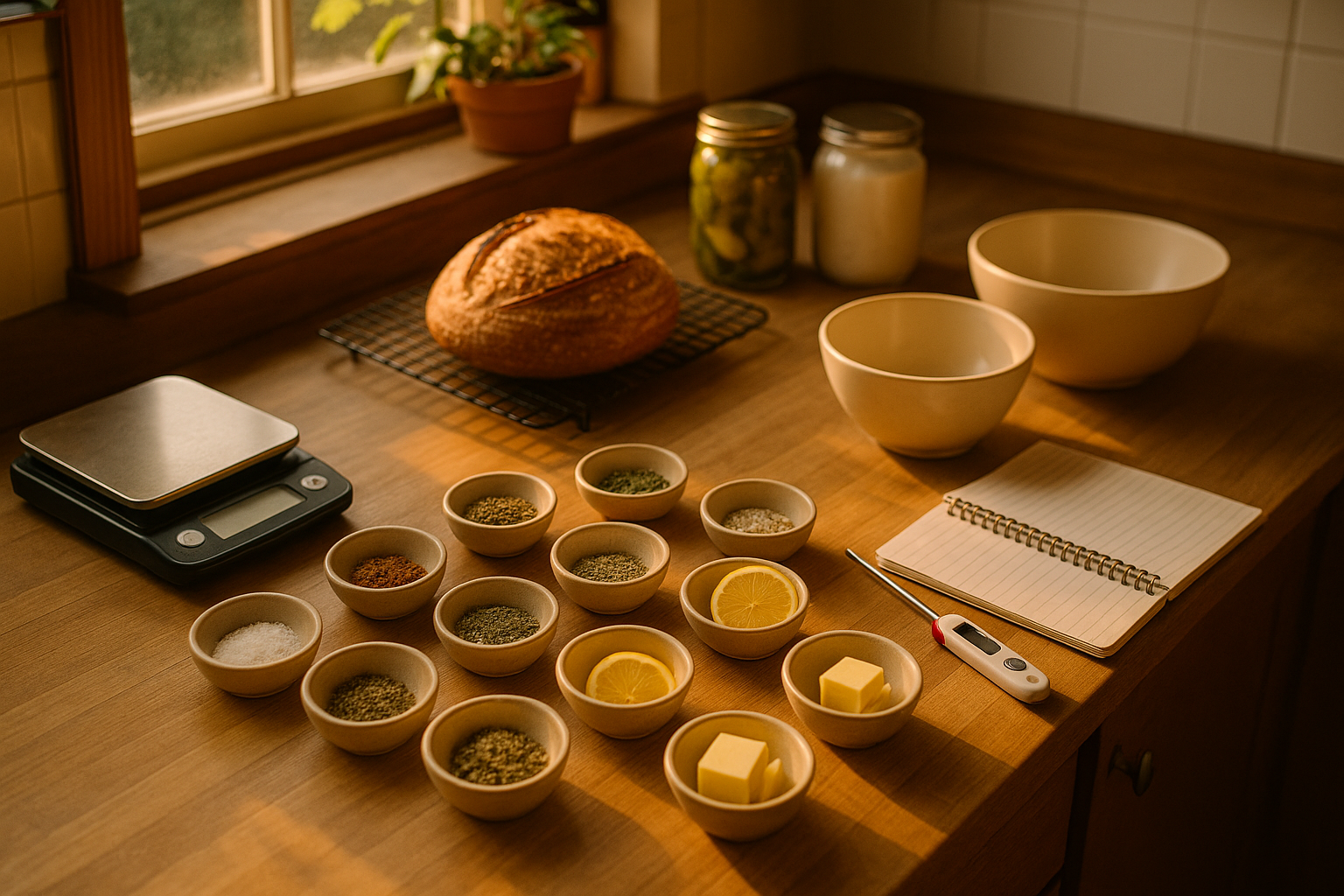
Cooking and baking don’t need to feel like chores; they can be your most soothing creative practice at home. In this guide, you’ll learn how to treat your kitchen like a low-stakes lab—where flavor, texture, time, and temperature become playful variables and dinner is the delicious outcome. Whether you’re brand-new or already confident at the stove, these twelve techniques will help you explore ideas, reduce stress, and build real skills. Quick answer: cooking and baking creatively means using simple frameworks—ratios, flavor pairings, and controlled experiments—to improvise reliably while staying safe and relaxed. To get started, skim items 1–3 to set up your “lab,” then pick one new technique each week.
Safety note: This article shares general information for home cooks. Always follow local food safety guidance and check allergies, dietary constraints, and appliance instructions.
At-a-glance start:
- Stock a flexible pantry.
- Use flavor frameworks.
- Cook by ratios and temperature.
- Run small A/B tests.
- Keep notes.
- Savor the process.
1. Build a Creative Pantry and Mise en Place That Invite Play
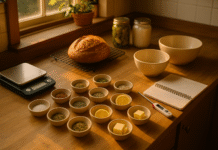
A creative kitchen starts before the heat turns on: the way you stock and set up your space either frees you to improvise or boxes you in. The goal is to assemble modular ingredients and tools that combine effortlessly—citrus, acid, fat, crunch, fresh herbs—so you can adjust flavor on the fly without a full grocery run. Start with a “mise en place” mindset: prep small bowls of aromatics, clean surfaces, and place a scale, thermometer, and tasting spoons within reach. This isn’t about a chef-y performance; it’s about lowering friction so your brain can stay in flow. When the basics are stocked and visible, you’ll notice how naturally ideas emerge: a squeeze of lemon to revive a sauce, toasted nuts for texture, or a quick pickle to balance richness. Your pantry becomes a palette, and cooking becomes more like sketching than test-taking.
- Pantry pillars (mix & match): neutral oil + extra-virgin olive oil; ghee or butter; vinegars (rice, apple cider, white wine); lemons/limes; soy or tamari; fish sauce; whole spices (cumin, coriander, black pepper); chili flakes; canned tomatoes; beans/chickpeas; good stock; grains (rice, couscous, bulgur); nuts/seeds.
- Mini prep tray: garlic/ginger, chopped onions/shallots, washed herbs, toasted breadcrumbs, zest, a small bowl of flaky salt.
- Tools within arm’s reach: digital scale, instant-read thermometer, microplane, bench/dough scraper, tongs, squeeze bottles.
1.1 Why it matters
When ingredients are prepped and modular, you make decisions faster and taste more along the way. That repeated tasting is what trains your palate and makes creativity feel safe rather than risky. Wrap up each session by resetting your “lab bench” so tomorrow’s creativity is effortless. This simple system is the backbone that supports everything else in this article.
2. Use Flavor Frameworks Instead of Guesswork
Creative flavor isn’t random; it’s built on a few reliable levers—salt, acid, fat, sweetness, bitterness, heat, umami, and aroma—that you can balance like sliders. Start a tasting habit: sample a spoonful, identify what you feel (flat, sharp, heavy, thin), and nudge with one lever at a time. If a soup tastes dull, try acid (lemon, vinegar) before salt; if a sauce is harsh, round it with fat (butter, cream, tahini). Herbs and spices are your “aroma” library—fresh basil brightens sweet tomatoes; toasted cumin adds warmth to yogurt; star anise amplifies slow-braised beef. With a simple grid in mind, you’ll stop chasing exact recipes and start creating variations that still land deliciously.
- Quick balancing moves:
- Flat → add acid (1 tsp vinegar or lemon per cup, then retaste).
- Harsh/too acidic → add fat (1–2 tsp butter/olive oil/cream), or a pinch of sugar/honey.
- Too rich → cut with acid, crunch (toasted nuts/crumbs), or fresh herbs.
- Bland → add salt gradually and retaste warm, not cold.
- Lacking “depth” → add umami (miso, soy, anchovy, parmesan rind, mushrooms).
- Aromatics trio ideas: garlic + chili + lime (bright/fiery), ginger + scallion + sesame (nutty), cumin + coriander + yogurt (cool/warm).
2.1 Mini case
Make two vinaigrettes: (A) 3:1 oil:acid with lemon + a pinch of salt; (B) 2:1 oil:acid with sherry vinegar + ½ tsp honey + black pepper. Toss each with the same greens and note how sweetness/acidity change bitterness perception. Keep tasting notes—you’re building your personal flavor map. With repetition, you’ll feel confident composing flavors on the fly.
3. Cook by Ratios and Baker’s Percentages (Formulas, Not Just Recipes)
Formulas unlock freedom. In baking, baker’s percentages express each ingredient as a percentage of flour weight (flour = 100%). A basic lean bread might be 70% water, 2% salt, 1% yeast; a sturdy pizza dough might sit at 60–65% hydration; cakes and muffins follow other stable ratios. In cooking, simple frames—like 3 parts oil : 1 part acid for vinaigrette or 5 parts stock : 3 parts rice (by volume) for many pilafs—give you a dependable baseline to improvise seasoning, herbs, and add-ins. Weighing ingredients with a digital scale increases repeatability; once you can repeat, you can riff. Ratios also make scaling easy: halve for two people or multiply for a crowd without losing texture.
- Useful ratios to memorize:
- Pancakes: 2 parts liquid : 2 parts flour : 1 part egg (by volume; tweak thickness with milk).
- Shortcrust pastry: 3 parts flour : 2 parts fat : 1 part liquid (by weight).
- Basic custard: 2 parts dairy : 1 part egg (by weight), sweeten to taste.
- Simple syrup: 1:1 (equal parts sugar:water) for cocktails/syrups.
- Vinaigrette: 3:1 oil:acid, then adjust toward 2:1 if your greens are sturdy.
- Checklist for consistency: weigh ingredients, note room temp, record brand/type of flour, and log rest times.
3.1 Numbers & guardrails
Keep hydration in bread between ~60–85% depending on flour strength and desired crumb; more water = more open crumb but stickier handling. Salt in dough around 1.8–2.2% is typical. For cakes, start with equal weights eggs, sugar, flour, and butter for a pound-cake baseline. Write your formula first, then annotate how you deviated. The ratio becomes your safety net as you experiment.
4. Fermentation Is Slow-Motion Creativity (Sourdough, Yogurt, Pickles)
Fermentation adds complexity and calm to your kitchen routine. It invites patience: you mix simple ingredients, control time and temperature, and let microbes do the rest. A sourdough starter is flour and water cultivated into a living leaven; yogurt is milk plus a culture; quick pickles are vegetables plus brine and time. The fun is in watching flavor evolve across hours and days, and the relaxation comes from the rhythm—feed, wait, taste, repeat. As you learn the cues (bubbles, aroma, rise), you’ll trust your senses more than any timer.
- Starter basics: feed at a 1:1:1 ratio (starter:water:flour by weight) once or twice daily at ~24–26 °C (75–79 °F). Bake when it doubles in 4–8 hours and smells pleasantly fruity.
- Yogurt baseline: heat milk to ~82–85 °C (180–185 °F), cool to 43–46 °C (110–115 °F), inoculate with 2–3 tbsp live yogurt per liter, incubate 5–8 hours.
- Quick pickles: 1:1 water:vinegar with 2–3% salt by weight; add spices (mustard seed, coriander, chili) and rest 24–48 hours.
- Region-specific note (South Asia): room temps can run warm; shorten fermentation windows or use a cooler/insulated box. For yogurt, a switched-off oven with the light on works well; for sourdough, aim for a “desired dough temp” around 24–26 °C.
4.1 Tools/Examples
A clear jar with rubber band marks helps you see rise. Use pH strips for pickles if you’re curious (safe quick pickles are kept refrigerated). Make a two-jar experiment: one pickle jar with sugar in the brine, one without—taste after 24 and 48 hours. You’ll learn how sugar softens acidity and impacts crunch. Close with a note in your log, and you’ve got a template for endless variations.
5. Treat Temperature and Time as Your Most Creative Variables (With Safety)
Heat turns ingredients into dinner—and small changes in temperature and time can mean crisp vs soggy, tender vs tough. Start using an instant-read thermometer as a creativity tool, not just a safety device: pull chicken when the thickest part hits ~74 °C (165 °F), rest steak after searing to let carryover heat finish, and use low-and-slow braises to dissolve collagen into silky sauces. Explore sous vide if you like precision; it’s essentially “temperature-controlled marinating,” giving you repeatable textures you can finish on a hot pan for browning. Time is creative too: 30 minutes of resting dough changes extensibility; 10 minutes of autolyse improves gluten development; chilling cookie dough 24 hours deepens flavor.
- Practical ranges:
- Searing: preheated pan so oil shimmers, ~190–205 °C (375–400 °F) surface temp.
- Custards: 77–82 °C (170–180 °F) for thickening without curdling.
- Bread baking: preheat oven thoroughly; many lean loaves bake at 230–245 °C (446–473 °F).
- Safety: poultry to 74 °C (165 °F); ground meats to at least 71 °C (160 °F); fish often tender around 52–60 °C (125–140 °F) depending on style.
- Mini-checklist: preheat properly, measure internal temp, rest meats, and log times that gave your favorite textures.
5.1 How to experiment safely
Run an A/B cook: roast two chicken thighs—one pulled at 72 °C then rested, one at 76 °C. Taste for juiciness vs firmness. For sous vide, consult pasteurization tables and finish with a quick, hot sear for browning. Creativity thrives when you can trust that your baseline is safe and repeatable.
6. Play With Texture: Emulsions, Crumbs, Crunch, and Cream
Texture is the secret path to “wow.” Two dishes with identical flavors can feel wildly different if one is creamy and the other crisp. Learn a few texture-building techniques: emulsions (mayonnaise, vinaigrettes) suspend fat in water with an emulsifier like egg yolk or mustard; crumbs (toasted panko, nut dukkah) add instant contrast; gels and foams (gelatin, agar, aquafaba) let you layer lightness; gluten development turns flour and water into stretchy strength. Use texture to balance richness: add acid and crunch to fatty meats, or fold whipped cream into pastry cream for diplomat cream that feels airy rather than heavy.
- Emulsion guardrails: whisk acid + aromatics + salt, then drizzle oil in slowly; use 1 tsp Dijon per ½ cup dressing to stabilize.
- Crunch library: toasted nuts/seeds, fried shallots, browned butter bread crumbs, crushed crackers, puffed rice.
- Gluten tips: autolyse 20–30 minutes before kneading; use stretch-and-folds every 30 minutes in the first 2 hours of fermentation for open crumb.
- Aquafaba basics: 3 tbsp aquafaba ≈ 1 whole egg white for foams/meringues (beat to stiff peaks with sugar and a pinch of acid).
6.1 Tools/Examples
Make a two-texture salad: creamy tahini-lemon dressing, crisp roasted chickpeas, and fresh herbs. Or turn pan drippings into a silky pan sauce by whisking in cold butter off heat. Close your “texture experiment” by asking: what one element could shift this from soft to crisp or vice versa?
7. Cook the Seasons and Your Region: Constraints Drive Imagination
Creativity loves constraints. Build meals around what’s abundant—ripe tomatoes in summer, citrus in winter, greens during the shoulder seasons—and you’ll naturally cook more varied, colorful food. Visit markets or a CSA and ask vendors how they’re cooking their produce; you’ll pick up regional techniques fast. In South Asia, for instance, yogurt, ghee, fresh chilies, and whole spices make lightning-fast sauces; in Mediterranean-leaning menus, lemon, olive oil, and herbs do heavy lifting. Seasonal cooking also relaxes decision fatigue: you’re not inventing from nothing, you’re riffing with what’s best right now.
- Idea prompts by season:
- Spring: lemon-herb chicken with quick-pickled radishes; pistachio-herb crumb.
- Summer: tomato-peach salad, 3:1 vinaigrette, torn basil; cold yogurt soups.
- Fall: roasted squash with miso-brown-butter crumb; braises.
- Winter: citrus dressings, slow stews, spiced dals, preserved lemons.
- Region-specific note (high heat): in hot climates, shift fermentation to cooler hours, freeze herb pastes in ice cubes, and lean on no-cook sauces like raita, zhug, or chimichurri.
7.1 How to do it
Pick one seasonal hero each week and build a meal around it with the flavor framework from item 2. Keep a short list of “always works” pairings (tomato+basil, yogurt+cucumber+dill, lime+chili+garlic). The boundary of a season becomes your creative playground.
8. Run Small-Batch Experiments and Keep a Kitchen Lab Notebook
The easiest way to learn fast (without wasting food) is to cook in small batches and change one variable at a time. Split cookie dough in half and bake one tray after 1 hour, another after 24 hours; roast two pans of vegetables, one tossed with vinegar after roasting and one before; try two bread hydrations, 68% vs 75%. Record times, temps, and results in a notebook or notes app. Over a month, you’ll build your own “playbook” that beats any recipe collection because it reflects your oven, your pans, and your taste.
- A/B ideas:
- Salt timing: pre-salt chicken 24 hours vs 30 minutes before cooking.
- Veg texture: roast carrots at 200 °C for 20 min vs 230 °C for 12 min.
- Bread flavor: direct dough vs overnight cold fermentation.
- Spice bloom: add whole spices to hot oil vs ground spices later.
- Mini-checklist: change one thing, weigh/measure, taste warm and cool, write a one-line conclusion.
8.1 Real example
Bake two banana breads: one with 10% whole-grain flour, one with 30%. Note crumb, moisture, and sweetness. Decide which you prefer and lock the ratio. Experiments like this make creativity cumulative—not chaos.
9. Design the Plate: Color, Contrast, Height, and Negative Space
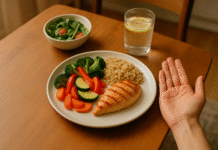
Plating isn’t vanity; it’s how you guide attention and make food feel inviting. Think like a photographer: contrast warm and cool colors, add height with stacked elements or a tuft of herbs, and leave negative space so the main ingredient stands out. Odd numbers tend to look more dynamic than even; a restrained drizzle beats a heavy pour. Using a shallow bowl for saucy dishes contains flavor and looks generous; a flat plate with a swipe of puree works for crisp proteins. Add a final sprinkle—citrus zest, flaky salt, or toasted seeds—to signal texture before the first bite.
- Simple plating moves:
- Put the protein slightly off-center; lean elements for height.
- Use a spoon to make a small “well” for sauces; don’t flood.
- Garnish with intention: if it’s on the plate, it should add flavor/texture.
- Wipe the rim; clean edges frame the scene.
- Tools: offset spatula, squeeze bottle, tweezers (optional), small ladle, paper towels for tidy rims.
9.1 Mini case
Plate two identical chicken thighs: one on a crowded plate with sauce everywhere, the other with sauce beneath, thigh offset, and a bright herb salad on top. The second will feel lighter and more composed—even before tasting. Good plating is creative confidence made visible.
10. Make Cooking a Mindful, Restorative Ritual
If the kitchen is your “relaxing lab,” design it for calm. Set a short intention (feed myself well, learn one new thing), put on music or a podcast, and do one task at a time: chop, then sauté, then taste. Let repetitive motions—kneading, stirring, whisking—be anchors for attention. Clean as you go to keep the workspace open and your mind unburdened. Mindful cooking doesn’t mean perfection; it means noticing sensations: the crackle of onions, the lemon scent lifting a sauce, the way steam fogs the window. Over time, these small cues become soothing rituals that make creativity sustainable.
- Ritual checklist: timer for 25-minute “focus cook,” a fresh towel on your shoulder, hot soapy water in the sink, a trash bowl for scraps, and a final 5-minute reset.
- Stress-light moves: pre-chop vegetables for two meals at once; make double vinaigrette to cover salads and marinades; keep cooked grains ready.
- Boundaries: if you’re short on time, pick one new variable per meal; if energy is low, assemble no-cook meals (canned beans + vinaigrette + herbs + crunchy topping).
10.1 Why it works
Rituals reduce decision fatigue and create a sense of progress. That’s the mental shift from “What should I make?” to “What do I want to try today?”—the essence of creative cooking as self-care.
11. Upcycle Leftovers: Turn “Extras” Into Creative Building Blocks
Waste less, cook more, and get extra practice by treating leftovers as ingredients rather than afterthoughts. Roast chicken bones become stock; stale bread becomes pangrattato (toasted crumbs) or bread pudding; rice becomes fried rice or arancini; chickpea liquid (aquafaba) becomes meringues. The trick is to imagine a second life at the start: when you roast vegetables, roast a double tray so tomorrow’s salad has grilled notes; when you cook beans, cook extra for a quick salad with lemon and herbs. Label and date small containers—your future self will say thanks.
- Second-life ideas:
- Roasted veg → grain bowls with tahini-lemon dressing.
- Stale bread → garlicky crumbs; store in a jar 1–2 weeks.
- Bones/scraps → pressure-cooker stock in 45–60 minutes.
- Rice → fritters with egg, herbs, and a little cheese.
- Yogurt whey → tender pancakes or bread dough liquid.
- Guardrails: cool leftovers quickly, refrigerate within 2 hours, reheat thoroughly; freeze extra stock in ice trays.
11.1 Mini case
Save carrot tops for a quick pesto (blend with oil, lemon, garlic, nuts). Toss with roasted carrots and couscous. You just created a “closed loop” dish that tastes intentional and reduces waste—creative and kind.
12. Equip Your “Lab” With a Few High-Leverage Tools
You don’t need a drawer of gadgets; a small set of high-leverage tools multiplies creativity. A digital scale makes ratios real; an instant-read thermometer removes guesswork; a sturdy chef’s knife and a bench scraper improve speed and safety. For baking and fermentation, add two clear containers with lids, a dough whisk, and a proofing basket or colander with a floured towel. If you enjoy precision, an immersion circulator (for sous vide) opens new textures; if you love sauces and soups, a decent blender pays off immediately. Most creativity gains come from tools that measure, mix, and manage heat accurately.
- Short list (buy once, cry once): 8-inch chef’s knife, paring knife, board; digital scale (0.1-g resolution helpful for yeast/salt); instant-read thermometer; heavy skillet; sheet pans and racks; silicone spatula; flexible fish spatula; microplane; oven thermometer.
- Nice-to-have: immersion blender, stand mixer if you bake a lot, induction burner for precise simmering, pocket pH strips for fermentation curiosity.
- Setup tip: create a “grab zone” near the stove with tongs, spoons, salt cellar, oil, and a towel.
12.1 Synthesis
Tools don’t create creativity—but they remove friction and uncertainty so your ideas can shine. Start with the basics, upgrade slowly, and let your projects guide what you add next.
FAQs
1) What does “cooking and baking creatively” actually mean?
It means using simple frameworks—ratios, flavor levers (salt/acid/fat/umami), and small experiments—to improvise confidently while keeping food safe and delicious. Instead of memorizing dozens of recipes, you learn a few baselines (like 3:1 oil:acid for vinaigrettes or 70% hydration for bread) and then vary herbs, textures, and techniques to suit your taste and what’s in your pantry.
2) How do I start if I’m a beginner with limited time?
Set up a small creative pantry (oil, vinegar, citrus, soy/tamari, a couple of whole spices, canned tomatoes/beans), then cook one meal a week by ratio rather than exact recipe. Keep a note with time, temp, and what you’d change next time. Over a month, you’ll have 4–5 small wins and a growing sense of what you like—far more effective than scattered, one-off attempts.
3) What are the safest internal temperatures I should know?
As general baselines, cook poultry to ~74 °C (165 °F), ground meats to at least ~71 °C (160 °F), and handle custards gently around 77–82 °C (170–180 °F) to thicken without curdling. Use an instant-read thermometer and rest meats so carryover heat finishes cooking. These guidelines help you stay creative with flavor while staying protected.
4) How can I be creative without wasting food?
Experiment in half-batches, change one variable at a time, and repurpose leftovers strategically (roast double vegetables, make stock from bones, turn stale bread into crumbs). Label and date small containers so you can build quick meals later. Creativity compounds when experiments are small and leftovers are ingredients.
5) Are ratios really better than recipes?
They work together. Recipes teach technique, timing, and the “feel” of a dish. Ratios give you a flexible baseline you can scale and season to taste. Once you grasp a few ratios—breads, vinaigrettes, custards—you’ll find recipes easier to understand and customize, which is where creativity lives.
6) What tools actually change my results most?
A digital scale and an instant-read thermometer have the biggest impact. The scale makes doughs, batters, and sauces repeatable; the thermometer tells you when something is done instead of guessing. After that, a sharp knife, a heavy pan, and a blender or immersion blender add speed and polish.
7) How do I adapt baking for high altitude or very warm climates?
At high altitude, reduce leavening slightly, add a bit more liquid, and consider raising oven temperatures modestly for structure. In hot climates, shorten fermentation windows, keep doughs cooler (aim ~24–26 °C), and chill butter-based doughs frequently. Small changes maintain structure while preserving flavor.
8) What are some easy flavor pairings that almost always work?
Tomato + basil + olive oil; lemon + garlic + parsley; yogurt + cucumber + dill; cumin + coriander + chili; soy + ginger + scallion; miso + sesame + honey; lime + chili + cilantro. Use the flavor framework: if the dish is heavy, add acid and herbs; if it’s sharp, add fat or a little sweetness.
9) How do I plate food so it looks as good as it tastes?
Think contrast and space. Offset the main item, add a small tuft of fresh herbs or a crispy topping for height, and keep rims clean. Place sauces under or beside the main element rather than on top; finish with zest or flaky salt to signal brightness and texture. The goal is appetizing clarity, not complexity.
10) Can creative cooking be healthier without feeling restrictive?
Yes—focus on whole ingredients, bold flavors, and texture contrast. Use acids and aromatics to reduce reliance on salt, add crunchy vegetables and herbs to make meals satisfying, and balance rich items with fresh, tangy components. Small technique shifts (like roasting instead of deep-frying) preserve pleasure while dialing down heaviness.
Conclusion
Turning your kitchen into a relaxing lab is less about fancy gear and more about mindset. Stock a modular pantry, memorize a few ratios, and treat each meal as a tiny experiment. Use flavor frameworks to steer seasoning, and lean on temperature and time to create the textures you love—crispy edges, tender centers, silky sauces, open-crumb breads. Fermentation teaches patience and pays you back in layers of flavor; plating turns your work into an inviting story on the plate. Most of all, keep notes. Creative cooking compounds the way savings do: a handful of small, repeatable wins become instinct. Start with one technique from this list—say, balancing flavors with acid and fat, or baking a lean loaf at a set hydration—and give it a week. Then add another variable. In a month, you’ll have a calmer routine, a sharper palate, and a kitchen that feels like your favorite studio.
Ready to begin? Choose tonight’s “one variable,” set a 25-minute timer, and cook.
References
- Safe Minimum Internal Temperatures, FoodSafety.gov, n.d., https://www.foodsafety.gov/food-safety-charts/safe-minimum-cooking-temperature
- Four Steps to Food Safety: Clean, Separate, Cook, Chill, Centers for Disease Control and Prevention (CDC), 2024, https://www.cdc.gov/foodsafety/keep-food-safe.html
- A Practical Guide to Sous Vide Cooking, Douglas Baldwin, 2012 (updated), http://www.douglasbaldwin.com/sous-vide.html
- Baker’s Percentage Guide, King Arthur Baking, n.d., https://www.kingarthurbaking.com/learn/guides/bakers-percentage
- The Importance of Desired Dough Temperature, King Arthur Baking (Blog), 2017, https://www.kingarthurbaking.com/blog/2017/06/12/desired-dough-temperature
- Fermented Vegetables and Vegetable Products, National Center for Home Food Preservation (University of Georgia), 2023, https://nchfp.uga.edu/how/can5_fermented.html
- High Altitude Food Preparation, Colorado State University Extension, 2022, https://extension.colostate.edu/topic-areas/nutrition-food-safety-health/high-altitude-food-preparation-9-340/
- Salt Reduction: Key Facts, World Health Organization, 2023, https://www.who.int/news-room/fact-sheets/detail/salt-reduction
- How Emulsions Work, Serious Eats, 2019, https://www.seriouseats.com/how-emulsions-work
- The Complete Guide to Aquafaba, Serious Eats, 2019, https://www.seriouseats.com/aquafaba-vegan-egg-substitute-guide