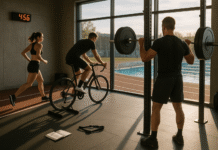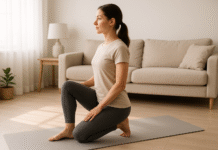
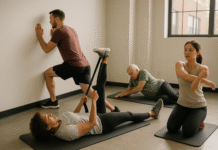
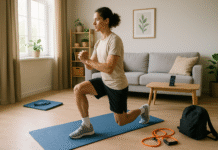
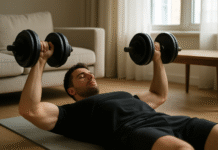



















If you want a stronger, more useful core, you don’t need another marathon of sit-ups. You need movements that teach your trunk to resist motion, transfer force, and stay stable while you push, pull, hinge, rotate, and carry. That’s what these “core strength workouts” do: they train your abdominals, obliques, spinal erectors, diaphragm, pelvic floor, and hips to create stiffness and control so your limbs can produce power safely. In plain terms, core strength workouts are sessions that build whole-torso stability for real-world performance—not just a burn in your abs. As ever, if you’re managing pain, pregnant, or have a medical condition, check with a qualified professional before changing your training.
Quick-start plan: Warm up (spine-neutral breathing, hip mobility) → 1 anti-extension drill → 1 anti-rotation drill → 1 hinge or carry → optional rotational power → brief finisher. As of August 2025, general activity guidelines still recommend muscle-strengthening work at least twice weekly—these workouts fit that bill.
1. Plank Progressions (Front, Long-Lever, and RKC)
Plank progressions are the simplest way to train anti-extension strength—the ability to resist your lower back arching while you move or carry loads. Start with a standard forearm plank, then extend the lever (elbows farther ahead of shoulders) or increase irradiation (RKC plank: squeeze glutes, quads, fists) to raise the challenge while keeping a neutral spine. Planks are joint-friendly, scale from beginner to advanced, and carry directly into heavier lifts by teaching organized bracing. Aim for crisp sets of 10–30 seconds rather than grinding minutes: quality over duration. If your low back “pinches,” shorten the lever, elevate forearms, or switch to a dead bug (Section 2) to rebuild control. A stronger plank improves push-ups, carries, and overhead work because your trunk stops leaking force.
1.1 How to do it
- Set forearms under shoulders, ribs stacked over pelvis.
- Squeeze glutes and quads; think “zip up” the front of your torso.
- Press the floor away; long neck, eyes slightly ahead.
- Breathe: slow nasal inhale, short “hiss” exhale while keeping pressure.
- Progress to long-lever (elbows 4–8 inches forward) or RKC plank for 10–20s sets.
1.2 Numbers & guardrails
- 3–5 sets of 10–30s holds; rest 30–60s.
- Stop when you lose rib-pelvis stack or feel low-back discomfort.
- Advance weekly by adding 2–5s per set or 1 harder variation.
Synthesis: Mastering short, high-tension planks builds the anti-extension foundation every other core drill stacks on.
2. Dead Bug & Hollow Variations (Anti-Extension with Breathing Control)
Dead bugs coordinate your ribs, pelvis, and breath while your limbs move—exactly how the core must behave in sport and lifting. The goal isn’t big motion; it’s quiet ribs as arms and legs travel, keeping the low back from arching. Start supine with knees over hips, arms vertical, and exhale gently to “melt” the rib cage down; then alternate reaching one leg and the opposite arm without losing contact pressure. Hollow hold/rock progressions ramp the difficulty by increasing lever length and shoulder flexion demands. These drills groove diaphragmatic breathing with bracing, improving your squat, press, and carries. If your hip flexors cramp or your back arches, shorten levers or elevate heels. Over time, you’ll feel bracing become automatic rather than forced.
2.1 Mini-checklist
- Ribs down, pelvis neutral; low back lightly “kisses” the floor.
- Slow nasal inhale; long, quiet exhale to keep pressure.
- Move limbs without torso rocking; stop if ribs flare.
2.2 Progression ladder
- Bent-knee dead bug → heel taps → full reaches → band-resisted arms → hollow hold/rock (10–20s).
Synthesis: Dead bugs teach the breath-driven brace that makes every other core task safer and stronger.
3. Side Plank & Hip Hitch (Lateral Stability and Frontal-Plane Control)
Side planks train your lateral trunk—the obliques and quadratus lumborum—to keep your pelvis level and resist side-bending or drifting during running, cutting, and single-leg lifts. In sport and daily life, loads rarely stay perfectly balanced; lateral stability is your “anti-wobble” insurance. Begin on your forearm, shoulder stacked, feet a little staggered for balance, and drive the bottom hip up without side-bending through the ribs. Hip hitches (raising and lowering the pelvis under control) add dynamic endurance. If your shoulder complains, elevate the plank on a bench or use a short-lever (knees bent) variation. For runners, a strong side plank often cleans up sluggish foot strikes; for lifters, it reduces lateral torso tilt in squats and carries. Short, crisp sets beat long, sagging holds.
3.1 How to do it
- Elbow under shoulder, top foot slightly in front.
- Drive the bottom hip up; keep ribs stacked (no flaring).
- Press floor away; long neck; don’t let the shoulder collapse.
- Breathe shallow and steady without losing height.
3.2 Numbers & guardrails
- 3–4 sets/side of 10–25s holds or 6–10 controlled hip hitches.
- Regress to bent-knee or elevated side plank if you can’t keep the pelvis level.
- Progress by adding top-leg abduction or a light plate on the hip.
Synthesis: Lateral endurance from side planks keeps your pelvis and spine honest when life gets asymmetrical.
4. Anti-Rotation Work: The Pallof Press (Standing, Tall/Half-Kneeling)
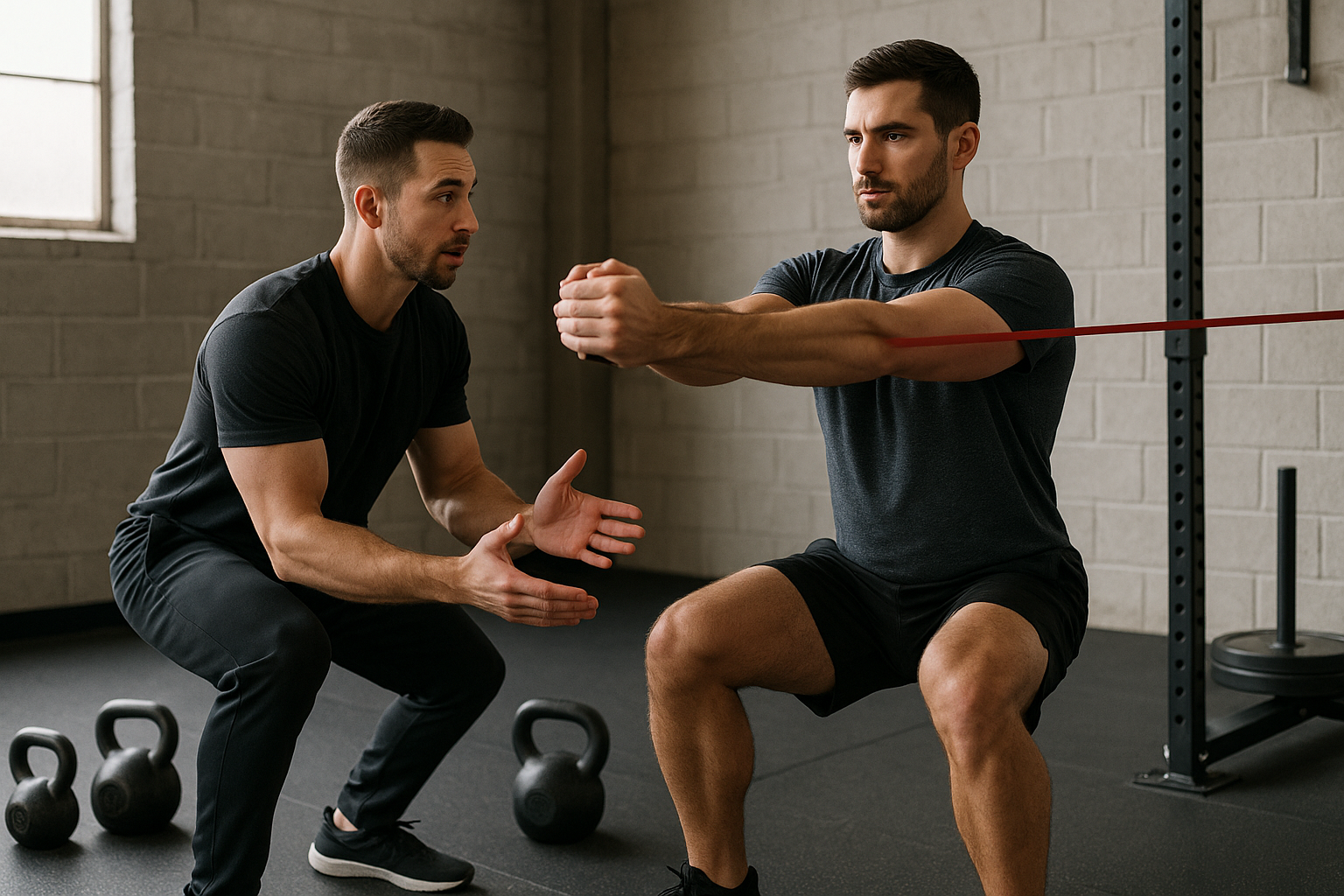
The Pallof press is a deceptively tough anti-rotation drill: a cable or band pulls you sideways while you press the handle straight out, forcing your torso and hips to resist twisting. It teaches you to create 360° abdominal pressure while maintaining a neutral spine—critical for lifting, running, and racket or bat sports. It scales easily through stance width, kneeling positions, and base of support (narrow, split, or tandem). Start light, lock your ribs and pelvis, and “brace then breathe.” You’ll feel the obliques and deep core working to keep the handle path linear. Compared with pure rotation drills, anti-rotation builds a stable platform first, then you can layer speed and power later (Section 10). Keep reps smooth and controlled, not jerky.
4.1 How to do it
- Anchor band at chest height; stand side-on, feet hip-width.
- Grip with both hands, hold at sternum, brace, then press straight out.
- Pause 1–2s with arms extended; keep handle from drifting.
- Return under control; repeat.
4.2 Numbers & guardrails
- 3–4 sets/side of 6–12 smooth reps; rest 45–75s.
- Make it harder by: narrowing stance, moving farther from anchor, half-kneeling, or using a unstable surface only after mastering basics.
- If your low back twists or ribs flare, lighten up and shorten range.
Synthesis: Build anti-rotation strength first so your torso can transmit power without leaking it when you sprint, throw, or change direction. ResearchGate
5. Loaded Carries (Suitcase, Farmer’s, Offset, Front-Rack)
Loaded carries are “walking planks.” Holding kettlebells or dumbbells while you walk forces full-body stiffness and teaches you to resist extension, lateral flexion, and rotation all at once. Suitcase carries (one side only) hammer anti-lateral flexion; farmer’s carries (both sides) overload grip and posture; front-rack or offset variations challenge breathing and thoracic position. Keep short strides, tall posture, and quiet feet. Start with lighter loads and 20–40-meter efforts; progress to heavier weights and longer distances as your posture stays crisp. Carries conveniently fit anywhere in a workout—early as activation with lighter loads, after strength work for capacity, or as a finisher for conditioning. Research shows carries activate the core across planes and can be progressed with “holds” when space is limited.
5.1 Practical setups
- Suitcase: one heavy bell, walk 20–30 m/side; don’t lean.
- Farmer’s: two heavy bells, 20–40 m; shoulders down/back.
- Front-rack/offset: one bell racked, other hand empty; short steps, quiet breathing.
5.2 Numbers & guardrails
- 3–6 trips of 20–40 m (or 15–30s holds if space is tight); rest back to nasal breathing.
- Posture is the limiter; stop the set when you can’t keep ribs stacked.
- Progress by 2–5 kg per hand or 5–10 m per week.
Synthesis: Carries train the trunk to behave under load while you move—exactly how your core works outside the gym.
6. Hip Hinge Patterns: RDLs and Kettlebell Swings (Posterior-Chain Core)
No, hinges aren’t “just hamstrings.” Proper Romanian deadlifts and swings demand a rock-solid midline that resists rounding or over-arching while hips do the work. That anti-flexion/anti-extension challenge is a core workout with a heavy side of posterior chain. For RDLs, think “hips back, shins vertical, torso long,” keeping the bar close and tension through lats. For swings, use a crisp hike, snap the hips, and stand tall—don’t lift the bell with your arms. Keep sets submaximal, prioritize speed and symmetry, and stop before your technique fades. Beginners should build hinge mechanics with dowel and light kettlebells before loading. Pair hinges with anti-rotation or carries for complete trunk training in one circuit.
6.1 Technique cues
- RDL: “Crack the floor with your feet,” “zipper the bar to your thighs.”
- Swing: “Hike, snap, stand tall, park,” bell floats from the hip snap.
- Finish tall—ribs down, glutes on; no lean-back.
6.2 Numbers & guardrails
- RDLs: 3–5 sets of 5–8 at RPE 6–8.
- Swings: 6–10 reps/set for 6–10 sets (EMOM style), crisp speed.
- Stop sets when your back rounds or knees drift forward on swings.
Synthesis: Hinge strength teaches your core to hold the line under real load and speed—vital for safe lifting and sprint power.
7. Glute Bridge & Hip Thrust Variations (Pelvic Control Under Load)
Glute bridges and hip thrusts train the posterior chain while demanding rib-pelvis control—key for athletes who over-arch under load. Start with floor bridges (2–3s squeeze), then progress to single-leg bridges to expose side-to-side gaps. Hip thrusts, whether with a barbell or band, let you load hip extension heavily with a neutral spine. Your job is to finish tall without flaring the ribs or dumping into the low back. If hamstrings dominate, change foot distance or cue “spread the floor.” Add a long exhale at lockout to integrate diaphragmatic control. Pair bridges with side planks to link hip and lateral trunk endurance. Expect carryover to sprints, squats, and even posture when standing for long periods.
7.1 How to do it
- Heels under knees; set ribs down before pushing.
- Drive through mid-foot, squeeze glutes to finish; no lumbar crank.
- Pause and breathe at the top; slow 2–3s eccentric.
7.2 Numbers & guardrails
- Bridges: 3–4×8–12; single-leg 3×6–10/side.
- Hip thrusts: 3–5×6–10 at RPE 6–8; 1–2s holds at the top.
- Elevate shoulders/bench for hip thrusts only when floor bridges are rock-solid.
Synthesis: Strong glutes plus rib-pelvis control make your trunk stable where it matters—at the hips.
8. Bird-Dog & Quadruped Progressions (Motor Control and Endurance)
Bird-dogs are a clinic favorite for good reason: they build spinal stability with minimal compressive loading, prioritizing endurance and motor control over brute force. From all fours, find a neutral spine (not arched, not rounded), lightly engage the abs, then reach opposite arm and leg. Keep the pelvis level and the ribs quiet; imagine balancing a glass of water on your low back. Hold for brief, strict reps (5–10 seconds), reset, and switch sides. Progress by adding a band at the feet, moving more slowly, or drawing small “squares” with the raised limbs. Pair with McGill’s modified curl-up and side planks for the classic “Big 3” stability circuit when you need spine-sparring options. Evidence suggests these drills improve tolerance and stability in low-back populations.
8.1 Mini-checklist
- Hands under shoulders, knees under hips; gentle chin tuck.
- Long spine; don’t chase height—chase stillness.
- 5–10s holds, 5–10 reps/side; breathe quietly.
8.2 Common mistakes
- Kicking limbs high and losing pelvic control.
- Shrugging shoulders; letting ribs flare.
- Rushing reps; treat each as a precision drill.
Synthesis: Bird-dog progressions rewire trunk control so strength sticks without aggravating your back.
9. Anti-Extension Rollouts & Body Saw (Ab Wheel, TRX/Suspension)
Rollouts and body saws are advanced anti-extension drills that hit the rectus abdominis and obliques hard without repetitive spine flexion. The farther your arms travel, the bigger the moment arm on your spine—so start small and earn your range. With an ab wheel, set ribs down, squeeze glutes, and “reach long” while keeping the low back quiet; return by pulling the wheel back under you, not by collapsing. On a suspension trainer, the body saw adds a dynamic element by sliding your body forward/back from a plank. EMG studies show rollouts and body saws strongly activate the anterior core—perfect once you own planks and dead bugs. If your low back pinches, shorten range or elevate the movement.
9.1 How to do it
- Start kneeling (wheel) or in a forearm plank with feet in straps (TRX).
- Brace, glutes on; reach forward slowly until just before lumbar extension.
- Pause, breathe, then pull back under control.
9.2 Numbers & guardrails
- 3–5 sets of 4–8 reps; rest 60–90s.
- Leave 1–2 reps “in the tank” to protect technique.
- Progress by increasing range first, then reps, then external load (weighted vest).
Synthesis: Rollouts/body saws deliver high anterior-core demand with none of the crunch-induced spinal flexion volume.
10. Rotational Power: Medicine-Ball Throws & Chops
Once you can resist rotation, it’s time to produce it—safely, at speed. Medicine-ball throws (standing side toss, step-behind, tall-kneeling chop) train hips-to-trunk-to-shoulder sequencing for athletes and anyone who needs dynamic power. Keep balls light (2–6 kg) and reps crisp so speed—not grind—drives adaptation. Do them early in the session after your warm-up, and stop before speed fades. Pairing throws with strength lifts creates potent contrast training (e.g., RDL set → side toss set). For general fitness, 3–5 sets of 3–6 fast, clean throws per side are plenty. Focus on sticking the finish with a braced trunk rather than overthrowing. A light, fast, technically sharp throw beats a heavy, slow one every time.
10.1 Programming guide
- Light ball, fast intent; 3–5×3–6 reps/side; full rest between sets.
- Sequence: warm-up → throws → strength → carries/conditioning.
- Quit while you’re quick—once throws slow, you’re done.
10.2 Safety notes
- Keep ribs stacked; rotate through hips and upper back, not low back.
- Start tall-kneeling to reduce compensations; progress to standing/step-behind.
- Use a wall you can safely throw into; stand far enough to load the hips.
Synthesis: Rotational throws build athletic pop and reinforce a braced trunk that transmits—not leaks—power.
11. Unilateral Lower-Body Strength: Split Squats & Step-Ups
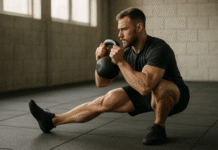
Single-leg patterns are stealth core training. Bulgarian split squats, walking lunges, and step-ups demand pelvic control, lateral stability, and anti-rotation as loads challenge your balance. Keep the torso long, shin near vertical, and knee tracking toes; feel front-side glute and quad do the work while the trunk stays quiet. Start with bodyweight, then load with dumbbells (suitcase or front-rack) or a sandbag in the “front-loaded” position to increase bracing demand. Use slow lowers and pauses to make light weights surprisingly hard. Expect better carries, more stable squats, and fewer wobbles when you run. If your knee aches, shorten range, adjust step height, or use reverse lunges.
11.1 How to do it
- Split squat: long spine, 2–3s down, soft floor tap, strong stand.
- Step-up: whole foot on box; drive through mid-foot; control the down.
- Load offset to challenge anti-lateral flexion (one dumbbell/suitcase).
11.2 Numbers & guardrails
- 3–4×6–10/leg at RPE 6–8; rest 60–90s.
- Progress with tempo (3s down), pauses (1–2s), or taller box (step-ups).
- Stop if your pelvis tips or trunk sways—reset, lighten, or regress.
Synthesis: Unilateral strength turns your core from passenger to pilot by forcing it to steer each rep.
12. The Turkish Get-Up (Total-Body Integration)
The Turkish get-up (TGU) is a moving plank that ties everything together—breathing, bracing, shoulder stability, hip mobility, and cross-body control. With a kettlebell balanced overhead, you’ll roll to elbow, post to hand, bridge, sweep to half-kneel, stand, then reverse it—all while keeping the bell vertical and your rib-pelvis stack intact. It’s slow strength, not cardio, and rewards patience. Start with a shoe or light dumbbell, owning each position for a breath before moving. Keep your eyes on the bell and your knuckles to the ceiling. TGUs shine as a stand-alone skill, a warm-up pattern, or a strength accessory on full-body days. They build shoulder resilience and teach the trunk to adapt continuously—not just at one angle.
12.1 Learning steps
- Roll to elbow → post to hand → high bridge → leg sweep → half-kneel → stand.
- Reverse the steps in perfect control.
- Pause one breath at each “checkpoint.”
12.2 Numbers & guardrails
- 3–5 singles/side with light-to-moderate load; 60–90s rest.
- Add weight only when every position is stable and quiet.
- If your low back extends or ribs flare, unload and shorten the range.
Synthesis: The TGU is the culmination drill—dynamic, total-body, and relentlessly core-centric.
FAQs
1) How often should I train core strength workouts?
Two to four focused core sessions per week work for most people, either as short blocks inside full-body workouts or as 10–20-minute finishers. Leave a day between hard anti-extension/anti-rotation sessions if you’re also heavy lifting. As of 2025, broad guidelines recommend doing muscle-strengthening activities at least twice weekly; many lifters exceed that by integrating core work into warm-ups and accessory blocks.
2) What’s the difference between anti-extension, anti-rotation, and rotation training?
Anti-extension (planks, dead bugs) teaches you to resist low-back arching; anti-rotation (Pallof press, suitcase carry) teaches you to resist twisting; rotation (medicine-ball throws) teaches you to produce turn-and-go power. In practice, train resisting forces first, then add speed and rotation when you can keep ribs stacked and pelvis stable. This sequence reduces compensations and improves performance.
3) Are crunches “bad,” or can I still include them?
Crunches aren’t evil—they just emphasize spinal flexion volume without the multiaxial control most people need for sport and lifting. If you like them and your back tolerates them, keep a little dose after you’ve built anti-extension, anti-rotation, and hinge/carry capacity. For those with low-back issues, spine-sparing options like bird-dogs, side planks, and modified curl-ups often work better.
4) How heavy/light should my medicine ball be?
Err on the light side so your throws are fast and crisp. For most adults, 2–6 kg covers 90% of needs. If speed drops or technique unravels, the ball is too heavy. Programs that emphasize speed over load (3–5 sets of 3–6 reps) are common in modern practice because power is velocity-driven, not weight-driven.
5) Do loaded carries really train the core, or just grip?
Both—but not just grip. EMG and coaching literature show carries drive core activation in multiple planes and can be tweaked (suitcase, offset, front-rack) to emphasize anti-lateral flexion and breathing/bracing demands. If space is tight, turn them into heavy “holds” for 15–30 seconds.
6) I feel rollouts in my low back—what am I doing wrong?
Likely outrunning your range or losing rib-pelvis control. Shorten the rollout distance, squeeze glutes, and keep ribs down. Build capacity with planks and dead bugs, then re-introduce partial rollouts. Suspension “body saws” are a friendly intermediate; both moves show high anterior-core activation but demand tension discipline.
7) How should I breathe and brace during core work and lifts?
Use a gentle diaphragmatic inhale to pressurize, then brace around it (think “360° canister”). For heavier lifts, a brief Valsalva (short breath hold at the sticking point) can enhance spinal stiffness but isn’t for everyone; keep holds short and breathe between reps. If you have blood pressure issues or are pregnant, skip breath holds and use controlled exhales.
8) I’m a runner—what are my top two picks?
Side planks (with hip hitches) for lateral endurance and suitcase carries for anti-lateral flexion under movement. Add step-ups or split squats to link pelvis control with foot strike mechanics. Keep total volume modest (10–15 minutes, 2–3×/week) around key sessions to protect recovery.
9) What’s a smart way to structure a 20-minute core session?
Warm-up (2–3 minutes breathing + cat-camel) → Plank or dead bug (2×20s) → Pallof press (3×8/side) → Hinge or carry (4–6 trips of 20–30 m or 3×6 RDLs) → Optional throws (3×4/side) → Short finisher (2×6 rollouts). Rest just enough to keep quality high and breathing calm.
10) How do I progress without adding crunches?
Lengthen levers (long-lever planks), narrow bases (tall-kneeling/feet together Pallof), increase load (heavier suitcase carry), or add time-under-tension (pauses). Progress one variable per week. Keep a training log with sets, reps, ranges, and Rate of Perceived Exertion (RPE) to ensure you’re nudging forward—not just surviving workouts.
11) Are there evidence-based picks for back-friendly core work?
Yes—bird-dogs, side planks, and modified curl-ups have been studied extensively as low-load, endurance-biased stability work. They’re often used in rehab protocols and show favorable tolerability compared to high-flexion options. Add load only when you can keep neutral alignment and steady breathing.
12) Can these workouts replace lifting?
They’re a complement, not a replacement. Big lifts (squats, presses, rows, hinges) remain the backbone of strength work. Your core sessions make those lifts safer and stronger by improving bracing, force transfer, and position. Combine both for the best results.
Conclusion
Crunches have their place, but they’re only a sliver of what your trunk needs. The 12 workouts above build resistance to unwanted motion (anti-extension and anti-rotation), control under load (hinges and unilateral work), and athletic expression (rotational power)—all wrapped in smart breathing and bracing. Start with stability: short, high-quality planks and dead bugs to organize ribs and pelvis. Layer in side planks and Pallof presses to bullet-proof the lateral and transverse planes. Add carries and hinges to translate that control to meaningful loads. Finally, sprinkle in light, fast medicine-ball throws to turn stability into speed. Keep sessions brief, crisp, and progressive, logging what you did and how it felt. In six to eight weeks, your lifts will feel steadier, your runs will wobble less, and everyday tasks will seem lighter because your trunk has learned to do its real job.
Ready to move beyond crunches? Pick two drills from Sections 1–4 and one from Sections 5–12, train them 3×/week for 20 minutes, and add a little each week.
References
- WHO Guidelines on Physical Activity and Sedentary Behaviour, World Health Organization, 2020. WHO IRIS
- Progression Models in Resistance Training for Healthy Adults (ACSM Position Stand), Medicine & Science in Sports & Exercise, 2009. tourniquets.org
- Increase Hip and Trunk Stability with Loaded Carries: Injury Prevention, Rehabilitation, and Performance, NSCA Coach 7(3), 2019. NSCA
- The Quantification of Muscle Activation During the Loaded Carry, Sports, 2024. PMC
- Core Muscle Activation in Suspension Training Exercises, Journal of Human Kinetics, 2017. PMC
- Muscle Activation Pattern During Isometric Ab Wheel Rollout Exercise, MedicalExpress, 2015. SciELO
- Tolerability and Muscle Activity of Core Muscle Exercises, Orthopaedic Journal of Sports Medicine, 2019. PMC
- Effects of McGill Stabilization Exercises vs Conventional Physiotherapy in Chronic Low Back Pain, Journal of Physical Therapy Science, 2018. PMC
- Basics of Strength and Conditioning Manual (Valsalva & Bracing), NSCA, 2012. NSCA
- Stability and Weightlifting: Mechanics of Stabilization (Part II), NSCA Coach 4(1), 2017. NSCA
- Core Muscle Activity during Physical Fitness Exercises: A Systematic Review, International Journal of Environmental Research and Public Health, 2020. PMC
- Medicine-Ball Throws for Rotational Power Development, National High School Strength Coaches Association, 2024. nhssca.us