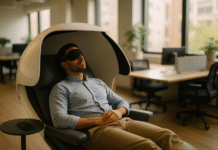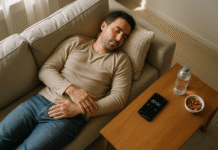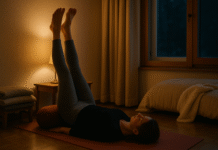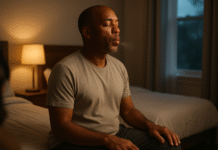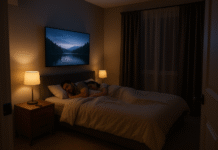















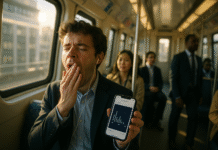
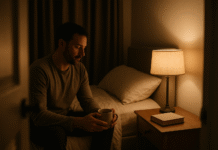
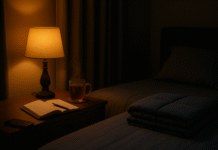
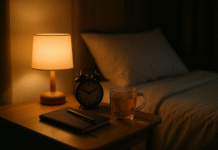

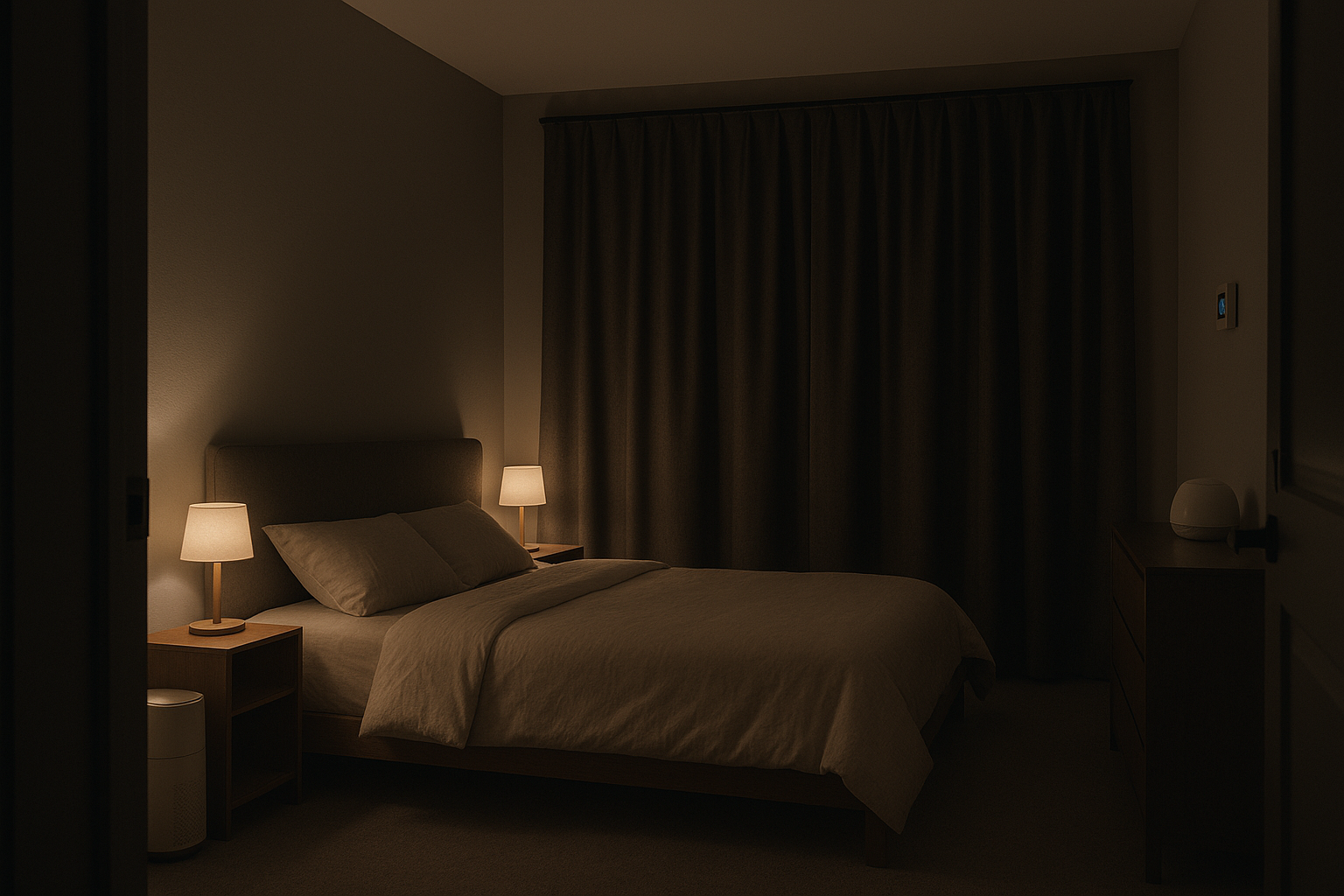
If you’ve ever tossed and turned and blamed “stress,” your bedroom itself might be the real culprit. This guide shows you how to build a sleep space that works with your biology: near-total darkness, quiet, and consistent physical comfort. In practice, an ideal sleep environment means very low light at night, low indoor noise, and cool, clean air with supportive bedding so your brain cycles through sleep stages without interruptions. In short: dark (~0–1 lux), quiet (~30 dB(A) indoors), and cool (about 18–19°C / 65°F) gives your sleep the best chance to be deep and continuous.
Quick-start steps (skim this first):
- Block outdoor/indoor light with blackout shades + tape over standby LEDs.
- Aim for indoor night noise near 30 dB(A); use earplugs or a sound masker if needed.
- Set the bedroom to about 18–19°C (65°F) and keep humidity ~30–50%.
- Choose a medium-firm, supportive mattress and a pillow that matches your sleep position.
- Keep air clean (ventilate, filter, and dust), and make rituals that cue relaxation (low light, scent, and consistent wind-down).
Brief note: This article offers general information for healthy sleep. If you have a medical condition (pain, insomnia, sleep apnea, pregnancy, etc.), consult a healthcare professional.
1. Make It Truly Dark (Not Just “Dim”)
The fastest way to improve sleep quality is to eliminate light during the night, because even modest light can suppress melatonin, fragment sleep, and alter metabolic signals. Practically, “truly dark” means you can’t read a page without turning on a light; any glow is incidental and not directly visible from the pillow. Research shows blue-enriched light is especially disruptive in the evening, and exposure to moderate room light (~100 lux) during sleep can acutely impair next-morning insulin sensitivity and elevate nighttime heart rate—signals your system is “on alert.” That’s why small changes—blackout curtains, an eye mask, covering LEDs—often produce outsized benefits within days.
1.1 Why it matters
- Melatonin suppression: Blue light delays circadian timing and dampens melatonin; experiments show stronger effects for blue vs. green light.
- Cardiometabolic impact: One night with 100 lux during sleep increased sympathetic activity and impaired insulin response in healthy adults.
- Cumulative effects: Even weak light from devices or street glow can nudge rhythms later and fragment sleep over time.
1.2 How to do it (mini-checklist)
- Install blackout roller shades; overlap edges or add side tracks to stop light leakage.
- Use opaque, magnetic or Velcro window covers for travel or rentals.
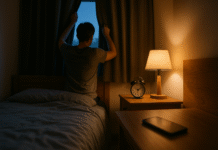
- Kill the glow: Tape over standby LEDs (routers, chargers), flip clocks away.
- Keep a low-lumens red/amber night light in hallways only if safety demands it.
- Wear a contoured eye mask if you share a room or can’t modify windows.
Numbers & guardrails: At night, aim for near 0–1 lux at eye level in bed; if you need a night light, keep it low and indirect. Morning light should be bright (open shades on waking) to reinforce your circadian anchor.
Bottom line: Treat darkness like a nutrient. The less your eyes see after lights-out, the more reliably your brain deepens sleep.
2. Target “Library Quiet” Indoors (≈30 dB(A)) and Mask What You Can’t Remove
Noise—especially intermittent peaks—triggers micro-arousals and lighter sleep. For bedrooms, WHO guidelines suggest keeping indoor nighttime noise around 30 dB(A) LAeq, with single events under ~45 dB(A) Lmax; outside the building, night-noise (annual average) should be below 40 dB(A) to protect health. If you can’t reduce a source, mask it with a steady neutral sound. The goal isn’t silence; it’s steady, predictable sound that your brain can ignore.
2.1 How to do it
- Block & seal: Close gaps; add door sweeps and weatherstripping; heavy curtains add a few dB of reduction.
- Relocate or isolate humming devices (mini-fridges, aquariums) away from the bedroom.
- Mask: Use a white/pink/brown-noise machine or a fan; keep volume just above the intrusion level.
- Protect: Foam or silicone earplugs can reduce 15–30 dB when fitted correctly; combine with an eye mask if light also intrudes (evidence of benefit in noisy clinical settings).
2.2 Numbers & guardrails
- Target indoors: ~30 dB(A) LAeq at night; peaks under 45 dB(A) Lmax.
- Outside goal: <40 dB(A) Lnight averaged, to reduce health risks. World Health Organization
Bottom line: Aim for “library quiet.” If you can’t get there, mask the spikes so sound stays steady and your sleep stays deep.
3. Set Cool, Stable Temperature (≈18–19°C / 65°F) and Comfortable Humidity (30–50%)
Your body naturally cools to initiate sleep; bedrooms around 18–19°C (about 65°F) help that drop. Most sleep organizations place optimal ranges roughly 60–67°F (15.6–19.4°C), with personal variations. Pair temperature with relative humidity ~30–50%: too dry causes airway irritation; too damp encourages dust mites and mold. Keep the night temperature stable; big swings promote awakenings. National Sleep Foundation
3.1 How to do it
- Pre-cool the room and use a fan to move air across skin; consider breathable bedding (see Pillar 5).
- Use smart thermostats to avoid 2–3°C rebounds near dawn.
- Track humidity with an inexpensive digital hygrometer; add or remove moisture with humidifier/dehumidifier as needed.
- In hot climates (e.g., monsoon-humid nights), combine AC + dehumidifier or use cross-ventilation when outdoor dew point is low.
3.2 Numbers & guardrails
- Temperature set-point: ~18–19°C (65°F); adjust ±1–2°C for comfort.
- Humidity: 30–50% RH, ideally <60% to discourage mold.
Bottom line: Cool and steady beats cold or fluctuating. Pair it with healthy humidity to keep airways happy and sleep consolidated.
4. Choose a Supportive Mattress and Pillow for Neutral Alignment
“Comfort” is subjective, but spinal neutrality is universal: your neck and back should maintain their natural curves while lying on your usual side/back/stomach. A well-conducted randomized trial found medium-firm mattresses improved pain and disability compared with firm mattresses in chronic low-back pain—suggesting that rock-hard isn’t better. Pillows should fill the space between head and mattress without kinking the neck; side sleepers typically need higher, firmer loft, back sleepers moderate, stomach sleepers low and soft (and should consider training to side/back to reduce strain).
4.1 How to do it
- Test alignment: Lie in your typical position; have someone snap a side photo. Your nose-to-sternum line should be roughly vertical; ears level.
- Check pressure points: If shoulders/hips feel hot or numb, you need better pressure relief (topper or different surface).
- Audit age: Many foam/coil beds lose support by years 7–10; telltale dips = time to replace.
- Customize pillow: Side (thicker), back (medium), stomach (thin/soft or change position).
4.2 Mini case
- Case: Samir (side sleeper) wakes with neck pain. He shifts from a low, soft pillow to a 10–12 cm loft, firmer contour pillow and adds a medium-firm mattress topper. Pain and middle-of-the-night wakeups drop across a week. (Alignment + pressure relief.)
Bottom line: Support beats squish. Aim for a surface that keeps your spine neutral and pressure points quiet all night.
5. Pick Breathable, Clean Bedding—and Use Weight Strategically
Bedding affects both skin microclimate and sensory comfort. Breathable fibers (cotton, linen, Tencel/lyocell, wool) wick moisture and reduce heat buildup, especially helpful in warm rooms. Duvets/comforters should match your climate and season; use layers you can peel back easily at 3 a.m. If anxiety or restlessness keeps you fidgeting, weighted blankets (around 7–12% of body weight) have emerging evidence for improving insomnia in some psychiatric populations, likely via deep-pressure calming. Clean bedding weekly to reduce allergens; consider dust-mite encasements if you’re sensitive.
5.1 Tools & tips
- Layering system: Light flat sheet + breathable duvet; keep a second lighter layer nearby for seasonal shifts.
- If you run hot: Choose percale weaves or moisture-managing fibers and skip impermeable protectors.
- Weighted blanket use: Start low (≈7–8% body weight), avoid in children without medical advice, and skip if you have respiratory or mobility issues. Evidence supports use in certain adults with comorbid psychiatric conditions; general population data are still growing.
Bottom line: Think breathable by default, and consider gentle pressure if it calms your nervous system—used thoughtfully and safely.
6. Keep Air Clean: Ventilation, Filtration, and Dust Control
“Sleep air” should be fresh, low in particulates and allergens, and not too dry or damp. That means bringing in outdoor air when quality is good, trapping particles with high-efficiency filters, and reducing dust reservoirs. The U.S. EPA’s residential air-cleaner guidance explains how HEPA portable purifiers and higher-MERV HVAC filters reduce indoor particles; pair that with routine cleaning and you’ll breathe easier all night. If outdoor air is smoky or polluted, seal windows and run filtration until levels improve.
6.1 How to do it
- Ventilate when outdoor air is clean and dry; otherwise recirculate + filter.
- Use a HEPA purifier sized for your room’s CADR (room area × ceiling height × target air changes).
- Upgrade HVAC filter to MERV 11–13 if compatible; change on schedule.
- Dust low-to-high weekly; launder bedding hot; keep soft clutter (pillows, throws) minimal.
6.2 Numbers & guardrails
- Humidity: Keep 30–50%, ideally <60% to reduce mold and dust mites.
Bottom line: Breathe clean, temperate air. Ventilate when you can, filter when you must, and keep dust reservoirs slim.
7. Build Smart Light Routines: Dim Evenings, Bright Mornings
Your circadian system is light-driven: bright daytime and dim evenings strengthen rhythms, making it easier to fall asleep on time and stay asleep. In practice: lower household light 2–3 hours before bed (lamps > overheads), switch screens off at least 30 minutes before lights-out (preferably longer), and seek morning daylight soon after waking. Evidence and professional guidance consistently emphasize reducing bright light at night and reinforcing a robust light/dark cycle for sleep health.
7.1 How to do it
- Evenings: Use warm, low-lux lamps; install dimmers; set device Night Shift—but better yet, shut devices and read on paper.
- Mornings: Open blinds immediately or step outside for 5–15 minutes of daylight exposure.
- If you must use screens: Keep them dim and distant, and wear amber lenses cautiously (they reduce blue, but behavior change beats gadgets).
7.2 Why it matters
- Blue-enriched light at night suppresses melatonin more than other wavelengths.
- Room light during sleep (as modest as 100 lux) altered cardiometabolic markers in controlled studies, reinforcing the case for true darkness.
Bottom line: Treat evening dimness and morning brightness as non-negotiable. The cycle sets your internal clock—and your sleep—up for success.
8. Design a Calm, Clutter-Light Layout You Can Use Half-Asleep
Good sleep design is frictionless: what you need at 3 a.m. is within reach, and what wakes you is out of sight. Keep your nightstand minimal (water, tissue, lamp), route cables away from legs, and ensure safe nighttime navigation (tiny, low-placed amber guide lights in the hall only if needed). Store work gear out of the bedroom to avoid mental “wake cues.” If traffic hum or streetlights intrude, rearrange the room to place the headboard on the quietest, least bright wall, and back it with a solid wall rather than a window if possible.
8.1 Mini-checklist
- Bed placement: Headboard against the quietest wall; avoid vents blowing at the face.
- Reach: Nightstand items you’ll use half-asleep (eye mask, earplugs) within 30 cm.
- Visual calm: Two colors max, matte finishes, minimal reflective glass.
- Safety: No sharp corners near shins; pathways clear; rugs secured.
Bottom line: Design for low friction and low stimulation. The fewer decisions and sensory hits after lights-out, the better your sleep continuity.
9. Add Personal Sleep Cues: Gentle Scents, Ritual Sounds, and Consistent Routines
Once the “physics” (dark, quiet, temp) are set, layer calming cues your nervous system associates with sleep. Aromatherapy—particularly lavender—has emerging evidence in adults and specific populations; results vary, but many find it soothing. Likewise, neutral soundscapes or steady noise at low volume can mask intrusions and provide predictability; closed-loop “pink noise” synced to brain waves is a research tool that improves slow-wave sleep in lab studies, though everyday apps are not the same as lab-timed stimulation. The theme here is consistency: the same relaxing steps, in the same order, at the same time.
9.1 How to do it
- Scent: Diffuse lavender for 20–30 minutes before bed or place a small cotton pad with 1–2 drops near the bed (not on skin if sensitive).
- Sound: Choose a steady, low-volume masker (fan/white/pink), not one with dramatic changes.
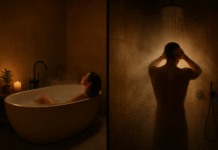
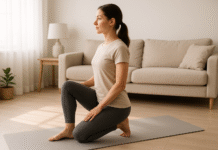
- Ritual: A 30–60-minute wind-down (dim lights, stretch, read, breathwork) tells your brain “sleep is next.”
9.2 Evidence snapshot
- Meta-analyses suggest aromatherapy can improve sleep quality in some adults; effects vary by method and population.
- Closed-loop, phase-locked acoustic stimulation can enhance slow-wave activity in controlled settings; consumer noise tracks are not phase-locked, so think masking rather than therapy.
Bottom line: After you nail the fundamentals, use cues your body recognizes as “bedtime.” Keep them gentle, predictable, and repeatable. Lippincott Journals
FAQs
1) What’s the single biggest change I can make tonight?
Eliminate light leaks. Tape over LEDs, flip the clock, and use a contoured eye mask if you don’t have blackout shades yet. Light is the strongest signal keeping your brain awake; removing it provides immediate returns for most people. Expect easier sleep onset and fewer night awakenings.
2) Is a cooler room always better?
Cooler within reason is best. Most people sleep well around 18–19°C / 65°F, but shivering is counterproductive. If you run cold, use a warmer duvet and socks yet keep room air cool; thermal comfort at the skin with a cool ambient helps your core drop—the cue your brain expects at night.
3) I live on a busy street—how quiet is “quiet enough”?
Indoors, aim for ~30 dB(A) LAeq at night and minimize peak events above ~45 dB(A). Can’t reach that? Mask with a steady sound and use earplugs. The brain tolerates a steady hum much better than unpredictable spikes from horns or motorbikes.
4) Do blue-blocking glasses fix evening light exposure?
They reduce blue light, but behavior beats gadgets. Dimming household lights and shutting devices 30–60 minutes before bed work better—and cost nothing. If you must use screens, combine dimming with warm color temperature and increased viewing distance.
5) Are weighted blankets safe for everyone?
They’re not for children without clinical guidance and may be unsuitable for people with certain respiratory, circulation, or mobility issues. In adults—especially with some psychiatric conditions—trials suggest benefits for insomnia. Start with ~7–8% of body weight, assess comfort and safety, and avoid excessive heat.
6) What humidity should I target if I wake with a dry throat?
Try 40–45% RH within the 30–50% recommended band. Use a humidifier if indoor air is dry and a dehumidifier if it’s muggy. Keep units clean to prevent mold/bacteria and monitor with a hygrometer so you don’t overshoot.
7) Do pink-noise apps help me get deeper sleep?
They can mask disruptions, which helps many people. The studies showing memory and deep-sleep boosts used closed-loop, precisely timed tones in a lab—not the same as continuous pink noise. Use apps for masking and relaxation; don’t expect lab-grade effects.
8) Is it okay to crack the window at night?
If outdoor air is clean and quiet, yes—fresh air helps reduce stuffiness and heat buildup. If it’s polluted (smoke, dust, traffic), keep windows closed and run HEPA filtration instead. Check noise implications, too; an open window can add 10–15 dB indoors.
9) Which pillow is “correct”?
The one that keeps your neck neutral in your usual sleep position. Side sleepers tend to need higher, firmer loft to fill the shoulder-head gap; back sleepers need a moderate loft; stomach sleepers need very low loft or a transition to side/back to reduce strain. Reassess when you change mattresses. (See Pillar 4.)
10) Do eye masks and earplugs really help?
Yes, especially in noisy/bright environments. Research—even in challenging settings like hospital ICUs—shows eye masks and earplugs can improve sleep quality by reducing arousals and promoting longer sleep periods. They’re inexpensive and highly portable.
11) What if my partner needs a night light?
Use a low-lumens amber night light, indirect and low to the floor (e.g., in the hallway), or a motion-activated under-bed light shielded from your line of sight. That preserves their safety while protecting your melatonin and sleep depth.
12) How long until I notice improvements?
Often immediately for light and noise changes; days to a week for temperature/humidity tweaks; and 1–2 weeks for habit cues (wind-down, scent, sound). Track your results with a simple sleep log so you can see patterns and iterate.
Conclusion
Great sleep is not a mystery—it’s the physics of your bedroom working with, not against, your biology. Start with the big three: near-total darkness, library-quiet sound levels, and cool, stable air. Then dial in supportive bedding and clean air, and layer personal cues that signal “bedtime” to your nervous system. The payoff is compound interest: fewer awakenings, easier mornings, and better energy across your day. Treat these pillars as a system—each supports the others—and adjust them to fit your climate, building, and budget. Tonight, pick one high-impact fix (blackout + LED tape), schedule a weekend for sealing gaps and setting up a sound masker, and plan a thermostat/humidity strategy for the season ahead. Your future self (and your circadian clock) will thank you.
CTA: Choose one pillar today—darkness, quiet, or temperature—and improve it by one step before bedtime.
References
- The Best Temperature for Sleep — National Sleep Foundation (SleepFoundation.org). Updated July 11, 2025. Sleep Foundation
- Healthy Sleep Habits — Sleep Education by the American Academy of Sleep Medicine. April 2, 2021. Sleep Education
- Blue light has a dark side — Harvard Health Publishing. July 24, 2024. Harvard Health
- Light exposure during sleep impairs cardiometabolic function — Proceedings of the National Academy of Sciences. 2022. (see also PubMed summary). PNASPubMed
- Guidelines for Community Noise — World Health Organization. 1999. (Bedroom guideline: 30 dB LAeq; 45 dB Lmax). IRIS
- Night Noise Guidelines for Europe — World Health Organization/European Commission. 2009. (Target: <40 dB(A) Lnight outside). IRIS
- Care for Your Air: A Guide to Indoor Air Quality — U.S. EPA. March 31, 2025. (Keep RH 30–50%.) US EPA
- Mold Course, Lesson 3 – Humidity — U.S. EPA. December 20, 2024. (Keep RH below 60%, ideally 30–50%.) US EPA
- Air Cleaners and Air Filters in the Home — U.S. EPA (with link to Residential Air Cleaners: A Technical Summary, 3rd ed., August 2018). US EPA
- Effect of firmness of mattress on chronic non-specific low-back pain — The Lancet. 2003. The Lancet
- A randomized controlled study of weighted chain blankets for insomnia in psychiatric disorders — Journal of Clinical Sleep Medicine. 2020. PMC
- The efficacy of eye masks and earplugs interventions for sleep quality in critically ill patients — Critical Care Nurse (meta-analysis; open-access summary). 2021. PMC
- Embracing the eclipse: light and sleep — American Academy of Sleep Medicine (public education on light’s role). April 9, 2024. AASM
- Acoustic enhancement of sleep slow oscillations & memory — Frontiers in Human Neuroscience. 2017. https://www.frontiersin.org/articles/10.3389/fnhum.2017.00109/full Frontiers
- Turn off all the lights at night: Your heart will thank you — NHLBI/NIH news release summarizing research on light at night and cardiometabolic risk. August 16, 2022. NHLBI, NIH