























Starting a sport is exciting—but the athletes who actually stick with it don’t rely on motivation. They build small, repeatable routines that make training automatic. This guide shows beginner athletes how to turn simple daily actions into momentum: short morning mobility, a non-negotiable training window, a reliable warm-up, basic fueling and hydration, strength and cardio foundations, consistent sleep, and an evening prep ritual. Quick safety note: this article is educational, not medical advice. If you have an injury, health condition, or are pregnant, check with a qualified professional before changing your activity or nutrition.
In one line: “Daily routine habits for beginner athletes” are small, consistent actions that remove friction from training so you start strong, recover well, and keep going week after week.
Quick-start checklist (skim and start today):
- Do a 7-minute morning mobility circuit.
- Reserve a 20–30-minute training window on your calendar.
- Use a simple RAMP warm-up before every session.
- Have a pre-workout carb snack (if training within 1–3 hours) and a post-workout protein target.
- Carry water; check urine color; sip regularly; replace fluids after training.
- Strength train 2–3 days per week with 6 fundamental patterns.
- Accumulate mostly easy cardio minutes; breathe through your nose, speak in full sentences.
- Aim for 7–9 hours of sleep and a 30–60-minute wind-down.
- Each evening: lay out gear, log your session, and plan tomorrow.
1. Start Your Day With a 7-Minute Mobility & Activation Circuit
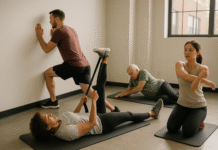
A short morning mobility routine immediately reduces stiffness, wakes up key joints, and makes your later workout feel easier. The goal is not to “burn calories” at sunrise; it’s to reclaim range of motion in the ankles, hips, and thoracic spine, turn on your core, and nudge circulation so you move better all day. Think of it as priming your nervous system and posture. Seven focused minutes also strengthen your identity as “someone who trains,” which lowers the activation energy for your main session later. Keep the sequence the same each day so it’s automatic, and do it barefoot if safe to help foot mechanics.
1.1 Why it matters
- Reduces desk- or sleep-related stiffness so you feel looser by your first steps.
- Reinforces positions you’ll need for squats, lunges, pushes/pulls, and easy runs.
- Serves as a mindfulness anchor—two birds: movement + mood regulation.
- Builds a streak that’s hard to break (tiny wins drive adherence over time).
1.2 How to do it (7 minutes)
- 90/90 hip switches x 8 each side
- Cat-camel x 8, then T-spine rotations x 6 each side
- Ankle rocks (knee over toe) x 10 each side
- Glute bridge with 2-sec pause x 10
- Dead bug (opposite arm/leg) x 6 slow each side
- World’s greatest stretch with reach x 4 each side
- Tall stand breathing (4-in/6-out) x 5 breaths
Mini-checklist: Smooth breathing, no sharp pain, slow tempo. If pressed for time, do hip switches, ankle rocks, and bridges only.
Synthesis: Seven minutes each morning costs little but compounds quickly—mobility today, better positions and fewer niggles tomorrow.
2. Block a Non-Negotiable 20–30-Minute Training Window (Habit Stacking & “Minimum Viable Session”)
The fastest way to become consistent is to schedule training like any appointment, then attach it to an existing daily cue (coffee, commute, kids’ drop-off). In the beginning, aim for a minimum viable session (MVS): 20–30 minutes you can always complete even on chaotic days. This lowers the psychological barrier—showing up matters more than crushing it. Put it in your calendar with an alert, decide the exact workout the night before, and prepare gear so there’s zero morning decision-making. If you genuinely miss, apply the “never miss twice” rule and show up the next day, even if you only walk.
2.1 Tools & examples
- Anchors: “After brushing teeth,” “after school drop-off,” or “before lunch.”
- Calendar: Block time with a title like “Run Easy 25′ + 10′ mobility.”
- Timers: Use a simple 25-minute countdown. Start when it starts—no dithering.
- Apps: Any calendar, Strong/Nike Training Club for templates, or a paper planner.
2.2 Mini plan (first 2 weeks)
- Mon/Wed/Fri: Strength MVS (full-body, 25–30′).
- Tue/Thu/Sat: Easy cardio 20–30′ + 5′ short mobility.
- Sun: Off or 30′ walk + stretch/journaling.
Common mistakes
- Over-programming (6 days hard, 1 off) → burnout.
- Vague sessions (“I’ll do something later”) → skipped.
- No friction removal (gear not ready, no plan) → procrastination.
Synthesis: Protect one small daily window and you’ll outperform “motivation” every time—consistency beats intensity for beginners.
3. Use a Simple RAMP Warm-Up Before Every Workout
Every session needs a warm-up that raises temperature, rehearses ranges, and gradually increases speed/force. A practical framework is RAMP: Raise, Activate, Mobilize, Potentiate. You’ll spend 8–12 minutes total, finishing with short, crisp, workout-specific moves. Beginners often stretch and then jump straight into hard sets; RAMP avoids that by sequencing from general to specific. The result is smoother technique, fewer tweaks, and better performance. Dynamic movements predominate; save long static holds for after training or separate recovery work.
3.1 RAMP in 10 minutes (template)
- Raise (2–3′): brisk walk, light jog, rope skips, or shadow boxing.
- Activate (2–3′): glute bridges, banded clamshells, Y-T-W for shoulders.
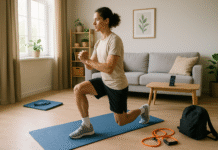
- Mobilize (3–4′): leg swings, lunge with rotation, ankle/knee over-toe rocks.
- Potentiate (1–2′): 2–3 short sets that mimic your workout (e.g., 3 × 20-m strides for running; 2 × 5 squats with the empty bar or light kettlebell before strength).
3.2 Numbers & guardrails
- Keep movements pain-free; prioritize control over range.
- Finish feeling ready, not tired—if you’re sweating buckets, you did too much.
- For hot/humid days, shorten Raise and lengthen Mobilize to avoid overheating.
- For older athletes or morning sessions, extend warm-up by 2–3 minutes.
Synthesis: A 10-minute RAMP warm-up turns “cold starts” into crisp sessions—your joints and nervous system will thank you.
4. Fuel Smart: Pre- and Post-Workout Basics for Beginners
You don’t need a complicated diet to train well. You do need predictable energy before sessions and enough protein afterward to support recovery. If your workout is within 1–3 hours, a carb-forward snack helps (e.g., yogurt + banana; toast + peanut butter; dates + water). For early mornings, a small carb bite or sports drink is fine if solid food feels heavy. After training, aim for ~20–30 g protein within a few hours via meals or a shake; prioritize whole foods most days. Hydrate alongside food. Keep fat and fiber lower immediately before hard efforts to reduce GI upset.
4.1 Practical pre-workout options (pick one)
- 1 banana + 200 ml yogurt
- 2 slices toast + 2 tsp peanut butter + water
- Oat packet cooked in milk + berries
- 3 dates + handful of pretzels + water
- If >3 h since last meal: small sandwich + water
4.2 Post-workout protein ideas (~20–30 g)
- 1.5 cups Greek yogurt + fruit
- 2 eggs + 150 g cooked beans + toast
- Protein shake (whey/soy/pea) + milk/water
- 120–150 g grilled chicken/tofu + rice + veg
Numbers & guardrails
- Carbs 1–4 g/kg in the 1–4 h pre-exercise window (use the low end for short, easy sessions).
- Most active adults do well with 1.4–2.0 g protein/kg/day spread over meals.
- If appetite is low post-session, a shake or chocolate milk can bridge to your next meal.
Synthesis: Eat a little before, hit a protein target after, and keep the rest of your day balanced—fueling gets simple fast.
5. Hydrate Intentionally Throughout the Day and Around Training
Hydration is a routine, not an emergency. Carry a bottle, sip regularly, and use simple cues to guide intake: pale-straw urine, minimal post-workout weight loss, and normal thirst. For most beginners, plain water covers everyday training; in heat, longer sessions, or if you sweat salty (white salt marks), add electrolytes. Weigh yourself before/after a longer session; each 1 kg lost ≈ ~1–1.5 L fluid to replace over the next few hours. Avoid over-drinking; steady sips beat chugging.
5.1 How to do it
- Baseline: Start the day with a glass of water; keep a bottle within arm’s reach.
- During: For sessions ~60 minutes, sip to comfort. For longer/hot sessions, consider a light electrolyte drink.
- After: Rehydrate gradually alongside a salty snack or meal.
5.2 Common mistakes & fixes
- All at once drinking: Space intake across the day.
- Ignoring sodium in heat: Add a pinch of salt or use electrolyte tabs for very sweaty sessions.
- Chugging sugary drinks: Save sports drinks for long/hard days; water is fine otherwise.
Synthesis: Hydration doesn’t need to be fancy—steady sips, listen to thirst, and replace what you sweat.
6. Build a Strength Foundation 2–3 Days a Week
Strength is your insurance policy against injuries and plateau. Beginners thrive on a full-body program that trains the six main patterns: squat, hinge, push, pull, lunge, carry. Keep weights moderate, reps controlled, and progress gradually. Two or three 25–40-minute sessions per week is plenty. You’re not chasing soreness—you’re building skill and capacity. Master technique with bodyweight or light loads first; then apply progressive overload (slightly more reps, sets, or weight over time).
6.1 Simple 30-minute template (2–3 rounds)
- Goblet squat 8–10 reps
- Hip hinge (kettlebell deadlift) 8–10
- Push (incline push-up or dumbbell press) 8–10
- Pull (band row or cable row) 10–12
- Lunge or split squat 6–8 each side
- Carry (suitcase carry) 20–30 m each side
6.2 Numbers & guardrails
- Start with 2 sets; add a third when sets feel “comfortable challenging.”
- Use a Rate of Perceived Exertion (RPE) ~6–7/10 for most sets (you could do 3–4 more reps).
- Progress by 5–10% in load or add 1–2 reps per set when the final reps feel crisp.
- Rest 60–90 seconds between sets and breathe through your nose to recover.
Synthesis: Two or three simple full-body sessions per week build durable, transferable strength without beating you up.
7. Build Your Aerobic Base With Easy, Consistent Cardio
Cardio is where beginners often go too hard, too soon. Flip that script: go easy, go often. Accumulate mostly comfortable minutes—pace where you can speak in full sentences and breathe through your nose. This “conversational” intensity strengthens your heart, builds capillaries, and accelerates recovery. Start with activities you enjoy (walking, easy running, cycling, rowing, swimming), and stack 20–30-minute sessions on most days. Later, sprinkle in short strides, hill walks, or brisk intervals, but let easy volume do the heavy lifting.
7.1 Weekly starter plan (mix & match)
- Mon: 25′ easy walk/jog
- Wed: 30′ bike or brisk walk
- Fri: 25′ easy jog or row
- Sat: 30–40′ hike or longer walk
7.2 Numbers & guardrails
- Global guideline target: ~150 minutes of moderate activity per week (or 75 minutes vigorous), plus muscle-strengthening on 2+ days.
- Keep 80–90% of minutes easy; add only tiny doses of “hard” when your easy volume feels great.
- If your resting heart rate is elevated or legs feel heavy, swap hard for easy or rest.
Synthesis: Cardio base is built on comfort—pile up easy minutes and your speed will quietly rise.
8. Protect Your Progress With a Consistent Sleep Routine
Sleep is the original recovery tool. Aim for 7–9 hours for most healthy adults and protect a 30–60-minute wind-down where you dim lights, park your phone, and let your nervous system downshift. Consistent bed and wake times stabilize hormones, mood, and readiness to train. Build an environment that invites sleep: cool room (~18–20 °C / 64–68 °F), dark curtains, and minimal noise. If you nap, keep it 15–25 minutes and avoid late-evening naps that sabotage bedtime.
8.1 Wind-down menu (pick 2–3)
- Gentle mobility or light stretching with slow nasal breathing
- Warm shower, then cool bedroom
- Paper book or journaling (no doom-scrolling)
- Herbal tea if you enjoy it (caffeine-free)
- Next-day plan written in 3 bullets (offload thinking)
8.2 Common pitfalls & fixes
- Weekend jet lag: Keep wake time within 60 minutes of weekdays.
- Late caffeine: Hold caffeine after mid-afternoon.
- Blue light: Set screens to night mode and cap screens 30–60 minutes pre-bed.
Synthesis: When sleep is steady, everything else gets easier—energy, decision-making, and training quality all rise.
9. Make Evenings Count: Prep, Reflect, and Plan Tomorrow
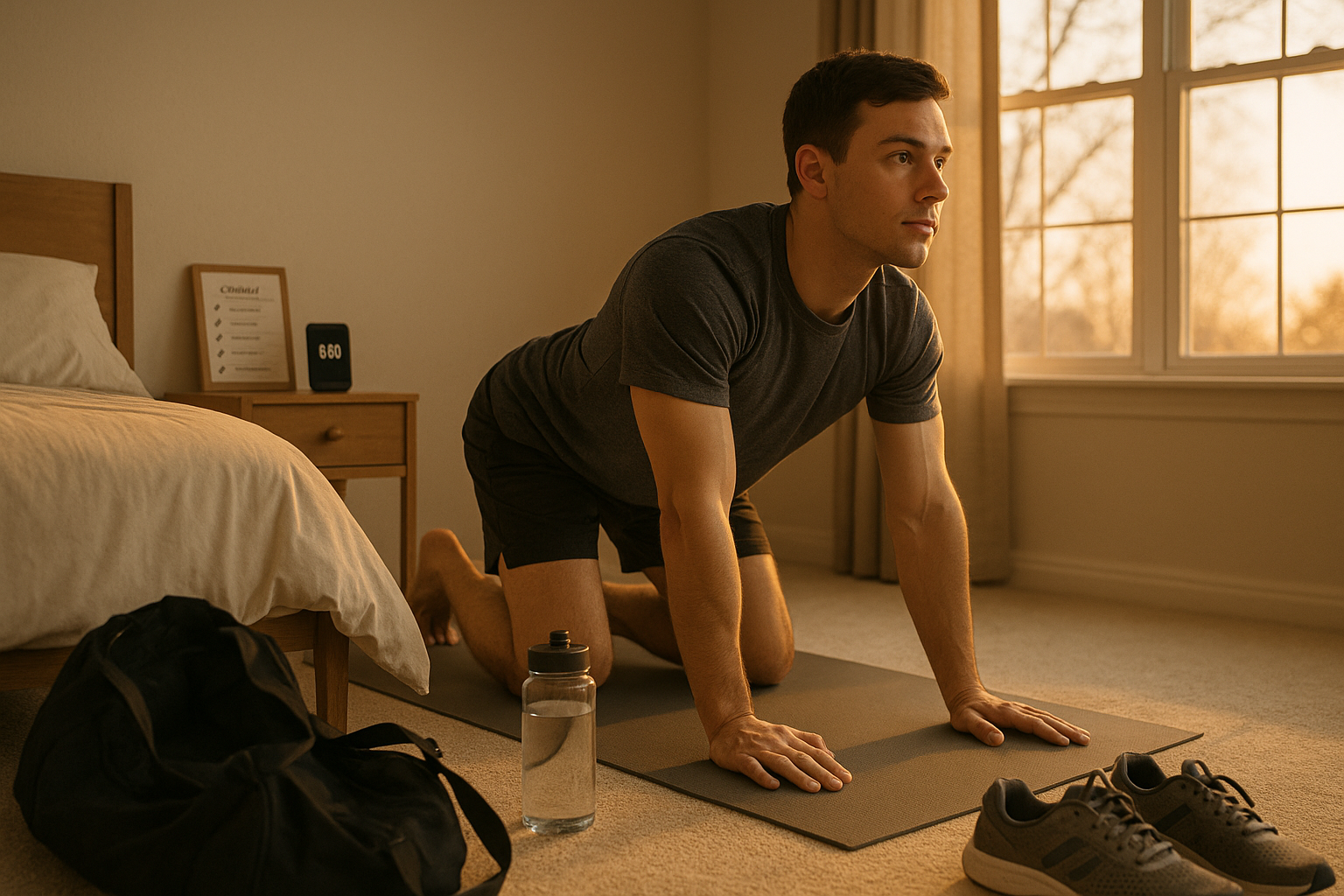
Evening is when tomorrow’s success is decided. Lay out your gear, pack your bag, prep a bottle, and confirm the exact workout so you can press “go” in the morning. Spend three minutes logging your session and energy; tracking builds awareness and, more importantly, adherence. Include a simple soreness check (0–10), your RPE for the day, and one sentence on what went well. If you’re feeling beat-up, schedule an easy day or rest. Finish by setting your alarm and putting your phone to charge outside the bedroom if possible.
9.1 6-minute evening ritual
- 00:00–01:00 Lay out shoes/kit/watch; pack a small towel and snacks.
- 01:00–02:00 Fill bottle; set out pre-workout snack if needed.
- 02:00–04:00 Log today: session type, minutes, RPE (0–10), soreness (0–10), one win.
- 04:00–06:00 Write tomorrow’s session title; set calendar alert; lights down.
9.2 Why it works
- Removes morning friction (no rummaging for socks).
- Reinforces identity (“I’m the kind of person who trains”).
- Progress tracking increases the likelihood you’ll hit future goals.
Synthesis: Pack, log, plan—your three-minute investment turns “I hope I train” into “I trained.”
FAQs
1) How long should a beginner’s workout be?
Most thrive on 20–40 minutes, 5–6 days per week split between strength and easy cardio. Early on, consistency > duration. If 20 minutes is all you have, make them count with a quick warm-up, two rounds of full-body strength, or a brisk walk/jog. Over time, extend one session weekly by 5–10 minutes to grow capacity without feeling overwhelmed.
2) What if I can’t train in the morning?
No problem. Anchor your training to a reliable cue you already do in the afternoon or evening—e.g., immediately after work or after dinner cleanup. Pack a small gym bag to remove friction. The key is a non-negotiable window and a minimum viable session; when energy is low, do the warm-up and one circuit—you’ll often find momentum mid-session.
3) Do I need supplements?
Generally, no. Beginners can cover needs through balanced meals: carbs for energy, 20–30 g protein after training for recovery, and regular hydration. A basic protein powder is a convenience food, not a requirement. If you consider anything beyond that (e.g., creatine), talk to a professional and ensure third-party testing for purity.
4) Should I do cardio or strength first?
If separate sessions, the order doesn’t matter much for beginners—do whichever you’re more likely to complete. In the same session, do strength before high-fatigue cardio so technique stays crisp. Always insert a RAMP warm-up first to prepare joints and nervous system.
5) How do I know if I’m training too hard?
Use RPE (Rate of Perceived Exertion). For base building, most work should feel like RPE 4–6/10—conversational, steady. Persistent soreness >6/10, disrupted sleep, or a resting heart rate 5–10 bpm above your norm are red flags. Scale back to easy cardio or rest, and aim for quality sleep and hydration.
6) What should I eat if I train very early?
If solid food feels heavy, sip a small carb drink (e.g., diluted juice) or eat a quick carb bite (half a banana, a date) and go. After training, have a normal meal with 20–30 g protein. Over time, test what your stomach tolerates; the goal is energy without GI distress.
7) How many rest days do I need?
At least one full rest day per week is wise for most beginners. But remember, rest can be active: easy walks, light mobility, or gentle cycling help recovery without adding fatigue. If your schedule is heavy (work, travel, heat), you might benefit from two easier days.
8) Is stretching before workouts still recommended?
Yes—but favor dynamic over long static holds before training. Dynamic movements (leg swings, lunges with rotation) prepare joints and tissues and fit the RAMP sequence. Save longer static stretches for cool-downs or separate sessions to improve flexibility without dampening power.
9) How quickly will I see results?
Expect better energy and mood in 1–2 weeks, measurable cardio improvements in 3–4 weeks, and noticeable strength changes in 4–6+ weeks with consistent training and sleep. Track minutes, RPE, and small wins nightly to see progress you might otherwise miss.
10) What if I’m short on time or traveling?
Keep a micro-kit: mini-band, jump rope, and a notebook. Fall back to 10–20-minute sessions: 5-minute RAMP, 10 minutes alternating squats/push-ups/rows, 5 minutes brisk walking or rope. Evening prep still applies—lay everything out in your room and set a calendar alert.
Conclusion
Beginner athletes don’t need perfect programs—they need dependable routines. Build a 7-minute morning mobility to start each day looser. Protect a 20–30-minute training window so sessions actually happen. Insert a RAMP warm-up to lift quality and cut risk. Keep nutrition simple with a small pre-workout carb and post-workout protein. Hydrate steadily, not reactively. Train full-body strength two or three days and layer easy cardio most other days. Guard it all with 7–9 hours of sleep and a 3-minute evening prep—pack, log, plan. These nine habits remove friction, create momentum, and build the identity that sustains results. Start with one habit today, stack the next next week, and keep going—future you will be grateful.
CTA: Pick your training window for tomorrow, block it on your calendar, and lay out your gear tonight.
References
- WHO Guidelines on Physical Activity and Sedentary Behaviour, World Health Organization, 2020. https://www.who.int/publications/i/item/9789240015128
- WHO Guidelines on Physical Activity and Sedentary Behaviour (Scientific paper overview), International Journal of Behavioral Nutrition and Physical Activity, 2020. https://ijbnpa.biomedcentral.com/articles/10.1186/s12966-020-01037-z
- About Sleep: How Much Sleep Do You Need?, Centers for Disease Control and Prevention, May 15, 2024. https://www.cdc.gov/sleep/about/index.html
- Recommended Amount of Sleep for a Healthy Adult: A Joint Consensus Statement, American Academy of Sleep Medicine & Sleep Research Society, 2015. https://pmc.ncbi.nlm.nih.gov/articles/PMC4434546/
- National Athletic Trainers’ Association Position Statement: Fluid Replacement for the Physically Active, Journal of Athletic Training, 2017. https://pmc.ncbi.nlm.nih.gov/articles/PMC5634236/
- International Society of Sports Nutrition Position Stand: Protein and Exercise, Journal of the International Society of Sports Nutrition, 2017. https://jissn.biomedcentral.com/articles/10.1186/s12970-017-0177-8
- International Society of Sports Nutrition Position Stand: Nutrient Timing, Journal of the International Society of Sports Nutrition, 2017. https://jissn.biomedcentral.com/articles/10.1186/s12970-017-0189-4
- American College of Sports Medicine Position Stand: Progression Models in Resistance Training for Healthy Adults, Medicine & Science in Sports & Exercise, 2009. https://pubmed.ncbi.nlm.nih.gov/19204579/
- Current Concepts in Muscle Stretching for Exercise and Rehabilitation, International Journal of Sports Physical Therapy, 2012. https://pmc.ncbi.nlm.nih.gov/articles/PMC3273886/
- Effects of Dynamic and Static Stretching Within General Warm-Up Protocols, Journal of Strength and Conditioning Research, 2012. https://pmc.ncbi.nlm.nih.gov/articles/PMC3737866/
- Does Monitoring Goal Progress Promote Goal Attainment? A Meta-Analysis, Psychological Bulletin, 2016. https://www.apa.org/pubs/journals/releases/bul-bul0000025.pdf
- The Borg Rating of Perceived Exertion (RPE) Scale—Overview, Occupational Medicine, 2017. https://academic.oup.com/occmed/article/67/5/404/3975235